
人类命运共同体

Search documents
持续13年 中美学生“云端”交流
Hang Zhou Ri Bao· 2025-10-28 02:22
10月27日,以"更紧密的合作 可持续的未来"为主题的第七届中美友城大会在杭州举行。民间友好 往来如涓涓细流,汇成中美友谊长河,教育层面的交流,成为其中重要一环。 "这是杭州学生最常用的App'支付宝',有了它,出门不用带现金,走到哪儿都可以移动支付,非常 方便。"上周四晚,一场国际理解连线课程如期在杭州外国语学校举行。视频的一端是杭外的学生,另 一端是美国北卡数理高中的学生,双方围绕"两国学生在生活中最常用的智能软件"侃侃而谈,即便有12 小时的时差,学生们仍非常兴奋。 这样的交流每周都会进行,已坚持13年。"这不是一堂简单的口语练习课。"课程负责人赵晶老师介 绍,每期讨论的主题两校都会结合中美学生的兴趣点提前沟通。开课前,学生们需完成文献共读、影像 观摩等任务,准备专题分享;课中,除了集体探讨,还有一对一交流;课后,同学们需撰写感受与作 业,梳理对文化差异的理解,让思考落地。 "世界是一个地球村,我们需要打开学生的国际视野。在这样的讨论中,学生慢慢从'知道对方的存 在',到'懂得彼此的不同',再到'珍视差异文化中的共通',一步步读懂人类命运共同体的意义。"赵晶 说。 这项课程也成为中国文化走向世界的一个窗 ...
抗战故事的国际化书写
Ren Min Ri Bao· 2025-10-27 22:38
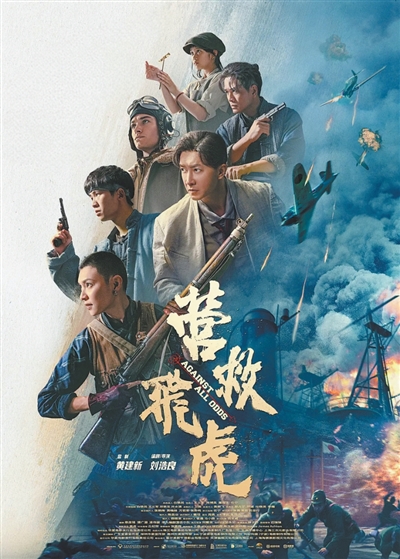
Core Viewpoint - The film "Rescue Flying Tigers" is based on the true events of the East River Column's rescue of Flying Tiger members, showcasing the collaboration of global anti-fascist forces and opening a pathway for the internationalization of war-themed films [1][4]. Summary by Sections Narrative and Storytelling - The film condenses a 27-day rescue operation into a 48-hour action sequence, focusing on the theme of "rescue" and minimizing distractions from the main plot [1]. - The characters' motivations are centered around the rescue mission, highlighting their bravery as they venture into enemy territory to secure the safety of allies and deliver crucial intelligence to the Allies, ultimately altering the course of the battle [1][2]. Visual and Audio Design - The creative team meticulously recreated the 1944 Hong Kong streetscape, employing real-life filming for aerial battles, urban combat, and explosive scenes [1]. - The film employs a clever editing technique that intertwines the physical confrontations with strategic maneuvers, enhancing the audience's sensory immersion while emphasizing the brutality of war [1]. Character Development - The film presents relatable heroic figures, such as the character "Sanjia Jie," whose initial motivation is to protect future generations in memory of her deceased daughters [1]. Historical Context and Cultural Significance - The narrative reflects the intertwined forces during the British colonial rule in Hong Kong, emphasizing the unity of the local population with their homeland during a time of crisis [4]. - The film serves as a reminder of the importance of maintaining a correct historical perspective on World War II, especially in the context of rising unilateralism and geopolitical tensions in today's world [4]. - "Rescue Flying Tigers" aims to enhance cross-cultural communication and promote the theme of a shared human destiny, resonating with audiences from diverse cultural backgrounds [4].

更好向世界展现中华文明标识
Ren Min Ri Bao· 2025-10-27 22:38
Core Viewpoint - The article emphasizes the importance of establishing a system of Chinese civilization symbols to enhance national cultural soft power and promote Chinese culture globally [1][2]. Group 1: Chinese Civilization Symbols - Chinese civilization symbols are expressions of the unique characteristics and cultural traits of Chinese civilization, encompassing traditional culture, revolutionary culture, and advanced socialist culture [2]. - These symbols include various forms such as thoughts, language, cultural heritage, historical artifacts, notable figures, and natural landscapes, which collectively support the global dissemination of Chinese culture [2]. Group 2: Emotional Resonance - The article highlights the need to enhance emotional resonance in the presentation of Chinese civilization symbols to overcome cultural and language barriers [3]. - It suggests integrating these symbols into international narratives to create relatable and emotionally engaging stories, as exemplified by the Beijing Winter Olympics opening ceremony [3]. Group 3: Enhancing Expressiveness - To construct a system of Chinese civilization symbols, it is essential to discover and highlight the cultural depth and significance of language, heritage, and artifacts [4]. - The article proposes using various artistic forms such as festivals, exhibitions, and performances to showcase these symbols, thereby increasing their expressiveness and international appeal [4]. - It also emphasizes the integration of technology and data analytics to enhance the effectiveness of cultural dissemination [4].
“甘瓜抱苦蒂,美枣生荆棘”(思想纵横)
Ren Min Ri Bao· 2025-10-27 22:38
Core Viewpoint - The article emphasizes the importance of recognizing both the advantages and disadvantages of economic globalization, advocating for a balanced approach to harness its benefits while mitigating its risks [1][2][3]. Group 1: Economic Globalization - Economic globalization is an inevitable historical trend driven by the development of productive forces and technological progress, which cannot be altered by any individual or nation [1]. - The experience of China shows that embracing economic globalization has led to significant achievements, while isolationist policies have resulted in missed opportunities [1][2]. - The article argues that the long-term benefits of economic globalization outweigh its drawbacks, and it is essential to adopt a systematic approach to address its challenges [2]. Group 2: Global Governance Initiatives - The article outlines China's four global initiatives—development, security, civilization, and governance—as important contributions to global stability and cooperation [4]. - These initiatives aim to address the increasing deficits in peace, development, security, and governance, countering unilateralism and protectionism [3][4]. - By promoting a community with a shared future for mankind, these initiatives seek to enhance the vitality, inclusiveness, and sustainability of economic globalization [4].
盘和林:从国富到民富,“中国人经济”的深层逻辑丨未来五年
Sou Hu Cai Jing· 2025-10-27 13:58
Core Viewpoint - The concept of "Chinese Human Economy" signifies a shift in China's economic and social development direction, moving from efficiency to fairness, from scale economy focused on commodity prosperity to a human-centered economy that emphasizes people's livelihoods and wealth distribution [1][9][10] Group 1: Transition in Economic Goals - The transition from pursuing efficiency to focusing on equitable distribution of wealth is highlighted, with "common prosperity" becoming a new goal for economic development [4][5] - The optimization of income distribution systems, including initial, redistributive, and tertiary distribution, is essential for achieving this new economic model [4][5] Group 2: Economic Development Model Shift - The shift from "scale economy" to "human-centered economy" indicates a change in policy focus, with future fiscal policies prioritizing social welfare and investments in areas like health, education, and pensions [6][8] - This change aims to alleviate the living burdens of ordinary people and enhance their overall well-being [6][8] Group 3: Global Perspective - The "human-centered" approach is seen as a necessary path for building a community with a shared future for mankind, enhancing China's global influence beyond mere economic metrics [9][10] - By focusing on human welfare and common prosperity, China can increase its global impact, which will translate into financial and trade advantages [9][10] Group 4: Future Implications - The "Chinese Human Economy" will lead to changes in various aspects of society, including the evaluation metrics for local governments, which will expand beyond GDP to include legal, ecological, and innovative dimensions [10] - Fiscal policies will increasingly emphasize quality and efficiency, particularly in social welfare, while income distribution systems will shift towards "common prosperity" [10]

开创携手前行、共同发展新局面——国际社会热议“十五五”发展蓝图的世界意义
Xin Hua She· 2025-10-27 13:00
Core Insights - The Fourth Plenary Session of the 20th Central Committee of the Communist Party of China concluded successfully, discussing the work report by General Secretary Xi Jinping and approving the "Suggestions on Formulating the 15th Five-Year Plan for National Economic and Social Development" [1][2] Group 1: Strategic Importance - The "15th Five-Year Plan" is seen as a significant blueprint for China's economic and social development over the next five years, reflecting a commitment to open cooperation and mutual benefit [1][2] - The plan emphasizes the importance of high-quality development, comprehensive deepening of reforms, and the combination of effective markets and proactive government [2][3] Group 2: Leadership and Governance - Xi Jinping's leadership in drafting the plan is highlighted as a demonstration of the Communist Party's wisdom and capability in governance, ensuring alignment with long-term strategic goals [2][3] - The plan's principles include prioritizing the people, high-quality development, and maintaining a focus on stability and gradual progress [3][7] Group 3: Economic Transformation - The plan prioritizes building a modern industrial system and strengthening the foundation of the real economy, indicating a shift from being the "world's factory" to a leader in smart and green manufacturing [4][5] - Emphasis is placed on accelerating technological self-reliance and innovation, which is crucial for enhancing production efficiency and fostering new industries [5][6] Group 4: Global Implications - The plan is expected to provide stability and predictability for global markets, making China a reliable partner for trade and investment [5][8] - China's experience with five-year planning is viewed as a valuable governance model for other developing countries, showcasing the importance of clear strategic vision and execution [6][7][8]
繁花绽放 必将结出累累硕果——非洲女性议员研讨班来豫访问交流活动侧记
He Nan Ri Bao· 2025-10-26 23:38
"感谢河南的周到安排,我们此行收获颇丰,同时也透过河南解码中国式现代化的生动图景。"10月25 日,在郑州新郑国际机场,尼日利亚众议员布莱辛·奥涅切·奥努真诚地说。 "非洲有一句古老的谚语:'教育一个女孩,你就教育了一个民族。'"塞内加尔议员达芭·瓦尼亚娜表示, 河南在职业教育方面的探索和实践非常值得借鉴,我们也会将这些成功的经验带回国,持续赋能妇女发 展。 赞比亚议员贝伦达·尼伦达则对全过程人民民主基层联络平台建设表现出浓厚兴趣,她认为这种模式能 够更有效地倾听民众的声音、解决实际问题、增强基层治理能力。 此次访问交流活动,不仅增进了非洲女性议员对中国、对河南的了解,更架起了中非立法机构、妇女事 业交流合作的新桥梁。大家表示,将把在河南的所见所闻带回国,积极推动开展多双边妇女领域国际交 流合作,共建妇女事业合作新格局、妇女赋能服务新平台,为构建人类命运共同体作出新的更大贡献。 (记者 石可欣) 责任编辑: 麻文静 近日,来自阿尔及利亚、布隆迪、加纳等8个国家的40位议员和议会官员参加由中国全国人大举办的非 洲女性议员研讨班,研讨班主题是"加强立法机构交流合作,推进全球妇女事业加速发展"。10月22日至 25 ...
新时代中国妇女事业高质量发展的世界意义
Zhong Guo Qing Nian Bao· 2025-10-26 00:48
Core Points - The Global Women's Summit held in Beijing emphasizes the importance of women's contributions to human civilization and sustainable development, continuing the spirit of the 1995 Beijing Women's Conference [1] - China's commitment to integrating women's development into national strategic planning is highlighted, with gender equality and women's comprehensive development being systematically included in national development strategies [1][2] - The advancement of women's rights and roles in society is recognized as a shared responsibility of the international community, with China offering its wisdom and solutions for global women's development [1][6] Group 1: Women's Development in China - The Chinese government has made significant strides in promoting women's rights and development, transitioning from a "one-way push" to a "systematic co-construction" approach, benefiting over 100 million women and children through various initiatives [2] - Education has played a crucial role in empowering women, with gender gaps in basic education nearly eliminated, and female enrollment in higher education exceeding 50% [3] - Women's participation in the workforce has increased, with 320 million women employed, representing over 40% of the total workforce, and a notable rise in women in STEM and entrepreneurship [3] Group 2: Quality of Life and Legal Protections - The high-quality development of women's affairs in China is reflected in their sense of gain, happiness, and security, with significant investments in poverty alleviation and financial support for women's entrepreneurship exceeding 450 billion yuan [4][5] - Legal protections for women's rights have been strengthened, with a comprehensive legal framework established, resulting in a 95% decrease in human trafficking cases since 2013 [4] - Health and social support systems have improved, with 651 million women covered by basic medical insurance and maternal mortality rates significantly lower than the global average [5] Group 3: Global Contributions and Cooperation - China's experience in women's development serves as a model for other developing countries, emphasizing the integration of gender equality into national governance and legal systems [6] - The country actively participates in global women's initiatives, promoting gender equality through various international cooperation platforms and projects [6] - The development of women's affairs in China is closely linked to national rejuvenation and modernization, contributing to a more just and inclusive society [6]
省委常委会召开会议学习贯彻习近平总书记近期重要文章重要讲话精神深入践行四大全球倡议 更好服务国家总体外交大局信长星主持并讲话
Xin Hua Ri Bao· 2025-10-25 23:18
Core Points - The meeting emphasized the importance of implementing Xi Jinping's recent important articles and speeches, focusing on the four global initiatives: development, security, civilization, and governance, which are interconnected and provide strategic guidance for building a community with a shared future for mankind [1] Group 1 - The meeting highlighted the need to deeply integrate the four global initiatives into high-quality Belt and Road cooperation, expanding relevant fields of exchange and cooperation to promote high-quality development and better serve the overall diplomatic situation of the country [1] - The meeting also discussed Xi Jinping's keynote speech at the Global Women's Summit, which provided strong motivation for the development of global women's causes, emphasizing the need for comprehensive leadership in women's work [1] - The focus was placed on creating a favorable environment for women's growth and development, ensuring legal rights for women, and encouraging women in the province to strive for excellence in the context of China's modernization [1]
深入践行四大全球倡议 更好服务国家总体外交大局
Xin Hua Ri Bao· 2025-10-25 20:22
Core Viewpoint - The meeting emphasized the importance of implementing Xi Jinping's recent important articles and speeches, focusing on the four global initiatives: development, security, civilization, and governance, which are interconnected and provide strategic guidance for building a community with a shared future for mankind [1] Group 1: Global Initiatives - The four global initiatives are seen as an organic whole that injects strong momentum into building a better world [1] - The meeting highlighted the need to deeply integrate into the high-quality construction of the "Belt and Road" initiative and expand cooperation in related fields [1] - High-level opening up is essential for promoting high-quality development and better serving the overall diplomatic situation of the country [1] Group 2: Women's Development - Xi Jinping's speech at the global women's summit was recognized for its high aspirations and profound thoughts, providing strong motivation for the development of global women's causes [1] - The meeting called for strengthening the party's comprehensive leadership over women's work and integrating it into the overall economic and social development of the province [1] - Efforts will be made to create a favorable environment for women's growth and development, ensuring their legal rights and encouraging them to achieve success in the context of Chinese-style modernization [1]