自动驾驶

Search documents
“十四五”以来北京累计实现服务贸易进出口额超5万亿元
Xin Lang Cai Jing· 2026-02-02 16:59
Core Insights - Beijing's service trade demonstrates strong resilience and ranks among the top in the country, achieving over 5 trillion yuan in service trade import and export since the start of the 14th Five-Year Plan, successfully meeting the annual growth target of 5% [1][2] - Digital trade has become a significant pillar of service trade in Beijing, with over 1,200 key monitored service trade enterprises and 135 recognized technologically advanced enterprises [1] - Beijing leads the nation with 14 national service export bases across seven categories, including digital, cultural, traditional Chinese medicine, human resources, geographic information, intellectual property, and language services [1] - The city is the first in the country to pilot the WTO's e-commerce agreement, implementing a detailed work plan with 41 tasks to promote projects like "AI Innovation District" and "Paperless Work Platform" [1] Industry Development - The Beijing Municipal Bureau of Commerce plans to promote high-quality development of service trade and digital trade through six dimensions, laying the foundation for becoming a national service trade innovation development demonstration zone and a digital trade demonstration zone [2] - The city aims to enhance cultural dissemination, enrich service supply, create service scenarios, and standardize market behavior, focusing on the integration of service trade and consumption, as well as fostering new growth points in service exports [2]
Uber主导自动驾驶投资布局,Waabi获7.5亿美元融资扩张出租车业务
Sou Hu Cai Jing· 2026-02-02 15:19
Group 1 - Waabi has secured a $1 billion funding round, which includes $750 million in upfront capital and an additional $250 million from Uber tied to deployment milestones. This funding will be used to expand its robotaxi business, with plans to deploy over 25,000 robotaxis [2][3] - Uber currently has over 20 autonomous driving partners globally, employing a comprehensive betting strategy in the autonomous driving sector [3] - Waabi utilizes a "simulation-first" approach in developing its autonomous driving technology, which may differ from the technical routes of other autonomous driving companies, although specific technical details are not provided [3] Group 2 - The funding round signifies Waabi's significant move into the robotaxi space, indicating that Uber is placing another bet on autonomous vehicles [2] - The success of Waabi's deployment plan and Uber's overall betting strategy in the autonomous driving market remains to be seen [2]


汽车周报:重点公司Q4业绩强兑现,特斯拉再次强调AI转型-20260202
Shenwan Hongyuan Securities· 2026-02-02 14:31
Investment Rating - The report suggests a positive outlook on companies with strong earnings support, particularly those in the index weight category, such as Yutong Bus, Minth Group, Jifeng, and Fuda [2][15]. Core Insights - Tesla's Q4 performance emphasizes its transition towards AI applications, including robotics and autonomous driving, with a focus on the valuation elasticity of the robotics supply chain [2]. - The report highlights the potential relaxation of tariff policies for vehicle exports to the EU and Canada, which could positively impact wholesale sales expectations for companies like BYD, SAIC, and Xpeng [2]. - Domestic cost pressures are significant, leading to a cautious view on annual profit forecasts, while overseas export opportunities are seen as promising for companies like BYD and Geely [2]. Industry Situation Update - According to the China Passenger Car Association, the average daily retail sales of passenger cars in the second week of January were 50,000 units, a year-on-year decrease of 22% and a month-on-month decrease of 31% [2]. - The traditional raw material price index increased by 0.6% week-on-week and 4.8% month-on-month, while the new energy raw material price index decreased by 2.7% week-on-week but increased by 9.3% month-on-month [2]. - The total transaction value of the automotive industry this week was 685.463 billion yuan, a week-on-week decrease of 10.64%, with the automotive industry index closing at 7997.50 points, down 5.08% [2][17]. Company Performance Highlights - Tesla's Q4 report showed a delivery volume of 418,000 electric vehicles, a year-on-year and month-on-month decline of 16%. Total revenue was $24.9 billion, down 3% year-on-year, marking the first decline, and net profit was $840 million, down 61% year-on-year [3][4]. - The report notes that Tesla is transitioning from a hardware-centric business to a physical AI company, focusing on smart driving and the production of humanoid robots [4][5]. - Key companies like Great Wall Motors and Fuda reported earnings that met expectations, with Fuda's Q4 performance showing significant growth due to strong demand for its crankshaft products [15]. Market Conditions - The automotive industry index's performance was ranked 29th among all primary industries, indicating a decline in relative performance [17]. - A total of 35 stocks in the automotive sector rose, while 234 fell, with the largest gainers being Xishanghai, Power New Science, and Xingyu Co., with increases of 13.3%, 13.0%, and 11.2%, respectively [22].

焦点访谈|加快场景培育 打通前沿科技落地应用“最后一公里”
Yang Shi Wang· 2026-02-02 14:12
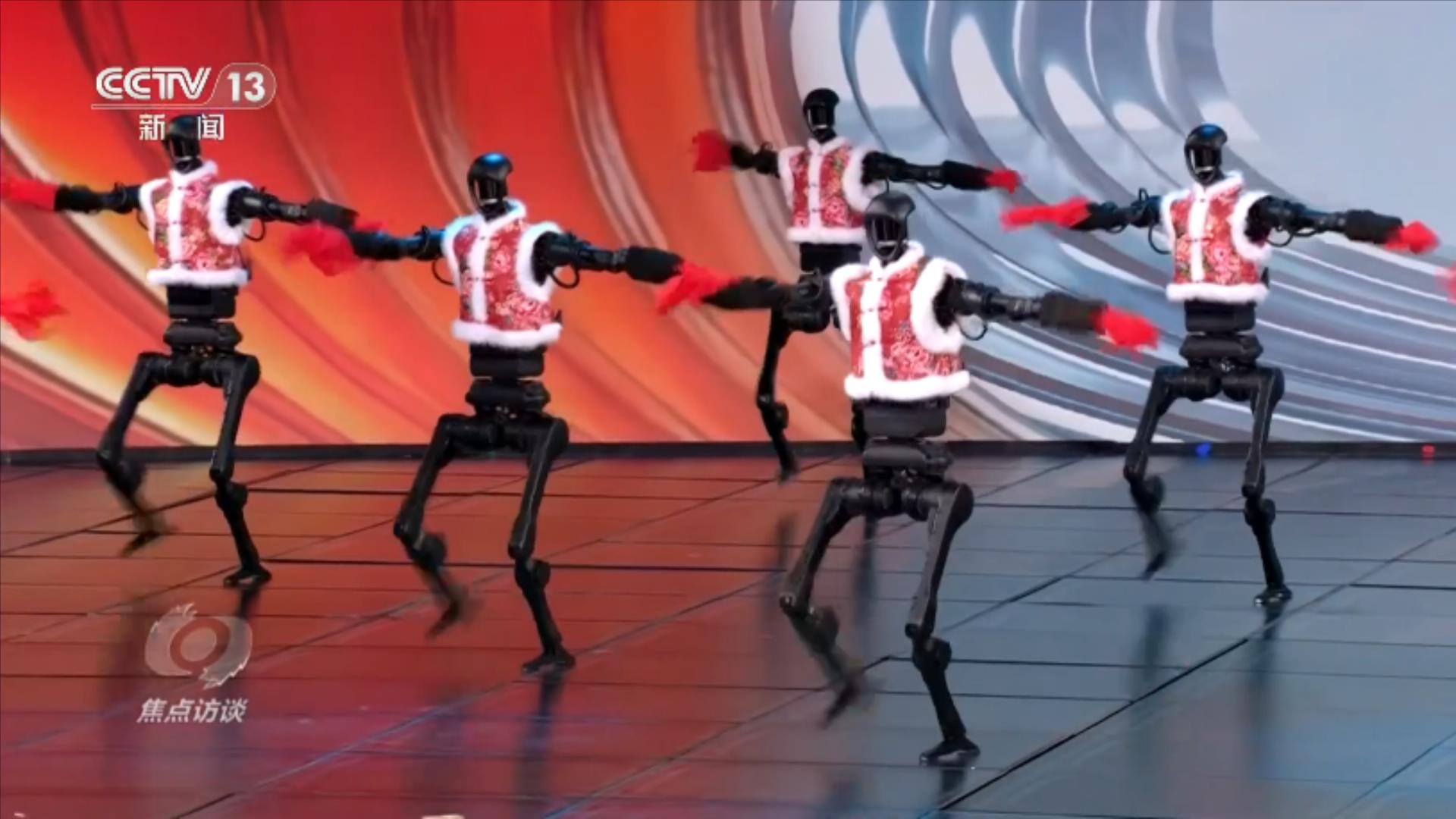
央视网消息(焦点访谈):现实中,有些新技术、新产品刚刚出现的时候,由于缺少"第一个吃螃蟹的人",应用案例少,应用效果也缺少验证支撑,导致它 们不太容易进入市场,出现"英雄无用武之地"的现象,有些"新技术"硬被拖成了"老技术"。去年11月7日,《关于加快场景培育和开放推动新场景大规模应 用的实施意见》发布,一个重要目的就是要解决类似这样一些问题。而场景就是把新技术、新产品、新业态放在一个具体情境中来应用、来验证,为新兴事 物提供展示应用的舞台,加快其产业化进程。那么,经过两个多月的加快实践,新场景大规模应用如何才能实现呢? 舞台上整齐划一,跳出优雅舞姿;手术台上精准操作,完成精密骨科手术……这是被大家称赞的典型机器人,在公众眼里,它们聪明、灵活、敏捷。这些较 为成熟的机器人在不同领域大放光彩。不过,很多机器人在初生时,是这样的:翻跟头时零件掉落,踉踉跄跄;马拉松赛场上跌跌撞撞,摔跤不断。从踉踉 跄跄到优雅舞姿的过程,是机器人不断学习进步的过程。 工作人员戴上VR头显,手握动作控制器,做出示范动作,机器人则跟着重复动作,在真实场景中完成搬箱子、分拣零件、做饭等工作。每一次训练都会产 生一条宝贵的训练数据,为算法迭 ...
中国无人驾驶“军团”,“武装”阿布扎比行业报告预测阿联酋自动驾驶市场规模
Mei Ri Jing Ji Xin Wen· 2026-02-02 13:08
Core Insights - The article highlights the rapid development and commercialization of autonomous driving technology in Abu Dhabi, driven primarily by Chinese companies [1][2][3] Group 1: Autonomous Driving Technology Development - Chinese companies, including WeRide and Baidu, have successfully launched the world's first fully autonomous Robotaxi service integrated with Uber in Abu Dhabi [2][3] - The testing of autonomous vehicles in extreme conditions has shown promising results, with WeRide achieving a daily driving distance of over 200 kilometers without human intervention [3] - The Abu Dhabi government has issued commercial operation licenses for fully autonomous vehicles, allowing companies like WeRide and Baidu to operate without safety drivers [3][4] Group 2: Government Support and Ecosystem - The Abu Dhabi government has adopted a proactive role in supporting autonomous driving initiatives, creating a collaborative ecosystem that integrates regulatory bodies, private sectors, and academia [5][6] - The establishment of the Smart and Autonomous Systems Committee facilitates efficient coordination among various departments to address operational challenges for autonomous vehicles [5][6] - The unique governmental approach has significantly reduced barriers to entry for Chinese companies, making Abu Dhabi an attractive destination for investment in autonomous driving technology [5][6] Group 3: Market Potential and Economic Impact - The operational model for Robotaxi in Abu Dhabi requires only 200 vehicles to achieve breakeven, significantly lower than the thousands needed in other markets, due to favorable market conditions [6][8] - Abu Dhabi aims to reduce its reliance on oil by investing in AI and autonomous driving, with a target for AI to contribute 335 billion dirhams (approximately 63.36 billion yuan) to GDP by 2031 [8][9] - The UAE's investment commitments in AI and autonomous driving exceeded $2 billion in the first half of 2025, indicating strong market potential [9][10] Group 4: Industry Growth and Future Prospects - The autonomous driving market in the UAE is projected to reach $2.73 billion by 2030, with a compound annual growth rate of 19.2% [10] - Chinese companies are positioned to become key players in the global autonomous driving sector, leveraging their technological advancements and operational models [10][12] - The presence of over 6,000 Chinese enterprises in the UAE, with a significant portion achieving profitability, underscores the growing influence of Chinese firms in the region's autonomous driving landscape [12][13]

中国无人驾驶“军团”,“武装”阿布扎比 行业报告预测阿联酋自动驾驶市场规模
Mei Ri Jing Ji Xin Wen· 2026-02-02 13:04
Core Insights - The article highlights the rapid development and commercialization of autonomous driving technology in Abu Dhabi, driven primarily by Chinese companies [2][3][12] - The collaboration between Chinese firms and the Abu Dhabi government has created a supportive ecosystem for autonomous vehicle operations, leading to significant advancements in the sector [5][8] Group 1: Autonomous Driving Developments - Chinese company WeRide has launched the world's first fully autonomous Robotaxi service integrated with Uber in Abu Dhabi, marking a significant milestone in the global autonomous driving landscape [2][3] - The autonomous vehicles operated by Chinese firms have demonstrated high reliability, with WeRide's Robotaxi achieving a daily driving distance of over 200 kilometers without human intervention [3] - During the "First Abu Dhabi Smart and Autonomous Technology Week," 29 commercial agreements related to autonomous driving were signed, with over 70% of partners being Chinese companies [3][8] Group 2: Government Support and Ecosystem - The Abu Dhabi government has adopted a proactive role in supporting autonomous driving initiatives, creating a unique model that integrates regulatory bodies, private sectors, and academia [5][6] - The establishment of the Smart and Autonomous Systems Committee has facilitated efficient coordination among various government departments to address operational challenges for autonomous vehicles [5][6] - The local market structure allows for a lower threshold for profitability, with only 200 vehicles needed for a Robotaxi service to break even, compared to the thousands required in other markets [6][8] Group 3: Market Potential and Future Outlook - The UAE's investment in artificial intelligence and autonomous driving is projected to reach over $2 billion in the first half of 2025, with a forecasted market size of $2.73 billion for autonomous driving by 2030 [8][9] - Chinese companies are expected to play a crucial role in driving the growth of the autonomous driving market, with the global market for autonomous systems projected to exceed $700 billion by 2032 [9][12] - The strategic initiatives in Abu Dhabi are part of a broader effort to diversify the economy away from oil dependency, positioning the region as a hub for smart manufacturing and technology [8][12]
2026年电子行业年度策略报告:AI主导的上行景气周期,寻找结构性投资机会
Guoyuan Securities· 2026-02-02 10:40
Market Outlook - The overall upturn in the semiconductor industry is expected to continue into 2026, driven by AI and storage chip price increases[26] - The A-share technology sector entered a recovery phase in January 2024 and transitioned to a prosperous phase in August 2024[11] - AI is anticipated to lead the next major cycle in the electronics industry, with structural investment opportunities emerging[11] Performance Metrics - Notable stock price increases for key semiconductor companies from January 1, 2025, to December 31, 2025, include Micron (240.1%), Lam Research (139.2%), and Intel (84.0%)[12] - A-share companies such as Industrial Fulian and Huahong Semiconductor saw stock price increases of 194% and 132%, respectively, in 2025[13] Demand Dynamics - AI infrastructure has not yet significantly boosted downstream demand, despite strong performance in AI-related sectors[39] - The semiconductor industry is experiencing a recovery, with storage and foundry sectors showing notable growth[22] Investment Recommendations - The report maintains a "Buy" rating, emphasizing the importance of AI and storage as key growth drivers for the semiconductor industry[1] - Investment strategies should focus on companies involved in AI chip production and semiconductor equipment, as these sectors are expected to benefit from increased demand[43] Economic Indicators - The semiconductor market is projected to grow significantly, with total sales expected to reach $774 billion by 2025, reflecting a year-over-year growth rate of 23.2%[28] - The global semiconductor sales growth cycle is showing positive trends, particularly in Europe and the Asia-Pacific region, driven by AI and storage chip demand[22]




汽车行业周报:特斯拉举行2025Q4业绩财报会,比亚迪天神之眼5.0辅助驾驶发布-20260202
Guohai Securities· 2026-02-02 08:02
Investment Rating - The report maintains a "Recommended" rating for the automotive industry [1] Core Insights - Tesla's total revenue for 2025 was $94.827 billion, a 3% year-on-year decline, marking its first revenue drop. The net profit for the year was $3.794 billion, down 46% year-on-year. In Q4 2025, total revenue was $24.901 billion, also down 3%, with a net profit of $840 million, down 61% year-on-year. Tesla plans to focus on autonomous driving, robotics, and AI, with a new model, Cybercab, set to launch in April 2026 [5][13] - BYD launched its Tian Shen Zhi Yan 5.0 advanced driver assistance system, which incorporates enhanced learning capabilities and claims to improve driving stability and response times. As of December 31, 2025, BYD's assisted driving vehicle ownership exceeded 2.56 million, generating over 160 million kilometers of data daily [6][14] - The automotive industry is expected to face challenges in 2026 due to the reduction of new energy vehicle purchase tax incentives and trade-in subsidies. However, there are opportunities in the high-end upgrade of domestic brands and the acceleration of smart technology integration [15][16] Summary by Sections Recent Developments - Tesla held its Q4 2025 earnings call on January 29, 2026, announcing a strategic focus on autonomous driving and AI, with plans for significant capital expenditures exceeding $20 billion in 2026 [5][13] - BYD's Tian Shen Zhi Yan 5.0 was announced on January 28, 2026, featuring a new technology framework for enhanced learning capabilities [6][14] Market Performance - From January 26 to January 30, 2026, the automotive sector underperformed the Shanghai Composite Index, with the automotive index down 5.1% compared to a 0.4% decline in the Shanghai Composite [17][24] Industry Trends - The report highlights a shift towards high-end domestic brands and the integration of smart technologies in the automotive sector, recommending companies such as Jianghuai Automobile, Leap Motor, Great Wall Motors, and BYD for investment [15][16]

何小鹏内部分享:智能座舱和智能驾驶会技术合流,组成“超级智能体”|36氪独家
3 6 Ke· 2026-02-02 07:53
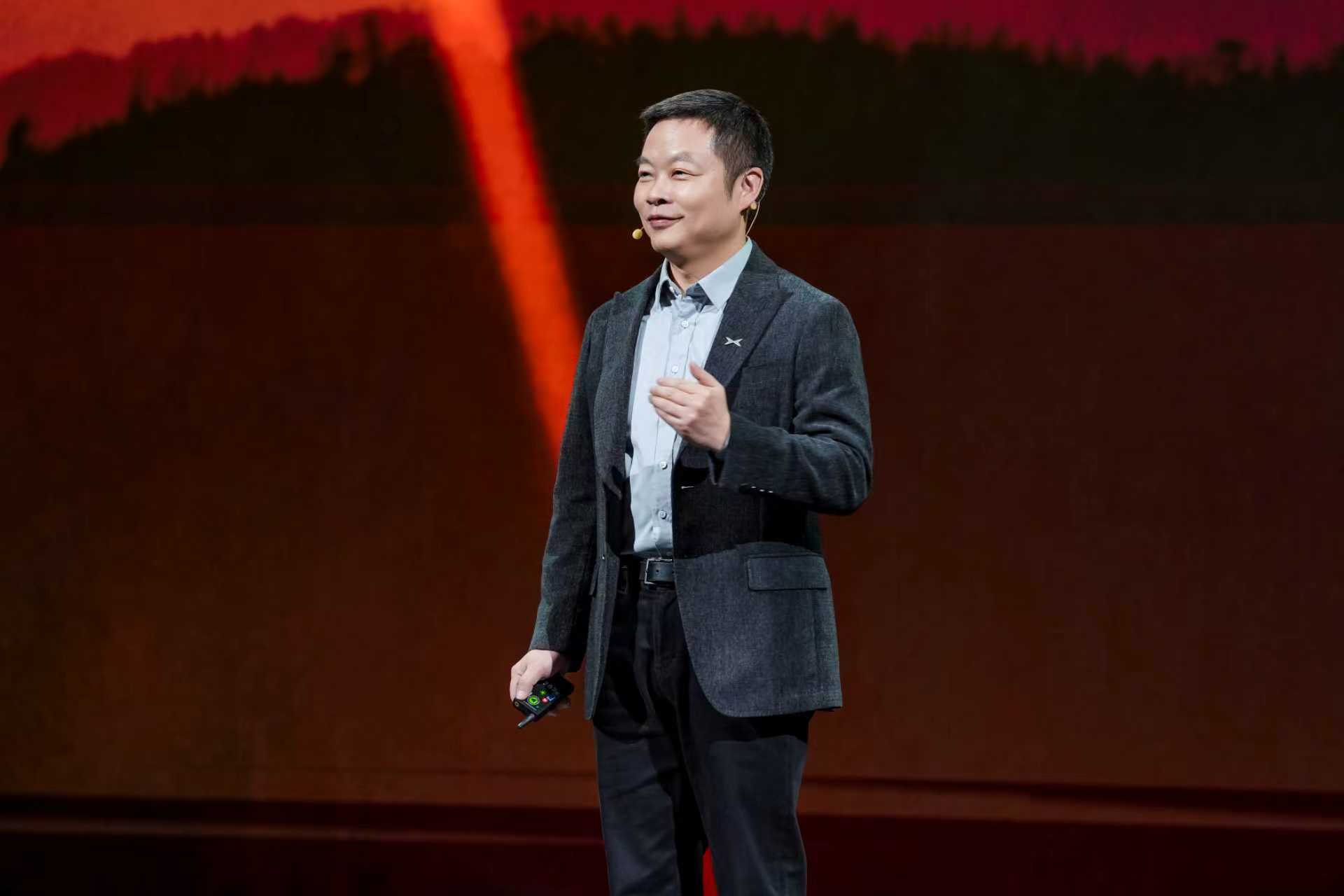
Core Insights - The chairman and CEO of XPeng Motors, He Xiaopeng, outlined the company's technological path and growth direction for the next phase, emphasizing 2026 as a critical year for the commercialization of physical AI [2][3] - He believes the automotive industry is entering a new phase of deep integration with AI, where smart cockpits and intelligent driving will converge to form a super intelligent entity [4][6] Strategic Focus - The primary focus is on scale growth, with three core growth curves: automotive, robotics, and globalization, aiming for full-stack self-research in physical AI technologies to achieve technological premium [3][7] - The period from 2026 to 2028 is identified as a key phase, with the core tasks being to solidify scale, globalization, and AI capabilities while ensuring operational quality [8] AI and Robotics Integration - He Xiaopeng predicts that AI will drive significant changes in the automotive industry, particularly in accelerating autonomous driving and deep integration with robotics [4][6] - The second-generation VLA is highlighted as a crucial technological milestone for XPeng in the autonomous driving sector, with confidence in its ability to create a super intelligent entity [4][5] New Strategic Guidelines - Four new strategic guidelines were proposed: prioritizing scale growth while innovating business models, focusing on automotive, robotics, and globalization, achieving full-stack self-research in physical AI, and establishing a new business model with agent effects [6][7] Talent and Organizational Development - XPeng plans to increase talent investment significantly, with a target of hiring 5,000 new campus talents by 2026, and a notable portion of AI-related positions offering salaries reaching one million [8][9] - The company emphasizes internal growth paths for its core and senior management as it scales up, indicating a focus on organizational stability [9][10]

自动驾驶芯片研发商迎重磅股东,剑指主流车规芯片?
Sou Hu Cai Jing· 2026-02-02 07:38
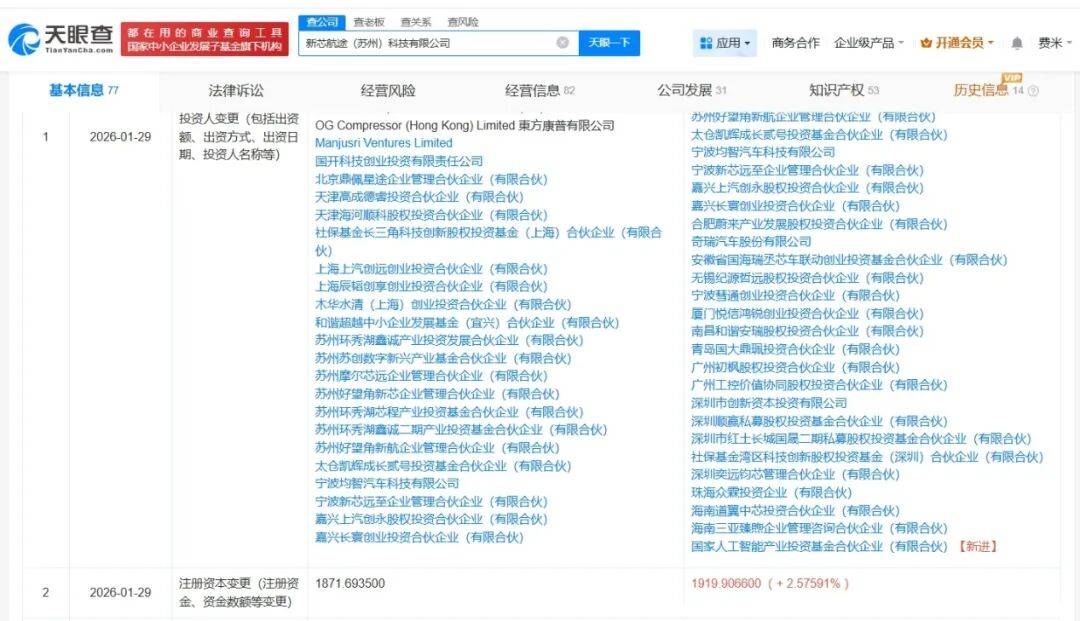
Company Overview - New Chip Navigation (Suzhou) Technology Co., Ltd. has undergone a business change, adding the National Artificial Intelligence Industry Investment Fund Partnership (Limited Partnership) as a shareholder [1] - The registered capital has increased from approximately 18.717 million RMB to about 19.199 million RMB, reflecting a growth of approximately 2.58% [1] Business Activities - The company was established in December 2023 and is engaged in technology promotion and application services, software development, integrated circuit chip design and services, and sales of integrated circuit chips and products [1] - New Chip Navigation focuses on integrated circuit chip design and autonomous driving technology research and development, targeting the market for vehicles priced between 200,000 to 300,000 RMB [1] Shareholder Structure - The current shareholders include Suzhou Good Hope New Chip Enterprise Management Partnership (Limited Partnership), Shanghai SAIC Chuangyuan Venture Capital Partnership (Limited Partnership), and the newly added shareholder [1]