
数字经济

Search documents
征税200%后,特朗普或对北约开刀,24小时内,英法对华求援
Sou Hu Cai Jing· 2026-01-26 07:57
Group 1 - Trump has decided to impose a 200% tariff on French champagne and wine, which are significant revenue sources for France, as a response to Macron's refusal to join his peace committee [3][5] - The potential cuts to NATO personnel, with at least 200 positions possibly being eliminated, raise questions about NATO's ability to protect European interests [3][5] - Trump's actions are seen as a dual strategy to pressure European nations into joining his peace committee and to align with U.S. interests regarding Greenland [5] Group 2 - In a surprising turn, both the UK and France have expressed intentions to strengthen economic ties with China, seeking assistance in light of U.S. tariff threats [7][9] - Macron emphasized the importance of developing green energy and digital economy sectors, positioning China as a favorable partner for investment in Europe [7] - The UK has recently resolved a dispute with China regarding the location of its embassy, indicating a shift towards enhancing cooperation with China [9]


杭钢股份发预盈,预计2025年年度归母净利润2200万元左右
Zhi Tong Cai Jing· 2026-01-26 07:56
Core Viewpoint - Hangzhou Steel Group Co., Ltd. (600126.SH) is expected to achieve a net profit of approximately 22 million yuan for the year 2025, marking a turnaround from losses in the previous year [1] Group 1: Steel Industry Performance - The steel industry is experiencing a recovery in overall efficiency, but still faces challenges such as insufficient effective demand, weakening export expectations, and prominent supply-demand contradictions [1] - The company is implementing a "low cost, high efficiency" operational strategy to mitigate losses in its steel business, focusing on optimizing production organization, improving technical and economic indicators, and promoting cost reduction and efficiency enhancement across the entire process [1] Group 2: Digital Economy Initiatives - The company is actively advancing a dual-driven strategy of "smart manufacturing + digital economy," with previously established digital economy businesses beginning to yield benefits, contributing to an overall improvement in performance [1]

北京:全面实施“人工智能+”行动,人工智能AIETF(515070)持仓股芯原股份大涨超7%
Mei Ri Jing Ji Xin Wen· 2026-01-26 06:20
Group 1 - A-shares in sectors such as non-ferrous metals, gold, and securities insurance performed well, while the commercial aerospace sector experienced significant adjustments [1] - The AI industry chain showed differentiation, with AI ETF (515070) holdings like Chip Origin Co., Ltd. rising over 7%, and other stocks such as Huahuan New Network and Runze Technology also seeing gains [1] - Beijing aims to vigorously develop high-tech industries, focusing on expanding integrated circuit projects, building an international pharmaceutical innovation park, and promoting green advanced energy and new energy vehicles [1] Group 2 - Industry analysts at Industrial Securities believe that ample liquidity is the core driving force behind the current spring market rally, supported by new insurance premiums and the return of overseas funds due to RMB appreciation [2] - The upcoming peak of annual report disclosures for A-share companies, along with the concentrated release of North American tech giants' earnings, is expected to significantly impact market structure [2] - The AI industry chain's software sector plays a crucial role in both midstream technology and downstream application layers, providing essential AI frameworks, development platforms, and algorithm models [2]

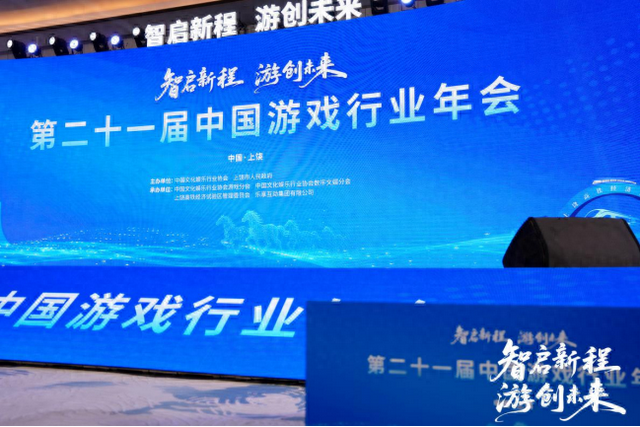
第21届中国游戏行业年会圆满落幕
Xin Lang Cai Jing· 2026-01-26 03:34
1月23日,以"智启新程·游创未来"为主题的第21届中国游戏行业年会在江西上饶高铁经济试验区成功举 办。本届年会由中国文化娱乐行业协会与上饶市人民政府共同主办,汇聚行业多方力量,共同探讨游戏 产业高质量发展路径。 文化和旅游部市场管理司相关同志、产业发展司相关代表,中国文化娱乐行业协会会长代柳梅,江西省 文化和旅游厅二级巡视员刘昌兵,上饶市人民政府党组成员、副市长解鸳,上饶高铁经济试验区党工委 书记李书铭,北京大学原副校长张国有、中央财经大学文化经济研究院院长魏鹏举,以及超300余位 产、学、研、资、媒多方行业领军人物与专家共赴盛会,围绕游戏产业高质量发展深度研讨,探索以新 质生产力驱动数字文娱产业升级、向"科技—文化—经济"三位一体赋能型生态跃升的实践路径。 大会通过主题演讲、圆桌对话、报告发布、项目签约等多元形式,搭建起凝聚行业共识、研判发展趋 势、精准对接资源、集中展示成果的高端交流合作平台,为游戏产业深度融合实体经济、赋能文化强国 与数字中国建设注入强劲澎湃的发展动力。 年会开幕式上,相关政府及行业协会领导深刻阐释国家数字经济发展战略与产业政策导向,高度肯定游 戏行业在文化传承创新与赋能实体经济中的独 ...
创新动能拉满!解锁朝阳新质生产力发展密码
Bei Jing Ri Bao Ke Hu Duan· 2026-01-26 03:10
Core Viewpoint - The development of new quality productivity is an inherent requirement and important focus for promoting high-quality development in Chaoyang District, leveraging technological innovation to build a modern industrial system and stimulate new regional development momentum [1] Group 1: Industry Development - Chaoyang District has implemented action plans for Internet 3.0 (metaverse), digital healthcare, artificial intelligence, data elements, and intelligent robotics, enhancing the development capabilities of the digital economy core area [2] - The district has established a robust cluster of leading industries, with over 700 artificial intelligence companies and more than 1,000 enterprises in the industrial internet sector, supported by major internet platforms like Alibaba and Meituan [3][4] - The digital economy computing power center has been completed, achieving a computing capacity of 1000 PFlops, and the first AIGC audiovisual industry innovation center has been established [3] Group 2: Technology Innovation and Transformation - Chaoyang District is enhancing its technology innovation capabilities by establishing a technology innovation development belt and launching various innovation centers, resulting in over 200 technology innovation enterprises [7] - The district has invested over 1.6 billion yuan in technology industry funding during the 14th Five-Year Plan period, supporting more than 2,500 enterprises [9] - A financial service team comprising nearly 200 partners has been formed to provide credit support exceeding 12 billion yuan for technology-based SMEs [9] Group 3: Application and Internationalization - The district is actively constructing diverse application scenarios, including the establishment of the Internet 3.0 application scenario research institute and various metaverse benchmark application cases [13] - Chaoyang has been recognized as the first "International Technology Organization Headquarters Cluster," attracting 15 international technology organizations and hosting over 100 international exchange activities [14] - The district has established international technology service stations in 12 countries and regions, covering over 20 countries [13] Group 4: Reform and Innovation - Chaoyang District is enhancing its technology park construction and reforming its management structure to support sustainable development in technology innovation and new quality productivity [16][18] - The district is focusing on improving the quality of park development, with plans to integrate large areas into national and municipal high-tech zones [19] - The district aims to build a highland for the transformation of cutting-edge technology achievements and international cooperation by 2025 [21] Group 5: Performance Metrics - By the first ten months of 2025, the combined GDP contribution of information services, technology services, and industrial added value reached 27.7%, an increase of 6.3 percentage points from the end of the 13th Five-Year Plan [22] - The district has established 23 specialized industrial parks, with 9 recognized by municipal departments, and has a significant number of national high-tech enterprises and specialized small and medium-sized enterprises [22]
我国专利含金量不断提升
Xin Hua Wang· 2026-01-26 02:58
Core Insights - The core focus of the news is on the progress of intellectual property work in China by 2025, highlighting significant increases in patent grants, trademark registrations, and the overall quality of patents [1][2]. Group 1: Patent and Trademark Statistics - By 2025, China authorized 972,000 invention patents, received 78,000 PCT international patent applications, and registered 4.206 million trademarks [1]. - By the end of 2025, the effective number of domestic invention patents in China (excluding Hong Kong, Macau, and Taiwan) is expected to reach 5.32 million, with a high-value invention patent ownership rate of 16 per 10,000 people [1]. Group 2: Quality Improvement Measures - The National Intellectual Property Administration (NIPA) has implemented various measures to enhance patent quality, including adjusting indicators to focus on high-value patents and eliminating financial subsidies for patent applications [2]. - NIPA has emphasized the importance of practical value and technological content in patents, discouraging the "quantity over quality" approach [2]. Group 3: Industry Contributions - Enterprises have become the main contributors to high-value invention patents, with 280,000 companies holding 1.764 million high-value invention patents, accounting for over 75% of the total [4]. - The value added by patent-intensive industries has increased from 12 trillion yuan in 2020 to over 18 trillion yuan in 2024, contributing significantly to GDP growth [4]. Group 4: Employment and Economic Impact - The employment in patent-intensive industries reached 52.67 million in 2024, an increase of approximately 1.9 million from the previous year, demonstrating a positive impact on economic stability and job creation [4]. - The digital economy-related industries within patent-intensive sectors have seen a continuous increase, with the combined value added of information and communication technology manufacturing and services exceeding 8 trillion yuan, accounting for over 40% of the total [5].
以城乡居民增收计划 推动经济发展和民生改善良性循环
Jin Rong Shi Bao· 2026-01-26 02:16
Core Viewpoint - The Urban and Rural Residents' Income Increase Plan is a strategic initiative aimed at addressing income distribution issues and promoting high-quality development in China, marking a shift from partial to systemic reforms in income distribution policy [1][2]. Group 1: High-Quality Development - The Urban and Rural Residents' Income Increase Plan is essential for high-quality development, which requires both qualitative improvements and reasonable quantitative growth, ensuring that economic growth meets the people's increasing needs for a better life [3]. - High-quality development is identified as the primary task of Chinese modernization, addressing imbalances in development across urban-rural, regional, and economic-social dimensions [3]. Group 2: New Development Pattern - The plan serves as a core driver for establishing a new development pattern, emphasizing the need for a robust domestic economic cycle to counter international uncertainties [4]. - The current economic environment faces challenges such as weak domestic demand and a significant drop in retail sales growth, necessitating a focus on increasing residents' income to stimulate consumption [4]. Group 3: Path to Common Prosperity - The plan is a critical pathway to achieving common prosperity, which is a fundamental requirement of socialism, aiming to reduce income disparities across urban-rural and regional lines [5]. - The goal is to enhance the overall income of urban and rural residents while narrowing the income gap, thereby promoting a more equitable distribution of wealth [5]. Group 4: Income Sources and Challenges - Residents' income primarily comes from four sources: wage income (56.6%), operating income (16.7%), property income (8.0%), and transfer income (18.6%) [6]. - Wage income disparities are widening, particularly between industries, with significant differences in average wages across sectors [6][7]. - Property income growth has slowed, with a notable decline in its share of total income, influenced by fluctuations in the real estate market and stock market performance [7]. - Operating income faces pressures from economic downturns and increased competition, particularly affecting small businesses and individual entrepreneurs [8]. - Transfer income has seen rapid growth but remains uneven, with significant disparities in pension benefits across different demographics [9]. Group 5: Implementation Pathways - The plan's implementation involves promoting high-quality employment, enhancing the initial distribution of national income, and improving the social security system [10][11][12]. - Employment stability is prioritized, especially for vulnerable groups such as recent graduates and migrant workers, to ensure a steady source of wage income [11]. - Adjustments to the distribution of national income are necessary to increase the share of residents' income and labor remuneration, addressing the current imbalances in income distribution [12]. - The social security system plays a crucial role in increasing transfer income, with a focus on improving pension benefits and ensuring equitable access across different groups [13]. - Expanding channels for property income is essential, particularly in light of the current challenges in the real estate market and financial asset management [14]. - Coordinated development between urban and rural areas is emphasized, with a focus on increasing income for low-income groups and promoting rural modernization [15].
奋楫踏浪挑大梁 解码山东GDP突破十万亿元背后的发展新篇
Xin Hua Wang· 2026-01-26 02:13
Economic Growth and Development Goals - Shandong Province aims to achieve a GDP of 10.3 trillion yuan by 2025, marking it as the first northern province and the third nationwide to surpass 10 trillion yuan in GDP [1] - The province's agricultural, forestry, animal husbandry, and fishery output value is projected to reach 1.3 trillion yuan by 2025, with 36 out of 41 industrial categories expected to see growth [6] Innovation and Industrial Transformation - Jinan Steel Group's transformation from steel production to becoming a leader in liquid rocket engine testing and satellite assembly exemplifies Shandong's push for new productive forces [4] - Shandong is advancing technology and industrial innovation, with significant investments in traditional industry upgrades and the cultivation of emerging industries [5] Digital Economy Development - The digital economy now accounts for a substantial portion of Shandong's economy, with the province promoting 300 key digital industry projects and establishing numerous national-level digital enterprises and platforms [6] - The rollout of 30,000 new 5G base stations has brought the total to 272,000, enhancing the province's digital infrastructure [6] Green and Low-Carbon Initiatives - Shandong is focusing on green and low-carbon development, with non-fossil energy accounting for 54.2% of installed capacity, an increase of 23.4 percentage points since 2020 [8] - The province is implementing various energy-saving and carbon-reduction policies, achieving over 35% of production capacity meeting energy efficiency benchmarks [8][9] Reform and Open Market Initiatives - Shandong is enhancing its business environment through reforms such as online processing for market supervision and the establishment of a "no proof province" initiative [11][12] - The province aims for a 4.5% growth in foreign trade by 2025, with significant participation in international trade events and the establishment of quality foreign investment projects [12]
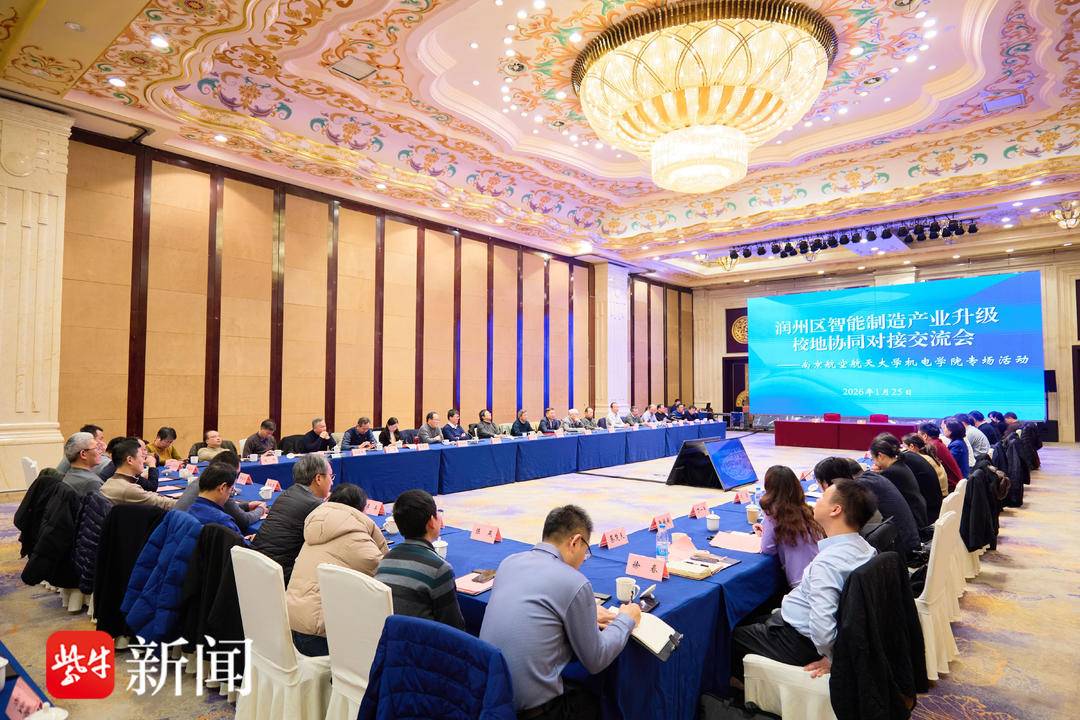
南航智慧赋能润州智造 ,镇江润州区智能制造校地协同对接会圆满举行
Yang Zi Wan Bao Wang· 2026-01-26 02:12
Core Viewpoint - The collaboration between Zhenjiang Runzhou District and Nanjing University of Aeronautics and Astronautics (NUAA) aims to enhance the development of intelligent manufacturing and align academic research with regional industrial needs, fostering high-quality growth in the smart manufacturing sector [1][5]. Group 1: Event Overview - The event held on January 25 focused on deepening cooperation between the local government and NUAA, emphasizing the transformation of academic research into practical applications in the manufacturing industry [1][3]. - Key attendees included district officials and leaders from NUAA, highlighting the importance of this collaboration for regional development [3][6]. Group 2: Strategic Goals - Runzhou District is implementing a "three-year action plan for industrial upgrading," focusing on digital economy and productive services, with intelligent manufacturing as a core driver [5][6]. - The district aims to create a modern urban economic industrial system characterized by "2+3+X" layout, which includes intelligent manufacturing, cultural tourism, and modern commerce [5]. Group 3: Collaboration Focus Areas - The partnership will focus on three main areas: empowering digital transformation in industries, developing low-altitude economy opportunities, and optimizing collaborative innovation mechanisms [5][6]. - The goal is to establish a high-level scientific and technological innovation platform that integrates production, education, and research, facilitating the transition of laboratory results to production lines [6][8]. Group 4: Institutional Agreements - A cooperation intention agreement was signed between NUAA and Runzhou, marking a new phase of systematic and regular collaboration aimed at achieving mutual benefits and development [6][8]. - The agreement emphasizes addressing industrial pain points and aligning academic capabilities with local business needs to enhance the manufacturing sector's value chain [6][8].
加强对话合作,共促包容性增长(国际视点)
Ren Min Ri Bao· 2026-01-26 02:04
Group 1: Economic Outlook and Risks - The World Economic Forum (WEF) 2026 Annual Meeting concluded with a consensus that the global economy is at a critical juncture, with artificial intelligence, green transition, and digital economy emerging as key growth engines [1] - The WEF's Global Risk Report 2026 identifies geopolitical economic confrontation as the primary global risk, followed by regional armed conflicts, extreme weather events, social polarization, and the spread of misinformation [2] - 53% of chief economists surveyed believe that the global economy will face multiple uncertainties in the coming year, with risks from asset revaluation volatility and debt accumulation intertwining with geopolitical economic restructuring and AI technology application [2] Group 2: Importance of Dialogue and Cooperation - The WEF emphasizes the necessity of dialogue to bridge divides and stabilize expectations, advocating for collaborative efforts to promote inclusive growth [3] - Experts express strong concerns about protectionism and unilateralism, stating that such policies undermine global innovation and exacerbate development imbalances, particularly affecting developing countries [3][4] - The WEF calls for enhanced global cooperation to address the challenges posed by fragmentation and to support institutions like the WEF, World Bank, and WTO in managing uncertainties [4] Group 3: Technological Advancements and Governance - The WEF's report on the future of the new economy highlights that technological progress and geopolitical dynamics will shape the global economy by 2030, necessitating collaborative governance to address new risks [5] - The rise of AI and geopolitical fragmentation is redefining global cybersecurity risks, requiring international cooperation to establish unified governance rules for new technologies [5][6] - Experts advocate for a global technology governance system to prevent misuse of new technologies and ensure equitable access to development opportunities [6]