耐心资本

Search documents
保险业提升服务实体经济质效
Jing Ji Ri Bao· 2025-07-03 22:03
Core Insights - The insurance industry in China is experiencing significant growth, with total assets reaching 37.8 trillion yuan by the end of Q1 2025, an increase of 1.9 trillion yuan or 5.4% from the beginning of the year [1] Investment Strategies - Insurance funds are diversifying their investment channels, including bonds, stocks, mutual funds, and infrastructure projects, with a focus on supporting social welfare initiatives [2] - China Life Asset Management has invested over 240 billion yuan in social welfare projects, marking a 160% increase from the initial phase of the 14th Five-Year Plan [2] Project Highlights - China Life Asset Management's investment in the Qinghai Yellow River Company, a major power generation firm, includes a 90 billion yuan equity investment, supporting renewable energy initiatives [3] - The "photovoltaic + ecological" model implemented in Qinghai has led to an 80% increase in vegetation coverage and a reduction of 100 square kilometers of desertified land [3] Investment Management Mechanisms - China Life Asset Management has established a comprehensive investment management framework, utilizing a dual-line allocation strategy and a multi-dimensional evaluation model to enhance project selection [4] - The company is increasing financing support for key infrastructure projects in water conservancy, transportation, and logistics [4] Regulatory Environment - Recent government policies encourage insurance funds to engage in long-term investments, allowing for greater flexibility in investment strategies [5] - In October 2023, regulatory approval was granted for China Life and Xinhua Insurance to establish a 500 billion yuan securities investment fund [5] Private Fund Initiatives - Xinhua Insurance and China Life are jointly investing 200 billion yuan in a private fund, with further commitments to additional funds totaling 225 billion yuan [6][7] - The focus of these funds is on long-term investments in stable, high-dividend blue-chip companies [7] Foreign Investment Trends - The entry of foreign asset management firms, such as Allianz, is reshaping the landscape, emphasizing the need for diversified investment strategies to balance risk and return [8] - AIA Insurance is establishing its asset management company to enhance investment efficiency and support long-term development in the Chinese market [9] Regulatory Changes for Foreign Investment - Recent regulatory revisions have removed restrictions on foreign ownership in insurance asset management, facilitating greater foreign participation in the market [10] - The challenges faced by long-term capital management include declining investment returns and the need for improved asset allocation capabilities [10]
清科倪正东:创投市场止跌向好
投资界· 2025-07-03 09:21
中国创投市场最新变化。 报道 I 投资界PEdaily 见证创投行业变迁,由清科创业、投资界联合主办的第十九届中国基金合伙人大会于7月3- 4日在上海举办。本届大会汇聚资本掌舵 者,共叙行业趋势,透视中国LP市场最新动态,探寻新周期下的创投之路。 会上,清科集团创始人、董事长,清科创业CEO倪正东带来主题演讲,透过清科研究中心新鲜出炉的数据回顾2025上半年中国股权投 资行业的境况,分享关于中国创投最一线的观察。 以下为演讲实录, 经投资界(ID:pedail y 2012)编辑: 又到年中相逢,感谢大家参加一年一度的中国基金合伙人峰会。转眼间,清科的年中峰会已经走过19届,见证了这个行业的浮沉变 迁。 记得当年我们第一届峰会也是在上海,那时论坛上几乎一半嘉宾是外资面孔,如今,我们这个行业外资身影远去——这算是行业变化 的一个缩影。 先看整体基金备案情况 。截至上半年,中基协备案管理人近1. 19万家,比2024年减少了275家;今年上半年注销基金管理人 超 30 0 家,新增只有47家,变化明显—— 注销的基金多了 。这意味着市场正在加速出清。 春 江 水 暖 看 募 资 。 202 5 年 第 一 季 度 ...


★"6群13链"续写新传奇 千年商埠扬州迈向"双万亿"
Zheng Quan Shi Bao· 2025-07-03 01:56
Core Insights - Yangzhou is leveraging its historical significance and modern industrial strategies to achieve economic growth, targeting a GDP of over 1 trillion yuan by 2025 [1][4] - The city has established a "6 clusters and 13 chains" industrial system to drive high-quality development and innovation [2][3] Industrial Development - Yangzhou's industrial sales are projected to reach 912.4 billion yuan in 2024, marking a significant increase from 612.6 billion yuan [4] - The city aims to surpass 1 trillion yuan in industrial sales by 2025, with a focus on advanced manufacturing and emerging industries [2][8] - The "6 clusters" include high-end equipment, new energy, new materials, new generation information technology, automotive components, and life health [2][3] Innovation and Technology - The aviation industry in Yangzhou has grown to include 63 enterprises, generating 18.4 billion yuan in sales in 2024 [2] - Significant investments in R&D, such as the 3 billion yuan Aviation Technology Laboratory, aim to create a billion-level aviation industry cluster [1][2] - The city has seen a 54.6% increase in high-tech enterprises, with high-tech industries accounting for a larger share of industrial output [4] Investment and Capital - Yangzhou has established a fund cluster with a total scale of 94.1 billion yuan to support new industrial developments [8] - The city is actively promoting the listing of local companies, with 24 listed companies and 28 on the New Third Board [9] - The government is fostering a favorable investment environment, attracting nearly 1,500 foreign enterprises in recent years [10][11] Cultural and Economic Integration - Yangzhou's cultural heritage, exemplified by the "Smoke and Flowers" international economic and trade tourism festival, enhances its economic appeal [10] - The city is focusing on integrating cultural tourism with industrial development to create a unique economic landscape [10]
这个省政府基金新规来了,没有规定管理费
母基金研究中心· 2025-07-02 11:22
Core Viewpoint - The article discusses the implementation of the "Implementation Opinions on Promoting the High-Quality Development of Government Investment Funds" by the Zhejiang Provincial Government, which aligns with the national guidelines aimed at enhancing the development of government investment funds [1][2]. Group 1: Key Measures and Innovations - The "Implementation Opinions" introduce innovative measures, including extending the lifespan of industrial investment funds to a maximum of 15 years and venture capital funds to 20 years, reflecting a commitment to "patient capital" [4][6]. - "Patient capital" is characterized by long-term support, high risk tolerance, and the ability to endure failures, which is essential for adapting to the lengthy and uncertain cycles of technological innovation [4][6]. - The article highlights the need for long-term capital and patient capital, as current financial supply mechanisms are still short-term focused and lack sufficient risk tolerance [6]. Group 2: Fund Management and Oversight - The "Implementation Opinions" emphasize granting fund managers more autonomy in market operations without administrative interference in daily management and investment decisions [7]. - Measures for underperforming funds include changing fund managers, management teams, forced liquidation, and early exit options, which aim to enhance accountability and performance [7][9]. - The article notes the importance of a collaborative regulatory framework to ensure effective execution of policies related to fund oversight and error tolerance [8][9]. Group 3: Fund Structure and Development - Zhejiang has established a "4+1" special fund model, focusing on four major trillion-yuan industrial clusters and a "specialized, refined, distinctive, and innovative" mother fund [11][12]. - By the end of 2024, Zhejiang had set up 17 special funds with a target total scale of 72.5 billion yuan, including 12 industrial cluster funds and 3 science and technology mother funds [13][14]. - The article emphasizes that the establishment of a billion-level advanced manufacturing fund cluster in Zhejiang is scientifically reasonable and can serve as a model for nationwide development [14]. Group 4: Industry Trends and Future Outlook - The article indicates that since last year, Zhejiang has become a focal point for VC/PE fundraising, attributed to its strategic integration of industrial funds with local characteristics [15]. - The introduction of the "Implementation Opinions" is expected to lead to more standardized, market-oriented, and professional development of mother funds in Zhejiang [16].

浙江:积极争取全国社会保障基金、保险资金以及各类国家级基金在浙江省落地或联合设立子基金
news flash· 2025-07-02 04:01
Core Viewpoint - The document outlines the implementation opinions of the Zhejiang Provincial Government Office on promoting the high-quality development of government investment funds, emphasizing the importance of developing patient capital and leveraging government investment funds as long-term and patient capital for cross-cycle and counter-cyclical adjustments [1] Group 1 - The government investment funds will play a crucial role in supporting long-term investments and ensuring continuity in investment for enterprises [1] - There is a focus on attracting national social security funds, insurance funds, and various national-level funds to establish or co-establish sub-funds in Zhejiang Province [1] - The policy allows for follow-up investments and reasonable extensions of the fund's duration in areas requiring long-term layout, ensuring the sustained development of invested enterprises [1]
创新药王炸新政出台,行业重大拐点已至
3 6 Ke· 2025-07-02 01:27
Core Viewpoint - The release of the "Several Measures to Support the High-Quality Development of Innovative Drugs" marks a significant shift in China's pharmaceutical policy from "squeezing out excess" to "promoting innovation," indicating a new phase for the industry [2][20][22]. Group 1: Support for Innovative Drug Development - The new policy provides comprehensive support across the entire chain of innovative drug development, addressing challenges from research and investment to insurance access and clinical application [2][3]. - The measures aim to foster a landscape of "true support for innovation, support for genuine innovation, and support for differentiated innovation" to combat the issue of homogenization in the industry [3][22]. - The introduction of healthcare data for innovative drug research is a breakthrough, allowing companies to better identify unmet clinical needs and enhance research efficiency [4][5]. Group 2: Capital and Investment - The need for patient capital is emphasized, as the typical investment fund lifespan does not align with the long development cycles of innovative drugs [6][7]. - The government is encouraging commercial health insurance to expand investment in innovative drugs, providing a new avenue for long-term funding [6][7][8]. Group 3: Payment and Insurance Integration - The integration of innovative drugs into the insurance payment system is crucial for commercialization, with significant improvements noted in the speed of new drug inclusion in insurance coverage [10][11]. - The establishment of a commercial health insurance directory for innovative drugs is a substantial step forward, allowing for better alignment with the national insurance directory [11][14]. - Policies are being developed to facilitate the clinical application of innovative drugs, addressing barriers that have previously hindered their use in medical institutions [16][19]. Group 4: Future Directions - The new measures are designed to ensure that genuine innovative projects receive the necessary support from healthcare data, investment, and diversified payment systems, fostering a virtuous cycle in the industry [22]. - The focus on clinical value and the need for precise support for innovation will likely lead to more effective outcomes in the application of innovative drugs [22].
资本市场将继续打好支持创新“组合拳”
Zhong Guo Zheng Quan Bao· 2025-07-01 21:04
Core Viewpoint - The article highlights the increasing support from the capital market for technology innovation, emphasizing the successful IPO of He Yuan Bio and the ongoing reforms aimed at enhancing the inclusivity and adaptability of the market for tech companies [1][2]. Group 1: Market Reforms and Innovations - The capital market is undergoing reforms to enhance its inclusivity and adaptability, with new policies such as the "1+6" policy and the establishment of a green channel for sci-tech bonds [2][3]. - The successful IPO of He Yuan Bio marks a significant milestone as it is the first company to pass the review under the new listing standards of the Sci-Tech Innovation Board [1][2]. - The A-share market is increasingly focusing on technology enterprises, with a notable rise in fundraising activities in sectors like automotive, hardware, and electrical equipment [1][2]. Group 2: Mergers and Acquisitions - The article notes a surge in merger and acquisition activities, with 103 companies disclosing M&A events by July 1, significantly higher than the previous year [3]. - A substantial portion of major restructuring events in 2024 is concentrated in the telecommunications, media, technology, and high-end equipment manufacturing sectors, indicating a trend towards horizontal expansion and vertical integration among "hard tech" companies [3][4]. - New measures such as simplified review processes and installment payment mechanisms for share exchanges are expected to enhance the competitiveness of tech enterprises through effective resource integration [4]. Group 3: Long-term Capital and Investment Strategies - There is a push to cultivate long-term capital and patient capital, with initiatives aimed at increasing participation from pension funds and encouraging private equity investments in technology innovation [5]. - The introduction of a "technology board" in the bond market is expected to facilitate deeper integration between technology and capital, with a significant increase in the issuance of sci-tech bonds [5]. - Future policies are anticipated to focus on innovating bond terms and enhancing credit support measures to improve the investment returns of private enterprise sci-tech bonds and mitigate default risks [5].
【新华解读】创新药产业迎支付准入两端重大利好
Zhong Guo Jin Rong Xin Xi Wang· 2025-07-01 12:40
Core Viewpoint - The recent issuance of the "Several Measures to Support the High-Quality Development of Innovative Drugs" by the National Medical Insurance Administration and the National Health Commission is expected to provide significant support for the innovative drug industry, leading to a new wave of benefits for the sector [1][4]. Group 1: Commercial Health Insurance - The new measures include the establishment of a commercial health insurance innovative drug directory, which will focus on innovative drugs with high clinical value and significant patient benefits that exceed basic medical insurance coverage [2][3]. - The commercial health insurance sector is experiencing rapid growth, with original premium income projected to reach 977.3 billion yuan in 2024, marking an 8.2% year-on-year increase [3]. - The measures aim to clarify the boundaries of basic medical insurance coverage, allowing commercial health insurance to expand its development space [3]. Group 2: Investment and Funding - The measures encourage commercial health insurance companies to invest in innovative drug research and development through various means, including innovative drug investment funds, to foster "patient capital" [4]. - There is an expectation that these initiatives will provide more "active water" for the innovative drug industry and create pathways for monetization [4]. Group 3: Drug Access and Data Utilization - The measures promote the expedited entry of innovative drugs into designated medical institutions and encourage timely adjustments to drug supplies based on clinical needs [5][6]. - The total sales of drugs across three major terminals (hospitals, pharmacies, and others) are projected to reach 1.94 trillion yuan in 2024, with public hospitals remaining the primary sales channel [5]. - The measures also highlight the importance of utilizing medical insurance data to support innovative drug research, with plans to develop data products that align with the needs of drug development [6].

中国人寿的“两山”答卷:用耐心资本助力“绿电+生态+民生”三赢
Feng Huang Wang Cai Jing· 2025-07-01 02:14
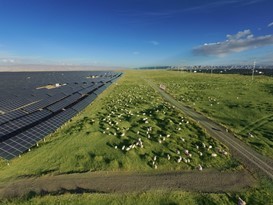
Core Viewpoint - The article highlights the successful integration of renewable energy projects, particularly solar and hydropower, in Qinghai Province, showcasing how financial investments from China Life Asset Management are driving green development and improving local ecosystems and livelihoods [2][12][14]. Group 1: Investment and Financial Support - China Life Asset Management has invested 9 billion yuan in Qinghai Huanghe Company to support green development initiatives, focusing on long-term investment strategies for renewable energy projects [2][12]. - As of March 2025, China Life Asset Management's green investment scale has exceeded 450 billion yuan, indicating a strong commitment to sustainable finance [12]. Group 2: Renewable Energy Projects - Qinghai Huanghe Company has developed the world's largest photovoltaic industrial park in Hainan Prefecture, with a total installed capacity of 6,244 MW and a storage capacity of 238.9 MW [3][4]. - The company has also constructed the Gongma Energy Storage Station, which will increase its storage capacity to 473 MW/1,168.23 MWh by May 2025, enhancing grid stability and supporting renewable energy integration [4][5]. Group 3: Environmental and Social Impact - The "photovoltaic + ecology" model has led to an 80% increase in vegetation coverage in the photovoltaic zones and a reduction of desertified land by 100 square kilometers [4]. - The transformation of the Gobi Desert into a thriving pastureland demonstrates the positive ecological impact of these renewable energy projects, contributing to local agricultural productivity [3][12]. Group 4: Hydropower Contributions - The Longyangxia Hydropower Station and the Laxiwa Hydropower Station have significantly improved local ecosystems, increasing wetland areas by 600 square kilometers and enhancing water quality along the Yellow River [6][8]. - The Longyangxia Hydropower Station plays a crucial role in flood control and irrigation, raising the irrigation guarantee rate from 56% to 80% for downstream areas [8][9]. Group 5: Strategic Methodologies - China Life Asset Management employs a "dual-line configuration" methodology to align investment strategies with national policies and client directives, facilitating long-term capital deployment in clean energy projects [12][13]. - The company emphasizes the importance of "patient capital" in supporting the long-term development of renewable energy sectors, allowing for the navigation of technological changes [12][13].

耐心遇见匠心 资本与电子通信产业的“长坡厚雪”之约
Shang Hai Zheng Quan Bao· 2025-06-30 19:10
Core Viewpoint - The electronic communication industry is experiencing significant activity and investment, driven by a combination of strategic state support, technological innovation, and market dynamics, leading to high growth and interest from various capital sources [3][4][5]. Group 1: Industry Overview - The electronic communication sector is characterized as a technology and capital-intensive industry with long investment cycles and high risks, yet it is crucial for national security and economic development [4]. - The industry encompasses various segments including chips, communication equipment, terminal manufacturing, and software applications, indicating a long industrial chain and numerous enterprises [3][4]. - The sector has seen a resurgence in 2024, with revenue growth rates leading among major industries, as reported by Wind data [4]. Group 2: Investment Dynamics - Private equity and venture capital are playing a vital role as "innovation engines," focusing on early to mid-stage projects to support technological advancements and industry upgrades [3][4]. - Public funds are increasingly engaging with electronic communication companies, with a notable rise in the number of public fund institutions conducting research on A-share companies in the sector [5]. - The investment logic has shifted from "single-point technology" to "industrial ecology," with a trend towards early and smaller investments [7][9]. Group 3: Future Trends - The future of the electronic communication industry is expected to revolve around innovation and self-sufficiency, driven by emerging technologies such as cloud computing, big data, and artificial intelligence [10]. - The capital market's role is evolving from mere financial investment to value discovery, with a focus on supporting companies with core technologies and enhancing their operational capabilities [11][12]. - The industry is moving towards a model of "ecological co-construction," emphasizing collaboration between capital and technology to strengthen the foundation for future advancements [12].