
金融风险防范

Search documents
金融产品无法兑付!浙江知名企业回应:如果政府部门能介入,应该能解决;三家上市公司紧急公告:是股东的问题,和我们无关
Mei Ri Jing Ji Xin Wen· 2025-12-07 12:25
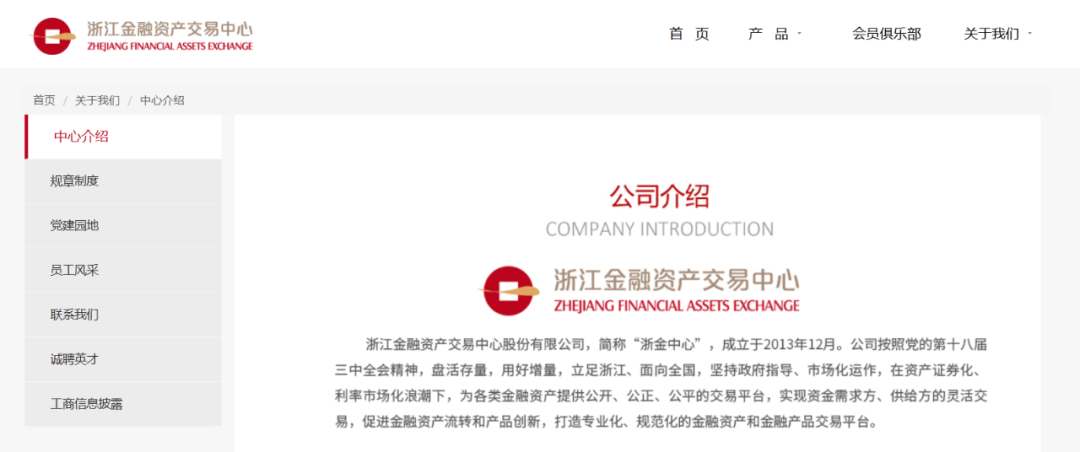
Core Viewpoint - Xiangyuan Cultural Tourism (SH600576) announced that its actual controller is responsible for the joint guarantee of financial products that have experienced partial overdue payments, which has attracted investor attention. The company clarified that it is not liable for any repayment or guarantee obligations related to these financial products [1][2]. Group 1: Company Clarification - The overdue financial products are related to real estate projects in cooperation with Xiangyuan Holdings, and the actual controller is in communication with relevant parties regarding the overdue situation [1]. - Xiangyuan Cultural Tourism is not involved in the overdue financial products and has not provided any guarantees or enhancements for any financial investment products [1]. - The company's operations are currently normal, and management has committed to ensuring independence from the controlling shareholder in various aspects [1]. Group 2: Background Information - Xiangyuan Holdings, founded in 1992 and based in Shaoxing, Zhejiang, is a leading enterprise in the cultural tourism industry, with over 50 cultural tourism projects across 17 provinces and cities in China [2]. - The company has three main business segments: cultural tourism, infrastructure, and real estate, with its real estate segment being among the top ten in China [2]. - As of December 6, reports indicated that some financial asset income products issued by Xiangyuan Holdings had not been repaid [2][3]. Group 3: Financial Context - The overdue products consist of approximately 2 to 3 types, with investor returns on these products ranging from 4% to 5%, while the company's financing costs are around 8% to 9% [3]. - The Zhejiang Financial Asset Trading Center, where these financial products were traded, had its financial asset trading business qualifications revoked as of October 2024, which may impact the resolution of these overdue payments [4][6].


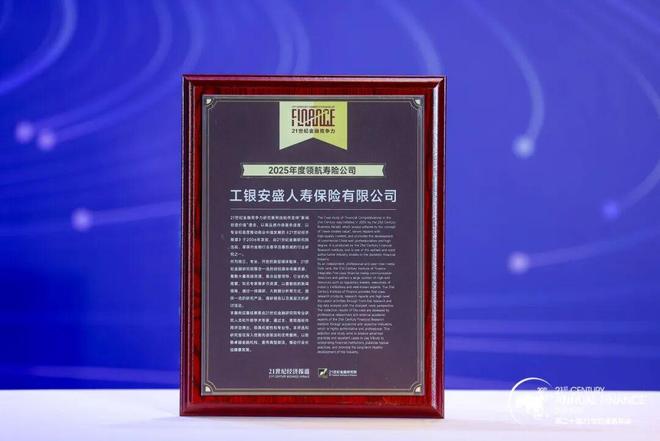
荣获“年度领航寿险公司”,工银安盛人寿如何“领航”?
2 1 Shi Ji Jing Ji Bao Dao· 2025-12-01 11:20
在当前保险业深化转型、寻求高质量发展的关键节点,工银安盛人寿作为合资险企和银行系险企的代 表,其发展模式备受市场关注。 金融工作具有深刻的政治性和人民性,防范化解金融风险是金融工作的永恒主题。工银安盛人寿在"双 七战略"中,明确将"风控固基"作为七大工程之一。其卓越的风控成效,在监管评级和资产质量上得到 了充分体现。2024年,工银安盛人寿首次获得国家金融监督管理总局风险综合评级AAA级。资产质量 是保险公司风控能力的直接反映。工银安盛人寿信用资产始终保持了"零不良"的记录。2025年三季度 末,公司的核心偿付能力充足率175%、综合偿付能力充足率243%,资本实力进一步夯实。 在服务实体经济方面,工银安盛紧跟国家战略步伐,与国家重大战略同频共振。截至2025年9月,公司 投资长三角区域、长江经济带、成渝都市圈、京津冀地区、粤港澳大湾区五大重点区域合计超1908亿 元,以金融引擎助力区域高质量发展。工银安盛还发挥保险资金"长期资本、耐心资金"的优势,通过股 权、债权等多元融资方式,持续支持高端制造业发展,助力产业高端转型,为打造世界先进制造业高地 贡献力量。 融汇股东禀赋 践行"守护"品牌 近日,由南方财经全 ...
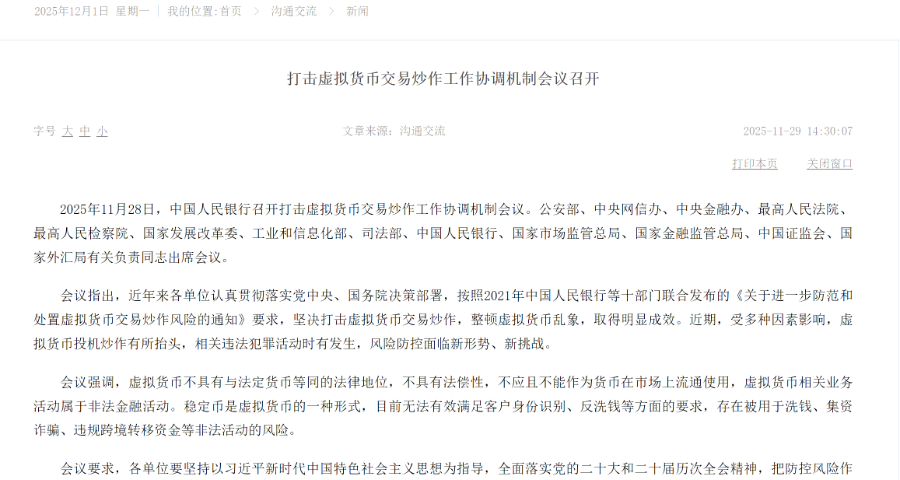
稳定币纳入虚拟币监管范畴 涵盖三大核心考量
2 1 Shi Ji Jing Ji Bao Dao· 2025-12-01 10:27
Core Viewpoint - The People's Bank of China (PBOC) has reinforced its stance on the regulation of stablecoins, categorizing them as a form of virtual currency that does not possess legal tender status and is associated with illegal financial activities [1][2][10]. Regulatory Framework - The recent meeting aligns with previous regulations, particularly the 2021 notice that classified virtual currencies like Bitcoin and Tether (USDT) as lacking legal status, thereby reinforcing a stringent regulatory framework against virtual currencies [2][3]. - The regulatory approach has evolved gradually, with significant milestones dating back to 2013, establishing a dynamic governance system that adapts to market developments [3]. Recent Developments - The introduction of the Hong Kong Stablecoin Regulation in August 2025 has drawn attention, while the volatility in cryptocurrency prices has led to increased speculative activities and illegal financial operations [4][5]. - The PBOC has expressed concerns regarding the risks associated with stablecoins, particularly in relation to money laundering and cross-border financial crimes [5][9]. Risk Management and Legal Considerations - The classification of stablecoins as virtual currencies is aimed at preventing financial risks and protecting monetary sovereignty, ensuring that they do not challenge the status of the digital yuan [7][11]. - Experts have highlighted the lack of transparency and potential risks associated with stablecoin reserves, which could lead to issues such as "de-pegging" and liquidity shortages [8]. Future Implications - The regulatory environment is expected to tighten, with stablecoin-related activities being classified as illegal financial activities, thereby limiting their operational space within China [12][13]. - The anticipated regulatory measures will likely focus on enhancing collaboration among regulatory bodies and improving technological capabilities to monitor and combat illegal activities associated with stablecoins [14].
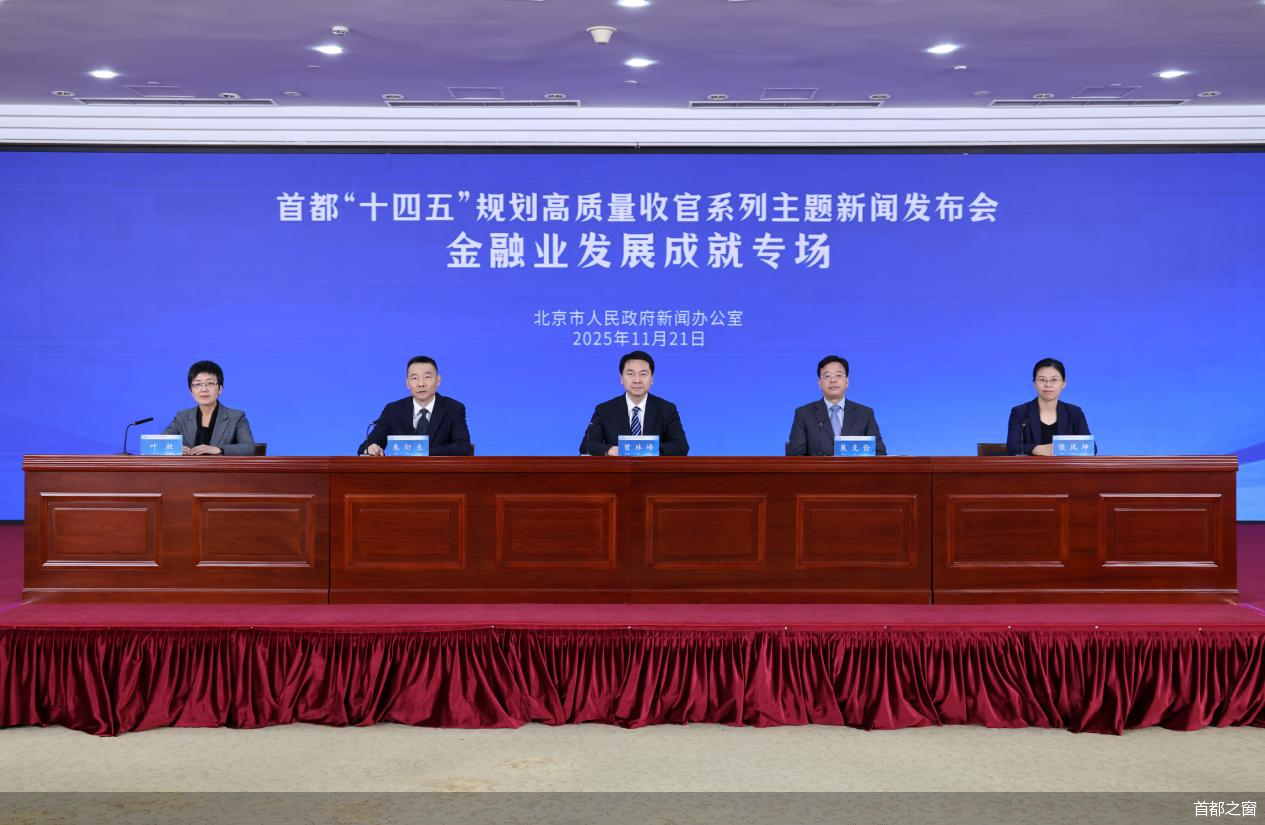
全市金融业增加值突破8100亿元,首都金融业答卷“十四五”
Bei Jing Shang Bao· 2025-11-21 15:01
Core Insights - The financial sector in Beijing has shown significant growth during the "14th Five-Year Plan" period, with the financial value added exceeding 810 billion yuan, contributing approximately 20% to the city's GDP, local public budget revenue, and local tax revenue, and around 40% to total tax revenue [4][5]. Financial Sector Growth - The financial value added in Beijing increased from 680.41 billion yuan at the end of 2020 to an estimated 815.42 billion yuan by the end of 2024, providing strong financial support for the stable operation and quality improvement of the capital's economy [5]. - The social financing scale in Beijing has increased by nearly 1 trillion yuan annually from 2021 to 2024, with RMB loans growing at an average rate of 9.2%, outpacing the city's GDP growth by 4 percentage points [5]. Banking and Insurance Sector Performance - By the end of Q3 2025, the total assets of Beijing's banking sector reached 38.3 trillion yuan, a 33.3% increase from the end of the "13th Five-Year Plan," while the insurance sector's total assets grew by 110% to 2.3 trillion yuan [5]. - The non-performing loan disposal amount in Beijing increased by 1.4 times compared to the "13th Five-Year Plan," with a non-performing loan rate of 0.7%, and a capital adequacy ratio of 16.58%, which is 1.22 percentage points higher than the national average [6]. Capital Market Development - As of September 2025, the number of listed companies on the Beijing Stock Exchange reached 277, with a total market capitalization of 91.746 billion yuan, and the region's enterprises achieved direct financing exceeding 5.6 trillion yuan during the "14th Five-Year Plan" [6]. Financial Risk Management - The financial management departments in Beijing have effectively prevented and mitigated financial risks, establishing a comprehensive financial risk prevention and disposal system, resulting in a low overall risk profile for the industry [6][7]. Support for the Real Economy - Beijing's financial management departments have innovated policies and mechanisms to address challenges faced by the real economy, including long-term funding for technological innovation and financing difficulties for small and micro enterprises [7][8]. Future Financial Development Plans - The financial sector in Beijing aims to continue its growth trajectory into the "15th Five-Year Plan," focusing on becoming a core hub for national financial strategy implementation and enhancing its role in international financial governance [10][11].
不良资产处置“大年”持续,金融风险“堰塞湖”加速排解
Zheng Quan Shi Bao Wang· 2025-11-12 05:41
Core Insights - The Chinese banking sector has entered a significant asset disposal phase in the second half of this year, with various institutions accelerating the clearance of long-standing non-performing loans through market-oriented methods such as transfer listings and packaged sales [1][2] - The scale of asset packages being listed has expanded dramatically, with some institutions offering packages worth hundreds of billions, indicating a new norm in the financial market for the fourth quarter [1] - The demand for financial risk resolution is expected to grow, leading to an increase in the supply of non-performing assets, marking a continued "big year" for asset disposal [1][2] Group 1: Factors Driving Asset Disposal - Multiple factors are contributing to the current wave of asset disposals, including macroeconomic pressures, weakened recovery capabilities in certain industries, and increased regulatory scrutiny on asset quality and capital adequacy [2] - As of June this year, the balance of non-performing loans in commercial banks was 3.43 trillion yuan, with a non-performing loan ratio of 1.49%, indicating ongoing pressure to manage these assets [2] Group 2: Market Dynamics and Trends - The market for personal consumer non-performing loans has seen explosive growth this year, significantly accelerating the overall disposal process [3] - In the first quarter of this year, the scale of personal consumer loans and credit card overdrafts reached 268.2 billion yuan and 51.9 billion yuan respectively, with personal consumer loans accounting for 72.4% of the total [3] Group 3: Impact on Banking Institutions - The accelerated disposal of non-performing assets is expected to improve banks' capital adequacy ratios and profitability metrics [4] - Large-scale disposals can directly reduce non-performing loan ratios and provisioning requirements, thereby enhancing asset quality and freeing up capital for new loans [4][5] Group 4: Regulatory and Systemic Implications - The regulatory environment is focused on preventing systemic financial risks, with measures to enhance asset disposal and capital replenishment efforts [7] - The current wave of concentrated asset disposals is seen as necessary for maintaining the stability of the banking sector and preventing a "dam" of non-performing loans from impacting credit availability in the economy [7][8]
央行重磅发文:稳妥有序推进金融领域人工智能大模型应用
Di Yi Cai Jing· 2025-11-11 11:23
Core Viewpoint - The People's Bank of China (PBOC) has implemented a moderately accommodative monetary policy in 2023, aiming to create a favorable monetary and financial environment for economic recovery and market stability [1][2]. Group 1: Monetary Policy Implementation - The PBOC has maintained reasonable growth in monetary credit by utilizing various tools such as open market operations and medium-term lending facilities to ensure ample liquidity [1][2]. - The central bank aims to reduce the overall financing costs in society by enhancing the market-oriented interest rate adjustment framework, leading to a decline in both deposit and loan rates [1][2]. - The PBOC is focusing on optimizing the credit structure by utilizing 500 billion yuan for consumer services and elderly care, as well as increasing the loan quotas for technological innovation and transformation [1][3]. Group 2: Financial Stability and Risk Management - The PBOC emphasizes the importance of risk prevention and resolution, enhancing the monitoring and assessment systems for financial risks [2][6]. - The central bank plans to maintain a reasonable growth of financial aggregates while ensuring that social financing conditions remain relatively loose [2][6]. - A comprehensive macro-prudential management system is being constructed to monitor and manage systemic financial risks effectively [6]. Group 3: Interest Rate and Exchange Rate Management - The PBOC is advancing interest rate marketization reforms to improve the transmission channels of monetary policy and enhance the pricing capabilities of financial institutions [4]. - The central bank aims to maintain the stability of the RMB exchange rate by ensuring that the market plays a decisive role in its formation [4][5]. Group 4: Financial Market Development - The PBOC is promoting the development of a multi-tiered bond market and enhancing the legal framework for corporate bonds to support financing for private technology enterprises [5]. - Efforts are being made to internationalize the RMB and expand its use in cross-border trade and investment [5].
下一阶段货币政策主要思路,央行最新披露
第一财经· 2025-11-11 09:37
Core Viewpoint - The People's Bank of China (PBOC) has implemented a moderately accommodative monetary policy in 2023, aiming to create a favorable monetary and financial environment for economic recovery and stability in financial markets [1][2]. Summary by Sections Monetary Policy Implementation - The PBOC has maintained reasonable growth in monetary credit by utilizing various tools such as open market operations and medium-term lending facilities to ensure ample liquidity [1]. - The report emphasizes the importance of lowering the overall financing costs in society by enhancing the market-oriented interest rate adjustment framework, which has led to a decline in both deposit and loan interest rates [1][2]. Credit Structure Optimization - The PBOC is focusing on optimizing the credit structure by utilizing 500 billion yuan for consumer services and elderly care re-lending, as well as increasing support for technological innovation and transformation [1][3]. - The report highlights the need to support key domestic demand areas such as consumption and technological innovation through targeted monetary policy tools [3]. Interest Rate and Exchange Rate Management - The PBOC aims to deepen interest rate marketization reforms and improve the transmission channels of monetary policy, ensuring that the central bank's policy rates effectively guide market rates [4]. - The report stresses the importance of maintaining a stable exchange rate, with the market playing a decisive role in its formation, while also monitoring cross-border capital flows to prevent excessive fluctuations [5]. Financial Risk Prevention - The PBOC is committed to systematically preventing and resolving financial risks by enhancing monitoring, assessment, and early warning systems for systemic financial risks [6]. - The report outlines the need for a comprehensive macro-prudential management system and emphasizes the importance of maintaining financial market stability through innovative financial tools [6].
央行披露下一阶段货币政策主要思路
Wind万得· 2025-11-11 09:35
Core Viewpoint - The People's Bank of China (PBOC) emphasizes the need for a balanced monetary policy that supports economic growth while managing risks, focusing on enhancing financial support for consumption and developing the bond market to aid private technology enterprises [5][6][8]. Group 1: Monetary Policy Direction - The PBOC aims to maintain reasonable growth in financial aggregates and implement a moderately loose monetary policy to ensure social financing conditions remain relatively relaxed [5][6]. - The central bank will closely monitor changes in overseas monetary policies and adjust its strategies accordingly to maintain liquidity in the banking system [5][6]. Group 2: Financial Support for Key Areas - The PBOC plans to enhance financial support for technology, green finance, inclusive finance, and the elderly finance sectors, focusing on supporting national strategic initiatives and addressing weak links in the economy [6][9]. - There will be a push to expand financial supply in the consumption sector and implement policies to support personal credit repair, aiming to unlock consumption potential [6][9]. Group 3: Interest and Exchange Rate Management - The PBOC will deepen interest rate marketization reforms and improve the transmission channels of monetary policy, ensuring that market forces play a decisive role in interest rate formation [7][9]. - The central bank will also work on stabilizing the RMB exchange rate at a reasonable equilibrium level while enhancing the risk management capabilities of enterprises and financial institutions [7][9]. Group 4: Development of Financial Markets - The PBOC is focused on developing a "technology board" in the bond market to support private technology enterprises and improve the legal framework for corporate bonds [8]. - There will be efforts to expand the multi-tiered bond market and enhance the regulation of issuance, pricing, and underwriting practices [8]. Group 5: Financial Risk Management - The PBOC aims to establish a comprehensive macro-prudential management system to monitor and mitigate systemic financial risks, enhancing the resilience of the financial market [9]. - The central bank will also work on improving the regulatory framework for systemically important financial institutions and expand the coverage of additional regulatory measures to non-bank sectors [9].
央行:拓展丰富中央银行宏观审慎与金融稳定功能 创新金融工具
Feng Huang Wang· 2025-11-11 09:23
Core Viewpoint - The People's Bank of China emphasizes the need for proactive and prudent measures to prevent and resolve financial risks in the upcoming phase, focusing on a comprehensive macro-prudential management system and mechanisms for systemic financial risk prevention and resolution [1] Group 1: Macro-Prudential Management - A comprehensive macro-prudential management system will be constructed to monitor, assess, and warn against systemic financial risks from macro, counter-cyclical, and contagion perspectives [1] - The toolbox for macro-prudential policies will be enriched, and the coverage of macro-prudential measures will be continuously expanded [1] Group 2: Financial Stability - The central bank will enhance its macro-prudential management functions and innovate financial tools to maintain stable financial market operations [1] - Systemically important financial institutions will undergo strengthened macro-prudential management, with a focus on advancing the additional regulatory framework [1] Group 3: Risk Management and Cooperation - The additional regulatory framework for systemically important banks will be further solidified, guiding selected banks to continuously improve their recovery and resolution plans [1] - A cross-border crisis management group mechanism for globally systemically important banks will be established to enhance cross-border regulatory cooperation and information sharing [1] Group 4: Non-Bank Financial Institutions - The coverage of additional regulation will be gradually expanded to the non-bank sector [1] - The reform of small and medium-sized financial institutions will be cautiously advanced under market-oriented and rule-of-law principles, with a focus on improving risk disposal responsibility mechanisms [1] Group 5: Risk Disposal Resources - Resources for risk disposal will be enriched, including the continued expansion of the deposit insurance fund and financial stability guarantee fund [1] - Exploration of establishing a backup financing mechanism will be undertaken [1]
中国央行发布2025年第三季度中国货币政策执行报告
Hua Er Jie Jian Wen· 2025-11-11 09:05
Core Viewpoint - The article outlines a series of monetary and financial policies aimed at supporting the real economy, optimizing credit structure, and maintaining financial stability. Group 1: Monetary Policy Measures - Maintain reasonable growth of money credit by utilizing tools such as open market operations, medium-term lending facilities, and re-lending to ensure ample liquidity [1] - Promote a decrease in overall financing costs by improving the market-oriented interest rate adjustment framework and effectively implementing interest rate policies [1] Group 2: Credit Structure Optimization - Guide the adjustment and optimization of credit structure by utilizing 500 billion yuan for consumer services and elderly care re-lending, as well as new quotas for technological innovation and transformation re-lending [1] - Support key domestic demand areas such as consumption and technological innovation through risk-sharing tools for technology innovation bonds [1] Group 3: Exchange Rate and Risk Management - Maintain basic stability of the exchange rate by ensuring the market plays a decisive role in its formation and utilizing it to adjust macroeconomic and international balance of payments [1] - Strengthen risk prevention and resolution by systematically addressing financial risks in key areas and enhancing the monitoring, assessment, and early warning systems for financial risks [1]