创新药出海

Search documents
医药生物行业周报:持续看好创新药领域
Guoyuan Securities· 2025-05-19 10:40
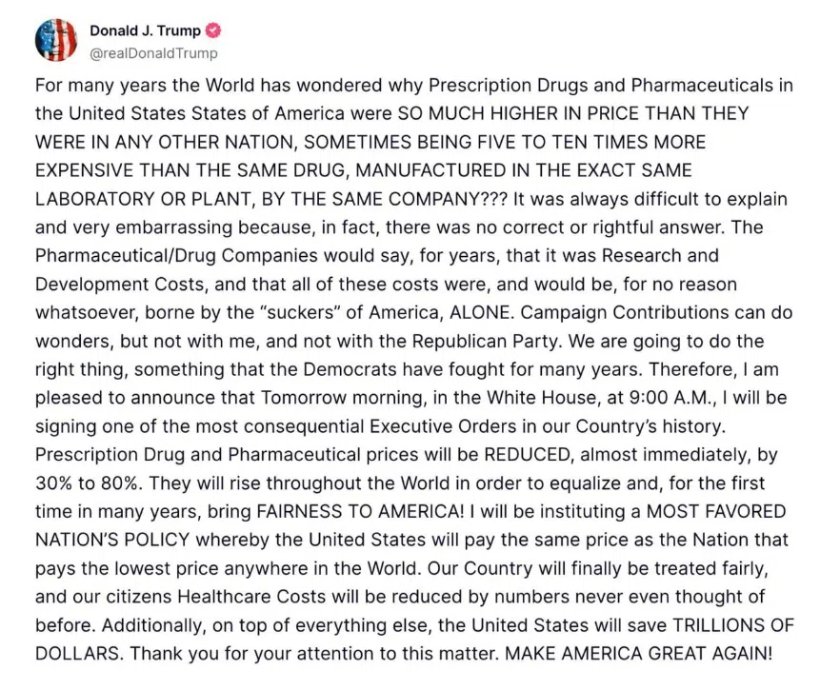
Investment Rating - The report maintains a positive outlook on the innovative drug sector within the healthcare industry [1]. Core Insights - The pharmaceutical sector outperformed the CSI 300 index slightly, with the Shenwan Pharmaceutical and Biological Index rising by 1.27% from May 12 to May 16, 2025, and by 2.48% year-to-date, ranking 11th among 31 Shenwan primary industry indices [1][12]. - The current valuation of the pharmaceutical sector stands at 26.80 times (TTM overall method, excluding negative values), with a premium of 141.06% compared to the CSI 300 index [15]. - The innovative drug segment is experiencing a pullback due to U.S. President Trump's announcement regarding drug price reductions, but the report suggests that the actual implementation of such policies will be challenging and will not significantly impact Chinese innovative drug companies' international expansion [3][20]. Summary by Sections 1. Market Review - The pharmaceutical sector's performance from May 12 to May 16, 2025, showed a 1.27% increase, outperforming the CSI 300 index by 0.15 percentage points [10]. - Year-to-date, the sector has increased by 2.48%, surpassing the CSI 300 index by 3.64 percentage points [12]. 2. Key Events - On May 12, 2025, President Trump announced plans to sign an executive order aimed at reducing prescription drug prices in the U.S., potentially lowering prices by 30% to 80% [19]. 3. Industry Perspective - The innovative drug sector is expected to continue as a key investment theme for 2025, with a focus on international expansion and emerging markets, particularly in companies like Kexing Pharmaceutical [4][21]. - The report highlights that the ongoing collection and procurement policies in various pharmaceutical fields are accelerating, with potential growth in segments like insulin and orthopedics [4][21].





医药生物行业周报:持续看好创新药领域-20250519
Guoyuan Securities· 2025-05-19 09:45
Investment Rating - The report maintains a positive outlook on the innovative drug sector within the healthcare industry [1] Core Insights - The pharmaceutical sector outperformed the CSI 300 index slightly, with the Shenwan Pharmaceutical and Biological Index rising by 1.27% from May 12 to May 16, 2025, and by 2.48% year-to-date, ranking 11th among 31 Shenwan primary industry indices [1][12] - The current valuation of the pharmaceutical sector stands at 26.80 times (TTM overall method, excluding negative values), with a premium of 141.06% compared to the CSI 300 index [15] - The innovative drug segment is expected to continue as a key investment theme for 2025, driven by advancements in research and development, and the potential for international market expansion [4][21] Summary by Sections 1. Market Performance - The pharmaceutical sector showed a slight outperformance against the CSI 300 index, with a 1.27% increase during the specified week [10] - Year-to-date, the sector has increased by 2.48%, outperforming the CSI 300 by 3.64 percentage points [12] 2. Key Events - On May 12, 2025, U.S. President Trump announced plans to sign an executive order aimed at reducing prescription drug prices in the U.S., potentially decreasing prices by 30% to 80% [19] 3. Industry Perspective - The innovative drug sector is experiencing a pullback due to Trump's announcement regarding drug price reductions in the U.S. However, the report suggests that the actual implementation of such policies will be challenging and unlikely to significantly impact Chinese innovative drug companies' international expansion [20] - The report emphasizes that the future growth of Chinese innovative drug companies will rely heavily on entering international markets, particularly the U.S. [3][21] 4. Investment Recommendations - The report continues to favor innovative drugs, international expansion, and sectors where centralized procurement impacts are clearing, such as insulin and orthopedics [4][21] - Companies with a focus on emerging markets are highlighted as having significant growth potential [4]
每日投资策略-20250519
Zhao Yin Guo Ji· 2025-05-19 03:38
Macro Commentary - The US economy shows signs of slowing down, with significant declines in retail and manufacturing output due to tariff impacts, particularly affecting durable goods like automobiles and electronics [2] - Despite the slowdown, unemployment claims remain stable, indicating that the service sector is less affected, and employment in this sector remains robust [2] - Inflation is expected to rebound temporarily from May to August, with the Federal Reserve likely to maintain interest rates until September, when a potential rate cut may occur [2] Industry Commentary - The Chinese pharmaceutical sector is experiencing a strong trend in innovative drug exports, with several significant business development transactions occurring despite recent tariff tensions [5][6] - The MSCI China Healthcare Index has risen by 14.9% since early 2025, although it has underperformed compared to the broader MSCI China Index [5] - The US innovative drug prices are unlikely to decrease in the short term due to recent executive orders, but long-term pressures on healthcare spending are anticipated [7] Company Initiation - The report covers Angelalign Technology (6699 HK), a leading provider of invisible orthodontic solutions in China, which has maintained a market share of 42% in the domestic market [9][10] - The company is expected to achieve a revenue compound annual growth rate (CAGR) of 23.8% from 2019 to 2024, with a projected CAGR of 18.0% from 2024 to 2027 [9] - Angelalign is expanding internationally, with a goal to cover over 50 countries and achieve significant revenue growth from overseas markets, which is expected to account for 30% of total revenue by 2024 [11][12]





近期关注创新药进展和传染病抬头趋势
SINOLINK SECURITIES· 2025-05-18 14:38
Investment Rating - The report maintains a positive outlook on the pharmaceutical sector, particularly anticipating a recovery in performance in the second half of 2025 [2][5]. Core Insights - The pharmaceutical market is currently experiencing a mild upward trend, with expectations for a new round of market activity following adjustments in trading [2]. - The report highlights significant advancements in innovative drugs, particularly from domestic companies, which are expected to achieve international recognition and commercial success [2][12]. - The report emphasizes the importance of monitoring policy developments related to medical insurance and the resurgence of respiratory infectious diseases [4][46]. Summary by Sections Pharmaceuticals - Key developments include the clinical data release from KJ Pharma regarding its universal CAR-T therapy and the approval of a new analgesic by Haishi Pharmaceutical [2][25]. - The report notes that domestic innovative pharmaceutical companies are increasingly demonstrating their capabilities on the international stage [2][12]. Biopharmaceuticals - Huadong Medicine's DR10624 has shown promising results in clinical trials, with liver fat content reductions significantly higher than the placebo group [3][38]. - The report suggests continued attention to DR10624's potential for commercialization and external licensing opportunities [3][45]. Medical Devices - The minimally invasive orthopedic surgical robot from Micron Medical has been integrated into the UK's National Health Service, indicating strong international market expansion potential [3][51]. - The report encourages focus on leading companies with strong product competitiveness and overseas channel layouts [3][51]. Medical Services - A partnership between Gushengtang and Huawei aims to enhance traditional Chinese medicine through digital infrastructure and talent development [3][12]. - The report highlights the ongoing transformation of the healthcare industry towards digitalization and smart solutions [3][12]. Traditional Chinese Medicine & Pharmacies - The Yunnan provincial government is advancing policies for provincial-level coordination of basic medical insurance, which is expected to benefit compliant leading companies [4][46]. - The report notes a rise in respiratory infectious disease rates, necessitating ongoing observation of trends [4][47]. Investment Recommendations - The report suggests focusing on innovative drugs and certain generic drugs, with attention to policy changes and upcoming data releases from major conferences [5][16]. - It highlights potential investment opportunities in chain pharmacies, medical devices, and traditional Chinese medicine as the market begins to recover [5][16].


医药行业2024Q1以来的下行趋势或已结束,恒生医疗指数ETF(159557)红盘震荡
Sou Hu Cai Jing· 2025-05-16 03:10
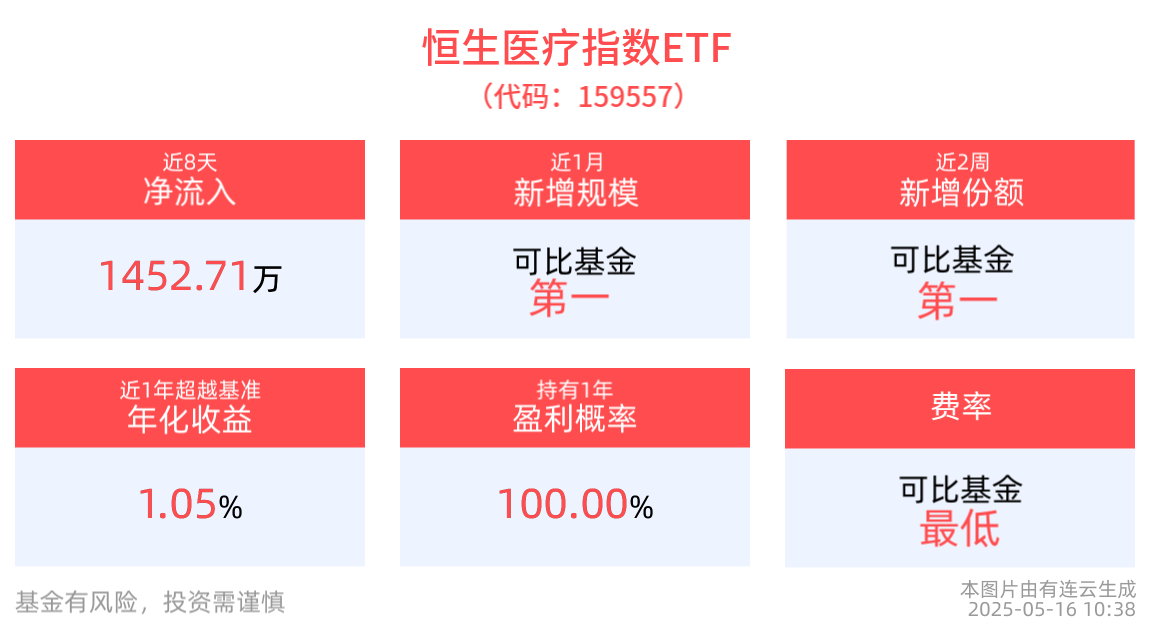
Group 1 - The Hang Seng Medical Index ETF has shown significant liquidity with a turnover of 1% and a transaction volume of 2.6148 million yuan, with an average daily transaction volume of 27.4616 million yuan over the past month [2] - The ETF's scale has increased by 28.6087 million yuan in the past month, ranking first among comparable funds, with a share increase of 12 million units in the last two weeks, also the highest among peers [2] - In terms of capital inflow, the ETF has seen net inflows on 5 out of the last 8 trading days, totaling 14.5271 million yuan [2] - The current price-to-earnings ratio (PE-TTM) of the Hang Seng Medical Healthcare Index is 23.4, which is in the 4.36% percentile over the past year, indicating a valuation lower than 95.64% of the time in the past year, suggesting historical low valuations [2] - The top ten weighted stocks in the Hang Seng Medical Healthcare Index account for 57.09% of the index, including companies like WuXi Biologics and BeiGene [2] Group 2 - Since the reform of new drug research and development policies in 2015, China's innovative drug industry has developed a strong ecosystem, integrating excellent resources in preclinical and clinical stages, which has gained recognition from multinational corporations (MNCs) [3] - The pharmaceutical and biotechnology sector's Q1 2025 financial reports show stable revenue and profit performance, with notable improvements in certain sub-industries, indicating a return of market enthusiasm for the sector [3] - There is a recommendation to focus on international biotech companies, revaluation of innovative pipelines in generic companies, and companies in the CXO industry with significant order and operational improvements [3] - Investors without stock accounts can access investment opportunities in the Hong Kong medical sector through the Hang Seng Medical Index ETF linked fund (018433) [3]



恒瑞医药H股招股最高可募131亿港元 补研发“弹药”累计对外授权15笔
Chang Jiang Shang Bao· 2025-05-15 23:29
恒瑞医药的港股IPO走到了招股环节。 5月15日早间,恒瑞医药发布公告称,计划发行约2.25亿股H股(假设超额配售权及发售量调整权未行 使),其中,香港公开发售占比为5.5%,国际配售占比为94.5%,发行价区间定为每股41.45港元至 44.05港元。 如果全额行使超额配售权及发售量调整权,恒瑞医药此次发行H股最高可达2.97亿股,最高募资额可达 130.8亿港元。这意味着此次恒瑞医药将成为近五年港股医药企业最大IPO。 恒瑞医药(600276)离港股上市越来越近了。 5月15日早间,恒瑞医药(600276.SH)发布公告称,公司正式启动H股全球公开发售,如果全额行使超 额配售权及发售量调整权,恒瑞医药此次发行H股最高可达2.97亿股,最高募资额可达130.8亿港元。这 意味着此次恒瑞医药募资额将成为近五年港股医药企业IPO最高募资额。 长江商报记者注意到,恒瑞医药此次港股IPO的基石投资者吸引了众多国际知名投资机构的关注与参 与,包括新加坡政府投资公司(GIC)、景顺(Invesco)、瑞银全球资产管理集团(UBS-GAM)、高 瓴资本、博裕资本等,基石投资者的阵营可谓豪华。 恒瑞医药资金充足,截至3月末 ...

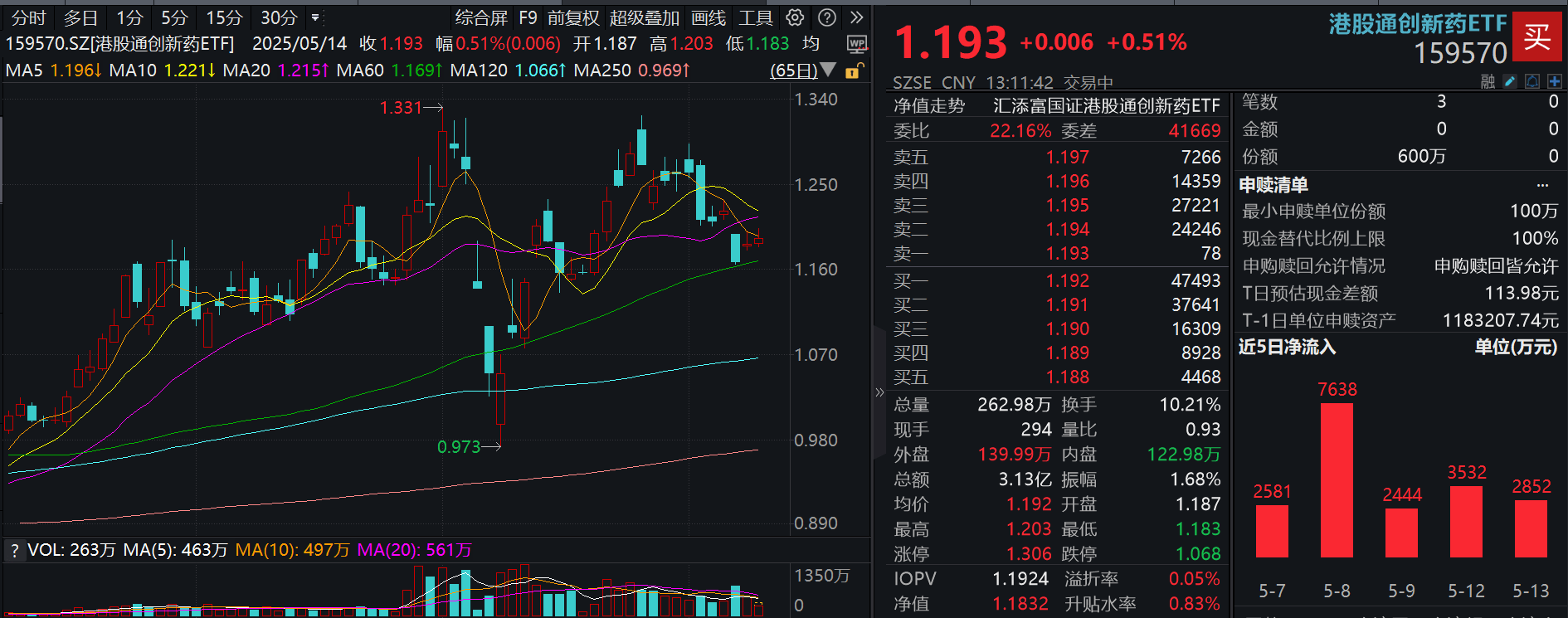
美药价政策仅是扰动,持续看好创新药!T+0交易的港股通创新药ETF(159570)连续5日大举“吸金”近2亿元!
Sou Hu Cai Jing· 2025-05-14 05:26
Group 1 - The core viewpoint of the articles highlights the increasing interest and investment in China's innovative drug sector, particularly through the Hong Kong Stock Connect Innovative Drug ETF (159570), which has seen significant net inflows over the past days [1][5][7] - The Hong Kong Stock Connect Innovative Drug ETF (159570) has experienced a trading volume exceeding 320 million yuan, with nearly 200 million yuan in net inflows over the past five days, indicating strong market confidence in the innovative drug sector [1][7] - Key component stocks of the ETF have shown mixed performance, with notable gains from China Biologic Products and CSPC Pharmaceutical Group, while some stocks like Wondfo Biotech and Innovent Biologics have seen declines [2][3] Group 2 - The impact of U.S. drug pricing policies on Chinese innovative drugs is complex, with the potential for limited effects on major pharmaceutical companies due to the intricate U.S. healthcare system and pricing mechanisms [4][5] - Chinese innovative drugs are viewed as high-quality assets, with a significant increase in business development (BD) activities expected, driven by the expiration of patents for many drugs by 2028 [5][7] - The value of Chinese innovative drugs is underscored by projected revenue from licensing agreements, with an estimated 5.7 billion USD in upfront payments expected in 2024, representing 20% of global cooperation licensing payments [5][7] Group 3 - The Hong Kong Stock Connect Innovative Drug ETF (159570) is characterized by a high concentration in innovative drug companies, with over 68% of its top ten holdings in this sector, showcasing its focus on leading firms [7] - The ETF is noted for its high weight in innovative drugs (84%) and relatively low valuation metrics, making it an attractive option for investors looking to capitalize on the growth of the innovative drug industry [7]
港股创新药ETF(159567)涨超0.5%,荣昌生物涨超3%,机构:坚定看好创新药的出海前景
2 1 Shi Ji Jing Ji Bao Dao· 2025-05-14 02:09
Group 1 - The Hong Kong stock market opened with the Hang Seng Index rising by 0.9% and the Hang Seng Tech Index increasing by 1.58%, indicating a positive market sentiment towards innovative pharmaceuticals [1] - The Hong Kong Innovative Drug ETF (159567) showed active trading with a turnover exceeding 85 million yuan and a trading volume increase of 0.51%, reflecting strong investor interest [1] - Major stocks in the innovative drug sector, such as Rongchang Biopharmaceutical and China Biologic Products, saw significant gains, with increases of over 3% and 2% respectively [1] Group 2 - Huayuan Securities reported that innovative drug companies are projected to achieve revenues of 47.53 billion yuan in 2024, marking a year-on-year growth of 68.4%, indicating a robust growth trend [2] - Domestic innovative drug companies have largely completed their R&D cycles, with core products entering a phase of rapid commercialization, leading to accelerated revenue growth [2] - The trend of overseas licensing has emerged as a second growth curve for biotech companies, providing sustainable funding support for ongoing R&D through high upfront payments [2]

特朗普签署“药品降价”行政令 知名投资人:对中国创新药企业的影响没那么悲观
Mei Ri Jing Ji Xin Wen· 2025-05-13 16:12
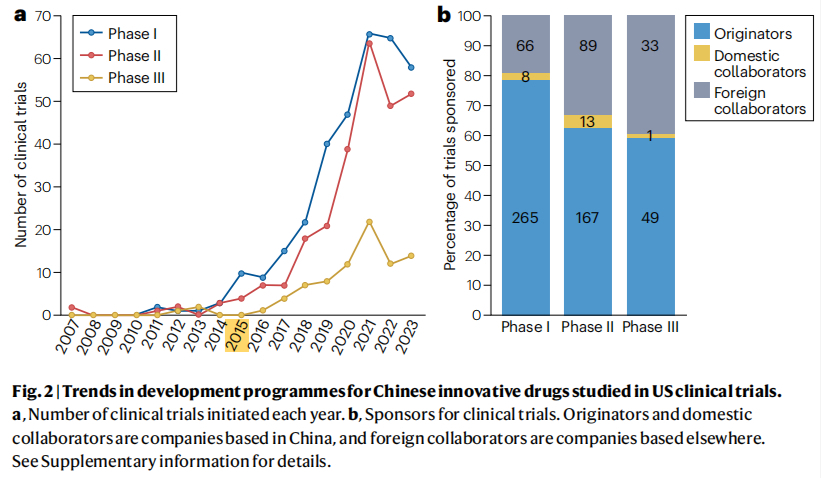
Group 1 - The core point of the news is the introduction of an executive order by President Trump aimed at lowering prescription drug prices in the U.S. through a "most-favored-nation pricing" model, aligning local drug prices with those in other developed countries [1][5] - Following the announcement, the domestic innovative drug sector in China experienced a significant market reaction, with related ETFs rising nearly 2% after an initial drop [1][5] - The executive order is perceived to favor generic drugs and biosimilars, potentially lowering entry barriers and increasing competition in the U.S. market [6][7] Group 2 - From 2007 to 2023, 350 innovative drugs from 177 Chinese pharmaceutical companies were studied in 691 clinical trials in the U.S., with 7 products approved for market [2][4] - Notable approved Chinese innovative drugs include BeiGene's BTK inhibitor, Legend Biotech's CAR-T therapy, and Junshi Biosciences' PD-1 inhibitor, with significant sales growth reported for these products in the U.S. market [4][5] - The impact of the drug pricing executive order on Chinese innovative drug companies is mixed; while some companies may face pressure on pricing, others may benefit from reduced competition in the generic drug space [7][8] Group 3 - Investment sentiment towards Chinese innovative drug companies remains cautiously optimistic, with some investors believing the impact of the pricing policy may not be as severe as anticipated [7][8] - The market share of U.S. sales is significant for many Chinese companies, with one leading company reporting a 107.5% year-on-year increase in sales for its core product in the U.S. [4][8] - The overall effect of the executive order on the pharmaceutical landscape is still uncertain, with companies advised to closely monitor developments [8][9]
特朗普将令美国药品降价,对中国公司影响几何?
Xin Lang Cai Jing· 2025-05-12 07:38
Core Viewpoint - The U.S. government, under President Trump, announced a significant reduction in prescription drug prices, aiming for a decrease of 30% to 80%, while implementing a "most-favored-nation" policy to align U.S. drug prices with those of the lowest-priced countries [1][2]. Group 1: Impact on U.S. Drug Market - The U.S. has the highest prescription drug prices globally, with generic drugs accounting for 90% of prescriptions but only contributing about 20% of sales [4]. - Innovative drugs, which represent only 10% of prescriptions, contribute approximately 80% of sales, highlighting the unique pricing structure in the U.S. where companies set their own prices without direct government intervention [4]. - The U.S. market is crucial for global pharmaceutical companies, contributing over 60% of revenue and 70% of profits for innovative drugs [4]. Group 2: Domestic Companies and Market Trends - Domestic innovative drug companies have begun to enter the U.S. market, with a few achieving commercial sales, such as BeiGene's Zanubrutinib and Legend Biotech's Carvykti, indicating the importance of the U.S. market for their revenue [5]. - The sales forecast for Zanubrutinib in the U.S. is projected to be $2 billion in 2024, representing over half of BeiGene's total revenue for that year [5]. - The trend of domestic companies seeking to enter the U.S. market is driven by lower revenue and profit potential in China, where the innovative drug market only accounts for 3% of the global market [4]. Group 3: Regulatory Environment and Future Considerations - The recent executive order by President Trump primarily affects drug prices for federal healthcare programs and does not directly enforce price reductions for commercial insurance [2]. - The ongoing changes in the U.S. drug pricing landscape may impact existing and potential licensing agreements for domestic companies, as seen with Eli Lilly's decision to halt development on a drug from Fosun Pharma due to pricing policy concerns [6][7]. - The Inflation Reduction Act, which began regulating drug prices in 2022, is expected to gradually initiate price negotiations for high-cost drugs [7].