
生成式AI

Search documents
阿里入口的B端战事
远川研究所· 2025-12-25 11:32
Core Insights - OpenAI aims to transform ChatGPT from a simple chatbot into a complex task-completing platform, enhancing user engagement and establishing itself as a key entry point in the AI era [3] - The competition for digital entry points is intensifying, with major players like Microsoft and Google integrating AI into their ecosystems, while Alibaba's DingTalk is also making significant strides in this space [4][7] Group 1: DingTalk's Evolution - DingTalk has transitioned from a mobile internet application to an AI-driven intelligent operating system, enabling AI to manage tasks autonomously [4][9] - The release of DingTalk 1.1 marks a significant upgrade, introducing AgentOS, which allows AI to operate other applications, fundamentally changing its role from a user-operated tool to an AI command center [9][10] - DingTalk ONE provides a new interaction interface where AI organizes and prioritizes work information, shifting the paradigm from "people finding tasks" to "tasks finding people" [9][10] Group 2: Competitive Landscape - The battle for B-end market entry is characterized by different strategies compared to C-end, with B-end focusing on ROI and efficiency, while C-end aims for user engagement and emotional connection [7][10] - DingTalk's upgrades are designed to deepen its integration within organizations, creating a strong lock-in effect that makes it difficult for companies to switch to competing platforms [10][12] Group 3: AI Integration and Future Vision - DingTalk's self-reconstruction involves three major changes: enhancing user interaction, restructuring its architecture to support AI operations, and expanding its ecosystem to include AI talent and resources [13][14] - The company is positioned as a key player in the transition to "super artificial intelligence" (ASI), with a focus on connecting AI to the physical world to enhance productivity and decision-making [17][22] - The ultimate goal is to create a closed-loop system where AI can learn from real-world data and influence physical actions, thereby redefining productivity in the AI era [22][23]


12.25犀牛财经晚报:沪市年报预披露时间表出炉
Xi Niu Cai Jing· 2025-12-25 10:27
Group 1: Financial Reports and Market Trends - The Shanghai Stock Exchange has released the annual report disclosure schedule, with Chipway Technology set to disclose its report on February 3, leading the list [1] - The main board will see *ST Huawang disclose its report on February 13, followed by Shangwei Co. on February 14 [1] - Multiple international financial institutions predict a decline in the attractiveness of dollar-denominated assets by 2026, leading to a continued rise in gold prices as a hedge against risks [2] - The asset management firm Schroders highlights increasing uncertainty in U.S. policies and fiscal vulnerabilities, which are driving investors towards gold for diversification [2] Group 2: Private Equity and Investment Activity - In 2025, 54 new private equity firms were registered in China, marking a 10.20% increase from 49 in 2024, with 98.15% being domestic firms [2] - Notable new private equity firms include three with management scales exceeding 5 billion yuan, indicating a significant influx of insurance capital into the private equity sector [2] Group 3: Semiconductor and Technology Sector - Major silicon wafer manufacturers have significantly raised prices due to increased costs of upstream silicon materials, with average price hikes reaching 12% [3] - Kingston has led the price increase in DDR4 and DDR5 memory products, with overall market prices remaining strong despite a slight slowdown in growth [3] Group 4: Automotive Market Insights - The automotive market is experiencing a quiet end-of-year period, with consumers showing a tendency to wait for new subsidy policies, impacting sales [4][5] - The China Automobile Industry Association notes that the withdrawal of subsidy policies has led to increased consumer hesitation in making purchases [5] Group 5: AI and Technology Forecasts - Global spending on generative AI is projected to grow from $225 billion in 2023 to $699 billion by 2030, with a compound annual growth rate (CAGR) of 21% [5] - The AI dialogue platform segment is expected to see the fastest growth, with monthly active users projected to exceed 5 billion by 2030 [5] Group 6: Corporate Financing and Investments - Starry Space has completed nearly 300 million yuan in Pre-A round financing, led by Shenzhen Innovation Investment Group, to enhance its global satellite control network [9] - Zhi Li Technology has secured 100 million yuan in B round financing to establish a manufacturing base for battery swap systems [9] - Deep Blue Automotive has announced a C round financing totaling 6.122 billion yuan, backed by major investors [9] Group 7: Corporate Governance and Compliance - Shanghai Washba has announced penalties for executives due to short-term trading violations, with fines of 100,000 yuan and 150,000 yuan imposed [10] - Haotou Co. has reported the resignation of its general manager, Zhang Xianjun, due to work relocation [11]
全球生成式AI:2023 - 2030年支出增超4700亿美元
Sou Hu Cai Jing· 2025-12-25 07:10
Core Insights - Global generative AI consumer spending is projected to increase from $225 billion in 2023 to $699 billion by 2030, with a compound annual growth rate (CAGR) of 21% [1] Segment Analysis - The AI dialogue platform is identified as the fastest-growing segment within the generative AI market [1] - Personal assistant AI and content generation tools are also expected to see significant expansion [1] - By 2030, the monthly active users (MAUs) of global AI dialogue platforms are anticipated to exceed 5 billion [1]
Counterpoint:预计2030年全球生成式AI消费支出将达到6990亿美元
Zhi Tong Cai Jing· 2025-12-25 06:32
Core Insights - Consumer spending in generative AI is rapidly reshaping the global tech industry, with projections indicating an increase from $225 billion in 2023 to $699 billion by 2030, reflecting a compound annual growth rate (CAGR) of 21% [1] Group 1: Market Growth - The report highlights that both consumer-facing AI software and the hardware required for its operation will experience significant growth in the coming years [1] - The AI dialogue platform is identified as the fastest-growing segment, with personal assistant AI and content generation tools also expected to expand significantly [1] - By 2030, the number of monthly active users (MAUs) for global AI dialogue platforms is projected to exceed 5 billion [1] Group 2: Hardware and Software Dynamics - AI hardware will continue to dominate overall consumer spending, driven by the integration of AI functionalities in personal devices [4] - From 2023 to 2030, global shipments of generative AI smartphones are expected to grow at a CAGR of 26%, with corresponding revenue growth at 16% [4] - The consumer AI software market is anticipated to show even greater growth potential, primarily due to a significant increase in user base [4] Group 3: Competitive Landscape - The competitive landscape at the platform level indicates that while OpenAI is expected to maintain a leading user base, Google and Microsoft are projected to experience the most significant growth in monthly active users during the forecast period [4] - Beyond AI dialogue platforms, other AI application markets, including AI art generation tools, companion applications, and photo editing software, also exhibit strong growth momentum [4] Group 4: Market Evolution - Generative AI is evolving from a "high-end differentiated feature" to a "mainstream market standard" [5] - Although high-end smartphones will remain the primary revenue driver until 2030, growth in shipments is increasingly being driven by mid-range devices, indicating a trend towards broader AI capability adoption [5] - Emerging forms such as laptops, XR devices, and AI-native terminals, while currently limited in scale, are expected to become important growth areas, pushing the AI hardware ecosystem towards greater diversification beyond smartphones [5]
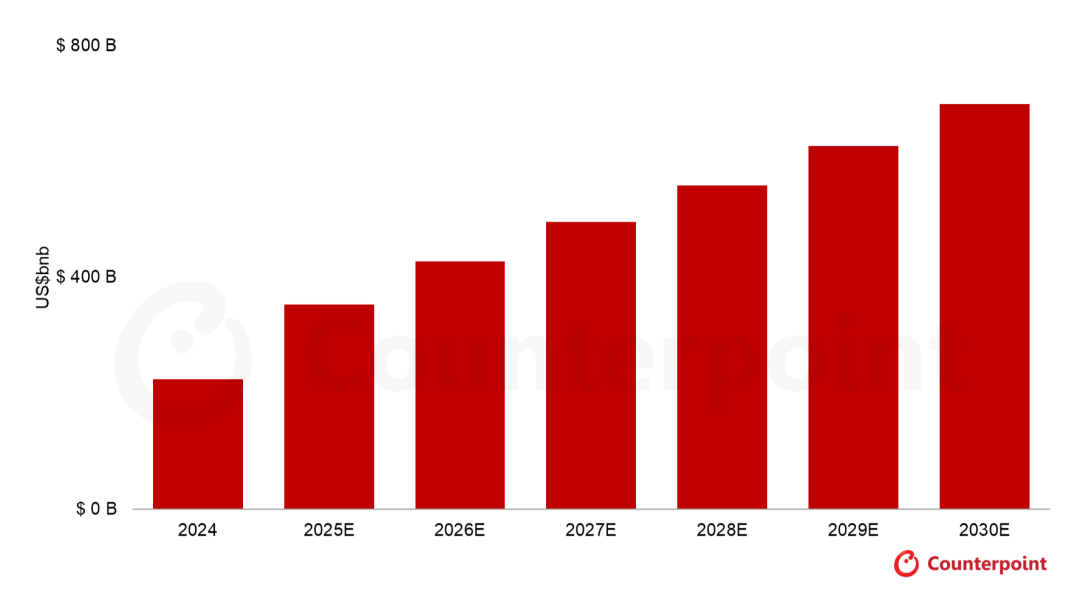
全球生成式 AI 消费支出将大幅增长, 2030 年逼近 7000 亿美元,但能否满足投资者预期仍存疑
Counterpoint Research· 2025-12-25 06:14
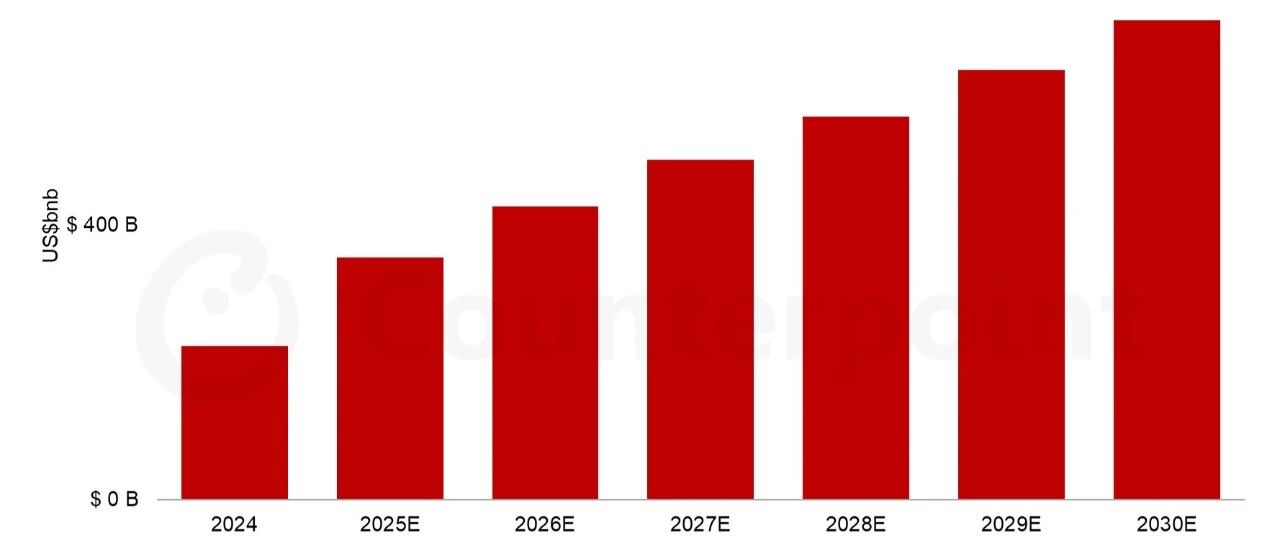
Core Insights - The report from Counterpoint Research highlights that consumer spending in the generative AI sector is rapidly reshaping the global technology landscape, with significant growth expected in both AI software and the hardware required to run it [5][6] - AI hardware is projected to maintain the largest share of overall consumer spending, driven by the integration of AI functionalities in personal devices [5][6] - The global generative AI smartphone shipment is expected to grow at a compound annual growth rate (CAGR) of 26% from 2023 to 2030, with corresponding revenue growth at a CAGR of 16% [5][7] AI Software Market - The consumer AI software market is anticipated to expand significantly, primarily due to a substantial increase in user base, with monthly active users of AI dialogue platforms expected to reach nearly 5 billion during the forecast period [5][7] - The competition among large language model (LLM) providers is intensifying, and notable changes in market dynamics and shares are expected throughout the forecast period [7] Hardware and Software Dynamics - While AI hardware spending is expected to remain strong in the coming years, the success of the next generation of the AI ecosystem will largely depend on the growth of software spending [6] - High-end smartphones will continue to support revenue until 2030, but growth in shipments is increasingly driven by mid-range models, indicating a trend towards broader AI capability adoption [6] Market Growth Projections - Global generative AI consumer spending is projected to increase from $225 billion in 2023 to $699 billion by 2030, with an overall CAGR of 21% [7] - The AI dialogue platform segment is identified as the fastest-growing area, with personal assistant AI and content generation tools also expected to see significant expansion [7] Industry Challenges - A key question facing the industry is whether the rapid market growth justifies the unprecedented capital investments in the sector [8]
当姚顺雨们开始掌舵科技巨轮
Tai Mei Ti A P P· 2025-12-25 05:12
Core Insights - The article discusses the shift in power dynamics within the AI industry, where younger leaders are taking charge due to their adaptability to new paradigms, contrasting with older engineers who rely on traditional methods [3][4][8]. Group 1: Paradigm Shift in AI - The AI industry has undergone a fundamental paradigm shift, comparable to the transition from Newtonian physics to relativity, with the introduction of the Transformer architecture and generative AI models [4][5]. - Older engineering practices, which focused on manual feature extraction and optimization, are becoming obsolete as new models thrive on large datasets and computational power [4][5][6]. Group 2: Rise of Young Leaders - Young leaders like Alexandr Wang at Meta, Yao Shunyu at Tencent, and Luo Fuli at Xiaomi are now at the forefront of AI development, each overseeing critical aspects such as data infrastructure, core algorithms, and application deployment [9][10][14]. - These leaders possess unique skills that are essential for navigating the complexities of modern AI, which older engineers may not fully grasp [12][19]. Group 3: Cultural and Structural Challenges - The rise of younger leaders is causing significant disruptions within traditional corporate structures, leading to a disconnect between older management and younger technical teams [20][21]. - Older managers often struggle to understand the logic and methodologies employed by younger leaders, resulting in communication barriers and potential resistance [21][22][26]. Group 4: Future Collaboration Models - A new collaborative model is emerging, characterized by a combination of young innovators and experienced managers, where the latter focus on resource management and regulatory compliance [30][34][36]. - This partnership aims to leverage the strengths of both generations, with young leaders driving technological advancements while older managers ensure stability and strategic oversight [30][39].
两年前猛裁1.2万人后,谷歌吃起了“回头草”:新招的AI工程师中,20%是「老面孔」
猿大侠· 2025-12-25 04:09
Core Viewpoint - Google is strategically reclaiming its position in the AI sector by re-hiring former employees, with approximately 20% of new AI software engineers in 2025 being ex-employees, a significant increase compared to previous years [1][4]. Group 1: Employee Rehiring Strategy - The trend of re-hiring former employees at Google is not coincidental, as the company faced significant layoffs in early 2023, with about 12,000 employees cut, representing 6% of its total workforce [4]. - Google has maintained connections with former employees, creating a potential talent pool that can be reactivated, especially as competition in generative AI intensifies [4]. - The return of former employees is driven by the availability of substantial computing resources and competitive compensation, which are critical for AI development [5][6]. Group 2: Cultural and Structural Changes - Google has undergone notable changes in its internal culture and organizational structure, including taking more risks, accelerating product release schedules, and reducing management layers by over one-third [8]. - The company has also adopted unconventional recruitment practices, such as re-hiring former employees and involving co-founder Sergey Brin in recruiting key AI talent [8]. Group 3: Competitive Landscape and Market Response - Initially, Google struggled in the generative AI space, lagging behind competitors like OpenAI and Meta, which rapidly gained market share [11][12]. - However, starting in 2024, Google shifted its strategy by increasing investments in AI infrastructure and stabilizing its product line with the Gemini series models, including the recent release of Gemini 3 [12]. - The market has responded positively, with Alphabet's stock price increasing by over 60% in 2025, outperforming other tech giants [13].

新恒汇:打造芯片材料“新引擎” 赋能山东集成电路产业链集群发展
证券时报· 2025-12-25 00:20
Core Viewpoint - The article emphasizes the strategic development blueprint of Xinhenghui in the context of the accelerating domestic chip independence, highlighting the significant opportunities for integrated circuit packaging materials as a key part of the industry chain [1][2]. Group 1: Core Technology and Competitive Advantage - Xinhenghui focuses on mastering core technologies to maintain a competitive edge in the industry, particularly in the production of etched lead frames, which are essential for chip packaging [4]. - The company has successfully developed and applied the roll-type maskless laser direct imaging (LDI) technology in the production of etched lead frames, which enhances precision and significantly reduces production and delivery cycles compared to traditional methods [4]. Group 2: Industry Ecosystem and Regional Development - Xinhenghui aims to leverage its position as a leading company in the industry to drive regional industrial collaboration and development, enhancing the overall efficiency of the supply chain [6]. - The company benefits from a strong industrial foundation in Shandong, which facilitates close cooperation with upstream and downstream enterprises, thereby promoting innovation and development across the industry [6][7]. Group 3: Capital Market and Brand Development - The successful listing of Xinhenghui on the capital market marks a significant milestone, enhancing the company's visibility and trust among partners and customers [9]. - The capital market support provides a solid financial foundation for the company's technological innovation and global expansion efforts [10]. Group 4: Future Development Plans - Xinhenghui has outlined a clear development plan for the upcoming "14th Five-Year Plan" period, focusing on three core business areas: smart card business, etched lead frame business, and IoT eSM chip packaging [12]. - The company aims to enhance its market brand awareness and expand its customer base while pursuing both organic growth and external expansion to improve profitability [12].

「AI教母」李飞飞最新采访:我最恐惧的,是人类在AI面前的放弃
3 6 Ke· 2025-12-24 23:45
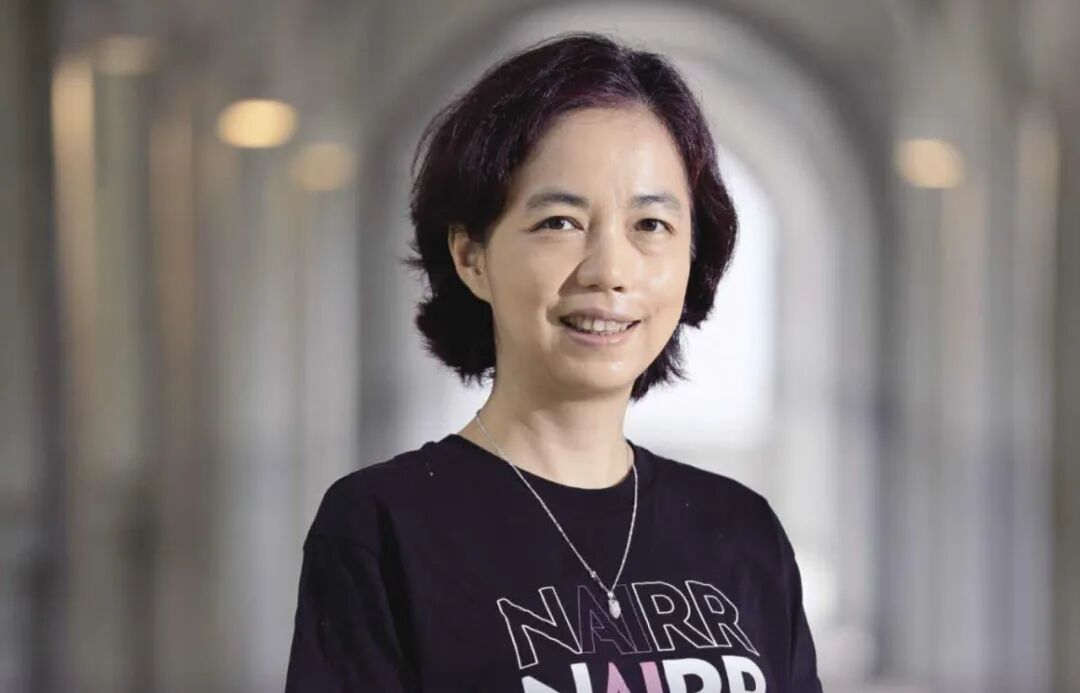
"我信仰的是人,不是 AI。" 在最近一场与钛媒体的对话中,这句看似简单却极不妥协的话,是李飞飞反复强调的核心立场:技术再先进,也不能替代人类自身的价值和责任。 李飞飞提出,当前 AI 的发展不能仅停留在语言和感知层面,它必须迈向更深层的空间智能——让机器能够理解、推理并与三维世界互动,而不是停留在 二维符号处理的表层。 她认为,这种能力的突破不是简单的技术堆叠,而是让 AI 能够真正"理解世界"的基本能力。 李飞飞不会回避 AI 的优势,但更担忧公众对技术的误读和过激叙事。 在她看来,当下围绕 AI 的讨论中存在从"末日论"到"乌托邦论"的极端观点,这既可能误导公众认知,也让有意义、务实的讨论变得更加困难。 对她而言,技术进步带来的,不仅是效率提升和产业变迁,更是对教育体系、社会结构乃至人类潜力的深刻挑战。 这正是她如此关注教育变革的原因。在她看来,传统的教育方法已经无法应对 AI 时代学生真正需要培养的能力——好奇心、批判性思维、创造力和空间 想象力。 "AI就是工具,工具就是双刃剑……我们对其他工具的期待,永远不是说让这个工具去 figure out (弄明白)要做什么,这是人类的责任。" 这不仅是对 ...
腾讯研究院AI速递 20251225
腾讯研究院· 2025-12-24 16:01
Group 1: Generative AI Developments - Anthropic has officially open-sourced the Skills project on GitHub, which includes 16 production-grade skill libraries covering document processing, creative design, and development technologies [1] - The Skills project features a skill-creator meta-skill that helps users create new skills, significantly lowering the customization barrier [1] - ByteDance's Seed team launched Seed Prover 1.5, achieving a score of 35/42 in the IMO 2025 top problems within 16.5 hours, utilizing a new Agentic Prover architecture [2] Group 2: Voice Interaction Models - Tongyi Bailing has open-sourced the Fun-Audio-Chat-8B voice interaction model, achieving state-of-the-art results in multiple authoritative benchmarks [3] - The model employs an innovative dual-resolution end-to-end design, reducing audio frame rates to the industry's lowest at 5Hz, saving nearly 50% GPU computation [3] - Fun-Audio-Chat-8B demonstrates excellent empathetic dialogue capabilities, automatically sensing user emotions without the need for emotional labels [3] Group 3: AI in Social Interaction - Second Me 1.1 has transformed the dialogue framework, allowing AI to proactively deliver content based on context and emotional temperature [4] - The platform utilizes a unique identity modeling approach, enabling users to leverage real identity information for content creation [4] - The upgrade from "social graph" to "context graph" enhances privacy through strict memory boundary delineation [4] Group 4: Robotics and AI Integration - Vbot's super-powered robotic dog achieved over 1,000 orders within 52 minutes of its launch, setting a record for high-end intelligent products [5][6] - The robot features 128 TOPS edge AI computing power, which is more than three times that of mainstream competitors, and supports 240W fast charging [6] - Priced at 9,988 yuan, Vbot aims to redefine consumer-grade embodied intelligence standards [6] Group 5: AI Perspectives and Future Trends - Turing Award winner Bengio argues that cognitive jobs are more susceptible to AI replacement, emphasizing the need for AI safety investments [7] - Google’s annual summary, led by Jeff Dean and Hassabis, predicts 2025 as a pivotal year for AI agents and scientific discovery, with Gemini 3 Pro leading benchmark tests [8] - Notion's CEO envisions AI as a transformative force in the knowledge economy, enhancing productivity significantly [9] Group 6: AI Growth and Market Insights - Epoch AI's year-end report indicates a significant acceleration in AI capabilities since April 2024, with reasoning models and reinforcement learning gaining prominence [10] - Key insights include a tenfold decrease in LLM reasoning costs and a rapid doubling of Nvidia chip computing power every ten months [10][11] - The report suggests that the greatest value of AI may come from widespread automation in economic systems rather than accelerated research [11]
