
绿色发展

Search documents
推动城市副中心高质量发展
Xin Lang Cai Jing· 2025-12-27 07:24
Group 1 - The construction of Beijing's urban sub-center is a significant national project aimed at enhancing the city's modern urban functions and quality of life [1][4] - The urban sub-center is tasked with relieving non-capital functions from the central urban area and optimizing the layout of the capital's urban functions [2][4] - The "Smart Beijing Innovation Center" is a key initiative for exploring digital economy and green development, focusing on data innovation and urban digitalization [2][4] Group 2 - The comprehensive transportation hub in the urban sub-center is crucial for implementing Beijing's overall urban planning and promoting regional collaboration [3] - The opening of the Beijing Tongzhou Station is a significant milestone, emphasizing safety and efficiency in transportation operations [3] - Continuous investment in major projects is necessary to enhance the urban sub-center's administrative, business, cultural, and technological functions [4] Group 3 - Cultural heritage preservation and the integration of historical and modern elements are essential for enhancing the cultural appeal of Tongzhou District [5] - The development of cultural facilities and community services is aimed at improving the quality of life for residents [5] - Regional collaboration with neighboring areas is vital for integrated development and improving transportation efficiency [5]
四川雅安:“十五五”期间锚定“一市一地”总目标 擘画“三区两地一枢纽”新路径
Xin Lang Cai Jing· 2025-12-27 06:22
Core Viewpoint - The Yaan Municipal Committee has approved the "14th Five-Year Plan" proposal, outlining the city's development direction and open cooperation strategy for the next five years, emphasizing its role in green development and western openness [1][3]. Group 1: Overall Positioning - The proposal defines Yaan's overall positioning as a "green development pioneer city" and a "new highland for western openness," reflecting its commitment to ecological priority and its strategic role in national and provincial openness [3]. Group 2: Implementation Path - The implementation path is detailed as "three districts, two areas, and one hub," focusing on high-quality development [4]. - **Three Districts**: - Green Industry Innovation Development Zone: Aims to promote industrial green transformation and establish a green industry system supported by modern industries [4]. - Sichuan-Tibet Economic Cooperation Experimental Zone: Focuses on developing a "land-based economy" by integrating resources from Tibet with technology from Chengdu and transformation capabilities from Yaan [5]. - Important Functional Area of Chengdu Metropolitan Area: Aims to deepen integration in various dimensions such as industry, transportation, and living standards [6]. - **Two Areas**: - Important Destination for Giant Panda Cultural Tourism: Leverages the construction of the Giant Panda National Park to promote cultural tourism [7]. - High-Quality Livable Area: Aims to create a "garden of Chengdu and Yaan" by integrating ecology, education, health, and urban development [8]. - **One Hub**: - Comprehensive Transportation Hub in Western Sichuan: Focuses on building a multi-modal transport system and aims to be included in the national logistics hub layout [9]. Group 3: Open Cooperation Strategy - The strategy for expanding open cooperation includes three key areas: - Constructing open corridors and accelerating infrastructure projects like the expansion of the Cheng-Yan Expressway and the establishment of a general airport [11]. - Expanding cooperation in four directions, connecting with Chengdu and the Yangtze River Delta to the east, Tibet to the west, the new land-sea corridor to the south, and the Silk Road Economic Belt to the north [12]. - Developing a high-level open economy by supporting the export of specialty products and promoting the establishment of bonded logistics centers and cross-border e-commerce [13].

明年经济工作怎么干?17市州主官这样说
Xin Lang Cai Jing· 2025-12-27 04:16
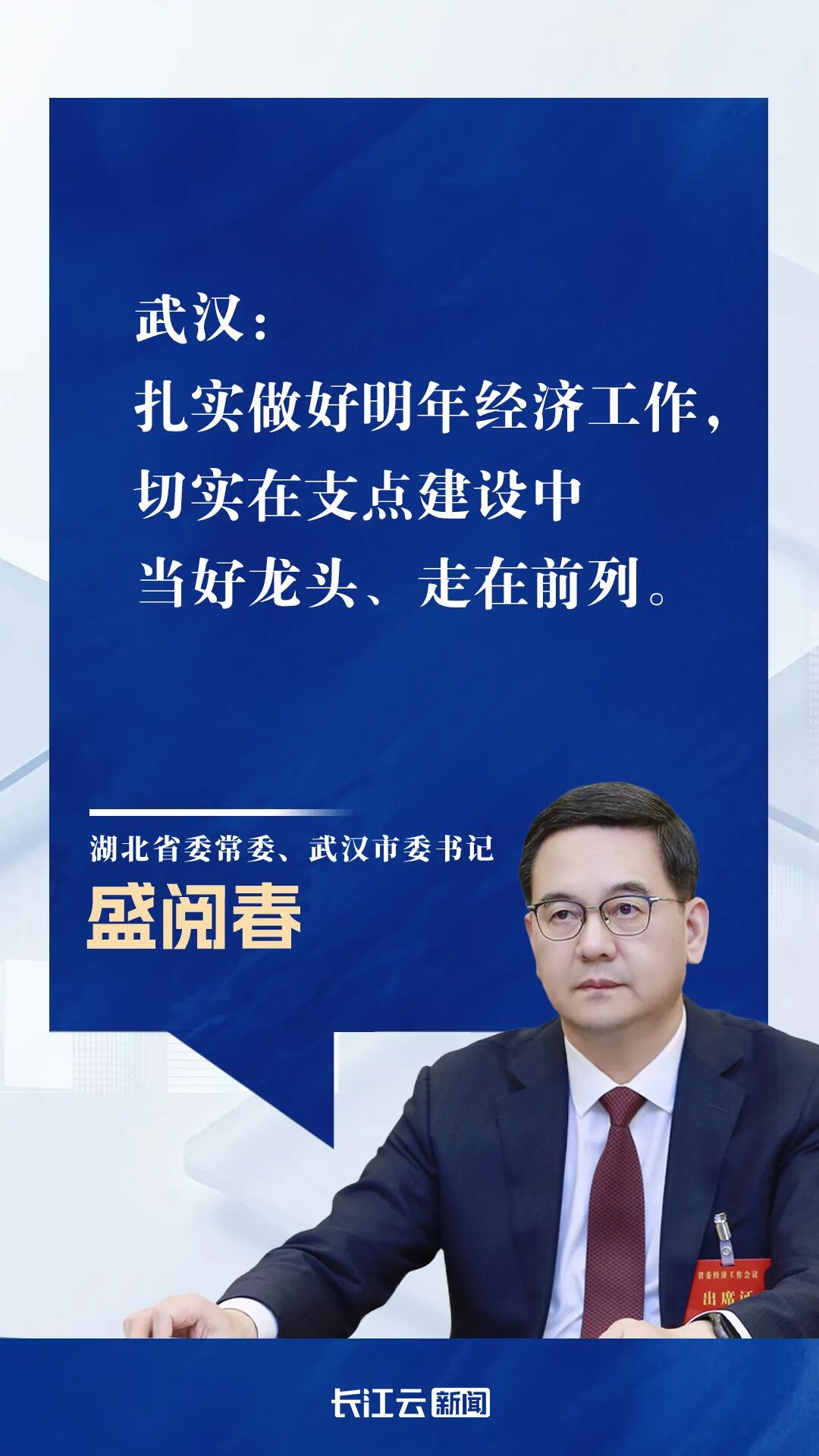
发展成绩来之不易,为我们在新起点上应对新挑战、夺取新胜利奠定了坚实基础。 转自:荆州发布 12月25日 省委经济工作会议在汉召开 研究部署2026年经济工作 17市州分组讨论 一致赞同省委、省政府 关于明年经济工作的安排 来看他们怎么说! ——武汉—— 对于省委经济工作会议有五点突出感受: 认识体会弥足珍贵,为我们做好当前和今后一个时期的经济工作提供了现实指导。 形势分析科学辩证,为我们全面做好经济工作坚定了信心决心。 目标安排务实进取,为我们更好引导预期、保持战略主动提供了重要依据。 工作任务重点突出,为全省上下抓好贯彻落实明确了主攻方向。 下一步,武汉将: 进一步强化内需主导,做强发展能级。扩大有效益的投资。激发有潜能的消费。培育有潜力的企业。 进一步壮大实体经济,加快发展新质生产力。加快打造"一城三廊一带"。加快构建现代化产业体系。加快建设基础设施体系。 进一步加快城市更新,建设现代化人民城市。深入推进城市更新三年行动。更好发挥"一委一办一平台"作用。 进一步推进区域协同,打造高质量发展重要增长极。持续"强核"。加快"壮圈"。全力"带群"。 进一步筑牢安全底线,持续增进民生福祉。加强生态保护。加强民生保 ...
工程推进背后的守护:包银高铁以科技之力穿山越河
Xin Lang Cai Jing· 2025-12-27 03:19
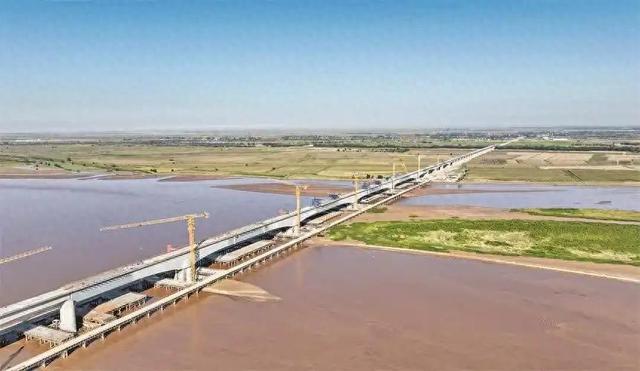
Core Insights - The opening of the Baoyin High-Speed Railway's Baotou to Huinong section marks a significant development in connecting Ningxia and Inner Mongolia, transforming travel time from "thousands of miles" to "half a day" [1][7] - The project features a high bridge and tunnel ratio of 39.6%, making it the longest high-speed railway project in Inner Mongolia with the most bridges [1] - The construction utilized innovative technologies to overcome complex terrain challenges, emphasizing both technological advancement and ecological protection [1][3] Infrastructure Development - The Wuhai Yellow River Bridge, a key project, spans 2,190.79 meters with a main span of 310 meters, employing advanced construction techniques to enhance efficiency [1][3] - The Dengkou Yellow River Bridge, measuring 5,145.91 meters, set a new record for high-speed railway bridge construction in China, utilizing a combination of large movable formwork and steel box girder technology [3] - The Gandel Mountain Tunnel, the longest on the line at 12,095 meters, faced complex geological conditions, requiring innovative blasting and monitoring techniques to ensure safety and quality [3][4] Environmental Protection - The construction adhered to strict environmental principles, particularly in the Gandel Mountain Tunnel, where protective measures were taken for rare plant species [4][6] - Measures included the use of closed mud treatment systems and ecological restoration practices to prevent pollution and maintain the integrity of the Yellow River ecosystem [6][7] - The project integrated green development concepts throughout its planning and execution, ensuring a balance between infrastructure advancement and ecological preservation [6][7]
周红波督办生态环境保护督察反馈及交办信访问题整改工作
Nan Jing Ri Bao· 2025-12-27 01:39
Group 1 - The core viewpoint emphasizes the importance of ecological environment protection as a fundamental aspect of public welfare and sustainable economic development [3] - The company is addressing issues related to illegal occupation of the Yangtze River management area, focusing on source governance and continuous improvement of ecological quality [1] - The company is committed to enhancing green development competitiveness through effective remediation and support for enterprises in planning and environmental technology upgrades [1] Group 2 - The company is implementing comprehensive noise reduction measures near residential areas, including the installation of sound barriers and traffic speed reduction [2] - The company is managing the remediation of industrial solid waste through transportation and resource utilization, emphasizing closed-loop management and timely completion of remediation [2] - The company is promoting a circular economy by focusing on waste reduction, resource utilization, and pollution reduction, aiming to prevent ecological risks [2]
打造绿色发展高地,三大区域开建“美丽中国先行区”
Di Yi Cai Jing· 2025-12-27 01:22
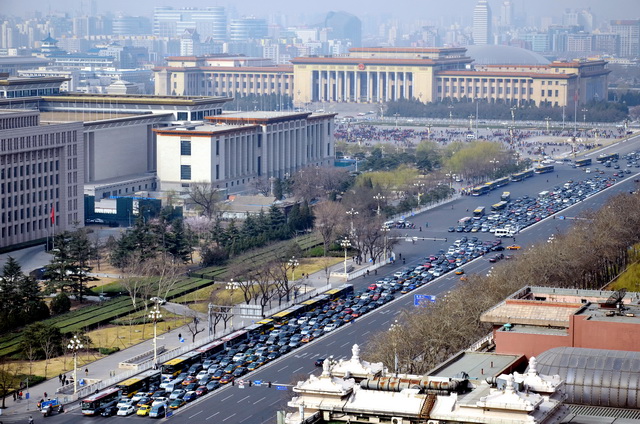
重中之重的任务是巩固提升京津冀、长三角、粤港澳大湾区高质量发展动力源作用。 京津冀、长三角、粤港澳大湾区将建设美丽中国先行区,破解制约生态环境治理深层次矛盾和问题,加 强区域绿色发展协作,深化生态环境共保联治,打造绿色发展高地。 粤港澳大湾区发挥"一国两制"制度优势,在提升生态环境品质、绿色金融改革创新、深化开放合作上先 行突破,充分发挥辐射带动作用,共建融合创新美丽湾区,打造全球绿色发展高地。 三大区域将打造绿色发展高地。图为北京城市景观。摄影 / 章轲 "三大区域行动方案"要求,坚持因地制宜,结合三大区域战略定位、发展基础与治理需求,统筹共性和 特性,设置各区域差异化、阶段性目标,既要确保先行先试又要切实可行,让建设成果可感可及。 第一财经记者注意到,三大区域先行区各自建设的主要目标有所不同。在主要生态环境指标方面,到 2027年,京津冀区域细颗粒物(PM2.5)年均浓度降至33微克/立方米,PM2.5为首要污染物的重度污染 天气和劣Ⅴ类水体、黑臭水体基本消除,优良水体比例比2024年提升3.2个百分点,地下水和近岸海域 水质保持稳定,主要污染物排放总量持续减少,碳排放强度持续下降; 生态环境部、国家发展 ...
河北菜园供应北京菜篮 共享智造助企降本增效
Xin Lang Cai Jing· 2025-12-26 22:03
Group 1: Agricultural Development - Hebei has established a facility vegetable industry cluster around Beijing, achieving a 42.5% market share in Beijing's wholesale vegetable market by 2024 [5] - The province has cultivated nine key vegetable-growing counties, each with over 200,000 acres, and has built 183 vegetable bases in collaboration with Beijing, supplying over 500,000 tons annually [5] - Hebei promotes smart planting technologies, including intelligent temperature control and integrated water and fertilizer systems, to enhance traditional farming practices [5] Group 2: Urban Development - Shijiazhuang has constructed and opened 62 pocket parks this year, exceeding the target of 50, enhancing urban green spaces and improving residents' quality of life [8] - The parks are designed with unique themes, such as the "Lingyu Park," which integrates cultural elements into its landscape, promoting a blend of culture and environment [8] Group 3: Economic Growth and Innovation - Xiong'an New Area is progressing towards becoming a modern city with an annual investment of 200 billion yuan and a GDP growth rate of 17.1%, focusing on quality and sustainability [6] - Hebei's "shared intelligent manufacturing" initiative aims to upgrade county-level industrial clusters, addressing issues like small scale and low efficiency, with 107 clusters now covered by this model [10] - The province has established 194 shared factories, engaging 18,000 enterprises to improve operational efficiency, as seen in the Anping wire mesh cluster and Ningjin cable base [10] Group 4: Talent Acquisition - The 16th Hebei High-level Talent Introduction and Exchange Conference attracted over 13,000 talents from 263 universities, focusing on the province's eight key industries [11] - The event featured 25 quality technology projects for roadshows and invited financial institutions to facilitate collaboration, aiming to attract technology, projects, and capital to Hebei [11]
怎样理解引导产业链供应链合理有序跨境布局
Xin Lang Cai Jing· 2025-12-26 21:02
Core Viewpoint - The article emphasizes the importance of guiding the cross-border layout of industrial and supply chains, highlighting that "going global" is a natural economic progression for major countries, and it is essential to focus on Gross National Income (GNI) alongside Gross Domestic Product (GDP) to foster international cooperation in supply chains and promote China's modernization [1][2]. Group 1: Current Status of China's Global Investment - Since the 18th National Congress, China has accelerated its integration into global industrial and supply chains, solidifying its position as a major investment country, with foreign direct investment projected to reach $192.2 billion in 2024, maintaining a top-three global ranking for 13 consecutive years [2]. - By the end of 2024, China's cumulative foreign investment is expected to exceed $3 trillion, with over 52,000 enterprises established abroad across 190 countries and regions, and total overseas assets exceeding $9 trillion [2]. - China's foreign investment has supported domestic development, facilitated the internationalization of products and services, and contributed positively to the host countries' livelihoods, while also enhancing global supply chain stability [2]. Group 2: Strategic Recommendations for Overseas Investment - Effective management of foreign investment is crucial, which includes improving the legal framework, enhancing regulatory systems, and integrating trade and investment to expand overseas marketing networks [3]. - Optimizing the overseas comprehensive service system is necessary, which involves upgrading public services and enhancing capabilities in legal, financial, and consulting services to support enterprises going global [3]. - Expanding the functionality of overseas economic and trade cooperation zones is recommended, focusing on infrastructure development and collaboration with domestic parks to better serve domestic industrial upgrades and international cooperation [4]. Group 3: Strengthening Partnerships and Risk Management - Establishing a robust network of partners in the industrial and supply chain is essential, promoting cooperation in green development, digital economy, and other emerging sectors to optimize global resource allocation [4]. - A comprehensive overseas risk prevention and interest protection system should be developed, including risk assessments and timely warnings to guide enterprises in avoiding high-risk areas and ensuring compliance in overseas operations [4].
大国工程改写时空版图
Xin Lang Cai Jing· 2025-12-26 19:01
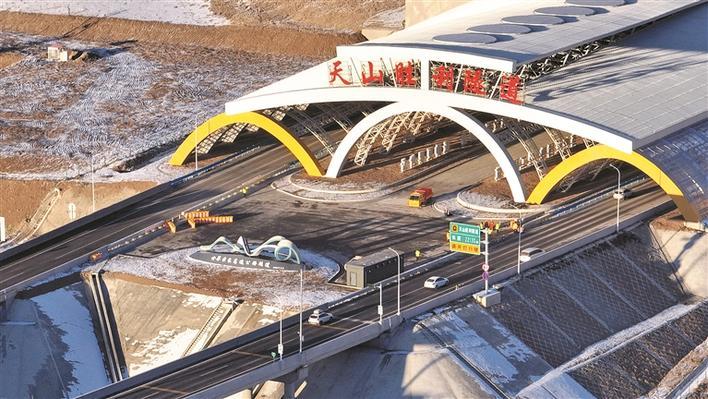
Core Viewpoint - The G0711 Urumqi to Yili Expressway, also known as the U-Y Expressway, has officially opened, significantly enhancing connectivity between northern and southern Xinjiang, and serving as a crucial infrastructure project for regional development and integration [6][12]. Infrastructure Development - The U-Y Expressway spans a total length of 22.13 kilometers, featuring the Tianshan Victory Tunnel, which is the longest high-altitude highway tunnel in the world, overcoming significant geological challenges [9][10]. - The construction of the U-Y Expressway took 5 years and 8 months, reducing travel time between Urumqi and Korla from 7 hours to 3.5 hours, thus establishing a "3-hour economic circle" in Xinjiang [8][12]. Technological Innovation - The project utilized advanced construction techniques, including a unique "three tunnels and four shafts" approach, which allowed for the completion of the Tianshan Victory Tunnel in just 52 months, a significant reduction from the typical 10-year timeframe [9][10]. - The construction faced challenges such as extreme temperatures and complex geological conditions, yet it achieved multiple domestic firsts and some world-leading technologies in tunnel construction [10][11]. Economic Impact - The U-Y Expressway is expected to enhance logistics efficiency, with transportation times reduced by over 200 kilometers and costs decreased by 30%, significantly benefiting local businesses and supply chains [12][14]. - The expressway connects major urban areas and trade zones, facilitating resource exchange and economic integration between northern and southern Xinjiang, thus reinforcing the region's role in the Belt and Road Initiative [12][13]. Environmental Considerations - The project emphasized ecological protection, implementing comprehensive environmental planning throughout its construction phases to minimize impact on sensitive areas [16][17]. - Innovative designs, such as the transparent pipeline showcasing natural water flow, reflect the commitment to sustainable development and ecological responsibility [16][17].
《粤港澳大湾区美丽中国先行区建设行动方案》印发
Xin Lang Cai Jing· 2025-12-26 17:59
Core Viewpoint - The "Guangdong-Hong Kong-Macao Greater Bay Area Beautiful China Pilot Zone Construction Action Plan" aims to leverage the advantages of "one country, two systems" to enhance ecological quality, promote green finance innovation, and deepen cooperation, ultimately establishing a modern ecological governance system and a beautiful bay area through collaborative innovation [1][2]. Group 1: Overall Requirements - The plan is guided by Xi Jinping's thoughts on ecological civilization, aiming to make the Greater Bay Area a strategic support for new development patterns and a demonstration area for high-quality development by 2027 and 2030 [3]. Group 2: Building a Green and Low-Carbon Greater Bay Area - The plan emphasizes regional cooperation, focusing on core engines like Hong Kong, Macao, Guangzhou, and Shenzhen to drive green development and infrastructure connectivity [4]. - It aims to create modern green and low-carbon industrial clusters, promoting digital and green transformation in traditional industries and developing high-value water-related new business formats [4]. - A clean and low-carbon energy system will be established, including world-class offshore wind power bases and integrated building photovoltaic systems [5]. Group 3: Building a Blue and Clean Greater Bay Area - The plan includes initiatives for air quality improvement, emphasizing integrated pollution control and cross-border cooperation in air quality management [6][7]. - It aims to enhance water environment governance in the Pearl River Basin, ensuring safe drinking water and promoting beautiful river and lake construction [7]. Group 4: Building a Beautiful and Ecological Greater Bay Area - The plan focuses on maintaining an integrated ecological system and protecting biodiversity, including the establishment of ecological corridors and the protection of endangered species [8][9]. Group 5: Building a Harmonious and Beautiful Greater Bay Area - The plan promotes the construction of high-standard international beautiful urban clusters and the integration of urban and rural development [9][10]. - It encourages innovative "beautiful cell" construction models, including pocket parks and zero-carbon communities [10]. Group 6: Building a Healthy and Safe Greater Bay Area - The plan emphasizes ecological safety and environmental health management, including monitoring and risk assessment systems [10][11]. - It aims to establish a "waste-free bay area" through solid waste management and pollution control measures [11]. Group 7: Building an Innovative and Collaborative Greater Bay Area - The plan promotes the alignment of regulations and mechanisms in key areas, including environmental quality monitoring and carbon footprint management [12][13]. - It encourages green finance innovation to attract investment in green projects and support sustainable development [13][14]. Group 8: Building an Open and Shared Greater Bay Area - The plan aims to create high-level green cooperation platforms and enhance cross-border environmental service integration [14][15]. - It emphasizes participation in global ecological civilization initiatives and the promotion of green trade [15][16].