虚拟电厂

Search documents
焦点访谈|今日入伏,带你看各地如何以“凉”策应对“烤题”
Yang Shi Wang· 2025-07-20 13:10
Health Impact - High temperature and humidity can lead to fluctuations in blood pressure and blood sugar, particularly affecting elderly individuals with chronic diseases [3] - Symptoms of heat exhaustion include dizziness, headache, fatigue, thirst, excessive sweating, and decreased concentration, which should be taken seriously to prevent progression to heat stroke [5][22] Public Health Measures - Many public spaces have been opened to provide cooling areas for citizens during extreme heat [7] - In Hebei, underground cooling points have been established, utilizing technology to enhance the experience for visitors [9] Energy Supply Challenges - The demand for electricity has surged due to high temperatures, with Zhejiang province recording a peak load of over 125 million kilowatts, a historical high [12] - Strategies to ensure electricity supply include increasing generation capacity and utilizing cross-regional power transmission [12][14] Labor Protection - New regulations mandate that outdoor work must cease when temperatures exceed 40°C, and limit work hours when temperatures are between 37°C and 40°C [22] - Construction sites are implementing staggered work schedules to avoid peak heat hours and providing cooling supplies to workers [24][26] Technological Innovations - Innovative cooling technologies, such as smart cooling vests, are being used to protect workers in high-temperature environments [20] - Drones are enhancing operational efficiency and reducing downtime for maintenance tasks during extreme heat [20]


稳定币浪潮,为什么我们建议关注RWA和新能源企业的结合?
Guotou Securities· 2025-07-20 09:05
Investment Rating - The report maintains an "Outperform" rating for the environmental and public utility sector [7]. Core Insights - The report emphasizes the potential of Real World Assets (RWA) in conjunction with renewable energy companies, highlighting that RWA could become a significant development direction for stablecoins, with a projected market size of $16 trillion by 2030 [24][39]. - The report discusses the recent advancements in RWA, particularly in Hong Kong, where the Ensemble project has initiated themes related to green and sustainable finance, indicating a shift towards tokenizing assets like carbon credits and renewable energy charging stations [39][40]. Summary by Sections 1. RWA and Renewable Energy - RWA connects real-world assets with digital finance, providing unique value in bridging virtual and real economies [27]. - The Ensemble project in Hong Kong includes green finance as a key theme, with the first project involving the tokenization of electric vehicle charging stations [39][40]. - RWA technology can lower investment thresholds and attract more investors, offering new financing channels for renewable energy companies [42]. 2. Market Review - From July 5 to July 18, the Shanghai Composite Index rose by 1.79%, while the environmental index increased by 2.66%, outperforming the composite index [43]. - The public utility index decreased by 0.27%, underperforming the Shanghai Composite Index by 2.06 percentage points [43]. 3. Market Information Tracking - In July 2025, the average transaction price for electricity in Jiangsu was 395.6 RMB/MWh, up 26.47% month-on-month [55]. - The price of thermal coal at Qinhuangdao Port was reported at 642 RMB/ton, reflecting a 19 RMB/ton increase from the previous week [58]. 4. Industry Dynamics - The report notes that the garbage incineration sector is seeing improved cash flow due to debt reduction policies, while companies are exploring new trends such as high-energy direct power supply [13]. - The water service sector is expected to enhance profitability as residential water prices gradually adjust [13]. 5. Investment Portfolio and Recommendations - For public utilities, the report suggests focusing on thermal power companies that are expected to perform well due to proximity to coal production areas and cost reductions [12]. - In the green energy sector, companies that integrate power generation, sales, and consumption are recommended for their resilience against market disruptions [12].
广西用电负荷创历史新高
Guang Xi Ri Bao· 2025-07-20 01:13
Core Insights - The power load in Guangxi reached a historical high of 35.234 million kilowatts on July 18, driven by high temperatures and increased air conditioning usage [1] - The overall electricity consumption in Guangxi for the first half of the year was 128.43 billion kilowatt-hours, a year-on-year increase of 2.9%, with significant growth in sectors like internet data services and electric vehicle charging [1][2] Group 1: Electricity Load and Consumption - High temperatures have significantly contributed to the surge in electricity load, with multiple cities in Guangxi setting new records [1] - The electricity consumption in Guangxi has shown robust growth in high-tech manufacturing, with internet data services increasing by 17.9% and electric vehicle charging services by 51% [1] Group 2: Power Supply and Infrastructure - As of June 30, the installed capacity of renewable energy in Guangxi exceeded 53.288 million kilowatts, marking a year-on-year growth of 70.7% [2] - Key infrastructure projects in the Guangxi power grid are set to enhance energy distribution capabilities, with 45 kilometers of new transmission lines and an additional 1.23 million kilovolt-amperes of substation capacity [2] - The total capacity of new energy storage in Guangxi reached 2.959 million kilowatts, reflecting a 37.6% increase compared to the previous year [2]
电力设备及新能源行业双周报(2025、7、4-2025、7、17):光伏产业链上游价格回暖-20250718
Dongguan Securities· 2025-07-18 14:49
Investment Rating - The report maintains an "Overweight" rating for the electric equipment and new energy industry [2] Core Viewpoints - The upstream prices of the photovoltaic industry chain have rebounded, with transaction activity increasing and average transaction prices rising above 40,000 yuan/ton [4][41] - The report highlights the importance of macro guidance and industry governance by national ministries to promote high-quality development in the photovoltaic sector [4][41] Market Review - As of July 17, 2025, the electric equipment industry has increased by 1.78% over the past two weeks, outperforming the CSI 300 index by 0.1 percentage points, ranking 15th among 31 industries [12][13] - The wind power equipment sector has decreased by 3.17%, while the photovoltaic equipment sector has increased by 5.22% [16][18] - The top three stocks in terms of growth over the past two weeks are Tongguan Copper Foil, Xinling Electric, and Yamaton, with increases of 51.16%, 36.20%, and 35.17%, respectively [20][21] Valuation and Industry Data - As of July 17, 2025, the PE (TTM) for the electric equipment sector is 26.11 times, with sub-sectors showing varied valuations: - Motor II: 50.78 times - Other Power Equipment II: 41.98 times - Photovoltaic Equipment: 18.47 times - Wind Power Equipment: 32.48 times - Battery: 26.29 times - Grid Equipment: 24.80 times [23][26] Industry News - The report notes that as of July 16, 2025, the average transaction price for multi-crystalline silicon n-type re-investment material is 41,700 yuan/ton, with a week-on-week increase of 12.4% [32][41] - The Ministry of Industry and Information Technology emphasized the need to regulate low-price disorderly competition in the photovoltaic industry to enhance product quality and promote sustainable development [4][41] Company Announcements - The report includes various company announcements, such as Tianqi Materials signing a procurement agreement to supply at least 550,000 tons of electrolyte products [39] - Beijing Ke Rui won a bid for a project with an estimated amount of approximately 322 million yuan [40] Weekly Perspective - The report suggests focusing on leading companies in technology and scale within the photovoltaic sector, as the industry is expected to undergo a new round of price adjustments [41][42]
如何卡位数智化储能?储能调研级白皮书启动
行家说储能· 2025-07-18 08:28
Core Viewpoint - The report emphasizes the acceleration of new energy storage and virtual power plants, which inject new momentum into the construction of a new power system in China [1]. Group 1: Impact of Power Market Reform on Energy Storage - The report outlines the structural changes in the profitability model of energy storage projects as the national unified power market system is gradually established by 2025 [1]. - It discusses the role and value of electrochemical energy storage in power trading, highlighting its importance in the evolving market [4]. Group 2: Digital Technology Empowering Electrochemical Energy Storage - The integration of AI and big data in energy storage applications is explored, showcasing how these technologies can enhance operational efficiency [4]. - Predictive maintenance and digital twins are identified as key components in optimizing energy storage systems [4]. Group 3: Analysis of Commercial Models for Energy Storage - The report analyzes various revenue models for independent energy storage stations, including spot market arbitrage and auxiliary services [4]. - It discusses the collaborative model of solar and storage integration, as well as the commercial storage and virtual power plant (VPP) model [4]. Group 4: Development and Breakthroughs in Intelligent Energy Storage Technology - The report highlights advancements in safety through intelligent technology applications in energy storage [5]. - It examines the transformation of energy storage batteries and the development of intelligent networked energy storage systems [5]. Group 5: Diverse Applications of Intelligent Energy Storage - An analysis of the 2025 energy storage industry registration and grid connection projects is included, providing insights into operational practices [5]. - The report discusses integrated projects involving source, grid, load, and storage, as well as benchmark projects in commercial energy storage [5]. Group 6: Price Analysis of Energy Storage Products - The report includes a detailed analysis of prices for EPC and energy storage systems, energy storage cells, and energy storage PCS [6]. Group 7: Trends and Recommendations for Energy Storage in the New Power Market - Forecasts for the energy storage market scale and commercial energy storage installation capacity from 2025 to 2030 are provided [6]. - Strategic layout directions for enterprises in the energy storage sector are discussed [6]. Group 8: Progress and Model Analysis of the Energy Storage Supply Chain - The report presents a diagram of the intelligent energy storage industry chain and analyzes key enterprises in the sector [6].

浙江嘉兴:可再生能源精准供给智算中心
Ke Ji Ri Bao· 2025-07-18 01:00
Core Insights - The demand for computing power is surging, driven by intelligent computing, with electricity being the ultimate requirement for this power [1] - The new green electricity aggregation supply model in Jiaxing, Zhejiang, has shown positive results in meeting computing power needs through local renewable energy consumption [1] Group 1: Green Electricity Supply Model - Jiaxing's model allows renewable energy to be precisely used to meet computing power demands, utilizing technologies like joint forecasting of computing load and renewable power [1] - The implementation of the power-computing-carbon cross-network adjustment plan aims to promote the use of green electricity in data centers, addressing energy consumption and renewable energy absorption issues [1] Group 2: Computing Power Infrastructure - Jiaxing is developing the Yangtze River Delta Intelligent Computing Center, with five 1024 computing clusters established, accounting for approximately 60% of Zhejiang's total computing power [1] - The information port in Pinghu experienced a 297% year-on-year increase in electricity consumption from January to May, with 48% of its electricity sourced from local offshore wind power [1] Group 3: Cooling and Energy Efficiency - A customized water storage cooling system has been proposed for the Pinghu information port, which includes the construction of two water storage tanks to reduce peak electricity load and save cooling costs by 2.06 million yuan annually [2] - The information port plans to connect its adjustable resources to Jiaxing's virtual power plant management platform, with an expected total adjustment capacity of 283,000 kilowatts by the end of 2026 [2]
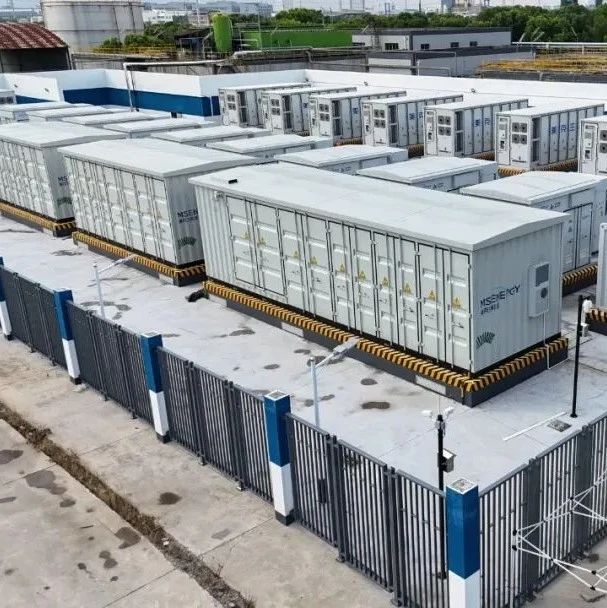
共86MWh!2家工商业储能企业瞄准这一领域
行家说储能· 2025-07-16 11:55
Core Viewpoint - The article discusses the recent developments in commercial energy storage projects by two companies, Wotai Energy and Lixing Energy, focusing on their applications in the chemical fiber industry, which faces significant energy demands and challenges under carbon neutrality goals [1]. Group 1: Wotai Energy - Wotai Energy has successfully connected a 60MWh energy storage station to the grid for Lixin Chemical Fiber, marking it as one of the largest commercial energy storage projects in Suzhou [2]. - The project utilizes 12 units of Wotai Energy's 5MWh liquid-cooled storage systems, integrated with 12 units of 2MW inverter-boosting units, ensuring safe and stable operation during high load scenarios [4]. - The centralized 60MWh solution is designed to manage energy distribution effectively, with an expected annual energy discharge of approximately 40 million kWh [5]. - Wotai Energy leverages its capabilities as a load aggregator to adapt to new regulations, allowing the project to generate revenue through various services beyond just price differences [6]. - The platform employs an "AI storage strategy" to optimize energy management by dynamically adjusting operations based on real-time load curves and cost considerations [7]. Group 2: Lixing Energy - Lixing Energy has partnered with a subsidiary of a major Chinese fiber group to implement energy storage projects across Jiangsu and Zhejiang provinces [8]. - In Xuzhou, a factory has installed a 5MW/10MWh energy storage system alongside a previously deployed 4000kWp photovoltaic system, creating a "solar + storage" integration [9]. - An 8MW/16MWh energy storage project in Huzhou, Zhejiang, supports high-intensity production needs and enhances the stability and resilience of the entire power system, with future potential for virtual power plant integration [11].
合康新能(300048):美的赋能,聚焦能源,踏浪前行
Guotou Securities· 2025-07-16 07:09
Investment Rating - The report assigns a "Buy-A" investment rating to the company with a 12-month target price of 7.61 CNY, while the current stock price is 6.21 CNY [5]. Core Insights - The company has undergone multiple rounds of business integration, focusing on renewable energy and frequency converter businesses, achieving profitability in 2024 with a revenue of 3.915 billion CNY, a year-on-year increase of 512.04%, accounting for 81.98% of total revenue [1][9]. - The company is backed by Midea Group, which is expected to empower its renewable energy business for rapid development, particularly in household energy storage and photovoltaic inverter sectors [2][49]. - The company is seizing opportunities in the renewable energy market, with a focus on virtual power plants, which are expected to thrive under new market pricing mechanisms [3][8]. Summary by Sections 1. Focus on Renewable Energy and Frequency Converters - The company has strategically divested from inefficient assets to concentrate on renewable energy and frequency converter businesses, establishing itself as a high-tech enterprise in these fields [15]. - The renewable energy segment has become the primary revenue driver, contributing over 80% of total revenue, with significant growth in photovoltaic EPC projects [21][22]. 2. Photovoltaic EPC + Household Storage + Photovoltaic Inverters - The global demand for household energy storage has surged, with a cumulative installed capacity of 51 GWh in 2024, a 48% year-on-year increase [36]. - The company has developed self-researched products for household storage and photovoltaic inverters, targeting international markets and obtaining high-level safety certifications [49][50]. 3. In-depth Analysis of the Company - The company has maintained a strong position in the high-voltage frequency converter market, achieving a revenue of 645 million CNY in 2024, despite it only accounting for 13.5% of total revenue [22]. - The company has successfully turned around its profitability in 2024, with a net profit of 10 million CNY, driven by the growth of its photovoltaic EPC business and effective cost management [26][29]. 4. Profit Forecast and Valuation - Revenue projections for 2025-2027 are estimated at 6.5 billion CNY, 8.375 billion CNY, and 9.76 billion CNY, with corresponding growth rates of 36.09%, 28.84%, and 16.55% [9][10].

机器人&AIDC&电网&工控行业中期策略
2025-07-15 01:58
Summary of Key Points from Conference Call Records Industry Overview - **Robotics and AIDC (Automatic Identification and Data Capture) Industry**: The humanoid robot sector is viewed as a starting point for a trillion-dollar market, with significant growth potential anticipated in the second half of 2025. [1][2][4] - **Industrial Control Industry**: The overall demand is expected to grow positively in 2025, particularly in lithium battery, logistics, packaging, and engineering machinery sectors. [1][9] - **Electric Power Industry**: Investment in the electric grid is maintaining high growth, with a 20% year-on-year increase in the first five months of 2025. [1][35] Key Insights and Arguments Robotics Sector - **Market Performance**: The humanoid robot sector performed well in Q1 2025 but saw a slowdown in Q2. Positive changes are emerging due to adjustments in Tesla's plans, which have already been reflected in stock prices. [2][4] - **Product Development**: Companies like Xiaopeng and Xiaomi are increasing investments in humanoid robots, with new products being launched and orders starting to materialize, although large-scale commercial applications are still in the trial phase. [5][6] - **Component Innovation**: Rapid advancements in components such as dexterous hands and joint modules are noted, with lightweight materials becoming a significant focus. [3][5] AIDC Sector - **Challenges and Opportunities**: The AIDC sector faces challenges such as supply chain issues and domestic restrictions affecting capital expenditure. However, new products and models like Deep Seek are expected to drive demand. [6][7] - **Market Valuation**: AIDC companies are currently valued around 30 times earnings, with expectations for improvement in 2026 as supply chain issues are resolved. [7] Industrial Control Sector - **Demand Growth**: The industrial control sector is projected to see growth driven by structural transformation needs rather than large-scale capital expenditures. [9][32] - **Impact of Trade Wars**: The sector has been slightly affected by trade wars and tariffs, leading to a dip in orders in Q2 2025 compared to Q1. [9] Electric Power Sector - **Investment Trends**: Electric grid investments are expected to exceed 10% growth in 2025, with significant funding allocated for equipment updates and new projects. [35][36] - **Market Dynamics**: The transition to a market-oriented electricity system is accelerating, with expectations for the national spot market to begin operations by the end of 2025. [36][49] Additional Important Insights - **Regional Procurement**: The first implementation of regional collective procurement in 2025 has led to a decrease in overall bidding prices, but market share for leading companies has increased. [40] - **Smart Meter Market**: The smart meter market is transitioning, with the 20th version nearing the end of its lifecycle and the 24th version expected to improve margins for leading companies. [44] - **HVDC Technology**: The growth of HVDC (High Voltage Direct Current) technology is anticipated, with significant interest from major companies like Alibaba and Tencent. [31] This summary encapsulates the critical insights and developments across the robotics, AIDC, industrial control, and electric power sectors as discussed in the conference call records.

财经聚焦|直面高温“烤”验 看今夏电力供应如何“过关”
Xin Hua She· 2025-07-14 14:42
Core Insights - The article highlights the record high electricity demand in China, reaching 1.467 billion kilowatts, and emphasizes the importance of ensuring sufficient power supply during peak summer months [1][2]. Group 1: Power Supply and Generation - Coal remains a critical component in energy supply, acting as a stabilizer in the energy mix, with major coal-fired power plants in Huainan contributing significantly to the grid [1][2]. - Huainan has seven large coal-fired power plants with a total installed capacity of 15.62 million kilowatts, supplying nearly 200 million kilowatt-hours daily to the East China grid [2]. - Nationally, coal inventories at regulated power plants have remained above 200 million tons, ensuring over 30 days of supply [2]. Group 2: Renewable Energy Contribution - The transition to renewable energy sources is increasingly vital for power supply during peak demand periods, with significant solar power generation reported in Shandong [4]. - On July 5, Shandong's renewable energy output reached 66.615 million kilowatts, accounting for 54.9% of the total grid load and 63.1% of total generation, with solar power contributing 83.9% of that output [4]. Group 3: Energy Distribution and Management - Efficient energy distribution systems are crucial for managing peak demand, with initiatives in Xinjiang facilitating the transfer of renewable energy to other regions [6][7]. - A new cross-regional trading mechanism has been established to optimize electricity supply and demand across different regions, enabling significant electricity transfers from southern provinces to eastern regions [9]. Group 4: Demand-Side Management - Demand-side management strategies, such as using virtual power plants and new energy storage systems, are being implemented to balance peak loads effectively [10][11]. - Initiatives encouraging residential energy conservation, such as the "demand response" program in Anhui, aim to reduce peak electricity usage by incentivizing households to save energy [13].