
大模型

Search documents
7个月5个人工智能IPO,启明创投:投资AI是未来二十年中国投资最大的确定性
投中网· 2026-01-29 06:38
Core Viewpoint - The article emphasizes that Qiming Venture Partners has successfully invested in over 100 AI-related companies, with a total investment of approximately 12 billion RMB, marking a significant return on investment as the AI industry matures in China [5][6]. Investment Achievements - Qiming Venture Partners has seen a surge in IPOs in the AI sector, with three IPOs occurring within a short span from late 2025 to early 2026, and a total of five IPOs in the past seven months [3][4]. - The firm has strategically invested across the entire AI value chain, from infrastructure to application layers, demonstrating a comprehensive understanding of the industry's evolution [4][6]. Investment Philosophy - The investment philosophy of Qiming Venture Partners is encapsulated in the concept of "half a step ahead," allowing them to identify and capitalize on key technological and market inflection points before they become widely recognized [12][13]. - This approach requires a deep understanding of both the disruptive potential of technologies and the timing of market demand, enabling the firm to make decisive investments at critical moments [13][14]. Future Outlook - Qiming Venture Partners believes that AI represents the greatest certainty for investment in the next 20 years, with confidence that the Chinese AI industry is not in a bubble but rather at the brink of significant growth [16][18]. - The firm anticipates a shift towards application-layer investments as the AI technology stack matures, predicting a vibrant future for AI applications across various industries, particularly in healthcare [18][19].


刘强东给光明村送“科技年货”,老少乡亲喜提AI新伙伴
Sou Hu Cai Jing· 2026-01-29 06:30
Group 1 - JD Group's founder Liu Qiangdong delivered over 10,000 New Year goods to villagers in Jiangsu, including essential items and practical appliances [1] - The "technology New Year goods" included an AI smartphone for the elderly, equipped with a dialect-recognizing AI application called "Dongdong" [1][3] - An AI classroom was established for children in the village, featuring AI toys and devices powered by JD's JoyAI model to enhance learning experiences [6] Group 2 - "Dongdong" serves as an AI assistant tailored for elderly users, capable of engaging in conversations and providing health advice [3][4] - The AI assistant can perform various tasks such as online shopping, food ordering, and health consultations through voice commands [4] - JD's innovative AI toys allow children to connect and interact with different devices, creating a safe social environment for them [8]

阿里,重磅!自研AI芯片亮相
证券时报· 2026-01-29 04:39
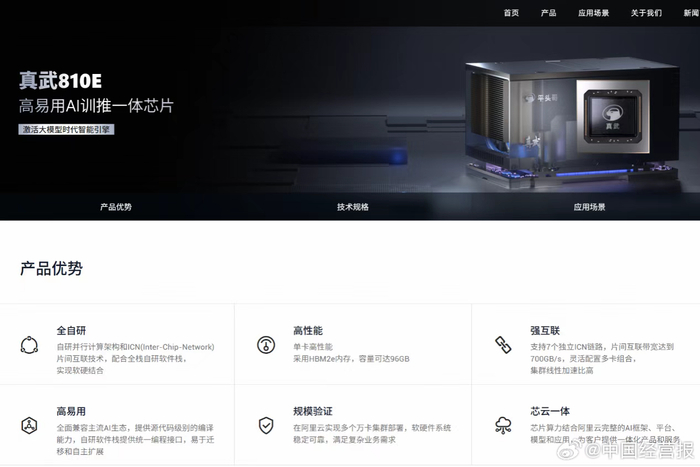
Core Viewpoint - Alibaba has officially launched its self-developed AI chip "Zhenwu 810E," marking the debut of the AI computing triangle formed by Tongyi Lab, Alibaba Cloud, and Pingtouge, aimed at creating a super AI computing platform [1][4]. Group 1: Chip Development - The "Zhenwu" PPU utilizes a self-developed parallel computing architecture and inter-chip communication technology, achieving full-stack self-research in both hardware and software [3]. - The memory of the "Zhenwu" PPU is 96G HBM2e, with an inter-chip communication bandwidth of 700 GB/s, suitable for AI training, inference, and autonomous driving applications [3]. Group 2: Performance Comparison - The overall performance of the "Zhenwu" PPU surpasses that of Nvidia's A800 and mainstream domestic GPUs, comparable to Nvidia's H200, and the upgraded version outperforms Nvidia's A100 [4]. - Industry insiders have noted that the "Zhenwu" PPU is well-regarded for its excellent stability and cost-effectiveness, with demand exceeding supply in the market [4]. Group 3: Strategic Development - Alibaba has invested 17 years in strategic development and vertical integration, culminating in the complete layout of the "Tongyun Ge" full-stack AI [4]. - The launch of the "Zhenwu" PPU reflects Pingtouge's accumulated strength in the chip sector, with Alibaba Cloud established in 2009 and Pingtouge founded in 2018 [4]. Group 4: AI Model Achievements - On January 26, Tongyi Lab released the flagship inference model Qwen3-Max-Thinking, setting multiple global records and performing comparably to GPT-5.2 and Gemini 3 Pro [4]. - The number of derivative models from the Qianwen open-source model has exceeded 200,000, with download counts surpassing 1 billion, maintaining its position as the largest AI open-source community globally [4].

7个月5个人工智能IPO 启明创投:投资AI是未来二十年中国投资最大的确定性 | 机构动态
Sou Hu Cai Jing· 2026-01-29 04:20
Core Insights - Qiming Venture Partners has achieved significant success in the AI sector, with three IPOs occurring within a short span from late 2025 to early 2026, and a total of five IPOs in the past seven months, marking a concentrated harvest period after over a decade of strategic investment [2][3] Investment Strategy - Since 2013, Qiming Venture Partners has invested over 12 billion RMB in more than 100 projects within the AI sector, covering the entire industry chain from infrastructure to application [3] - The firm has strategically positioned itself to capture key technological turning points, investing early in companies like CloudWalk, Megvii, and others, which have become benchmarks in the industry [3][4] Notable IPOs - CloudWalk, which successfully went public on the Hong Kong Stock Exchange in June 2025, exemplifies the firm's long-term investment strategy, having received multiple rounds of funding from Qiming since its early stages [4][5] - Wall Street's first GPU stock, Biren Technology, also went public in January 2026, with Qiming as a founding investor, showcasing the firm's commitment to supporting companies from inception [4][5] Market Outlook - Qiming's founder, Kuang Ziping, believes that investing in AI represents the greatest certainty for the next 20 years, driven by a strong belief in technological transformation and the firm's established presence in the AI landscape [2][10] - The firm anticipates a significant increase in AI applications as costs decrease, predicting a surge in native AI applications by 2026, which will further accelerate the industry [10][11] Investment Philosophy - Qiming's investment philosophy, termed "half a step ahead," emphasizes the importance of timing in identifying technological and market inflection points, allowing the firm to make informed investment decisions before widespread market consensus [7][8] - The firm has consistently demonstrated a commitment to supporting entrepreneurs through various stages of development, reflecting a deep belief in the potential of AI technologies [9] Future Focus - Qiming is shifting its focus towards application layers of AI, anticipating a diverse range of applications and platforms to emerge, particularly in sectors like healthcare and education [11] - The firm aims to play a significant role in the transformation of industries through AI, emphasizing the importance of Chinese innovators in the global AI landscape [11]

7个月5个人工智能IPO,启明创投:投资AI是未来二十年中国投资最大的确定性
创业邦· 2026-01-29 03:54
Core Viewpoint - The article emphasizes that the wave of artificial intelligence (AI) is transforming industries globally, with early-stage investments playing a crucial role in this transition. It highlights the success of Qiming Venture Partners in the AI sector, marking a significant return on investment after over a decade of strategic positioning [2][4]. Investment Achievements - Qiming Venture Partners has invested over 12 billion RMB in more than 100 projects in the AI sector since 2013, including nearly 30 companies at the intersection of healthcare and AI [4]. - The firm has successfully captured key opportunities in various AI domains, including speech recognition and autonomous driving, with notable investments in companies like Yunzhisheng and WeRide [4][6]. IPO Success - In a short span from late 2025 to early 2026, Qiming Venture Partners celebrated three IPOs in the AI field, including Yunzhisheng and Biran Technology, marking a concentrated harvest period after years of investment [2][6]. - The firm has been a significant early investor in companies like Biran Technology, which became the first GPU stock on the Hong Kong Stock Exchange, and Zhipu AI, which saw its market value soar to over 100 billion HKD shortly after its IPO [6][7]. Investment Philosophy - Qiming Venture Partners operates on a clear investment philosophy of being "half a step fast," allowing them to identify and invest in technologies before they become mainstream [11][12]. - The firm believes that the most valuable investment opportunities exist between the technological breakthrough point and the market explosion point, requiring a deep understanding of both technology and market dynamics [11][12]. Future Outlook - The firm maintains a strong belief that AI will be the largest certainty in investment over the next 20 years, asserting that the current discussions around an "AI bubble" do not reflect the reality of the Chinese AI market [14][15]. - Qiming Venture Partners is shifting its focus towards application layers in AI, anticipating a surge in native applications and super platforms that will significantly impact various industries, particularly healthcare [15].

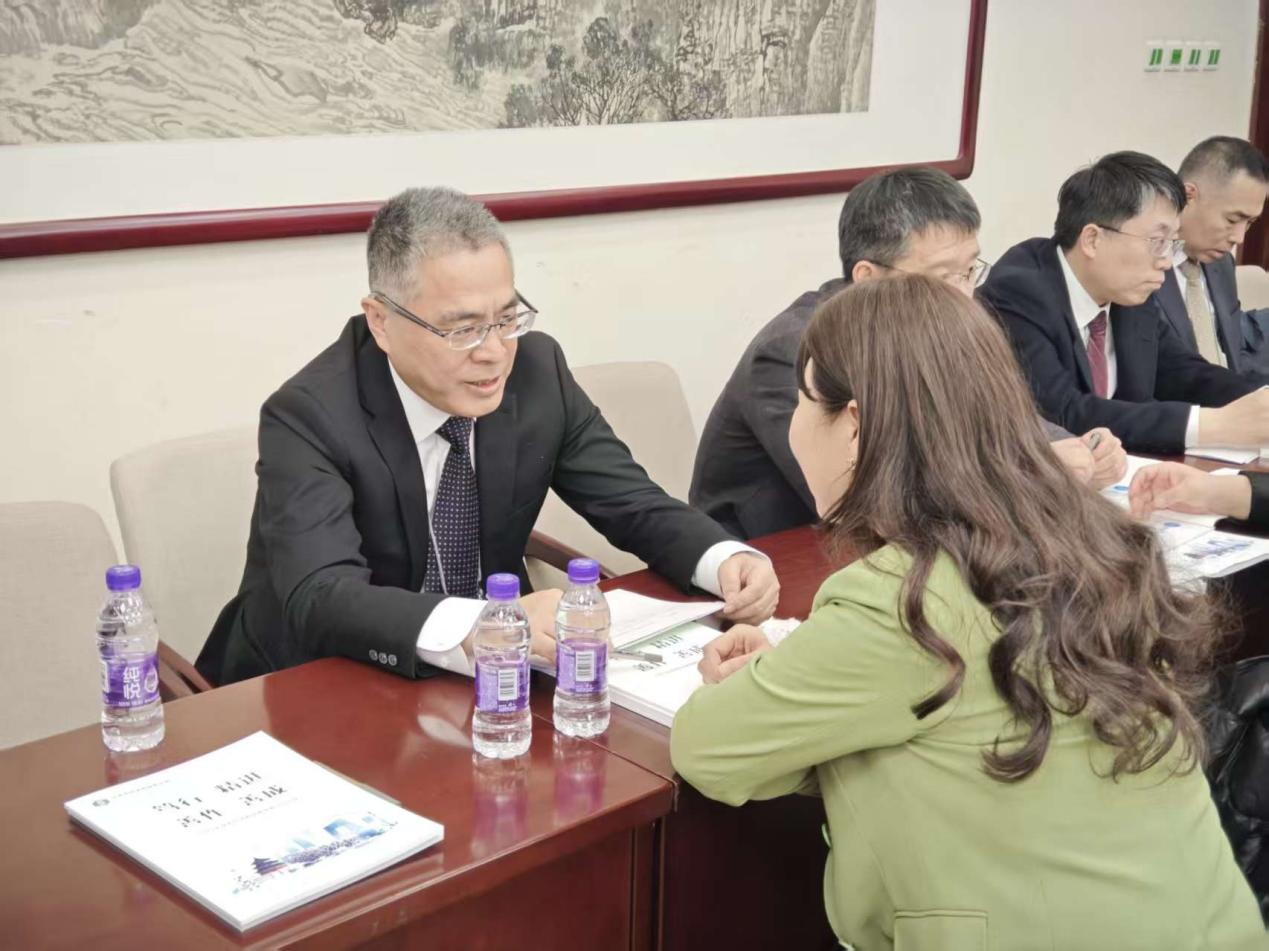
专访北京市经信局局长姜广智:发展AI要采取“差异化战略”
Bei Ke Cai Jing· 2026-01-29 03:49
Core Insights - The article highlights the rapid advancements in Beijing's AI industry, marked by the listing of Zhipu AI on the Hong Kong Stock Exchange and the release of the Kimi K2.5 model, showcasing significant technological breakthroughs [1] - The Beijing government emphasizes the need for a differentiated development strategy to overcome computational power bottlenecks and promote a positive cycle between models and applications [1][5] Group 1: AI Development and Applications - The AI application market is divided into ToC (consumer) and ToB (business) sectors, with significant achievements in conversational AI and productivity tools for businesses [3] - The government is actively promoting AI integration in key industries, including software development, manufacturing, and sectors like smart vehicles, healthcare, and education [3][8] Group 2: Model and Data Quality - The increasing usability of large models is noted, with Zhipu's GLM-4.7 model demonstrating enhanced programming capabilities [4] - The government stresses the importance of high-quality, specialized data for training models, moving away from generic internet data to meet specific industry needs [8] Group 3: Future Outlook and Strategic Goals - The Beijing government aims to foster the development of several trillion-yuan emerging industry clusters, including AI, green energy, and intelligent manufacturing by the end of the 14th Five-Year Plan [9] - The development logic follows an integrated approach of data, computation, modeling, and application, with the government playing a crucial role in policy and ecosystem facilitation [10]
阿里自研高端AI芯片曝光 黄金三角“通云哥”浮出水面
Zhong Guo Jing Ying Bao· 2026-01-29 03:47
Core Insights - Alibaba's chip company, PingTouGe, has launched a high-end AI chip named "Zhenwu 810E," marking a significant step in its AI strategy and the formation of the "Tongyun Ge" AI supercomputer with Alibaba Cloud and Tongyi Lab [1][2] - The "Zhenwu" PPU has been deployed in multiple clusters on Alibaba Cloud, serving over 400 clients, showcasing PingTouGe's capabilities in the chip sector [2] - Alibaba and Google are currently the only two companies globally with top-tier capabilities across large models, cloud, and chip technologies [3] Group 1 - The "Zhenwu" PPU features a self-developed parallel computing architecture and inter-chip communication technology, with 96G HBM2e memory and a bandwidth of 700 GB/s, suitable for AI training, inference, and autonomous driving [7] - The performance of the "Zhenwu" PPU surpasses Nvidia's A800 and mainstream domestic GPUs, comparable to Nvidia's H20, and the upgraded version outperforms Nvidia's A100 [7] - The launch of the "Zhenwu" PPU is part of Alibaba's 17-year strategic investment and vertical integration in AI, which includes Alibaba Cloud, PingTouGe, and the Qianwen model [2][7] Group 2 - The chip concept is closely tied to Alibaba's market valuation, with recent news of PingTouGe's potential independent listing leading to a market capitalization increase of approximately HKD 100 billion in two days [8] - The Qianwen flagship reasoning model, Qwen3-Max-Thinking, has set multiple global records, demonstrating performance comparable to GPT-5.2 and Gemini 3 Pro [7] - The Qianwen open-source model has seen over 200,000 derivative models and more than 1 billion downloads, maintaining its position as the largest in the world [7]

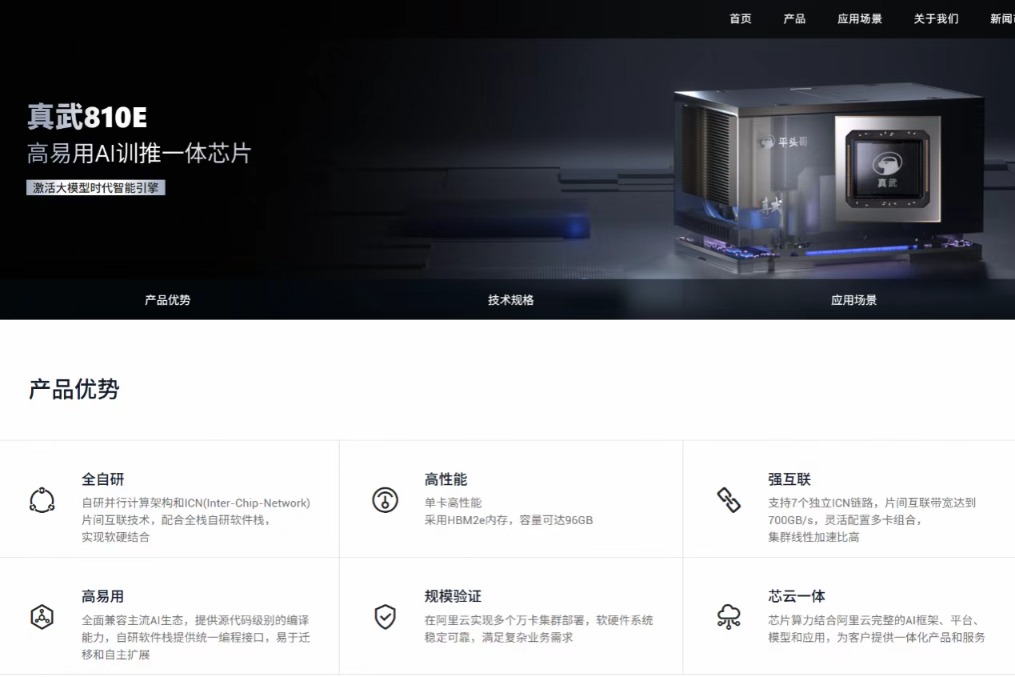
平头哥官网悄然上线,阿里自研AI芯片“真武”亮相!业内人士:整体性能与英伟达H20相当
Mei Ri Jing Ji Xin Wen· 2026-01-29 03:37
Group 1 - The core point of the article is the launch of Alibaba's high-end AI chip "Zhenwu 810E" and the formation of the AI supercomputer "Tongyun Ge," which integrates self-developed chips, cloud services, and open-source models [1][3] - Alibaba aims to create an AI supercomputer that leverages its self-developed chip, the leading cloud service in the Asia-Pacific region, and the world's strongest open-source model "Qianwen" for maximum efficiency in training and deploying large models [3] - The "Zhenwu" PPU has been deployed in multiple clusters on Alibaba Cloud, serving over 400 clients, including State Grid, Chinese Academy of Sciences, Xiaopeng Motors, and Sina Weibo [3] Group 2 - The "Zhenwu" PPU features a self-developed parallel computing architecture and inter-chip communication technology, with a memory of 96G HBM2e and an inter-chip bandwidth of 700 GB/s, suitable for AI training, inference, and autonomous driving [3] - The performance of the "Zhenwu" PPU surpasses that of Nvidia's A800 and mainstream domestic GPUs, being comparable to Nvidia's H20 [3]

阿里平头哥发布真武810E芯片,通云哥AI黄金三角首亮相
Zhong Guo Jing Ying Bao· 2026-01-29 03:34
Core Viewpoint - Alibaba's self-developed high-end AI chip "Zhenwu 810E" has been officially launched, marking a significant step in the establishment of the "Tongyun Ge" AI supercomputing framework, which integrates Alibaba Cloud, Pingtouge, and Tongyi Lab [1][2]. Group 1: Product Launch and Features - The "Zhenwu" PPU chip has been deployed in multiple large-scale clusters on Alibaba Cloud, serving over 400 clients including State Grid, Chinese Academy of Sciences, Xiaopeng Motors, and Sina Weibo [1]. - The "Zhenwu" PPU features a self-developed parallel computing architecture and inter-chip network technology, with a memory capacity of 96GB HBM2e and an inter-chip bandwidth of 700 GB/s, suitable for AI training, inference, and autonomous driving [2]. - The performance of "Zhenwu" PPU surpasses NVIDIA's A800 and mainstream domestic GPUs, and is comparable to NVIDIA's H20, with an upgraded version reportedly outperforming NVIDIA's A100 [2]. Group 2: Market Impact and Strategic Positioning - Alibaba is recognized as one of the only two global tech companies, alongside Google, that possesses top-tier capabilities across large models, cloud services, and chip development [2]. - The launch of the "Zhenwu" PPU and the positive market reception have contributed to a significant increase in Alibaba's market value, with a reported rise of approximately HKD 100 billion in just two days following the news of Pingtouge's potential independent listing [3]. - The Tongyun Ge framework aims to achieve maximum efficiency for users training and deploying large models on Alibaba Cloud, showcasing a comprehensive AI stack developed over 17 years of strategic investment and vertical integration [1].
科大讯飞2025年净利润预增超预期,软件ETF(159852)一键布局AI软件投资机遇
Xin Lang Cai Jing· 2026-01-29 02:50
Group 1 - The core viewpoint of the news highlights the strong performance of the software service index, with notable increases in stock prices of key companies like iFlytek, which is expected to see significant profit growth in 2025 [1][2] - iFlytek forecasts a net profit of 785 million to 950 million yuan for 2025, representing a year-on-year growth of 40% to 70%, with a non-net profit of 245 million to 301 million yuan, indicating a growth of 30% to 60% [1] - The company has consistently invested in AI research and development, with planned expenditures increasing from 2.416 billion yuan in 2020 to 4.580 billion yuan in 2024, maintaining a high R&D intensity with over 20% growth expected in 2025 [1] Group 2 - iFlytek has established a comprehensive commercialization system for AI applications, including AI industry applications, AI open platforms, and AI consumer products, with expected breakthroughs in 2025 [2] - According to CITIC Securities, 2026 is projected to be a pivotal year for AI, transitioning from "computing power construction" to "software volume release," benefiting software leaders with core algorithm capabilities and industry data [2] - The top ten weighted stocks in the CSI Software Service Index, including iFlytek, account for 60.89% of the index, indicating a concentrated investment opportunity in the software sector [2]
