双碳目标

Search documents
新年“开门红”!甘肃电气集团长开公司中标多个项目开启2026奋进新篇
Xin Lang Cai Jing· 2026-01-13 04:20
Core Viewpoint - Gansu Electric Group Changkai Company has secured multiple orders for power distribution and transmission switchgear projects, demonstrating its core competitiveness and laying a solid foundation for deep participation in the national energy strategy for high-quality development [1] Group 1: Project Achievements - The company has won projects in key areas such as nuclear power, photovoltaic energy storage, coal power, and building materials [1] - Notable projects include the "BOP medium voltage distribution device" for the No. 5 and No. 6 units of the Sanmen Nuclear Power Plant by China National Nuclear Corporation, and the "Hua Kun No. 1 Technology Demonstration Project LOT64 (medium voltage switchgear)" by China General Nuclear Power Group [1] - As of January 9, the company has achieved a cumulative bid amount of 65.53 million yuan, including two projects over 10 million yuan and seven projects over 1 million yuan, marking a strong start for market orders in 2026 [1] Group 2: Strategic Goals - The company aims to leverage this strong start to actively respond to the national "dual carbon" goals and energy transition strategy [1] - The mission is to ensure that electricity is safer and more reliable to serve the world, focusing on continuous technological innovation and optimizing product systems and service quality [1] - The company plans to intensify efforts in nuclear power, new energy, grid distribution, data centers, and equipment upgrades to write a new chapter in high-quality development [1]
经济聚焦丨加速!新能源重卡跑向中长途
Ren Min Ri Bao· 2026-01-13 04:02
Core Insights - The rapid growth of the new energy heavy truck market is driven by policy support, cost advantages, and technological advancements, with sales expected to reach 180,000 units in 2025, marking a nearly twofold increase year-on-year [1][2] Market Dynamics - The market focus has shifted towards new energy vehicles, with traditional fuel truck sales declining as old trucks are replaced due to policies promoting the scrapping of older models [2] - New energy heavy trucks are increasingly being used in diverse applications beyond fixed routes, expanding their operational scope significantly [2] Cost Advantages - The cost of operating new energy heavy trucks is significantly lower, with electricity costs around 1 yuan per kilometer compared to 2.5-3 yuan for diesel trucks, leading to annual savings of approximately 270,000 yuan [3] - Government incentives, such as subsidies for scrapping older vehicles, further enhance the financial attractiveness of new energy trucks [3] Infrastructure Development - The establishment of charging stations and battery swap stations along logistics routes has improved refueling efficiency, with rapid charging capabilities allowing for 400 kilometers of range in just 15 minutes [4] - The current infrastructure still faces challenges, particularly in expanding the use of new energy trucks for medium to long-distance transport [5] Future Outlook - The Ministry of Transport is committed to promoting the large-scale development of new energy transport equipment, with a focus on transitioning from older vehicles to low-emission alternatives [6] - Technological advancements are necessary for the development of high-density batteries and hydrogen fuel systems to support the growth of new energy heavy trucks [6][7] - Leading manufacturers are increasing R&D efforts and collaborating with academic and industry partners to drive innovation in new energy heavy truck technologies [7]


国产vs丰田:燃料电池合金催化剂的对比分析与追赶路径
势银能链· 2026-01-13 03:00
"宁波膜智信息科技有限公司"为势银(TrendBank)唯一工商注册实体及收款账户 添加文末微信,加 绿氢 群 在 2025势银 氢能与燃料电池产业年会上, 苏州擎动动力科技有限公司总经理朱威博士 ,以 《 国产合金催化剂距离丰田还有多远 》 为题 ,系 统阐述了在燃料电池核心材料领域,国内产业与国际先进水平之间的对比与追赶路径。报告基于详实的数据与实验对比,从行业挑战、技术剖 析、国产进展及未来展望等多个维度,进行了深入解读。 在全球加速能源转型与 "双碳"目标的双重驱动下,燃料电池作为高效清洁的能源转换技术,其商业化进程备受关注。然而,产业链面临一个突出 瓶颈:对贵金属铂的高度依赖。自2025年以来,铂金价格大幅攀升,导致催化剂成本在电堆总成本中的占比显著提高,降本压力空前。 铂合金催 化剂因其高活性、低铂载量的特点,被视为破局的关键方向。但其在实际应用中的耐久性问题,尤其是非贵金属元素在酸性环境中的刻蚀溶出, 成为了规模化应用的"卡脖子"难题。 在这一领域,日本丰田汽车通过两代技术 更迭 ,为行业提供了成功范本。丰田将铂钴合金催化剂成功应用于 Mirai系列燃料电池乘用车,其第二 代产品实现了15万公里 ...



2025(第十二届)中国互联网企业社会责任论坛在京举办
Yang Guang Wang· 2026-01-13 02:43
Core Viewpoint - The 2025 China Internet Enterprises Social Responsibility Forum emphasizes the theme of "Inclusive Digital Future, Shared Social Responsibility," aiming to explore new methods for social responsibility in the digital era and promote healthy development in the internet industry [1]. Group 1: Forum Overview - The forum was organized by the China Internet Association and included various stakeholders such as government officials, industry leaders, and experts from organizations like Alibaba, Meituan, and Tencent [2]. - The forum featured speeches and discussions on the importance of social responsibility in the internet sector, highlighting the need for collaboration and innovation [2][4]. Group 2: Key Speeches and Recommendations - Huang Chengqing, a key speaker, outlined four recommendations for the internet industry: integrating technology for good, fostering partnerships for ecological prosperity, embedding green development into operations, and promoting open dialogue to address challenges [4]. - Lv Shiming emphasized the significance of building an accessible environment as a marker of national and social civilization, highlighting the legal framework supporting 85 million disabled individuals and 310 million elderly people in China [5]. Group 3: Reports and Initiatives - Zhao Xinxin presented the "Sustainable Information Disclosure Development Report (2025)," indicating that the overall quality of information disclosure in the internet and communication sectors is improving, with significant advancements in quantitative data disclosure and substantive issue analysis [6]. - The "China Internet Elderly Assistance and Disability Support Intelligent Application Common Technology Service Platform" was launched to address the needs of 130 million elderly individuals living alone and 30 million individuals with severe disabilities [7][11]. Group 4: Collaborative Efforts and Future Plans - The China Internet Association, along with other organizations, initiated a recruitment plan for partners in the intelligent application ecosystem, focusing on collaboration among government, enterprises, social organizations, and research institutions [8]. - The forum also announced the "Digital Temperature" series of promotional activities aimed at showcasing the internet industry's social responsibility practices through case studies [12]. Group 5: Trends and Future Directions - A report on the "Top Ten Trends in Internet Industry Sustainable Development" was released, highlighting the integration of environmental, social, and governance (ESG) factors into business operations and the role of artificial intelligence in reshaping industry responsibilities [11]. - The forum concluded with a roundtable discussion on "Technology for Good and Business Practice," emphasizing the importance of sharing experiences and best practices in fulfilling social responsibilities [14].
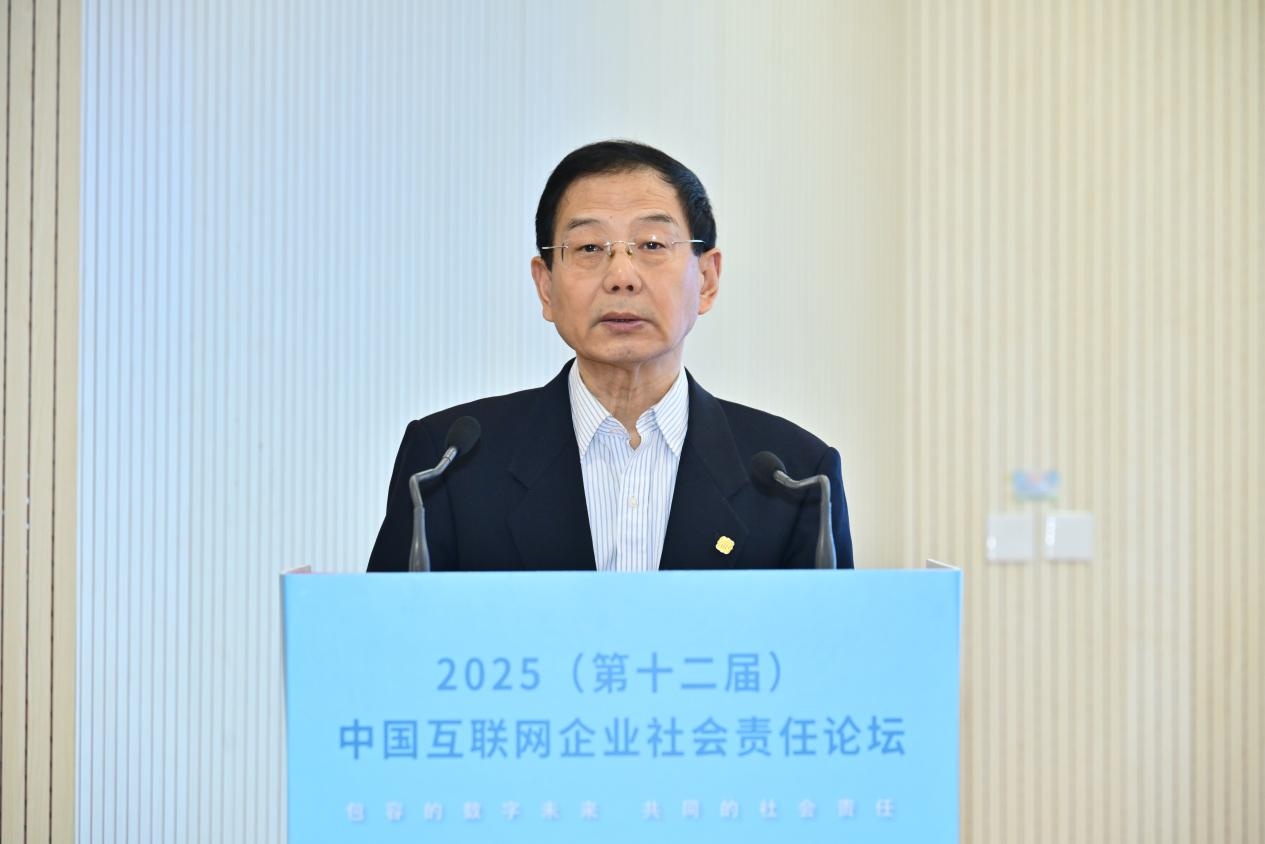
中国银河证券党委书记、董事长王晟:践行金融报国使命 构建一流投行新格局
Zhong Guo Zheng Quan Bao· 2026-01-13 00:32
Core Viewpoint - China Galaxy Securities has achieved record total assets and net profit, reflecting its commitment to national strategies and its transformation towards high-quality development [1] Group 1: Key Elements of Building a First-Class Investment Bank - Functionality is the core guiding principle, emphasizing the alignment of financial enterprises with national development and enhancing core functions to support key areas like technology innovation and small enterprises [2] - Professional capability is fundamental, requiring securities firms to provide specialized solutions to meet diverse financial needs, thereby building long-term trust with clients [2] - Internationalization is essential for differentiation and responding to national strategies, with a focus on initiatives like the Belt and Road and RMB internationalization [3][4] - Risk management is a safety baseline, necessitating a comprehensive risk management system to ensure high-quality development and prevent systemic financial risks [4] - Cultural development is the spiritual core, promoting human capital and enhancing industry culture to foster a cohesive development force [4] Group 2: Practical Implementation and Achievements - China Galaxy Securities has consistently adhered to its mission of "financial patriotism" and "customer first," aiming to rank among the top five in key operational indicators by 2025 [5] - In technology finance, the company has facilitated significant projects, including a major asset purchase and strategic financing for electric vehicle companies [5] - In green finance, it has created innovative financial products to address carbon tariffs and support carbon neutrality goals [6] - In inclusive finance, the company has served over 19 million clients and developed innovative business models to support poverty alleviation [6] - In pension finance, it leads in personal pension account openings and product sales, establishing a comprehensive ecosystem for retirement services [6] Group 3: Future Development Directions - The company emphasizes the importance of party leadership in guiding its direction and integrating governance with business operations [9] - It aims to deepen reforms to enhance capabilities, optimize business structures, and support key technologies and industries [10] - The company seeks to take a leading role in financial service cooperation, establish reasonable business standards, and enhance international market connectivity [11]

构建“蓝碳经济”治理体系
Xin Hua Ri Bao· 2026-01-12 23:27
Core Viewpoint - The development of blue carbon economy is essential for addressing climate change and fulfilling international commitments, while also serving as a strategic pillar for building a maritime power [1] Group 1: Governance System - The primary task in constructing a blue carbon governance system is to clarify resource boundaries and responsibilities, as current blue carbon ecosystems like mangroves and seagrass beds face challenges due to unclear boundaries and dynamic changes [2] - A systematic survey and dynamic monitoring of blue carbon ecosystems are necessary, utilizing integrated methods such as satellite remote sensing and ground monitoring to establish a national blue carbon resource database for data sharing [2] - Accelerating rights registration and property definition is crucial to clarify the asset attributes and ownership of blue carbon resources, especially in collective and cross-administrative sea areas [2] Group 2: Legal Framework and Standards - A robust legal framework and standard norms are vital for the healthy development of the blue carbon economy, as current legal support is fragmented and lacks specific regulations for blue carbon [3] - There is a need for top-level design and legislative support to formulate national guidelines or special plans for promoting blue carbon economic development, including the establishment of specific clauses for blue carbon protection in relevant laws [3] - Developing a scientific and standardized accounting system for carbon credits is urgent, requiring the establishment of national guidelines for carbon credit accounting and verification [3] Group 3: Market Mechanisms and Policy Tools - Converting the ecological value of blue carbon into economic value requires effective market mechanisms and diversified policy tools, including exploring the establishment of blue carbon market trading mechanisms [4] - Financial policies should be strengthened to increase investment in blue carbon ecosystem protection and restoration, while also encouraging the development of green financial products [4] - Promoting an eco-environmental development model that integrates blue carbon ecosystem protection with related industries like coastal tourism and ecological health is essential for realizing value transformation [4] Group 4: Multi-Stakeholder Engagement - The governance of blue carbon economy involves multiple stakeholders and requires breaking down departmental barriers and regional boundaries to form a collaborative governance structure [5] - Establishing a cross-departmental and cross-regional coordination mechanism is necessary to address major issues in planning, policy, and project advancement [5] - Encouraging community participation and ensuring that local residents have rights to information, participation, and benefits is crucial for effective blue carbon governance [5] Group 5: Long-term Strategy - Building a blue carbon economic governance system is a long-term and complex project that requires historical patience and strategic determination to gradually develop a unique path for blue carbon economic development in China [6]
加快推进我国碳标识制度建设
Xin Lang Cai Jing· 2026-01-12 21:04
(来源:团结报) 加快构建反映中国实际的产品碳足迹因子数据库,夯实数据支撑基础。明确规定企业及行业协会须按统 一标准报送产品碳排放数据。鼓励各类主体在合规前提下提交排放因子。鼓励行业协会、企业和科研院 所在注明数据来源的基础上,依法依规收集整理本行业相关数据资源。推动建立并发布钢铁、石化、化 工等细分行业的产品碳足迹数据库。设立国家级碳足迹因子数据库专职管理机构,建立数据分类使用规 则。 拓宽碳足迹应用场景,激发企业参与积极性。设立碳标识认证专项基金,对企业的认证与碳足迹核算费 用给予一定比例补贴。将政府绿色采购需求标准与产品碳足迹水平挂钩,优先采购已建立国家或行业碳 足迹标准、数据基础好、可比性强的产品。(张美华) 建立碳标识制度,是我国实现"双碳"目标、赢得发展主动权的关键制度支撑。然而,我国碳标识制度目 前仍处于起步阶段,整体发展面临立法保障不足、跨部门协调与监管能力不足、未建立起国内外广泛认 可的碳足迹因子数据库、国内碳足迹应用场景受限等诸多困境。 建议: 构建跨部门统筹机制,强化协同监管能力。通过立法或规范性文件,明确相关部门在碳标识管理中的法 定职责。由市场监管总局牵头,协同相关部门建立程序化协商 ...
从“生态好”走向“能转化、可持续、有支撑”
Xin Lang Cai Jing· 2026-01-12 19:03
Core Viewpoint - Qinghai is at a crucial stage of ecological civilization construction, aiming to transform its ecological advantages into institutional, market-oriented, and industrialized benefits, thereby enhancing sustainable governance and high-quality development [1] Group 1: Institutional Framework for Ecological Advantages - The focus is on establishing a rigorous institutional framework to institutionalize ecological advantages, emphasizing the importance of ecological protection as a national priority [1] - Key measures include implementing strict land use regulations, ecological protection red lines, and a natural protection area system to minimize ecological fragmentation and disorderly development [1] - The approach also involves integrated protection and systematic governance of ecosystems, transitioning from point-based restoration to comprehensive regional management [1] Group 2: Marketization of Ecological Advantages - The article highlights the need for market mechanisms and compensation systems to address the cost-benefit mismatch in ecological services, facilitating the realization of ecological product values [2] - It emphasizes the importance of ecological product value assessment and management, converting ecological contributions into measurable values for policy-making and funding allocation [2] - The development of trading mechanisms for ecological resources, such as carbon credits and water rights, is essential to create positive incentives for conservation behaviors [2] Group 3: Industrialization of Ecological Advantages - The transformation of ecological advantages into a modern industrial system is crucial, focusing on converting ecological resources into products and services while driving industrial upgrades through green constraints [3] - The establishment of a high-quality, low-impact ecological experience and education sector is proposed, leveraging national parks to create a new growth point for ecological branding [3] - The article advocates for a robust supply system for green organic agricultural products, enhancing local transformation capabilities and market credibility [3]
中国被称铀资源匮乏,鄂尔多斯发现全球首例铀矿,核电布局提速
Sou Hu Cai Jing· 2026-01-12 17:09
Group 1 - The core point of the article highlights China's significant discovery of a large uranium deposit, challenging previous Western geological theories and marking a pivotal moment in the global energy landscape [1][8] - In 2025, China's geological community announced the discovery of a world-class wind-blown sandstone-type uranium mine in the Ordos Basin, with an estimated resource of 2.88 million tons, valued at approximately 10.26 trillion yuan [3][5] - This discovery not only represents immense wealth but also serves as a direct rebuttal to the Western "granite mineralization theory," which had long dominated geological thinking [6][8] Group 2 - The discovery signifies a shift in global uranium resource distribution, allowing China to break free from resource dependency and redefine its energy security amidst increasing nuclear power demand [8][39] - Following this, another significant find was reported in the Tarim Basin, setting a new record for the world's deepest sandstone-type industrial uranium mineralization, showcasing the effectiveness of China's geological survey system [9] - The journey to this discovery was fraught with challenges, as early foreign assessments deemed China devoid of large uranium deposits, leading to a comprehensive resource blockade against the country [11][13] Group 3 - The article discusses the innovative "National Uranium No. 1" technology developed by China, which utilizes in-situ leaching methods to extract uranium, significantly reducing costs and increasing efficiency [29][31] - This breakthrough in mining technology not only enhances production capacity from hundreds to thousands of tons but also transforms previously undervalued resources into economically viable assets [31][33] - The discovery and subsequent technological advancements underscore the importance of continuous innovation in geology, challenging established norms and opening new avenues for resource extraction [35][37] Group 4 - The newfound uranium resources are expected to increase China's self-sufficiency in uranium supply from 30% to 70% by 2030, enhancing national energy security and reducing reliance on foreign imports [39][41] - The implications extend beyond national security, as the development of nuclear power is aligned with China's carbon reduction goals, providing a clean energy source for future power stations [41][43] - Furthermore, China's expertise and technology in uranium mining can be exported to regions with similar geological conditions, promoting international collaboration and reinforcing China's role as a responsible global player [45][47]


委内瑞拉对华石油出口被堵截,特朗普的死对头成最大赢家?
Sou Hu Cai Jing· 2026-01-12 17:09
Core Viewpoint - The U.S. oil blockade against Venezuela has unexpectedly triggered a chain reaction in global energy trade, leading Chinese refineries to turn to Canadian heavy oil, marking a significant shift in North American energy dynamics and positioning Canada as a new player in the Asian market [1] Group 1: Impact of U.S. Actions - The U.S. implemented a maritime blockade against Venezuela, cutting off approximately 500,000 barrels per day of Venezuelan heavy crude oil supply to Chinese refineries [3] - This heavy crude oil, characterized by high viscosity and sulfur content, is particularly suitable for producing asphalt and occupies a unique position in the production formulas of independent Chinese refineries [3] Group 2: Response from Chinese Refineries - Chinese independent refineries, referred to as "teapot" refineries, quickly activated emergency measures, assessing Canadian heavy oil as a substitute [5] - Alberta's oil sands crude is highly similar to Venezuelan Merey crude in viscosity and sulfur content, allowing for immediate use in existing production lines without major equipment modifications [5] Group 3: Logistics and Supply Chain Adjustments - The current buffer period is crucial, with approximately 22 million barrels of Venezuelan crude floating in Asian waters, sufficient to meet Chinese refinery needs for about 75 days [7] - The volume of crude oil shipped from Vancouver to China surged to 7.3 million barrels in March 2025, with expectations for continued increases in April [7] Group 4: Canadian Energy Strategy - Canada is pursuing a trade diversification strategy, aiming to double exports to non-U.S. markets within ten years, with China as a key target [10] - By June 2024, China is expected to become the largest buyer of crude oil from the Trans Mountain pipeline, with an average daily import of 207,000 barrels, surpassing shipments to the U.S. [10] Group 5: Geopolitical Context - The geopolitical landscape is accelerating the shift in energy flows, with U.S. Energy Secretary Chris Wright announcing indefinite control over Venezuelan oil sales [9] - The Canadian Prime Minister's visit to China marks the first by a Canadian leader in eight years, with energy cooperation as a core agenda item [9] Group 6: Market Dynamics and Future Outlook - Despite higher prices for Canadian crude, the reduced shipping time enhances cash flow and flexibility in tanker scheduling, partially offsetting the price disadvantage [13] - The logistics infrastructure in Vancouver has been upgraded, increasing the monthly unloading capacity significantly, reflecting the growing importance of the trade route to China [18]