普惠金融

Search documents
2025北京金融业十大品牌揭晓!金融赋能消费,这场论坛擘画未来升级方向
Bei Jing Shang Bao· 2025-12-12 15:06
Core Viewpoint - The integration of finance and consumption is crucial for economic growth, with a focus on quality improvement rather than mere scale expansion. This collaboration is essential for expanding domestic demand and stabilizing growth [1]. Group 1: Financial and Consumption Integration - The 2025 Beijing Commercial Brand Conference highlighted the evolution of financial empowerment in consumption, addressing industry pain points and future upgrade directions [1]. - Two significant reports were released: "Technology and Capital Twins" focusing on the efficient cycle of technology, industry, and capital, and "Inclusive Finance: Breaking Through and New Situations," which explores the deep integration of financial and social value [1]. Group 2: Economic Outlook and Consumer Trends - The emphasis on consumption upgrade and domestic demand is a strategic priority for China's economy, with consumption being the "ballast stone" for economic growth [3][4]. - Future economic transformations will include a shift from traditional factor-driven growth to innovation-driven growth, with a focus on high-quality development and the importance of technology and innovation in driving consumption [5][6]. Group 3: Investment Opportunities - Investment opportunities are identified in policies that stabilize and invigorate the market, with a focus on technology and new materials leading the market trends [4]. - The capital market is expected to show a structural bull market in 2025, with significant growth in sectors like precious metals, communication, and high-end manufacturing [4]. Group 4: Inclusive Finance Challenges and Innovations - The inclusive finance sector is transitioning from a blue ocean to a red ocean competition, facing challenges in reaching underserved markets, particularly small and micro enterprises [9][10]. - Financial institutions are developing collaborative solutions to address the challenges in inclusive finance, leveraging technology and innovative approaches to enhance service delivery [11]. Group 5: Consumer Financial Services - The demand for service consumption is expected to grow, with sectors like culture, sports, and health services being prioritized for policy support, which will drive employment and regional economic growth [6]. - Financial institutions are adapting their services to meet the evolving needs of younger consumers, focusing on personalized and scenario-based financial products [14][15]. Group 6: Technological Integration in Finance - The use of AI in financial services is transforming the landscape, enabling better risk management and customer understanding, which is crucial for enhancing consumer trust and service quality [16][17]. - Technology is broadening the reach of insurance services, making them more accessible and tailored to consumer needs, particularly in health and wellness sectors [19][20]. Group 7: Wealth Management Trends - There is a noticeable shift in wealth management, with funds moving from traditional assets like real estate to diversified financial products, reflecting changing consumer preferences [23][25]. - Financial institutions are focusing on providing a range of investment options to meet the diverse needs of consumers, emphasizing low-risk and stable returns [25][26].
交银车贷:以普惠金融赋能汽车消费,书写国有大行民生答卷
Sou Hu Cai Jing· 2025-12-12 11:39
2025年以来,党中央、国务院持续释放扩大内需、提振消费的政策信号,党的二十届四中全会明确提 出"坚持扩大内需这个战略基点,坚持惠民生和促消费"。其中,汽车消费作为大宗消费的核心板块,成 为拉动经济增长的重要引擎。 在供给端,国内各大车企以持续的技术突破和供应链整合优势,为市场提供更多高品质、高科技、高性 价比的汽车产品,中国汽车产业已成为全球范围内高速增长的创新引擎。在需求端,家庭用车需求从满 足"从无到有"的首购消费,逐步转向追求体验进阶的"增换购消费",国家推出的一系列汽车以旧换新补 贴政策,亦是对这一消费趋势的及时响应。而金融机构所提供的汽车金融服务,正是沟通供给端和需求 端的关键桥梁,也是促进消费、拉动经济增长的重要"催化剂"。 贴息落地,交银车贷兑现政策福利 交通银行(601328)作为国有大型商业银行,始终将金融服务与国家战略同频共振,以"交银惠贷"个人 贷款品牌为依托打造的"交银车贷",正通过政策红利快速落地、服务流程数字化的双重发力,成为连接 汽车消费供需两端、践行金融为民使命的重要载体。 服务"减负",让家庭购车"一路绿灯" 为让贴息政策惠及更多群体,交银车贷首先在申请流程上做"减法",以 ...

从货车司机到新市民,普惠金融如何精准滴灌“消费新蓝海”
Sou Hu Cai Jing· 2025-12-12 10:28
Core Insights - Inclusive finance is facing challenges such as product homogeneity and overlapping customer segments, while new opportunities arise from emerging consumer trends like the new citizen economy and green living [1] - Financial institutions are leveraging inclusive finance to unlock consumer potential by tailoring services to specific consumption scenarios [3] Group 1: Financial Institutions' Strategies - Banks are focusing on large consumer sectors like automotive and home appliances, offering specialized installment loans to ease consumer spending pressure [3] - Insurance companies are innovating products to enhance financial accessibility for low- and middle-income groups, while also emphasizing their social responsibility [3] - Consumer finance institutions are shifting from a "money finds people" approach to a "people find money" model, utilizing inclusive credit tools [1][3] Group 2: Emerging Consumer Trends - The consumer base is becoming younger and more educated, with millennials and Gen Z driving consumption, leading to a shift in spending habits towards online price comparison and offline purchases [6] - Specific consumer needs are becoming clearer, with business travelers focusing on travel-related benefits and families prioritizing education and health services [6] Group 3: Technological Integration - AI and large models are enhancing the capabilities of inclusive finance, allowing for more precise risk assessment and fraud detection [9][10] - Financial institutions are using technology to create a more personalized and efficient customer experience, transforming traditional risk management practices [11][12] Group 4: Challenges and Opportunities in REITs - The development of consumer-related REITs is still in its infancy, with only 12 out of 77 public REITs focused on consumer infrastructure, indicating significant growth potential [8] - There is a need for improved integration between fund managers and industry players to enhance operational management and decision-making processes [8] Group 5: Consumer Financial Health - Financial tools are being designed to help consumers manage their spending responsibly, with initiatives like government-subsidized personal loans and interest-free installment plans [5][6] - AI-driven features in financial products are aimed at promoting rational consumption and ensuring financial well-being for users [12]

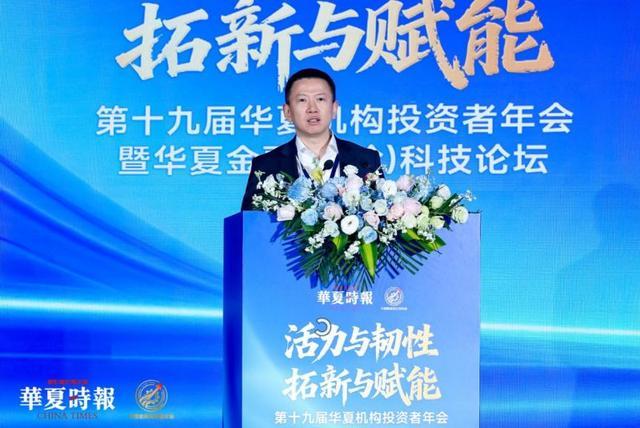
中化资本有限公司总裁助理赵照:打破规模依赖,央企产融结合坚守实体本源|2025华夏机构投资者年会
Hua Xia Shi Bao· 2025-12-12 09:36
Core Viewpoint - The forum focused on the theme of "Vitality and Resilience, Innovation and Empowerment," aiming to respond to contemporary challenges and explore future pathways for development [2]. Group 1: Central Enterprises and Financial Integration - Zhao Zhao, Assistant President of Sinochem Capital, emphasized the importance of central enterprises (SOEs) in integrating industry and finance to empower the real economy, highlighting the need for innovative financial methods [2][3]. - The core of SOEs' financial integration lies in adhering to the service of the real economy, actively responding to national calls, and focusing on five key areas: technology finance, green finance, inclusive finance, pension finance, and digital finance [2][3]. Group 2: Characteristics of Financial Licenses - SOEs are prioritizing the cultivation of financial licenses that can empower their main businesses, particularly in areas like industrial funds and financing leasing [2][3]. - The analysis pointed out that SOEs are also considering licenses with fewer restrictions on related transactions and lower capital consumption as important factors in their strategic layout [2][3]. Group 3: Core Competitiveness and Future Directions - Providing differentiated financial services along the industrial chain has become a key strategy for SOEs to build core competitiveness in their financial sectors [3]. - Zhao emphasized the need to prioritize compliance and risk prevention over mere scale, fostering a new pattern of high-quality development [3]. - The future focus for SOEs in financial integration will be on leveraging existing license capabilities and enhancing financial support for major strategies and key areas [3][4]. Group 4: Practical Exploration by Sinochem Capital - Sinochem Capital has engaged in various financial and service sectors, including trust, factoring, industrial funds, business services, and insurance brokerage, through controlling and participating in different entities [3][4]. - The company has established distinctive brands and advantages in areas such as securities services, inclusive finance, supply chain finance, and risk services, supporting the development of core industries like life sciences and petrochemicals [4]. Group 5: Commitment to Quality Development - The path of financial integration for SOEs is fundamentally about maintaining a commitment to political and social responsibilities while serving their primary business roles [4]. - Sinochem Capital and similar SOE platforms will continue to deepen financial collaboration, providing high-quality and empathetic financial services to support the high-quality development of the real economy and improve the lives of households [4].
关于提高商业银行普惠金融服务覆盖面的实践与思考
Jiang Nan Shi Bao· 2025-12-12 08:06
当前,我国普惠金融发展取得了显著成效,但依然面临"最后一公里"覆盖难、服务不均衡、商业可持续 性挑战等诸多问题。本文构建了一个多层次、系统化的策略框架,提出商业银行应从战略引领与顶层设 计、科技赋能与数字化转型、产品与服务模式创新、生态构建与多方协同、内部机制优化与能力建设五 大维度协同发力,旨在为商业银行实现普惠金融服务的广覆盖、低成本、可持续提供理论参考与实践指 南。 一、战略引领与顶层设计:重塑普惠金融发展新格局。为推动普惠金融业务实现深度覆盖与可持续发 展,商业银行首先必须从战略层面进行顶层重构,将其确立为"一把手"工程,从根本上强化战略定力。 建立专门的普惠金融事业部制,明确各层级的职责分工。总行负责顶层设计与标准输出,提供统一的平 台、产品及风控支持,基层行则应深耕本土,转型为贴近市场的"社区银行"与"乡村银行"。通过设立普 惠金融特色支行、组建专业服务团队等方式,增强基层服务能力。 四、生态构建与多方协同:汇聚普惠金融发展合力。深化银政担合作是破解风险难题的关键举措;加强 同业协作是实现优势互补的有效途径;构建普惠金融生态圈是提升服务效能的重要保障;银行应当与电 商平台、物流企业、行业协会、咨询 ...
兴业蓝邂逅成都红金融体育共燃凤凰山
Zhong Guo Jin Rong Xin Xi Wang· 2025-12-12 06:56
Core Viewpoint - The collaboration between Industrial Bank Chengdu Branch and Chengdu Rongcheng Football Club marks a significant branding initiative in the Chinese Super League, enhancing community engagement through sports and financial education [1][3][4]. Group 1: Event Highlights - The match between Beijing Guoan and Chengdu Rongcheng attracted over 40,000 spectators, creating an electrifying atmosphere at the Phoenix Mountain Sports Park [1]. - Industrial Bank Chengdu Branch launched a "co-branding" initiative with Chengdu Rongcheng, featuring their logo prominently displayed on LED screens and at various promotional booths [1][3]. - The bank's financial knowledge campaign reached over 4,200 fans, distributing 1,600 anti-fraud brochures and engaging attendees with interactive activities [3]. Group 2: Community Engagement - The event included a unique employee sports day where players engaged with children in fun activities, promoting sportsmanship and financial literacy [3]. - The bank plans to further develop the "Xingfu Long" brand IP, integrating financial education into community events and sports, thereby supporting the development of Chengdu as a sports city [4]. - Future initiatives will focus on anti-fraud education, green finance, and pension finance, aiming to enhance financial services in a manner that resonates with fans [4].


金融活水润民生 消费引擎焕活力
Qi Lu Wan Bao· 2025-12-12 06:47
Core Viewpoint - Consumption is a lasting driver of economic growth and a key vehicle for meeting people's aspirations for a better life. The Minsheng Bank Jinan Branch aims to integrate financial services deeply into the entire consumption chain to inject vitality into the high-quality development of the Shandong consumption market [1] Group 1: Inclusive Finance - The Minsheng Bank Jinan Branch focuses on inclusive finance to support small and micro enterprises, which are crucial for stabilizing employment and promoting consumption. The bank has established a comprehensive financial support system for small and micro enterprises, increasing the number of inclusive loan clients from 11,503 to 17,124, a growth of 49% from 2022 to November 2025 [2] - Inclusive micro-enterprise loans increased from 17.8 billion to 25.7 billion, a rise of 7.9 billion or 44% during the same period [2] Group 2: Innovative Financial Products - The bank's "Minsheng Hui" credit loan product allows for quick access to credit, with approvals in 3 minutes and amounts up to 10 million, addressing the urgent funding needs of small and micro enterprises [3] - The bank has issued 8.4 billion in no-repayment loans to small and micro enterprises since the third quarter, alleviating financial burdens and enabling more investment in operations and consumption supply [3] Group 3: Scene Empowerment - The bank integrates financial services into various life scenarios, such as elderly care and supply chains, to activate consumption potential. It has developed a comprehensive financial service system for the elderly, enhancing their consumption experience [4] - The bank's "Honeypot Plan" and "Minsheng Quick Loan" products utilize big data to streamline loan processes, significantly reducing the time required for financing [5] Group 4: Digital Transformation - The digital transformation at Minsheng Bank Jinan Branch enhances service efficiency through online, standardized, and intelligent processes. The "Minsheng Hui" credit loan can be fully processed online, allowing small and micro enterprises to access funds without leaving their premises [7] - The bank's digital tools have improved response times and enabled precise targeting of different consumer groups, supporting sustained growth in the consumption market [7] Group 5: Future Outlook - The Minsheng Bank Jinan Branch is committed to deepening the integration of finance and consumption, aiming to contribute to the high-quality development of the Shandong consumption market with better products, more efficient services, and a warmer commitment [8]

数字金融:以业务赋能为中心、以数智化为手段、以安全为基石,开启理财新篇章
Shang Hai Zheng Quan Bao· 2025-12-12 06:29
"十五五"规划建议指出要大力发展科技金融、绿色金融、普惠金融、养老金融、数字金融。 数字金融是打通金融服务"最后一公里"、提升服务质效的重要底座。兴银理财自成立以来,始终以服 务"国之大者"的担当深耕数字金融领域,将数字化转型作为战略发展的"生命线"。在研判行业数字化转 型趋势、深入调研同业实践的基础上,公司绘制了数字化转型蓝图,确立"以业务赋能为中心、以数智 化为手段、以安全为基石"的实施方案,全力推动数字技术与理财业务深度融合。 数字金融以赋能业务为中心 坚持"科技向善",数字金融的价值体现为对业务的赋能,最终还是要落脚到员工生产力的解放和广大居 民体验的优化改善上,是推动科技金融、绿色金融、养老金融和普惠金融等落地的"加速器"。兴银理财 立足自身禀赋,聚焦市场服务、投研风控、运营管理三大核心领域,以数字化手段补短板、强优势、固 根基,让数字金融真正服务于业务发展、惠及广大客户。 首先是补齐市场服务的短板。银行理财从母行资管部转型而来,过去普遍存在"隔着母行渠道推产品、 做服务"的问题,不够接地气,因此系统设计在多渠道服务支撑、客户精准服务方面存在短板,这也是 一直以来兴银理财数字化转型要重点突破的方向。 ...
中国银行内蒙古分行精准施策助力小微科创企业破解融资难题
Zhong Guo Jin Rong Xin Xi Wang· 2025-12-12 03:59
Core Viewpoint - China Bank's Inner Mongolia branch focuses on providing tailored financial services to small and micro technology innovation enterprises, aiming to support the high-quality economic development of Inner Mongolia Autonomous Region [1] Group 1: Financial Support for Innovation - The bank is innovating products and services to provide precise financial support for technology innovation enterprises, particularly in manufacturing, technology innovation, and green transformation [2] - The bank has increased the promotion of online products like "Innovation Loan" and "Knowledge Benefit Loan," and optimized the offline "Special Credit Service Plan for Innovation Enterprises," offering credit loan limits ranging from 3 million to 10 million yuan with a maximum loan term of three years [2] - By the end of November 2025, the bank has supported 500 small and micro technology innovation enterprises with a loan balance of 3.018 billion yuan, an increase of 98 enterprises and 459 million yuan since the beginning of the year, with a credit coverage rate increase of 2.25 percentage points [2] Group 2: Innovative Credit Models - The bank has implemented a pure credit loan model for a specialized high-end equipment manufacturing enterprise, utilizing a differentiated risk control approach with personal joint liability guarantees from the actual controller and their family members [3] - The bank approved a credit flow amount of 8 million yuan for this client with a preferential interest rate of 2.7%, facilitating the enterprise's procurement of raw materials and daily operational turnover [3] Group 3: Pledge Financing Innovations - The bank has launched the first "Water Rights" pledge loan in the region, providing a "Water Loan" of 7 million yuan to a water-saving enterprise, incorporating 96,980 cubic meters of water rights into the pledge scope [4] - This innovative "water rights pledge + bilateral registration" model addresses the financing difficulties faced by water-saving enterprises due to insufficient traditional collateral [4] - The bank has issued loans to 65 water-saving enterprises amounting to 190 million yuan, supporting water-saving technology innovation and providing one-stop financial services for water conservancy projects in Inner Mongolia [4]

践行金融为民,担当主力先锋|工行四川省分行“十四五”高质量发展纪实
Xin Lang Cai Jing· 2025-12-12 03:50
Core Viewpoint - During the "14th Five-Year Plan" period, the Industrial and Commercial Bank of China Sichuan Branch has aligned its strategies with national and local development, focusing on serving the real economy, rural revitalization, technological innovation, and improving people's livelihoods, thereby injecting financial support into Sichuan's economic and social development [1] Group 1: Empowering the Real Economy - The bank has actively supported local enterprises, such as the Honglong Meat Products Company, by providing timely financial assistance through specialized loans, enabling the company to upgrade its production capacity and expand its market reach [3] - In Mianyang, the bank facilitated the construction of a new soy sauce production line by providing a loan of 160 million yuan and assisting with government subsidies, thus reducing financing costs for the company [4] - Over the past five years, the bank has focused on six key industries in Sichuan, with manufacturing loans exceeding 120 billion yuan and loans to technology enterprises surpassing 80 billion yuan, achieving a financing coverage rate of nearly 60% for national-level specialized and innovative "little giant" enterprises [4] Group 2: Deepening Rural Revitalization - The bank has introduced innovative loan products like "Cherry Loan" to support local cherry farmers in Ya'an, enabling them to upgrade irrigation systems and increase productivity, benefiting over 200 local households [6] - In Liangshan Prefecture, the bank provided a quick loan of 3 million yuan to an agricultural company, facilitating its entry into the Southeast Asian market and addressing seasonal funding shortages [7] - The bank's agricultural loan balance exceeded 240 billion yuan by September 2025, demonstrating its commitment to rural revitalization and financial support for farmers [8] Group 3: Technological Empowerment for Livelihood Improvement - The bank has implemented a smart dining solution in community canteens, allowing elderly citizens to use facial recognition for meal subsidies, enhancing convenience and respect for their payment preferences [9] - The bank has supported the integration of high-frequency social security services across provinces, improving efficiency in payment processes for over 11 million elderly customers [11] - The bank's initiatives have contributed to the high-quality development of Sichuan, with a focus on technology finance, green finance, inclusive finance, elderly finance, and digital finance [11]