
数字经济

Search documents
公募基金调仓路线图浮现 中际旭创成头号重仓股
2 1 Shi Ji Jing Ji Bao Dao· 2026-01-23 13:33
Core Viewpoint - The latest statistics indicate a significant shift in the top holdings of actively managed equity funds, with Zhongji Xuchuang replacing CATL as the largest holding, reflecting changing market dynamics and investment strategies [2][3]. Group 1: Changes in Top Holdings - As of the end of Q4 2025, the top ten holdings of actively managed equity funds are: Zhongji Xuchuang, Xinyi Semiconductor, CATL, Tencent Holdings, Zijin Mining, Alibaba-W, Cambrian Biologics-U, Luxshare Precision, Kweichow Moutai, and Dongshan Precision [3]. - The total market value of these top ten stocks held by actively managed equity funds is 76.8 billion, 63.8 billion, 63 billion, 57.4 billion, 36.8 billion, 31 billion, 29.1 billion, 28 billion, 25.8 billion, and 24.4 billion respectively [3]. - Notable changes from Q3 2025 include Zhongji Xuchuang rising from fourth to first, Xinyi Semiconductor from third to second, and Zijin Mining from eighth to fifth, while CATL and Tencent Holdings dropped to third and fourth respectively [3][6]. Group 2: Sector Allocation Adjustments - In Q4 2025, actively managed equity funds increased their allocations in sectors such as non-ferrous metals, communication, non-bank financials, chemicals, and machinery, while reducing exposure to electronics, pharmaceuticals, media, computers, and power equipment [2][8]. - The overall stock position of actively managed equity funds decreased to 84.4%, down 1.4 percentage points from the previous quarter, indicating a cautious approach amidst market volatility [7]. - The increase in allocation to sectors like non-ferrous metals and chemicals is attributed to supply constraints and recovering demand from new energy and AI applications, while the reduction in electronics and pharmaceuticals is linked to high valuations and weak short-term outlooks [8][9]. Group 3: Market Trends and Insights - The changes in top holdings and sector allocations reflect a shift in market focus towards technology, particularly in the communication sector, driven by the rapid development of the digital economy and AI [4][5]. - The strategic importance of communication infrastructure and chip manufacturing is highlighted, with ongoing policy support for industry upgrades creating new growth opportunities [5]. - The overall market sentiment is characterized by a balance between short-term gains and long-term strategic positioning, influenced by industry prospects and policy environments [9].







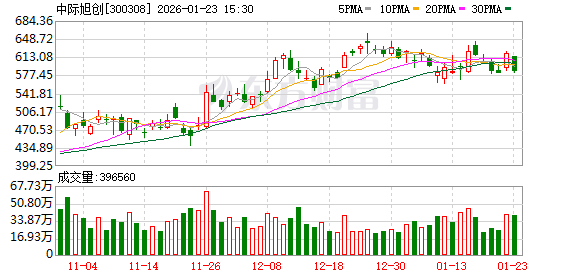
公募基金调仓路线图浮现,中际旭创成头号重仓股
2 1 Shi Ji Jing Ji Bao Dao· 2026-01-23 13:19
Group 1 - The core point of the article is that Zhongji Xuchuang has replaced CATL as the largest holding in actively managed equity funds as of Q4 2025, indicating a shift in market focus and investment strategies [1][3] - The top ten holdings of actively managed equity funds have changed significantly compared to Q3 2025, with Zhongji Xuchuang, Xinyi Semiconductor, and Zijin Mining moving up in rankings, while CATL and Tencent have dropped [3][4] - The total market value of the top ten holdings in actively managed equity funds is reported, with Zhongji Xuchuang at 76.8 billion, Xinyi Semiconductor at 63.8 billion, and CATL at 63 billion [3] Group 2 - Actively managed equity funds have increased their allocation in sectors such as non-ferrous metals, chemicals, and non-bank financials, while reducing exposure to electronics, pharmaceuticals, and media [9][10] - The overall stock position of actively managed equity funds has decreased to 84.4%, reflecting a cautious approach amid changing market conditions [8] - The analysis indicates that the shift in sector allocation is driven by a combination of cyclical recovery, technological optimization, and improved market activity in non-bank financials [9][10]

上海30家领跑:收获 IPO 公司最多的五大城市还有谁?
Sou Hu Cai Jing· 2026-01-23 13:06
Core Insights - In 2025, a total of 277 companies are expected to go public in domestic and international markets in China, with a concentrated geographical distribution among five cities: Shanghai, Beijing, Suzhou, Shenzhen, and Hangzhou, which together account for 37.5% of the total IPOs [2] Group 1: IPO Distribution by City - Shanghai leads with 30 IPOs, followed by Beijing with 27, Suzhou with 18, Shenzhen with 16, and Hangzhou with 13 [3] - The concentration of IPOs in these cities reflects their industrial structure and development direction [2] Group 2: Shanghai's Internationalization - Shanghai's 30 listed companies show a strong internationalization trend, with 20 companies choosing to list on the Hong Kong Stock Exchange (HKEX), representing two-thirds of its total [5] - This distribution aligns with Shanghai's positioning as an international financial center, catering to companies seeking global financing and brand influence [5] Group 3: Beijing's Global Perspective - Beijing ranks second with 27 IPOs, showcasing a globalized listing strategy, including 15 on HKEX and 4 on NASDAQ, the highest among all cities [6] - As a technology innovation hub, Beijing's strengths in AI and biomedicine drive companies to seek international benchmarks and valuations [6] Group 4: Suzhou's Balanced Approach - Suzhou's 18 IPOs are distributed across various exchanges: 6 on HKEX, 5 on the Shanghai Stock Exchange (SSE), 4 on the Shenzhen Stock Exchange (SZSE), and 3 on the Beijing Stock Exchange (BSE) [7] - This balanced distribution reflects Suzhou's manufacturing base and diverse industrial ecosystem, allowing companies to choose platforms based on their development stages [7] Group 5: Shenzhen's Preference for HKEX - Shenzhen, with 16 IPOs, shows a clear preference for HKEX, with 11 companies listing there, which is 2.75 times the number listed on SZSE [8] - The choice aligns with Shenzhen's characteristics as a hub for electronic information and technology innovation, facilitating connections with international markets [9][10] Group 6: Hangzhou's Diverse Pathways - Hangzhou, ranking fifth with 13 IPOs, exhibits a diverse listing strategy, with 7 on HKEX, 3 on SSE, 2 on SZSE, and 1 on NASDAQ [11][12] - As a center for digital economy, Hangzhou's companies seek international capital, reflected in their significant presence on HKEX and NASDAQ [13][14][16] Group 7: Summary of Trends - The IPO distribution in major cities in 2025 not only reflects quantity but also correlates with local industrial structures, city positioning, and capital strategies [17] - Shanghai's financial center status, Beijing's tech innovation, Suzhou's manufacturing foundation, Shenzhen's innovation ecosystem, and Hangzhou's digital economy strengths are evident in their respective listing choices [17]

中国第三、北方首个 山东省GDP破10万亿
Zhong Guo Xin Wen Wang· 2026-01-23 12:45
Core Viewpoint - Shandong Province has achieved a GDP of 10 trillion yuan, becoming the third province in China and the first in Northern China to reach this milestone, with a year-on-year growth of 5.5% in 2025 [1][3] Economic Structure and Growth - The service sector in Shandong has seen a value-added growth of 6.1%, accounting for 54.1% of the GDP, contributing 59.1% to economic growth, indicating a shift from a heavy industrial focus to a more diversified economy [3][4] - Industrial output remains strong, with a 7.6% increase in industrial value-added, and a notable 11.4% growth in equipment manufacturing [3][4] - Shandong's agricultural sector also supports economic growth, with a total output value of 1,317.93 billion yuan, reflecting a 4.4% year-on-year increase [4] Foreign Trade and Market Diversification - Shandong's foreign trade has reached a historic high, with import and export values exceeding 3.5 trillion yuan, engaging in trade with over 250 countries and regions [5] - The province has successfully diversified its market, with nine foreign trade markets exceeding 100 billion yuan in scale [5] Industrial Transformation and Innovation - Shandong has undergone significant industrial transformation since 2018, focusing on reducing outdated production capacity while fostering new industries, leading to a more balanced economic structure [6][7] - The province has established a project library with over 3,100 projects and total investments exceeding 8.4 trillion yuan, emphasizing green and high-quality development [7] Future Development Plans - Looking ahead, Shandong aims to become a major economic growth pole in Northern China, with plans to enhance traditional industries and expand emerging sectors such as integrated circuits and renewable energy [8][9] - The province is also targeting the development of six trillion-yuan cities, which would further stabilize economic growth [9]
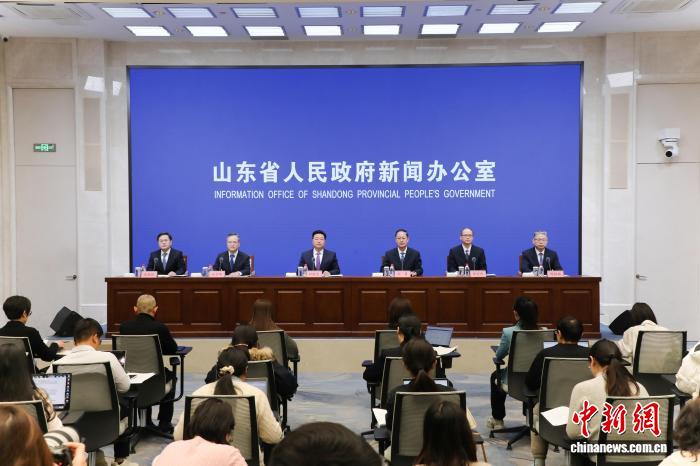
横店东磁产业基金落子算力基础设施服务商BCI Group 向零碳化转型迈出关键一步
Quan Jing Wang· 2026-01-23 12:22
Core Viewpoint - Hengdian East Magnetic has made a strategic investment in BCI, marking a significant step in its dual-driven strategy of magnetic materials and new energy, aiming to enhance its data center industry chain layout and transition towards zero-carbon computing infrastructure [1][2][4]. Investment Details - The investment involves a total of 600 million yuan, with Hengdian East Magnetic contributing 300 million yuan, alongside partners Baihui Qiushi and Dongyang Yingluohua [1]. - This investment is the first project following the expansion of the company's industrial fund to 500 million yuan [1]. Industry Context - BCI operates in the low-carbon, zero-carbon computing infrastructure sector, focusing on the "energy + equipment + park" industrial chain, which is essential for the green transformation of data centers [2][3]. - The digital economy in China is entering a new phase of high-quality development, with a growing demand for data centers and supporting industries, indicating a broad growth outlook for the sector [2]. Strategic Alignment - The investment aligns with Hengdian East Magnetic's strategy to strengthen its magnetic materials and develop new energy, leveraging BCI's capabilities in providing customized, high-performance computing infrastructure services [1][2][4]. - BCI's integrated low-carbon computing platform complements Hengdian East Magnetic's technological advantages in magnetic materials, particularly in AI server power management [1][2]. Operational Synergies - BCI has established multiple green computing infrastructure clusters and has developed a GW-level renewable energy reserve, which includes centralized wind and solar power [3]. - The collaboration is expected to create a mutually beneficial relationship, enhancing both companies' market positions and operational efficiencies [5].

多个维度详解2025年经济数据 | 热点观察
Sou Hu Cai Jing· 2026-01-23 12:17
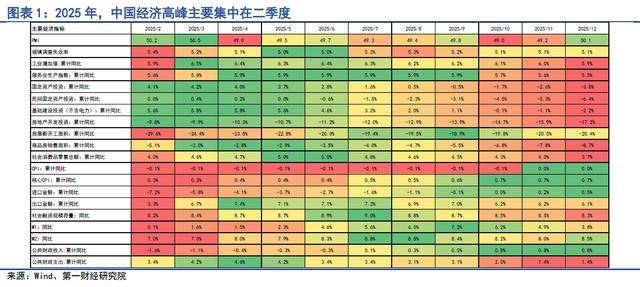
Economic Overview - In 2025, China's GDP grew by 5% year-on-year, meeting the government's target set at the beginning of the year [4][5] - The economic growth showed a "high first, low later" trend, with key indicators peaking in the second quarter [4] - The contribution of the tertiary industry to GDP growth surpassed that of the secondary industry, reflecting a shift towards service-oriented economic structure [4][5] Industry Performance - The manufacturing sector grew by 6.1%, while the information transmission, software, and IT services sector saw an impressive growth of 11.1% [5] - High-tech industries showed significant growth, with industrial robot production increasing by 14.7% and integrated circuit production by 12.9% in December [12][7] - The overall industrial output value increased by 5.9% year-on-year, although it showed a slight decline compared to November [7][9] Investment Trends - Fixed asset investment growth declined to -3.8% by the end of December 2025, with infrastructure investment experiencing its first negative growth in four years at -1.48% [2][11][14] - The decline in investment is attributed to a shift in fiscal policy focus towards social welfare and consumption rather than infrastructure [14] - New policy financial tools were introduced to stimulate investment in key sectors, potentially stabilizing fixed asset investment growth in 2026 [16] Real Estate Market - The real estate sector faced significant challenges, with development investment down by 17.2% and new housing starts down by 20.4% [17][19] - The inventory cycle for residential properties is stabilizing, with a narrow cycle of about 6 months and a broad cycle of 72.6 months [19] - Housing prices have generally declined, with second-hand home prices in major cities falling significantly [19][21] Consumer Behavior - Retail sales growth slowed to 3.7% year-on-year by December 2025, with automotive sales declining by 1.04% [3][22] - Certain consumer categories, such as food and jewelry, experienced high growth rates, indicating potential areas for market recovery [22][24] - Government initiatives aimed at boosting consumption include measures to enhance income and reduce restrictions in various service sectors [24][25]
新培育8个省级战略性新兴产业集群,山东省级以上集群总数达到50个、总规模超3.6万亿元
Qi Lu Wan Bao· 2026-01-23 10:49
Group 1 - The core mission of Shandong Province is to build a leading area for green, low-carbon, and high-quality development by 2025, as emphasized by the central government [1] - Shandong is focusing on industrial structure adjustment as a key driver for transformation, promoting intelligent, green, and integrated industrial upgrades [3] - The province aims to increase the proportion of advanced capacity in key industries to over 40% while fostering new pillar industries, particularly in artificial intelligence, high-end equipment, and new energy materials [3] Group 2 - Shandong is prioritizing the construction of a new energy system as a critical breakthrough for low-carbon transformation, promoting large-scale and diversified development of clean energy [4] - The total installed capacity of non-fossil energy has reached over 139 million kilowatts, which is 2.9 times that of 2020, accounting for 54.2% of the total power installed capacity, an increase of 23.4 percentage points [4] - By 2025, Shandong plans to add 23.993 million kilowatts of non-fossil energy generation capacity and achieve a power generation volume of 224.54 billion kilowatt-hours, with investments in key energy projects exceeding 215 billion yuan [4]
我们该如何看待6G?
3 6 Ke· 2026-01-23 10:40
Core Viewpoint - The article discusses the ongoing debate surrounding 5G technology and the upcoming 6G, emphasizing the necessity of research and investment in 6G to maintain technological leadership and address industry needs [1][3][5]. Group 1: Importance of 6G Research - Researching 6G technology and establishing standards is essential as ICT technology is at the core of the fourth industrial revolution [3][4]. - Maintaining a leading position in 6G is crucial for the overall communication industry, as it relates to various wireless communication methods beyond just mobile networks [5][6]. Group 2: 5G Evaluation - It is premature to conclude the success of 5G, as its primary goal was to transition from consumer internet to industry internet, which requires more time for application development [7][8]. - The success of 6G is expected to be higher than that of 5G due to the lessons learned and the evolving industry landscape [8]. Group 3: Demand-Driven Development - The primary demand driving 6G development is expected to come from the AI wave, with AI applications requiring higher network performance [9][11]. - 6G will also address other communication scenarios, such as integrated communication across various domains [11]. Group 4: Evolution of Network Upgrades - The traditional ten-year upgrade cycle for mobile communication technology may change based on emerging demands, which could lead to more frequent or delayed upgrades [12][13]. - The current 5G infrastructure, with over 483.8 million base stations in China, highlights the need to maximize the value of existing investments before moving to 6G [13]. Group 5: Challenges Ahead for 6G - There are significant technical risks associated with achieving the ambitious goals of 6G, including limitations in frequency efficiency and the need for new technologies [16][18]. - The potential for standard fragmentation due to geopolitical tensions poses a risk to the unified development of 6G [20][21]. - The competition in the communication sector is expected to intensify, necessitating continuous innovation and investment to maintain a competitive edge [21][23].

从达沃斯看全球经济增长新动能
Xin Hua Wang· 2026-01-23 09:46
Group 1 - The World Economic Forum held from January 19 to 23 in Davos highlighted that the global economy is at a critical juncture, with innovation, green transformation, and open cooperation being essential for growth [1] - Artificial intelligence is identified as a significant transformative force, enhancing productivity across various sectors such as agriculture, healthcare, education, and transportation, which is crucial given the current low productivity levels globally [1] - Green transformation is viewed as a new growth opportunity, particularly in renewable energy, low-carbon technologies, and green finance, which are expected to play a vital role in long-term global economic growth [1] Group 2 - China is recognized for its advantages in new technology fields, transitioning from singular technological breakthroughs to driving manufacturing upgrades, digital services, and new industry cultivation [2] - Emerging markets and developing countries are seen as key contributors to global economic growth, with projections indicating that by 2035, they will account for approximately 65% of global economic growth [2] - A conducive international environment is essential for new technology-driven economic development, emphasizing the importance of cooperation in a contentious world to avoid rising costs and stifled innovation [2] Group 3 - Many attendees expressed support for China's long-standing commitment to openness, noting that China's focus on long-term planning and high-level openness provides stability for global economic cooperation [3] - An innovative and more open China is viewed as beneficial for global economic stability and for maintaining multilateralism, which can expand trade and investment opportunities [3]
综述丨从达沃斯看全球经济增长新动能
Xin Hua Wang· 2026-01-23 09:37
新华社瑞士达沃斯1月23日电 综述|从达沃斯看全球经济增长新动能 新华社记者康逸 张兆卿 世界经济论坛年会19日至23日在瑞士达沃斯举行。在全球经济复苏乏力、不确定性持续上升背景下,与 会嘉宾普遍认为,世界经济并非缺乏增长动能,关键在于能否坚持创新驱动、绿色转型和开放合作的正 确方向。 当前,世界经济正站在新旧动能转换的关键节点,人工智能、绿色转型、数字经济等新技术加速演进或 将成为今后一段时间最具潜力的增长引擎。 "人工智能是重要的变革力量。"国际货币基金组织总裁格奥尔基耶娃指出,人工智能在农业、医疗、教 育、交通等多个领域正推动提升生产率,而当下全球增长乏力的关键原因之一正是生产率长期低迷。 不少论坛嘉宾还密切关注绿色转型,并指出,绿色发展正转变为新的增长机遇,特别是新能源、低碳和 绿色金融被视为全球经济增长中长期重要抓手。 美国前副总统戈尔在论坛中提到,在可再生经济领域每投入1美元,创造的就业机会是传统经济领域的 三倍。他特别提到,去年中国向世界出口的绿色技术按美元价值计算比美国向世界出口的化石燃料总额 高出50%。 另外,不少嘉宾提出,新兴市场和发展中国家是全球经济增长的重要潜力所在。世界经济论坛议程 ...