
虚拟电厂

Search documents
借鉴德国平衡市场机制推动我国虚拟电厂发展
Zhong Guo Dian Li Bao· 2025-06-26 02:57
Core Insights - The virtual power plant aggregation model is a crucial flexibility resource in new power systems with a high proportion of renewable energy, addressing frequency stability issues through market-based balancing management mechanisms [1][3] Group 1: Market Mechanisms - Germany's balancing market includes three product categories: Frequency Control Reserve (FCR), Automatic Frequency Restoration Reserve (aFRR), and Manual Frequency Restoration Reserve (mFRR), each corresponding to different frequency control services [1] - The balancing market structure in Germany provides stable revenue and flexible response value, allowing virtual power plants to secure predictable fixed income while reducing market risks [2] - The inclusion of aFRR and mFRR products allows resources to participate without needing equal upward and downward adjustment capabilities, broadening the range of eligible resources [2] Group 2: Virtual Power Plant Operations - In China, virtual power plants primarily generate revenue through participation in the electricity spot market, demand response, and auxiliary service markets, with increasing demand for flexible adjustment resources [3] - The operational model of virtual power plants in Germany leverages digital and intelligent technologies to coordinate distributed resources for market participation, enhancing trading efficiency [4] - Recommendations include establishing clear entry mechanisms for virtual power plants in auxiliary service markets and developing performance testing standards to ensure fair participation [3][4] Group 3: Cross-Regional Coordination - Germany's balancing market participates in European cooperation projects, allowing cross-border procurement of balancing resources, which is essential for integrating high proportions of renewable energy [5] - Suggestions for China include breaking down inter-provincial barriers to allow surplus resources to participate in markets in resource-scarce areas, enhancing overall grid safety and economic efficiency [5] Group 4: Resource Aggregation and Flexibility - The common business model of German virtual power plants aggregates distributed renewable energy, flexible units, storage, and loads to create a larger scale for market participation [6] - In contrast, China's virtual power plant concept emphasizes load control, which limits resource expansion and introduces uncertainty in adjustment capabilities [6] - Recommendations include incorporating highly flexible new resources and exploring diverse system balancing products to enhance the effectiveness of resource integration and control [6]
安科瑞(300286) - 300286安科瑞投资者关系管理信息20250625
2025-06-25 08:50
Group 1: EMS Development and Market Position - EMS3.0 integrates AI and renewable energy, enhancing the capabilities of EMS2.0, which focuses on centralized monitoring and management of microgrids [1] - EMS3.0 aims to optimize the operation of distributed energy resources and reduce electricity costs, adapting to new power system requirements [1] - The transition from traditional clients to new industry clients, particularly in parks and renewable energy sectors, indicates a significant improvement in the company's industry focus [1] Group 2: Financial Performance and Shareholder Returns - The company plans to maintain stable dividends to enhance shareholder returns and market recognition [1] - Continuous improvement in operational management is expected to drive core competitiveness and company value [1] Group 3: Future Growth Drivers - The rise of energy internet and carbon neutrality trends are driving industry demand and technological diversification [2] - The company is focusing on expanding its business in energy storage and photovoltaic sectors, providing intelligent microgrid solutions [2] - Emphasis on product transformation and upgrading through internet tools and cloud platforms to meet market demands [2]

广州推动智能网联新能源汽车产业发展 购买燃料电池新车最高补贴4万元
Nan Fang Ri Bao Wang Luo Ban· 2025-06-25 08:17
Group 1 - Guangzhou government has issued a three-year action plan to promote the development of the intelligent connected new energy vehicle industry, aiming to create a world-class "Smart Car City" [1] - The plan includes annual rewards of up to 500 million yuan for vehicle manufacturers and subsidies of up to 40,000 yuan per unit for the first 5,000 fuel cell vehicles purchased and registered during the policy implementation period [1] - By 2027, the automotive industry in Guangzhou is expected to see significant transformation, with plans to cultivate 2-3 new energy vehicle manufacturers producing over 500,000 units annually and achieve initial commercialization of fuel cell vehicles [1] Group 2 - The core component enhancement initiative supports enterprises in tackling core technology challenges, with government financial assistance available for projects with fixed asset investments exceeding 100 million yuan [2] - The support system aims to promote the construction and operation of local virtual power plants, with annual rewards of up to 30 million yuan for participants [2] - Guangzhou plans to establish an automotive culture theme park and provide one-time rewards of up to 10 million yuan for passenger vehicle models with annual production exceeding 1,000 units [2]
试点落地第一年 车网互动被激活
Zhong Guo Qi Che Bao Wang· 2025-06-25 01:31
Core Viewpoint - The vehicle-to-grid (V2G) interaction is gaining momentum in the electric vehicle (EV) industry, transitioning from technical validation to pilot-scale applications, with significant participation from over 6,000 EVs in a recent test in Hefei, achieving an interaction volume of 28,000 kWh [2][3] Group 1: Pilot Scale Applications - The increasing penetration of EVs is leading to challenges in grid stability and resource allocation, necessitating the development of intelligent and orderly charging facilities to ensure positive interaction with the grid [3] - Under the V2G model, EVs act as mobile energy storage units, charging during low demand and discharging during peak demand, thus alleviating grid pressure and allowing owners to profit from electricity price differences [3][4] - The first batch of nine pilot cities for V2G applications includes Shanghai, Hefei, and others, with Shanghai standing out due to its large EV ownership and mature market response [4] Group 2: Government and Local Support - Local governments are incentivizing participation in V2G projects through financial subsidies, such as Guangzhou's annual support of up to 20 million yuan for pilot projects [4] - Shenzhen has initiated large-scale V2G testing, allowing EV owners to profit significantly from returning excess energy to the grid, with one owner reportedly earning over 2,000 yuan in two days [6] Group 3: Industry Engagement - Various enterprises are actively exploring V2G projects, with Southern Power Grid organizing extensive participation across multiple provinces, involving over 100,000 EVs in interactive activities [7] - Private companies are also entering the market, supported by recent government initiatives aimed at promoting private investment in innovative energy technologies [8] Group 4: Challenges and Solutions - Despite the progress, challenges remain in technology, standards, and user perception, with calls for unified communication protocols and increased awareness of the benefits of V2G participation [9] - Collaborative efforts among government, enterprises, and users are essential to overcome these barriers and establish a robust commercial framework for V2G applications [9][10]




美的打出一张暗牌
虎嗅APP· 2025-06-24 14:31
Core Viewpoint - Midea Group has been expanding its B2B business, which now accounts for 25.67% of total revenue, up from 18.5% in 2020, indicating significant growth in this segment [2][3]. Group 1: B2B Business Expansion - Midea's B2B business includes sectors such as new energy and industrial technology, robotics and automation, and smart building technology, with respective revenue contributions of 8.26%, 7.05%, 6.99%, and 3.37% as of 2024 [3]. - The company employs a strategy of "one fish, multiple eats," allowing it to expand revenue streams by integrating various products and services within its B2B offerings [3][4]. - Midea's approach includes a "point-to-surface" strategy, where it sells core products and expands into related systems, enhancing customer loyalty and creating a more robust business ecosystem [4]. Group 2: Focus on New Energy - Midea is strategically entering the new energy sector, particularly in solar and storage solutions, to directly engage with both B2B and B2C markets [5][7]. - The company has acquired firms like Hekang New Energy and Kelun Electronics to complete its value chain in solar, storage, and smart grid technologies, with new energy now contributing approximately 10% to overall revenue [7][8]. - Midea's existing strengths in technology, brand, and supply chain from its home appliance business provide a solid foundation for its new energy initiatives [7][8]. Group 3: Competitive Landscape and Strategy - The energy storage industry is currently facing challenges, including low-quality products and safety concerns, necessitating a return to healthy market practices [9][10]. - Midea is adopting a dual-brand strategy with Midea and Kelun to enhance its competitiveness in large-scale storage and commercial storage markets [10][11]. - The company is leveraging its extensive supply chain and customer base to facilitate easier entry into commercial energy storage, focusing on innovative solutions tailored to specific market needs [12][13]. Group 4: Technological Integration - Midea is exploring the integration of heat pump technology into its energy storage systems, which could disrupt the current dominance of electrochemical storage solutions [15][16]. - The company aims to utilize its expertise in heat exchange and thermal generation to improve the efficiency of energy storage systems, potentially leading to significant advancements in the sector [15].

让用电从成本变利润!星星充电6月30日揭晓未来能源新生态
中关村储能产业技术联盟· 2025-06-24 13:40
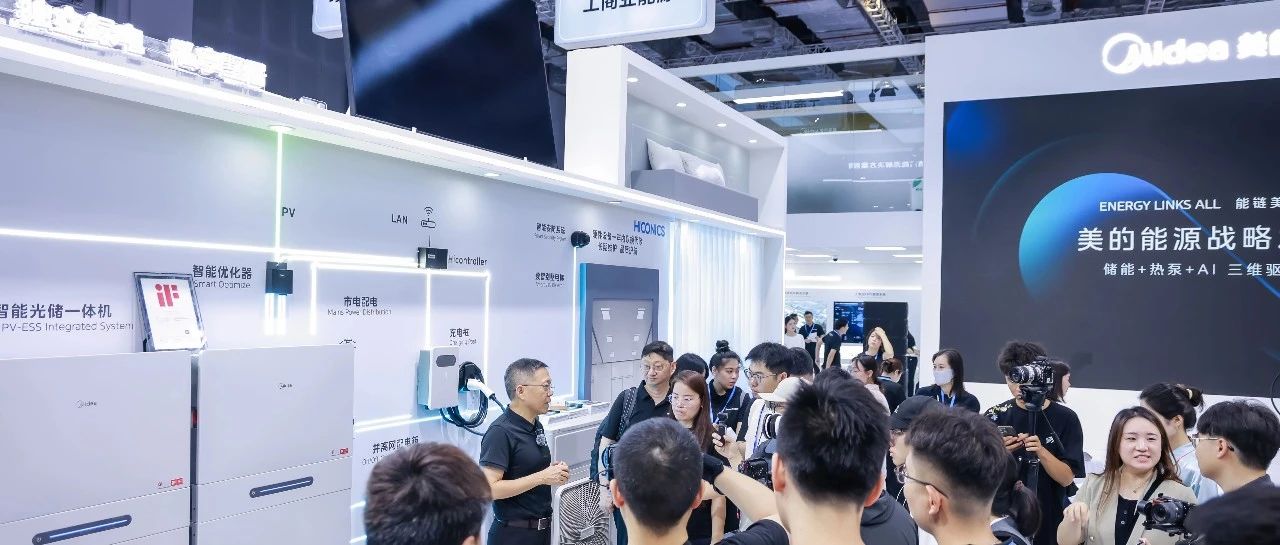
Core Viewpoint - The integration of AI with energy assets is set to transform the value of renewable energy equipment and create new opportunities for all participants in the energy market through the launch of the "Three Networks Integration Platform" and "Taiyi Trading System" by Xixing Charging [1] Group 1: Three Networks Integration Platform - The Three Networks Integration Platform is a comprehensive energy coordination and scheduling operation system that integrates "smart charging networks, scenario microgrids, and virtual power plant operation networks" [2] - The smart charging network connects a vast number of new energy vehicles and charging facilities, aggregating over 20 million adjustable load users, serving as the entry point for energy interaction [3] - The scenario microgrid covers various settings such as factories, homes, parks, and villages, enabling local collaboration of photovoltaic, energy storage, and charging for green electricity consumption [3] - The virtual power plant operation network aggregates distributed energy resources, flexibly responding to grid demands and deeply participating in electricity market transactions [4] - The platform allows electric vehicle owners to charge during off-peak hours and sell electricity back to the grid, transforming electricity costs into income, while commercial users can enhance annual revenue by 10%-20% through energy storage device scheduling [5] Group 2: Taiyi Trading System - The Taiyi Trading System aims to bring order to the chaotic electricity trading market by utilizing both general and specialized AI to process vast amounts of data daily, effectively acting as an "AI supercomputer" for electricity trading [8] - The combination of the Three Networks Integration Platform and Taiyi Trading System is expected to revolutionize the industry by transforming charging stations into energy dispatch nodes, enabling businesses to easily engage in electricity markets, and creating a closed-loop ecosystem for green electricity consumption and virtual power plant scheduling [8] Group 3: Industry Impact - The integration of these systems not only reconstructs the energy value chain but also significantly alters urban energy landscapes, injecting strong momentum into the development of a clean, low-carbon, safe, and efficient modern energy system [9]

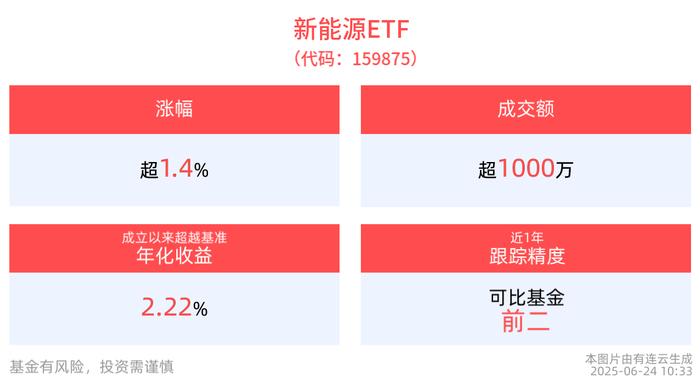
新能源消纳持续打开空间,光伏需求侧预期有望向好,新能源ETF(159875)盘中上涨1.41%
Xin Lang Cai Jing· 2025-06-24 03:02
Core Viewpoint - The renewable energy sector is experiencing significant growth, with key stocks and indices showing strong performance, driven by favorable market conditions and government policies. Group 1: Market Performance - The Zhongzheng New Energy Index rose by 1.54%, with notable increases in constituent stocks such as Hunan YN (up 5.26%) and Zhongwei Co. (up 3.65%) [1] - The New Energy ETF (159875) increased by 1.41%, indicating positive investor sentiment in the sector [1] Group 2: Liquidity and Valuation - The New Energy ETF had a turnover of 2% during the trading session, with a total transaction value of 17.6062 million yuan [2] - Over the past year, the ETF's average daily trading volume was 35.548 million yuan, ranking it among the top two comparable funds [2] - The current price-to-book ratio (PB) of the Zhongzheng New Energy Index is 1.98, which is below 85.19% of the historical data over the past three years, highlighting its attractive valuation [2] Group 3: Key Stocks and Weightings - The top ten weighted stocks in the Zhongzheng New Energy Index account for 44.89%, with Ningde Times holding the highest weight at 10.62% [5] - Other significant stocks include Yangguang Electric (5.65%), Longi Green Energy (4.25%), and China Nuclear Power (4.25%) [5] Group 4: Industry Trends and Policies - The construction of ultra-high voltage projects in China is entering a phase of intensive production, with the recent commissioning of the Hami-Chongqing ±800 kV UHVDC project [4] - New policies such as the "Green Power Direct Connection" allow renewable energy sources to supply power directly to single users without connecting to the public grid [4] - The market for virtual power plants is expanding, with regions like Guizhou and Yunnan participating in various trading mechanisms [4] Group 5: Electric Vehicle Market Outlook - The China Passenger Car Association predicts that retail sales of new energy vehicles (NEVs) in June could reach 1.1 million units, with a penetration rate of around 55% [5] - The introduction of new models, such as the Xiaomi YU7, is expected to enhance the competitiveness of NEVs, driving demand for batteries and materials [5]
智慧电力行业周刊:技术成果多点开花,虚拟电厂仍是行业重点发展方向
Chan Ye Xin Xi Wang· 2025-06-23 05:35
Key Policies - Sichuan Province has released management measures for distributed photovoltaic power generation, requiring that large commercial distributed photovoltaic projects primarily self-consume electricity, with a minimum self-consumption ratio of 50% for certain regions [4][5] - Tianjin plans to adjust its time-of-use electricity pricing, expanding the floating range of peak and valley prices, with peak prices potentially increasing by 60% and valley prices decreasing by 60% [6] Key Events - Guizhou Electric Power Company has established a near-zero carbon demonstration zone with a capacity of 940 kW, aiming to reduce CO2 emissions by 267 tons annually [8][10] - The establishment of the New Power System Standardization Technical Committee in Yunnan Province marks a significant step in standardization efforts within the energy sector [22][23] - The "Ningxia New Power System Construction Strategic Research" project has been approved, focusing on reliable power supply and high-level renewable energy consumption [25][26] - A meeting between the National Energy Group and the State Grid Corporation discussed accelerating the construction of new power systems and ensuring national energy security [27][28] - The largest provincial autonomous controllable power grid operation control system in the country has been put into operation in Guangdong, achieving 100% localization of core components [30][31] Key Technologies - Beijing Digital Green Land Technology Co., Ltd. has published a patent for real-time monitoring of power line deployment using ground-based laser radar technology [43][44] - Datang Digital Technology has applied for a patent to enhance the accuracy of knowledge retrieval models in the energy sector [45] - Huawei Digital Energy has obtained a patent for an uninterruptible power supply that ensures continuous power during switching between main and bypass routes [46] - China Power Construction Corporation's Hebei Institute has developed a photovoltaic inspection drone that protects itself in case of a fall [47] Key Companies - Southern Power Grid Technology has established a comprehensive capability chain in intelligent robots and drones, focusing on research, manufacturing, and application [49] - Haibo Technology has launched an electric power electronics technology platform to support the new power system [50][51] - China Resources Power has initiated research on multi-energy complementary smart operations, collaborating with Tsinghua University and the State Grid [52][53]


虚拟电厂专家会议
2025-06-23 02:09
Summary of Virtual Power Plant Conference Industry Overview - The conference focused on the **virtual power plant (VPP)** industry, which integrates distributed energy resources to participate in demand response, ancillary services, and the electricity spot market, aiming for grid balance and maximized revenue [1][2]. Key Points and Arguments Business Model and Profitability - The VPP's business model supports grid balance, traditionally managed by thermal power plants. With increasing renewable energy capacity, the demand for balancing capabilities has risen. VPPs provide flexible and economical balancing by integrating distributed energy resources [2]. - VPPs engage in demand response by reducing user electricity consumption during supply shortages, receiving compensation for this service. They also participate in ancillary services and the spot market to maximize revenue through real-time trading [2][4]. Market Dynamics - The electricity spot market has normalized demand response, allowing companies to continuously engage in energy trading and earn profits. Key provinces like **Shandong, Shanxi, and Guangdong** have established policies that enable VPPs to leverage their advantages [4]. - Real-time prices in the spot market reflect supply-demand balance, allowing companies to adjust their electricity usage strategies accordingly. The comparison of baseline and real-time loads provides reliable data for optimizing operational strategies [4]. Ancillary Services - Ancillary services, including ramping and frequency regulation, are crucial for addressing fluctuations in renewable energy generation. These services provide additional revenue streams for VPPs [8]. - Ramping services require quick response resources, while frequency regulation involves complex calculations that affect settlement prices based on performance coefficients [8]. Differences Between VPPs and Retail Electricity Companies - VPPs focus on optimizing energy usage through demand response and ancillary services, while retail electricity companies primarily assist consumers in purchasing energy at lower costs [9]. Industry Chain Composition - The VPP industry chain consists of three parts: - **Downstream**: National grid as the main entity for electricity transactions. - **Midstream**: Aggregation platforms or companies that integrate resources. - **Upstream**: Energy storage, distributed photovoltaics, and adjustable loads [11]. Role of Adjustable Loads - Adjustable loads are pivotal for VPP development, allowing entities like bus stations and high-energy-consuming industries to profit by adjusting their electricity usage [12][14]. Technological Requirements - Key technological requirements for VPPs include high-quality load forecasting and aggregation capabilities. Accurate predictions are essential for participating in the day-ahead market and ensuring compliance with performance standards [15][16]. Additional Important Insights Future Trends - The future of VPPs includes stricter compliance assessments and more detailed trading varieties. The construction of VPPs in Germany serves as a reference model for China [24]. - The development of VPPs globally shows significant differences, with Europe and the U.S. having more mature systems compared to China's early-stage market [25][26]. Challenges in China - China's VPP development faces challenges such as limited profitability for retail electricity companies and the need for technological upgrades in high-capacity enterprises to support frequent operations [27][29]. Policy Impact - The spot market and related policies are crucial for advancing VPPs in China, with increasing provincial participation and clear timelines set by regulatory documents [28]. This summary encapsulates the essential aspects of the virtual power plant industry as discussed in the conference, highlighting its business model, market dynamics, technological needs, and future directions.
电力设备及新能源行业双周报(2025、6、6-2025、6、19):国家能源局发布《关于组织开展能源领域氢能试点工作的通知-20250620
Dongguan Securities· 2025-06-20 09:21
Investment Rating - The industry investment rating is "Overweight," indicating that the industry index is expected to outperform the market index by more than 10% in the next six months [48]. Core Viewpoints - The report highlights the recent announcement by the National Energy Administration regarding the initiation of hydrogen energy pilot projects in regions rich in wind, solar, hydro, nuclear, and biomass resources. This initiative aims to promote large-scale renewable energy hydrogen production and explore diverse pathways for hydrogen industry development [3][42]. - The report suggests focusing on leading companies in the hydrogen technology sector, as the pilot projects are expected to drive innovation in hydrogen management models and support the entire hydrogen supply chain development [3][42]. Summary by Sections 1. Market Review - As of June 19, 2025, the Shenwan Electric Equipment industry has seen a decline of 1.06% over the past two weeks, underperforming the CSI 300 index by 0.17 percentage points, ranking 11th among 31 industries. Year-to-date, the industry has decreased by 6.44%, lagging behind the CSI 300 index by 4.11 percentage points, ranking 26th [11][15]. 2. Valuation and Industry Data - As of June 19, 2025, the price-to-earnings (PE) ratio for the electric equipment sector is 24.13 times. Sub-sector PE ratios include: - Electric Motor II: 46.20 times - Other Power Equipment II: 39.37 times - Solar Equipment: 16.37 times - Wind Equipment: 32.12 times - Battery: 24.08 times - Grid Equipment: 23.41 times [22][25]. 3. Industry News - The report discusses the National Energy Administration's recent data release indicating that total electricity consumption in May reached 809.6 billion kWh, a year-on-year increase of 4.4%. Cumulative electricity consumption from January to May was 39,665 billion kWh, up 3.4% year-on-year [38]. 4. Company Announcements - The report includes various company announcements, such as share reduction plans by major shareholders and updates on procurement projects, indicating ongoing corporate activities within the sector [41]. 5. Weekly Perspective on Electric Equipment Sector - The report emphasizes the importance of the hydrogen energy pilot projects and suggests that companies with advanced hydrogen technology should be closely monitored for potential investment opportunities [41][42].