
银发经济

Search documents
环球家居周报:居然智家完成换届,顾家乐活升级为副品牌,友邦吊顶筹划控制权变更……
Huan Qiu Wang· 2025-12-29 05:05
Group 1: Business Developments - Red Star Macalline and Jianfa's first collaborative commercial project, Chengdu Bay Yue City, officially opened on December 20, 2023, with a total construction area of approximately 144,000 square meters, focusing on family-oriented services and experiences [1] - Juran Smart Home completed its board restructuring on December 23, 2023, with Wang Ning reappointed as Chairman and CEO, aiming for strategic upgrades driven by innovation [2] - Gujia Home announced the upgrade of its "Gujia Lehuo" brand to an independent sub-brand, focusing on the third and fourth-tier city markets with a new store design emphasizing a warm atmosphere and young design [3] Group 2: Financial Transactions - Dream Home confirmed the completion of a share transfer of 6.86%, amounting to approximately 267 million yuan, while maintaining control with a 50.91% stake [5] - Dongyi Risheng's restructuring plan was approved by the Beijing First Intermediate People's Court, with over 1.4 billion yuan in funding to support its main business and new ventures [6] - Haier Smart Home announced the sale of 49% of its Indian subsidiary to Bharti Group and Warburg Pincus, maintaining operational control while enhancing market penetration in India [10] Group 3: Product Launches and Innovations - ONETENO, a smart sleep solution provider, completed a Pre-A round of financing, with a post-investment valuation in the tens of millions of yuan, aiming for mass production of its radar sleep monitoring products [4] - Huawei launched a new range of smart home packages during the nova 15 series release, with prices ranging from 29,999 yuan to 99,999 yuan, targeting various consumer needs [7] - The first "silver economy" themed store in Shanghai opened on December 23, showcasing elderly-friendly furniture and health products [8] Group 4: Market Expansion - Dongpeng and New Pearl Group's joint real estate company acquired residential land for 279 million yuan, marking a strategic move into real estate development [9] - Jiumu opened its largest overseas showroom in Riyadh, Saudi Arabia, covering 1,029 square meters, focusing on smart bathrooms and high-end customization [11] - Oriental Yuhong launched its new overseas brand "OYH" and a global marketing platform, aiming to transition from "Chinese supply" to a "global brand" [12]

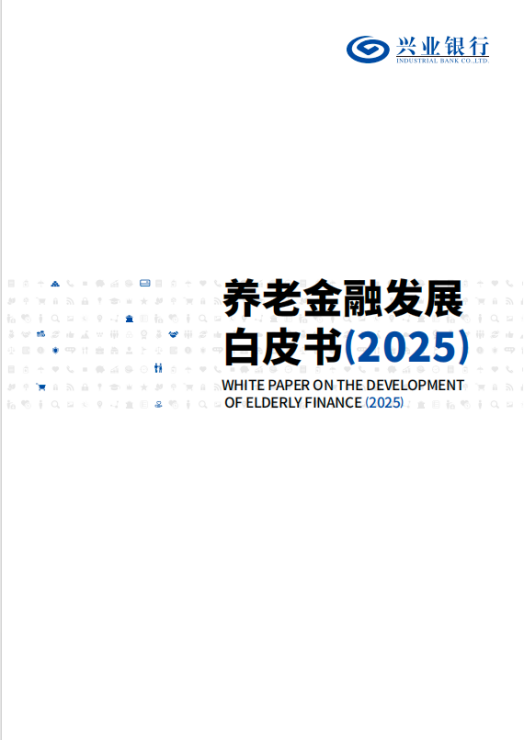
《养老金融发展白皮书》发布:机构深耕细作时代来临
2 1 Shi Ji Jing Ji Bao Dao· 2025-12-29 04:19
Core Insights - The aging population in China is becoming a significant challenge, with projections indicating that by the end of 2024, 22.0% of the population will be over 60 years old, and 15.6% will be over 65 years old, marking an increase from 2019 [1] - The government is actively implementing policies to enhance the pension finance system, aiming to create a robust framework for pension financial services [2][3] Policy Developments - In December 2024, the People's Bank of China and nine other departments issued guidelines to support the development of the pension sector, emphasizing tailored financial products for different elderly demographics [2] - The National Financial Supervision Administration released an implementation plan in March 2025 to establish a diverse commercial pension finance system [2] Research Findings - The "Pension Finance Development White Paper (2025)" by Industrial Bank highlights that nearly 80% of respondents are willing to allocate up to 30% of their monthly income for retirement savings, with a preference for bank deposits and wealth management products [3][7] - The white paper also identifies a significant gap between the awareness and actual participation in personal pension accounts, with an account opening rate of 54.3% but a contribution rate of only 18.3% [5] Consumer Behavior Trends - Survey results indicate that the ideal monthly retirement expenditure for respondents is between 3000-5000 yuan, with higher expectations in first-tier cities [9] - The demand for diverse pension financial products is characterized by a preference for safety, reasonable return expectations, and liquidity sensitivity [7] International Experience and Recommendations - The white paper suggests that China can learn from international practices, such as optimizing tax policies for pension withdrawals and providing subsidies for low-income groups to encourage participation in personal pension systems [10][13] - It emphasizes the importance of long-term care insurance in enhancing the payment capacity of the elderly and balancing fiscal burdens [14] Future Trends in Pension Finance - The white paper predicts a "six-fold" trend in the development of pension finance in China, including systematic management of pension funds, diversification of pension products, and personalized financial services [15][16] - The report also highlights the need for age-appropriate financial services and the diversification of financing methods for the pension industry [16][17]

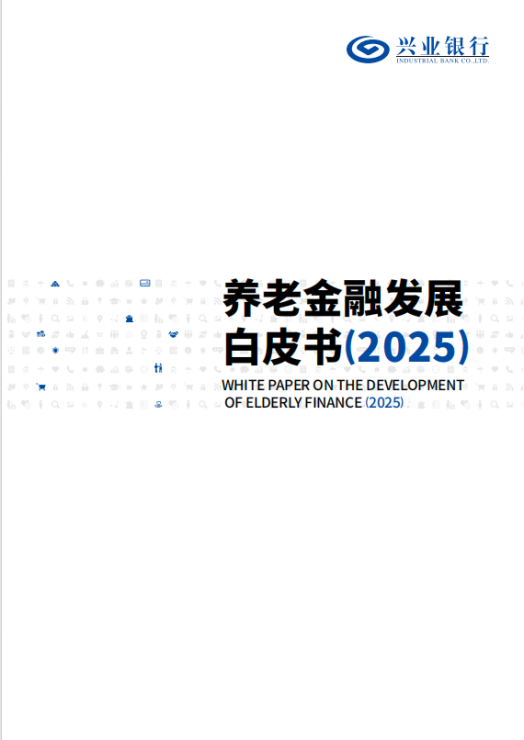
《养老金融发展白皮书(2025)》发布:机构深耕细作时代来临
2 1 Shi Ji Jing Ji Bao Dao· 2025-12-29 04:16
Core Insights - The aging population in China is becoming a significant challenge, with projections indicating that by the end of 2024, 22.0% of the population will be over 60 years old, and 15.6% will be over 65 years old, marking an increase from 2019 [1] - The government is actively implementing policies to enhance the pension finance system, aiming to create a robust framework for pension financial services and products [2][3] Policy Developments - In December 2024, a joint guideline was issued by the People's Bank of China and nine other departments to support the development of the silver economy through targeted financial products for different age groups [2] - The National Financial Supervision Administration released an implementation plan in March 2025 to establish a diverse commercial pension finance system [2] Research Findings - A recent white paper by Industrial Bank highlights that nearly 80% of respondents are willing to allocate up to 30% of their monthly income for retirement savings, with a preference for bank deposits and wealth management products [3][8] - The white paper also indicates a significant urban-rural divide in pension account participation, with urban residents showing higher account opening and contribution rates compared to rural residents [6] Future Trends - The white paper predicts a "six-fold" trend in pension finance development, including systematic management of pension funds, diversification of pension products, personalized financial services, age-appropriate online and offline services, diversified financing methods for the pension industry, and the integration of smart technologies in the silver economy [19][20][21] Consumer Behavior - The ideal monthly retirement expenditure for respondents is between 3,000 to 5,000 yuan, with higher expectations in first-tier cities [12] - The demand for diverse pension financial products is characterized by a preference for safety, rational return expectations, and sensitivity to liquidity [8][12] International Insights - The white paper draws on international experiences, particularly from Japan, suggesting that China can enhance participation in personal pension systems through optimized tax policies and targeted subsidies for low-income groups [14][16] - The analysis indicates that as life expectancy increases, the demand for institutional care in China is likely to rise, similar to trends observed in Japan [16][17]

超越金融:银行如何织就“养老金融+养老服务”的生态网?
2 1 Shi Ji Jing Ji Bao Dao· 2025-12-29 04:16
Core Insights - The article discusses the emergence of a significant "silver economy" in China due to rapid population aging, highlighting the need for innovative financial services tailored to the elderly [1][3] - It emphasizes the shift from traditional financial services focused on account management to a more comprehensive approach that integrates financial products with various aspects of elderly care and lifestyle [5][6] Financial Policy and Market Trends - Since 2022, there has been a surge in pension finance policies, with the central financial work conference prioritizing "pension finance" as a new growth area for commercial banks [3][4] - The demand for pension financial services is evolving, requiring banks to extend their services beyond mere financial management to encompass a full range of elder care needs [3][5] Service Innovation and Integration - Banks are encouraged to create a comprehensive ecosystem that combines financial products with real-life services, addressing the diverse needs of elderly clients [5][6] - Leading banks, such as Industrial Bank, are already exploring innovative service models that integrate various elder care services, including healthcare and social activities, into their offerings [6][10] Challenges in Implementation - The article outlines several challenges banks face in establishing a cohesive pension finance ecosystem, including organizational structure, data sharing, and the need for specialized talent [8][9] - A shift from decentralized management to a more centralized and professional approach is recommended to enhance service delivery [8] Talent Development and Education - The lack of professionals who understand finance, elder care, and customer needs is identified as a significant barrier to improving pension financial services [9] - Industrial Bank is initiating a talent development program to train over 2,100 pension financial planners, focusing on practical experience and collaboration with industry experts [9] Community Engagement and Financial Literacy - Enhancing financial literacy among the elderly is crucial for the acceptance of innovative financial products and services [9] - Industrial Bank has conducted numerous public lectures and established educational bases to promote financial knowledge among the elderly, receiving positive feedback from the community [9][10]

中国人寿:已在十余个城市完成养老养生项目布局,后续将加快推进26个重点城市布局
Cai Jing Wang· 2025-12-29 04:00
Core Viewpoint - China Life is leveraging its comprehensive financial advantages to enhance pension fund reserves, explore new models for elderly care services, and increase support for the silver economy, aiming to integrate financial resources into the pension sector effectively [1] Group 1: Pension Fund Management - As of Q3 2025, China Life's pension insurance company is providing investment management services for over 75 billion yuan in basic pension insurance funds, achieving top rankings in specific investment portfolios [1] - The cumulative scale of enterprise annuities and occupational annuities managed by China Life's pension insurance company exceeds 2.1 trillion yuan, maintaining the leading position in the industry [1] - The third pillar of pension finance development is highlighted, with Guangfa Bank, a member of China Life Group, having opened over 3.4 million personal pension accounts and offering more than 220 personal pension products [1] Group 2: Elderly Care Community Development - The "Guangfa Garden" brand, developed by China Life's Guoshou Health Investment Company, focuses on professional elderly care operations, with various product lines including comprehensive elderly care communities and boutique elderly apartments [1][2] - The suburban CCRC elderly care communities are strategically located in cities like Beijing, Tianjin, Chengdu, and Xiamen, catering to a wide range of elderly care needs from self-care to nursing [2] - The urban boutique elderly apartments primarily serve elderly individuals requiring care and are actively being developed in cities such as Qingdao, Shijiazhuang, Hangzhou, Kunming, and Shenzhen [2] Group 3: Innovative Community Projects - China Life's Guoshou Health Investment Company is collaborating with the Shenzhen government to innovate three "embedded" community elderly care projects, aimed at providing affordable care options for the working class [2] - The "Guangfa Garden" community emphasizes a professional care system that ensures peace of mind for families and comfort for the elderly, supported by a unique service standard system comprising 291 standards [2] - China Life has completed elderly care project layouts in over ten cities, including Beijing, Tianjin, Suzhou, and Chengdu, with plans to accelerate development in 26 key cities nationwide [2]

王永春:银发经济2035年将达19万亿,但要先把“底盘”打牢
Xin Jing Bao· 2025-12-29 03:08
Core Viewpoint - The silver economy is positioned as a core sector of the service industry, aiming to meet the diverse needs of the elderly through market mechanisms during the 14th Five-Year Plan period, creating a closed loop of "improving people's livelihood - releasing consumption - economic growth" [2][8]. Group 1: Industry Overview - As of October 2025, there are over 17 million enterprises in the elderly care industry, employing more than 49 million people, with a conservative estimate of total employment exceeding 100 million [3]. - The elderly care industry has established 470,000 service facilities, creating a "quarter-hour elderly care service circle" that covers urban and rural areas [3]. - The elderly care technology and smart elderly care service sector comprises over 5.43 million enterprises, accounting for 30.66% of the overall elderly care industry, with smart elderly care services growing at a rate of 22% [3]. Group 2: Policy and Development Goals - The basic elderly care service supply is prioritized as the foundation for expanding the silver economy, focusing on inclusivity and security [4]. - The central government has set a goal to enhance basic elderly care services, particularly for disabled elderly individuals, by 2029 [5]. Group 3: Challenges and Shortcomings - There is a significant care gap for approximately 45 million disabled and cognitively impaired elderly individuals, with only 500,000 certified caregivers available, indicating a shortfall of 550,000 [6]. - The elderly population aged 60 and above in rural areas exceeds 23%, highlighting the need for targeted services for rural elderly and those in difficult circumstances [6]. Group 4: Strategic Focus Areas - The silver economy must focus on three rigid shortcomings: addressing special groups, enhancing service networks, and building professional capabilities [6][7]. - The demand for caregivers and rehabilitation therapists is increasing, with job postings in these areas growing by 36.1% and 25.7% year-on-year, respectively [7]. Group 5: Development Principles - The development of the silver economy should adhere to three principles: not deviating from "elderly-friendly needs," not deviating from "collaborative integration," and not deviating from "China's national conditions" [8][9]. - The health management elderly care service market is projected to reach between 1.4 trillion and 1.5 trillion yuan by 2025, becoming one of the fastest-growing sectors [8].
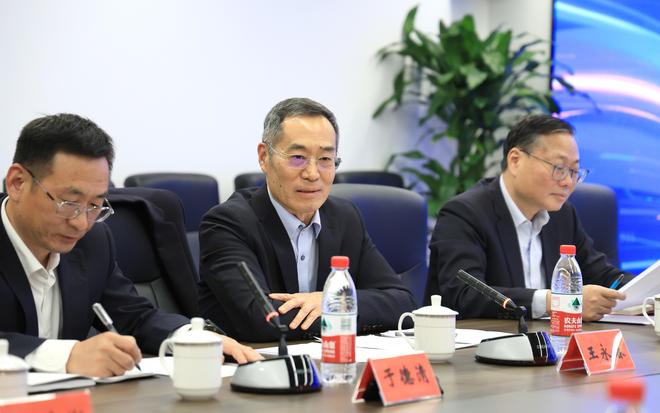
中国人寿寿险公司参与承办长期护理保险项目超70个
Jin Rong Jie Zi Xun· 2025-12-29 03:01
Core Viewpoint - The 20th Central Committee's Fourth Plenary Session outlines the "14th Five-Year" strategic tasks, emphasizing the importance of enhancing pension systems and services, which provides fundamental guidance for the development of pension financing over the next five years [1] Group 1: Pension Fund Management - China Life is leveraging its comprehensive financial advantages to enhance pension fund reserves and explore new models for pension services, thereby integrating financial resources into the pension sector [1] - The company adopts a "one increase, one decrease" strategy to enrich pension funds, focusing on professional investments to grow reserves and reduce individual pension burdens through various insurance products [2][4] - As of Q3 2025, China Life's pension insurance company has provided investment management services for over 75 billion yuan in basic pension insurance funds, ranking high in specific investment portfolios [3] - The cumulative scale of enterprise annuities and occupational annuities managed by China Life exceeds 2.1 trillion yuan, maintaining the industry's leading position [3] Group 2: Insurance Products for Seniors - China Life has launched a series of insurance products tailored for the elderly, including "Silver Age Health" and "Silver Age Peace," which cover various risks such as death, accidents, and medical expenses [4] - The company has participated in over 70 long-term care insurance projects, contributing valuable experience to national long-term care insurance schemes [4] Group 3: Quality Service in Elderly Care - China Life's "Guoshou Jiayuan" brand focuses on creating a comprehensive elderly care service system that integrates institutional, community, and home care [5][6] - The company has established various types of elderly care communities across multiple cities, including high-quality integrated care complexes and community-based care projects [6][8] - The "Guoshou Jiayuan" community incorporates advanced medical facilities and services, addressing the challenges of healthcare access for the elderly [7] Group 4: Economic Impact and Innovation - The silver economy is expanding, with over 77,600 companies registered in the elderly products and services sector by 2024, indicating a shift from a "sunset industry" to a "sunrise industry" [9] - China Life is actively investing in the silver economy, establishing a 10 billion yuan fund to support systematic investments in this sector [11] - The company is also developing a debt investment plan focused on elderly care real estate, aiming to create comprehensive shopping and service centers for seniors [11] Group 5: Strategic Vision - China Life aims to transform the concept of "pension" into "enjoyment of old age" by providing comprehensive, high-quality, and inclusive financial services for the elderly [12]
“十五五”银发经济怎么做?专家建议:先兜底、再扩容、做实平台
Xin Jing Bao· 2025-12-29 03:00
12月26日,由新京报社与中国老龄产业协会科技委联合主办,主题为"看2026银发经济新趋势研讨会"在 京举行,围绕"十五五"时期银发经济的发展趋势、服务供给与技术落地等议题展开研讨交流。 政策牵引的另一面,是产业体量被更直观地"量化"出来。王永春介绍,以国家统计分类口径划分,养老 产业分为12大类;到2025年10月,我国老龄化水平为18.72%,新注册企业173.8万户、注销129.9万户, 实有企业1775万户;按社保缴纳口径估算,从业人员为4981万。 与此同时,养老供给载体正在形成更清晰的网络。王永春介绍,截至2025年10月,全国服务机构总量约 47万,其中养老机构3.88万、社区服务中心32万、助餐点11万。这些载体共同构成从机构端到社区端、 再到助餐等便民节点的"多载体谱系",让服务更贴近老年人生活半径,也为后续的专业照护、康复服务 与智慧养老应用提供接入点。 不仅如此,马旗戟表示,在增长路径上,我国银发经济的动力结构也正在发生变化:前一阶段更多依靠 政府完成全覆盖兜底、基础设施建设和制度投入,"十五五"期间,市场化供给的扩张和升级将成为核心 动能。公共服务体系要把底兜牢,社会力量则主要投向以社 ...
任泽平:展望未来十年中国经济的十大趋势
Xin Lang Cai Jing· 2025-12-29 01:53
Group 1 - The core viewpoint is that China's economy is expected to surpass the United States by 2035, becoming the world's largest economy, leading to a reshuffling of global economic, trade, technology, and geopolitical orders, marking a critical period for great power competition [1] Group 2 - The explosive growth of artificial intelligence applications is anticipated to become a new growth point for the economy, leading a new wave of economic cycles and providing opportunities for the younger generation to achieve wealth [1] - Significant breakthroughs in life sciences are expected, with AI facilitating rapid innovation in drug development, potentially increasing human lifespan to 120 years, and redefining the concept of aging [1] Group 3 - The prevalence of humanoid robots is projected to replace simple repetitive labor, allowing humans to engage in creative, social, and emotional activities [1] - The unstoppable rise of autonomous driving is expected to lead to the complete elimination of fuel vehicles, providing ultimate solutions to urban traffic congestion, air pollution, and safety in transportation [1] Group 4 - A new green energy system is anticipated to emerge, with solar, wind, and controllable nuclear fusion completely replacing coal power, transforming the energy supply system to "distributed generation + storage," significantly improving the greenhouse effect [1] Group 5 - The arrival of the post-real estate era is expected, with a market bifurcation where housing prices in areas attracting 20% of the population may hit bottom or even reach new highs, while prices in areas losing 80% of the population may experience prolonged declines [1] Group 6 - Demographic trends such as aging population, declining birth rates, and increasing singlehood are expected to give rise to the silver economy, pet economy, single economy, and emotional consumption, with robots and AI assistants becoming integral parts of human life [1] Group 7 - By 2035, China's per capita GDP is projected to reach the level of moderately developed countries, leading to material abundance and a shift in consumer focus towards spiritual and emotional consumption [1] Group 8 - The transition from an internet-based existence to an AI-driven existence is expected to significantly change daily life through AI assistants, autonomous driving, virtual reality, AI-driven pharmaceuticals, robotic healthcare, telemedicine, and humanoid robots [1]
2026年-大消费策略展望
2025-12-29 01:04
Summary of Key Points from Conference Call Records Industry Overview - **Consumer Sector Outlook for 2026**: The consumer sector is expected to recover significantly, driven by a focus on domestic demand and policy support, particularly in service consumption and new product categories. The real estate sector's negative impact is diminishing, with core CPI showing six months of recovery [2][5][8]. Core Insights and Arguments - **Long Bull Market Prediction**: A long bull market similar to 2016-2019 is anticipated to begin in the second half of 2026, led by AI-driven new products, service consumption, overseas opportunities, and durable goods. The first half of 2026 will see strong performance in overseas markets, while domestic demand will gain attention in the latter half [1][5][6]. - **Policy Support for Consumer Spending**: The introduction of a resident income increase plan by the central economic work conference, along with the appreciation of the RMB and favorable trade policies, will provide a solid foundation for consumer spending in the coming years [1][9][10]. - **AI and 3D Printing Opportunities**: The AI and 3D printing sectors are poised for significant growth, with opportunities across the entire supply chain, including leading companies and innovative hardware products like AI glasses and smart mattresses [1][12]. Key Sectors and Companies to Watch - **Service Consumption**: Focus on service consumption growth in 2026, particularly in travel and tourism, as well as the elderly care sector, which is expected to see increased demand [3][15]. - **Alcohol and Snack Industries**: The liquor sector, particularly major brands like Moutai, is expected to maintain strong performance due to price stability measures. The snack sector is also showing promise, with companies like Wanchen and Yanjin expected to perform well during the pre-Spring Festival period [16][20][24]. - **Elderly Economy**: The silver economy is anticipated to grow, with companies like Sanxia Tourism and Aima Technology showing potential in the elderly travel and mobility sectors [15][11]. Investment Logic and Recommendations - **Consumer Sector Investment**: The consumer sector is seen as undervalued, with significant room for valuation recovery. The focus should be on companies benefiting from policy support and improving domestic demand [2][30]. - **Emerging Technologies**: Investment opportunities in AI and new technologies, particularly in 3D printing and AI-enhanced products, are highlighted as key growth areas [12][35]. - **Overseas Expansion**: Companies with strong overseas branding and supply chain capabilities are recommended for investment, especially in light of the RMB appreciation [13][31]. Additional Insights - **Real Estate Market Impact**: The negative impact of the real estate market on consumer spending is expected to be limited, as government measures to boost public spending and social security are likely to stabilize purchasing power [7][8]. - **Consumer Market Drivers**: Key drivers for the consumer market include urbanization, rising GDP per capita, and demographic shifts, particularly the aging population, which will influence consumption patterns [10][11]. - **Food and Beverage Sector**: The snack and beverage sectors are expected to benefit from new retail models and consumer trends, with specific companies recommended for their growth potential [20][24][27]. This summary encapsulates the essential insights and recommendations from the conference call records, providing a comprehensive overview of the anticipated trends and investment opportunities in the consumer sector for 2026.