双碳目标

Search documents
他要同时对战宁德时代与比亚迪
3 6 Ke· 2026-01-10 04:46
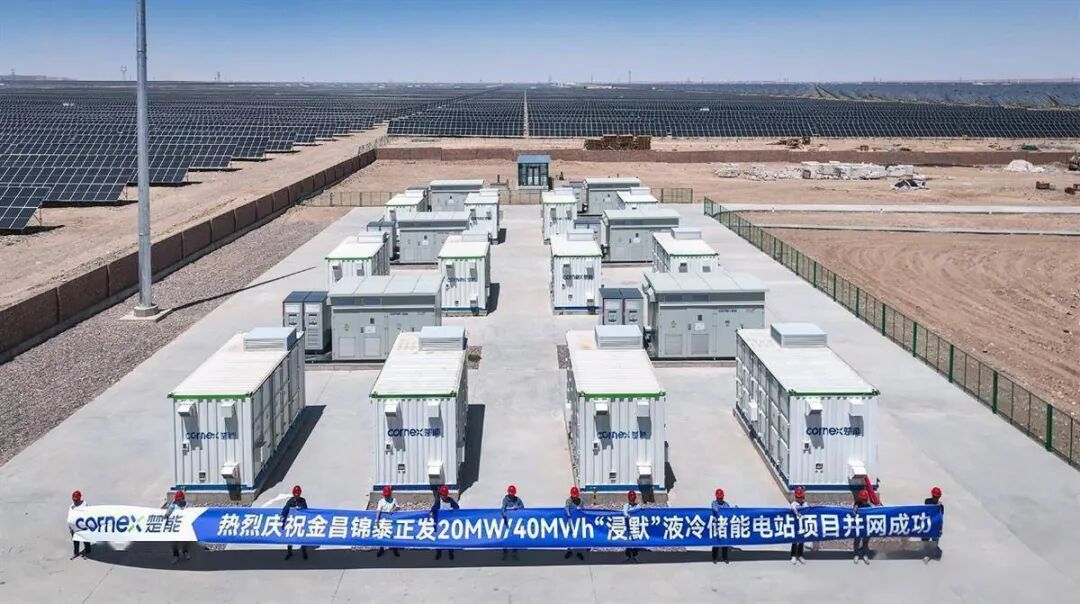
Core Viewpoint - Chuangneng New Energy has emerged as a significant player in the energy storage battery market, achieving over 45 billion yuan in orders and rapidly expanding its market presence within just four years of establishment [1][2]. Group 1: Company Overview - Chuangneng New Energy Co., Ltd. was founded in August 2021 in Xiaogan, Hubei, focusing on the research, production, and marketing of energy storage batteries, power batteries, and energy management systems [2]. - The company has quickly gained recognition in a competitive market dominated by established giants like CATL, which has a market value in the trillions [2]. Group 2: Product Innovations - In December 2022, Chuangneng launched the first "Immersion" battery safety system in the energy storage industry, which effectively prevents fire spread by submerging at-risk areas with a liquid suppressor [3][4]. - The "Immersion" system has received the "Excellence in Energy Storage Technology Award" in 2023 and has been implemented in various projects, including those by major energy companies [4]. Group 3: Market Strategy and Performance - In August 2023, Chuangneng announced a groundbreaking price of 0.5 yuan/Wh for its 280Ah cells, significantly undercutting the market price of 0.9 yuan/Wh, which has helped the company secure contracts with major state-owned enterprises [6]. - By 2024, Chuangneng had secured over 30 GWh of domestic and international energy storage orders, ranking eighth globally in energy storage battery shipments, with a projected shipment of over 50 GWh in the first three quarters alone [6][8]. Group 4: Global Expansion - Chuangneng's energy storage business has expanded to over 60 countries and regions, with cumulative orders exceeding 100 GWh, primarily driven by strong demand in Europe [8]. - The company has also signed strategic agreements for projects in the UK and Honduras, further solidifying its international presence [6]. Group 5: Future Aspirations - Chuangneng is not only focused on energy storage batteries but is also entering the power battery market, having established partnerships with several automotive manufacturers [10]. - The company plans to develop a range-extended SUV, aiming to become a vertically integrated player in the electric vehicle market, challenging established competitors like BYD [11][37]. Group 6: Leadership and Support - The founder, Dai Deming, is recognized for his cross-industry expertise and has received significant support from the Hubei provincial government, which has designated Chuangneng as a key enterprise for development [19][20]. - Local governments have implemented comprehensive support measures to facilitate Chuangneng's rapid growth and project execution [21][22]. Group 7: Investment and Growth - Chuangneng has committed 137.5 billion yuan to establish three major production bases in Hubei, with a total designed capacity of 350 GWh, positioning itself among the top players in the industry [26]. - The company has rapidly built a workforce of over 2,000 R&D personnel and has submitted nearly 5,000 global lithium battery patents, showcasing its commitment to innovation and rapid product development [29][32].



两大央企重组!能源领域格局再变→
Sou Hu Cai Jing· 2026-01-10 02:35
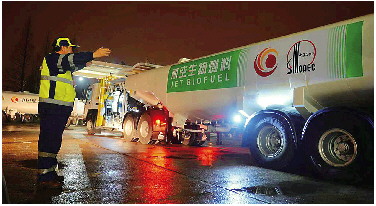
Group 1 - China Petroleum & Chemical Corporation (Sinopec) is the largest supplier of refined oil and petrochemical products in China, the world's largest refining company, and the second-largest chemical company, with the second-highest number of gas stations globally [2] - China Aviation Oil Holding Company (China Aviation Oil) is the largest integrated aviation fuel procurement, transportation, storage, testing, sales, and refueling service provider in Asia [2] Group 2 - The restructuring of Sinopec and China Aviation Oil is expected to create green collaborative value in the context of China's "dual carbon" goals, particularly in the civil aviation sector, which is a key area for carbon emission reduction [3] - Sustainable aviation fuel (SAF) is identified as a critical pathway for reducing emissions in the aviation industry, with Sinopec focusing on the development of new energy technologies and sustainable aviation fuel as a key area of interest [3] - Analysts believe that the collaboration between Sinopec and China Aviation Oil in green energy transition will not only reshape the competitive landscape of the traditional energy market but also have a profound impact on the green transformation of China's aviation industry [3]

综合整治“内卷式”竞争制度建设取得重要成果 新能源汽车、锂电池和光伏产业相关国家标准研制将进一步加快
Zhong Guo Zheng Quan Bao· 2026-01-09 23:04
Core Viewpoint - The State Administration for Market Regulation (SAMR) is accelerating the development of national standards related to the new energy vehicle, lithium battery, and photovoltaic industries to combat "involutionary" competition, which is characterized by low-price, low-quality, and low-level competition that disrupts market signals and undermines long-term competitiveness [2][4]. Group 1: Institutional Achievements - The SAMR has introduced ten key institutional achievements aimed at addressing "involutionary" competition, including the new Anti-Unfair Competition Law and guidelines for internet platform anti-monopoly compliance [3][4]. - These achievements encompass a comprehensive rule system that includes both mandatory regulations and guiding documents, enhancing internal regulation and external standard alignment [2][3]. Group 2: Standards Development - The SAMR has outlined a plan to develop 167 national standard projects for the new energy vehicle, lithium battery, and photovoltaic industries by 2025, focusing on safety, quality, and environmental standards [4][5]. - Specific standards include 57 for new energy vehicles, 30 for lithium batteries, and 80 for photovoltaic products, addressing areas such as product safety, quality management, and energy efficiency [5][6]. Group 3: Implementation and Promotion - The SAMR plans to enhance the promotion of these standards through various educational initiatives, including visual aids and expert interpretations, to ensure timely implementation and application within the industry [6][7]. - Collaboration with the Ministry of Industry and Information Technology will facilitate on-site promotional meetings to help the industry accurately understand and apply the new standards [7].
2.8万亿元,改写能源行业版图!中石化和中航油合并
Sou Hu Cai Jing· 2026-01-09 22:24
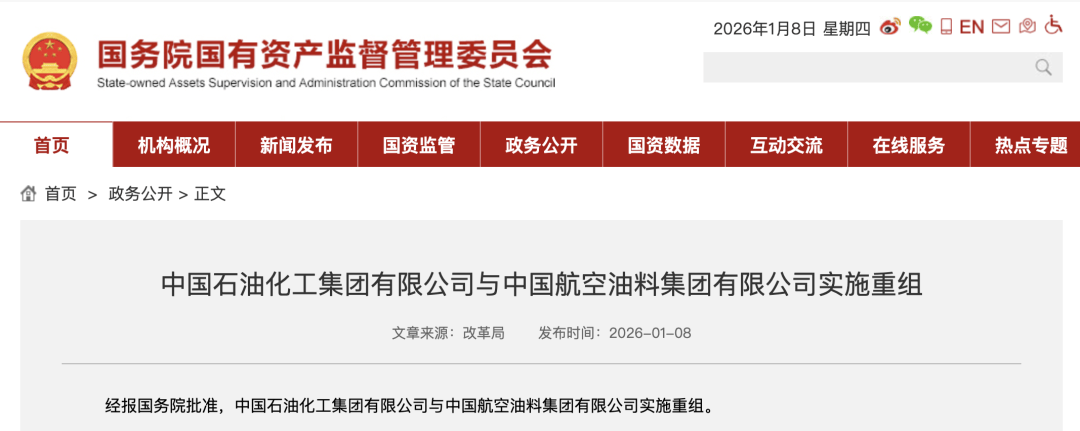
Core Viewpoint - The restructuring of China Petroleum & Chemical Corporation (Sinopec) and China Aviation Oil Group is a strategic move approved by the State-owned Assets Supervision and Administration Commission (SASAC), aiming to create the largest vertically integrated entity in the domestic aviation fuel sector, with a combined asset scale of nearly 2.8 trillion yuan [1][4][9]. Group 1: Company Overview - Sinopec is the largest supplier of refined oil and petrochemical products in China, recognized as the world's largest refining company and the second-largest chemical company, with a total number of gas stations ranking second globally [4]. - China Aviation Oil Group is the largest aviation fuel procurement, transportation, storage, testing, sales, and refueling service provider in Asia, supplying fuel to 258 transport airports and 454 general airports in China [4]. Group 2: Financial Metrics - In 2024, Sinopec reported an operating income of approximately 407.49 billion USD (about 2.93 trillion yuan) and total assets of around 375.39 billion USD (approximately 2.69 trillion yuan) [6]. - In the same year, China Aviation Oil Group had an operating income of about 33.45 billion USD (approximately 240.83 billion yuan) and total assets of around 10.59 billion USD (approximately 76.27 billion yuan) [7]. Group 3: Strategic Implications - The merger is expected to lower aviation fuel supply costs, enhance the competitiveness of China's aviation fuel industry, and promote the green and low-carbon transition of the aviation sector [9][12]. - The integration of Sinopec and China Aviation Oil Group is anticipated to facilitate a more market-oriented development of the aviation fuel industry, potentially altering the competitive landscape [10]. Group 4: Industry Context - The restructuring reflects a broader trend of strategic and professional consolidation among central enterprises, with several other significant mergers occurring in various sectors [13][15]. - The move aligns with national goals for energy security and the dual carbon targets, emphasizing the need for a balance between enhancing state-owned enterprise competitiveness and deepening market reforms [16][17].

综合整治“内卷式”竞争制度建设取得重要成果
Zhong Guo Zheng Quan Bao· 2026-01-09 20:52
Core Viewpoint - The State Administration for Market Regulation (SAMR) is accelerating the development of national standards related to the new energy vehicle, lithium battery, and photovoltaic industries to combat "involutionary" competition, which is characterized by low price, low quality, and low-level competition [1][2]. Group 1: Key Achievements in Institutional Construction - The SAMR has announced ten key institutional construction achievements aimed at addressing "involutionary" competition, including the new Anti-Unfair Competition Law and guidelines for internet platform anti-monopoly compliance [2]. - These achievements include both mandatory regulations and guiding documents, forming a comprehensive governance framework that covers all stages of market competition [2]. Group 2: Focus on New Energy Industries - The new energy vehicle, lithium battery, and photovoltaic industries are identified as strategic emerging industries, with a focus on high-quality development and the establishment of a standard system to support innovation [3][4]. - A total of 167 national standard projects have been deployed for these industries, with specific standards being developed for safety, quality management, and environmental sustainability [3]. Group 3: Specific Standards Developed - In the new energy vehicle sector, 57 national standards have been revised or established, focusing on safety, product quality, and performance evaluation [3]. - For lithium batteries, 30 national standards have been created, emphasizing safety and quality management [3]. - The photovoltaic sector has seen the establishment of 80 national standards, targeting product quality and energy efficiency [3]. Group 4: Future Actions - The SAMR plans to enhance the promotion and implementation of the established standards through various educational initiatives and collaboration with the Ministry of Industry and Information Technology [4]. - The goal is to ensure that the standards are effectively applied in the industry to foster high-quality development in the "new three types" sectors [4].
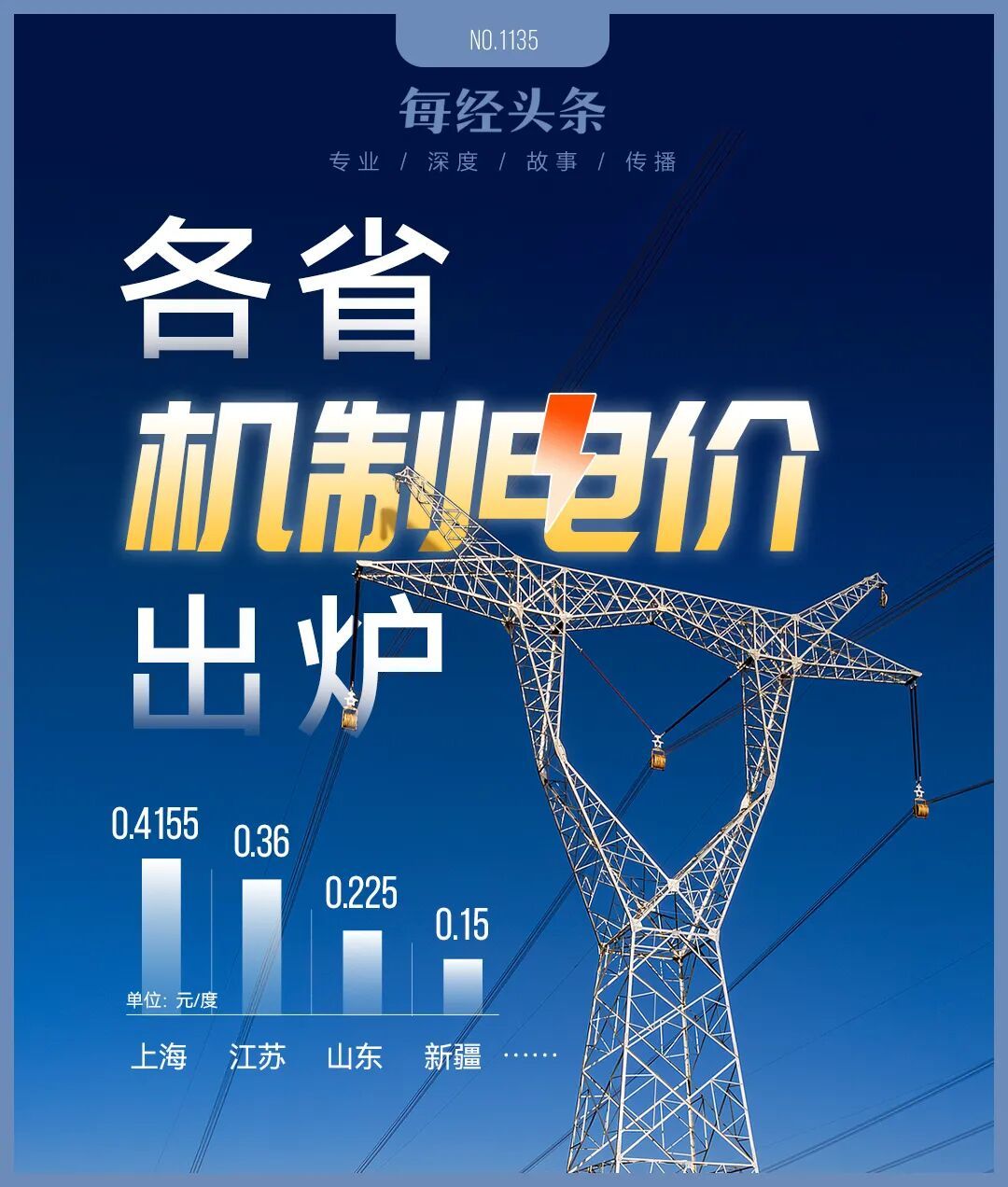
20余省份机制电价揭晓:上海比山东高84%,浙江比辽宁高31%⋯⋯
Mei Ri Jing Ji Xin Wen· 2026-01-09 12:36
Core Viewpoint - The implementation of the new mechanism electricity pricing system has led to significant regional disparities in electricity prices for renewable energy projects, particularly in solar and wind energy, affecting investment decisions and project profitability across various provinces in China [1][2][4]. Group 1: Mechanism Pricing Changes - The "136 Document" issued by the National Development and Reform Commission and the National Energy Administration mandates that all new renewable energy projects must participate in market trading, replacing the previous guaranteed purchase system [1][4]. - The mechanism electricity prices for new projects vary significantly across regions, with the highest prices exceeding 0.40 yuan/kWh in places like Shanghai and the lowest dropping to 0.15 yuan/kWh in Xinjiang [2][7]. - The pricing for existing projects ranges from 0.26 yuan/kWh to 0.45 yuan/kWh, with higher prices generally found in economically developed provinces [4][5]. Group 2: Regional Price Disparities - The price differences for solar and wind energy are pronounced, with solar prices in Shanghai at 0.4155 yuan/kWh, significantly higher than 0.225 yuan/kWh in Shandong, representing an 84% difference [2][6]. - Factors contributing to these disparities include local resource endowments, consumption capacity, and specific policy preferences of different provinces [9][10]. - The competition among renewable energy companies in regions with abundant resources, such as Gansu, has led to lower mechanism prices due to oversupply in the market [10][12]. Group 3: Impact on Investment Strategies - The extended payback periods for solar projects, now averaging 12 to 13 years instead of the previous 8 to 9 years, have prompted many companies to pause new investments and shift focus to EPC (Engineering, Procurement, and Construction) services [1][21]. - Companies are adopting a "minimize losses" approach, often bidding low to secure participation in the mechanism pricing system, which further drives down prices [24][30]. - The upcoming changes in 2027, where non-natural person distributed solar projects will exit the mechanism pricing system, are expected to further impact investment strategies in the sector [25][26]. Group 4: Changes in Electricity Costs - The implementation of the mechanism pricing system is expected to increase system operation costs for companies, but the overall electricity prices may decrease due to intensified market competition and technological advancements [32][33]. - The transition to a fully market-based pricing system may exacerbate the occurrence of negative electricity prices, particularly during periods of oversupply, although the new pricing mechanism provides some revenue stability for renewable energy producers [34][35].
煤炭产业破“卷”:告别规模竞赛,迈向清洁高效新格局
2 1 Shi Ji Jing Ji Bao Dao· 2026-01-09 12:17
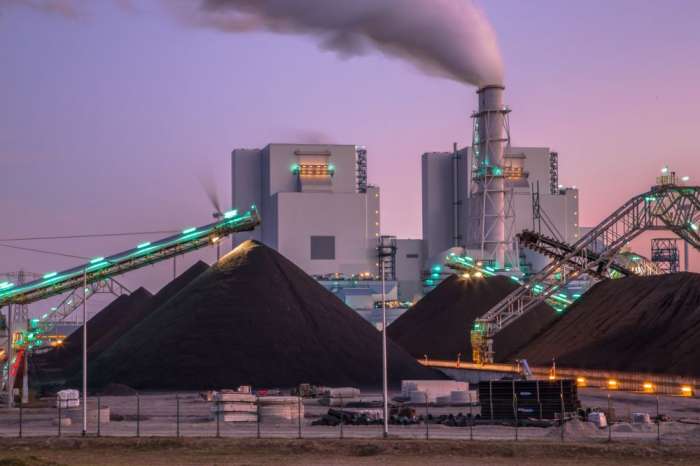
Core Viewpoint - The coal industry is undergoing a systematic upgrade driven by both policy and market forces, focusing on clean, efficient, and intelligent utilization in alignment with national "dual carbon" goals and energy security [1][10]. Policy and Regulatory Framework - The National Development and Reform Commission (NDRC) has released the "Benchmark Levels for Clean and Efficient Utilization of Coal (2025 Edition)," which aims to guide enterprises in upgrading coal utilization and eliminating outdated capacities [1][4]. - The policy emphasizes the need for a transition from quantity growth to quality improvement, promoting the development of coal as a clean and high-value product [1][2]. Industry Transformation Directions - The coal industry's transformation is centered around three core directions: clean utilization, intelligent technology, and high efficiency [1][10]. - The approach of "replacing advanced capacity with outdated capacity" signifies a shift from scale expansion to quality enhancement through technological and institutional innovation [2][3]. Regional Strategies - Different coal-producing provinces are implementing tailored strategies for transformation. Shanxi aims to transition from a coal province to an "energy strong province," while Shaanxi focuses on high-end coal chemical and circular economy development [5][8]. - Shanxi has successfully reduced the number of coal mines and stabilized its coal production capacity at 1.465 billion tons per year, while Shaanxi is categorizing and addressing low-efficiency capacities [7][8]. Clean and Efficient Utilization - The clean and efficient utilization of coal is seen as essential for the industry's survival and development, with policies being implemented to ensure compliance with environmental standards [10][14]. - The integration of coal with renewable energy sources is highlighted as a complementary strategy to enhance energy security and stability [13][14]. Technological Advancements - The industry is increasingly adopting intelligent technologies to improve operational efficiency and safety, with provinces like Shanxi and Shaanxi leading in smart coal mining initiatives [11][12]. - The establishment of industrial internet platforms and the promotion of digital transformation are key components of the industry's modernization efforts [11]. Economic Role of Coal - Coal is expected to transition from a mere energy supplier to a stabilizer and regulator in the national economy, supporting the intermittent nature of renewable energy sources [14]. - The value of coal in a green economic growth model will be realized through its foundational role in low-carbon industrial chains, such as coal chemical and new materials [14].
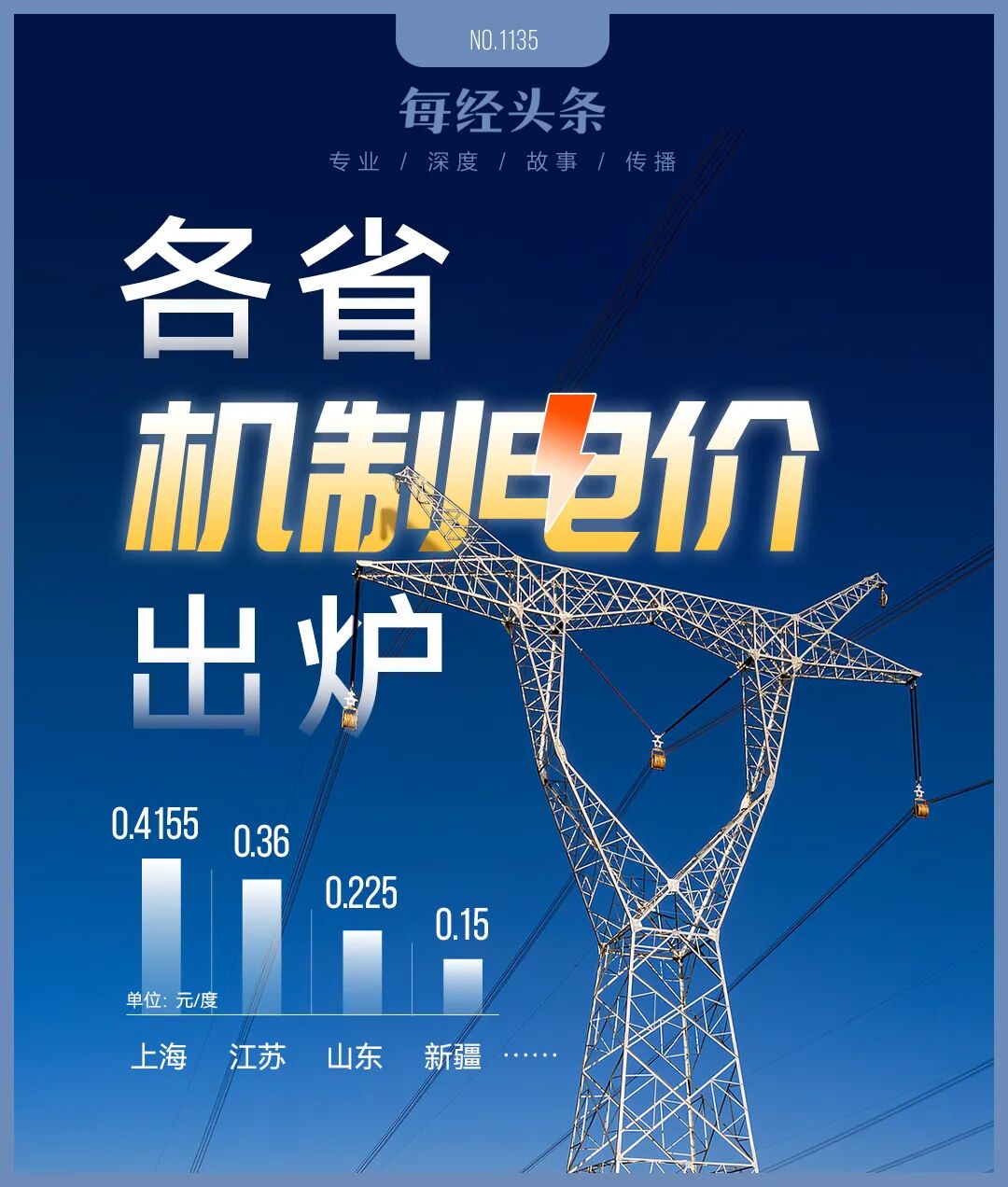
20余省份机制电价揭晓!上海比山东高84%,浙江比辽宁高31%⋯⋯专家:企业用电成本仍有下降空间
Mei Ri Jing Ji Xin Wen· 2026-01-09 11:43
Core Insights - The article discusses the impact of the new pricing mechanism for renewable energy projects in China, particularly focusing on the differences in electricity prices across various provinces and the implications for investment strategies in the solar and wind energy sectors [2][3][4]. Group 1: Pricing Mechanism Changes - The introduction of the "136 Document" has led to a shift from guaranteed purchase systems to a market-based pricing mechanism for renewable energy, requiring all new projects to participate in market transactions [2][4]. - The mechanism prices for new wind and solar projects vary significantly across regions, with the highest prices exceeding 0.40 yuan/kWh in some areas, while others, like Xinjiang, are as low as 0.15 yuan/kWh [3][7]. - The pricing disparities are attributed to regional resource endowments, demand for renewable energy, and local government policies [8][9]. Group 2: Investment Strategies and Market Reactions - Many energy companies are adopting a cautious approach to new investments in renewable projects, particularly in solar energy, due to the extended payback periods resulting from lower mechanism prices [21][22]. - The competitive bidding process has led to lower mechanism prices, with companies often submitting low bids to secure a place in the market, which further depresses prices [20][25]. - The shift in focus from full-grid projects to self-consumption projects is becoming prevalent, as companies seek to ensure stable revenue streams by targeting areas with high electricity demand [29]. Group 3: Impact on Electricity Costs and Market Dynamics - The implementation of the new pricing mechanism is expected to increase system operation costs for companies, but the overall electricity prices may decrease due to intensified market competition and technological advancements [30][31]. - The transition to a market-based system may exacerbate the occurrence of negative electricity prices, particularly during periods of oversupply, but the new pricing structure provides some revenue stability for renewable energy producers [31][32]. - The article highlights the need for renewable energy companies to adapt their pricing strategies in response to market conditions, emphasizing the importance of rational participation in the electricity market [25][31].
草根木匠兄弟,借款1800元起家,逆袭成亿万富翁
创业家· 2026-01-09 10:13
Core Viewpoint - The article highlights the remarkable journey of a Chinese private enterprise, Jili Rigging, which has evolved from a small family workshop into a leading player in the global wire rope rigging market, contributing to significant national projects such as the Shenzhou spacecraft and the Hong Kong-Zhuhai-Macao Bridge [6][30]. Group 1: Company Background - Jili Rigging, founded by Yang Jianzhong and his brother, started with a modest investment of 2,000 yuan, including a loan of 1,800 yuan, to purchase a used machine for making rigging equipment [11][12]. - The company initially focused on producing rigging machines and later expanded its product line to include wire ropes, responding to market demand [15][16]. - By the 1990s, Jili Rigging had transitioned from a rural workshop to a formal enterprise, eventually becoming a publicly listed company in 2010, marking its status as "China's first rigging stock" [24][30]. Group 2: Market Expansion and Innovation - The company adopted innovative marketing strategies, such as allowing customers to use products for free before payment, which helped establish a strong customer base [19][20]. - Jili Rigging capitalized on the rapid economic development in Shanghai during the 1990s, setting up operations there and customizing products to meet local demands [22][23]. - The company became a key supplier for major aerospace projects, including the Shenzhou and Chang'e series, by developing specialized rigging solutions that met stringent requirements at a fraction of the cost of foreign competitors [23][24]. Group 3: Challenges and Resilience - Despite facing significant challenges, such as losses from investments in the solar industry, the company maintained a strong reputation by repaying investors fully, which helped secure future collaborations [26][28]. - Jili Rigging has continued to innovate, recently applying domestic high-vanadium closed cables in major projects like the National Speed Skating Oval for the 2022 Winter Olympics, breaking international monopolies [28][29]. - The company has diversified its revenue streams, with over 60% of its income now coming from emerging sectors such as wind power, nuclear energy, and aerospace [29].


推动我国航空业实现绿色低碳转型
Qi Lu Wan Bao· 2026-01-09 09:54
Group 1 - The restructuring of China Petroleum & Chemical Corporation (Sinopec) and China Aviation Oil Group has been approved by the State Council, marking a significant move in the central enterprise restructuring efforts [2] - Sinopec is the world's largest refining company and the leading aviation fuel producer in China, while China Aviation Oil is the largest aviation fuel procurement and service company in Asia, providing fuel support to numerous airports [2] - The integration aims to streamline the entire supply chain from crude oil refining to aircraft refueling, potentially reducing costs and enhancing energy security for China's aviation industry [2][3] Group 2 - The collaboration between Sinopec and China Aviation Oil is expected to facilitate the commercialization of Sustainable Aviation Fuel (SAF), addressing the industry's need for carbon reduction and climate change mitigation [3] - The restructuring is part of a broader trend of accelerated mergers and acquisitions among central enterprises, with several significant consolidations occurring during the 14th Five-Year Plan period [3][4] - The 15th Five-Year Plan emphasizes optimizing the layout and structure of state-owned enterprises to enhance their core functions and competitiveness [3][4] Group 3 - Experts highlight that while the merger is a crucial first step, the real challenge lies in achieving effective integration and synergy between the two companies [4] - The restructuring faces challenges in ensuring national energy security and advancing the dual carbon goals, with stakeholders keenly observing the outcomes [4]