
大模型

Search documents
印奇出任阶跃星辰董事长 公司迈入商业化深耕期?
Mei Ri Jing Ji Xin Wen· 2026-01-27 13:17
Core Viewpoint - The appointment of Yin Qi as the chairman of Jiyue Xingchen marks a significant strategic move in the AI industry, aiming to enhance the company's competitive edge and commercial viability in the rapidly evolving large model sector [1][2][8]. Group 1: Leadership Changes - Yin Qi has been appointed as the chairman of Jiyue Xingchen, responsible for overall strategic direction and technology [1]. - Yin Qi is also the chairman of Qianli Technology, bringing extensive experience in AI and automotive integration [1][3]. - The new management team includes CEO Jiang Daxin, Chief Scientist Zhang Xiangyu, and CTO Zhu Yibo, indicating a strong leadership structure [1]. Group 2: Financing and Market Position - Jiyue Xingchen completed over 5 billion RMB in B+ round financing, setting a record for single financing in China's large model sector in the past 12 months [1][2]. - The company is transitioning from a financing race to a phase of value realization, with increasing market attention on the "AI Six Little Tigers" [1][8]. Group 3: Strategic Focus - The company aims to become one of the best in the foundational model field in China, focusing on the integration of AI and terminal applications [5][6]. - Jiyue Xingchen has developed three generations of foundational models and has partnered with major smartphone brands and automotive companies to implement AI functionalities [6][7]. Group 4: Commercialization Efforts - Yin Qi's dual role is expected to enhance the commercialization of AI technologies, with a focus on strategic direction and specific projects [7]. - The company is working on a complete chain from foundational models to productization and market implementation, particularly in automotive and mobile sectors [7][8]. Group 5: Future Outlook - Jiyue Xingchen's revenue is projected to reach 1 billion RMB in 2025, indicating strong growth potential [8]. - The company remains optimistic about future financing opportunities but has not disclosed specific IPO plans [9][10].

推理需求爆发,国产芯片从“堆算力”转向系统协同
Di Yi Cai Jing· 2026-01-27 12:00
Group 1 - The domestic computing power is in a very favorable position, with a shift in focus towards high-performance and cost-effective chips due to changing industry demands [1][5] - The third-generation inference GPU chip, S3, was launched by Xiwang, aiming to reduce the cost of one million tokens to one cent, reflecting the industry's transition from training to inference [3] - By 2030, it is expected that inference chips will account for 80% of the company's resource allocation, indicating a strategic focus on optimizing inference capabilities [3] Group 2 - The integrated training and inference chips face challenges such as high costs, unstable supply, and complex deployment, highlighting the need for a reasonable computing power to memory access ratio [4] - The "memory wall" has become a significant bottleneck in chip performance, as the speed of computing unit enhancements outpaces memory bandwidth improvements, particularly in inference chips [4] - Companies like DeepSeek are driving innovation across the entire technology chain, from model architecture to inference systems, aiming to reduce dependency on NVIDIA's CUDA ecosystem [4] Group 3 - The reduction of costs in AI applications significantly boosts the number of applications in the market, with the domestic computing power positioned advantageously to capitalize on this trend [5]

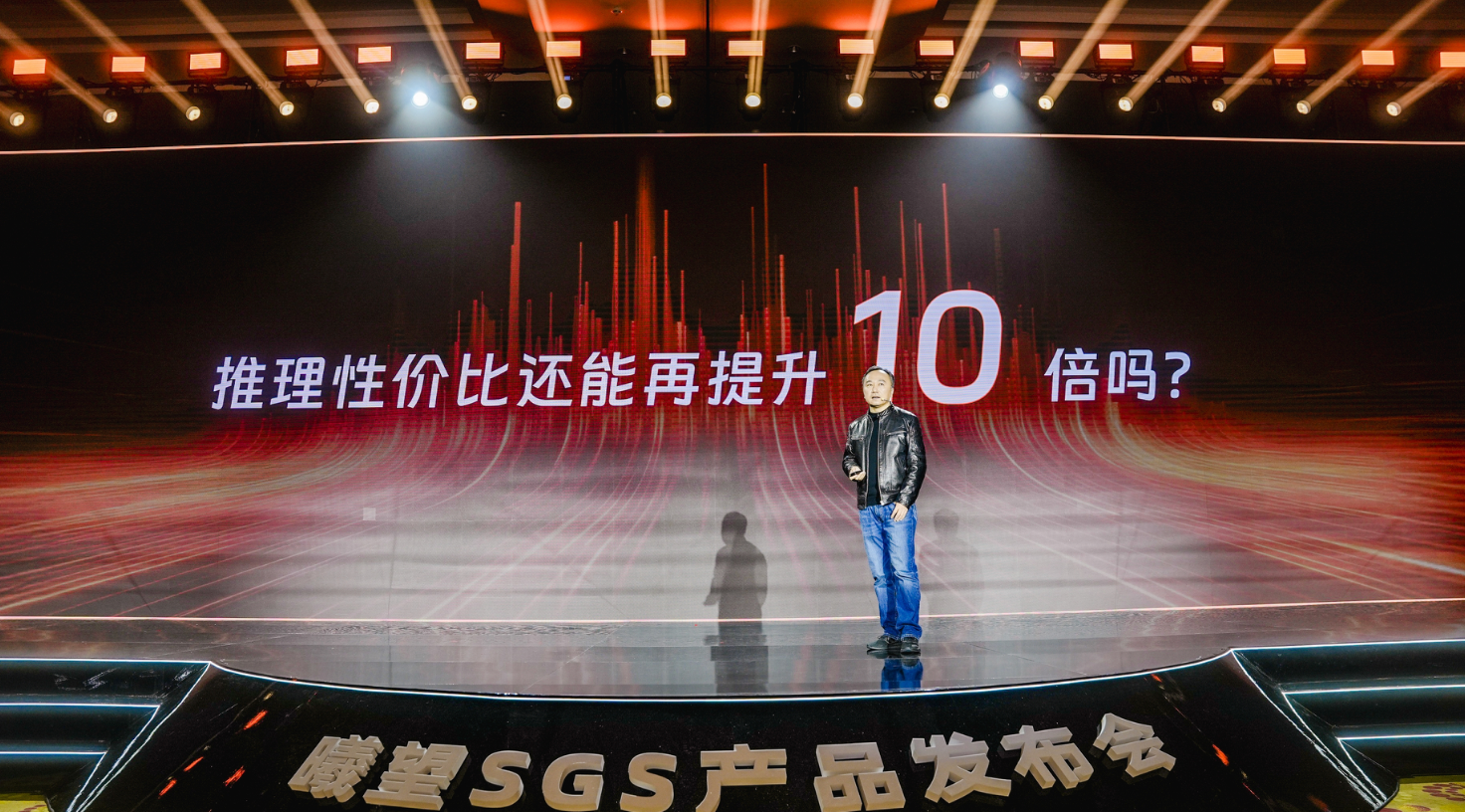
阶跃星辰不再低调:巨额融资,印奇加入,“1+3”核心决策层浮出水面
3 6 Ke· 2026-01-27 11:31
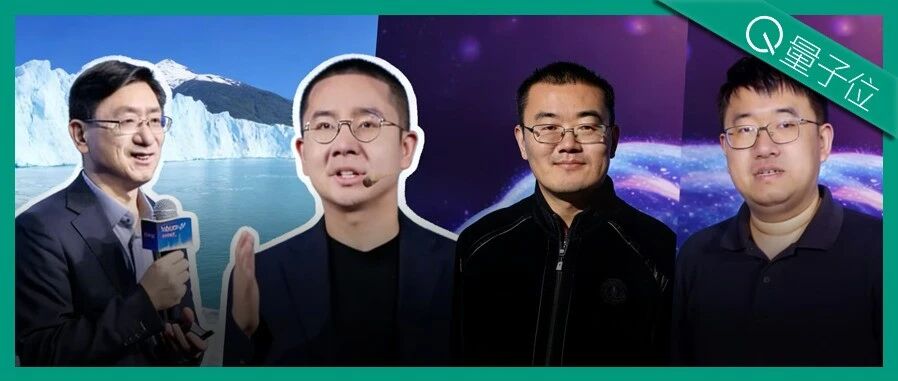
Core Insights - StepFun has completed a B+ round financing of over 5 billion RMB, setting a record for single financing in the large model sector over the past 12 months [1][2] - The company has announced the appointment of Yin Qi as the chairman, who has a significant background in AI and has previously founded Megvii Technology [2][10] - The core decision-making team of StepFun is structured in a "1+3" model, consisting of Yin Qi, CEO Jiang Daxin, Chief Scientist Zhang Xiangyu, and CTO Zhu Yibo [4][5] Group 1: Financing and Leadership Changes - The financing amount surpasses the IPO fundraising amounts of two other companies in the large model sector, Zhiyun and MiniMax [2] - Yin Qi's appointment is seen as a strategic move, given his extensive experience in both AI 1.0 and AI 2.0 eras, and his focus on integrating AI with hardware [12][13] - The "1+3" model is designed to cover four core capabilities essential for the implementation of large models: strategy, algorithms, systems, and engineering [9][36] Group 2: Team Member Profiles - Yin Qi has a unique background that includes founding Megvii Technology and leading it through various stages of AI development, emphasizing the importance of industrial application [11][12] - CEO Jiang Daxin is a globally recognized expert in natural language processing, with a strong engineering background from Microsoft, making him well-suited for leading large model applications [16][18] - Chief Scientist Zhang Xiangyu is known for co-authoring ResNet, a pivotal architecture in deep learning, and is focused on multi-modal models, which aligns with StepFun's strategic direction [20][25] Group 3: Strategic Focus and Market Position - StepFun emphasizes an "AI + terminal" strategy, which aims to integrate AI capabilities with hardware, positioning the company to capitalize on emerging market opportunities [7][52] - The company plans to leverage its unique team composition to address the challenges of algorithm development, system engineering, and commercial viability in the competitive landscape of large models [36][50] - The market for AI terminals is projected to exceed 300 million units by 2026, indicating a significant growth opportunity for companies like StepFun that focus on integrating AI with hardware [52]
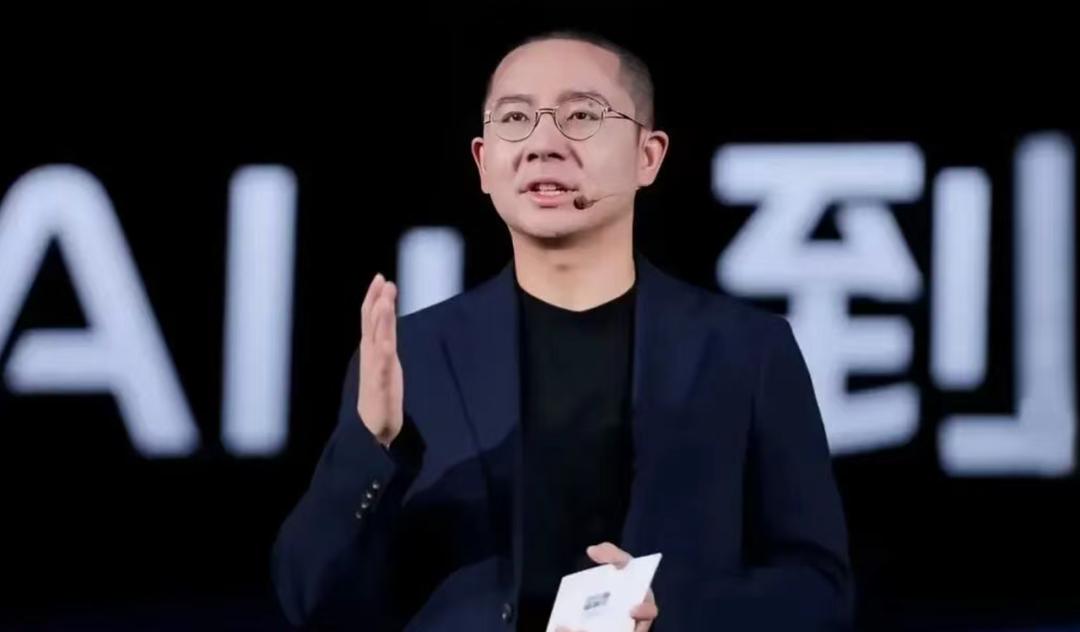
Kimi发布新模型,月之暗面完成C轮融资现金储备破100亿
21世纪经济报道· 2026-01-27 10:41
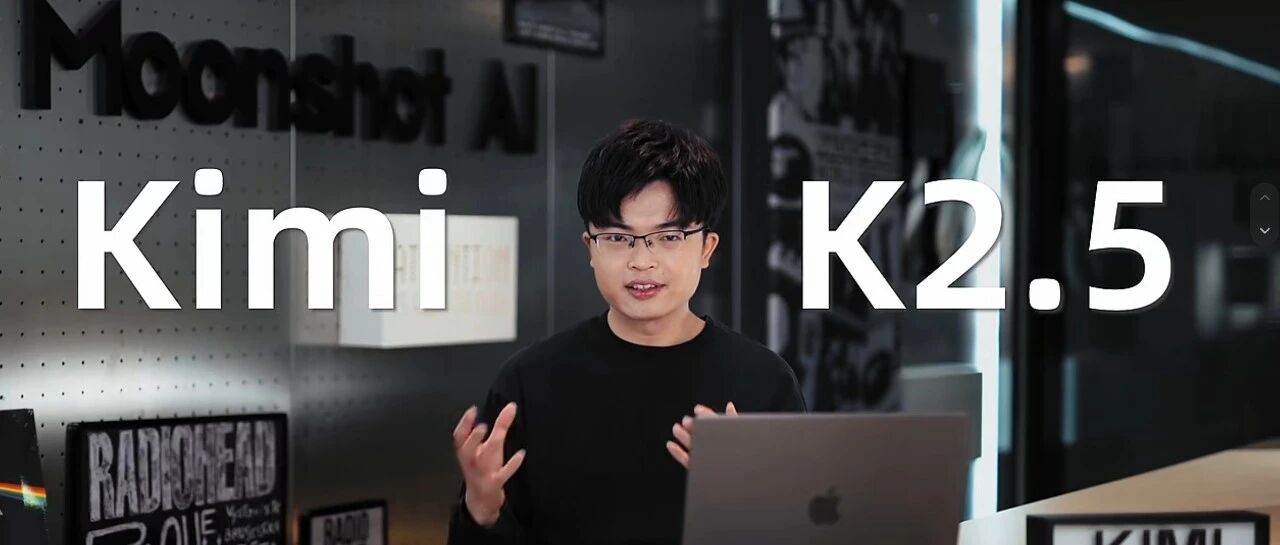
Core Viewpoint - Kimi has launched its new multimodal model K2.5, which demonstrates state-of-the-art performance in various core areas, including agent collaboration and code generation, marking a significant advancement in AI capabilities [1][3]. Group 1: Model Features and Capabilities - K2.5 is designed with a native multimodal architecture, supporting both visual and textual inputs, and can perform tasks in thinking and non-thinking modes, excelling in agent, code, image, video, and general intelligence tasks [1][3]. - The model significantly lowers the AI interaction threshold by allowing users to submit requests via photos, screenshots, or screen recordings, thus overcoming the limitations of text-based communication [5]. - K2.5 introduces a new "Agent Cluster" capability, enabling the creation of multiple intelligent agents that can work in parallel, improving task efficiency by reducing key steps by 3 to 4.5 times and cutting actual runtime by up to 4.5 times [5][6]. Group 2: Financial and Strategic Developments - Kimi's valuation has risen to $4.3 billion (approximately 29.9 billion RMB) following a $500 million Series C funding round completed on December 31, 2023, which was significantly oversubscribed [1][10]. - The company is currently finalizing a new round of financing with a pre-money valuation of $4.8 billion [1]. - Kimi's strategic shift from a user acquisition strategy to focusing on foundational algorithms and model development has been influenced by the competitive landscape, particularly the rise of DeepSeek [7][8]. Group 3: Future Plans and Goals - Kimi aims to surpass leading companies like Anthropic and become a world leader in AGI by enhancing its K3 model and focusing on unique capabilities that have not been defined by other models [12]. - The company plans to integrate model training and agent product development, aiming for significant revenue growth while not prioritizing absolute user numbers [12].

加码天地一体化及大模型研发,拓必达赴港IPO,前五大客户占比94%
Jin Rong Jie· 2026-01-27 10:30
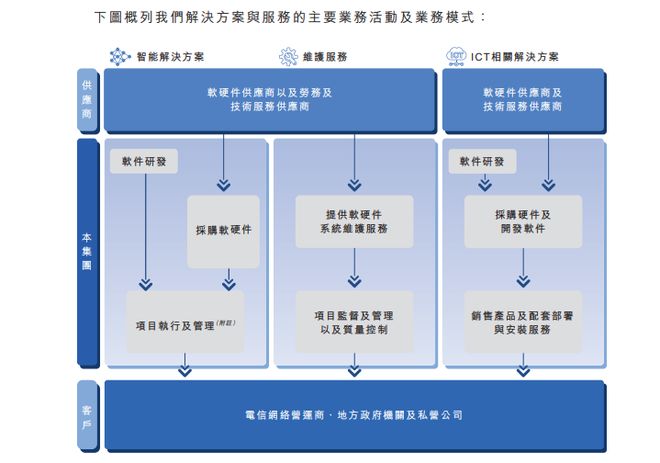
Core Viewpoint - The company, Topida (Group) Holdings Limited, has submitted a listing application to the Hong Kong Stock Exchange, aiming to go public on the main board, with Zhongtai International as the sole sponsor [1] Group 1: Business Overview - Established in 2013, Topida focuses on the transportation sector, developing a three-dimensional business model that includes "intelligent solutions + maintenance services + ICT-related solutions" and has expanded into urban management and community services [2] - The company utilizes IoT, big data, and AI technologies to create a modular architecture that connects front-end sensors, edge computing, and cloud platforms, addressing industry pain points such as data silos and high operational costs [2] Group 2: Financial Performance - Financial data shows that total revenue for the first nine months of 2023, 2024, and 2025 was RMB 191.99 million, RMB 125.95 million, and RMB 271.21 million, respectively, with net profits of RMB 47.03 million, RMB 40.07 million, and RMB 43.91 million [5] - Revenue fluctuations are primarily influenced by project acceptance cycles, with a decrease in revenue in 2024 due to fewer projects reaching formal acceptance, while a significant rebound is expected in 2025 due to the recognition of multiple major transportation projects [4] Group 3: Business Structure - The transportation business is the core revenue source, contributing 90.6%, 74.6%, and 79.1% of total revenue for 2023, 2024, and the first nine months of 2025, respectively [5] - The urban management business's contribution is gradually increasing, accounting for 8.2%, 20.3%, and 11.0% during the same periods, indicating a diversification in business structure [5] Group 4: Client and Supplier Relationships - The company has a high customer concentration, with the top five clients accounting for 97.9%, 90.9%, and 94.4% of total revenue from 2023 to the first nine months of 2025 [6] - Supplier relationships are stable, with the top five suppliers representing 32.0%, 31.7%, and 21.9% of procurement amounts during the same periods [6] Group 5: Market Trends and Future Development - The intelligent transportation industry is experiencing a digital and intelligent transformation, driven by the integration of IoT, big data, and AI, supported by strong policy initiatives such as the "Digital China" strategy and the "14th Five-Year Plan for Digital Transportation Development" [7] - The holographic road solution market in China is rapidly growing, with an expected increase from RMB 700 million in 2020 to RMB 3.3 billion by 2024, representing a compound annual growth rate of 47.4% [8] - Topida plans to enhance its R&D capabilities, focusing on integrated technology and large model development, with a goal to expand its R&D team and establish local offices in key regions like the Yangtze River Delta and South China [10]
C轮融资27天后,Kimi推出“最智能”模型
2 1 Shi Ji Jing Ji Bao Dao· 2026-01-27 10:19
月之暗面发布开源多模态大模型K2.5,支持视觉/文本输入、Agent集群协作与代码生成。去年底,公司完成5亿美元C轮融资。 关联内容 Kimi张予彤亮相达沃斯:用1%的算力,撕开AI的另一种赢法 1月27日,月之暗面Kimi正式发布并开源新一代多模态大模型K2.5。该模型在原生多模态架构、Agent集群协作、代码生成等核心领域实现开源state-of-the- art表现,相关能力已全面登陆kimi.com、KimiApp及开放平台。 据Kimi介绍,作为其迄今最智能、最全能的模型,K2.5采用原生多模态架构设计,同时支持视觉与文本输入、思考与非思考模式、对话与Agent任务,在 Agent、代码、图像、视频及一系列通用智能任务上表现领先。 值得关注的是,此次发布距Kimi 创始人杨植麟去年12月31日宣布完成5亿美元C轮超募融资仅27天,资本与技术形成高效联动,公司估值攀升至43亿美元 (约合人民币299亿元),较B轮融资后的33亿美元实现快速增长。另据智通财经1月19日报道,月之暗面正在敲定新一轮融资,此轮融资投前估值达到48 亿美元。 不卷流量卷技术 目前,KimiK2.5已登陆kimi.com、最新版 ...
刚刚,杨植麟亲自开源Kimi K2.5!国产大模型打架的一天
机器之心· 2026-01-27 09:45
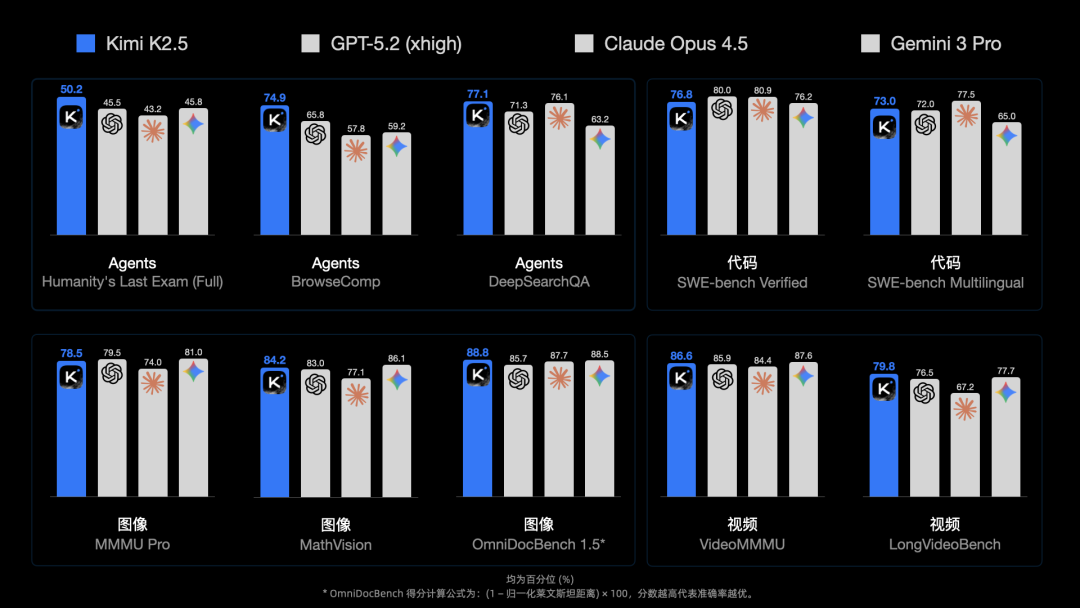
Core Viewpoint - The article discusses the launch of Kimi K2.5, a new model that significantly enhances visual understanding and coding capabilities, positioning itself as a leading open-source model in the AI landscape [4][65]. Group 1: Model Capabilities - Kimi K2.5 features a foundation model with 1 trillion parameters, showing substantial improvements in visual understanding and coding abilities compared to its predecessor [4]. - The model achieved state-of-the-art (SOTA) performance in challenging assessments, such as 50.2% in HLE and 74.9% in BrowseComp [4]. - Kimi K2.5's programming capabilities are notable, scoring 76.8% on SWE-bench Verified, narrowing the gap with top proprietary models [4][6]. Group 2: Cost Efficiency - Kimi K2.5 operates at a fraction of the cost of GPT-5.2-xhigh while outperforming it in several assessments [7]. Group 3: Unified Model Features - Kimi K2.5 is an all-in-one model that integrates visual, text, and coding capabilities, allowing users to generate code from design sketches without needing to write code or use prompt engineering [12]. - The model can interpret images and videos to produce code, enhancing user experience in design modifications [13][14]. Group 4: Agent Swarm Functionality - Kimi K2.5 introduces the "Agent Swarm" feature, enabling it to coordinate up to 100 agents to work in parallel, significantly speeding up task completion [21]. - This parallel processing capability can reduce tasks that typically take days to mere minutes [25]. Group 5: Real-World Applications - Kimi K2.5 can handle complex office tasks, including document editing and financial modeling, with the ability to produce extensive outputs, such as 10,000-word papers or 100-page documents [29]. - The model's agent capabilities allow for sophisticated task management, such as creating a new language with consistent linguistic structures [51]. Group 6: Development and Future Outlook - The release of Kimi K2.5 sets a new benchmark for open-source models globally, indicating a shift in the standards of AI development [65]. - The advancements in visual and agent capabilities suggest that AI is moving closer to achieving artificial general intelligence (AGI) [67].
阶跃星辰不再低调:巨额融资,印奇加入,“1+3”核心决策层浮出水面
量子位· 2026-01-27 08:32
Core Insights - The article discusses the recent significant developments at Jieyue Xingchen, including a record-breaking financing round and the appointment of a new chairman, Yin Qi, who brings extensive experience in AI and industry integration [2][3]. Group 1: Financing and Leadership Changes - Jieyue Xingchen completed a B+ round financing exceeding 5 billion RMB, setting a record for single financing in the large model sector over the past 12 months [2]. - Yin Qi has officially joined the core decision-making team as chairman, marking a strategic shift for the company [3]. Group 2: Team Composition and Strategy - The core team is structured in a "1+3" model, consisting of Yin Qi as chairman, CEO Jiang Daxin, Chief Scientist Zhang Xiangyu, and CTO Zhu Yibo, each bringing unique expertise [13][8]. - This team structure aligns with the four essential capabilities required for the implementation of large models: strategy, algorithms, systems, and engineering [15]. Group 3: Individual Contributions - Yin Qi has a notable background, being a co-founder of Megvii Technology and has experience in transitioning AI from research to practical applications [6][22]. - CEO Jiang Daxin is recognized for his contributions to natural language processing and has extensive experience in large-scale online systems, making him well-suited for leading the application of large models [28][30]. - Chief Scientist Zhang Xiangyu is a co-author of ResNet, a pivotal architecture in deep learning, and is focused on multi-modal models, which is a distinctive feature of Jieyue's approach [35][43]. - CTO Zhu Yibo has a strong background in AI infrastructure, having built significant AI systems at ByteDance and Google Cloud, which positions Jieyue uniquely in the competitive landscape [51][56]. Group 4: Market Position and Future Outlook - The AI+ terminal model is seen as a blue ocean opportunity, with projections indicating that by 2026, AI terminal shipments in China will exceed 300 million units, with a penetration rate expected to surpass 93% by 2027 [85]. - The company aims to achieve significant milestones by 2026, including having 1 million vehicles equipped with its intelligent driving system and developing top-tier foundational models [90].
赶在农历新年前后,DeepSeek又发大模型,DeepSeek-OCR 2来了!更接近人类视觉编码逻辑
Jin Rong Jie· 2026-01-27 07:56
Core Insights - DeepSeek has launched its new model, DeepSeek-OCR 2, which utilizes the innovative DeepEncoder V2 method to dynamically rearrange image components based on their meaning, enhancing visual encoding logic similar to human perception [1] - The release of DeepSeek-OCR 2 comes approximately four months after the first version, indicating a rapid development cycle [1] - DeepSeek's approach contrasts traditional OCR by converting text information into visual images for efficient understanding, addressing challenges in processing long texts [1] Model Developments - The core component of DeepSeek's technology, the visual encoder, is believed to simulate the human brain's forgetting mechanism, providing a clear technical path for integrating optical and quantum computing in large language models (LLMs) [2] - Following the release of the V3 model in late 2024, DeepSeek is expected to unveil its next flagship model, DeepSeek V4, in February 2025, although the company has not confirmed this [2] - The DeepSeek-V3.1 upgrade features a hybrid reasoning architecture that supports both thinking and non-thinking modes, improving response efficiency and agent capabilities through post-training optimization [2] Performance Metrics - DeepSeek-V3.2 and its enhanced version, DeepSeek-V3.2-Speciale, reportedly achieve reasoning capabilities comparable to GPT-5, significantly reducing output length and computational costs compared to competitors [3] - DeepSeek-R1, launched on January 20, 2025, claims performance on par with OpenAI's models while maintaining a remarkably low inference cost of $294,000, with total training costs still below those of major international competitors [3] Market Impact - On January 27, 2025, DeepSeek topped the free app download charts in both the U.S. and China, surpassing ChatGPT, which has led to a significant revaluation of Chinese assets in the stock market [4] - Following DeepSeek's rise, indices related to computing power and cloud computing in the A-share market surged over 40%, with several stocks experiencing substantial gains [4] - The potential for DeepSeek to replicate its previous success in the market remains a point of interest for investors and analysts [4]

港股异动 | 智谱(02513)午后飙升逾12% 中国证监会更新智谱IPO辅导进展 公司有望实现“A+H”两地上市
智通财经网· 2026-01-27 07:21
Core Viewpoint - The stock of Zhiyu (02513) surged by 11.89% to HKD 242.8, with a trading volume of HKD 596 million, following the announcement of its ongoing A-share listing plan after its successful IPO on the Hong Kong Stock Exchange [1] Group 1: Company Developments - Zhiyu's counseling institution, CICC, has submitted the third progress report on the company's initial public offering and listing, indicating continued efforts towards A-share listing [1] - The company aims to complete its A-share listing by January 8, 2026, after becoming the "first global large model stock" [1] Group 2: Industry Insights - Dongwu Securities expressed optimism about Zhiyu's strengths in local large model technology, open-source ecosystem layout, and localized implementation capabilities for government and enterprise [1] - The company is expected to benefit from the long-term trend of the Chinese large model industry transitioning from localized deployment to cloud services [1]