自动驾驶

Search documents
禾赛-W(02525):首次覆盖报告:全球激光雷达龙头,赋能高阶智驾、机器人
Western Securities· 2026-01-29 07:57
Investment Rating - The report assigns a "Buy" rating for the company, Hesai Technology (2525.HK), indicating a positive outlook for its stock performance [6]. Core Insights - The company is projected to achieve total revenues of 3.1 billion, 4.8 billion, and 6.1 billion yuan from 2025 to 2027, with net profits of 370 million, 690 million, and 1.09 billion yuan respectively. As a global leader in LiDAR technology, Hesai is expected to rapidly expand in high-level autonomous driving and robotics sectors [1][6]. - The market perception is that the LiDAR space is limited; however, the report argues that there is significant potential, particularly in the automotive sector, where over 100,000 models are expected to adopt LiDAR technology. The report anticipates an increase in the number of LiDAR units per vehicle and an enhancement in average selling price (ASP) as autonomous driving technology evolves [1][14]. Summary by Sections Company Overview - Hesai Technology is recognized as a global leader in LiDAR development and manufacturing, with products widely used in advanced driver-assistance systems (ADAS), autonomous vehicles, and various robotic applications [19][40]. - The company has established a comprehensive product matrix covering multiple scenarios, including ADAS, robotics, and high-precision modeling [19]. Strategic Advantages - The founders of Hesai have clearly defined roles that complement each other, contributing to the company's strategic foresight and technological leadership. The company was an early entrant into the L4 market and has maintained a focus on chip-based LiDAR and mirror technology [2]. - Hesai's research and development capabilities are industry-leading, having introduced the chip-based approach early on. The AT128 LiDAR, launched in 2022, was the first chip-based long-range LiDAR product to achieve automotive-grade mass production [2]. - The proprietary manufacturing processes of Hesai integrate R&D and design, ensuring high performance, reliability, and cost-effectiveness. The company plans to increase its production capacity to 4 million units by 2026 [2]. Financial Projections - Revenue projections for 2023 to 2027 indicate significant growth, with expected revenues of 1.88 billion, 2.08 billion, 3.07 billion, 4.77 billion, and 6.11 billion yuan respectively. The net profit is expected to turn positive by 2025, reaching 367 million yuan [4][13]. - The report highlights a projected compound annual growth rate (CAGR) of 48% from 2025 to 2027, with a focus on expanding customer bases in both domestic and international markets [16]. Market Position and Competitive Landscape - Hesai has secured partnerships with over 22 major OEMs, covering more than 120 vehicle models, including prominent Chinese brands. The company is also expanding its international presence, collaborating with leading Tier 1 suppliers in Japan and Europe [27][28]. - The report emphasizes that Hesai's technology, particularly in SPAD and IPE, positions it well against competitors, enabling it to maintain a competitive edge in the rapidly evolving LiDAR market [32]. Product Development and Innovation - The company has developed a diverse range of LiDAR products tailored for various applications, including the ET, AT, FT, JT, and XT series, each designed to meet specific market needs from L2 to L4 autonomous driving [21][24]. - The introduction of the "Thousand Eye" LiDAR solution, which combines multiple LiDAR units for comprehensive coverage, showcases Hesai's commitment to innovation and market leadership [26].
年营收首降!特斯拉“献祭”Model S/X,豪赌AI与机器人
Ge Long Hui· 2026-01-29 06:54
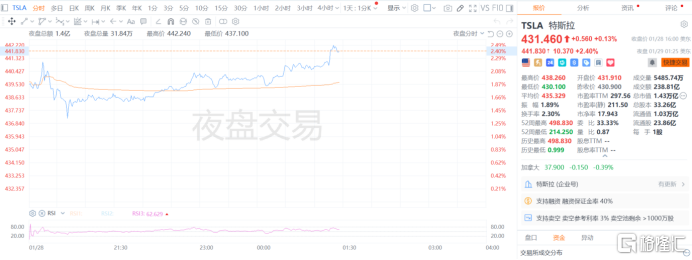
受此消息影响,周四美股夜盘,特斯拉股价上涨2.4%,报441.83美元。 营收承压但超预期 财报显示,2025年第四季度,特斯拉总营收达249.01亿美元,较去年同期的257.07亿美元下滑3%,略超 预期的247.9亿美元。 盈利端承压明显,四季度营业利润为14.09亿美元,同比下滑11%;净利润8.4亿美元,同比暴跌61%。 非GAAP口径下调整后的每股收益(EPS)为0.50美元,同比下降17%,显著高于预期的0.45美元。 年营收首降、Q4净利暴跌61%,特斯拉交出一份不理想成绩单。 由于核心汽车业务承压,特斯拉全年营收同比下滑3%,创下历史首次年度营收降幅。 不过,公司四季度营收与调整后每股收益均超出市场预期。 | Printered | | | | | | | | --- | --- | --- | --- | --- | --- | --- | | ($ in millions, except percentages and per share data) | Q4-2024 | Q1-2025 | Q2-2025 | Q3-2025 | Q4-2025 | YoY | | Total auto ...


停产 Model S/X,特斯拉不再是一家汽车公司?
Sou Hu Cai Jing· 2026-01-29 06:08
Core Viewpoint - The announcement of the discontinuation of Model S and Model X marks a significant shift for the company, reflecting both a response to declining automotive sales and a strategic pivot towards artificial intelligence and robotics [2][3][10] Group 1: Financial Performance - The company reported its first annual revenue decline since going public, with total revenue of $94.8 billion in 2025, down 3% year-over-year [2] - Net profit fell to $3.79 billion, a staggering 46% decrease, while global vehicle deliveries dropped by 8.6% for the second consecutive year [2] - The decision to cease production of Model S and Model X is driven by their declining sales and higher production costs compared to more efficient models like Model Y and Model 3 [3] Group 2: Strategic Shift - The production lines for Model S and Model X are being repurposed for the mass production of the Optimus humanoid robot, indicating a strategic focus on AI and robotics rather than traditional automotive sales [3][5] - The company plans to invest over $20 billion in 2026, significantly exceeding its 2025 net profit, to support its ambitious goals in AI and robotics [5][10] - New products such as the next-generation Roadster, Cybercab, and Megapack 3 are expected to enter production in 2026, showing that the company is not entirely abandoning its automotive business [4] Group 3: Competitive Landscape - The company acknowledges that Chinese firms are emerging as significant competitors, particularly in manufacturing and AI, which could impact its market position [8][9] - The competitive environment in the electric vehicle sector is intensifying, with companies like BYD, NIO, and others challenging Tesla's dominance [9] - The urgency in the company's strategy may stem from the need to establish a strong foothold in AI and robotics before facing faster-moving competitors in China [9][10]
特斯拉:Model S和Model X即将停产
Shen Zhen Shang Bao· 2026-01-29 05:17
Core Viewpoint - Tesla is officially phasing out the Model S and Model X projects to focus on a future centered around autonomous driving, with production expected to cease in the next quarter [1] Group 1: Transition to Autonomous Driving - Tesla plans to gradually stop the production of Model S and Model X, transitioning the Fremont factory's production line to humanoid robots by the end of 2026, with an expected annual capacity of 1 million units [1] - The company emphasizes that it should not be viewed merely as an automotive manufacturer but as a technology company, accelerating its investments in autonomous driving, humanoid robots, computing chips, and energy storage [1] Group 2: Developments in Humanoid Robots and Robotaxi - The third generation of Tesla's humanoid robot is set to be released in Q1 2026, featuring significant upgrades including a new hand design [2] - Tesla has begun removing safety drivers from its autonomous ride-hailing service in Austin, which will expand the fleet and service coverage of its Robotaxi operations, with over 500 vehicles already in service [2] Group 3: Performance Metrics and Future Goals - In 2026, Tesla aims to double the local computing power at its Texas Gigafactory, enhancing AI training capabilities [3] - Tesla produced approximately 1.655 million electric vehicles and delivered 1.636 million in 2026, with the Model Y leading sales in multiple markets and record high deliveries in the Asia-Pacific region [3] - The company achieved a storage installation capacity of 46.7 GWh, a 48.7% year-over-year increase, with Q4 installations reaching 14.2 GWh, marking historical highs [3] Group 4: Company Mission and Vision - Tesla has updated its mission to "build a world of extraordinary abundance," highlighting the transformative potential of autonomous driving and humanoid robots in reshaping transportation and alleviating humans from monotonous labor [4]
特斯拉透露“自动驾驶、机器人、AI”最新进展
Shang Hai Zheng Quan Bao· 2026-01-29 04:56
Core Viewpoint - Tesla reported a decline in annual revenue for the first time in its history, with a 3% decrease in revenue for fiscal year 2025, totaling $94.827 billion, and a 3% drop in Q4 revenue to $24.901 billion, slightly below Wall Street expectations [4][3]. Financial Performance - In Q4 2025, Tesla achieved a non-GAAP EPS of $0.50 and a gross margin of 20%, both exceeding expectations [2]. - The total gross profit for Q4 reached $5.009 billion, a 20% year-over-year increase, while operating profit was $1.409 billion, down 11% year-over-year, resulting in an operating margin of 5.7% [4]. - Automotive revenue for Q4 was $17.693 billion, a 10% decline year-over-year, while energy generation and storage revenue increased by 25% to $3.837 billion [4]. Production and Delivery - In Q4 2025, Tesla delivered 418,200 vehicles, a year-over-year decline of 15.61%, with total deliveries for the year at 1.636 million, down 8.55% [5]. - The Shanghai Gigafactory delivered 851,000 vehicles in 2025, accounting for 52% of Tesla's global deliveries, and achieved a record monthly delivery of over 97,100 vehicles in December [5]. Product Strategy - Tesla plans to streamline its vehicle lineup and will invest $20 billion by 2026 to pivot towards robotics and autonomous driving technologies [2]. - The company announced the discontinuation of the high-end Model S and Model X by the end of Q2 2026, with production lines being repurposed for Optimus robot manufacturing [5][12]. Autonomous Driving and AI Developments - Tesla is transitioning its Full Self-Driving (FSD) software to a monthly subscription model, with active subscribers increasing by 38% year-over-year to 1.1 million [8][9]. - The company is testing its Robotaxi service in Austin, with plans to expand to multiple U.S. cities in 2026 [8]. - Tesla's autonomous driving software has seen a doubling in purchase volume, with a global fleet capable of collecting data equivalent to over 500 years of continuous driving daily [9]. Robotics and AI Investments - Tesla's third-generation humanoid robot, Optimus, is set to launch in Q1 2026, with plans for mass production by the end of 2026, targeting an annual capacity of 1 million units [12][13]. - The company is investing approximately $2 billion in AI startup xAI to enhance its AI capabilities and is developing its own chip factory to support long-term strategies in autonomous driving and robotics [15].
理想调整研发架构,智驾部门将被重组;保时捷资深设计总监毛迈恪将于下月离任丨汽车交通日报
创业邦· 2026-01-29 03:54
Group 1 - Li Auto is restructuring its R&D system into three main teams: Base Model Team, Software Team, and Hardware Team, with a focus on splitting the autonomous driving team [2] - The former Senior Vice President of Autonomous Driving, Lang Xianpeng, will lead the Hardware Team, focusing on robotics, while the autonomous driving team will merge into the Software Team led by Guo Xiaofei [2] - Chery has launched its first electric pickup, the Weilin R08 EV, priced from 127,800 yuan, featuring remote control, vehicle networking, and a range of 405-510 km [3] Group 2 - Uber has established an AV Labs (Autonomous Vehicle Laboratory) in the U.S., aimed at converting real-world driving data into high-quality training data to enhance autonomous driving systems [2]


曹操出行(02643.HK):配股加速全球ROBOTAXI布局 深化出行全场景服务
Ge Long Hui· 2026-01-29 03:42
在国际化方面,公司与阿布扎比达成合作,积极推动自动驾驶技术与换电体系出海。曹操出行正以全链 路生态和清晰的商业化路径与国内外双线布局,全力推进Robotaxi 战略落地。 盈利预测与投资评级:公司Robotaxi 商业化路径清晰,构建车辆技术运营生态闭环。我们维持曹操出行 2025-2027 年营业收入预期分别为206.7/262.4/323.7 亿元,对应PS 分别为0.9/0.7/0.6 倍(截至2026 年1月 27 日),基于网约车业务稳步发展、Robotaxi 业务空间广阔,维持"买入"评级。 机构:东吴证券 研究员:张良卫/黄细里/童明祺 事件:2026 年1 月28 日,公司公告拟配售不多于1200 万股配售股份,占扩大后已发行股份总数的约 2.06%,配售价每股32.46 港元,筹资净额3.83 亿港元,较1 月27 日收市价35.66 港元折让约8.97%,所 得款项净额将主要用于Robotaxi 业务。 整体资金运用旨在强化公司Robotaxi 与企业服务领域的战略布局。约67.7%将投入国内外Robotaxi 业务 的发展,重点用于采购定制化的Robotaxi 车辆、构建与之匹配的运营体 ...
特斯拉Q4业绩交流
数说新能源· 2026-01-29 03:30
Production - The S/X production line will cease next quarter, with the Fremont factory being converted to produce 1 million Optimus robots annually [1] - Future vehicle models will be designed for full autonomy, eliminating steering wheels and pedals [1] FSD and Robotaxi - Tesla has launched a paid, driverless Robotaxi service in Austin, with over 500 operational vehicles in the Bay Area and Austin, experiencing exponential monthly growth [1][32] - FSD coverage is expected to reach 25-50% of the U.S. by year-end, pending regulatory approval [1][31] - Nearly 1.1 million FSD users exist, with 70% opting for a one-time purchase; the transition to a subscription model will impact automotive gross margins in the short term [1][12] Chips - Elon Musk is dedicating significant time to the AI5 chip, which is currently a core bottleneck for Tesla; the AI6 chip is expected to launch within a year [1][33] - The company plans to build its own TerraFab facility to mitigate geopolitical risks associated with chip production [1][33] Optimus - Optimus 3 will be released in a few months, showcasing advanced capabilities such as learning new tasks through observation, voice, and video [1][28] - Production of Optimus robots will begin this year, with significant output expected by year-end [1][11] Energy Storage - Tesla plans to launch Megapack 3 and Megablock by 2026, anticipating continued global deployment growth [2] - The company is significantly increasing capital expenditures, projected to exceed $20 billion for six major factories and AI capabilities [2][19] Financial Overview - Tesla's cash and investments exceed $44 billion, with plans to utilize internal funds initially [2][20] - The company aims for a record annual revenue of $12.8 billion from energy storage by 2025, reflecting a 26.6% year-over-year increase [11][13] Market Competition - China is identified as a strong competitor in manufacturing and AI, often underestimated by external observers [3][40] Company Mission - Tesla's mission has been updated to "Amazing Abundance," reflecting optimism for a future of universal high income rather than basic income [4][5] - The company aims to enhance safety and reduce costs while ensuring environmental protection and access to quality healthcare [5]

特斯拉押注AI与机器人:2026资本支出将破200亿
Wind万得· 2026-01-29 03:29
Core Viewpoint - Tesla's Q4 2025 earnings report indicates a strategic shift from traditional electric vehicle manufacturing to becoming a "physical AI company" focused on autonomous driving, AI, and robotics, despite facing challenges in traditional EV sales and core automotive revenue [3][19]. Financial Performance - Total revenue for Q4 2025 was $24.901 billion, a decrease of approximately 3% year-over-year, slightly exceeding analyst expectations [5]. - Non-GAAP EPS was $0.50, higher than the market expectation of around $0.45 [6]. - GAAP net profit was $840 million, reflecting a year-over-year decline of about 61% [7]. - Gross margin improved compared to the previous year, with reports indicating an overall gross margin of approximately 20.1%, suggesting effective cost management [8]. Business Segment Performance - Automotive revenue was approximately $17.69 billion, down about 11% year-over-year, remaining the primary revenue source [9]. - Energy generation and storage revenue was approximately $3.837 billion, showing a year-over-year growth of about 25%, marking one of the few growth highlights [10]. - Management noted growth in software and services revenue (including FSD), although specific figures were not disclosed [11]. Production and Delivery - Q4 production was approximately 434,358 vehicles, with deliveries around 418,227 vehicles, both showing a decline compared to the previous year [12]. - Total deliveries for 2025 were approximately 1,636,129 vehicles, representing a year-over-year decline of about 8-9%, marking the second consecutive year of annual sales decline [13]. Business Highlights and Strategic Directions - Tesla has made progress in its autonomous driving initiatives, with some Robotaxi service vehicles in Austin, Texas, operating without human safety supervisors [15]. - The company is advancing the Cybercab, a vehicle designed for autonomous driving, with mass production expected to start in 2026 [15]. - Tesla announced an investment of approximately $2 billion in Elon Musk's AI company xAI to enhance the integration of AI with autonomous driving and robotics [16]. - The company is progressing with the production line for the Optimus humanoid robot, expecting to achieve mass production and initial market deployment in 2026 [17]. Management Statements - CEO Elon Musk reiterated the company's strategic shift towards autonomous driving, AI, and robotics, emphasizing that Cybercab will have fully autonomous capabilities and is expected to be deployed commercially in multiple U.S. cities by 2026 [19]. - CFO Vaibhav Taneja acknowledged the short-term pressures on the automotive business but noted improvements in overall profitability and revenue quality through a diversified business mix and cost control measures [21]. - The CFO confirmed that capital expenditures for FY 2026 are expected to significantly increase (over $20 billion), focusing on autonomous driving, AI infrastructure, and robotics production line expansion [22]. Investor Q&A Summary - Management indicated that the competitive landscape in the global electric vehicle market and the reduction of certain incentives are contributing to short-term sales pressures, but the company aims to improve profitability by increasing the revenue share from high-margin software subscriptions and energy and AI/robotics businesses [24]. - Tesla plans to continue testing and deploying Robotaxi and Cybercab while engaging with regulators to advance broader commercial applications of autonomous driving, emphasizing safety and regulatory compliance [25]. - The company confirmed that the production line for Optimus is underway, with mass production expected in 2026 [26]. - The CFO clarified that the 2026 capital expenditure is projected to rise significantly, primarily for AI infrastructure, autonomous driving technology, and robotics production expansion [27].
Model S和Model X将停产
财联社· 2026-01-29 03:25
据科创板日报, 今日凌晨,特斯拉正式披露财报,第四季度营收249.0亿美元,同比减少3.1%,预估251.1亿美元;全年实现营收约967亿 美元,同比下滑3%,首现年度营收下滑。 营收下滑的根源在于核心汽车业务的萎缩。2025年第四季度,特斯拉累计交付418227辆汽车,同比下降16%;全年累计交付量为 1636129辆,同比下降8.6%,首现年度交付量下滑。 特斯拉汽车业务明显下滑 在最近几个季度,特斯拉的汽车销售一直表现不佳,因为该公司在全球各地面临着激烈的竞争,尤其是在中国市场,特斯拉面临了来自比亚 迪、小米等众多国产电动品牌的挑战。 值此背景下,马斯克似乎下定决心"弃车保帅"。 其宣称,2026年资本支出将"非常大";预计下季度将开始逐步停止Model S和Model X的 生产,弗里蒙特工厂转型为生产Optimus人形机器人,预计今年年底实现Optimus的大规模量产 。 该设想也在财报会议上得到了验证,特斯拉透露,公司正精简其汽车产品线,同时规划今年投入200亿美元,以转向机器人技术和自动驾驶 领域。特斯拉今年计划在提升产能的同时改造部分工厂,构建人工智能基础设施, 并扩大Optimus人形机器人 ...