
中国文化

Search documents
通讯丨从历史到现代——在法兰克福书展看立体中国
Xin Hua Wang· 2025-10-19 08:27
Core Insights - The 77th Frankfurt Book Fair showcases a diverse representation of Chinese culture, highlighting traditional philosophy, historical literature, and modern development concepts, attracting significant attention from attendees [1][2][3] Group 1: Traditional Chinese Culture - A large number of translated books focusing on Chinese traditional culture were exhibited, including the Spanish version of "The Wisdom of Daoism: Laozi's Wisdom" and the German version of "Research on Tao Yuanming," showcasing the appeal of Chinese philosophical thought [1] - The "Siming Library," featuring 342 types of literature covering historical documents from Ningbo, received interest from foreign publishers and visitors, emphasizing the significance of local cultural heritage [1] Group 2: Contemporary Chinese Literature and Art - The China Social Sciences Press and Taylor & Francis Group launched four English-language new books, aiming to deepen global understanding of contemporary China's development and theoretical innovations [2] - The original Chinese comic "Canglan Jue" gained popularity among young attendees, and a collaborative ink painting was created by a German high school student and the comic's author, highlighting the depth of Chinese culture and art [2] - A discussion event titled "How Chinese Young Writers Are Seen by the World" featured contemporary Chinese authors engaging with German scholars and audiences, promoting awareness of modern Chinese literature [2]
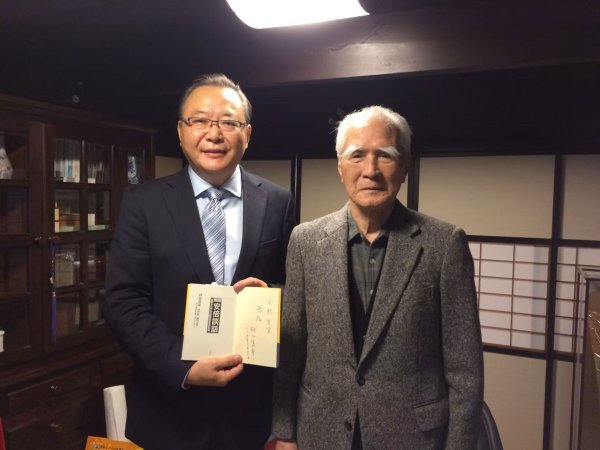
日本前首相村山富市给武汉记者的赠书赠言,写的都是汉字
Chang Jiang Ri Bao· 2025-10-18 00:58
Core Points - Former Japanese Prime Minister Tomiichi Murayama passed away at the age of 101, known for his dedication to Sino-Japanese friendship [2] - Murayama's interactions with Chinese individuals, including his thoughtful inscriptions in books, reflect his deep appreciation for Chinese culture [2][5] - His legacy includes promoting cultural exchange and understanding between China and Japan, emphasizing the historical connections between the two nations [9] Group 1 - Tomiichi Murayama was a significant figure in fostering Sino-Japanese relations, remembered fondly by those he interacted with [2] - His writings and inscriptions, such as "惠存" (to keep), demonstrate his respect for Chinese culture and the importance of equality in cultural exchanges [2][5] - Murayama's belief in the intertwined history of China and Japan is highlighted by his remarks on shared cultural elements like kanji and chopsticks [9] Group 2 - The friendship between Oita City in Japan and Wuhan, China, established in 2004, marks a significant milestone in international relations, with Murayama playing a role in this connection [6] - His handwritten message "武汉加油" (Wuhan, stay strong) during the COVID-19 pandemic showcases his continued support for China [9] - Experts note that Murayama's ability to write kanji reflects the educational background of his generation, emphasizing the cultural ties between the two countries [9]

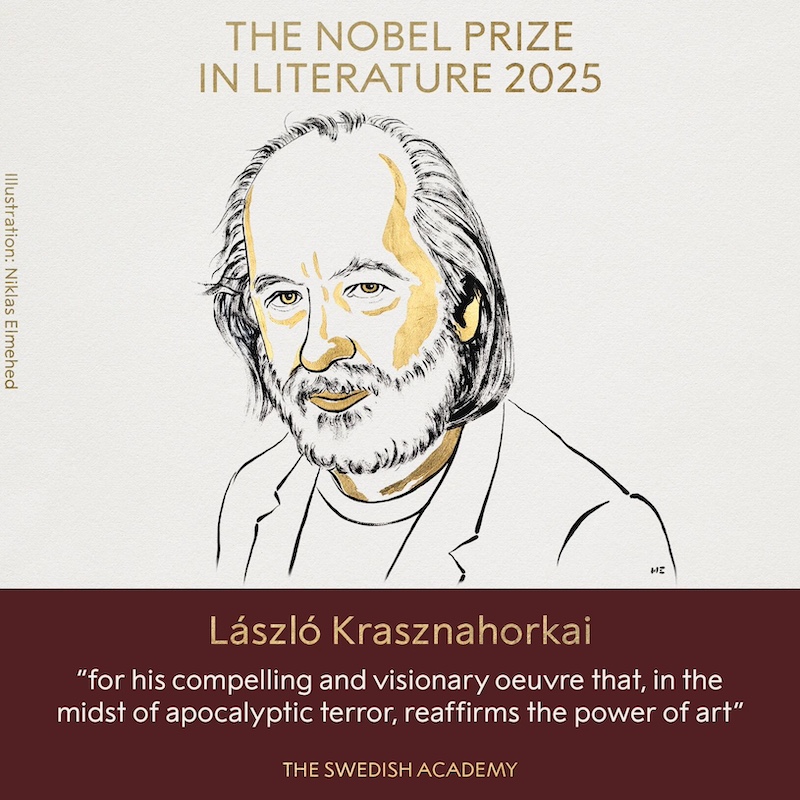
匈牙利作家拉斯洛获诺贝尔文学奖,他最喜欢的诗人是李白
Di Yi Cai Jing· 2025-10-09 14:51
Core Points - Hungarian writer László Krasznahorkai won the 2025 Nobel Prize in Literature for his captivating and visionary works that reaffirm the power of art amidst apocalyptic fears [1] - Krasznahorkai is recognized as one of Hungary's most significant contemporary writers, having won numerous prestigious literary awards including the 2015 International Booker Prize [4] - His notable works include "Satan's Tango," which was published in Chinese in 2013, and a recent collection of short stories titled "The World is Advancing" [4][9] Author Background - László was born in 1954 in Győr, Hungary, and initially pursued a career in law before turning to literature [5] - He has a long-standing friendship with translator Yu Zemin, who has introduced his works to Chinese readers [5] - Krasznahorkai's early experiences, including a period of unemployment and various odd jobs, inspired the themes and narratives in his writing [6] Literary Style and Themes - His writing is characterized by a complex structure and philosophical reflections on human despair and hope, often drawing comparisons to Kafka [8] - The narrative style is described as challenging, requiring readers to engage deeply with the text to appreciate its nuances [8] Cultural Influence - Krasznahorkai has a profound appreciation for Chinese culture, having traveled to China and written books reflecting his experiences [9] - He has expressed admiration for Chinese poet Li Bai, considering him a modernist figure in Tang Dynasty literature [9]
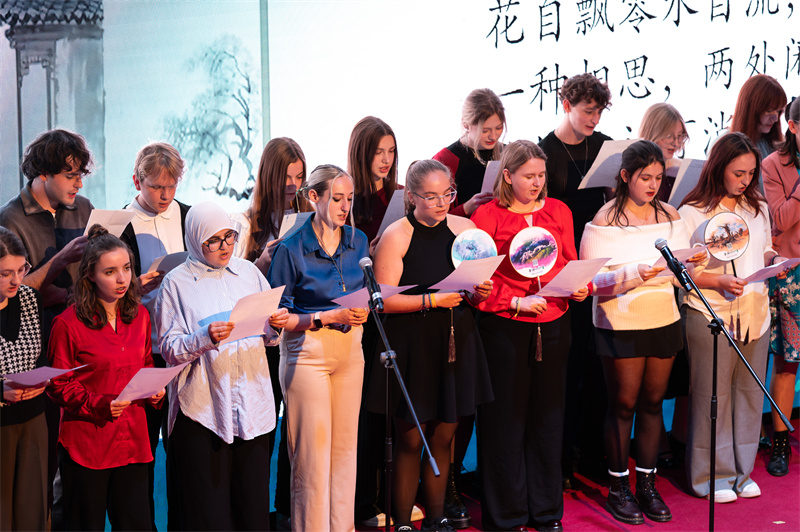
“天涯共此时·中秋诗会暨中国故事讲座”活动在布鲁塞尔中国文化中心举行
人民网-国际频道 原创稿· 2025-10-07 02:30
Core Points - The event "Mid-Autumn Poetry Gathering and Chinese Story Lecture" was held at the Brussels Chinese Cultural Center to celebrate its 10th anniversary, bringing together over a hundred participants including students, teachers, and friends of Chinese culture [1][3] - The event featured a variety of activities such as lectures, poetry recitations, artistic performances, interactive Q&A, and calligraphy experiences, emphasizing the cultural richness of the Mid-Autumn Festival [1][3] - The highlight of the event was a collective recitation of Su Shi's famous poem "Water Melody: When Will the Moon Be Clear and Bright," which was accompanied by a discussion on its artistic beauty [3] Summary by Sections Event Overview - The event took place on October 4, marking the 10th anniversary of the Brussels Chinese Cultural Center, and included a diverse audience of students and cultural enthusiasts [1] - Activities included a lecture on "Chinese Stories" and poetry recitations that showcased the cultural significance of the Mid-Autumn Festival [1][2] Cultural Exchange - The event was hosted by students from the Brussels Confucius Institute and Mons University, who introduced the cultural connotations and traditions of the Mid-Autumn Festival in both Chinese and English [2] - Young students recited famous Chinese poems and also performed works by French and American poets, highlighting the universal appeal of poetry [2] Performances and Engagement - Various performances such as flute music, dance, and children's songs were presented, creating a lively atmosphere filled with applause and laughter [3] - The event concluded with participants enjoying mooncakes, symbolizing reunion, while engaging in calligraphy and appreciating the depth of Chinese culture [3]
华裔新生代丨月饼为何会有团圆味?“00后”华裔青年懂了
Zhong Guo Xin Wen Wang· 2025-10-06 08:11
Core Insights - The article highlights the cultural significance of mooncakes during the Mid-Autumn Festival, emphasizing the themes of reunion and heritage [2] Group 1: Cultural Significance - Mooncakes symbolize reunion and are deeply rooted in Chinese culture, particularly during the Mid-Autumn Festival [2] - The experience of making mooncakes allows individuals, especially youth, to connect with their cultural heritage and traditions [2] Group 2: Personal Experience - The article features two Malaysian Chinese youths, Lin Qianyin and Lin Youqi, who have deepened their understanding of Chinese culture through hands-on experiences [2] - Their choice to make mooncakes this year reflects a personal journey of cultural exploration and connection to their roots [2]
记者手记丨意大利月光下的中国味道
Xin Hua Wang· 2025-10-05 11:49
Core Perspective - The article highlights the cultural significance of Chinese cuisine in Italy, showcasing how food serves as a bridge for understanding and connection between different cultures [1][2]. Group 1: Cultural Exchange through Cuisine - Chinese restaurants in Italy, such as a Sichuan hot dish shop in Milan, are introducing local customers to traditional Chinese customs, like the Mid-Autumn Festival and mooncakes, fostering cultural appreciation [1][2]. - Customers express curiosity about the origins of dishes, leading to deeper conversations about Chinese culture and history, as seen with the meat sandwich shop owner who shares stories related to Xi'an [2]. Group 2: Food as a Medium for Connection - Dining experiences in these restaurants go beyond mere sustenance; they create opportunities for cultural exchange and understanding, as customers feel a sense of familiarity with China through its cuisine [2]. - The article emphasizes that food can serve as a medium for building trust and curiosity between Chinese and Italian communities, illustrating the idea that "food is a bridge for reunion with the world" [2].
“发现真实中国的立体、多元、美好”(外国博主眼中的中国)
Ren Min Ri Bao· 2025-10-04 21:50
Core Points - The article highlights the efforts of foreign individuals in China to promote and preserve local dialects and cultures through social media, showcasing a vibrant and diverse image of China to the world [1][2][3][4][5][6]. Group 1: Cultural Exchange and Preservation - Wu Feide, an Argentine youth, focuses on researching and preserving the Shanghai dialect, utilizing social media to engage audiences and promote local culture [2][3]. - The establishment of a "Hometown Sound Museum" in Jinshan District reflects the growing recognition of dialect preservation efforts, with Wu Feide's work contributing to the documentation of local dialects [2][3]. - Wang Xiaole, a Tanzanian student, creates over 3,000 short videos in Swahili, sharing his experiences in China and promoting cultural understanding between Africa and China [4][5]. Group 2: Digital and Traditional Cultural Integration - French national Foudil, a teacher in Hangzhou, explores the integration of advanced technologies like AI and AR with traditional cultural elements, highlighting the evolution of digital culture in China [5][6]. - Foudil's experiences in various Chinese cities and rural areas reveal a rich tapestry of cultural practices, emphasizing the importance of travel in understanding Chinese culture [6].
“把这片土地上的故事,讲给更多人听”(外国博主眼中的中国)
Ren Min Ri Bao· 2025-10-03 22:02
Core Insights - The article highlights the increasing interest of foreigners in Chinese culture, particularly through immersive experiences and social media sharing [1][2][4][6] Group 1: Cultural Exchange - Foreigners in China are actively engaging with traditional culture, such as playing traditional instruments and participating in local customs, which fosters cultural exchange [2][4][6] - The experiences shared by foreigners, like learning the Erhu and participating in local festivals, serve as a bridge for cultural understanding [2][3][6] Group 2: Personal Stories - Individual narratives, such as that of a young American who plays the Erhu and integrates traditional culture into education, illustrate the personal connections formed with Chinese culture [2][3] - Another story features a British individual who returned to China after years abroad, emphasizing the sense of belonging and community found in Guizhou [4][5] Group 3: Social Media Influence - Social media platforms play a crucial role in showcasing the diverse and vibrant aspects of Chinese culture to a global audience [1][6] - Foreign influencers are using their platforms to share authentic experiences, challenging stereotypes and promoting a deeper understanding of China [1][6][7]
看着五星红旗冉冉升起(老外不见外)
Ren Min Ri Bao· 2025-09-29 22:30
Core Points - The article reflects on the experience of attending the flag-raising ceremony in Tiananmen Square during China's National Day, highlighting the warmth and hospitality of the Chinese people [1][2] - The significance of the flag-raising ceremony is emphasized as a solemn event for expressing love and respect for the country, showcasing the patriotic sentiment among Chinese citizens [1][2] Group 1 - The author received two national flags from a local woman, symbolizing the friendliness and sincerity of the Chinese people [1] - Conversations with Chinese university students provided insights into Chinese culture, traditions, and the enthusiasm of the youth [2] - The flag-raising ceremony evoked a deep sense of national pride and love for the country among participants [2]
通讯丨舞狮迎中秋 中国文化融入匈牙利寻常百姓家
Xin Hua Wang· 2025-09-26 05:51
Core Viewpoint - The article highlights the integration of Chinese culture into the daily lives of ordinary people in Hungary, particularly through traditional celebrations like the Mid-Autumn Festival, showcasing activities such as lion dancing, martial arts, and tea ceremonies [1]. Group 1: Cultural Events - The fifth Hungarian Zen Martial Alliance family and friends gathering featured lion dancing and other traditional Chinese cultural activities, emphasizing the celebration of Chinese culture [1]. - The event has been held annually before the Mid-Autumn Festival for the past five years, aiming to bridge cultural connections between China and Hungary [1]. Group 2: Community Involvement - The Hungarian Martial Arts Association president stated that the event has become an important moment for Hungarian families and friends to celebrate Chinese culture [1]. - The Hungarian Lion Dance Association introduced a new lion symbolizing joy and prosperity, which was well-received during the recent Mid-Autumn Festival performance in Budapest [1]. Group 3: Personal Experiences - Local participants, including university students and high school girls, expressed their passion for lion dancing, highlighting its blend of athletic skill and cultural significance [1]. - The involvement of younger generations in lion dancing indicates a growing interest in Chinese cultural practices among the local population [1].