
生态产品价值实现

Search documents
“红色热土”江西的绿色转身
Xin Lang Cai Jing· 2025-11-25 23:46
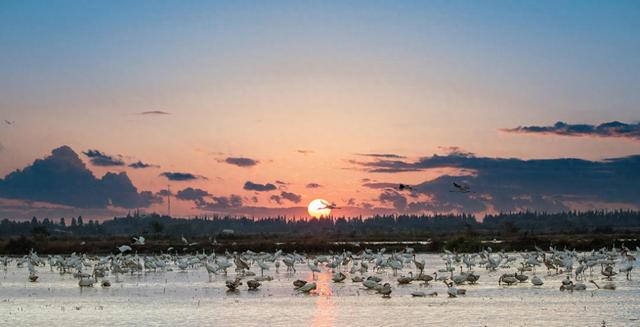
绿色发展,正在成为时代主旋律。 党的二十届四中全会公布的"十五五"规划建议明确提出,加快经济社会发展全面绿色转型,建设美丽中 国。在这场关乎未来的转型竞赛中,有一个既不沿边也不靠海的中部省份,凭借着深厚的绿色家底和前 瞻行动、战略定力,正展现出越来越不容忽视的存在感。 它就是江西。 江西省九 江市鄱阳湖湿地白鹤栖息地。视觉中国 图 眼下,2025世界绿色发展投资贸易博览会暨中国绿色食品博览会(以下简称"绿发会"),即将在江西南 昌开幕。来自68个国家和地区的嘉宾、2500余家参展商、900余家采购商、300余家投资商将齐聚赣鄱大 地,共同见证江西以"绿"为桥的转型实践,并探讨绿色发展的未来路径。 这背后,是江西用16年时间将绿发会打造成"生态搭台、经贸唱戏"超级平台的坚守,更是这座中部大省 在红色基底上不断增强绿色动能、崛起为绿色发展先行者的生动注脚。 01 绿发会是经党中央批准,江西唯一保留的省部级展会,首届于2009年举办。经过连续多年的成功举办, 绿发会的知名度、影响力持续扩大,不仅成为江西对内对外开放的重要平台,也成为观察中国绿色发展 的一个重要窗口。 那么,它为何能够花落江西? 首先,江西拥有堪称" ...

从山顶到海洋,崂山湾美丽海湾创建构筑生态保护新格局
Da Zhong Ri Bao· 2025-11-25 05:07
Core Viewpoint - The creation of the national-level beautiful bay in Laoshan Bay and the provincial-level beautiful bay in the eastern Qianhai Bay area in Qingdao, Shandong Province is progressing steadily, supported by innovative governance mechanisms and systematic restoration measures for ecological environment protection [1] Group 1: Governance and Management - The Laoshan District has implemented a four-level bay chief system and a multi-department joint management mechanism, achieving regular forest protection and bay patrols [3] - The district has reached a 100% harmless disposal rate for domestic waste in Laoshan Bay, with all rivers flowing into the sea meeting water quality standards [3] Group 2: Environmental Quality - The proportion of nearshore water quality rated as excellent has maintained a 100% level for several consecutive years [3] - A total of 214 sewage outlets into the sea have been rectified and registered in the district [3] Group 3: Economic Development and Ecological Protection - The district is exploring pathways for realizing the value of ecological products, with the innovative "ecological reward and subsidy" policy benefiting approximately 60,000 residents [3] - By cultivating local specialty brands such as Wanggezhuang Big Steamed Bun and Laoshan Homestays, the district has established an eco-led development model, successfully achieving a win-win situation for ecological protection and economic development [3]

环境规划院副总工程师王夏晖:“十五五”时期持续深入推进生态系统优化,该抓好哪些工作重点?
Zhong Guo Huan Jing Bao· 2025-11-23 23:21
Core Viewpoint - The 20th Central Committee's Fourth Plenary Session has approved the proposal for the 15th Five-Year Plan, emphasizing significant progress in building a beautiful China as a primary goal for economic and social development during this period [1] Group 1: Achievements in Ecological Protection and Restoration - Significant progress has been made in ecological protection and restoration, establishing a solid foundation for optimizing ecosystems during the 15th Five-Year Plan [2] - The overall quality of ecosystems in the country has stabilized and improved, with a new pattern for biodiversity protection gradually forming [2][3] - The area of ecological protection red lines exceeds 30% of the land area, with 90% of terrestrial ecosystem types and 74% of key protected wild species effectively protected [3] Group 2: Challenges and Future Directions - Despite achievements, the ecological protection and restoration efforts face challenges, including the need to solidify existing gains and expand improvements [4] - The current ecological system remains under significant human activity pressure, with a need for modernization in the regulatory framework [4] Group 3: Key Focus Areas for the 15th Five-Year Plan - The focus will be on optimizing ecological systems, improving quality, enhancing functions, realizing value, and efficient regulation [5] - A comprehensive national ecological security system will be constructed, addressing spatial planning and ecological resource management [6] Group 4: Collaborative and Integrated Approaches - Emphasis on a multi-faceted approach to improve ecosystem quality, integrating various ecological elements [7] - Implementation of integrated protection and restoration projects targeting specific ecological degradation areas [8] Group 5: Enhancing Ecosystem Services and Resilience - The need to enhance ecosystem service functions and develop a robust ecological risk resilience system in response to climate change [9] - Focus on technology and innovation to improve ecological monitoring and risk assessment capabilities [11] Group 6: Realizing Ecological Product Value - The plan includes expanding channels for realizing the value of ecological products, aligning with national strategies for sustainable development [10] - Encouragement of innovative practices in ecological product value realization to support local environmental protection and economic growth [10]
第三届生态资产管理与中国式现代化战略咨询会闽北举行
Zhong Guo Xin Wen Wang· 2025-11-23 02:44
中新网南平11月23日电 (记者 张丽君)第三届生态资产管理与中国式现代化战略咨询会22日在福建南平 武夷山启幕。会议以"加强生态资产管理,践行绿水青山就是金山银山理念"为主题,聚焦"十五五"时期 生态产品价值实现路径。 第三届生态资产管理与中国式现代化战略咨询会22日在福建南平武夷山举行。中新网记者 张丽君摄。 11月22日,福建首笔VEP质押贷款正式落地,兴业银行南平分行与武夷山4家生态茶叶企业签约。中新 网记者 张丽君摄。 值得关注的是,全国首批生态茶园VEP贷款正式落地,兴业银行南平分行与武夷山4家生态茶叶企业签 约。该贷款以VEP核算结果为核心质押依据,未来将探索"VEP价值与贷款利率挂钩"机制,为金融支持 生态产业提供可复制经验。 会议期间,中国人民大学生态环境学院与武夷山国家公园签订共建教学实践基地协议并揭牌。 中国人民大学党委常委、常务副校长朱信凯在致辞中表示,二十年实践证明,"绿水青山"是极具潜力的 经济资源,可转化为推动高质量发展的生态资产。生态资产管理通过统筹生态链、经济链、产业链推动 自然资本增值,是释放生态综合效益的关键抓手。 据悉,本次会议设置5个专题论坛,将通过多项务实举措,推动 ...

云南重点高原湖泊流域单位面积GEP为全国均值6.5倍
Zhong Guo Xin Wen Wang· 2025-11-20 08:22
Core Insights - Yunnan Province's key plateau lake basins have a unit area GEP (Gross Ecosystem Product) that is 6.5 times the national average, with a per capita GEP 1.5 times the national average [1] Group 1: Ecological Product Value - The ecological product value accounting in Yunnan's key plateau lake basins shows rich ecological resources and high total value, making it one of the regions with the greatest potential for ecological product value realization in China [2] - The highest value in the ecological product value is from regulating services, accounting for approximately 58% of the total GEP, while cultural service functions exceed the national average by 25 percentage points [2] - The GEP to GDP ratio (green gold ratio) for the nine lake basins is 0.78, which is generally higher than that of more developed provinces in central and eastern China, indicating significant potential for ecological value enhancement [2] Group 2: Standards and Case Studies - The release of the "Technical Specifications for Ecological Asset and Ecological Product Value Accounting" establishes a dual evaluation accounting system for ecological assets and product value, incorporating local parameters and technical innovations [1] - The published cases, including "Yuan Yang Code" and "Meng Lian Scroll," illustrate various transformation paths such as "green to gold" and "eco-tourism," providing valuable experiences for promoting green development in Yunnan and nationwide [2][3] - The Yunnan Provincial Ecological Environment Department plans to continue deepening practical exploration and institutional innovation to support high-quality economic and social development through high-level ecological protection [3]
广东江门完成全国首次红树林保护碳汇公众认购
Zhong Guo Xin Wen Wang· 2025-11-19 03:32
台山市自然资源局表示,将继续通过机制创新,让生态资源变成可衡量、可交易的生态产品,拓宽生态 产品价值实现路径,最终以生态产品交易收益反哺生态系统保护修复。(完) 来源:中国新闻网 广东江门完成全国首次红树林保护碳汇公众认购 中新网广州11月19日电 (孙秋霞 冯建奎)记者19日从广东省自然资源厅获悉,江门台山近日启动全国首 次红树林保护碳汇公众认购,首批红树林保护碳汇以336元/吨价格公开发售,吸引了众多侨胞、市民等 踊跃咨询认购,现场认购量达477吨。 据介绍,红树林碳汇是市场公认的高价值生态产品,具备明确增值预期。随着优质蓝碳资源日益稀缺, 红树林碳汇有望成为兼具生态意义与经济回报的长期投资。 根据认购协议,认购台山市红树林保护碳汇的公众可获得一份政府确权的可靠资产,一份预期可观的投 资回报,一份未来可期的绿色权益。同时,认购红树林碳汇也是一项兼具生态与情感价值的公益行为, 将侨乡台山市的"绿水青山"转化为海内外乡亲可共同参与、共享价值的"金山银山"。 据了解,认购所得资金将用于红树林抚育、修复与科普教育,形成"保护-增值-再保护"可持续循环。 2025年,台山市政府与深圳市自然资源和不动产评估发展研究中 ...
福地怀化绘就生态新画卷
Zhong Guo Huan Jing Bao· 2025-11-19 01:05
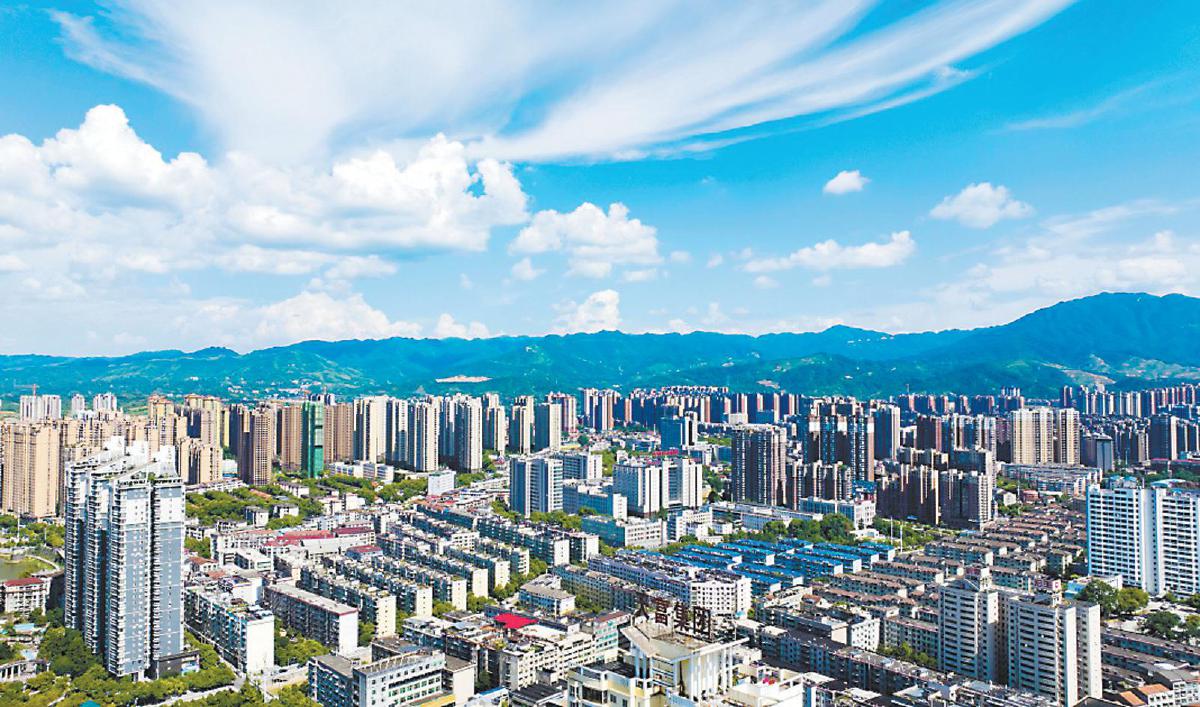
Core Viewpoint - Huaihua City has made significant progress in ecological protection and environmental improvement over the past five years, demonstrating the principle that "lucid waters and lush mountains are invaluable assets" through various initiatives and policies aimed at sustainable development [2][4][23] Group 1: Ecological Achievements - Huaihua has maintained air quality at the national secondary standard for five consecutive years, with "Huaihua Blue" becoming a norm [2] - The city ranks 22nd among 337 prefecture-level cities in China for surface water quality as of September this year [2] - Public satisfaction regarding the ecological environment has ranked first in the province for three consecutive years, reflecting the effectiveness of environmental protection efforts [2] Group 2: Institutional Framework - The city has established a robust legal framework for ecological protection, including the "Huaihua Dust Pollution Prevention Regulations," which clarifies responsibilities and standards for pollution control [6] - A comprehensive system of accountability has been implemented, with various committees overseeing environmental protection efforts and ensuring that responsibilities are clearly defined [5] Group 3: Pollution Control Initiatives - Huaihua has launched a systematic pollution prevention campaign, achieving a reduction of nearly 13,000 tons in four major pollutants during the "14th Five-Year Plan" period [9] - The city has completed the precise remediation of 251 river pollution outlets and resolved 408 issues related to rural drinking water sources [9] Group 4: Economic and Environmental Synergy - The city has streamlined environmental approval processes, reducing the time for project approvals significantly, which has enhanced the business environment while maintaining ecological standards [13][14] - Innovative measures such as "deficient acceptance" and "synchronous review" have been adopted to facilitate faster project implementation [14] Group 5: Community Engagement and Value Realization - Huaihua has actively involved the public in ecological protection, rewarding citizens for reporting environmental violations, which has fostered community participation [6] - The city has implemented mechanisms for realizing the value of ecological products, allowing local farmers to benefit financially from carbon reduction efforts [21][22]
为青山添“金” 为绿水赋“值”
Jin Rong Shi Bao· 2025-11-18 05:05
Core Insights - Hunan Province is leveraging its rich ecological resources to transform green assets into financial capital through innovative financial models, with green loan balances exceeding 1.3 trillion yuan by Q3 2025, marking a 21.1% increase from the beginning of the year [1] Policy Guidance - The People's Bank of China Hunan Branch is focused on enhancing the financial ecosystem for ecological product value realization, issuing guidelines to support green finance and initiating pilot projects for ecological product value assessment [2] - Huaihua City has been designated as a pilot for the national ecological product value realization mechanism, encouraging banks to include ecological assets as collateral for financing [2][3] Innovative Products - The "Xianglin Carbon Ticket," a forestry carbon credit system, is being utilized to facilitate financing and carbon offsetting, with banks exploring its inclusion as collateral for loans [4] - Financial institutions are actively engaging with carbon ticket holders, with innovative financing models being developed, such as pledging carbon credits for loans to support agricultural projects [4] Financial Support Mechanisms - The promotion of water rights pledge loans is providing additional financial support for green development, with 63 loans totaling 1.55 billion yuan issued by Q3 2025 [5] - Financial institutions are creating tailored financing solutions for the cultural tourism sector, with loans amounting to 10.11 billion yuan allocated to various ecological tourism projects [5] Collaborative Financial Framework - A coordinated mechanism involving seven departments has been established to enhance financial services for ecological resource-rich areas, with pilot projects achieving significant financing outcomes [6] - Financial institutions are optimizing credit management for ecological projects, offering preferential loan rates and enhanced performance metrics for green credit initiatives [6] Risk Mitigation Strategies - Innovative risk compensation mechanisms have been introduced to alleviate lending hesitance, with a total of 800 million yuan allocated for forestry industry development and environmental rights financing risk compensation [7] - Local governments are collaborating with financial institutions to establish risk compensation funds, facilitating over 8 billion yuan in green finance credit for ecological product industries [7]
做大做强绿色发展引擎——推动“十五五”时期经济社会发展向新而行③
Ren Min Ri Bao· 2025-11-18 03:09
Group 1 - The core viewpoint emphasizes the importance of developing the under-forest economy and strengthening the forestry and grass industry, as highlighted in the "14th Five-Year Plan" and the government work report [1] - By 2024, the total output value of the national forestry and grass industry is projected to reach 10.496 trillion yuan, with four pillar industries exceeding one trillion yuan each: wood processing, economic forests, forest tourism, and the under-forest economy [1] - The development of the under-forest economy and forestry industry is seen as a crucial approach to promote rural revitalization and the transformation of the "Two Mountains" concept [1] Group 2 - The article discusses the challenges of ecological product value realization, which has historically faced difficulties in measurement, collateralization, trading, and monetization [2] - The establishment of mechanisms for ecological product value realization and compensation is essential for sustainable and stable green development, as demonstrated by various local initiatives [2] - Continuous optimization of economic policies supporting green low-carbon development is necessary to provide robust support for green lifestyles and development [2] Group 3 - The current green development landscape faces deep-seated contradictions in systems, standards, and benefit structures, indicating a need for further reform and overcoming bottlenecks [3] - The article highlights the role of green production and consumption in enhancing food security, optimizing transportation, and promoting a circular economy [3] - Accelerating the formation of green production and lifestyle patterns is expected to strengthen the development momentum of the Chinese economy [3]
数字化驱动高颜值变高价值
Jing Ji Ri Bao· 2025-11-17 22:24
《中共中央关于制定国民经济和社会发展第十五个五年规划的建议》明确提出,完善多元化生态补偿机 制,因地制宜拓展生态产品价值实现渠道。生态产品价值实现能够把优良的生态优势转化为经济收益, 是落实"两山"理念的重要举措。当前,数字技术正在重塑传统业态模式,对生态产品价值实现的拓展作 用日益显现。加快数字化绿色化协同转型,已然成为生态产品价值实现的未来趋势。 生态产品是自然生态系统与人类生产共同作用所产生的、能够增进人类福祉的产品,也是维系人类生存 发展、满足人民日益增长的美好生活需要的必需品。近年来,我国各地深入开展生态产品价值实现的理 论与实践探索,取得了一定的成绩和经验。然而,由于生态产品的稀缺性、要素复杂性、服务公共性和 价值多维性等特征,在实践中也出现了一些问题。 比如,在资源清查和确权方面,生态产品跨时间、跨空间和多元要素资源整合的复杂特点,为摸清自然 资源资产底数、明晰产权和实时监控带来很大困难。在生产方面,由于农业林业本身智能化水平相对较 低,加之生态环境底子好的产地往往地处偏远,基础设施、人力资源水平等相对落后,使得生态产品规 模化生产受限,产品质量和品牌溢价难以提升。在交易流通方面,一些生态产品受 ...