
科技创新和产业创新融合

Search documents
郭永航开展推进粤港澳大湾区建设专题调研
Guang Zhou Ri Bao· 2025-08-02 01:36
Core Viewpoint - The article emphasizes the importance of advancing the construction of the Guangdong-Hong Kong-Macao Greater Bay Area, focusing on the "one point, two places" strategy to enhance the practice of "one country, two systems" [1][4]. Group 1: Government Initiatives - The Guangzhou Municipal Party Secretary conducted a special investigation on the advancement of the Greater Bay Area construction, aligning with the directives from Xi Jinping and the provincial government [2]. - Key areas of focus include the development of a "water-land-air" transportation network, enhancing customs services, and supporting foreign trade growth [3]. Group 2: Economic Development - The establishment of a regional technology transfer center in the biomedicine sector aims to strengthen the link between government, universities, and the market, facilitating the conversion of scientific achievements into practical applications [3]. - The emphasis is placed on fostering innovation in deep-sea and aerospace industries, encouraging research institutions and enterprises to achieve self-controlled core technologies [3]. Group 3: Youth Engagement - Initiatives are in place to encourage Hong Kong and Macao youth to innovate and start businesses in Guangzhou, with the government aiming to create better living and working conditions for them [3][4]. Group 4: Strategic Goals - The article outlines the goal of creating a significant strategic platform in Nansha that collaborates with Hong Kong and Macao while facing the world, aiming for high-quality completion of the Nansha plan's first phase [4]. - The focus is on enhancing the international technology innovation center and high-level talent hub, linking Hong Kong and Macao's innovation resources [4]. Group 5: Market Integration - The article discusses the need for deeper market integration within the Greater Bay Area, promoting efficient circulation of people, goods, and information while breaking down institutional barriers [4]. Group 6: Public Services and Living Standards - The implementation of the "Five Happiness" plan aims to improve public services in education, healthcare, and elderly care, while also addressing urban development and social stability [4].
筑硬核科技底座 助产业攀高向新
Xin Hua Ri Bao· 2025-08-01 21:39
Core Viewpoint - Jiangsu province is committed to leading the integration of technological innovation and industrial innovation, showcasing significant achievements in research and development, high-tech industry output, and manufacturing quality development [1][2]. Group 1: Achievements in Innovation - Jiangsu's R&D investment intensity reached approximately 3.33% last year, exceeding the provincial "14th Five-Year Plan" target, positioning it at a medium level among innovative countries and regions [2]. - In the first half of this year, the output value of high-tech industries accounted for 51.8% of the total industrial output value, continuing to rise from last year's 50.7% [2]. - Jiangsu has maintained the highest quality development index in manufacturing nationwide for four consecutive years, indicating a robust innovation and industrial chain [2]. Group 2: Major Innovation Platforms - Jiangsu is accelerating the cultivation of strategic technological capabilities and has established a matrix of innovative platforms, including the "Future" deep-sea green intelligent technology experimental ship and various laboratories [2][4]. - The province has initiated the construction of 44 national key laboratories, establishing a collaborative mechanism with leading enterprises [2][4]. Group 3: Industry Chain Development - The provincial industrial and information technology department supports leading enterprises in driving collaborative innovation across the industry chain, with 101 projects funded last year generating an additional R&D investment of 4.16 billion [3]. - Jiangsu's focus on 16 key industrial clusters accounts for over 70% of the industrial output value, with sectors like new energy and biomedicine leading nationally [3]. Group 4: Integration of Technology and Industry - The integration of technological and industrial innovation is being pursued through five key areas: enhancing high-quality technology supply, reinforcing enterprise innovation, promoting technology transfer, transforming high-tech zones, and deepening technology system reforms [4][5]. - Jiangsu has established a technology transfer platform and organized events to connect research institutions with enterprises, resulting in over 2,000 innovation achievements and 2,300 technology demands last year [5]. Group 5: Local Government Initiatives - Local governments, such as Wuxi and Yancheng, are implementing innovative measures to promote technology transfer and application, including establishing innovation centers and enhancing support for technology enterprises [6][7]. - Wuxi aims for a R&D investment intensity of 3.7% by 2027, while Yancheng focuses on becoming a preferred location for concept verification and technology application [6][7]. Group 6: Talent Development - The provincial human resources department plans to decentralize authority for senior professional title evaluations to qualified innovation platforms and enterprises, enhancing talent evaluation mechanisms [8]. - New professional evaluation standards are being developed to meet the needs of emerging industries, including a talent evaluation system for the low-altitude economy [8].
江苏在推动科技创新和产业创新融合上“打头阵”
Jiang Nan Shi Bao· 2025-08-01 13:02
Group 1 - The "Future" deep-sea green intelligent technology test ship has been successfully delivered, led by the Taihu Laboratory in Wuxi, Jiangsu [1] - Jiangsu's "1650" industrial system has shown significant results, with 14 clusters selected as national advanced manufacturing clusters, accounting for nearly 1/5 of the national total [1] - Jiangsu ranked second in China's regional innovation capability evaluation last year, with Suzhou and Nanjing listed among the top 10 global innovation clusters [1] Group 2 - Jiangsu has organized 250 key projects in the past two years, achieving notable results such as the world's first 8-inch silicon-based gallium nitride production line [2] - The provincial government established a special fund for basic research amounting to 2.48 billion yuan last year, increasing to 2.68 billion yuan this year [2] - Major original breakthroughs include the first observation of a graviton mode in condensed matter and the discovery of the oldest multicellular eukaryotic fossil [2] Group 3 - Jiangsu has over 57,000 high-tech enterprises, with unicorn and potential unicorn companies accounting for 13% and 23% of the national total, respectively [3] - The province has 89,000 technology-based small and medium-sized enterprises and 114 companies listed on the Sci-Tech Innovation Board, both ranking first in the country [3] - 85% of R&D investment comes from enterprises, with nearly 80% of high-level innovation and entrepreneurship talent concentrated in companies [3] Group 4 - Jiangsu has established a technology transfer platform, hosting over 2,000 innovation results and 2,300 technology demands last year [4] - The province was approved to build the first regional technology transfer center in universities, with continuous collaboration with major scientific institutions [4] - The total value of technology contracts in Jiangsu reached nearly 530 billion yuan last year [4] Group 5 - Jiangsu promotes the coordinated innovation development of high-tech zones and higher education institutions, implementing organized research and transformation [5] - The province has 18 national high-tech zones, the highest number in the country, contributing significantly to the national economy and exports [5] - Jiangsu has been approved for 19 national innovative industrial clusters, with 9 high-tech zones entering the national top 50 [5] Group 6 - Jiangsu is advancing reforms in the education and technology talent system, including the modification of regulations for technology transfer [6] - The province supports the establishment of over 400 joint innovation centers and has achieved over 7,500 technology transfer results [6] - Jiangsu ranked first in the number of participants selected for national major talent projects in the technology sector last year [6] Group 7 - Jiangsu is planning a talent evaluation system for the low-altitude economy, which is becoming a new engine for high-quality economic development [7] - The province is setting new professional qualifications for technical personnel in the low-altitude economy industry chain [7] - Pilot programs for the low-altitude economy are being conducted in Suzhou and Taicang [7]
向稳、向新、向优!工业经济交出亮眼“期中卷”
Zhong Guo Chan Ye Jing Ji Xin Xi Wang· 2025-08-01 00:18
Group 1: Industrial Economic Performance - In the first half of the year, China's industrial added value increased by 6.4% year-on-year, showcasing strong resilience following a good start in the first quarter [1] - Manufacturing investment grew by 7.5% year-on-year, with the number of large-scale industrial enterprises reaching 520,000, an increase of over 8,000 from the end of last year [1] - Profits of large-scale manufacturing enterprises rose by 5.4% year-on-year, indicating a robust industrial economic performance [1] Group 2: Policy Support and Industry Growth - The growth in industrial economy is attributed to precise policy measures, including major project construction and support for quality enterprises [2] - Key industries such as electrical machinery, automotive, electronics, and chemicals showed rapid growth, contributing significantly to the overall industrial growth [2] - The equipment manufacturing and high-tech manufacturing sectors performed well, with their added value accounting for 35.5% and 16.4% of large-scale industrial output, respectively [2] Group 3: Technological Innovation and New Growth Points - The integration of technological and industrial innovation has deepened, with significant advancements in artificial intelligence and robotics [6] - The production of industrial and service robots increased by 35.6% and 25.5% year-on-year, reflecting market confidence in these sectors [6] - The number of technology contracts registered reached nearly 410,000, with a transaction value exceeding 3 trillion yuan, marking a 14.2% year-on-year increase [7] Group 4: Structural Optimization and Environmental Improvement - The proportion of high-end equipment manufacturing in total industrial output reached 35.5%, up 0.9 percentage points from last year, contributing 3.4 percentage points to industrial growth [8] - The green factory output accounted for over 20% of total manufacturing output, with energy consumption per unit of added value in large-scale industry continuing to decline [9] - The government has initiated various support programs for small and medium-sized enterprises, benefiting over 3.6 million companies and facilitating significant financing and transaction amounts [9] Group 5: Future Outlook - The industrial economy is expected to maintain a positive trend in the second half of the year, supported by the accelerated implementation of various policy measures [10] - The Ministry of Industry and Information Technology plans to introduce targeted measures to further enhance industrial economic development [10]
建设创新滨江 贡献高新力量
Hang Zhou Ri Bao· 2025-07-31 02:23
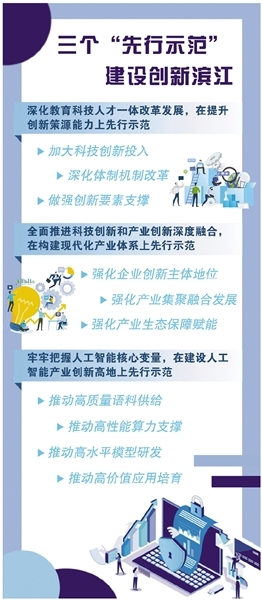
滨江全景。 中国网络作家村。 宇树科技人形机器人。 白马湖实验室科研人员正在做试验。 自贸大厦。 抢拼、得分!在区域经济的"浙BA"赛场上,高新区(滨江)经济运行情况实现近六个季度最好水 平。 作为我省挑起经济大梁的"核心球员",高新区(滨江)在今年"上半场"表现亮眼——全区实现地区 生产总值1560亿元,增长7.3%。其中,规上工业增加值实现465亿元,增长15.4%,列全市第一。捧 回"浙江制造天工鼎"金鼎的高新区(滨江),以创新提质、产业提能和改革提效之姿,拼出了高质量发 展新气象。 今年是杭州高新区成立35周年,也是"十四五"规划收官之年,7月31日,滨江将召开区委六届八次 全体(扩大)会议,进一步动员全区上下创新发展增动能、实干争先增才能,高质量完成年度目标任 务,全力打好"十四五"收官战,奋力推动创新滨江建设开新局谱新篇,为全省高质量发展建设共同富裕 示范区贡献高新力量。 A.深化教育科技人才一体改革发展 在提升创新策源能力上先行示范 5月末,由浙江省统计局、省科技厅发布的《2024浙江科技人才发展指数》出炉,滨江区蝉联全省 第一,其中,滨江在科技人才规模指数、科技人才效能指数、科技人才环境指数三 ...

习近平:要有力提振消费、破除“内卷”
Xin Hua She· 2025-07-31 01:04
Core Viewpoint - The meeting emphasized the need for a stable yet progressive approach to economic work in the second half of the year, focusing on maintaining policy continuity and enhancing flexibility to boost consumption and stabilize employment and market expectations [2][4]. Economic Situation and Work Plans - The Central Committee of the Communist Party of China held a meeting to discuss the current economic situation and plans for the second half of the year, with input from various democratic parties and non-party representatives [2][3]. - The meeting highlighted the importance of a proactive macroeconomic policy to support economic recovery and stability, with a focus on expanding domestic demand and deepening reforms [4][5]. Suggestions from Democratic Parties - Leaders from various democratic parties and organizations expressed support for the Central Committee's analysis of the economic situation and provided suggestions on promoting technological and industrial innovation, enhancing service consumption, and improving social security for flexible employment groups [3][4]. Key Challenges and Opportunities - The meeting acknowledged ongoing risks and challenges in the economy, urging a correct understanding of the situation and the need to leverage development opportunities while consolidating the recovery momentum [4][5]. - Emphasis was placed on the necessity of continuous efforts in macroeconomic policy, risk prevention, and improving people's livelihoods [4][5]. Expectations for Future Collaboration - The Central Committee expressed hopes for unified understanding and collaboration among democratic parties to promote high-quality development and gather actionable insights for economic policies [5].
经济大省稳稳扛起“大梁”
Jing Ji Ri Bao· 2025-07-24 22:04
Core Insights - The exploration and achievements of major economic provinces in scale support, structural improvement, and momentum accumulation are crucial for observing the high-quality development of China's economy [1] Group 1: Economic Performance - In the first half of 2025, six major provinces contributed over 29.4 trillion yuan to the national economy, accounting for 44.6% of the total, with five provinces outpacing the national average growth rate [1][2] - Guangdong and Jiangsu remain in the "6 trillion yuan club," with GDPs of 68,725.4 billion yuan and 66,967.8 billion yuan respectively, showing growth rates of 4.2% and 5.7% [2] - Shandong and Zhejiang surpassed 50 billion yuan and 45 billion yuan in GDP, with growth rates of 5.6% and 5.8% respectively, while Sichuan and Henan are in a competitive race for the fifth position with GDPs of 31,918.2 billion yuan and 31,683.8 billion yuan, growing by 5.6% and 5.7% [2] Group 2: Innovation and Structural Transformation - Major economic provinces are leading in the integration of technological and industrial innovation, accelerating the transformation of old and new growth drivers, and fostering new productive forces [3] - The service sector is also experiencing a clear transformation, with modern services increasingly contributing to economic growth and a strong shift towards mid-to-high-end industrial structures [3] - In Zhejiang, high-tech manufacturing and digital economy sectors saw double-digit growth, while Jiangsu's equipment manufacturing sector has maintained a growth rate above the overall industrial average for 20 consecutive months [3] Group 3: Resilience and External Engagement - The vast domestic market serves as a strong safeguard against various risks, with major provinces actively boosting consumption and investment to stabilize employment and market expectations [4] - In the first half of the year, Sichuan's retail sales of household appliances grew by 20.2%, while Guangdong, as the largest foreign trade province, achieved a foreign trade volume of 4.55 trillion yuan, marking a 4% year-on-year increase [4] - Shandong's goods trade imports and exports grew by 6.8%, leading among the top six foreign trade provinces, with products exported to 242 countries and regions [4] Group 4: Future Outlook - Major economic provinces are expected to play a more significant role in driving national development, focusing on achieving annual targets and ensuring the successful completion of the 14th Five-Year Plan [5]
江西省经济运行平稳向好顺利实现“双过半”
Sou Hu Cai Jing· 2025-07-19 01:19
Economic Overview - Jiangxi Province's GDP for the first half of 2025 reached 1,671.96 billion yuan, with a year-on-year growth of 5.6%, surpassing the national average by 0.3 percentage points [1] - The province's economic performance is characterized by stability and a strong foundation, achieving a "double over half" milestone [1] Sector Performance - The agricultural sector showed growth, with total output value of agriculture, forestry, animal husbandry, and fishery at 145.88 billion yuan, a 3.8% increase year-on-year [1] - Industrial output increased significantly, with the added value of above-scale industries growing by 8.3%, exceeding the national average by 1.9 percentage points [1] - The service sector also performed well, with above-scale service industry revenue increasing by 9.8%, outpacing the national average by 1.7 percentage points [1] Investment and Consumption - Fixed asset investment in the province grew by 5.4% year-on-year, with significant growth in infrastructure and manufacturing investments [2] - Retail sales of consumer goods totaled 609.47 billion yuan, reflecting a year-on-year growth of 5.3%, with certain categories like communication equipment and home appliances seeing over 30% growth [2] Innovation and Employment - Industrial technological transformation investment rose by 9.3%, contributing to a 3.3 percentage point increase in industrial investment [2] - New urban employment reached 277,000, achieving 67.6% of the annual target, indicating a stable employment situation [3] - The profit of above-scale industrial enterprises increased by 10.0% year-on-year, showcasing improved corporate efficiency [3]
拓展在科技创新和产业创新融合上打头阵新路径
Xin Hua Ri Bao· 2025-07-14 22:04
Core Viewpoint - The emphasis on integrating technological innovation with industrial innovation in Jiangsu is crucial for driving economic growth and enhancing competitiveness, as highlighted by President Xi Jinping during the National People's Congress [1]. Group 1: Challenges in Integration - There are four main challenges in promoting the deep integration of technological and industrial innovation: lack of coordination in the connection phase, imprecise evaluation of technological achievements, inadequate incentives for innovation, and mismatched educational structures with new industry developments [1][2][3]. Group 2: New Approaches to Innovation - The "Four New" strategies proposed include: 1. "From 0 to 1": Fostering original technological innovations through enhanced basic research funding and establishing research centers [2]. 2. "From Team to Corps": Coordinating key technology breakthroughs by optimizing resource allocation and collaboration among research entities [2]. 3. "From Small Circulation to Large Transformation": Reforming the technology transfer process to create a seamless transition from research to industrial application [3]. 4. "From Concept Validation to Pilot Testing": Developing new application scenarios to drive technology product development and market demand [3]. Group 3: High-Standard Construction of Innovation Ecosystem - The "Four High" paths include: 1. High-level planning for "Two New Integration" layouts, inspired by successful models from other regions [4]. 2. High-standard construction of collaborative platforms among large enterprises and research institutions to foster innovation networks [5]. 3. High-quality advancement of "Two New Integration" initiatives, focusing on digital transformation of traditional industries and nurturing emerging sectors [7]. 4. High-level creation of a supportive ecosystem for innovation, including streamlined regulatory frameworks and enhanced market environments [8].
我市与省产研院签署全面深化合作协议
Nan Jing Ri Bao· 2025-07-03 02:10
Core Viewpoint - The signing of a comprehensive cooperation agreement between the municipal government and the Jiangsu Provincial Academy of Industrial Technology aims to deepen collaboration in technology and industry innovation, leveraging local resources and institutional advantages to accelerate the transformation and industrialization of scientific achievements [1][2]. Group 1: Cooperation Agreement - The agreement focuses on addressing major industrial development needs in Nanjing and aims to promote the deep integration of technological and industrial innovation [1]. - A new funding model will be explored, which involves initial grants to support research projects that can later be converted into investments during market financing stages [1]. - Six projects, including a precision-targeted magnetic stimulation treatment system, were signed under the "grant-investment combination" model [1]. Group 2: Strategic Goals - The municipal leadership emphasizes the importance of integrating technological and industrial innovation as a key expectation from the central government [2]. - The Jiangsu Provincial Academy of Industrial Technology is recognized as a leader in promoting industrial technology innovation and has created effective institutional outcomes through long-term reform practices [2]. - The collaboration aims to build an innovation service system that facilitates the entire process from innovation sourcing to industrial implementation [2]. Group 3: Future Directions - Suggestions include increasing high-quality technological supply, strengthening the role of enterprises in technological innovation, and efficiently promoting the transformation of scientific achievements [2]. - The partnership will focus on reforms in education, technology, and talent systems, as well as the establishment of research platforms and innovation talent cultivation [2].