老龄化

Search documents
人口16连降,日本绷不住了
Hu Xiu· 2025-08-13 06:33
Core Points - Japan's population has decreased to 120.65 million as of January 1, 2025, marking a record decline of 908,000 people from the previous year, the largest drop since records began [1] - The country has experienced a continuous population decline for 16 years, totaling a reduction of nearly 7 million people since 2008, equivalent to the disappearance of two Osaka cities [3][5] - Japan has invested approximately 66 trillion yen (about 3.2 trillion yuan) over the past 20 years to address the declining birth rate, viewing it as a national crisis [4] Population Trends - In 2024, Japan recorded its lowest birth rate of 686,000, while the death toll reached nearly 1.6 million, the highest on record [6] - The dual pressures of declining birth rates and an aging population are contributing to the ongoing population decrease [8] - Japan's median age is 49.4 years, with approximately 29.6% of the population aged 65 and older, making it the oldest country globally [11][13] Regional Disparities - Population decline is widespread across Japan, with only Tokyo experiencing growth among the 47 prefectures; other regions are seeing declines [14][15] - Some areas, like Tottori Prefecture, have populations dropping below 100,000, facing a "disappearance crisis" [16] Education and Infrastructure Impact - The population decrease has led to the closure of over 400 schools annually, with more than half of private universities failing to meet enrollment targets [17] - Some schools have been repurposed for other uses, such as agricultural parks or aquariums [18] Government Response and Policies - Japan's total fertility rate fell to 1.15 in 2024, the lowest since records began in 1947, significantly below the 2.1 replacement level [21] - The government has implemented extensive financial support measures, including a comprehensive subsidy system for families with children, averaging 3.52 million yen (approximately 164,000 yuan) per child from birth to age 18 [31] - New policies include full tuition waivers for national universities for families with three or more children, alongside various other financial incentives [32][34] Comparison with Other Regions - Despite Japan's low birth rate, it is not the lowest in East Asia, with South Korea's rate at 0.75 [24] - The European Union has seen population growth, with 19 out of 27 member states increasing their populations, largely due to immigration, which Japan has been historically resistant to [37][42][43] - Japan's recent increase in foreign residents, reaching 3.77 million, indicates a potential shift in immigration policy as domestic population decline continues [48][49]


服务消费的星辰大海:基于中美服务业的比较
2025-08-11 14:06
Summary of Key Points from Conference Call Records Industry Overview - The focus is on the service consumption sector in China, particularly in comparison to developed countries like the US, Japan, and South Korea. The current service consumption in China is relatively low, even when GDP per capita reaches approximately $13,000, indicating significant room for growth in service consumption [1][2][11]. Core Insights and Arguments - **Drivers of Service Consumption Growth**: - Three main drivers identified: urbanization, aging population, and increased government spending on social welfare as GDP per capita exceeds $10,000, known as the Wagner's Law effect [1][4][17]. - Urbanization leads to increased demand for urban public services and lifestyle services [4][12]. - The aging population significantly boosts demand for healthcare and elderly care services [14][17]. - Government investment in social welfare is expected to rise, enhancing consumer spending [15][17]. - **Technological Gaps**: - There exists a technological gap between China and the US in productive services, particularly in information technology and software transmission. China needs to enhance its capabilities in these areas to close the gap and improve productivity, which in turn can lead to wage growth and service sector development [5][19]. - **Employment and Quality of Jobs**: - The rapid urbanization has not been matched by a corresponding increase in high-quality jobs in the service sector, leading to a situation where many workers are forced into low-quality service jobs, exacerbating the issue of "involution" in the service industry [6][7][24]. - **Price Dynamics**: - Service price growth in China has been lower than that of goods, indicating a broader low-price issue that extends beyond manufacturing to the service sector. This necessitates a focus on improving the quality of service supply to stimulate consumer willingness to pay [3][8][9]. - **Comparison with the US**: - The US has seen a significant increase in service sector contribution to GDP, reaching 76% by 2009, while China remains at a lower stage of development. The US has a more integrated productive service sector that supports various industries, while China's service sector is still developing [16][22]. Additional Important Insights - **Future Focus Areas**: - Over the next five years, China is expected to prioritize the development of both productive and lifestyle services, with an emphasis on technological advancements and improved income distribution mechanisms to enhance wages in the service sector [24][25]. - **Potential Growth Areas**: - Specific sectors identified for future growth include information technology, scientific research, wholesale and retail, and health and social work, which show strong demand elasticity with rising income levels [25][26]. - **Challenges in Service Sector**: - The service sector faces challenges such as insufficient high-quality job creation and the need for better integration of productive services with manufacturing to enhance overall economic growth [6][27]. This summary encapsulates the key points discussed in the conference call, highlighting the current state and future potential of the service consumption sector in China, along with the challenges it faces in comparison to developed economies.
想想都可怕,2050年,谁来给我们养老呢?
3 6 Ke· 2025-08-11 00:10
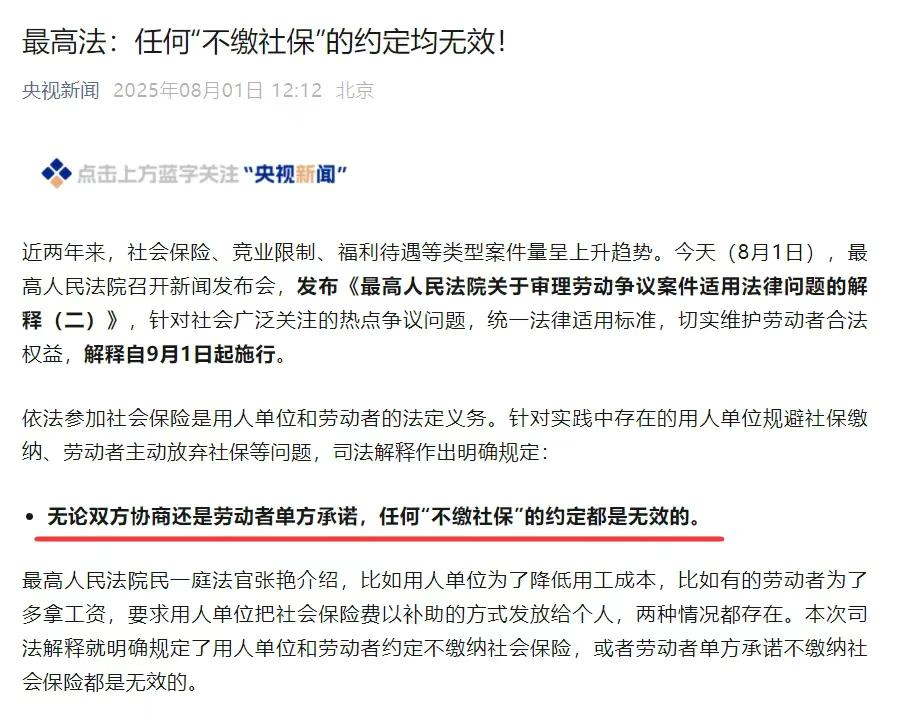
Group 1 - By 2050, the elderly population aged 60 and above in China is expected to reach nearly 500 million, accounting for over one-third of the total population [1] - The new social insurance regulations mandate that both employers and employees must contribute to social insurance, rendering any agreements to waive contributions invalid [3][5][6] - The enforcement of mandatory social insurance is seen as a significant burden for small enterprises and low-income individuals, as it eliminates the previous flexibility in contributions [10][11] Group 2 - The calculation of social insurance contributions is based on a formula that includes the contribution base and respective rates for employers and employees [16][17] - Pension benefits after retirement are derived from two components: the basic account pension and the personal account pension, with the latter being influenced by the individual's contributions [20][21] - Concerns about the sustainability of the social insurance fund are rising due to an aging population and declining birth rates, with predictions suggesting that pension funds may be depleted by 2035 [31][32] Group 3 - The government is exploring solutions to address potential pension shortfalls, including leveraging state-owned assets and implementing gradual retirement age increases [32][33] - The societal implications of a significant elderly population without adequate social security could lead to increased poverty and social unrest, highlighting the necessity of preemptive funding for social insurance [37]
未来发展的六大趋势
Sou Hu Cai Jing· 2025-08-10 20:52
Group 1 - The global situation is highly uncertain, and major powers must manage globalization risks, with six irreversible trends emerging: digitalization, low-carbon green transformation, financialization, urbanization, aging, and new-type globalization [1] - The current shift in globalization is towards a new type, which cannot be reversed, as seen in the attempts of the Trump administration to alter its course [1] - China is experiencing rapid development in digitalization and is leading in low-carbon green transformation, but the understanding and systems related to financialization are lagging, which hampers international competitiveness [1] Group 2 - Urbanization in China is facing challenges, with a significant gap between household registration urbanization rate and permanent population urbanization rate, weakening internal dynamics and economic growth [2] - There are approximately 290 million migrant workers in China, and achieving full urban citizenship for them at the current pace may take decades, raising questions about readiness for accelerated urbanization [2] - The evolution of trends brings macro risks that are expanding, necessitating effective management of public and macro risks during this transition [2]
韩国国防部:兵力6年减11万,17个师级以上部队消失
Guan Cha Zhe Wang· 2025-08-10 14:13
Group 1 - The South Korean military has reduced its size by 20% over the past six years, from 690,000 to 450,000 personnel, primarily due to a sharp decline in the male population eligible for conscription [1][3] - The number of active-duty soldiers and officers was approximately 563,000 in 2019 and is projected to decrease to 450,000 by July 2025, indicating a shortfall of 50,000 personnel needed to maintain a ceasefire status [1][3] - The number of divisions has decreased from 59 in 2006 to 42 currently, with 17 divisions being disbanded or merged, mainly affecting combat units in the Gangwon and northern Gyeonggi provinces [1][3] Group 2 - The South Korean government is attempting to attract military personnel by reducing alternative service and reserve forces, increasing the proportion of female soldiers, and enhancing short-term service incentives [3] - The defense budget for 2025 is projected to exceed 61 trillion won (approximately 315.3 billion RMB), surpassing the estimated total economic output of North Korea [3][4] - The decline in military personnel is attributed to low birth rates and decreased attractiveness of officer positions due to improved soldier treatment [3][4] Group 3 - South Korea has the lowest birth rate globally, with a fertility rate of 0.75 in 2024, and the population is expected to decrease from a peak of 51.8 million in 2020 to 36.2 million by 2072 [4][6] - A significant portion of unmarried individuals in South Korea express reluctance to marry or have children, citing economic burdens and lack of ideal partners as primary reasons [6][7] - The proportion of working wives in childless couples has increased from 53.2% in 2013 to 71% in 2022, indicating challenges in balancing career and family life [7]
生育补贴够吗?
Hu Xiu· 2025-07-31 05:55
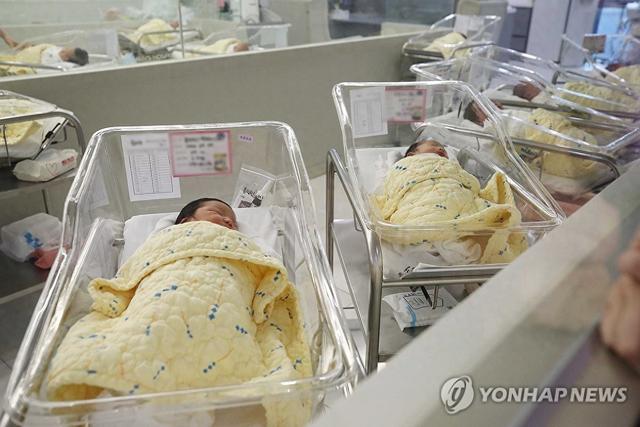
Core Viewpoint - The introduction of a universal child-rearing subsidy in China marks the first large-scale, direct cash support for public welfare since the founding of the People's Republic of China [1][3]. Group 1: Subsidy Details - The subsidy provides 300 yuan per month for families with children aged 0-3, with an initial budget allocation of approximately 90 billion yuan for this year [3]. - This measure is expected to be a long-term fiscal commitment, indicating a shift towards sustained financial support for families [3]. Group 2: Expert Opinions on Effectiveness - Some population experts argue that the primary goal of the subsidy is to increase the birth rate, but they express skepticism about its effectiveness, suggesting that the amount is too low to significantly change birth intentions [5][6]. - Experts propose that the subsidy should be increased to 1,000 or even 2,000 yuan per month to have a more substantial impact on birth rates [5]. Group 3: Target Demographics - The subsidy is primarily aimed at low-income families, where the additional 300 yuan can help cover essential expenses like formula milk [5]. - However, for families in first- and second-tier cities, the subsidy may have limited significance, as it does not address their higher living costs [5]. Group 4: Broader Context of Population Issues - The article emphasizes that the challenges facing China's declining birth rate are unique and cannot be directly compared to those in Western or East Asian countries, which have different socio-economic contexts [12][13]. - The large floating population in China, exceeding 385 million, is highlighted as a critical factor contributing to the low birth rate, as this demographic tends to have lower fertility rates [13].
白发人与机器人活在同一屋檐下的时代不远了 | 海斌访谈
Di Yi Cai Jing· 2025-07-31 05:04
Group 1: Demographic Changes and Labor Market Implications - The founder and CEO of Meikaman, Shao Tianlan, highlights the significant decline in China's young labor force by 2024, with newborns dropping from 24.32 million in 1989 to 9.54 million, leading to a potential labor shortage as the population ages [1][2] - The reduction in young workers will necessitate a shift in production and economic growth methods, as fewer individuals are willing to perform labor-intensive jobs [2] - The aging population in China is expected to require more robots to fill labor gaps in various sectors, including manufacturing and elder care [2][5] Group 2: Robotics Integration in the Workforce - Japan serves as a model for the integration of elderly workers and robots, with a significant percentage of the workforce being over 65, and robots being used extensively in logistics and manufacturing [3][4] - In Japan, companies like Amazon have successfully integrated robots in their operations, allowing elderly workers to continue contributing despite physical limitations [3][4] - The advancements in robotics are enabling machines to perform complex tasks with high accuracy, which could further enhance human productivity [5] Group 3: Future of Robotics in Elder Care - The potential for robots to assist in elder care is significant, with current developments focusing on companionship and basic assistance rather than complex caregiving tasks [6][7] - The market for home robots is vast, but challenges remain in terms of safety, cost, and functionality, which must be addressed for widespread adoption [8] - As technology evolves, robots may increasingly take on roles in elder care, potentially alleviating labor shortages in this sector [8][9] Group 4: Historical Context and Future Outlook - The evolution of robotics has historically raised concerns about job displacement, yet it has also led to increased efficiency and the creation of new job categories [9][10] - The development of robots is not necessarily detrimental to the elderly workforce; rather, it can enhance their working conditions and opportunities [10]

原新:打破传统“男主外女主内”分工,男性参与育儿对提升生育意愿有积极作用
Feng Huang Wang Cai Jing· 2025-07-29 23:13
Group 1 - The core viewpoint of the news is the introduction of a national cash subsidy for child-rearing, marking a significant milestone in China's population policy [1][2] - Starting from January 1, 2025, families with newborns, regardless of whether they have one, two, or three children, will receive an annual subsidy of 3,600 yuan until the child reaches three years old, totaling 10,800 yuan over three years [1][4] - The subsidy is designed to alleviate family financial burdens and is considered a minimum standard that local governments can increase but not decrease [1][4] Group 2 - The new policy emphasizes fairness by providing equal subsidies for all legally born children, contrasting with previous differentiated subsidy models [3] - It establishes a unified standard for child-rearing subsidies, addressing the disparities seen in local government policies [3] - The policy aims to reduce the financial pressure on local governments while controlling overall fiscal burdens [4] Group 3 - Current demographic challenges include a shrinking reproductive age population, declining birth intentions, and delayed marriage and childbirth ages [5] - The average marriage age for women has increased from 24 in 2010 to over 28, further limiting potential birth rates [5] - The policy is part of a broader strategy to improve the birth rate, which also requires enhancing marriage rates and creating a supportive environment for families [6] Group 4 - The aging population is projected to reach 310 million by 2024, accounting for 22% of the total population, and is expected to exceed 400 million by 2035 [8] - The dual pressures of declining birth rates and increasing life expectancy are creating significant social security burdens [8] Group 5 - Gender equality within families is highlighted as a crucial factor in improving birth rates, advocating for shared parenting responsibilities [10] - International examples show that policies encouraging male participation in child-rearing can enhance family dynamics and increase birth intentions [10]
短期3600点附近或仍有反复,科技成长股或存在结构性机会
British Securities· 2025-07-28 00:57
Market Overview - The A-share market is currently experiencing fluctuations around the 3600-point level, reflecting increased divergence between bulls and bears [2][16][17] - The market is likely to enter a period of consolidation, with the index expected to oscillate around 3600 points to digest accumulated pressure [17] - Short-term market sentiment is influenced by profit-taking and external disturbances, while medium-term trends remain upward due to policy support and industry upgrades [5][17] Sector Performance - The semiconductor and AI application sectors have shown strength, indicating a potential shift towards technology stocks, particularly among small and mid-cap growth stocks [1][16] - The "Yalu River Downstream Hydropower" concept stocks have experienced significant volatility, with a recent pullback after a period of strong performance [11] - The healthcare sector, particularly innovative drugs and medical devices, is expected to see continued growth due to favorable policy changes and an aging population [10] Investment Strategy - Short-term strategies should focus on avoiding high-flying stocks and selectively reducing positions in sectors that have seen substantial gains, such as the Yalu River hydropower concept [3][17] - Mid-term investments should target growth sectors with elastic potential, including AI infrastructure, innovative pharmaceuticals, and humanoid robotics, driven by both policy and technological advancements [3][17] - The cultural media sector is also highlighted as a potential area for investment, particularly in gaming and interactive content, benefiting from advancements in AI technology [9] Economic Indicators - The report emphasizes the importance of monitoring tariff negotiations and the overall liquidity environment, which are expected to positively influence the A-share market [3][17] - The upcoming fiscal policy window in Q3 and the timing of the Federal Reserve's monetary policy shift are critical factors to watch for market direction [3][17]
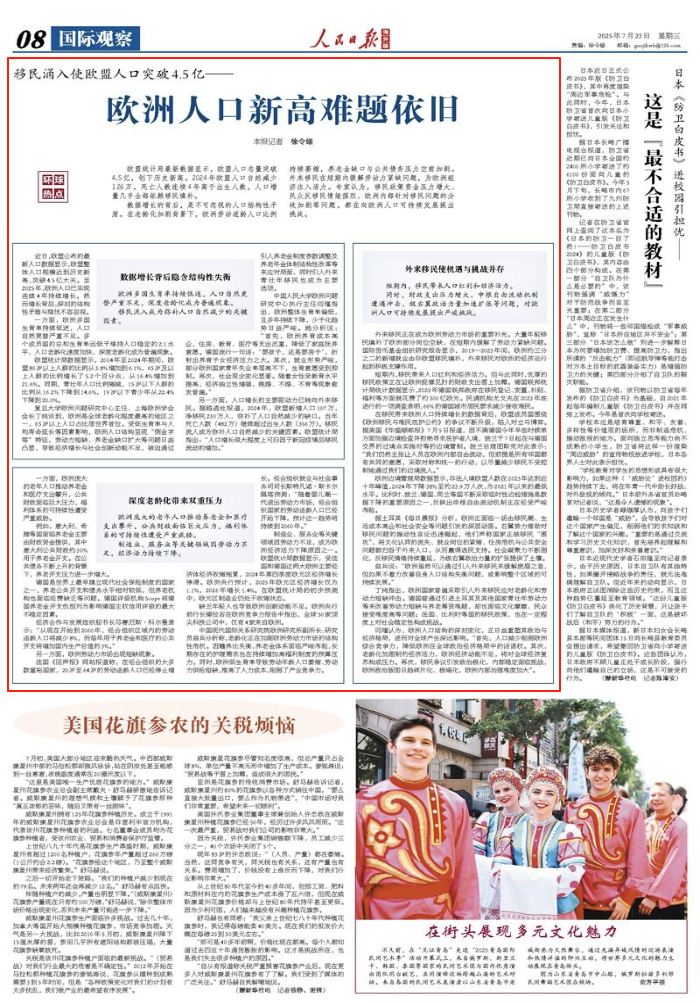
欧洲人口新高难题依旧(环球热点)
Ren Min Ri Bao Hai Wai Ban· 2025-07-22 21:56
Core Insights - The total population of the EU has surpassed 450 million, marking a historical high, but the population is projected to naturally decline by 1.26 million in 2024, with deaths exceeding births for four consecutive years, relying heavily on immigration to fill the gap [1][2][12] - The EU faces significant structural challenges due to an aging population, with a shrinking working-age demographic, increasing pension deficits, and mounting public debt pressures [1][4][5] Population Dynamics - The birth rate in many European countries remains low, with total fertility rates falling below the replacement level of 2.1, leading to severe natural population replacement issues [2][3] - The proportion of individuals aged 80 and above in the EU has increased from 3.8% in 2004 to 6.1% in 2024, while the share of those aged 65 and older has risen from 16.4% to 21.6% during the same period [2][3] - The youth population (under 15 years) has decreased from 16.2% to 14.6%, indicating a demographic shift towards an older population [2][3] Economic Implications - The aging population is driving up pension and healthcare expenditures, placing immense pressure on public finances and threatening the sustainability of welfare systems [4][5] - In Italy and Greece, pension spending constitutes about 30% of public finances, exacerbating the fiscal burden amid rising public debt [5][6] - The OECD predicts an 8% reduction in the working-age population by 2060, while public spending on pensions and healthcare is expected to increase by 3% of GDP annually [6][7] Labor Market Challenges - Labor shortages in key sectors such as manufacturing and services are contributing to declining economic vitality in Europe [5][6] - The Eurozone's economic growth is projected to stagnate, with growth rates of only 1.1% in 2025 and 1.4% in 2026, largely due to the contraction in major economies like France and Germany [6][7] Immigration as a Solution - Immigration has become a crucial factor in offsetting natural population decline, with the EU expected to gain 1.07 million new residents and a net immigration of 2.3 million in 2024 [3][8] - Immigrants have filled approximately two-thirds of new jobs in Europe from 2019 to 2023, providing essential support to the economy [8][9] - However, the influx of immigrants has led to increased fiscal pressures and rising anti-immigrant sentiments, complicating the sustainability of immigration policies [8][10] Political and Social Challenges - The EU is experiencing rising tensions over immigration policies, with member states divided on the approach to handling asylum seekers and border controls [9][10] - The rise of far-right political movements is fueled by public discontent regarding immigration, which is perceived to threaten cultural identity and social cohesion [10][11] - The demographic changes are reshaping Europe's political and economic landscape, potentially diminishing its global influence and competitiveness [10][11]