超级智能

Search documents
微软瞄准“超级智能”新赛道,科创AIETF(588790)回调迎布局时点
Xin Lang Cai Jing· 2025-11-07 03:08
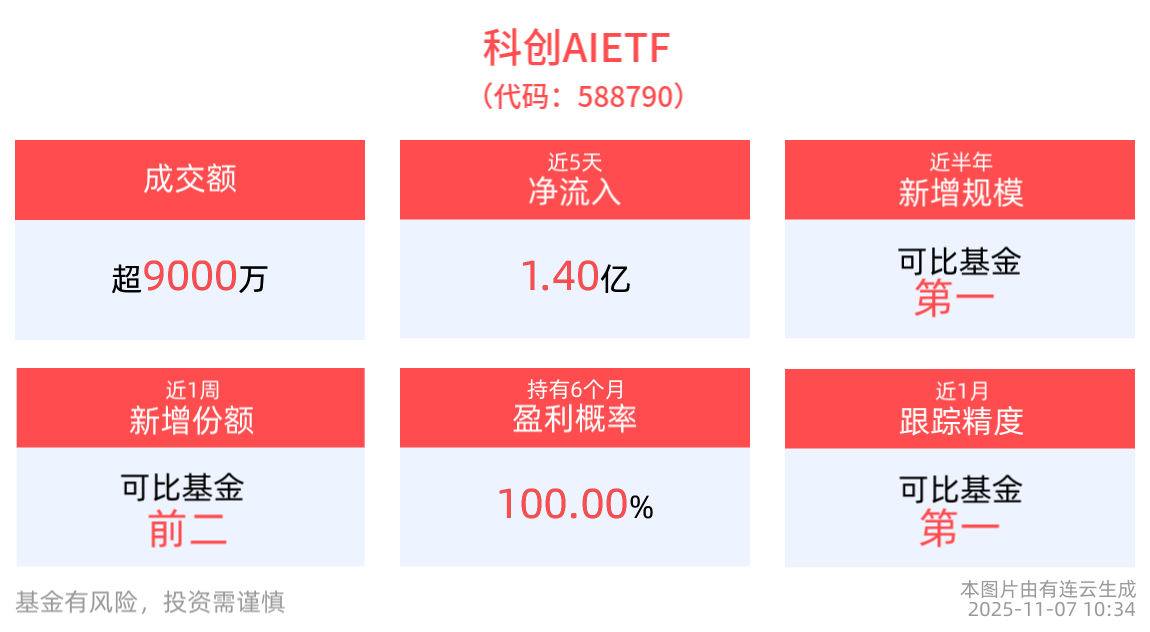
Core Insights - The Shanghai Stock Exchange Sci-Tech Innovation Board Artificial Intelligence Index has decreased by 1.86% as of November 7, 2025, with notable declines in stocks such as Fudan Microelectronics and Chipone Technology [3] - Microsoft is pursuing a more advanced form of AI called "superintelligence," aiming for breakthroughs in fields like medicine and materials science, led by Mustafa Suleyman [3] - The AI programming platform Cursor has upgraded to version 2.0, introducing a self-developed model called Composer, which significantly enhances coding efficiency and speed [4] Market Performance - The Sci-Tech AI ETF (588790) has seen a decline of 1.88%, with the latest price at 0.78 yuan, but has accumulated a 22.73% increase over the past three months [3] - The Sci-Tech AI ETF has experienced a significant growth in scale, increasing by 32.46 billion yuan over the past six months, ranking it among the top 10 comparable funds [4] - The ETF's recent weekly share growth was 14.4 million shares, placing it second among comparable funds [5] Fund Flow and Composition - The latest net outflow for the Sci-Tech AI ETF was 23.71 million yuan, but it has seen net inflows on four out of the last five trading days, totaling 140 million yuan [5] - The index tracks 30 large-cap stocks that provide foundational resources and technology for the AI sector, with the top ten stocks accounting for 70.92% of the index [5]

AI与机器人盘前速递丨宇树 G1 机器人家务全能,微软超级智能剑指医学新突破!
Mei Ri Jing Ji Xin Wen· 2025-11-07 01:29
Market Review - The Huaxia Sci-Tech AI ETF (589010) increased by 2.62%, closing at 1.410 yuan, maintaining a high volatility pattern throughout the day, indicating strong upward momentum [1] - Among the 30 constituent stocks, 22 rose while 8 fell, with notable gains from companies like Cambricon, Obsidian Optics, and Yuntian Lefe [1] - The Robot ETF (562500) rose by 1.91%, closing at 1.015 yuan, with a daily high of 1.018 yuan and a low of 0.997 yuan, showing strong intraday support [1] - Out of 73 constituent stocks, 63 increased and only 10 decreased, highlighting a significant structural rebound within the sector [1] - The trading volume exceeded 1.1 billion yuan, indicating active trading, with a continued net inflow trend over the past three trading days [1] Hot News - Yushu Technology launched a full-body remote operation platform, showcasing its G1 robot performing household tasks under human control [2] - Microsoft is pursuing a more advanced form of AI called "superintelligence," aiming for breakthroughs in healthcare and clean energy, led by Mustafa Suleyman [2] - Nvidia's CEO Jensen Huang stated that China is likely to win the AI race due to favorable regulatory environments and lower energy costs, criticizing Western approaches as hindering progress [2] Institutional Insights - CITIC Securities highlighted the rapid establishment of data collection factories across the country, addressing the data scarcity in the embodied intelligence sector, which is expected to enhance model training advantages [3] - The circulation of data elements is benefiting both downstream model developers and upstream manufacturers, with domestic data collection potential being more substantial compared to overseas [3] - The focus on data collection is anticipated to elevate the importance of this aspect in the development of the embodied intelligence industry [3] Popular ETFs - The Robot ETF (562500) is the only ETF in the market with a scale exceeding 20 billion, offering the best liquidity and comprehensive coverage of the Chinese robotics industry [4] - The Huaxia Sci-Tech AI ETF (589010) is positioned as the brain of robotics, capturing the "singularity moment" in the AI industry with a 20% price fluctuation and small-cap elasticity [4]

AI一线大佬:“人类水平”的AI已经来了
Hua Er Jie Jian Wen· 2025-11-07 00:42
Core Insights - AI systems have reached a level of intelligence comparable to humans in certain areas, intensifying the debate on the timeline for the arrival of "superintelligence" [1][2] - The realization of Artificial General Intelligence (AGI) is viewed as a gradual process rather than a singular event, with significant investments flowing into companies like OpenAI and Anthropic based on expectations of transformative technologies [1][2] Group 1: Expert Opinions on AGI - Experts believe that AGI will not emerge suddenly but will expand gradually across various fields, with Huang Renxun stating that sufficient general intelligence already exists to create numerous socially beneficial applications [2] - The competition to achieve AGI has led to substantial investments in AI companies, with both the US and China striving to be the first to reach this milestone [2] Group 2: Divergence in AI Capabilities - There is a division among experts regarding whether AI systems will surpass human intelligence in all domains, with some, like Li Feifei, acknowledging that certain machines have already exceeded human capabilities in specific tasks [3] - Geoffrey Hinton predicts that machines will eventually win debates against humans within the next 20 years, while Yoshua Bengio expresses optimism about creating machines that can perform nearly all human tasks, though he cautions against making current decisions based on future technological developments [3]

微软修订与OpenAI协议,瞄准“超级智能”新赛道
Hua Er Jie Jian Wen· 2025-11-06 16:19
Core Insights - Microsoft is developing a more advanced form of artificial intelligence called "superintelligence," aiming for breakthroughs in fields such as healthcare and materials science [1] - Mustafa Suleyman, head of Microsoft's AI department, announced the formation of a new team focused on "humanitarian superintelligence," which seeks to surpass the capabilities of general artificial intelligence (AGI) [1][2] - The announcement coincides with a renegotiated agreement between Microsoft and OpenAI, which modifies their relationship and lifts previous restrictions on Microsoft's development of advanced AI tools [1] Summary by Sections - **Project Formalization**: The announcement formalizes a project that has been in preparation since March of the previous year, when Microsoft hired Suleyman and obtained intellectual property licenses from his startup Inflection AI [2] - **Team Restructuring**: Suleyman is restructuring Microsoft's teams and recruiting new employees to build a new series of AI models, although these models are currently smaller in scale compared to those from OpenAI or Alphabet's Google [2]

丁宁:大模型是“智能基建”,资本与技术融合重塑AI版图
2 1 Shi Ji Jing Ji Bao Dao· 2025-11-05 09:23
Core Insights - The event "Scientists Meet Investors" highlighted the significance of the fourth industrial revolution, emphasizing artificial intelligence (AI) and big data as core technologies for the future [1] - Professor Ding Ning from Xi'an Jiaotong University discussed the evolution of large language models (LLMs) and the shift from merely increasing parameter size to focusing on structural innovation and efficient training methods [2][3] Industry Trends - The industry is witnessing a transition from single-modal models to multi-modal integration, allowing AI to understand and generate information across various formats such as text, images, and speech [2] - The current trend in model training is moving towards continuous learning and parameter-efficient fine-tuning, enabling faster adaptation with lower computational costs [3] Capital and Technology Relationship - The relationship between capital and technology is crucial, where capital acts as a magnifier for technology, while technology drives capital efficiency [3] - High initial costs for training large models necessitate capital investment, but without technological insights, capital alone cannot drive industry upgrades [3] Global Comparison - The United States leads in top enterprises and computational resources, while China excels in research output, holding 41% of global AI papers and 69% of AI patents as of 2023 [3] - Despite advancements, computational power remains a bottleneck for AI development in China, with challenges such as model hallucinations and precision issues still needing resolution [3] Future Outlook - Future trends in AI development include multi-modal integration, parallel advancements in large-scale and lightweight models, embodied intelligence, and the exploration of artificial general intelligence (AGI) [4] - The concept of superintelligence, which refers to systems surpassing the smartest humans, remains a theoretical discussion and a potential future direction for AI [5]
被特朗普“抽血”,扎克伯格差点成了有庆
Sou Hu Cai Jing· 2025-11-01 05:24
Core Insights - Meta's Q3 2025 earnings report showed revenue exceeding market expectations with a 26% year-over-year increase, but net profit plummeted by 83% to $2.71 billion due to a one-time tax expense of $15.93 billion from Trump's "Big and Beautiful Act" [1][7][8] Financial Performance - Meta's Q3 2025 revenue reached $51.24 billion, significantly above Wall Street's forecast of $49.41 billion, with advertising revenue accounting for $50.08 billion, also up 26% year-over-year [4][6] - The Reality Labs division, which includes Ray-Ban Meta smart glasses, reported $470 million in revenue but incurred a loss of $4.4 billion, maintaining a cumulative loss of over $70 billion since Q4 2020 [6][10] Capital Expenditure and Investment Strategy - Meta's capital expenditures hit a record high of $19.37 billion in Q3, up from $17.01 billion in Q2, with an increased full-year capital expenditure forecast of $70 to $72 billion [10][18] - The company plans to invest at least $60 billion in data centers and infrastructure in the U.S. by 2028, and has aggressively recruited top AI talent with compensation packages ranging from tens of millions to over $1 billion [18][19] Organizational Changes and AI Strategy - Meta has undergone four reorganizations in its AI department over the past eight months, including a recent layoff of 600 employees to create a more agile and responsive AI organization [19][20] - Despite significant investments in AI, Meta's recent product launches, such as the AI glasses and the Vibes AI video stream, have faced criticism for lacking innovation compared to competitors like OpenAI [21][21] Market Reaction - Following the earnings report, Meta's stock price fell by 8% in after-hours trading, resulting in a market capitalization loss of approximately $160 billion, marking one of the largest single-day declines in the company's history [16][16]


扎克伯格差点成了有庆
虎嗅APP· 2025-10-30 14:20
Core Viewpoint - Meta is undergoing significant reforms and investments in artificial intelligence (AI), but is facing challenges in profitability and market confidence due to high expenditures and a recent tax burden from Trump's "Big and Beautiful Act" [4][9][21]. Financial Performance - In Q3 2025, Meta reported revenue of $51.24 billion, a 26% year-over-year increase, surpassing market expectations [8][9]. - However, net profit plummeted to $2.71 billion, an 83% decline year-over-year, primarily due to a one-time tax expense of $15.93 billion [9][10]. - Excluding this tax impact, net profit growth was 18%, significantly lower than the previous quarters' growth rates of over 30% [10][12]. Capital Expenditure - Meta's capital expenditures reached a record high of $19.37 billion in Q3, up from $17.01 billion in Q2, with an annual forecast of $70-72 billion, exceeding previous estimates [12][22]. - The company is investing heavily in AI infrastructure and talent, with plans to invest at least $60 billion in data centers and infrastructure by 2028 [22][23]. AI Strategy and Developments - Meta has restructured its AI department multiple times in the past eight months, including a recent layoff of 600 employees to enhance flexibility [5][24]. - The launch of new AI products, such as the Meta Ray-Ban Display and Vibes AI video stream, has been met with skepticism, especially in light of competing products from OpenAI [24][25]. - Despite the challenges, Meta's CEO Mark Zuckerberg remains optimistic about the potential of AI to drive future growth and profitability [18][19]. Market Reaction - Following the earnings report, Meta's stock price fell by 8% in after-hours trading, leading to a market capitalization loss of approximately $160 billion [21]. - This decline contrasts sharply with the positive market response to previous earnings reports earlier in the year [21].

扎克伯格差点成了有庆
3 6 Ke· 2025-10-30 07:27
Core Viewpoint - Meta is facing significant challenges despite a strong revenue increase, primarily due to a massive tax expense linked to Trump's "Big and Beautiful Act," which has severely impacted its net profit [1][6][7]. Financial Performance - In Q3 2025, Meta reported revenue of $51.24 billion, a 26% year-over-year increase, surpassing Wall Street's expectations of $49.41 billion [5]. - Advertising revenue constituted the majority, reaching $50.08 billion, also up 26% year-over-year [5]. - However, net profit plummeted to $2.71 billion, an 83% decline compared to the previous year, largely due to a one-time tax expense of $15.93 billion [6][8]. Capital Expenditure and Investment - Meta's capital expenditure reached a record high of $19.37 billion in Q3, up from $17.01 billion in Q2, with an annual forecast of $70 to $72 billion, indicating a significant increase from previous years [10][22]. - The company is investing heavily in AI infrastructure and talent, with plans to invest at least $60 billion in data centers and infrastructure by 2028 [22]. AI Strategy and Organizational Changes - Over the past eight months, Meta has undergone four reorganizations of its AI department, including a recent layoff of 600 employees to make the organization more agile [3][23]. - Despite these efforts, the company has yet to see substantial results from its AI initiatives, with recent product launches receiving mixed reviews [26][29]. Market Reaction - Following the earnings report, Meta's stock price fell by 8% in after-hours trading, leading to a market capitalization loss of approximately $160 billion, marking one of the largest single-day declines in the company's history [19][20].

全文|Meta Q3业绩会实录:2026预算制定已启动 Reality Labs Q4营收预计...
Xin Lang Cai Jing· 2025-10-30 06:09
Core Insights - Meta reported Q3 2025 revenue of $51.242 billion, a 26% increase from $40.589 billion year-over-year, while net profit fell 83% to $2.709 billion from $15.688 billion [1][2] - The company is focusing on significant capital expenditures in AI and infrastructure, expecting these investments to yield returns by 2026 [3][4][7] - Reality Labs is projected to face revenue headwinds in Q4 due to the absence of new product launches compared to the previous year [5][6] Financial Performance - Q3 2025 revenue: $51.242 billion, up 26% from $40.589 billion [1] - Q3 2025 net profit: $2.709 billion, down 83% from $15.688 billion [1] - Earnings per share: $1.05, down 83% from $6.03 [1] Strategic Focus - Meta is investing heavily in AI and infrastructure, with a notable increase in capital expenditures for core business modules, particularly in AI and Meta Super Lab [3][4][7] - The company is optimistic about the return on investment from these expenditures, particularly in improving ad performance and conversion rates [4][8] Product Development - The company anticipates significant growth in AI glasses revenue in Q4, although this may be offset by declines in Quest headset sales [5][6] - Meta is actively developing new AI models and applications, with over 1 billion users engaging with Meta AI products monthly [10][11] Advertising Strategy - Meta Advantage+ is enhancing ad performance, with users of the system seeing a 14% lower cost per lead compared to those not using it [18][19] - The company aims to expand the adoption of its automated advertising solutions among advertisers [19] Future Outlook - Meta is optimistic about the potential of AI technologies to drive new product development and enhance existing services, with plans to integrate advanced models into various applications [22][23] - The company is committed to building a robust AI infrastructure to support its long-term growth strategy [7][23]
Meta电话会七大要点:"超级智能"到来前,继续激进投资基础设施,即便短期过剩也能解决(电话会全文)
美股IPO· 2025-10-30 04:04
Core Viewpoint - Meta's CEO Mark Zuckerberg emphasizes the company's strategy of aggressively building infrastructure based on optimistic assumptions, leading to demand consistently exceeding expectations, particularly in core business areas. This approach justifies continued investment, even if it results in short-term excess capacity, which can be utilized to enhance application recommendations and advertising intelligence, or explore external API or computing services [1][3][28]. Financial Performance - In Q3, Meta reported revenue of $51.24 billion, a 26% year-over-year increase. However, due to a one-time non-cash tax expense of $15.93 billion, net profit plummeted 83% to $2.71 billion from $15.69 billion in the same quarter last year [3][14]. - The company plans to significantly increase capital expenditures and total expenses by 2026 to establish a leading AI laboratory, with capital expenditure guidance raised to $70-72 billion for 2025, up from a previous range of $66-72 billion [4][14]. AI and Infrastructure Development - Meta is actively preparing for the future of AI, with plans to build its own infrastructure and partner with third-party cloud service providers to meet computing demands. The company views the evolution of social media as entering a third era driven by AI [4][8]. - The AI recommendation system has shown continuous improvement, leading to increased user engagement, with Facebook usage time up 5% and Instagram video usage time up over 30% year-over-year [4][8]. User Engagement and Growth - Meta's AI user base has surpassed 1 billion monthly active users, with annualized revenue from AI-driven advertising tools exceeding $60 billion. Instagram reached 3 billion monthly active users, and Threads recently surpassed 150 million daily active users [4][10]. - The introduction of Vibes, a next-generation AI creation tool, has shown promising retention rates and rapid weekly growth since its launch in September [11][20]. Advertising and Monetization - Meta's advertising revenue for Q3 was $50.1 billion, also reflecting a 26% year-over-year growth, driven by a 14% increase in ad impressions and a 10% rise in average ad prices [13][14]. - The company is focused on improving ad effectiveness through advanced modeling techniques and integrating AI advancements into its advertising systems, with annualized revenue from the end-to-end AI-driven advertising tools reaching over $60 billion [9][22]. Future Outlook - Meta anticipates significant growth in total expenses in 2026, primarily driven by infrastructure costs, including additional cloud spending and depreciation [4][16]. - The company is committed to enhancing its recommendation systems and leveraging large language models to improve content understanding, which is expected to yield more relevant recommendations [19][21].