
高端化

Search documents
比音勒芬:动态点评:控股股东之一致行动人拟增持,开启发展新篇章-20260303
东方财富· 2026-03-03 05:45
Investment Rating - The report maintains a "Buy" rating for the company, indicating a positive outlook for its stock performance relative to the market index [3][7]. Core Insights - The company's major shareholder plans to increase their stake by investing between 100 million to 200 million yuan over the next six months, reflecting confidence in the company's future growth [1]. - The company is focusing on brand positioning and development, with a strategy to enhance brand awareness and appeal to younger consumers through various initiatives, including collaborations with artists and the introduction of new product lines [2]. - Despite fluctuations in consumer spending, the company has shown steady revenue growth, with year-over-year increases of 13.2% and 6.7% for 2024 and Q1-Q3 2025, respectively [2]. - The company is expected to continue its expansion in both offline and online channels, with a strong cash position of approximately 1.92 billion yuan as of Q3 2025, supporting ongoing investments in product development and marketing [2][6]. Financial Projections - Revenue is projected to grow from 4,004.46 million yuan in 2024 to 5,451.76 million yuan by 2027, with annual growth rates of 13.24%, 8.88%, 11.44%, and 12.21% respectively [8]. - The net profit attributable to the parent company is forecasted to decline in 2025 to 675.74 million yuan, before recovering to 891.69 million yuan by 2027, reflecting a growth rate of 14.43% [8]. - The earnings per share (EPS) is expected to increase from 1.37 yuan in 2024 to 1.56 yuan in 2027, with corresponding price-to-earnings (P/E) ratios decreasing from 15.63 to 10.51 [8].

比音勒芬(002832):动态点评:控股股东之一致行动人拟增持,开启发展新篇章
East Money Securities· 2026-03-03 05:27
Investment Rating - The report maintains a "Buy" rating for the company, indicating a positive outlook for its stock performance relative to the market index [3][7]. Core Insights - The company's major shareholder plans to increase their stake by investing between 100 million to 200 million yuan over the next six months, reflecting confidence in the company's future growth [1]. - The company is focusing on brand positioning and development, with a strategy to enhance brand awareness and appeal to younger consumers through various initiatives, including collaborations with artists and the introduction of new product lines [2]. - Despite fluctuations in consumer spending, the company has shown steady revenue growth, with year-over-year increases of 13.2% and 6.7% for 2024 and Q1-Q3 2025, respectively [2]. - The company is expected to continue its expansion in both offline and online channels, with a strong cash position of approximately 1.92 billion yuan as of Q3 2025, supporting ongoing investments in product development and marketing [2][6]. Financial Projections - Revenue is projected to grow from 4,004.46 million yuan in 2024 to 5,451.76 million yuan by 2027, with a compound annual growth rate of approximately 12.21% [8]. - The net profit attributable to the parent company is forecasted to decline in 2025 to 675.74 million yuan, before recovering to 891.69 million yuan by 2027, reflecting a strategic investment in brand development [8]. - The earnings per share (EPS) is expected to increase from 1.37 yuan in 2024 to 1.56 yuan in 2027, indicating improving profitability over the forecast period [8].
【“十五五”开好局起好步】加快建设制造强国 壮大实体经济根基
中汽协会数据· 2026-03-02 04:23
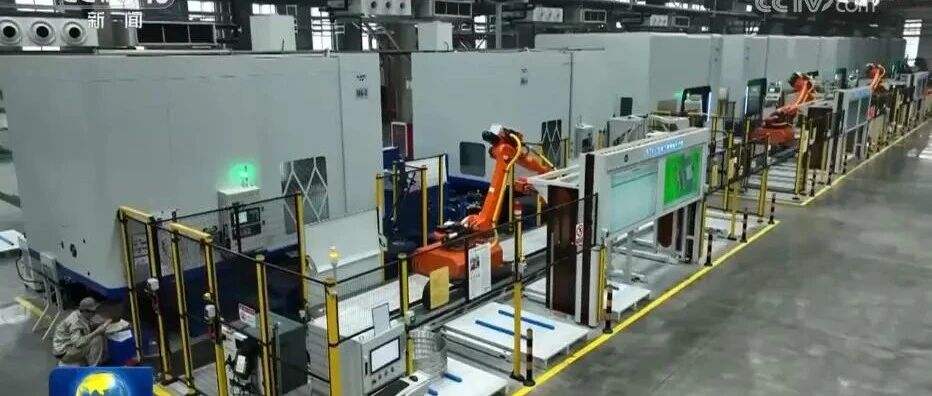
Core Viewpoint - The article emphasizes the importance of advancing the manufacturing sector in China, focusing on high-end, intelligent, and green development as essential for economic growth and modernization [1][6][10]. Group 1: Manufacturing Development - The manufacturing industry is highlighted as a crucial pillar of the national economy, with a call for maintaining a reasonable proportion of manufacturing in the economy [3][6]. - The Luoyang Bearing Group has developed a 10-ton bearing for producing super-large, heavy-duty ring forgings, filling a gap in this field in China [1][3]. - The company has diversified its product range to over 30,000 specifications across nine categories, with high-end bearing products accounting for 70% of its output [3]. Group 2: Technological Innovation - The Luoyang Bearing Group is undergoing a comprehensive digital transformation and focusing on independent innovation to meet major national needs and advance the bearing industry [4][6]. - The article mentions the implementation of AI in manufacturing, with projects aimed at enhancing production efficiency and quality through automation [10][12]. - Various regions are launching initiatives to support technological upgrades and digital transformation in traditional manufacturing sectors, with plans for thousands of high-level technology renovation projects [10][12]. Group 3: Collaborative Efforts - The article discusses collaborative efforts among regions, such as the Beijing-Tianjin-Hebei area, to develop the Beidou space-time industry, aiming for a scale of over 200 billion yuan by 2027 [12]. - Jiangsu province plans to support the establishment of innovation alliances in high-end manufacturing and advanced materials to tackle technological challenges [12]. - The focus is on creating competitive advanced manufacturing clusters to support high-quality economic development [13].

9块9翻篇,瑞幸的敌人更多了
创业邦· 2026-03-01 05:00
Core Viewpoint - Luckin Coffee's latest financial report reflects the ongoing competition in the coffee industry, revealing both growth and emerging challenges as the company expands its store network while facing declining revenue growth [6][8][9]. Financial Performance - In Q4 2025, Luckin Coffee reported a revenue of 12.777 billion yuan, a year-on-year increase of 32.9%, while the total revenue for the year reached 49.288 billion yuan, up 43% [7]. - The adjusted operating profit for the year grew by 43.5% to 5.646 billion yuan, but Q4 saw a significant decline in both adjusted operating profit and net profit [7][23]. - The number of new stores opened in 2025 was 8,708, bringing the total to 31,048 by year-end, surpassing 30,000 stores [7][14]. Market Dynamics - The revenue growth rate in Q4 fell to its lowest level in nearly three years, with same-store sales growth dropping to 1.2% [9][20]. - The aggressive expansion strategy has diluted same-store sales growth, with the same-store sales growth rate fluctuating significantly throughout the year [21][22]. - The competitive landscape has intensified, with rivals like Starbucks China and new entrants like Kudi rapidly expanding their presence in the market [11][40]. Strategic Shifts - Luckin Coffee has been transitioning away from low-price competition, having raised prices on several products and reduced the coverage of its 9 yuan promotional offers [26][27]. - The company is focusing on store expansion and market share rather than maintaining high profit margins, a shift prompted by increased competition [29][33]. - Plans to return to the U.S. stock market are underway, with revenue scale and store count being critical factors for valuation [34]. Competitive Landscape - The coffee industry is witnessing a shift from price wars to a focus on scale, with competitors like Kudi and Starbucks China aggressively expanding their store networks [36][40]. - Luckin Coffee faces competition not only from traditional coffee brands but also from tea brands and fast-food chains that are entering the coffee market [41][43]. - The end of the 9 yuan price war signals a new phase in the industry, where scale and market presence will be paramount [37][46].

模具钢市场洞察 | 全球前16强生产商排名及市场份额
QYResearch· 2026-02-28 02:06
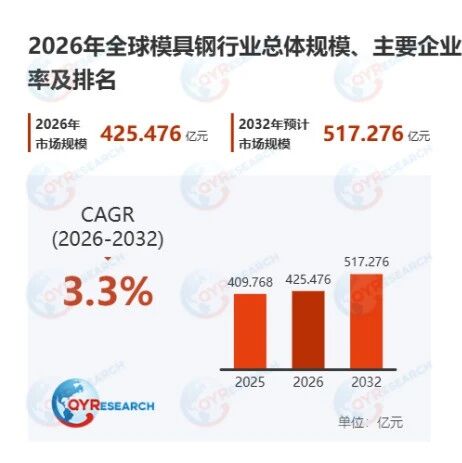
Global Market Overview - The global die steel market is projected to reach USD 6.257 billion by 2032, with a compound annual growth rate (CAGR) of 3.3% in the coming years [4]. Key Manufacturers and Market Share - Major global manufacturers of die steel include Voestalpine, Swiss Steel Group, Tiangong International, Datong Special Steel, Northeast Special Steel, and others. The top five manufacturers hold approximately 41% of the market share [6]. Industry Drivers - The demand for die steel is increasing due to the manufacturing industry's shift towards high precision, efficiency, and consistency. Industries such as automotive (including new energy), home appliances, 3C electronics, packaging, and general machinery are driving the consumption and renewal of die steel [9]. Challenges in the Market - The die steel market faces constraints primarily from cost and process coordination uncertainties. Fluctuations in upstream alloy element and energy prices affect material cost stability. High-end die steel requires stringent cleanliness, uniformity, and defect control, posing challenges for suppliers [10]. Industry Development Opportunities - Growth opportunities are mainly seen in high-end, green manufacturing, and service-oriented delivery. The expansion of large integrated die-casting, ultra-high-strength steel hot forming, and precision stamping is expected to increase the demand for high-performance die steels [11].
百威全球利润大涨16.8%,中国区却失速下滑11%,如何“赢回来”?
Guan Cha Zhe Wang· 2026-02-28 01:57
Core Insights - An analysis of Budweiser's 2025 financial results reveals a stark contrast between global performance and challenges in the Asia-Pacific region, particularly China [1][8] - Despite a global revenue decline of 0.8% to $59.32 billion, net profit increased by 16.8% to $6.837 billion, showcasing a successful strategy of premiumization and digitalization [1][2] - The Asia-Pacific segment, however, reported a revenue drop of 6.1% to $5.764 billion, with a significant 32.6% decline in profit attributable to shareholders, primarily driven by an 11.3% revenue decrease in the Chinese market [1][3] Global Performance - Budweiser's global sales volume decreased by 2.3%, yet net profit grew nearly 17%, indicating a successful shift towards higher-margin products [2] - The company saw a 7.6% increase in sales of ultra-premium brands like Corona, with double-digit growth in 30 markets, highlighting the willingness of high-net-worth consumers to pay for premium products [3][4] - The introduction of low-calorie and non-alcoholic beers contributed to an 8.9% increase in net revenue, with non-alcoholic beer sales soaring by 34% [3][4] Digitalization Strategy - Budweiser's B2B digital platform, BEES, significantly contributed to revenue, with 75% of the group's income generated through digital channels [3][4] - The platform enhances pricing strategies, improves distribution efficiency, and provides real-time consumer data to inform product innovation [4] Regional Disparities - The Americas remain a stronghold for Budweiser, with North America gaining market share through brands like Michelob and Cutwater, while South America saw a 4.9% organic revenue growth [5][6] - The European market faced challenges but managed to mitigate some impacts through premiumization strategies, while the Asia-Pacific region experienced a 6.5% organic revenue decline, primarily due to China [6] Challenges in China - Budweiser's reliance on on-premise channels, such as nightclubs and high-end dining, has become a liability as these venues struggle with foot traffic [12][13] - The shift in consumer behavior towards home and community consumption has left Budweiser lagging in adapting its channel strategy [14][15] - Competitors have aggressively captured market share in the premium segment, with local brands like China Resources Snow Beer and Tsingtao Beer gaining ground [19][21] Strategic Responses - Budweiser plans to increase investment in marketing and distribution, particularly in non-premise channels, to regain market share [22][24] - The company aims to leverage upcoming major sporting events to enhance brand visibility and consumer engagement [28][30] - A focus on a complete product portfolio across key price segments is deemed essential for regaining competitive advantage [26][27] Future Outlook - The year 2026 is positioned as a critical period for Budweiser to stabilize its presence in the on-premise market while building new advantages in off-premise channels [33]



赛微电子:公司灵活、务实地发展MEMS纯代工业务
Zheng Quan Ri Bao Zhi Sheng· 2026-02-27 11:11
Core Viewpoint - The company has successfully developed its MEMS pure foundry business over the past decade under the leadership of Chairman Yang Yunchun, achieving significant growth through strategic acquisitions and domestic production capabilities [1] Group 1: Business Development - The company has integrated overseas production lines through successful acquisitions, leading to rapid development and mutual benefits [1] - It has established and operates an industry-leading 8-inch MEMS pure foundry line domestically, marking a significant milestone in its growth [1] Group 2: Technological Advancements - The company has built a complete MEMS basic process platform with independent intellectual property rights in China, enabling mass production of silicon microphones, BAW filters, micro-mirrors, and ultra-high frequency devices [1] - Currently, the company is in small-batch trial production of MEMS gas sensors, biochips, accelerometers, inertial measurement units, and MEMS-OCS [1] Group 3: Industry Positioning - The company aims to continue promoting the autonomy and high-end development of China's MEMS industry through its key manufacturing platform role [1] - It expresses a desire to develop collaboratively with domestic peers in the semiconductor manufacturing sector [1] Group 4: Industry Characteristics - The semiconductor manufacturing industry is characterized by "heavy assets and long cycles," indicating that business accumulation and development require steady progress [1]

机械设备行业简评:2025年机床行业稳健增长,高端数控机床领域加速推进
Donghai Securities· 2026-02-27 09:16
Investment Rating - The industry investment rating is "Overweight" indicating that the industry index is expected to outperform the CSI 300 index by 10% or more in the next six months [7]. Core Insights - The machine tool industry in China is projected to maintain steady growth in 2025, with a significant acceleration in the high-end CNC machine tool sector [3][6]. - In 2025, the production of metal cutting machine tools reached 868,300 units, a year-on-year increase of 9.70%. The export value of machine tools was $12.91 billion, up 14.60% year-on-year, while imports amounted to $5.87 billion, reflecting a modest growth of 0.40% [6]. - The domestic high-end CNC machine tool market is rapidly advancing, driven by policy support and market demand, with significant breakthroughs in core technologies [6]. Summary by Sections Production and Market Growth - The production of CNC metal cutting machine tools reached 346,800 units in 2025, marking a year-on-year increase of 16.81%. The overall machine tool market is expected to continue its growth trend into 2026, supported by strong demand from high-end manufacturing sectors such as new energy vehicles and aerospace [6]. Export Performance - The export structure of machine tools has shown significant improvement, with the average export price increasing by 40.19% year-on-year. Despite a decrease in the number of exported units by 18.20%, the total export value reached a record high, indicating a successful transition towards high-value CNC machine tools [6]. Domestic High-End CNC Machine Tool Development - The domestic high-end CNC machine tool industry is experiencing accelerated development, with a notable increase in domestic market share. The localization rate of five-axis CNC machine tools has risen from 18% in 2020 to 55% in 2024, indicating a strong trend towards domestic substitution [6]. Recommendations - It is advisable to focus on leading domestic machine tool companies that possess strong R&D capabilities, core technology barriers, and deep ties with downstream clients. Companies such as Kede CNC, Nuwei CNC, and Huatai Precision are highlighted as key players in this sector [6].
溢价20%仍被抢,谁在高溢价入局A股定增,哪类行业高溢价?
Feng Huang Wang· 2026-02-25 06:24
Core Viewpoint - The A-share private placement market is witnessing a significant shift from traditional discount-based participation to high-premium issuance, with several projects achieving premium rates exceeding 20% [1][3]. Group 1: High Premium Issuance - A number of private placement projects have been successfully issued at high premiums, breaking the previous norm of "buying shares at a discount" [1][3]. - The issuance of shares by Guangdian Measurement has a premium rate of 29.09%, raising a total of 1.3 billion yuan at an issue price of 24.01 yuan per share [3]. - The automotive industry has seen particularly notable high-premium issuances, with companies like Jianghuai Automobile and Fengshen Co. achieving premium rates of 23.93% and 125% respectively [4]. Group 2: Participants in High Premium Placements - Public funds are the primary participants in high-premium private placements, with notable involvement from private equity, securities firms, insurance capital, and foreign institutions [1][6]. - The largest single subscription for the North Vehicle Blue Valley's new round of private placement was made by E Fund, amounting to 2.2 billion yuan [7]. - Notable individual investors, referred to as "bulls," have also played a significant role, with some becoming the largest subscribers in various projects [8][9]. Group 3: Investment Focus and Trends - The focus of investment has shifted towards sectors such as new energy vehicles, artificial intelligence, and high-end manufacturing, driven by macroeconomic policies and industry trends [2][10]. - The funds raised in these private placements are primarily allocated to the development of high-end intelligent electric platforms and new materials, aligning with the industry's push for innovation and sustainability [10][11]. - The demand for advanced materials and technologies in the automotive sector is increasing, with companies like Yao Pi Glass and Zhongbei Communication investing in energy-saving upgrades and 5G infrastructure [11][12].
LCD景气度与TCL科技近况交流
2026-02-25 04:13
Summary of TCL Technology Conference Call Company and Industry Overview - **Company**: TCL Technology - **Industry**: LCD and OLED Display Technology Key Points and Arguments 1. **Market Resilience**: The LCD market is expected to show resilience in pricing throughout the year, reflecting a strong industry structure and pricing power due to the exit of older manufacturers over the past decade [2][3][4] 2. **Long-term Outlook**: The long-term outlook for the LCD industry remains positive, with expectations of stable annual growth in pricing and profitability as long as LCD technology remains dominant [3][4] 3. **Seasonal Demand Fluctuations**: Short-term fluctuations in demand may occur due to seasonal factors, such as inventory adjustments related to major events like the World Cup, but these are not expected to significantly impact long-term pricing trends [16][18] 4. **Demand Stability**: The demand for large-sized displays is expected to remain stable, with a significant contribution from large TVs and monitors, which are less affected by market fluctuations [5][21] 5. **Product Differentiation**: TCL's strategy includes a focus on product differentiation in the OLED segment, moving away from merely following competitors to establishing a unique position in the market [7][8] 6. **IT Product Growth**: The IT segment, particularly with the T9 production line, is expected to contribute significantly to revenue growth, driven by a shift towards IPS technology and increased demand from major clients [26][27] 7. **Capital Expenditure and Shareholder Returns**: TCL plans to manage its capital expenditures carefully while also considering shareholder returns through dividends and share buybacks, especially as the company transitions from a heavy investment phase to a cash-generating phase [30][33] 8. **OLED Market Challenges**: The OLED market faces challenges, particularly in terms of pricing pressures and supply chain issues, but TCL is optimistic about its ability to navigate these challenges through strategic client relationships and product innovation [39][40][41] 9. **Future of OLED**: The long-term outlook for OLED technology is cautiously optimistic, with expectations of market growth driven by new applications and consumer demand, although competition remains intense [44][46] Additional Important Insights - **Inventory Management**: Effective inventory management will be crucial in maintaining price stability, especially in the face of potential demand fluctuations [16][18] - **Technological Advancements**: Continuous investment in technology and production capabilities is essential for maintaining competitive advantages in both LCD and OLED markets [35][38] - **Market Dynamics**: The industry is expected to undergo consolidation, which may improve profitability for leading companies as weaker players exit the market [46][48] This summary encapsulates the key insights from the TCL Technology conference call, highlighting the company's strategic outlook and the broader industry dynamics.
