
BD交易

Search documents
下一个BD大药
投资界· 2025-08-18 07:57
Core Viewpoint - The article discusses the rising trend of business development (BD) in the Chinese innovative pharmaceutical sector, highlighting significant transactions and the evolving landscape of BD strategies among companies and investors [5][11]. BD Trends - Many fund teams are researching the next BD trends and adjusting their investments accordingly, with a notable increase in BD transaction amounts in China, exceeding $48.4 billion in the first half of 2025, including over $2 billion in upfront payments [5][6]. - The impact of BD news on companies' short-term strategies is significant, especially in a resource-constrained environment where pipeline prioritization is critical [5][6]. Major BD Events - Significant transactions this year include a $60.5 billion collaboration between 3SBio and Pfizer, setting a record for domestic dual antibodies, and a $53.3 billion deal between CSPC and AstraZeneca [8][9]. - The trend is shifting towards "packaged" BD deals, which help build trust between companies, as MNCs remain cautious about the long-term delivery capabilities of Chinese biotech firms [9][10]. Changes in Perception of Going Global - The perception of Chinese innovative drugs going global has evolved, with a shift from high barriers to entry to recognizing numerous opportunities as MNCs actively seek partnerships [12][13]. - The focus has shifted to products that can be standardized and have a proven track record in China, indicating that BD opportunities are increasingly competitive [12][13]. High-Value BD Opportunities - The PD-1/VEGF dual antibody market is highlighted as a high-value area, with multiple Chinese biotech firms entering clinical stages and generating significant BD events [13][14]. - The TCE (T-cell engagers) sector is also emerging as a promising area for BD, with substantial transaction amounts already recorded [15]. Future Considerations - The BD landscape is expected to evolve, with uncertainties about the long-term sustainability of current successes and the potential impact of future clinical data on the reputation of Chinese biotech [17][18]. - Concerns exist regarding the sustainability of companies focusing solely on BD, as excessive reliance on selling core pipelines may hinder future growth and exit strategies [18][19].


600亿BD大单,美元LP突然想给GP投钱了
3 6 Ke· 2025-08-17 07:35
Core Insights - The Chinese innovative drug sector has gained global recognition, with the Hang Seng Medical ETF rising over 90% and the Hong Kong Stock Connect Innovative Drug Index increasing by 130% this year, indicating a shift to the first tier of global pharmaceutical capabilities [1] - There is a trend where investors are actively engaging in business development (BD) transactions rather than waiting for IPOs, with international capital looking to invest in domestic biopharmaceutical firms to explore promising drug development projects [1][2] - The investment model has evolved, focusing on direct investments in drug development projects and supply chain management, leading to opportunities for domestic general partners (GPs) to raise USD funds and enter international supply chains [1][2] Investment Trends - BD transactions have become mainstream in the industry, particularly large deals exceeding USD 1 billion related to overseas licensing of drug pipelines [2] - For instance, the collaboration between 3SBio and Pfizer involves a potential total transaction amount exceeding USD 6 billion, with an upfront payment of USD 1.25 billion [2] - The total value of BD transactions in the first half of the year surpassed USD 60 billion, highlighting the significance of this investment approach [2] Target Investment Institutions - International limited partners (LPs) are seeking three types of domestic GPs for investment in innovative drug projects: 1. GPs that invest in U.S. biopharmaceutical companies, primarily to introduce Chinese drug projects [3] 2. GPs that invest in foreign companies with Chinese drug authorizations [3] 3. GPs that lead investments in newly established domestic companies (NewCos) focused on overseas sales of Chinese drugs [3] NewCo as a Strategy - Establishing NewCos allows domestic GPs to enhance their bargaining power in international collaborations by determining their share of profits and selecting international teams for management [5][6] - NewCos can be established at a low valuation, enabling domestic GPs to leverage investments while providing accountability to domestic LPs [6] - However, the effectiveness of this model depends on the specific terms of agreements, particularly regarding profit-sharing and distribution [6] Challenges and Market Alignment - Despite the potential advantages of NewCos, challenges remain, particularly in aligning drug development with international market demands [7][8] - Domestic GPs need to better understand U.S. market needs and integrate into the drug project initiation phase to facilitate marketization and internationalization [8] - The use of AI technology is being explored to match Chinese drug projects with international buyer demands, enhancing the likelihood of successful collaborations [8][9] Investment Focus Areas - International LPs are also interested in investing in AI pharmaceutical companies, platforms that incubate multiple projects, and specific types of research and development projects [9] - The emphasis on supply chain management capabilities is crucial for the success of these investments, reflecting a shift in biopharmaceutical investment strategies [9]

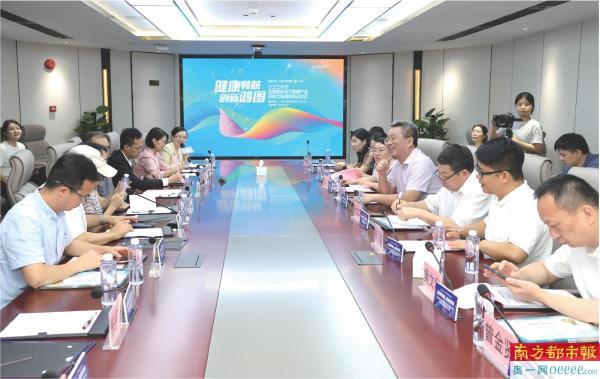
调研团队采用“三维评估模型”,对生物医药企业系统评估
Nan Fang Du Shi Bao· 2025-08-09 23:12
Core Insights - The Guangdong province is aiming to achieve a trillion-level biopharmaceutical and health industry by leveraging policy support, capital assistance, and technological innovation [3][4][6]. Group 1: Industry Development - Guangdong's biopharmaceutical industry is at a critical development stage, with Guangzhou and Shenzhen as core hubs, supported by cities like Zhuhai and Zhongshan [4]. - The province has a strong foundation in traditional Chinese medicine (TCM), with a total industrial output value of 45.71 billion yuan in 2024, of which over 33.43 billion yuan comes from traditional Chinese medicine products, accounting for over 11% of the national total [8]. - The province faces challenges such as the degradation of medicinal material sources and low rates of secondary development for high-quality traditional Chinese medicine products, with less than 35% of products undergoing secondary development [8][9]. Group 2: Policy and Investment - Guangzhou is establishing a biopharmaceutical industry investment fund with a target scale of 20 billion yuan to support enterprise growth and optimize regulatory processes [6]. - Experts emphasize the need for long-term capital support for innovative drug development, advocating for the establishment of a comprehensive mother fund system to align with social capital [12][13]. - The current investment cycle for innovative drugs is long, and there is a call for government and market-based funds to adopt longer-term capital models to better serve the biopharmaceutical industry [12][13]. Group 3: Innovation and Collaboration - The Southern Metropolis Daily has initiated a deep research project focusing on the innovation capabilities of the biopharmaceutical and health industry, covering five major regions and evaluating companies based on innovation, transformation, and collaboration [6][9]. - Experts suggest building collaborative innovation platforms and promoting industry-academia-research alliances to enhance the biopharmaceutical ecosystem [15]. - The integration of AI in healthcare and biopharmaceuticals is seen as a transformative force, although challenges such as data silos and collaborative ecosystems remain [16]. Group 4: Market Trends and Opportunities - Chinese biopharmaceutical companies are increasingly gaining international attention, with 40% of major BD transactions in the first seven months of the year involving Chinese firms, up from 4-5% four years ago [16]. - Traditional pharmaceutical companies are transitioning to innovative biopharmaceutical enterprises, with significant R&D investments, exemplified by a company that allocated 22.4% of its revenue to R&D last year [17].
创新药的风,还刮的起来吗?
雪球· 2025-08-08 08:18
Core Viewpoint - The recent pullback in the innovative drug sector does not indicate a peak, as the underlying logic differs from previous market cycles, particularly the 2021 bubble [2][3]. Group 1: Current Market Conditions - The current rise in innovative drugs is supported by strong fundamentals, contrasting with the previous bubble driven by capital [4][5]. - Key drivers include the ability to generate revenue from overseas markets, gradual improvement in domestic drug consumption capacity, favorable policy changes, and advancements in technology [5][6][7]. - The Chinese market is expected to see a significant increase in the approval speed for innovative drugs, with the average approval time reduced from 24 months to 12 months [6]. Group 2: Investment Opportunities - The innovative drug market is likely to experience a long-term trend supported by various factors, including engineering talent, policy benefits, technological breakthroughs, and capital support [7]. - Companies in the sector face challenges in realizing their pipeline values, necessitating careful evaluation of current market valuations against potential future values [8][11]. - The market has shifted from negative expectations to normal expectations, leading to substantial price increases for many companies that were previously undervalued [9][10]. Group 3: Specific Company Analysis - For instance, He Yu Pharmaceutical has a market cap of approximately 70 billion HKD, with cash reserves of 23 billion RMB and pipeline values potentially exceeding 40 billion RMB [12][14]. - The company's lead pipeline candidate, Pimicotinib, has high market expectations, with projected peak sales exceeding 2 billion USD [12][14]. - Other companies in the sector exhibit similar characteristics, where short-term price increases may obscure the true intrinsic value of their businesses [17]. Group 4: Future Trends and Strategies - The market is expected to transition from a broad-based rally to a more differentiated performance, emphasizing the importance of identifying companies with strong fundamentals [18]. - Business Development (BD) will continue to be a critical factor, with companies focusing on reliable technologies and partnerships to drive growth [18][19]. - Pre-commercial companies are also seen as attractive investments, as their valuations can significantly increase upon achieving commercialization milestones [23][24]. Group 5: Industry Outlook - The Chinese innovative drug industry is undergoing a critical transformation, with improved R&D capabilities and capital efficiency, comparable to strong sectors like photovoltaics and new energy [25].

港股异动 | 石药集团(01093)反弹近5% 昨日一度挫逾9% 大摩预期行业将有更多BD交易
Zhi Tong Cai Jing· 2025-08-08 06:45
Group 1 - The stock of CSPC Pharmaceutical Group (01093) rebounded nearly 5% after a drop of almost 9% earlier, closing down nearly 4% at HKD 10.15 with a trading volume of HKD 1.824 billion [1] - Morgan Stanley's report indicated that the Hang Seng Healthcare Index fell by 3% during the trading session, while the overall Hang Seng Index remained flat, highlighting the weak performance of companies with asset authorization potential [1] - Concerns about the upcoming US pharmaceutical and semiconductor tariffs may have contributed to the market's decline, although Morgan Stanley believes the likelihood of tariffs on BD transaction payments is low [1] Group 2 - Morgan Stanley anticipates more BD transactions in the second half of this year and in the future, particularly for key pharmaceutical companies with strong product lines, such as CSPC Pharmaceutical Group [1] - Credit Lyonnais previously reported that CSPC has 10 already listed innovative brands and over 30 innovative products expected to launch before 2028, predicting a re-acceleration of core profit growth starting in 2026 [1] - The target price for CSPC was raised from HKD 13.8 to HKD 17.4, with a reaffirmation of a strong belief in outperforming the market [1]
石药集团反弹近5% 昨日一度挫逾9% 大摩预期行业将有更多BD交易
Zhi Tong Cai Jing· 2025-08-08 06:40
Group 1 - The stock of CSPC Pharmaceutical Group (01093) rebounded nearly 5% after a drop of almost 9% earlier in the day, closing down nearly 4% at HKD 10.15 with a trading volume of HKD 1.824 billion [1] - Morgan Stanley's report indicated that the Hang Seng Healthcare Index fell by 3% during the trading session, while the overall Hang Seng Index remained flat, highlighting the weak performance of companies with asset authorization potential [1] - Concerns about the upcoming US pharmaceutical tariffs and semiconductor tariffs may have contributed to the market's decline, although Morgan Stanley believes the likelihood of tariffs on BD transaction payments is low [1] Group 2 - Morgan Stanley anticipates more BD transactions in the second half of this year and in the future, particularly for key pharmaceutical companies with strong product lines, such as CSPC Pharmaceutical Group [1] - According to a previous report from Credit Lyonnais, CSPC Pharmaceutical Group has 10 innovative brands already on the market and over 30 innovative products expected to launch before 2028, predicting a re-acceleration of core profit growth starting in 2026 [1] - Credit Lyonnais raised the target price for CSPC Pharmaceutical Group from HKD 13.8 to HKD 17.4, reaffirming a strong conviction in outperforming the market rating [1]
创新药估值培训框架
2025-08-07 15:03
Summary of Key Points from Conference Call Records Industry Overview - The conference call discusses the **innovative drug industry** in China, highlighting its growth and international recognition, particularly in the context of major academic conferences like ASR and ASCO [1][2][4]. Core Insights and Arguments - **Policy Support**: Since early 2024, favorable policies have been introduced to support the pharmaceutical industry, positively impacting the valuation of innovative drugs [2][3]. - **International Recognition**: The number of Chinese companies and new drugs showcased at the 2025 ASR and ASCO conferences reached record highs, indicating increased international recognition and collaboration opportunities [1][2][4]. - **Medicare Fund Health**: The Medicare fund is operating well, with a healthy surplus rate, which reduces future payment pressures. New innovative drugs entering negotiations from 2018 to 2024 accounted for only 2% of total fund expenditures, suggesting significant growth potential in the market [1][5]. - **Leading Fields**: China holds a leading position in areas such as ADC (Antibody-Drug Conjugates), monoclonal antibodies, bispecific antibodies, and gene therapy, contributing to the establishment of global competitiveness [1][6]. - **Significant Transactions**: Notable transactions in the innovative drug sector include the licensing of TCE bispecific antibodies from Tongren Pharmaceutical to Merck, with an upfront payment of $700 million, reflecting increased recognition from multinational companies [1][7]. Additional Important Content - **Emerging "留扣" Model**: This new transaction model allows Chinese companies to license products or establish small companies overseas to collaborate with foreign funds, alleviating cash flow pressures and potentially leading to profitable sales in the U.S. market [3][8][9]. - **Profitability Expectations**: Companies like Innovent Biologics and BeiGene are expected to achieve profitability by 2025, indicating that the innovative drug sector is entering a profitable cycle, which may attract more investors [3][10]. - **Impact of Business Development (BD)**: BD activities significantly contribute to company performance, as high-quality research outputs gain international recognition, leading to more licensing deals and collaborations with multinational corporations [11]. - **Valuation Methods**: The common methods for evaluating innovative drug companies include RNPV (Risk-Adjusted Net Present Value) and simplified peak sales multiples, which consider various factors such as discount rates and growth rates [12][17]. - **Factors Influencing PS Multiples**: Key factors affecting the PS multiples include profit margins, product launch speeds, success rates of R&D, and discount rates, all of which have shown positive trends in the innovative drug sector [15][16][18]. This summary encapsulates the essential insights and developments within the innovative drug industry as discussed in the conference call records, providing a comprehensive overview of the current landscape and future prospects.

华富基金廖庆阳:拥抱创新药浪潮 差异化挖掘黑马股机会
Zhong Guo Zheng Quan Bao· 2025-08-04 00:06
Core Insights - The article highlights the significant growth and transformation of China's innovative pharmaceutical industry, driven by favorable healthcare policies and large business development (BD) transactions, which have led to a revaluation of innovative drug assets [2][3][4]. Group 1: Market Trends - The innovative drug sector has experienced two main waves of market growth, with the first wave driven by healthcare policy support and the second wave continuing due to strong clinical validation of Chinese innovative drugs at global conferences [3]. - Large multinational pharmaceutical companies are increasingly recognizing and acquiring Chinese innovative drug products, indicating a shift in asset valuation within the sector [3][4]. Group 2: Investment Strategy - The focus is on identifying high-growth potential "dark horse" companies within the innovative drug space, particularly those that have not yet been fully valued by the market [6]. - The strategy involves shifting investments from widely held blue-chip stocks to lesser-known companies that may offer better risk-reward profiles and opportunities for excess returns [6][9]. Group 3: Valuation Logic - The valuation of innovative drugs is based on discounted cash flows from peak sales of future products rather than traditional price-to-earnings (PE) ratios, reflecting a unique valuation logic in this sector [7]. - Despite significant price increases in the innovative drug sector this year, many companies are still in the early stages of realizing their full commercial potential, suggesting ongoing opportunities for valuation adjustments [7]. Group 4: Future Outlook - The innovative drug industry is expected to enter a prolonged growth cycle, potentially lasting three years or more, as more high-quality assets are discovered and developed [8][9]. - Companies with successful BD transactions are likely to continue advancing their product pipelines, while those with strong clinical data will increasingly meet the high standards set by multinational firms [8].

拥抱创新药浪潮 差异化挖掘黑马股机会
Zhong Guo Zheng Quan Bao· 2025-08-03 21:12
Core Insights - The article highlights the significant growth and transformation of China's innovative drug industry, driven by favorable healthcare policies and large business development (BD) transactions [1][2][3] - The current market trend indicates a second wave of growth in the innovative drug sector, with increasing recognition from global pharmaceutical companies [2][4] Industry Analysis - The first wave of the innovative drug market was primarily fueled by healthcare policy support, allowing innovative drugs to be covered by both public insurance and commercial insurance [2] - The second wave is supported by successful clinical results presented at global academic conferences, attracting attention from international investors [2][4] - Large BD transactions are emerging as multinational pharmaceutical companies seek effective innovative drugs from China, indicating a revaluation of domestic innovative drug assets [2][3] Investment Strategy - The focus is shifting towards identifying high-growth potential "dark horse" innovative drug companies that have not yet been fully valued by the market [3][5] - The investment strategy emphasizes a differentiated approach, moving away from widely held blue-chip stocks to lesser-known companies with significant upside potential [3][5] - The innovative drug sector is viewed as having its own valuation logic, based on future product sales peak cash flow rather than traditional price-to-earnings (PE) ratios [3][4] Market Outlook - The innovative drug industry is expected to enter a prolonged growth cycle, potentially lasting three years or more, as more companies achieve significant clinical milestones and BD transactions [4][5] - The increasing number of innovative drug companies meeting high standards set by multinational firms is likely to enhance their market presence globally [4] - The emergence of new research pipelines and expanding treatment indications will further elevate the sales peak expectations for innovative drug products [4]
石药集团涨超6% 此前宣布拿下超20亿美元海外BD交易
Zhi Tong Cai Jing· 2025-08-01 02:02
Group 1 - The core viewpoint of the news is that CSPC Pharmaceutical Group has entered into an exclusive licensing agreement with Madrigal Pharmaceuticals for the global development, production, and commercialization of the oral small molecule GLP-1 receptor agonist SYH2086, which has led to a significant increase in the company's stock price [1] - CSPC will receive up to $2.075 billion in total consideration, including an upfront payment of $120 million and potential milestone payments based on development, regulatory, and commercial achievements, as well as sales royalties based on annual net sales of SYH2086 [1] - The stock price of CSPC increased by 6.25% to HKD 10.54, with a trading volume of HKD 613 million at the time of reporting [1] Group 2 - Huatai Securities highlighted that the recent business development (BD) surpasses market expectations, showcasing CSPC's strong R&D and BD capabilities in the metabolic platform [2] - The company is in advanced discussions for a significant product, EGFR ADC, which is expected to become an important benchmark for domestic ADCs going abroad [2] - There are still important early-stage technology platforms with licensing expectations, and the sales and development potential of some key products (such as KN026 and PD-1/IL-15) remains to be reassessed [2]