
宠物经济

Search documents
没错,它们带来的不仅是情绪价值!
Shang Hai Zheng Quan Bao· 2025-08-22 21:10
Core Insights - The pet economy in developed countries is a mature industry, with the U.S. pet market being the largest globally, where approximately 74% of households own pets and the annual consumption exceeds $140 billion [1] - The pet economy reflects societal development and emotional needs, creating new economic growth points and job opportunities, while also presenting challenges such as inconsistent industry standards and frequent pet abandonment [2] Group 1: Market Overview - The U.S. pet market has a consumption scale exceeding $140 billion, with highly developed segments like pet insurance and pet-friendly services [1] - In Europe, particularly in the UK and Germany, pets are considered family members, indicating a deep-rooted cultural acceptance [1] - Japan has a unique pet culture where the number of pets exceeds that of children, leading to a highly specialized market for elderly pets [1] Group 2: Challenges and Opportunities - The Chinese pet market shows significant potential, with young pet owners treating pets as family members, but faces challenges such as high and opaque medical costs and insufficient pet-friendly areas [1] - The rise of the pet economy necessitates a rational approach to avoid overconsumption and impulsive pet ownership, emphasizing the need for consumer awareness of responsibilities and costs [2] - Industry professionals are encouraged to enhance self-discipline and service quality, while regulatory bodies should expedite the establishment of relevant laws and standards to guide healthy industry development [2] Group 3: Future Trends - The pet economy is expected to undergo innovation and transformation through the integration of technology, personalized services, and the development of pet-friendly urban environments [2] - The pursuit of emotional connection and quality of life in modern society is likely to sustain the growth of the pet economy, even during economic downturns [2]
“宠”出来的市场何止千亿级?
Shang Hai Zheng Quan Bao· 2025-08-22 21:10
Group 1 - The pet economy in China is experiencing significant growth, driven by social changes such as urbanization, smaller family structures, and an increase in single and elderly populations, leading to pets being viewed as family members and emotional companions [4][5] - The number of pet dogs in China is projected to reach 52.58 million in 2024, a 1.6% increase from 2023, while the number of pet cats is expected to reach 71.53 million, a 2.5% increase [7] - The pet market in urban areas is expected to exceed 300 billion yuan in 2024 and is projected to surpass 400 billion yuan by 2027, indicating a robust growth trajectory [8] Group 2 - Pet food is a major expenditure for pet owners, with a focus on safety, nutrition, and specific health needs, driving demand for high-quality products [9] - Domestic brands are gaining market share by understanding local consumer needs and leveraging online sales channels, leading to significant growth in revenue for companies like 中宠股份, which reported a 24.32% increase in revenue [10] - The demand for diverse and high-quality pet services is rising, with over 30,000 businesses offering pet services on platforms like 美团, reflecting a 24% year-on-year growth [11] Group 3 - The entry of new players into the pet industry is increasing, with companies like 大千生态 and 三只松鼠 launching new pet brands and products, indicating a growing interest in the pet market [13] - Competition in the pet industry is intensifying, prompting companies to innovate and meet specific consumer needs, such as unique pet products and tailored services [14][15] - The trend of "specialized pet products" is emerging as a new growth point for brands, with opportunities in health care, nutrition, and pet supplies based on pet type and age [16]

乖宝宠物股价小幅回落 亚宠展展现全球业务布局
Jin Rong Jie· 2025-08-22 18:08
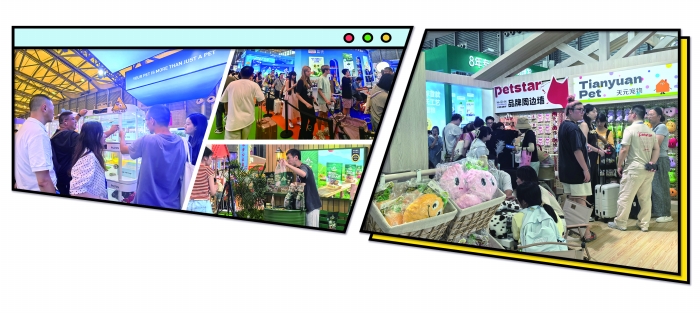
Group 1 - The stock price of Guibao Pet is reported at 94.97 yuan as of August 22, 2025, with a decline of 1.58% from the previous trading day and a trading volume of 347 million yuan [1] - Guibao Pet operates in sectors including agriculture, animal husbandry, and the pet economy, focusing on the research and sales of pet food, with its brand Maifudi holding a significant market share in China [1] - The company participated in the 27th Asia Pet Expo, showcasing high-end staple foods and functional snacks, with its smart pet care devices attracting industry attention [1] Group 2 - The Asia Pet Expo this year set a record with over 2,600 exhibitors participating, highlighting the growing interest in the pet industry [1] - Guibao Pet is expanding its international market presence through overseas factory establishment and brand acquisitions, with its Thailand production base and integration of U.S. channels being key business highlights [1] - On August 22, the net outflow of main funds was 12.43 million yuan, with a cumulative net outflow of 23.64 million yuan over the past five days [2]
宠物经济洞察:从养得起进阶到养得好
Zheng Quan Ri Bao· 2025-08-22 16:12
Core Insights - The Asian Pet Expo held in Shanghai showcased over 2,600 exhibitors and more than 20,000 brands, highlighting the transformation of pets from mere animals to family members, leading to a shift in consumer spending from basic needs to personalized services [1][2] Market Growth - China's pet market has grown from 97.8 billion yuan in 2015 to over 592.8 billion yuan in 2023, with a compound annual growth rate of 25.4% [2] - The growth is driven by younger generations viewing pets as emotional companions, shifting consumption from basic feeding to emotional attachment and care [2] Supply Chain Innovations - The pet industry is seeing innovations across the supply chain, with high-end and personalized products emerging in food and medical services, expanding consumer scenarios and increasing average spending [2][3] - Companies like "Safi" are introducing organic selenium-rich pet food, combining traditional herbal ingredients with modern nutrition [3] Medical Services Evolution - Pet medical services are evolving from treatment-focused to preventive care, with increasing demand for regular check-ups and chronic disease management [3] - Pet insurance is experiencing rapid growth, with companies like ZhongAn Insurance reporting a nearly 100% annual growth rate in pet insurance business [3] Personalized Services - There is a growing trend towards personalized memorial services for pets, with companies offering customized products that cater to the emotional needs of pet owners [4] - Younger consumers, particularly those born in the 1990s and 2000s, are driving demand for personalized pet products and services [4] Technological Innovations - The industry faces challenges such as food safety, homogenization, and talent shortages, but technology is seen as a key solution [5] - Innovations like AI diagnostics, remote medical services, and blockchain for food safety are being explored to enhance industry standards [5] - The expo featured advanced pet technology products, including smart pet phones and automatic litter boxes with health monitoring capabilities [5][6] Future Directions - Companies are focusing on refining smart pet devices through AI and big data to enhance user experience and meet specific consumer needs [6]
山东中慧悦宠生物科技有限公司成立,注册资本1000万人民币
Sou Hu Cai Jing· 2025-08-22 11:58
天眼查显示,近日,山东中慧悦宠生物科技有限公司成立,法定代表人为李冰,注册资本1000万人民 币,由中慧农牧股份有限公司全资持股。 序号股东名称持股比例1中慧农牧股份有限公司100% 来源:金融界 企业名称山东中慧悦宠生物科技有限公司法定代表人李冰注册资本1000万人民币国标行业科学研究和技 术服务业>科技推广和应用服务业>技术推广服务地址山东省潍坊市昌乐县五图街道国防路1号5幢企业 类型有限责任公司(非自然人投资或控股的法人独资)营业期限2025-8-21至无固定期限登记机关昌乐 县市场监督管理局 经营范围含技术服务、技术开发、技术咨询、技术交流、技术转让、技术推广;宠物食品及用品批发; 供应链管理服务;饲料添加剂销售;饲料原料销售;生物饲料研发;粮食收购;互联网销售(除销售需 要许可的商品);网络技术服务;宠物食品及用品零售。(除依法须经批准的项目外,凭营业执照依法 自主开展经营活动)许可项目:饲料生产;食品生产。(依法须经批准的项目,经相关部门批准后方可 开展经营活动,具体经营项目以相关部门批准文件或许可证件为准) ...
宠物经济升温!李佳琦“云探”亚宠展
Yang Zi Wan Bao Wang· 2025-08-22 10:45
Core Viewpoint - The 27th Asia Pet Expo showcased the growing pet economy, with a significant focus on consumer engagement through live streaming and interactive experiences led by influencer Li Jiaqi [1][5]. Group 1: Event Highlights - Li Jiaqi's live stream at the Asia Pet Expo provided a fun and informative pet care guide for consumers [1]. - The event featured over 2,600 exhibitors from around the world, marking a record scale for the expo [5]. - Young consumers represented over 70% of the audience, highlighting a shift in demographic engagement within the pet industry [5]. Group 2: Consumer Engagement and Education - Li Jiaqi engaged with various pet food brands, explaining product formulations and processes through interactive games and discussions [3]. - The live stream incorporated professional pet care knowledge into a relaxed format, helping consumers make informed decisions [3][8]. - The event emphasized the importance of scientific, intelligent, and personalized pet care, with a focus on suitable pet food types for different ages, breeds, and sizes [8]. Group 3: Market Trends - The pet consumption market in China is experiencing continuous growth, moving towards quality, diversity, and intelligence in products [5]. - During the 618 shopping festival, sales of pet products in Li Jiaqi's live stream increased by over 70% year-on-year, indicating a strong market demand [5].
中红医疗跌0.06%,成交额1.57亿元,后市是否有机会?
Xin Lang Cai Jing· 2025-08-22 09:54
Core Viewpoint - The company, Zhonghong Medical, is primarily engaged in the export of medical devices and consumables, utilizing an ODM direct sales model, which allows it to design and produce products for overseas brand owners [2][4]. Group 1: Business Overview - Zhonghong Medical's main business includes the research, production, and sales of high-quality nitrile gloves, PVC gloves, and other disposable protective gloves, with health protection products accounting for 87.33% of revenue [9]. - The company has a significant overseas revenue share of 81.56%, benefiting from the depreciation of the RMB [4]. - The company is state-owned, with its ultimate control held by the Xiamen Municipal Government State-owned Assets Supervision and Administration Commission [5]. Group 2: Product Innovation and Market Presence - Zhonghong Medical showcased its products at the 12th Beijing Pet Expo, highlighting its veterinary infusion pumps, which feature IP34 waterproof design and dual CPU architecture, providing multiple infusion modes and safety [2]. - The company emphasizes innovation through digital technology, aiming to develop high-quality, innovative medical consumables and equipment, positioning itself as a leading provider of intelligent medical solutions [3]. Group 3: Financial Performance - For the first quarter of 2025, Zhonghong Medical reported a revenue of 629 million yuan, representing a year-on-year growth of 15.45%, and a net profit of 18.92 million yuan, up 1369.95% year-on-year [10]. - The company has distributed a total of 1.251 billion yuan in dividends since its A-share listing, with 501 million yuan in the last three years [11]. Group 4: Market Activity - On August 22, Zhonghong Medical's stock price decreased by 0.06%, with a trading volume of 157 million yuan and a turnover rate of 2.52%, bringing the total market capitalization to 6.84 billion yuan [1]. - The stock has seen a net outflow of 20.0854 million yuan from main funds today, indicating a trend of reduced holdings by major investors [6][7].
源飞宠物跌2.41%,成交额9341.63万元,今日主力净流入-450.73万
Xin Lang Cai Jing· 2025-08-22 08:58
Core Viewpoint - The company, Wenzhou Yuanfei Pet Toy Co., Ltd., is experiencing fluctuations in stock performance and is positioned to benefit from trends in the pet economy, cross-border e-commerce, and the depreciation of the RMB [2][3]. Company Overview - Wenzhou Yuanfei Pet Toy Co., Ltd. specializes in the research, production, and sales of pet products and pet food, with main products including pet snacks, leashes, toys, dry food, and wet food [2][7]. - The company is located in Pingyang County, Wenzhou, Zhejiang Province, and was established on September 27, 2004, with its stock listed on August 18, 2022 [7]. - The revenue composition of the company includes 46.31% from pet snacks, 34.81% from leashes, and 3.89% from pet injection-molded toys [7]. Financial Performance - For the first quarter of 2025, the company achieved a revenue of 335 million yuan, representing a year-on-year growth of 36.30%, while the net profit attributable to the parent company was 25.368 million yuan, a decrease of 30.57% year-on-year [7]. - The company has distributed a total of 120 million yuan in dividends since its A-share listing [8]. Market Position and Strategy - The company has a significant overseas revenue share of 85.78%, benefiting from the depreciation of the RMB [3]. - The overseas bases in Cambodia are crucial for the company's global capacity layout and market competitiveness, aimed at reducing labor costs and addressing international trade friction [3]. - The company’s main overseas sales are conducted through its subsidiary in the U.S., focusing on pet leashes sold via e-commerce platforms like Amazon and Shopify [2][3]. Trading Activity - On August 22, the stock price of Yuanfei Pet fell by 2.41%, with a trading volume of approximately 93.42 million yuan and a market capitalization of 4.169 billion yuan [1]. - The stock has seen a net outflow of 4.5073 million yuan from major investors, indicating a lack of strong control by major shareholders [4][5].
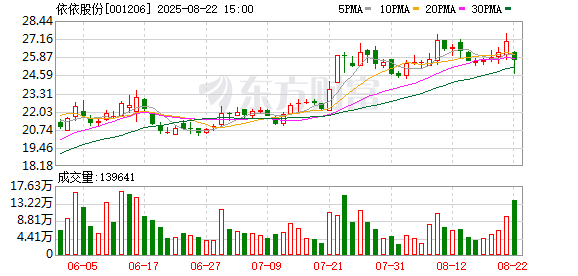
东莞证券给予依依股份增持评级,2025年中报点评:上半年业绩实现增长,加大国内自主品牌投入
Mei Ri Jing Ji Xin Wen· 2025-08-22 07:31
(文章来源:每日经济新闻) 东莞证券8月21日发布研报称,给予依依股份(001206.SZ)增持评级。评级理由主要包括:1)公司宠 物一次性卫生用品保持较快增长;2)境内外市场收入保持较快增长;3)公司不断加大国内自主品牌的 推广投入;4)毛利率略有提升,净利率略有下降;5)维持对公司的"增持"评级。风险提示:原材料价 格波动,汇率波动,国际形势变化等风险。 ...
再创新高!“硬科技”全面爆发,上证指数破3800点
Xin Jing Bao· 2025-08-22 05:41
Group 1 - The stock market reached a new high on August 22, with the Shanghai Composite Index breaking 3800 points during the afternoon session [1] - Key sectors leading the market include GPU, servers, stock trading software, and optical communication, while sectors such as pet economy and air transportation experienced significant declines [1] - Despite the index reaching a new high, individual stock performance showed significant divergence, with a general trend of "more declines than gains" across the market [1] Group 2 - The "hard technology" sector saw a comprehensive surge, with the Sci-Tech Innovation 50 Index rising over 5% [1] - Notably, Cambrian's stock surged over 16% during the session, pushing its total market capitalization above 500 billion yuan [1]
