智能驾驶

Search documents
在汽车安全史上写下浓墨重彩的一笔
Di Yi Cai Jing Zi Xun· 2025-12-30 13:09
Core Insights - The Xiaomi SU7 traffic accident has catalyzed a significant shift towards stricter regulations in the Chinese automotive industry, particularly concerning safety standards for electric and smart vehicles [1][3]. Group 1: Incident Overview - On March 29, 2025, a serious traffic accident involving a Xiaomi SU7 resulted in fatalities, sparking widespread public discussion and concern within the automotive sector [1]. - The incident highlighted potential safety hazards in the rapidly developing electric vehicle industry, prompting a reevaluation of existing safety measures [1][2]. Group 2: Industry Response - Following the accident, there was a notable backlash from industry insiders, leading to discussions about the need for improved safety protocols and regulations [2][3]. - The Ministry of Industry and Information Technology (MIIT) convened a meeting with nearly 60 representatives from automotive manufacturers, emphasizing the importance of accurate marketing and enhanced safety standards for smart connected vehicles [3]. Group 3: Regulatory Developments - In April 2025, MIIT introduced stringent national standards for electric vehicle batteries, mandating that they must not catch fire or explode, marking a significant regulatory milestone [3][4]. - The establishment of a strong standard for L2 level assisted driving was expedited due to the public outcry following the Xiaomi incident, indicating a shift towards more rigorous safety regulations in the industry [3][5]. Group 4: Market Trends - By the end of 2025, the penetration rate of new energy vehicles in China exceeded 50%, a significant increase from 40.9% in 2024, indicating a rapid shift in consumer preferences [4]. - The market penetration rate for L2 level assisted driving vehicles reached 64% in the first three quarters of 2025, up from 48% in 2024, reflecting the growing adoption of advanced driving technologies [5]. Group 5: Safety Concerns - The rapid advancement of technology in the automotive sector has led to increased safety concerns, particularly regarding the boundaries of smart driving capabilities and the risks associated with electronic design and battery safety [5]. - Ongoing incidents, including difficulties in opening vehicle doors and battery explosions, have underscored the urgent need for improved safety measures and regulations in the industry [5].

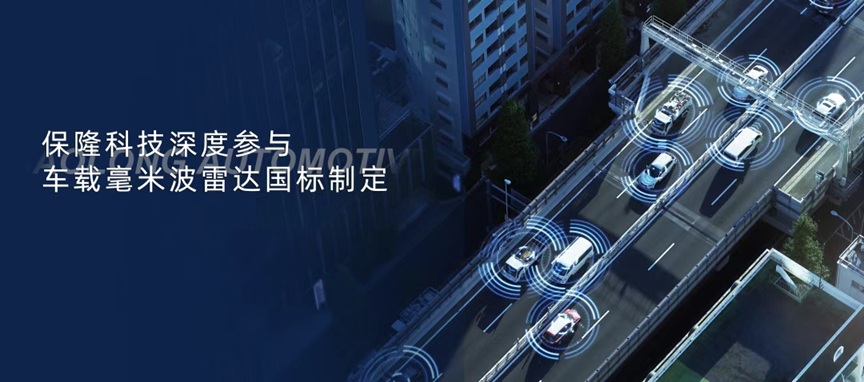
保隆科技:深度参与车载毫米波雷达国标修订会议 献智量产经验推动产业高质量发展
Zhong Guo Qi Che Bao Wang· 2025-12-30 10:19
Core Viewpoint - The meeting focused on revising the national standard for vehicle-mounted millimeter-wave radar performance requirements and testing methods, aiming to enhance industry standards and promote high-quality development in the sector [1][3]. Group 1: Meeting Overview - The second meeting of the drafting group for the national standard was successfully held in Qingdao, with participation from over 20 domestic and international automotive manufacturers and technical experts [1]. - The drafting group engaged in thorough discussions regarding the draft revision of GB/T "Performance Requirements and Testing Methods for Vehicle-Mounted Millimeter-Wave Radar," addressing key aspects such as scope, terminology, core technical requirements, and testing methods [3]. Group 2: Industry Implications - The establishment of a unified national standard for vehicle-mounted millimeter-wave radar is crucial for improving product quality control, technological application, and industry innovation [3]. - The current lack of standardized performance evaluation and testing methods has been a barrier to the development of the vehicle-mounted millimeter-wave radar industry, which has a complete R&D system and industrial chain in China [3].


2026年A股投资策略报告:突破:百尺竿头,更进一步-20251230
CHINA DRAGON SECURITIES· 2025-12-30 09:18
Group 1 - The external environment presents uncertainties but is overall favorable, with global economic resilience expected in 2026, as major economic organizations forecast slight declines in growth rates compared to 2025, with the World Bank predicting a growth rate of 2.40% for 2026, up from 2.30% in 2025 [6][10] - The U.S. is likely to continue lowering interest rates in 2026 due to a weak labor market, with expectations of more than one rate cut, as indicated by the Federal Reserve's recent actions [6][13] - The U.S. dollar's strength is supported by weak economic expectations, with factors such as reduced immigration and uncertain tariff policies suppressing economic activity [6][21] Group 2 - The "15th Five-Year Plan" aims for qualitative and quantitative economic growth, emphasizing stability in employment, enterprises, and market expectations, with policies to support effective growth and enhance quality [6][44] - The investment sector is expected to stabilize, with government initiatives to increase investment in infrastructure and optimize the use of local government bonds [6][49] - Consumer spending is projected to improve, supported by policies aimed at boosting consumption and enhancing the supply of quality goods and services [6][52] Group 3 - The market is expected to continue a "slow bull" trend, with overall company performance anticipated to improve, driven by supportive policies and resilient economic dynamics [6][59] - The technology (TMT) and advanced manufacturing sectors are expected to benefit from long-term policy support and are key drivers of economic transformation [6][67] - Investment opportunities are identified in sectors such as non-involution, supply-demand changes, and emerging themes like artificial intelligence and renewable energy [6][70]
汽车行业2026年投资策略:智驾+出海驱动新增长,机器人开启未来篇章
Huajin Securities· 2025-12-30 06:27
Core Insights - The report emphasizes that the automotive industry will experience new growth driven by "smart driving and overseas expansion" in 2026, with L3-level autonomous driving penetration expected to continue increasing and new energy vehicle (NEV) exports maintaining high growth [2][3] - The report anticipates that the overall export of vehicles will exceed expectations in 2025, with strong momentum for NEV exports in regions such as Europe, the Middle East, and North America, indicating a new growth phase for domestic brands [2] - The report highlights that the L3 window period is clearly defined, with multiple domestic manufacturers set to mass-produce vehicles equipped with advanced driving assistance systems, leading to increased penetration of intelligent components [2] Vehicle Sector - The overall demand in the vehicle market remains stable, with a projected retail sales volume of 2,494 million units in 2026, reflecting a year-on-year growth rate of 1% [45] - NEV sales are steadily increasing, with a retail penetration rate exceeding 50%, and a cumulative retail sales volume of 10.15 million units from January to October 2025, representing a year-on-year growth of 21.9% [13] - The average price of passenger vehicles is on a downward trend, with the average price in the first ten months of 2025 being 170,000 yuan, a decrease of 7,000 yuan from the previous year [19] Component Sector - The report indicates that the trend towards electrification remains unchanged, with the penetration of intelligent components expected to continue rising, benefiting from the ongoing development of the automotive supply chain [2] - The report suggests that the domestic automotive supply chain, combined with overseas expansion, is likely to accelerate in 2026, providing incremental opportunities for relevant component manufacturers [2] Robotics Sector - The report notes that humanoid robots are entering a critical stage of industrialization, with significant demand for complex scene interactions driving the growth of core components, benefiting companies with relevant layouts in the robotics field [2] - The report emphasizes that the core components of humanoid robots will enjoy the dividends of industrial development, with companies positioned in this sector expected to benefit first [2] Low-altitude Economy - The report states that the domestic low-altitude economy has transitioned from a nascent stage to a period of rapid development, with the market scale expected to leap from hundreds of billions to trillions [2] - Several automotive companies are entering the low-altitude economy sector, indicating a promising future for growth [2] Policy and Market Dynamics - The report highlights that the 2026 NEV purchase tax subsidy will be reduced, leading to increased market competition, while the overall trend of NEV penetration and intelligentization is expected to drive the rise of domestic brands [2][38] - The tightening of "two new" policies is anticipated to increase the marginal cost for consumers, with various regions adjusting or suspending vehicle replacement and scrapping subsidy policies [39][40]





港股新动能,智驾新未来!港股通汽车ETF华宝(520780)12月29日上市
Sou Hu Cai Jing· 2025-12-30 01:21
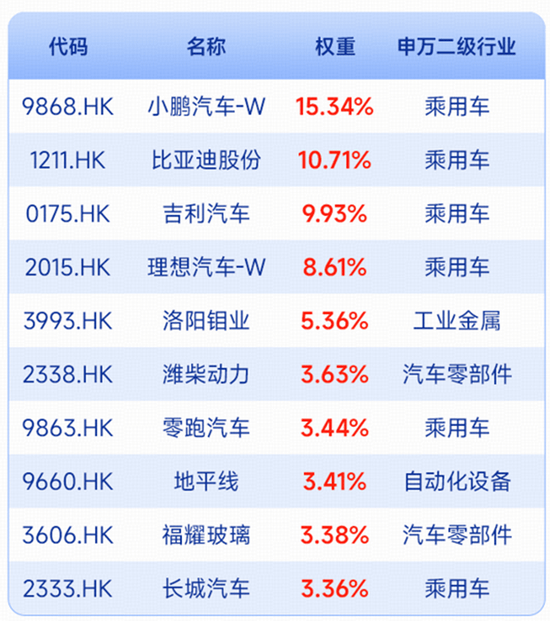
来源:市场资讯 周一(12月29日),华宝基金旗下新品——港股通汽车ETF华宝(520780)正式于上海证券交易所上市 交易。该基金的上市,为投资者一键布局港股汽车产业龙头,尤其是分享智能驾驶革命红利,提供了一 个高效、便捷的指数化投资工具。 聚焦整车龙头,拥抱智驾浪潮 数据来源:中证指数 当前,汽车产业的变革已远不止于电动化,更深刻的智能化、网联化浪潮正在重塑行业格局。"智驾新 未来"已成为社会各界广泛认同的产业前景。汽车不仅是重要的消费终端,更成为人工智能技术关键的 端侧应用场景。 港股通汽车ETF华宝所跟踪的这个指数,敏锐地捕捉了这一趋势,成分股中包含了如小鹏汽车-W、零 跑汽车、地平线机器人-W等在内地市场相对稀缺的智能驾驶核心标的。相较于A股的同主题ETF,这只 ETF为投资者呈现了一个更具科创属性与国际化视野的智能驾驶龙头企业组合。 产品优势与市场机遇 从业绩上来看,截至2025年11月30日,中证港股通汽车指数自基日(2016.12.30)以来,累计涨幅已达 到132.21%,显著跑赢同期CS新能车、中证800汽车等同类行业主题指数及恒生科技、沪深300等宽基指 数。 从盈利预测来看,港股通汽车 ...
定下百万年销目标 零跑豪赌2026
Bei Jing Shang Bao· 2025-12-29 16:49
Core Insights - Leapmotor aims to achieve an annual sales target of 1 million vehicles by 2026 and reach 4 million vehicles in the next decade, positioning itself as a world-class automotive company [1][2] Group 1: Sales and Product Strategy - The sales target is supported by a comprehensive product upgrade, with the D series being the core product line aimed at the high-end market, featuring the D99 MPV priced around 300,000 yuan [2] - The D series will offer both extended range and pure electric options, with significant battery specifications including an 80.3 kWh battery for the extended range version and a 115 kWh battery for the pure electric version [2] - Leapmotor has prepared a battery supply redundancy of 1.2 to 1.3 times to meet the demand for 1 million vehicles, with a cumulative delivery of over 1.2 million vehicles and an expected sales volume of nearly 600,000 vehicles in 2025 [3] Group 2: Technology and Innovation - Leapmotor plans to shift from a following strategy to a leading strategy in the autonomous driving sector, increasing investment in this area to catch up with industry leaders [4] - The company has set a pragmatic approach to technology investment, focusing on solutions that provide real value to users and aiming for a return on investment within three years [4] - Leapmotor has introduced a unique integrated system for driving and parking, supporting full-scenario experiences and aiming for L3-level capabilities in the next decade [4] Group 3: Channel and Service Strategy - To align with its high-end transformation and sales goals, Leapmotor is upgrading its channel and service systems, focusing on user experience as the core of its luxury definition [6] - The company is adopting an innovative channel model that emphasizes a partnership with dealers, aiming to create a "co-traveler" relationship rather than a traditional buyer-seller dynamic [6] - Leapmotor's previous success was largely based on cost performance, and it faces the challenge of changing consumer perceptions to justify higher pricing for its products [6][7] Group 4: Brand Positioning and Market Challenges - Leapmotor's brand elevation requires overcoming multiple challenges, particularly in establishing brand value, technical strength, and system capabilities [1][7] - The company must reshape user recognition in the luxury MPV market to match its pricing strategy, which involves significant R&D and marketing investments [7] - Achieving the ambitious sales targets will depend on product matrix, technological leadership, and breakthroughs in global markets [7]

公司互动丨这些公司披露在商业航天、智能驾驶等方面最新情况
Di Yi Cai Jing· 2025-12-29 14:44
Commercial Aerospace - Zhongtian Rocket's thermal protection components are utilized in commercial aerospace [1] - Zai Sheng Technology's high-silica fiber has been supplied to international aerospace companies [1] - Aerospace Intelligent Equipment has established long-term cooperation with multiple aerospace enterprises for its aerospace chips [1] - Sanan Optoelectronics' gallium arsenide solar cells are applied in commercial satellite power systems [1] - Electronic Science and Technology's Ka-band phased array antenna chip for low Earth orbit constellations has entered mass production [1] - Guangzhi Technology's infrared optical materials are used for satellite infrared camera optical windows and satellite solar cells [1] - Kosen Technology does not manufacture precision structural components for aerospace applications [1] - Baoding Technology currently has no orders in the commercial aerospace sector [1] Intelligent Driving - Weichai Power's Shaanxi Heavy Truck has achieved L4-level combined driving assistance technology in closed areas [1] - Guoxin Technology's CCFC3009PT chip, designed for automotive assisted driving, has completed development and is in the trial production stage [1] Precious Metals - Xing Shuaier will adjust sales strategies in response to fluctuations in silver prices [1] - Xingye Silver Tin has not engaged in silver hedging business from early 2025 to the present [1] Other Developments - Jinyuan Co. is in the trial production phase of its lithium extraction project from the salt lake [1] - Hengdian East Magnetic has technical reserves for perovskite tandem batteries [1] - Zhongmi Holdings' products have not yet been applied to "Super Carbon No. 1" [1] - Rewei Co. has a client relationship with Chasing Technology (Suzhou) Co., Ltd. [1] - Yingjie Electric's controllable nuclear fusion business is currently focused on domestic clients, with no clear plans for international development [1]
国芯科技:已布局智能驾驶MCU芯片并研发10000DMIPS高性能AI芯片
Xin Lang Cai Jing· 2025-12-29 10:02
Core Viewpoint - The company is focusing on the development of domain control MCU chips for automotive intelligent driving, intelligent domain control, and intelligent chassis applications, with several key products launched. Group 1: Product Development - The main chip products launched by the company include CCFC3007PT, CCFC3010PT, CCFC3011PT, and CCFC3012PT [1] - The CCFC3012PT chip is comparable to Infineon TC397/399 series chips [1] - The CCFC3009PT chip has completed development and is now in the tape-out trial stage, designed for automotive assisted driving and cross-domain integration applications [1] Group 2: Performance and Applications - The CCFC3009PT chip has a pre-computing power of over 10,000 DMIPS, which is approximately three times that of the CCFC3012PT chip [1] - The CCFC3009PT chip is at an internationally advanced level and is applicable in scenarios such as real-time control for intelligent driving, network data exchange, radar signal processing, and intelligent sensor signal processing [1]

ETF主力榜 | 智能驾驶ETF(516520)主力资金净流出660.58万元,居可比基金第一-20251229
Xin Lang Cai Jing· 2025-12-29 08:55
Group 1 - The smart driving ETF (516520.SH) experienced a decline of 0.47% on December 29, 2025 [1] - The net outflow of main funds (transactions over 1 million yuan) amounted to 6.6058 million yuan, ranking first among comparable funds [1] - The latest trading volume for the fund was 65.3956 million shares, with the latest trading amount falling below 90 million yuan, dropping 95 positions in the overall market ranking compared to the previous trading day [1]
中国汽车ABS和ESC系统市场现状研究分析与发展前景预测报告
QYResearch· 2025-12-29 08:18
Core Viewpoint - The article discusses the current status and future trends of the automotive ABS (Antilock Brake System) and ESC (Electronic Stability Control) systems in the Chinese market, highlighting the transition from traditional mechanical braking to electronic and intelligent systems, driven by regulatory requirements and technological advancements [3][10][14]. Market Development Status and Future Trends - The revenue from the automotive ABS and ESC systems in China is projected to reach 12.31 billion yuan in 2024, with an expected decline to 6.022 billion yuan by 2031, indicating a compound annual growth rate (CAGR) of -10.10% from 2025 to 2031 [3]. - The market is experiencing a shift towards electronic hydraulic brake (EHB) systems, particularly the One-Box solution, which integrates multiple functions and is expected to penetrate the market significantly, with over 10 million units installed by 2024 [10][13]. Industry Concentration and Competition Analysis - Major players in the Chinese market include Bosch, Continental, ZF, Aisin, and others, with the top three companies holding approximately 65.25% of the market share in 2024 [7]. Technological Evolution - The transition from traditional hydraulic braking to ABS and ESC systems has been rapid, with ESC installation rates exceeding 90% in new passenger vehicles since 2020 [10]. - In the commercial vehicle sector, the market is primarily dominated by pneumatic braking systems, with a projected EBS penetration rate of 80% by 2025 for key models [11][12]. Driving Factors - Regulatory requirements are a significant driver, with ABS and ESC becoming mandatory for all new passenger and commercial vehicles in China [14]. - The growth in vehicle ownership and sales, particularly in the new energy vehicle segment, is expanding the market for ABS and ESC systems [15]. - The development of intelligent driving and ADAS (Advanced Driver Assistance Systems) is increasing the demand for enhanced vehicle dynamic control systems [16]. Constraints - The industry faces challenges such as reliance on imported high-end chips and core technologies, which creates barriers for domestic manufacturers [18]. - Intense price competition and the pressure on suppliers to reduce costs are compressing profit margins and limiting R&D investments [19]. - The lengthy certification process for new products poses significant entry barriers for new players in the market [20]. Supply Chain Analysis - The supply chain for automotive ABS and ESC systems includes upstream suppliers of raw materials, midstream manufacturers who integrate and assemble the systems, and downstream customers, primarily automotive OEMs [28][29]. - Key components of ABS and ESC systems include electronic control units (ECUs), hydraulic control units (HCUs), and various sensors, with a focus on technological integration and system performance [29][32].