汽车智能化

Search documents
车载SOC芯片深度报告:智能汽车引领进化,SOC芯片加速国产化
Guoyuan Securities· 2025-08-05 10:15
Investment Rating - The report rates the smart driving industry as "Recommended" [1] Core Insights - The evolution of smart cars is being led by intelligent driving, with SOC chips accelerating domestic production [1] - The demand for SOC chips is surging due to advancements in smart cockpits, intelligent driving, and autonomous driving technologies [4][9] - The market is highly concentrated, with domestic alternatives gaining traction, and leading domestic companies are expected to continue breakthroughs leveraging industry trends [5] Summary by Sections 1. Evolution from ECU to SOC Chips - The automotive industry is experiencing a shift from distributed electronic control units (ECUs) to centralized SOC chips, driven by the increasing complexity of electronic and electrical architectures [15][16] - SOC chips are becoming essential components for smart vehicles, facilitating the integration of various systems and enhancing performance [23][24] 2. Explosive Demand for SOC Chips - The market for SOC chips is expanding rapidly, particularly in high-level autonomous driving applications such as unmanned delivery and robotaxis [9] - The integration of AI models and the push for high-performance SOC chips are accelerating the domestic production of cockpit SOCs [9][50] 3. Investment Recommendations - The report suggests that investors should focus on leading domestic SOC chip manufacturers that are well-positioned to benefit from the ongoing trends in the smart driving sector [5][9] - Key domestic companies in the SOC chip market include Horizon Robotics, Black Sesame, and others, which are capitalizing on the opportunities presented by intelligent driving [9][47]



公司深度 | 沪光股份:国产线束之光 连接器助力成长【民生汽车 崔琰团队】
汽车琰究· 2025-08-05 04:00
Core Viewpoint - The company is positioned to benefit from the rapid growth of the electric vehicle (EV) market and the ongoing trend of domestic substitution in the automotive wiring harness industry, with projected revenue growth from 2.45 billion to 7.91 billion yuan from 2021 to 2024, reflecting a CAGR of 47.9% [2][24]. Group 1: Industry Growth and Trends - The automotive wiring harness industry is expanding due to the increasing demand for high-voltage and lightweight wiring harnesses driven by the electric vehicle market [4][51]. - The market for automotive wiring harnesses is expected to reach 150.3 billion yuan by 2026 and 216.5 billion yuan by 2030, indicating significant growth potential [4][15]. - The penetration rate of new energy vehicles is projected to reach 50% by 2025, further driving the demand for domestic wiring harness suppliers [64]. Group 2: Customer Structure and Global Strategy - The company has optimized its customer structure, with the revenue share of the top five customers decreasing from 98.7% in 2015 to 80.1% in 2024, indicating a diversification of its client base [3][40]. - The company has successfully entered the supply chains of new energy vehicle manufacturers such as Seres and Tesla, enhancing its revenue potential [13][43]. - The establishment of a subsidiary in Romania has contributed to a significant revenue increase, showcasing the company's successful global expansion strategy [3][24]. Group 3: Product Development and Competitive Advantage - The company is expanding into high-voltage connector products, which are expected to open a second growth curve, with the global automotive connector market projected to reach 23.09 billion dollars by 2025 [4][15]. - The company has a comprehensive product range covering various types of wiring harnesses, including high-voltage and low-voltage harnesses, catering to both traditional and new energy vehicles [19][48]. - Continuous investment in R&D, with expenses rising from 40 million yuan in 2016 to 260 million yuan in 2024, supports the company's technological advancements and product development [28][48]. Group 4: Financial Performance and Profitability - The company's revenue is expected to grow from 7.91 billion yuan in 2024 to 14.11 billion yuan in 2027, with a net profit of 670 million yuan in 2024, reflecting a year-on-year increase of 1,139.2% [7][25]. - The gross profit margin has improved significantly, with a projected gross margin of 17.5% in 2025, narrowing the gap with international competitors [32][33]. - The return on equity (ROE) is expected to reach 35.6% in 2024, indicating strong profitability and efficient asset management [33][48].



智能化零部件框架培训
2025-08-05 03:16
Summary of Conference Call Records Industry Overview - The automotive industry is experiencing a shift in core competitiveness towards upstream components such as chips, algorithms, and battery systems, creating new opportunities for suppliers in these areas [1][2] - The transition from distributed to centralized electrical architecture is noted, with software functions being controlled by OEMs while hardware increments are managed by the supply chain, leading to a separation of software and hardware value [1][2] Key Insights and Arguments - The intelligent component sector can be divided into technology and consumer attributes, with autonomous driving, chips, and battery systems leaning towards technology, while cockpit and lighting systems are more consumer-oriented [1] - The penetration rate for mature sectors like cockpits is at 100%, while chips and algorithms are rapidly increasing with a current penetration of about 10% [1][6] - Future growth potential is significant in areas such as chips and algorithms, autonomous driving domain controllers, chassis control, steering systems, and air suspension, all of which have high average selling price (ASP) enhancement potential [1][8] Competitive Landscape - The intelligent driving sector is highly competitive, with third-party chips and algorithms holding over 30% market share. Leading companies in this space have market shares below 30% [1][9] - Domestic companies like Horizon Robotics and Desay SV are emerging as key players across various tracks [1][9] Market Projections - By 2025, the penetration rate for high-level urban Navigation on Autonomous (NOA) is expected to rise from 11% in 2024 to 27% in 2025, driven by domestic automakers [1][10] - The Robo TAXI market is projected to commercialize by 2025, with an expected market size exceeding 200 billion yuan by 2030, accounting for over 30% of shared mobility [3][18] Technological Developments - The upgrade of electrical architecture has led to significant changes in the intelligent component industry, with a shift towards System on Chip (SoC) designs that consolidate multiple functions into a single chip [4] - The development of modular algorithms offers strong interpretability and safety, while end-to-end algorithms are simpler but require more data and computational power [15][16] Emerging Trends - The intelligent detection sector is evolving, with mandatory and non-mandatory testing components. The rise in intelligent vehicle technology is driving up single vehicle testing prices [21] - By 2026, every L2 level vehicle will require national standard certification, potentially expanding the market by 50% to 100% [22] Recommended Companies - Key investment targets include chip and algorithm sectors, intelligent detection, and domain control. Recommended companies are Horizon Robotics, Desay SV, Bosch Rexroth, and Huayang Group due to their technological strength and market performance [30][31]
【周观点】7月第4周乘用车环比+13.2%,继续看好汽车板块
东吴汽车黄细里团队· 2025-08-04 09:11
Core Viewpoint - The automotive industry is entering a new crossroads phase, with the end of the electric vehicle (EV) dividend and the dawn of automotive intelligence, while robotics innovation is in the 0-1 stage. The recommendation is to increase the allocation weight of "dividend style" investments in the second half of the year [6][8][13]. Weekly Review Summary - In the fourth week of July, the compulsory insurance for vehicles reached 440,000 units, with a week-on-week increase of 13.2% but a month-on-month decrease of 22.8% [3][11]. - The performance of segmented automotive sectors this week ranked as follows: SW commercial cargo vehicles (-0.4%) > SW commercial passenger vehicles (-0.7%) > SW automotive parts (-2.1%) > SW automobiles (-2.4%) > SW motorcycles and others (-2.4%) > SW passenger vehicles (-3.4%) [3][11]. Industry Core Changes - Xiaopeng's new P7 will debut on August 6, with 36,717 new cars delivered in July. - Li Auto launched its first pure electric SUV, the i8, with deliveries starting on August 20. The Pro version is priced at 321,800 yuan, the Max version at 349,800 yuan, and the Ultra version at 369,800 yuan, with 30,731 new cars delivered in July [5][12]. - Zhiji released the "Star" super range extension system, targeting a pure electric CLTC range of over 400 km and a comprehensive CLTC range of 1,500 km. Audi A5L Sportback was officially launched with a starting price of 259,900 yuan [5][12]. - Yutong Bus signed a procurement agreement for 400 pure electric buses with its partner in Pakistan, marking the largest single order for new energy buses in Pakistan [5][12]. Sector Outlook - The automotive sector remains optimistic, focusing on three main lines: dividends, intelligence, and robotics [6][13]. - The market's core focus this week was on the automotive sector, which underperformed the broader market, with heavy trucks performing relatively better. The internal demand for passenger vehicles met expectations, but the performance of new energy vehicles fell short [6][13]. - Recommendations for sector allocation include: - **Dividend & Good Pattern Main Line**: Buses (Yutong Bus), heavy trucks (China National Heavy Duty Truck Group A-H / Weichai Power), two-wheelers (Chunfeng Power / Longxin General), and parts (Fuyao Glass + Xingyu Co., Ltd. + Xinquan Co., Ltd. + Jifeng Co., Ltd.) [8][13]. - **AI Intelligence Main Line**: Preferred passenger vehicles in Hong Kong stocks (Xiaopeng Motors-W / Li Auto-W / Xiaomi Group-W) > A-shares (Seres / SAIC Motor / BYD); preferred parts (Horizon Robotics-W / China Automotive Research / Desay SV / Bertel / Black Sesame Intelligence) [8][13]. - **AI Robotics Main Line**: Preferred parts (Top Group + Precision Forging Technology + Fuda Co., Ltd. + Xusheng Group + Aikodi) [8][13].

恒帅股份(300969):首次覆盖报告:汽车微电机核心企业,有望切入人形机器人电机领域
Western Securities· 2025-08-04 06:19
Investment Rating - The report assigns a "Buy" rating for the company [4]. Core Insights - Hengshuai Co., Ltd. is a leading enterprise in automotive micro-motors and cleaning systems, with steady global expansion. The company primarily focuses on automotive motor technology and fluid technology. In 2024, it is projected to achieve revenue of 960 million yuan, a year-on-year growth of 4.21%, with a CAGR of 29.6% from 2020 to 2024. The net profit attributable to shareholders is expected to reach 210 million yuan, a year-on-year increase of 5.75%, with a CAGR of 34.2% during the same period [1][4][31]. Summary by Sections Automotive Micro-Motor and Cleaning System Leadership - Hengshuai Co., Ltd. has been deeply engaged in the automotive cleaning system and micro-motor industry since its establishment in 2001, continuously enhancing its product matrix and expanding its global footprint [21][22]. - The company has established subsidiaries in various locations since 2019, actively expanding its domestic and international customer base [21][31]. Growth in Automotive Electrification - The trend of automotive electrification is evident, driving rapid growth in the demand for automotive micro-motors. The average usage of micro-motors in mid-to-high-end electric vehicles is significantly higher than in traditional fuel vehicles [50][53]. - The global automotive micro-motor market is expected to reach 20.4 billion USD by 2031, with a CAGR of 3.1% from 2025 to 2031 [60][61]. Advancements in Automotive Intelligence - The report highlights the increasing penetration of intelligent driving technologies, with the demand for ADAS (Advanced Driver Assistance Systems) cleaning systems expected to grow as the number of sensors in vehicles increases [2][71]. - The company has made significant progress in developing ADAS active perception cleaning systems, having secured batch business designations from various clients [79]. Strategic Expansion into Humanoid Robot Motors - Hengshuai Co., Ltd. is strategically positioning itself in the humanoid robot motor market, which is projected to have a market space of 58.3 billion yuan by 2027. The company’s harmonic magnetic field motors are entering the industrial expansion phase, indicating potential growth in this sector [2][80]. Financial Projections - The company is expected to achieve net profits of 239 million, 294 million, and 389 million yuan from 2025 to 2027, representing year-on-year growth rates of 11.8%, 23.0%, and 32.4%, respectively [2][15]. - The projected revenue for the same period is expected to be 1.08 billion, 1.32 billion, and 1.71 billion yuan, with corresponding growth rates of 12.4%, 22.1%, and 29.3% [2][15]. Valuation - The report notes that Hengshuai Co., Ltd. has a lower PE valuation compared to comparable companies in the automotive micro-motor sector, with projected PE ratios of 37.2, 30.2, and 22.8 for 2025 to 2027 [15].
7月第4周乘用车环比+13.2% | 投研报告
Zhong Guo Neng Yuan Wang· 2025-08-04 03:30
东吴证券近日发布汽车周观点:本周汽车A-H表现跑输大盘,板块内部重卡相对较佳。 本周核心变化:理想i8新车上市表现一般,7月前四周数据内需乘用车总量符合我们预期但 新能源表现不及我们预期。重卡7月板块最新观点据内需因淡季环比有一定下滑同比依然高 增长。 以下为研究报告摘要: 本周复盘总结:七月第四周交强险44万辆,环比上周/上月周度+13.2%/-22.8%。 本周细分板块涨跌幅排序:SW商用载货车(-0.4%)>SW商用载客车(-0.7%)>SW汽车零部件 (-2.1%)>SW汽车(-2.4%)>SW摩托车及其他(-2.4%)>SW乘用车(-3.4%)。本周已覆盖标的沪 光股份,北汽蓝谷,爱柯迪,明阳科技,江淮汽车涨幅前五。 板块观点重申:继续坚定看好汽车!红利/智能化/机器人三条主线! 本周市场对汽车核心关注? 本周汽车A-H表现跑输大盘,板块内部重卡相对较佳。本周核心变化:理想i8新车上市 表现一般,7月前四周数据内需乘用车总量符合我们预期但新能源表现不及我们预期。重卡7 月数 (板块最新观点据内需因淡季环比有一定下滑同比依然高增长。 当前时点汽车板块如何配置? 我们认为汽车行业或又进入了新的十字路口阶 ...
汽车周观点:7月第4周乘用车环比+13.2%,继续看好汽车板块-20250804
Soochow Securities· 2025-08-04 02:58
Group 1 - The report indicates a positive outlook for the automotive sector, with a 13.2% week-on-week increase in passenger car insurance registrations, totaling 440,000 units for the week [2][52] - The report highlights the performance of various segments, with commercial trucks showing the best performance, while the overall automotive sector experienced a decline [2][18] - Key companies such as Xpeng Motors and Li Auto are launching new models, with Xpeng's new P7 debuting on August 6 and Li Auto's i8 set for delivery on August 20 [3][67] Group 2 - The report emphasizes the importance of electric vehicle (EV) penetration, with 236,000 units of new energy vehicles registered, reflecting a 10.5% increase week-on-week and a penetration rate of 53.7% [52] - The report projects that the domestic retail sales of passenger vehicles will reach 23.69 million units in 2025, representing a year-on-year growth of 4.1% [53] - The report outlines the expected growth in the heavy truck segment, forecasting 750,000 units in insurance registrations for 2025, a year-on-year increase of 24.9% [58] Group 3 - The report discusses the competitive landscape for intelligent driving technologies, predicting that L3 automation will reach a penetration rate of 27% by 2025, driven by companies like Tesla and Huawei [56] - The report notes that the domestic market is expected to see a 15% growth in vehicle sales in 2025, supported by policies promoting vehicle trade-ins [61] - The report highlights the strategic partnerships in the robotics sector, indicating a growing interest in humanoid robots and automation technologies [64][65]
上汽奥迪A5L Sportback正式上市 搭载华为乾崑智驾技术
Huan Qiu Wang· 2025-08-04 01:54
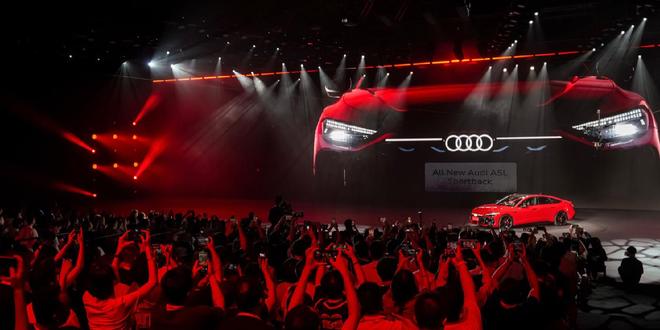
2025年8月1日,上汽奥迪全新A5L Sportback车型正式上市。新车共推出豪华型、尊享quattro型、智领型、智领quattro型、旗舰型、旗舰智曜型六款配置车 型,起售价为25.99万元(限时),并可享4000元限时现金优惠。 当前,燃油车在全球及中国市场仍占有重要份额。上汽奥迪方面表示,洞察到部分消费者在喜爱燃油车驾驶质感的同时,对智能化体验的需求日益增长,因 此推出了这款全新车型。全新A5L Sportback是全球首款搭载华为乾崑智能驾驶技术的燃油车。 技术亮点:集成华为乾崑智驾 全新上汽奥迪A5L Sportback基于奥迪全新PPC(Premium Platform Combustion)豪华燃油车平台打造,采用最新E³ 1.2电子架构。该架构的高集成化、高扩展 性及灵活的迭代能力,使其成功整合了华为乾崑智能驾驶解决方案。 新车配备了包含12个高清摄像头、6个毫米波雷达、12个超声波传感器以及2颗带有恒温自清洁系统的激光雷达在内的32个高性能传感器,构建了覆盖多场景 的感知系统。 华为智能汽车解决方案BU产品营销部部长聂奕在发布会上介绍,上汽奥迪A5L Sportback搭载的乾崑智驾技 ...

“全家桶”配置的是与非
Zhong Guo Qi Che Bao Wang· 2025-08-04 01:40
JODDOD IDOOOOOOOO 00 ODDODDODDOD 00 00000000000 00000000000 PARTY BEA 10 的图书馆 4 8 LE SE GIS NEW 2级辅助驾驶、激光雷达、高清大屏、智能座舱……正如消费者所言,"全家桶"配置已成为很多高端车型的重要标志,并为新车型的销量增长提供了有力支 撑。数据显示,2025年上半年,国内中大型SUV累计销量约120万辆,同比增长28%,占SUV总销量的22%;其中,新能源车型(含纯电、插混、增程)占 比超65%,约78万辆,同比提升15%,成为市场增长的主力。 吉林汽车工业协会专家李博在接受《中国汽车报》记者采访时表示,"全家桶"带来的智能化、科技感和时尚感,对中高端市场增长贡献显著。在一定程度 上,正是由于"全家桶"配置满足了市场需求,才成为新车型吸引消费者的关键因素之一。用户调研显示,随着国内二胎、三胎家庭增多,其购车需求已从豪 华感转向"全场景实用性"。"如今的车主不仅追求大空间,还看重智能化配置,因此各品牌新车上'全家桶'配置,契合市场需求和发展潮流。"一位车企营销 人员说。 "'全家桶'配置不仅拓展了用车场景,还为用户带 ...

上汽奥迪联姻华为智驾,燃油豪车绝地反击
Jing Ji Guan Cha Bao· 2025-08-03 13:51
Group 1 - The launch of the SAIC Audi A5L Sportback on August 1 marks a significant product in the transition of traditional luxury brands, featuring hidden laser radars for advanced driver assistance systems [2] - The A5L Sportback is the world's first fuel vehicle equipped with Huawei's QianKun intelligent driving system, highlighting the collaboration between a multinational automotive company and a Chinese tech firm [3][5] - Despite the rapid development of new energy vehicles in China, fuel vehicles still hold a substantial market share, with projected sales of 18.57 million units in 2024, a 9.8% year-on-year decline, yet maintaining nearly 60% market share [2] Group 2 - The intelligentization of fuel vehicles has lagged behind electric vehicles, with challenges such as slow system response times and insufficient redundancy [3] - SAIC Audi's partnership with Huawei aims to address three core challenges in fuel vehicle intelligentization: stable energy management, real-time data feedback, and precise motion response [3] - The A5L Sportback is priced starting at 259,900 yuan after limited-time discounts, positioning it competitively against the Tesla Model 3 [3][5] Group 3 - SAIC Audi, established in 2021, is a young joint venture brand that previously focused on niche markets with models like the A7L and Q6 [4] - The A5L Sportback is a key step in SAIC Audi's dual-brand strategy, with plans to balance electric transformation and fuel vehicle competitiveness [5] - The new AUDI brand will focus on new energy vehicles, while the traditional Audi four-ring brand will continue to develop high-end fuel vehicles with advanced driver assistance systems [5]