
多边主义

Search documents
以更大“南方合力”推动全球治理改革完善
Huan Qiu Wang· 2025-11-03 23:22
Core Viewpoint - The article discusses China's global governance initiative proposed by President Xi Jinping, aiming to reform and improve the global governance system in response to current global challenges and the demands of developing countries [1][7]. Group 1: China-Brazil Cooperation - China and Brazil, as major developing countries and founding members of BRICS, share similar positions on multilateralism and global governance reform [2]. - The strategic trust between China and Brazil has deepened, with both countries enhancing bilateral relations and cooperation across various sectors [2][3]. - The two nations are committed to practical cooperation in traditional areas like energy and agriculture, while also expanding into emerging fields such as digital economy and artificial intelligence [2]. Group 2: Multilateral Collaboration - China supports Brazil in hosting significant international events like the G20 and BRICS summits, emphasizing their collaboration on global issues [3][4]. - Both countries advocate for a multilateral approach to address global challenges, including the Ukraine crisis and the Israeli-Palestinian conflict [4][5]. - The initiative promotes a collective response to global challenges, emphasizing the importance of cooperation among developing countries [5][10]. Group 3: Global Governance Reform - The global governance initiative addresses the inefficiencies and deficits in the current global governance system, particularly for developing countries [7][8]. - Brazil emphasizes the need for reform in international institutions to enhance representation and effectiveness, particularly for developing nations [6][7]. - The initiative aligns with the principles of the UN Charter and seeks to create a more equitable global governance framework [8][9]. Group 4: Role of Global South - The Global South is positioned as a key player in reshaping governance structures, moving from being passive recipients of rules to active contributors in rule-making [10][11]. - Developing countries are increasingly taking the lead in promoting multilateralism and addressing global challenges, such as climate change and economic cooperation [11][12]. - The initiative aims to create unprecedented development opportunities for the Global South, focusing on equitable resource distribution and capacity building [12].
深化亚太合作 共创发展新局(环球热点)
Ren Min Ri Bao Hai Wai Ban· 2025-11-03 22:46
Group 1 - The core viewpoint of the news is that China's proposals at the APEC meeting aim to address regional challenges and promote an inclusive and open Asia-Pacific economy, emphasizing multilateralism and cooperation amidst rising protectionism and supply chain risks [3][4][5]. - China presented five key suggestions during the APEC meeting, including maintaining a multilateral trade system, creating an open regional economic environment, ensuring stable supply chains, promoting digital and green trade, and fostering inclusive development [3][4]. - The international media has highlighted China's emphasis on building an Asia-Pacific community, especially in the context of some countries adopting unilateral tariff policies and retreating from multilateral mechanisms [3][4]. Group 2 - The meeting underscored the shift from traditional trade to deeper cooperation, with a focus on strategic alignment, platform utilization, and regulatory collaboration to leverage opportunities in the "Chinese market" [6][7]. - China is a major trading partner for 21 APEC economies and the largest partner for 13 of them, indicating its significant role in regional trade dynamics [6]. - The call for stable supply chains and expanded openness from China serves as a strong signal for businesses to engage in collaborative projects and capitalize on the opportunities presented by the Chinese market [6][7]. Group 3 - In key areas like artificial intelligence and green development, China's experience aligns well with the industrialization and digitalization needs of Asia-Pacific countries, creating unique opportunities for regional development [9][10]. - China's advanced technologies in renewable energy and AI can support the region's transition to sustainable practices, while the diverse resource endowments of Asia-Pacific nations complement China's technological capabilities [9][10]. - The collaboration between China's mature technology solutions and the urgent demands of ASEAN countries for electric vehicles, smart manufacturing, and digital infrastructure highlights the potential for mutual benefit and growth in the region [10].


专访欧洲经济学家乌赞:世界正处于转折点 全球南方力量正在崛起
2 1 Shi Ji Jing Ji Bao Dao· 2025-11-03 15:31
Core Insights - The global South, particularly countries like China and India, is increasingly becoming a growth engine for the world economy, with China advocating for reforms in global governance through initiatives like the Global Governance Initiative presented at the Shanghai Cooperation Organization summit [1][9]. Group 1: Global Governance Reform - The Bretton Woods system is facing significant challenges, including outdated quota distributions that do not reflect the economic weight of emerging markets, monopolistic practices in leadership selection, and a disconnect between the institutions' missions and the realities of capital mobility [2][9]. - The establishment of new institutions by China, such as the New Development Bank (NDB) and the Asian Infrastructure Investment Bank (AIIB), signifies a push for inclusive reforms in the global governance framework [6][13]. Group 2: Dollar Dominance and Currency Dynamics - While the U.S. dollar remains the dominant reserve currency, its supremacy is being challenged by factors such as the weaponization of the dollar through sanctions, increasing domestic policy uncertainty in the U.S., the growing use of the renminbi in international trade, and innovations in digital currencies [7][8]. - The rise of stablecoins, projected to grow from approximately $300 billion to $4 trillion by 2030, could significantly alter the landscape of reserve currencies, potentially reinforcing the dollar's position or complicating monetary policy in emerging markets [8]. Group 3: Role of BRICS and Emerging Economies - The expansion of the BRICS group reflects the increasing influence of emerging economies and their collective desire to reduce dependence on the dollar [11][12]. - The BRICS nations are seen as key players in advocating for global governance reforms, with initiatives like the New Development Bank serving as evidence of their commitment to multilateralism [11][12]. Group 4: China's Position in Global Finance - China is positioned as a crucial participant in the global financial architecture, promoting a model of inclusivity rather than seeking hegemony, as evidenced by its various global governance initiatives and participation in existing institutions like the IMF and World Bank [13]. - The ongoing development of infrastructure investments under initiatives like the Belt and Road Initiative is reshaping global trade dynamics, particularly in Central Asia and the Middle East [11].
从庆州到深圳:APEC共倡“开放创新” 亚太多边合作接力前行
2 1 Shi Ji Jing Ji Bao Dao· 2025-11-03 15:10
Core Points - The APEC summit held in Gyeongju, South Korea, from October 31 to November 1, 2025, focused on "Building a Sustainable Future: Connectivity, Innovation, Prosperity" with three priorities: enhancing connectivity, promoting innovation, and achieving inclusive growth and prosperity [1][2][4] - The summit emphasized the importance of multilateral cooperation in the face of rising unilateralism and protectionism, reaffirming the commitment to open regionalism and the need for collaboration to counter global economic challenges [2][4][9] - The outcomes included the Gyeongju Declaration, the APEC Artificial Intelligence Initiative, and the APEC Framework for Addressing Demographic Changes, highlighting the focus on free trade, digital economy, and new growth areas such as cultural and creative industries [8][9][10] Group 1: APEC Summit Outcomes - The Gyeongju Declaration emphasizes advancing the Free Trade Area of the Asia-Pacific (FTAAP) agenda and promoting regional economic integration through market-oriented approaches [8][9] - The summit introduced significant new topics, including a shared vision for artificial intelligence and the recognition of cultural and creative industries as new growth drivers [8][9] - The meeting underscored the need for cooperation in addressing demographic challenges such as low birth rates and aging populations among member economies [8][9] Group 2: China's Role and Future APEC Meetings - China will host the next APEC summit in Shenzhen in 2026, symbolizing its commitment to deepening reforms and expanding high-level openness [3][12][14] - Shenzhen's selection as the host city reflects its status as a hub for innovation and technology, showcasing China's achievements in digital economy and its role in global economic governance [3][14][15] - The upcoming summit is expected to further promote trade and investment liberalization, enhance regional cooperation, and solidify China's influence in shaping future economic rules [13][14][15]
专访欧洲经济学家乌赞:世界正处于转折点,全球南方力量正在崛起
2 1 Shi Ji Jing Ji Bao Dao· 2025-11-03 12:36
Core Insights - The global South, including countries like China and India, is increasingly becoming a growth engine for the world economy, with China advocating for reforms in global governance through initiatives like the Global Governance Initiative presented at the Shanghai Cooperation Organization summit [1][9]. Group 1: Global Governance and Financial Institutions - The Bretton Woods system is facing significant challenges, including outdated quota distributions and a lack of representation for emerging economies, which necessitates reform [2][9]. - The International Monetary Fund (IMF) and World Bank are struggling to adapt to the current economic landscape, which has shifted significantly since their inception nearly 80 years ago [6][9]. - China is actively promoting inclusive reforms through initiatives such as the New Development Bank and the Asian Infrastructure Investment Bank, aiming to complement rather than replace existing institutions [6][13]. Group 2: Dollar Dominance and Currency Dynamics - While the US dollar remains the dominant reserve currency, its supremacy is being challenged by factors such as the weaponization of the dollar, increased use of the renminbi, and innovations in digital currencies [2][7]. - The rise of stablecoins, projected to grow from $300 billion to $4 trillion by 2030, could significantly alter the landscape of reserve currencies, potentially reinforcing or undermining the dollar's position [8][7]. - The ongoing expansion of BRICS reflects a collective desire among emerging economies to reduce reliance on the dollar and challenge Western-dominated financial structures [10][11]. Group 3: Future of Global Economic Governance - The current geopolitical tensions and economic fragmentation pose a fundamental challenge to the cooperation and integration that have characterized the past four decades [4][12]. - The need for a new global economic framework is evident, as existing institutions struggle to meet the demands of a rapidly changing world [5][4]. - The emphasis on multilateralism and shared development opportunities is crucial for the future of global governance, with China positioning itself as a key player in this transition [13][12].
外交部发言人:相信深圳将为世界呈现一次精彩纷呈的盛会
中国基金报· 2025-11-03 11:34
Group 1 - The core viewpoint of the article emphasizes China's role in hosting the APEC meetings, highlighting the significance of Shenzhen as the venue for the upcoming APEC leaders' informal meeting in November 2024 [2] - The article notes that this will be the third time China has hosted APEC, showcasing the country's growing influence and contributions to regional cooperation and multilateralism [2] - Shenzhen is described as a symbol of China's reform and opening-up, representing a successful model in global development and a key window for China's win-win open strategy [2]
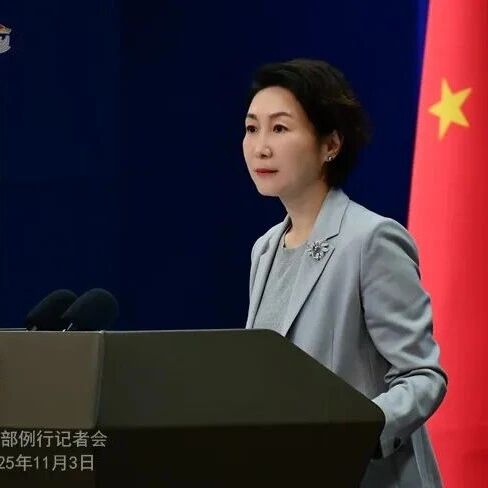
外交部:相信深圳将为世界呈现一次精彩纷呈的APEC盛会
Xin Hua She· 2025-11-03 10:05
Core Points - China is set to host the APEC Leaders' Informal Meeting in Shenzhen in November 2024, marking the third time China has served as the APEC host [1] - The role and contributions of China in the APEC framework are increasingly significant, showcasing leadership in Asia-Pacific cooperation, commitment to multilateralism, and support for regional economic integration [1] - Shenzhen is highlighted as a symbol of China's reform and opening-up, representing a successful model in global development and a key window for China's win-win open strategy [1] Summary by Categories - **Event Announcement** - The APEC Leaders' Informal Meeting will take place in Shenzhen, Guangdong Province, in November 2024 [1] - This event is part of the "China Year" for APEC, following the conclusion of the 32nd APEC Leaders' Informal Meeting [1] - **China's Role in APEC** - China's contributions to APEC are becoming more diverse and impactful, reflecting its leadership in regional cooperation and multilateral efforts [1] - The progression from Shanghai to Beijing and now to Shenzhen illustrates China's growing influence within the APEC framework [1] - **Significance of Shenzhen** - Shenzhen is described as a "testing ground" for China's reform and opening-up policies, and a remarkable achievement in global development history [1] - The city is positioned as an important platform for China's open strategy, promising an engaging and successful event for global participants [1]
11月3日外交部例行记者会答问汇总
Bei Jing Ri Bao Ke Hu Duan· 2025-11-03 09:58
Group 1 - The Spanish King Felipe VI will visit China from November 10 to 13 at the invitation of President Xi Jinping, marking his first state visit to China since ascending the throne and the first visit by a Spanish king in 18 years, highlighting the significance of this event [3][4] - The visit aims to strengthen bilateral relations and discuss international and regional issues of mutual concern, with meetings scheduled between King Felipe VI and Chinese leaders including President Xi Jinping, Premier Li Qiang, and Chairman Zhao Leji [3][4] - This year marks the 20th anniversary of the establishment of the comprehensive strategic partnership between China and Spain, with both sides looking to enhance cooperation and cultural exchanges during the visit [4] Group 2 - China will host the APEC (Asia-Pacific Economic Cooperation) informal leaders' meeting in Shenzhen in November 2024, marking the third time China has served as the host, reflecting its growing role in regional cooperation and multilateralism [5] - The decision to hold the APEC meeting in Shenzhen is seen as a recognition of the city as a significant window for China's open and cooperative strategy, with expectations for a successful event [5] Group 3 - China has decided to extend its visa-free policy for certain countries, including France, until December 31, 2026, to facilitate international exchanges and promote high-level openness [7] - The restoration of group tours for Chinese citizens to Canada is expected to enhance people-to-people exchanges and mutual understanding between the two nations [8]
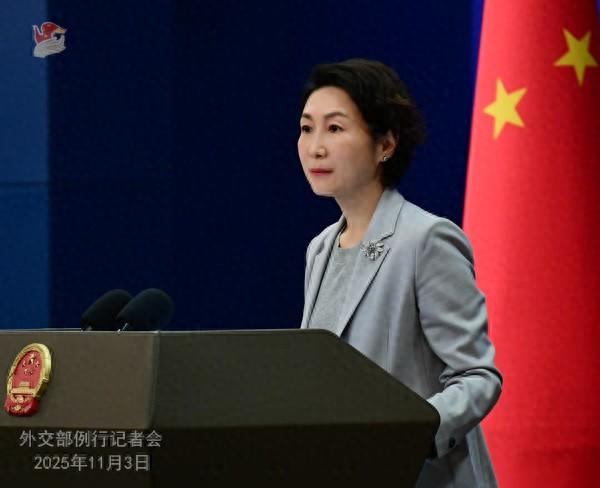
推动尽快恢复 中日韩自贸协定谈判
Zheng Quan Shi Bao· 2025-11-03 07:49
Group 1 - The core viewpoint emphasizes the need for China and South Korea to expedite the resumption of the China-Japan-South Korea Free Trade Agreement negotiations to jointly uphold free trade and multilateralism [1] - Both parties discussed maintaining the stability of industrial and supply chains, as well as enhancing regional and bilateral cooperation [1] - China expresses willingness to implement the important consensus reached by the leaders of both countries and aims to achieve new developments in China-South Korea economic and trade relations [1] Group 2 - The discussion included strengthening communication and coordination through mechanisms such as the China-South Korea supply chain cooperation hotline, export control dialogue, and trade remedy cooperation [1] - There is a focus on collaboration within frameworks like the World Trade Organization and the Regional Comprehensive Economic Partnership to promote the swift resumption of the China-Japan-South Korea Free Trade Agreement negotiations [1]
习总书记建议:破除亚太经合组织各种绿色壁垒,拓展清洁能源和绿色矿产合作
Xin Hua She· 2025-11-03 06:22
女士们,先生们,朋友们: 2025年10月31日,习近平在亚太经合组织第三十二次领导人非正式会议第一阶段会议上发表重要讲话。 习近平建议,共同推进贸易数字化绿色化。充分发挥数字技术对跨境贸易的促进作用,推进无纸贸易、 智慧海关等务实合作。破除各种绿色壁垒,拓展绿色产业、清洁能源和绿色矿产合作。中方在亚太经合 组织首倡设立的亚太示范电子口岸网络、绿色供应链网络,已经成为区域贸易数字化绿色化合作的重要 平台。 发布会文字实录如下: 发挥亚太引领作用 共促世界发展繁荣 ——在亚太经合组织工商领导人峰会上的书面演讲 (2025年10月31日,庆州) 中华人民共和国主席 习近平 各位工商界代表, 很高兴再次到访历史古城庆州,出席亚太经合组织工商领导人峰会。 当前,世界百年变局加速演进,国际形势变乱交织,全球经济增长乏力。世界正站在新的十字路口:是 团结合作、互利共赢,还是重回霸权主义、丛林法则?是坚持多边主义、开放包容,还是走向单边主 义、保护主义?何去何从将深刻影响世界的未来。我们要展现远见和担当,作出符合亚太人民期待、经 得起历史检验的抉择。 "往古者,所以知今也。"80年前,世界反法西斯战争取得伟大胜利,逐步建立 ...