
关税政策

Search documents
美最高法院定于9日就关税问题作出裁决
Yang Shi Xin Wen· 2026-01-06 16:44
特朗普政府2025年1月上台后援引美国《国际紧急经济权力法》,以不经过国会批准、直接颁布行政令 的方式出台一系列加征关税措施。在美国联邦巡回上诉法院和美国国际贸易法院分别裁定现政府一揽子 关税政策违法后,特朗普政府向最高法院提出上诉,目前案件正在最高法院审理。据悉,特朗普政府已 制定了在裁决不利的情况下重新征收进口关税的方案。 当地时间1月6日,美国最高法院宣布,将在本周五(1月9日)就关税问题作出裁决。 (文章来源:央视新闻) ...
阻止购买俄石油,特朗普再次威胁!
中国能源报· 2026-01-06 04:33
Group 1 - The core viewpoint of the article highlights President Trump's warning to India regarding potential tariff increases if it continues to purchase Russian oil, indicating a strong stance on U.S. trade policy [1] - The U.S. government plans to impose punitive tariffs on Indian goods, raising the overall tariff rate to 50% due to India's imports of Russian oil, which reflects the ongoing tensions in U.S.-India trade relations [1] - India maintains that its energy import policy is focused on protecting the interests of its consumers, suggesting a conflict between U.S. demands and India's domestic priorities [1] Group 2 - Negotiations between the U.S. and India regarding the tariff issue are ongoing, indicating that the situation remains fluid and subject to change based on diplomatic discussions [1]


特朗普减税政策刺激消费和投资效果不明朗
Xin Lang Cai Jing· 2026-01-05 20:42
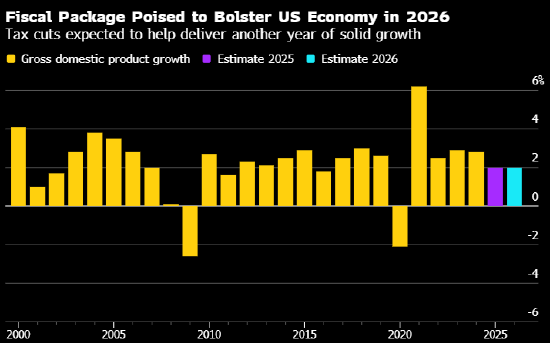
Economic Outlook - The U.S. economy's ability to maintain expansion through 2026, influenced by Trump's tax cuts, remains uncertain after a year of policy shocks [1][12] - Economists estimate that taxpayers will receive higher refunds this year, with total new refunds projected between $30 billion and $100 billion [1][12] - Predictions indicate a cautious outlook, with consumer spending boosts from fiscal stimulus expected to diminish over time, and tariffs continuing to burden small businesses [1][12] GDP Growth Projections - Economists forecast a GDP growth rate of 2% for 2026, consistent with predictions for 2025, which is considered slow by historical standards [1][12] - The Federal Reserve is slightly more optimistic, projecting a 2.3% GDP growth for this year, driven by fiscal policy, a looser financial environment, and diminishing tariff impacts [3][14] Tax Refunds and Consumer Spending - Tax legislation has extended income tax cuts and introduced exemptions for tips and overtime pay, with average refunds expected to be $300 to $1,000 higher than usual [14][15] - Goldman Sachs estimates consumers will receive an additional $100 billion in refunds in the first half of the year, while Citigroup estimates range from $30 billion to $50 billion [14][15] Business Investment and Employment - Economists suggest that business incentives from the Trump administration could increase GDP by 0.3 percentage points this year, despite some negative impacts from cuts to federal assistance programs [6][17] - The unemployment rate rose to 4.6% in November, the highest in over four years, with expectations of an average rate of 4.5% for the year [6][17] Tariff Impacts and Inflation - Federal Reserve officials believe the inflationary effects of rising tariffs are likely to be temporary, but living costs remain a significant issue for upcoming elections [9][20] - Businesses express concerns over tariffs, with expectations of price increases exceeding 3% in 2026, impacting consumer behavior [9][20] Artificial Intelligence and Investment Trends - The surge in investment for data centers driven by artificial intelligence has raised concerns about the actual job creation not matching the scale of investment announcements [11][22] - There are worries that AI could displace human labor, despite its potential to enhance purchasing power among wealthier Americans [11][22]
2026 年美国政局展望:换届与选举
Changjiang Securities· 2026-01-05 15:26
Group 1: Federal Reserve Chair Transition - The upcoming transition of the Federal Reserve Chair is expected to have limited impact on the Fed's independence, as the leading candidates, Hassett and Warsh, are establishment figures unlikely to pursue aggressive easing policies[8] - The decision-making process of the Federal Open Market Committee (FOMC) requires collective voting, which constrains the new chair's ability to unilaterally influence policy direction[8] - Current market predictions indicate a 45% probability for Hassett and a 33% probability for Warsh to be nominated as the next Fed Chair[17] Group 2: Midterm Elections - Historically, the ruling party has lost an average of 26.8 House seats and 3.4 Senate seats in midterm elections since 1934, regardless of presidential approval ratings[30] - The Republican Party is likely to lose control of the House and faces fierce competition in the Senate, with 22 of the 35 contested seats currently held by Republicans[35] - Trump's focus is expected to shift towards short-term domestic policies to boost approval ratings ahead of the midterms, as tariffs have not significantly improved his support[43]
美国人的日常生活涨了多少?
Sou Hu Cai Jing· 2026-01-05 08:10
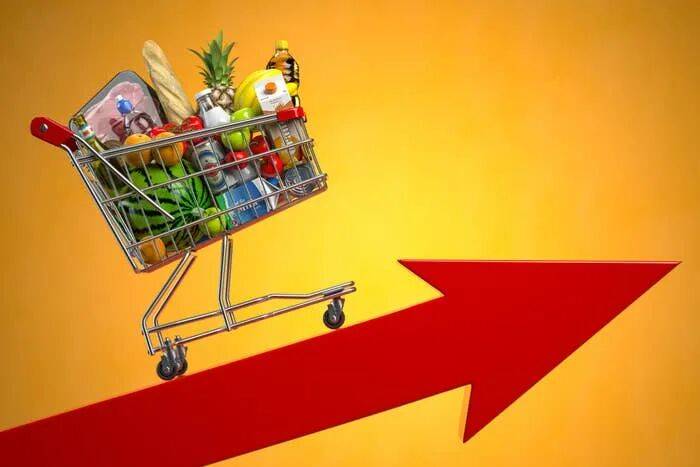
Inflation Overview - The inflation rate in the U.S. reached 3% in 2025, an increase of 4 percentage points since the beginning of the year, remaining above the Federal Reserve's target of 2% [1] Grocery Prices - Grocery prices have been on the rise since 2017, according to the Consumer Price Index data from the U.S. Bureau of Labor Statistics [2] Restaurant Industry - Prices for dining out have hit a historical high, with non-home dining costs increasing by over 2%. Restaurant traffic has declined for nine consecutive months, leading fast-food chains to attract consumers through price reductions and special menu items [7] - Notable declines in stock prices for mid-range casual dining brands include Chipotle (-44.7%), Sweetgreen (-79.9%), Shack Shack (-38.71%), and Wingstop (-14.7%) [4] Housing and Utilities - The median price of existing single-family homes rose nearly 6% from $398,100 in January to $420,600 in October [8] - Electricity prices for residents increased by 13% since the beginning of the year, with significant price hikes in states with concentrated AI data centers [8] Transportation Costs - Gasoline prices rose to approximately $3.20 per gallon at the beginning of the year but fell to around $2.90 by December [11] - The average price of new cars surpassed $50,000 for the first time in September, while used car sales increased by nearly 4% since the beginning of the year [11] - The number of car owners with overdue payments reached a historical high in November [11] Economic Policies Impact - The inflation trend in 2025 is closely linked to policy adjustments, with the Federal Reserve having cut interest rates for three consecutive months starting in October to address economic pressures. However, inflation control remains a challenge [10] - The "Liberation Day" tariff policy implemented by the Trump administration in April has contributed to rising inflation, with customs collecting approximately $30 billion in tariffs monthly, affecting various consumer goods [10]
中美决战倒计时?美国选好2个帮手,中国已经在台海摆上硬菜
Sou Hu Cai Jing· 2026-01-02 12:11
菲律宾和日本在美国的帮助下,继续加强防务合作,菲律宾将其军事基地转变为反华前线。黄岩岛的对峙已经持续了13年,而日本的历史纠葛则使得两国关 系更加复杂。中国则通过辽宁号和山东号航母在6月进行双航母演习,山东号进入了日本的经济区,展示了中国在该区域的强大控制力。台湾的汉光演习则 着重训练城市的防御韧性,假设指挥系统失灵,进行长时间的实弹射击演练。解放军也在5月21日进行了海军登陆演练,73集团军进行了兵力调动。台湾方 面则用阿布拉姆斯坦克进行了射击训练,东区则加强了防空准备。 美、日、菲三国通过联合演习的方式增强了区域内的防御能力。美国和日本、澳大利 亚、菲律宾的防御协定也在不断推进。特朗普政府对盟友的征税政策,使得美国与各国的经济安全关系日益复杂。中国虽然增加了对美进口农产品的量,但 今年中美关系不断升温,特朗普刚上任就开始了关税战,似乎是故意挑起争端。1月份,他签署了行政命令,对中国的钢铁和电子产品加征10%的关税。中 国立刻反击,2月4日宣布对美国的农产品和汽车加征同样的税率。到了3月,美方将关税提高至54%,导致供应链出现混乱。美国企业纷纷寻找本地供应 商,而中国港口则从欧洲和亚洲转运货物进行补位。4月 ...

美国一涨关税政策推迟1年
Xin Lang Cai Jing· 2026-01-02 04:04
Core Viewpoint - The U.S. government has postponed the planned increase in tariffs on soft furniture, kitchen cabinets, and bathroom cabinets, which was originally set to take effect on January 1, 2026, now delayed to January 1, 2027 [1] Industry Impact - The current tariff rate on these products is 25%, with the proposed increase to 50% for kitchen cabinets and bathroom cabinets, and to 30% for soft furniture [1] - Industry associations and media have indicated that the tariff increases would place additional pressure on U.S. consumers, homebuyers, and builders, who are already in sectors targeted for economic growth by the government [1] Economic Context - CNN reported that the imposition of tariffs on various goods has led to price instability, attracting increasing criticism [1] - Bloomberg noted that dissatisfaction among U.S. voters regarding price levels is expected to continue to grow [1]
继续调整贸易策略,白宫暂停对家具再加关税
Xin Lang Cai Jing· 2026-01-01 15:39
Group 1 - The U.S. government has postponed the planned increase in tariffs on imported soft furniture, kitchen cabinets, and bathroom cabinets, which were initially set to rise to 50% and 30% respectively in January 2026 [1] - The imposition of a 25% tariff on these products began in October of the previous year, with concerns that further increases would pressure U.S. consumers, homebuyers, and builders [1] - Furniture prices have already seen a year-on-year increase of 4.7%, with living and dining room furniture experiencing a notable rise of 9.5% over the past 12 months [1] Group 2 - The Trump administration aimed to restructure the domestic supply chain through tariffs, but there are internal industry disagreements regarding the feasibility of domestic timber meeting builders' demands [2] - The tariffs were initiated following an investigation by the U.S. Department of Commerce under Section 232 of the Trade Expansion Act, which allows for tariffs on products deemed a threat to national security [2] - Certain agricultural products, including coffee, bananas, and beef, have been exempted from additional tariffs, reflecting a strategic adjustment in trade policy [2]
关税突发!特朗普宣布:推迟上调
券商中国· 2026-01-01 12:40
美国,传来大消息! 当地时间周三(2025年12月31日),美国总统特朗普签署一项公告,将软体家具、橱柜和浴室柜的关税上调措 施再推迟一年。 彭博社评论此事称,在美国民众对物价水平不满情绪持续升温背景下,特朗普推迟上述上调计划,放缓了其征 税步伐。 据总台环球资讯广播消息,美国《华盛顿邮报》日前刊文指出,尽管美国联邦政府为美国农民推出了规模为 120亿美元的救助计划,但美国农民仍继续在通货膨胀和关税政策的影响下苦苦挣扎。 美国政府日前宣布,将为美国农民提供巨额资金的救助,以应对美关税政策对其农业的"反噬"。文章说,对于 农民、行业协会而言,这项救助计划默认了政府过去一年的政策已经彻底改变了农业,并威胁到他们的生计。 目前尚不清楚的是,这些损害农民利益的政策是否也会破坏总统与他最忠实的选民群体之间的关系。 文章援引美国爱荷华州立大学农业经济学教授查德·哈特(Chad Hart)的话表示,由于拜登政府执政期间通货 膨胀加剧,农民们曾希望现任政府能带来更为有利的经济环境。但美国政府对外国进口商品实施的广泛关税措 施——以及部分国家对进口美国产品的反制措施——都粉碎了这些希望。 文章还表示,对一些农民来说,政府的救助 ...
美媒:通货膨胀和关税政策下的美国农民在苦苦挣扎
Zhong Guo Xin Wen Wang· 2025-12-31 15:25
Core Viewpoint - Despite a $12 billion relief plan from the U.S. federal government, American farmers continue to struggle under the pressures of inflation and tariff policies [1][2]. Group 1: Economic Impact on Farmers - The Biden administration's inflation has led farmers to hope for a more favorable economic environment, but extensive tariffs on foreign imports have dashed these hopes [2]. - Tariffs on specific goods, including steel and aluminum, have increased costs for essential farming equipment and supplies, such as tractors, combines, and fertilizers [2]. - The number of U.S. farmers filing for bankruptcy protection has increased by 60% compared to the same period in 2024, marking the highest rate since 2020 [2]. Group 2: Government Relief and Its Limitations - The relief plan is seen as a recognition that past government policies have significantly altered the agricultural landscape and threatened farmers' livelihoods [1][2]. - Some farmers believe the relief may come too late, with many expressing doubts about the effectiveness of the government's assistance [3]. - The agricultural relief plan is viewed as insufficient, with farmers indicating that it will not lead to wealth and that some may not survive the current economic conditions [3]. Group 3: Personal Accounts and Concerns - Farmers like Mike Phillips are questioning how much of the promised relief will actually reach them and are advocating for more sensible economic and trade policies instead of reliance on government aid [3]. - The situation is compared to the agricultural crisis of the 1980s, with concerns about low food prices, high input costs, and industry consolidation [3].