
数字化转型

Search documents
金春股份:致力成为产业生态构建者
Zheng Quan Ri Bao Zhi Sheng· 2026-01-16 16:40
Core Viewpoint - Anhui Jinchun Nonwoven Fabric Co., Ltd. is at a critical juncture in its transformation, facing challenges from volatile raw material prices, increasing quality demands from the market, and intensified competition, yet it is actively seeking change through various strategies [1] Group 1: Company Background and Development - Founded in July 2011, Jinchun started with a registered capital of 20 million yuan and a single production line, focusing on nonwoven fabric materials and products [2] - The company has expanded its product range to include water-jet nonwoven fabric materials used in hygiene, decoration, and industrial applications [2] - Jinchun completed its shareholding reform in September 2015 and was listed on the Shenzhen Stock Exchange's Growth Enterprise Market in August 2020 [3] Group 2: Innovation and Technology - The company emphasizes technological innovation as a lifeline, developing market-first products such as low shrinkage high-temperature synthetic leather base fabrics [4] - Jinchun's production process involves advanced automation and real-time data monitoring, significantly improving efficiency and product quality [7][8] - The digital management platform integrates various operational aspects, enhancing decision-making and enabling customized product development [8] Group 3: Cost Management and Risk Control - The profitability of the nonwoven fabric industry is closely tied to raw material prices, which have shown significant volatility [5] - Jinchun has established a "three-in-one" risk control system, focusing on local procurement and long-term supplier agreements to stabilize costs [6] - The company has successfully reduced raw material costs by 3.2% year-on-year through strategic purchasing and futures market hedging [6] Group 4: Strategic Expansion - In October 2022, Jinchun acquired a 51% stake in Anhui Jinsenyuan Material Technology Co., Ltd., marking a strategic entry into the automotive materials sector [9] - This acquisition allows Jinchun to bypass market cultivation periods and leverage existing relationships and resources for enhanced competitiveness [10] - The company aims to transition from a material supplier to an ecosystem builder in the industry, focusing on high-value markets [10]
越总理范明政:越南希加强与日荷的前沿领域合作
Shang Wu Bu Wang Zhan· 2026-01-16 16:10
Group 1 - Vietnam aims for double-digit GDP growth and focuses on digital transformation and modern digital infrastructure development, particularly in AI and big data [1] - Japan is considered an irreplaceable partner for Vietnam, with ongoing cooperation in digital transformation and AI governance [1] - Vietnam seeks support from Japan in planning, technology transfer, and high-quality human resource training [1] Group 2 - Vietnam is enhancing its policies related to technology, innovation, and digital transformation to meet the stringent standards of the semiconductor industry [2] - ASML is exploring the establishment of a semiconductor training and R&D center in Vietnam and is considering setting up a representative office [2] - ASML aims to support Vietnamese companies in developing digital infrastructure and semiconductor production, including training and expert exchange programs [2]

越南主办第六届东盟数字部长会议
Shang Wu Bu Wang Zhan· 2026-01-16 16:10
Group 1 - The sixth ASEAN Digital Ministers' Meeting was held in Hanoi, Vietnam, focusing on the theme "ASEAN Transformation: From Infrastructure Connectivity to Smart Connectivity" with approximately 300 attendees including ASEAN leaders and international representatives [1] - Vietnam's Prime Minister emphasized the shift from traditional economic integration to a more adaptive economy, aiming for ASEAN to become the world's fourth-largest economy by 2045, with digital transformation as a key driver for economic growth and resilience [1][2] - The meeting highlighted a significant shift in ASEAN's digital development philosophy, moving from prioritizing infrastructure development to leveraging intelligence and data to create value, which is seen as a necessary trend in the digital age [2] Group 2 - The ASEAN Digital Ministers' Meeting is the highest-level cooperation mechanism in the digital technology sector, discussing topics such as digital transformation, digital economy, infrastructure connectivity, data governance, artificial intelligence, and cybersecurity [3] - The meeting resulted in the discussion and approval of the "ASEAN Digital Development Master Plan 2030" and the "ASEAN Digital Economy Strategy 2030," which aim to enhance cooperation with dialogue partners and international organizations [3]
东盟秘书长高金洪:越南在东盟数字化战略中展现引领作用
Shang Wu Bu Wang Zhan· 2026-01-16 16:10
(原标题:东盟秘书长高金洪:越南在东盟数字化战略中展现引领作用) 越通社1月15日报道,在出席第六届东盟数字部长会议期间,东盟秘书长高金洪就越南及区域未来 数字发展接受越通社记者采访。 高表示,对东盟地区乃至全球而言,科技创新和数字化转型都是当前首要优先事项。越南党、国家 和政府对科技创新和数字化转型的目标,彰显出越南远见卓识,具有战略性敏锐思维。东盟正拟议《东 盟2045年愿景:共同未来》,这是一个旨在建设和平、繁荣、有韧性,致力于实现更深入的融合、可持 续发展,不让任何人掉队的东盟共同体的长期战略,越南非常积极地参与了该文件的起草。加强科技创 新和数字化转型,不仅为各成员国创造新的增长动力,也有助于提升东盟在充满变动的全球背景下的战 略自主能力、竞争力和地位。这些也是范明政总理在第六届东盟数字部长级会议开幕式发言时所强调的 内容,他完全支持。 第六届东盟数字部长会议讨论了《2030年东盟数字总体规划》,其愿景是将东盟打造成为具备竞争 力、连通性和包容性的全球数字中心。这是一份重要蓝图,不仅有助于缩小成员国间发展差距,还能开 辟新增长空间,提升竞争力,巩固东盟在全球数字价值链中的地位。东盟正积极推动《东盟数 ...
谁才是中国民企真龙头?两份榜单背后,藏着两套生存哲学
Sou Hu Cai Jing· 2026-01-16 15:59
Core Insights - The contrasting rankings of JD.com and Tencent/Alibaba highlight two distinct business philosophies in China's private sector, focusing on current revenue versus future growth potential [1][2] Group 1: Rankings and Evaluation Standards - JD.com topped the "2025 China Private Enterprises 500" list with a revenue of 1.16 trillion RMB, surpassing Alibaba and Huawei, based on a revenue-centric evaluation of 6,379 companies [4][5] - Goldman Sachs' report ranked Tencent, Alibaba, and BYD as the "Top Ten Private Enterprises," emphasizing investment value and growth potential rather than current size [7] Group 2: Business Models - JD.com adopted a heavy asset model, investing significantly in logistics and self-operated goods, which has created substantial competitive barriers despite initial losses [8][6] - In contrast, Tencent and Alibaba utilize a light asset model, focusing on technology, data, and user relationships, allowing for high profitability with lower operational costs [10][12] Group 3: Manufacturing Sector Growth - The manufacturing sector is a significant contributor to the private economy, with 66.4% of the top 500 companies being manufacturers, accounting for 68.84% of revenue and 53.21% of net profit [13][14] - Companies like BYD and CATL are leading in innovation and R&D, with substantial investments in new energy technologies [16][17] Group 4: Future Directions - The diversity in business models among private enterprises is a strength, with companies like JD.com and Tencent exploring synergies between heavy and light asset strategies [18][19] - The implementation of the "Private Economy Promotion Law" in May 2025 is expected to provide a more supportive legal environment for private enterprises [19][20] - A significant portion of the top 500 companies is focusing on digital transformation and green initiatives, with international revenue growth indicating a push towards global expansion [20]






方洪波谈企业家精神:不被过往成绩束缚,不被路径依赖拖累
Shang Hai Zheng Quan Bao· 2026-01-16 15:47
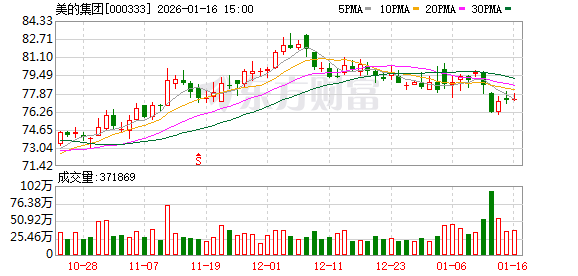
Core Insights - The annual speech by Midea Group's Chairman and President, Fang Hongbo, emphasized the company's achievements over the past year and outlined the strategic direction for the upcoming year, focusing on core business and diversification strategies [2][5]. Business Performance - Midea Group has made significant progress in various business sectors, achieving notable results through a strategy of simplification and self-disruption, leading to breakthroughs in technology, product innovation, and global expansion [6]. - In the smart home sector, Midea introduced the industry's first AI butler and continued to lead in air conditioning technology with multi-model AI interaction, while also launching innovative products like the 45CM ultra-thin refrigerator [6]. - The industrial technology segment saw the introduction of new products such as wide-frequency rotary compressors and the establishment of manufacturing facilities in Mexico and Brazil, enhancing the company's capabilities in core components for electric vehicles and robotics [6]. - Midea's energy business is expanding rapidly, with significant growth in distributed photovoltaic installations and the launch of self-developed energy storage systems in multiple international markets [7]. Future Strategy - For 2026, Midea aims to focus on core businesses and markets, promoting synergy between ToC (business-to-consumer) and ToB (business-to-business) operations to create a sustainable growth model [9][10]. - The company plans to enhance its core capabilities in white goods and HVAC, targeting a leading position globally while improving its presence in key markets such as Southeast Asia, North America, and the Middle East [10][11]. - Midea is committed to innovation in its secondary core businesses, including robotics, energy, and healthcare, recognizing their potential for significant market opportunities [11]. Management Philosophy - Fang Hongbo highlighted the importance of self-revolution and breaking path dependence to adapt to increasing market competition, advocating for a culture of innovation and agility within the organization [12][13]. - The company emphasizes the need for decisive action and the elimination of redundant operations to maintain organizational efficiency and responsiveness [13]. Conclusion - The overarching message from Fang Hongbo's speech is one of resilience and adaptability, encouraging the organization to embrace change and pursue growth opportunities while remaining grounded in core competencies [14].

红星实业集团董事长罗跃:以标准、数字、民生为翼 赋能农批统一大市场建设
Xin Lang Cai Jing· 2026-01-16 14:57
在中国农产品批发市场行业发展40年的关键节点,构建全国统一大市场成为行业高质量发展的核心命 题。红星实业集团作为深耕农业产业与会展服务的标杆企业,始终以创新实践助力行业转型。1月16 日,红星实业集团党委书记、董事长罗跃在农产品批发市场高质量发展论坛中围绕农批行业发展新路 径,分享了企业在标准统一、数字赋能、民生服务等方面的探索与思考。 以标准统一为基石 筑牢全链协同发展根基 (来源:经济参考报) 激活流通效率核心动能 数字化转型是农批行业突破"信息差、高成本、高损耗"痛点的必由之路。罗跃称,智慧农批已在头部市 场形成成熟实践,上海江桥的智慧云平台、广州江南果菜的数字化冷链网络、武汉白沙洲的"农批+金 融"模式,均通过数字技术重构了流通逻辑。红星实业集团同样积极布局数字化转型,通过农博会搭建 线上线下融合交易平台,利用数字化工具实现供需精准匹配,展会期间线上交易额超3亿元;以红星农 批达人矩阵、融媒体短视频中心、新媒体分会等平台为载体,孵化多个农产品IP账号,推动农产品 从"产得好"向"卖得好"升级。 此外,企业正探索建立农产品流通大数据联盟,打通产供销储各环节数据壁垒,让资源配置更高效。罗 跃表示,数字化不 ...
蓝皮书:技术创新推动数字消费金融行业提质增效
Xin Lang Cai Jing· 2026-01-16 14:57
Group 1 - The core competitiveness of digital consumer finance will increasingly rely on the efficient allocation of digital technology and data elements [1][2] - Digital consumer finance will gradually cover all scenarios of consumers' smart lives, fostering a specialized business system through orderly competition [2] - The industry will expand its incremental space in sustainable development areas such as agriculture, elderly care, and green finance, with a focus on rural markets [3] Group 2 - The rapid development of frontier technologies like AI will drive innovation and transformation in the digital consumer finance sector, enhancing service efficiency and data governance [2] - Digital consumer finance will act as a bridge connecting consumers and the real economy, improving financial services' capability to support the real economy [2] - The industry will explore cross-border payment and consumer credit linkage, leveraging the internationalization of the digital yuan and the Belt and Road Initiative [2][3]
北京新发地董事长张玉玺:深耕三十八载 北京新发地市场的民生坚守
Xin Lang Cai Jing· 2026-01-16 14:57
Core Insights - The article discusses the evolution and current challenges of China's agricultural wholesale market, emphasizing the significant role of the Xinfadi market in Beijing as a key player in this sector [1][3][4]. Group 1: Historical Context and Development - The agricultural wholesale market in China emerged as a result of the reform and opening-up policies, transitioning from a planned economy to a market economy [2]. - The development of the agricultural wholesale market can be divided into three phases: rapid growth from 1985 to 2003, stability from 2003 to 2012, and adjustment since 2012, with the number of wholesale markets exceeding 5,500 [3]. - Xinfadi market has grown from a small market to a significant hub, covering 1,680 acres and employing 2,600 staff, handling 1,580 million tons of transactions worth 130.6 billion yuan in 2024 [3][4]. Group 2: Current Market Dynamics - In 2024, China's vegetable production reached 823 million tons, accounting for 61.4% of the global total, while the market sees over 270 vegetable varieties and 280 fruit varieties traded daily [5][6]. - The market faces challenges such as intense competition, the need for brand establishment, and ensuring food safety, which are critical for consumer trust [6][7]. Group 3: Future Directions and Challenges - The agricultural wholesale industry is experiencing a decline in overall scale by 10%, with fruit transaction volumes decreasing faster than vegetables due to changing consumer habits [9]. - Key strategies for overcoming challenges include enhancing supply chain management, developing e-commerce, improving logistics, and advancing digital transformation [9][10]. - Xinfadi market aims to lead the industry towards a more efficient, safe, and sustainable future while continuing to benefit consumers and farmers [11].
全球灯塔网络评选出23个新工厂,其中16个来自中国
Zhong Guo Xin Wen Wang· 2026-01-16 13:59
Core Insights - The World Economic Forum has welcomed 23 new lighthouse factories into the Global Lighthouse Network, showcasing how these factories are achieving significant industry transformation amidst geopolitical turmoil, cost pressures, and rapid technological changes [1] - The newly inducted factories are leveraging advanced technologies, particularly AI, to enhance operational resilience, competitiveness, and sustainability [1][2] - The annual white paper released by the Forum outlines pathways for large-scale operational transformation to enhance resilience and impact, drawing insights from over 220 lighthouse factories across more than 30 countries [1][2] Group 1: Operational Transformation - Leading companies are institutionalizing successful practices by integrating AI into daily decision-making and extending transformation across the entire value chain [2] - The newly launched AI industrial intelligence platform, Lumina, consolidates data from over 1,000 successful transformation factories, helping leaders benchmark performance and avoid common pitfalls [2][3] - 94% of successful transformations are attributed to the integration of multiple technologies, with AI being the most widely deployed, followed by IoT, cloud computing, and digital twins [2] Group 2: Performance Metrics - New lighthouse factories have achieved significant improvements in various performance metrics, such as a 400% increase in personalized product range and a 29% reduction in delivery cycles at Carl Zeiss Optical [7] - Hisense Qingdao factory has seen an 84% net promoter score, a 34% reduction in R&D cycles, and an 18% decrease in material costs through comprehensive digital transformation [8] - ACG Packaging Materials achieved a 40% reduction in delivery cycles and a 20% decrease in raw material costs, alongside a 71% drop in product defect rates [10] Group 3: Sustainability and Resilience - Factories are increasingly focusing on sustainability, with Ningde Times reducing carbon footprints by 56% and achieving significant reductions in emissions through innovative energy solutions [32] - The transformation initiatives at SOCAR Carbamide led to a 21% increase in production throughput and a 24% improvement in natural gas utilization efficiency [25] - The focus on sustainable practices is evident in the new lighthouse factories, which aim for net-zero and circular development goals, leading to industry-leading performance in energy conservation and waste reduction [32][36] Group 4: Talent Development - Companies like AUO in Suzhou have implemented digital initiatives to enhance employee engagement and reduce turnover rates by nearly 70%, while also increasing productivity by 29% [37] - Schneider Electric's initiatives in Wuhan focus on advanced solutions for workforce design and talent planning, contributing to significant operational improvements [38]
