
粮食安全

Search documents
2025年中国进口粮食行业市场政策、产业链图谱、供需现状、竞争格局及发展趋势研判:豆类依然是占比最大的进口品种,占比高达66.67%[图]
Chan Ye Xin Xi Wang· 2025-06-26 01:38
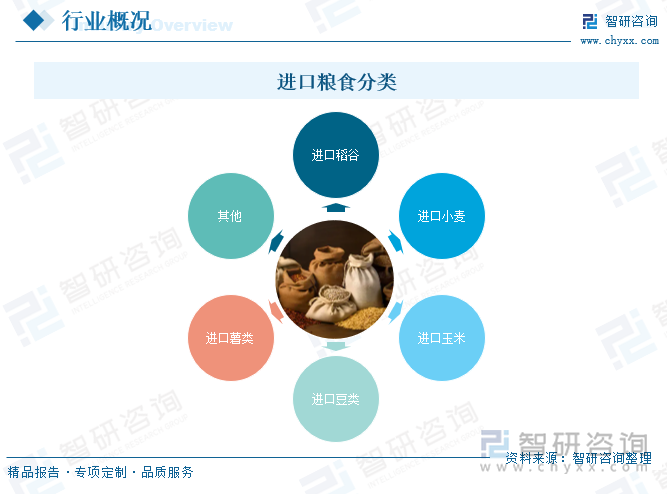
Overview - China, as a populous country, has a massive demand for food, with grain demand projected to reach 861.77 million tons in 2024, while production is only expected to be 706.5 million tons, necessitating significant imports [1][9]. - The demand for feed grains such as corn and soybeans has surged due to increased consumption of livestock products as living standards rise [1][9]. Market Policies - The Chinese government emphasizes food security and has implemented various policies to control import scales and ensure the quality of imported grains [4][6]. - Recent policies include support for cross-border e-commerce and measures to stabilize foreign trade growth, reflecting a commitment to enhancing the agricultural sector [4][6]. Industry Chain - The upstream of the imported grain industry includes overseas grain planting, ocean transportation, and cold chain logistics, while the downstream consists of oil extraction, flour processing, feed production, and food processing [7]. - Key products processed from imported grains include edible oils, various flours, and animal feed, which are essential for meeting domestic consumption needs [7]. Current Development - In 2024, China is expected to import 15.753 million tons of grain, a decrease of 2.3% year-on-year, with an import dependency rate of 18.28% [11]. - Soybeans remain the largest import category, accounting for 66.67% of total imports, followed by corn and wheat at 8.66% and 2.74%, respectively [11]. Competitive Landscape - The competitive landscape includes 344 companies applying for wheat import quotas and 1,453 for corn, with major state-owned enterprises like COFCO Group holding significant market influence due to their comprehensive logistics and storage capabilities [14][22]. - COFCO Group is a leading player in the grain import sector, with a global supply chain covering grain storage, logistics, processing, and trade [22]. Industry Representative Analysis - COFCO Group has established itself as a global leader in the agricultural sector, with operations spanning across six continents and an annual grain trading volume of 170 million tons [22]. - Jin Jian Rice Industry Co., Ltd. focuses on high-quality grain and oil products, with a revenue of 4.627 billion yuan in 2024, indicating a strong presence in the agricultural trade market [24]. Development Trends - Future trends indicate a diversification in imported grain types, with an expected increase in high-end edible oils, quality rice, and specialty grains [26]. - China aims to optimize its import structure and expand its sources of grain imports, reducing reliance on single markets and enhancing trade cooperation with countries along the Belt and Road Initiative [26].




夏收连夏种 夏管正当时(三夏进行时)
Ren Min Ri Bao· 2025-06-25 22:21
Core Insights - The article emphasizes the importance of timely agricultural practices to ensure food security in China, particularly during the summer harvest and planting seasons [6][7] - It highlights the advancements in agricultural technology and machinery that enhance efficiency and productivity in grain production [2][3] Group 1: Agricultural Practices - The summer harvest of wheat is nearly complete, with over 90% of summer grain harvested and significant progress in summer planting, including 95% of summer corn and 70% of summer soybeans planted [2][3] - The use of advanced planting techniques, such as wide-narrow row planting and precision seeding with smart machinery, has increased corn planting density to over 6,000 plants per acre [2][3] Group 2: Mechanization and Efficiency - Over 800,000 combine harvesters were deployed nationwide, with more than 200,000 operating across regions, improving harvesting efficiency by over 30% compared to five years ago [3] - The average harvesting loss rate for wheat is expected to remain below 1% due to continuous improvements in machinery and farming techniques [3] Group 3: Irrigation and Crop Management - Nationwide summer irrigation efforts are underway, with significant water management strategies in place to support crop growth during critical periods [4] - Smart irrigation systems are being utilized to enhance crop management, with real-time pest alerts and irrigation adjustments being communicated to farmers [4] Group 4: Financial Support - The Agricultural Bank of China has provided over 70 billion yuan in loans to support grain production and the purchase of advanced agricultural machinery [3]
亚行增加二百六十亿美元粮食安全援助资金——加大投资 改善亚太地区粮食安全状况
Ren Min Ri Bao· 2025-06-25 22:18
除增资计划外,亚行正在开发创新自然资本融资机制,通过设立自然资本基金,加大对气候智能型农业 的支持。据亚行介绍,这是一个计划规模为1.5亿美元的混合融资工具,由全球环境基金提供主要支 持,预计还将得到包括全球农业和粮食安全计划在内的其他资金支持。该机制将支持亚行发展中成员的 农民和创新者开展的农业食品体系项目,与生物多样性补偿、水质检测等有形生态系统服务或碳信用额 挂钩,以可持续的方式保护、恢复和管理自然资本,努力构建一个富有韧性、可持续的粮食体系。 "当前极端气候和资源退化威胁着众多人口的粮食供应和生计。这笔资金不仅有助于缓解饥饿、改善营 养状况,还将推动粮食生产、加工、分销和消费全链条的变革。"亚行行长神田真人表示,通过推广气 候适应型农业技术、培育新型农业经营主体,能为农民增加收入,为农业企业创造发展机会。 (文章来源:人民日报) 近年来,全球极端天气气候事件频发,地缘冲突影响粮食供应链稳定,给亚太地区粮食安全带来严峻挑 战。亚洲开发银行(以下简称"亚行")在一份报告中指出,全球超过一半的营养不良人口分布在亚洲发 展中国家。世界粮食计划署评估,大多数发展中国家面临三大粮食不安全风险中的至少两项,即极端天 ...
粮食“飞地”新模式前景广阔
Jing Ji Ri Bao· 2025-06-25 21:57
Core Viewpoint - The "flying land" model has the potential to become a model for coordinated development between grain production and sales areas, contributing to common prosperity and ensuring food security in China [1][5]. Group 1: Background and Rationale - The establishment of "flying land" farms in regions like Heilongjiang and Tianjin by Beijing, and in Jiangsu and Anhui by Shanghai, stems from historical reasons and aims to address structural contradictions between production and sales areas [2]. - The 13 main production areas contribute nearly 80% of the national grain output annually, yet face challenges such as low added value and the "grain finance imbalance," leading to difficulties for farmers despite increased production [2]. Group 2: Benefits of the "Flying Land" Model - The "flying land" model integrates the financial, technological, and market advantages of sales areas with the resource advantages of production areas, promoting the development of modern grain industry parks and enhancing the integration of production, supply, storage, and sales [2][3]. - This model not only secures high-quality grain sources for sales areas but also helps production areas move beyond basic grain production to deep processing and brand management, thus boosting local economies and farmers' incomes [2][3]. Group 3: Current Practices and Models - Various effective cooperation models have emerged across the country, including land transfer, equity cooperation, and order-based management, which enhance the depth of collaboration between production and sales areas [3]. - These practices have shifted cooperation from simple supply-demand relationships to deeper industrial chain collaborations, creating a virtuous cycle where sales areas support production areas and vice versa [3]. Group 4: Challenges and Solutions - The "flying land" model is still in the exploratory phase and faces challenges such as imperfect profit distribution mechanisms, difficulties in cross-regional policy coordination, high logistics costs, and market risks affecting contract stability [4]. - Solutions include establishing fair profit-sharing mechanisms, creating national-level coordination for policy integration, reducing logistics costs through infrastructure development, and improving futures markets to mitigate risks [4]. Group 5: Future Outlook and Policy Recommendations - The success of the "flying land" model relies on systematic policy support, with national and local governments encouraged to integrate it into food security plans and provide targeted support [5]. - Future efforts should focus on expanding pilot programs, optimizing policies, and enhancing infrastructure to ensure collaborative progress between production and sales areas, thereby strengthening China's food security [5].
阿布扎比财富基金ADQ:支持阿联酋的长期粮食安全目标,包括将国内粮食产量提高到总消费量的 50%,并减少对进口的依赖。
news flash· 2025-06-25 16:44
Core Viewpoint - Abu Dhabi Wealth Fund ADQ is committed to supporting the UAE's long-term food security goals, which include increasing domestic food production to 50% of total consumption and reducing reliance on imports [1] Group 1 - The initiative aims to enhance the self-sufficiency of the UAE in food production [1] - The strategy focuses on reducing the dependency on imported food products [1] - The target of achieving 50% domestic food production reflects a significant shift in the UAE's food security policy [1]
第一观察丨领悟总书记抓土地工作的系统思维
Xin Hua She· 2025-06-25 13:08
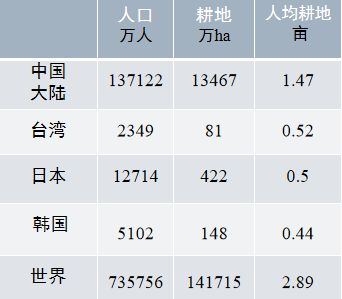
Core Viewpoint - The article emphasizes the importance of a comprehensive and systematic approach to land management in China, highlighting the need for ecological protection, food security, and sustainable development as interconnected goals [3][4][5]. Group 1: Land Protection and Food Security - The significance of arable land is underscored, with the assertion that China uses 9% of the world's arable land to feed nearly 20% of the global population, necessitating strict protection measures [3][4]. - The concept of "land as a bowl of rice" is reiterated, stressing that food security is directly linked to the protection of arable land, which is a strategic priority [4][5]. Group 2: Systematic Land Management - The article discusses the need for a holistic view of land resources, integrating various types of land such as forests, grasslands, wetlands, and deserts into a unified management strategy [5][6]. - It highlights the necessity of balancing development and ecological preservation, with specific attention to the unique ecological functions of different land types [6][7]. Group 3: Policy and Governance - The article mentions the importance of enforcing regulations and responsibilities at all levels of government to ensure effective land management and protection [4][5]. - It calls for a strategic approach to land use that considers population demands and ecological sustainability, advocating for careful planning and resource allocation [7].
农行广东分行:浇灌金融“活水” ,守护沃土粮安
Nan Fang Nong Cun Bao· 2025-06-25 02:32
Core Viewpoint - Agricultural Bank of China Guangdong Branch is actively supporting food security and land protection in Guangdong province through innovative financial services and products, contributing to the implementation of the provincial land protection plan [6][64]. Group 1: Financial Support for Agricultural Development - Agricultural Bank of China Guangdong Branch has provided 22.5 million yuan in credit support for high-standard farmland construction projects in Nanhua City, enhancing the financial capacity of five construction units [34][35]. - The bank has developed a unique financial service model for high-standard farmland construction, facilitating the integration of government and enterprise efforts [28][30]. - The bank's financial support has enabled the establishment of a provincial-level modern agricultural industrial park, improving land productivity through advanced agricultural practices [31][32]. Group 2: Enhancing Market Stability - The stable development of the grain industry is crucial for protecting farmland and improving land utilization efficiency [41]. - Chengsheng Rice Industry, a key grain enterprise, has benefited from 16 million yuan in pure credit loans from the bank, allowing it to expand production and enhance storage capacity [58][60]. - The bank's support has helped stabilize the grain procurement mechanism, fostering close ties between the company and local farmers, thereby ensuring food security [62][63]. Group 3: Commitment to Food Security - As of now, Agricultural Bank of China Guangdong Branch has a loan balance of 36 billion yuan in key grain sectors, supporting over a thousand grain enterprises [64]. - The bank's actions reflect its commitment to safeguarding farmland and ensuring food security, contributing to rural revitalization and the "Hundred Thousand Project" in Guangdong [66].


米价一年暴涨98%,日本“米荒”折射了什么问题?
Hu Xiu· 2025-06-25 00:16
Group 1 - The core issue is the rice shortage in Japan, leading to a significant price increase of over 98% compared to the previous year, with prices reaching around 24 RMB per kilogram [1] - The rising rice prices have forced Japanese households to be more budget-conscious and alter their dietary habits, yet farmers are not benefiting from these price increases due to rising production costs and profit margins being squeezed by distribution channels [1][2] - The Japanese government is responding to the crisis by releasing reserve rice and increasing imports, which may alleviate short-term price pressures but could increase long-term dependency on international markets [2][3] Group 2 - The agricultural model in East Asia, including Japan, has historically been characterized by small-scale family farming, which has led to vulnerabilities in food security and reliance on external markets [4][5] - Since the mid-20th century, East Asian economies have shifted towards export-oriented manufacturing, sacrificing agricultural stability and increasing reliance on food imports [13][14] - The decline in food self-sufficiency rates in Japan, Taiwan, and South Korea has been significant, with Japan's grain self-sufficiency dropping from 88% in 1955 to below 50% by the 1980s [21][24] Group 3 - The agricultural policies in Japan, South Korea, and Taiwan have evolved to prioritize industrialization and urbanization, leading to a neglect of agricultural production and a shift towards a consumption-oriented society [12][14] - The reliance on imported food has been exacerbated by the increasing demand for meat and dairy, which requires substantial imports of feed grains [32][35] - The structural dependency on external food sources has created vulnerabilities, as seen in the recent rice crisis, highlighting the need for a reevaluation of agricultural policies in the region [42][48]
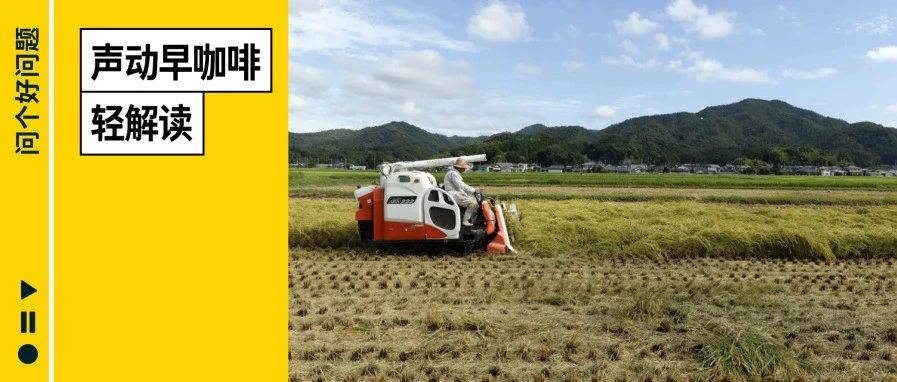
日本大米为什么越来越贵? | 声动早咖啡
声动活泼· 2025-06-24 05:01
Core Viewpoint - The article discusses the ongoing rice crisis in Japan, highlighting the impact of government policies, climate change, and market dynamics on rice production and pricing. Group 1: Rice Production and Pricing - Japan's rice consumption heavily relies on domestic production, with only 100,000 tons allowed for duty-free import, constituting about 1% of total consumption [1] - Despite government intervention by releasing 300,000 tons of reserve rice, retail prices have doubled compared to last year [1] - The rice crisis is attributed to a combination of rare high temperatures in 2023 leading to poor harvests and increased demand from international tourists [2] Group 2: Government Policies and Historical Context - Japan's long-standing policies have restricted rice production, leading to a lack of market elasticity [2] - The "Reduction Policy" initiated in the 1970s aimed to stabilize rice prices by limiting the area for rice cultivation, which has continued to influence production decisions [4][6] - The abolition of the "Reduction Policy" in 2018 did not eliminate government support for reduced rice planting, indicating a continuation of restrictive practices [6] Group 3: Agricultural Structure and Challenges - Japan's agricultural sector is characterized by smallholder farms rather than large agricultural groups, relying on the Japan Agricultural Cooperatives (JA) for support [7] - The complex supply chain, where rice is collected by cooperatives before reaching retailers, has contributed to market inefficiencies [7] - The aging farming population, with an average age of 69, and a significant decline in agricultural workforce pose challenges for increasing rice production [8] Group 4: Potential Solutions and Future Outlook - The Japanese government is exploring options to alleviate the rice crisis, including relaxing import restrictions and directly contracting with large retailers [9] - The rice crisis reflects the broader struggle between protecting traditional agriculture and adapting to market changes in a globalized economy [11]
从田间到餐桌 夏粮收储加工一线追踪
Xin Hua She· 2025-06-23 13:36
Group 1: Summer Grain Purchase - The summer grain purchase is crucial for the interests of grain farmers and the stable operation of the grain market, with an estimated purchase volume of around 200 billion jin, including 170 billion jin of wheat [2] - The quality of this year's wheat is reported to be better than usual, with active purchasing and a faster pace compared to the previous year, supported by both policy and market factors [2][3] - The implementation of minimum purchase price policies in key provinces has clarified the price floor for wheat, stabilizing market expectations and ensuring farmers can sell their grain [2] Group 2: Grain Storage Technology - The demand for fresh, healthy, and high-quality grain has led to higher requirements for grain storage, with challenges such as temperature control and pest management [3] - Innovative technologies like "internal circulation temperature control" and carbon dioxide atmosphere storage are being utilized to enhance grain preservation and quality [3][4] - The coverage of technological grain storage by the Central Reserve Grain Group exceeds 98%, with comprehensive grain loss rates controlled within 1% [4][5] Group 3: Grain Processing and Waste Reduction - The reduction of waste in the processing stage is essential for maximizing the value of every grain, aligning with national strategies to combat food waste [6] - Companies like COFCO are transforming by utilizing by-products like wheat bran into valuable ingredients, enhancing the quality and shelf life of whole wheat flour [7] - The national action plan aims to control grain loss rates in production, storage, transportation, and processing below international averages by the end of 2027, requiring collective efforts from all sectors [6][7]