
自动驾驶

Search documents
自动驾驶专题:写在技术落地加速与商业化元年之际-自动驾驶加速发展
Jinyuan Securities· 2026-01-28 00:20
Investment Rating - The report maintains an "Overweight" rating for the autonomous driving industry [3]. Core Insights - The autonomous driving industry is experiencing significant advancements, with the official launch of L3 level autonomous driving pilot programs in China, accelerated commercialization of Robotaxi services, and decreasing core hardware costs. This transition marks a critical phase from technology validation to large-scale implementation, driven by policy encouragement, technological breakthroughs, and commercial trials [3]. Summary by Relevant Sections Industry Developments - The first batch of L3 level autonomous driving vehicle permits was announced by the Ministry of Industry and Information Technology by the end of 2025. In January 2026, models such as the BAIC Arcfox Alpha S (L3 version) and Deep Blue L3 vehicles began pilot testing in designated areas of Beijing and Chongqing, with the Deep Blue L3 vehicle accumulating over 70,000 kilometers of autonomous driving in 19 days, covering complex urban scenarios [6]. - The Robotaxi operations are expanding, with Pony.ai's fleet exceeding 1,159 vehicles, aiming to grow to 3,000 by 2026, transitioning from trial to regular commercial operations [6]. - The AI industry's growth is enhancing autonomous driving capabilities through improved computing power and algorithms, with end-to-end architecture becoming mainstream. For instance, Huawei's ADS 4.0 system reduces latency by 50% and increases traffic efficiency by 20% [6]. Cost Reduction and Accessibility - BYD announced that all its models will feature advanced intelligent driving systems priced below 100,000 yuan, marking the beginning of an era of "universal intelligent driving." This is supported by technological upgrades and supply chain enhancements, leading to a decrease in the overall cost of high-level intelligent driving systems [7]. Policy and Market Dynamics - China is establishing a policy framework that prioritizes pilot programs followed by standardization. Local regulations have been introduced in cities like Beijing and Chongqing, with expectations for expansion to major cities like Shanghai and Shenzhen [7]. - The implementation of L3/L4 technologies is expected to drive demand for high-performance chips, domain controllers, and LiDAR systems, with the value share of decision-making components rising to 25-30% [7]. Key Focus Areas for Industry Monitoring - The report suggests monitoring six dimensions: core technology barriers, mass production progress, market competition positioning, growth and certainty of performance, domestic substitution potential, and key event catalysts [7].
刘强东给老家光明村送年货,由无人车领航
Xin Jing Bao· 2026-01-27 14:17
Core Viewpoint - JD.com's founder Liu Qiangdong has delivered over 10,000 New Year goods to his hometown, utilizing advanced autonomous delivery vehicles for logistics operations [1] Group 1: Autonomous Delivery Vehicles - The leading vehicle in the delivery fleet is the "Wolf" sixth-generation intelligent delivery vehicle, which operates with L4-level autonomous driving capabilities [1] - The vehicle can reach a maximum speed of 60 km/h, has a range of 200 kilometers, and can carry a load of 1 ton [1] - The vehicle is currently in regular operation in multiple cities including Suqian, Shenzhen, and Wuhan, and has also entered trial operations in Saudi Arabia [1] Group 2: Operational Efficiency - The implementation of a "human-machine collaboration" model allows delivery personnel to avoid repetitive trips to the station [1] - This initiative has resulted in a 21% reduction in transportation costs at the stations and has shortened the average delivery time for couriers by 1 hour per day [1]

汽车与零部件行业周报(2026.1.19-2026.1.25):特斯拉计划27年面向公众销售Optimus机器人,红旗全固态电池首台样车下线-20260127
Shanghai Securities· 2026-01-27 13:26
Investment Rating - The industry investment rating is "Hold" [6] Core Views - The automotive sector experienced a weekly increase of 2.20%, with the best-performing sub-sector being automotive services, which rose by 6.87% [3] - The average daily wholesale volume of domestic passenger car manufacturers was 51,200 units, a year-on-year decrease of 28.00%, while the average daily retail volume was 50,200 units, down 22.00% year-on-year [3] - In January, the narrow passenger car retail market is expected to reach approximately 1.8 million units, with new energy vehicles accounting for around 800,000 units, resulting in a penetration rate of 44.4% [4] - CATL launched a light commercial vehicle solution featuring the industry's first mass-produced sodium battery, which can operate effectively in extreme temperatures [4][11] - Tesla plans to sell the Optimus robot to the public by the end of next year, indicating a significant future business line for the company [5] Summary by Sections Automotive Sector Performance - The automotive sector's weekly performance was +2.20%, ranking 15th among 31 first-level industries [3] - The top five companies in terms of stock performance included New Coordinates (+36.30%) and Iron Flow Co. (+32.97%) [3] Sales and Market Trends - The expected retail sales for January are 1.8 million units, with a month-on-month decrease of 20.4% but a year-on-year increase of 0.3% [4] - The penetration rate for new energy vehicles in January is projected at 44.4% [4] Technological Developments - CATL's sodium battery solution for light commercial vehicles is designed for various vehicle types and can function in extreme cold [4][11] - The first prototype of the Hongqi all-solid-state battery has successfully passed critical testing, marking a significant technological advancement for the company [11] Investment Recommendations - Focus on companies involved in intelligent vehicle technology and those with potential overseas sales [12] - Recommended companies include Beiqi Blue Valley and several component manufacturers [14]


2026/1/19-2026/1/25汽车周报:关注业绩支撑的白马反弹,科技与通胀共振-20260127
Shenwan Hongyuan Securities· 2026-01-27 13:00
Investment Rating - The report suggests focusing on companies with performance certainty, particularly those in the index, such as Yutong Bus, Minth Group, Jifeng, and Fuda Group [1] Core Insights - The report highlights a potential recovery in wholesale sales due to relaxed tariff policies for vehicle exports to the EU and Canada, benefiting companies like BYD, SAIC, and Xpeng [1] - The expectation for Tesla's Optimus V3 continues to strengthen, indicating valuation elasticity in the robotics industry chain, with a focus on Hengbo, Yinlun, Top, and Sanhua [1] - Domestic cost pressures are significant, leading to a cautious outlook on annual profit forecasts, while overseas export opportunities are promising for companies like BYD and Geely [1] Industry Situation Update - According to the China Passenger Car Association, the average daily retail sales of passenger cars in the second week of January were 50,000 units, a year-on-year decrease of 22% and a month-on-month decrease of 31% [1] - The traditional raw material price index and the new energy raw material price index both increased recently, with traditional vehicle raw material prices rising by 1.1% month-on-month and 5.4% year-on-year, while new energy vehicle raw material prices increased by 3.2% month-on-month and 19.5% year-on-year [1] Market Situation Update - The total transaction amount in the automotive industry this week was 767.057 billion, with a week-on-week decrease of 8.37%. The automotive industry index closed at 8425.62 points, up 2.51% for the week [1][4] - The automotive industry index's weekly increase was higher than that of the CSI 300 index, which decreased by 0.62% [4] - A total of 219 stocks in the industry rose, while 50 fell, with the largest gainers being New Coordinates, Tieliu, and Weichai Heavy Industry, which rose by 36.3%, 33.0%, and 28.0% respectively [8] Investment Analysis Opinion - The report emphasizes the importance of AI spillover, anti-involution, and demand recovery as key themes. It suggests focusing on intelligent and high-end directions in the vehicle sector, particularly new force car companies like Xpeng, NIO, and Li Auto [1] - Companies with overseas business support for profit totals, such as BYD, Geely, and Leap Motor, are also highlighted [1] - The report notes that the reform of state-owned enterprises may bring breakthrough changes, with attention on SAIC and Dongfeng [1]


美股盘前要点 | 美联储官员预计本周将暂停降息!iPhone内存成本或飙升100%
Ge Long Hui A P P· 2026-01-27 12:52
Group 1 - U.S. stock index futures show mixed performance, with Nasdaq futures up 0.63% and S&P 500 futures up 0.25%, while Dow futures are down 0.44% [1] - Major European indices also display mixed results, with Germany's DAX down 0.09%, UK's FTSE 100 up 0.35%, France's CAC up 0.37%, and the Euro Stoxx 50 up 0.28% [1] - The Federal Reserve officials expect to pause interest rate cuts this week, with an unclear path for future cuts [1] Group 2 - Samsung Electronics and SK Hynix are negotiating with Apple to significantly increase the price of LPDDR memory used in iPhones, with a potential increase of up to 100% [2] Group 3 - The European Union has initiated two compliance procedures to ensure Google meets its obligations under the Digital Markets Act [3] Group 4 - Microsoft has received approval to build 15 additional data centers in Wisconsin, USA [4] Group 5 - Micron Technology is investing $24 billion to expand production in Singapore to address AI chip shortages [5] - Synopsys CEO anticipates that the price increase and shortage of memory chips will persist until 2027 [5] Group 6 - Nike is reportedly planning to lay off 775 employees to enhance profitability and accelerate automation [6] Group 7 - Alibaba has officially launched its flagship reasoning model Qwen3-Max-Thinking, which is noted for its stronger initiative and proficiency in logical reasoning [7] Group 8 - XPeng Motors' CEO expects "very strong" growth this year, with overseas sales growth potentially surpassing that of the domestic market [8] Group 9 - VinFast is collaborating with AI company Autobrains to develop autonomous driving technology [9] Group 10 - The U.S. Treasury has terminated its contract with consulting firm Booz Allen, related to the leak of tax records for Trump and Musk [10] Group 11 - UnitedHealth reported Q4 revenue of $113.215 billion, with adjusted EPS down 69.02% year-over-year to $2.11 [11] - General Motors reported Q4 revenue of $45.29 billion, with a loss of $3.31 billion; the company approved a $6 billion stock buyback plan [12] - American Airlines reported Q4 adjusted EPS of $0.16, which was below expectations, and anticipates a revenue decrease of $150 million to $200 million due to winter storms [13] - Raytheon Technologies reported a 12% year-over-year increase in Q4 sales to $24.24 billion, with adjusted EPS of $1.55, exceeding expectations [14]




特斯拉2025年欧洲销量收官下滑,比亚迪势头强劲;小鹏汽车顾宏地:预计今年公司将实现“非常强劲”的增长丨汽车交通日报
创业邦· 2026-01-27 11:53
Group 1 - VinFast collaborates with Autobrains to develop autonomous driving technology, focusing on enhancing the L2 level autonomous driving capabilities of its upcoming electric vehicles [2] - Tesla's sales in Europe declined significantly, with a 20% year-on-year drop in December, totaling 35,280 units, and an annual decline of 27% to 238,656 units, while BYD's sales surged over twofold to 27,678 units in December, with an annual total of 187,657 units [2] - BYD plans to launch at least three new models in South Korea this year, aiming for sales exceeding 10,000 units [3] - Xiaopeng Motors anticipates "very strong" growth this year, with overseas sales growth potentially outpacing domestic sales [2] - The 2026 Beijing Off-road BJ40 family has been launched, with prices starting from 132,900 yuan, featuring various upgrades including a new drone storage system in one model [2][3]


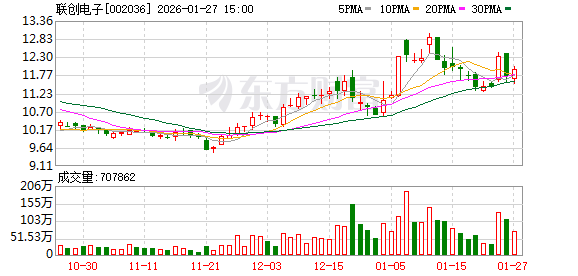
联创电子:公司在自动驾驶方面产品有车载镜头及影像模组、车载照明、车载雷达等
Zheng Quan Ri Bao· 2026-01-27 11:16
Group 1 - The core viewpoint of the article highlights that Lianchuang Electronics is actively involved in the autonomous driving sector, offering products such as vehicle-mounted cameras, imaging modules, vehicle lighting, and vehicle radar [2] - The company emphasizes its strong research and development capabilities, as well as its mass production abilities, which enable it to deeply empower customer products [2] - Specific details regarding the R&D projects are not disclosed due to confidentiality [2]

2026、1、19-2026、1、25汽车周报:关注业绩支撑的白马反弹,科技与通胀共振-20260127
Shenwan Hongyuan Securities· 2026-01-27 10:29
行 业 及 产 业 行 业 研 究 / 行 业 点 《整车出海、机器人预期强化;同时关注 业绩确定性白马——2026/1/12- 2026/1/18 汽车周报》 2026/01/19 证券分析师 戴文杰 A0230522100006 daiwj@swsresearch.com 联系人 请务必仔细阅读正文之后的各项信息披露与声明 本研究报告仅通过邮件提供给 博时基金 博时基金管理有限公司(researchreport@bosera.com) 使用。1 评 证 券 研 究 报 告 汽车 邵翼 A0230524120001 shaoyi@swsresearch.com 2026 年 01 月 27 日 关注业绩支撑的白马反弹,科技与 通胀共振 看好 ——2026/1/19-2026/1/25 汽车周报 本期投资提示: 行业折扣率环比下行,终端让利减少。我们整理懂车帝报价并加权计算得,2025Q4 行业平均折扣率环比-1.33pct 至 12.28%,其中自主品牌折扣率-1.25pct 至 6.91%,合 资品牌折扣率-2.19pct 至 18.03%,豪华品牌折扣率-1.74pct 至 27.38%。 2025Q4 ...

汽车行业周报:2026年首月政策过渡期,新能源渗透率短暂承压-20260127
CHINA DRAGON SECURITIES· 2026-01-27 10:00
Investment Rating - The report maintains an investment rating of "Recommended" for the automotive industry [2] Core Insights - In January 2026, the penetration rate of new energy vehicles (NEVs) is expected to experience a temporary decline due to a transitional policy period. The retail sales of narrow-sense passenger cars in China are projected to be around 1.8 million units, reflecting a month-on-month decrease of 20.4% but a slight year-on-year increase of 0.3%. The new round of trade-in subsidies has been initiated, and the continuation and optimization of policies are expected to provide stable support for the automotive market throughout the year. NEV retail sales are anticipated to be approximately 800,000 units, showing a year-on-year decline of 40.2% but a month-on-month increase of 7.5% [5][15][16]. Summary by Sections Industry Dynamics - Key industry news includes Geely Holding's announcement of its 2030 strategic goal to achieve global sales of over 6.5 million vehicles and revenue exceeding 1 trillion yuan. Additionally, Germany's electric vehicle subsidies will now cover range-extended and plug-in hybrid models [17][19][24]. Market Performance - The automotive sector outperformed the CSI 300 index by 3.13 percentage points, with the automotive sector index rising by 2.51% from January 19 to January 23, 2026. The passenger vehicle segment saw a decline of 1.60%, while the commercial vehicle segment increased by 3.69% [27][28]. Data Tracking - In December 2025, the retail sales of passenger vehicles reached 2.261 million units, a year-on-year decrease of 14.15%. The retail penetration rate for NEVs was 59.1%, with a year-on-year increase of 9.69 percentage points. The sales of NEVs in December were 1.337 million units, reflecting a year-on-year increase of 2.68% [36][45][52]. Investment Recommendations - The report suggests focusing on high-end manufacturers with differentiated products that are less affected by subsidy changes and tax reductions. Additionally, companies expanding into overseas markets are expected to benefit from high growth and margins, leading to performance recovery [5][16].
自动驾驶,掀翻旅游租车行业的桌子
3 6 Ke· 2026-01-27 03:58
Core Insights - The traditional car rental experience is often burdensome for users, involving multiple tasks such as driving, parking, and returning the vehicle. The advent of autonomous driving technology is expected to fundamentally change this experience, making it more user-friendly and efficient [1] Group 1: User Experience Transformation - The introduction of autonomous vehicles will allow users to purchase transportation services rather than just the right to drive a car, eliminating the need for a driver's license and reducing concerns about driving skills and accident risks [2] - Users will be able to summon a vehicle, input their destination, and enjoy the ride without worrying about parking or returning the car, significantly enhancing the overall travel experience [3] Group 2: Cost Reduction for Rental Companies - Autonomous vehicles will lower operational costs for rental companies by expanding service coverage without the need for expensive rental locations, as vehicles can autonomously deliver and pick up customers [4] - The ability to provide in-car services during rides opens up new revenue streams for rental companies, including entertainment and local products [4] Group 3: Opportunities in Shared Mobility - The proliferation of autonomous vehicles will facilitate the integration of private cars into rental platforms, allowing car owners to monetize their vehicles during idle times, thus enhancing the sharing economy [6] - Autonomous vehicles will address safety concerns associated with renting local cars, making it easier for tourists to access vehicles that are better suited to local conditions [6] Group 4: Industry Convergence and Market Dynamics - The boundaries between car rental and ride-hailing services are expected to blur, as both sectors will focus on providing vehicle transportation services, leading to potential mergers and collaborations [7] - The convenience and cost-effectiveness of renting autonomous vehicles may reduce the desire for personal car ownership, shifting consumer preferences towards shared mobility solutions [7] - A decrease in private car ownership could lead to significant changes in the automotive industry, potentially reducing the number of car manufacturers and fostering competition between automotive and aerial vehicle companies [8]