
十五五规划

Search documents
评论员文章|把握关键 乘势而上 将党的二十届四中全会精神贯穿“十五五”民航发展
Zhong Guo Min Hang Wang· 2026-01-07 02:59
Core Viewpoint - The article emphasizes the importance of implementing the spirit of the 20th National Congress of the Communist Party of China to achieve high-quality development in the civil aviation sector during the 14th Five-Year Plan period, highlighting the need for safety, innovation, and market expansion [2][5]. Group 1: Development Strategy - The 14th Five-Year Plan period is crucial for achieving socialist modernization, with the 20th National Congress providing guidance on economic and social development goals [2]. - The civil aviation industry is identified as a strategic sector that can significantly contribute to the national economy and must adapt to new technological and industrial changes [3]. Group 2: Safety and Security - Emphasis is placed on the need for a robust aviation safety management system to ensure high-quality development, with a focus on maintaining safety as a priority [2]. - The industry must enhance its resilience against unexpected events and ensure the absolute safety of operations [2]. Group 3: Market Expansion - The article highlights the importance of expanding domestic demand as a strategic foundation for development, with a focus on building a unified national aviation market [4]. - The civil aviation sector is encouraged to enhance its service offerings and improve market order to better meet the needs of the public [4]. Group 4: International Cooperation - The civil aviation industry is positioned as a key player in China's international engagement, with a call for optimizing international aviation hub functions and expanding international cooperation [4]. - The development of the "Air Silk Road" is highlighted as a means to strengthen international connectivity and support national strategic goals [4]. Group 5: Political Leadership - The article stresses the necessity of adhering to the leadership of the Communist Party as a fundamental characteristic of socialism with Chinese characteristics, ensuring that civil aviation development aligns with political standards [5]. - A commitment to strict party governance is emphasized to foster a positive political environment for the civil aviation sector [5].
中国“3万亿”城市,即将大扩容
Sou Hu Cai Jing· 2026-01-07 02:34
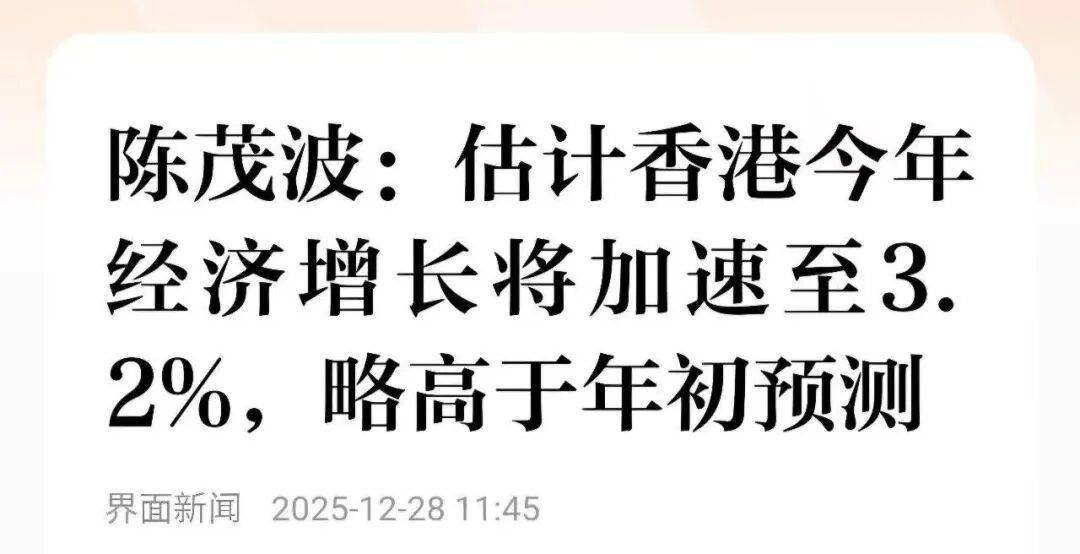
京沪深渝穗之后,中国第六个迈入"3万亿俱乐部"的,是香港。 香港财政司司长陈茂波近日透露,2025年香港GDP增速估算为3.2%,2024年香港GDP约合人民币2.9万亿元,按照3.2%的增速,2025年大概率超过3万亿 元。 IMF也预测,2025年香港GDP近4300亿美元,迈入3万亿俱乐部,应该没啥大问题。 ——————————— 截至2024年末,GDP超3万亿元的城市只有5座,分别是上海、北京、深圳、重庆、广州。 香港之后,还有哪些城市,会是"三万亿俱乐部"的种子选手? 下面就来盘一盘这个话题。 01. 2030年,将有10座"3万亿城市"? 近日,随着多个城市"十五五"规划发布,一场关于"3万亿GDP城市"的扩容浪潮正悄然酝酿,苏州、成都、杭州、武汉、南京等经济大市正在加速冲刺。 以下是部分城市十五五规划的目标值 简单测算一下,到2030年,主要城市的GDP分别会到多少? 如果按照年均5%的增速,到2030年,上海GDP有望达到7.22万亿、北京6.67万亿,深圳有望达到4.93万亿,与5万亿只有咫尺之遥,胜算很大。 同样按照年均5%的增速来计算,2030年重庆、广州突破4万亿,苏州、成都突破3万 ...

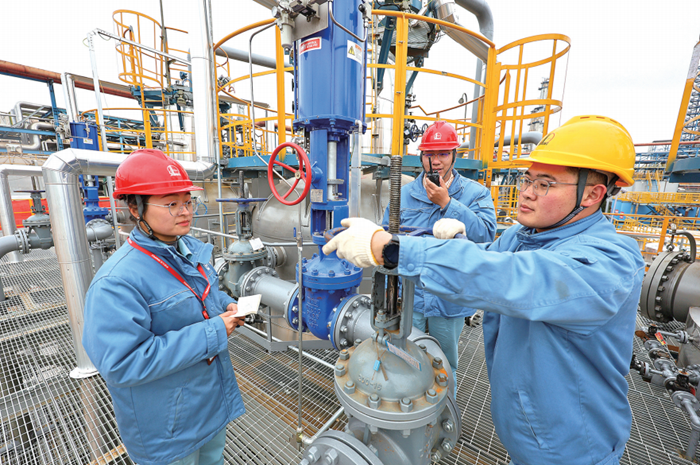
石化企业新年开新局共奏“奋进曲”
Zhong Guo Hua Gong Bao· 2026-01-07 02:26
Group 1 - The year 2026 marks the beginning of the "14th Five-Year Plan," with companies in the oil and chemical sectors adopting a proactive approach to ensure high-quality development [1] - China National Petroleum Corporation's Jilin Petrochemical Company is enhancing production efficiency and achieving zero emissions through optimized processes [1] - China National Petroleum's Bohai Drilling Company set records in the Bayannur Oilfield with a well depth of 6077 meters and a horizontal section of 1327 meters [1] Group 2 - Sinopec's Yangzi Petrochemical is implementing an innovative wastewater treatment project that separates oil and water without chemical additives, setting a model for pollution control [2] - Sinopec's exploration and development institute is addressing key challenges with a new integrated geological engineering tracking system [2] - Sinopec's East China Engineering Technology Development Company successfully launched a carbon capture and storage project, with the first batch of liquid CO2 delivered for use [2] Group 3 - China National Offshore Oil Corporation held a safety production meeting to reinforce safety measures for the start of the "14th Five-Year Plan" [4] - China Chemical Engineering Group is focusing on renewable energy and green technology as part of its "135 development strategy" [4] - Sichuan Jinxin Saier Chemical is advancing a project for integrated production of high-quality lithium iron phosphate and hard carbon materials [5] Group 4 - Hubei Xiangyun Chemical is set to complete its new materials industrial park project, aiming for significant growth in the coming year [6] - Shandong Hualu Hengsheng Chemical is focusing on sustainable competitive advantages and innovation to enhance its market position [6] - Meilan Group plans to strengthen its fluorochemical and chlor-alkali chemical sectors while targeting new energy and materials for future growth [6]
定制报告:全球半导体硅片产业“十五五”市场发展趋势研究及投资建议评估预测报告(2026版)
Sou Hu Cai Jing· 2026-01-07 01:37
Core Insights - The semiconductor silicon wafer industry is a critical component of the semiconductor supply chain, with applications in various sectors including mobile devices, IoT, automotive electronics, AI, and aerospace [2][5][6]. Industry Overview - The semiconductor silicon wafer market is experiencing a shift towards larger wafer sizes, with 12-inch wafers becoming the dominant product, accounting for 76.39% of the market share by 2024 [11][12]. - The demand for 8-inch wafers is projected to decline to 2,366 million square inches by 2024, but is expected to recover to 2,412 million square inches by 2025 [10]. Market Dynamics - The global semiconductor silicon wafer market size is forecasted to decrease by 7.50% to $11.5 billion in 2024 due to weak end-user demand and macroeconomic factors, but is expected to rebound in 2025 driven by sectors like new energy vehicles and 5G [12][15]. - The market for silicon epitaxial wafers is also growing, with a compound annual growth rate of 7.39% from $3.68 billion in 2015 to $6.06 billion in 2022 [16]. Product Classification - Silicon wafers can be classified by size (2-inch to 12-inch), manufacturing process (polished, epitaxial, annealed, SOI), doping type (P-type and N-type), and doping concentration (lightly doped and heavily doped) [5][7][8][9]. Future Trends - The industry is expected to see continued growth in the 8-inch and 12-inch wafer segments, which together will account for approximately 96.29% of the market by 2025 [11][12]. - The transition to larger wafer sizes is anticipated to enhance production efficiency and reduce costs, although it requires significant investment in technology and equipment [11][12].
以实干实绩确保“十五五”开好局起好步
Liao Ning Ri Bao· 2026-01-07 01:00
Group 1 - The provincial development and reform commission aims to achieve the economic and social development goals for 2026, ensuring a strong start for the 14th Five-Year Plan [1] - The commission will implement the provincial planning suggestions and develop the "14th Five-Year" planning outline and special plans [1] - Emphasis will be placed on economic monitoring, policy coordination, and measures to stabilize the economy and boost social confidence [1] Group 2 - Investment and consumption are identified as the "two wings" for expanding domestic demand, with a focus on both material and human investment [2] - The province plans to implement major projects in key areas such as new industrialization and urbanization, while also promoting private investment in significant infrastructure [2] - Actions will be taken to enhance consumption, including plans to increase income for urban and rural residents and optimize policies to release consumption potential [2] Group 3 - The province will deepen reforms to optimize the business environment and integrate into the national unified market [3] - There will be a focus on developing the private economy and improving market access, alongside efforts to build a friendly government-business relationship [3] - A commitment to green transformation includes implementing dual control of carbon emissions and promoting renewable energy projects, aiming for an additional 4 million kilowatts of wind and solar capacity [3] Group 4 - The ultimate goal is to ensure that the revitalization benefits the people, with plans to improve public resource allocation and support flexible employment [3] - Efforts will be made to enhance healthcare resources and stabilize prices of essential goods, ensuring a better quality of life for the population [3]
各地密集举办开工仪式,能不能带来“开门红”?
Xin Lang Cai Jing· 2026-01-07 00:39
Core Viewpoint - The emphasis on achieving a strong start in the new year is crucial for setting the pace for subsequent activities, with a focus on effective and rapid implementation of policies and projects [3][4]. Group 1: Urgency and Implementation - There is a strong call for a sense of urgency among stakeholders to ensure that various tasks are executed effectively and swiftly, moving from planning to tangible results [3]. - The need for quick disbursement of funds, prompt implementation of measures, and continuous support services is highlighted to enhance efficiency and transition from theoretical plans to practical outcomes [3]. Group 2: Strategic Agility - The external environment is rapidly changing, necessitating a high level of strategic agility among Shanghai officials, which includes proactive engagement and seizing opportunities [4]. - There is an emphasis on the importance of actively pursuing high-quality industries, projects, enterprises, and talents that are essential for Shanghai's development, rather than waiting for them to come [4]. Group 3: Time Management - The end of the year and the approach of the Spring Festival present unique challenges, making effective time management critical for achieving results [3]. - The principle of "one part planning, nine parts execution" is stressed, indicating that planning should be closely aligned with actionable paths and methods to ensure quality and efficiency throughout the process [3].
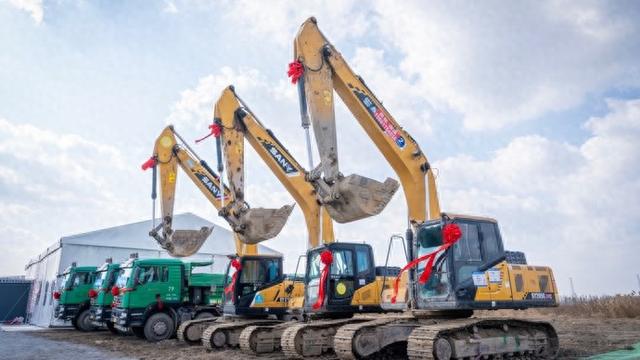
签约、开工、接单 上市公司奏响新年“三部曲”丨“十五五”开局新气象
证券时报· 2026-01-07 00:13
Core Viewpoint - The article highlights the robust investment and cooperation activities in China as the economy embarks on the "15th Five-Year Plan," showcasing the proactive role of listed companies in driving economic growth and innovation [1]. Investment Cooperation - A series of investment and cooperation announcements have emerged, indicating strong economic vitality. For instance, on January 4, the Beijing Economic Development Zone held a high-quality development conference, resulting in the signing of 22 key projects with a total investment of approximately 40 billion yuan, over 80% of which are future industry projects [3]. - On the same day, Shengyi Technology announced a cooperation intention with the Dongguan Songshan Lake High-tech Industrial Development Zone to invest approximately 4.5 billion yuan in a high-performance copper-clad laminate project, which is crucial for the new generation of information technology [3]. Project Acceleration - The construction of significant projects is underway, such as the semiconductor intelligent manufacturing industrial base in Zhengzhou, which has a total investment of 1.8 billion yuan. This project aims to integrate high-end research and manufacturing capabilities [6]. - Guangli Technology, a leader in the semiconductor industry, is breaking foreign monopolies through overseas acquisitions and independent research, with its new project expected to be completed by 2027 [7]. - In Suzhou, the Bozhong Precision Machinery's new energy intelligent equipment R&D and manufacturing base has commenced construction with a total investment of 1 billion yuan, expected to achieve annual sales of 4 billion yuan upon full production [7]. Market Expansion - Companies are also focusing on market expansion to lay the groundwork for growth in the new year. For example, Xusheng Group received a notification from a North American electric vehicle manufacturer for a project with a lifecycle sales amount of approximately 7.8 billion yuan over eight years, starting production by the end of 2026 [9]. - Defu Technology announced a cooperation agreement with a leading domestic CCL company to ensure stable supply of high-end electronic circuit copper foil products, which is expected to positively impact the company's financial performance [9]. - Qiaoyin Co. has won a bid for a comprehensive urban sanitation project with a contract value of 1.225 billion yuan over 25 years, which is anticipated to enhance the company's market development and operational performance [9].


白云新年第一会,传递了什么信号?
Nan Fang Du Shi Bao· 2026-01-06 23:08
白云区企业家大会在华为广州研发中心召开。谭札烽 摄 1月4日,广州市白云区企业家大会在华为广州研发中心召开。大会以"奋进'十五五'实现新突破"为主 题,推动企业发展战略与白云区"十五五"规划深度融合,努力构建"双赢、多赢、共赢"发展格局。超过 160位各行业领域企业家参加大会。 在这当中,既有龙头企业、上市公司,也汇聚了一批高新技术企业、"专精特新"小巨人企业为代表的创 新力量。企业家代表们一致认为,白云区区位优势明显、产业基础扎实、政策支持有力,特别是 在"6+6+X"现代产业集群培育和营商环境优化方面的持续发力,为企业成长提供了广阔的舞台。 作为深耕白云的央企龙头,南方航空正全力发挥航空主业优势,为白云区的现代化产业体系,装上强劲 的"航空引擎"。中国南方航空股份有限公司战略规划投资部副总经理黄翔表示,展望"十五五",南方航 空将与白云区携手共进,推动航空价值链拓展提升、供应链深度融合,助力白云谱写高质量发展新篇 章。 广东省机场管理集团有限公司副总经理邓勇刚也表示,期待和白云区一起,将独特的"临空优势"转化为 实实在在的产业优势和经济增长极,共同打造"港产城"融合发展的新生态。 作为扎根白云区18载的新 ...
2026年将继续实施好适度宽松的货币政策
Xin Lang Cai Jing· 2026-01-06 23:07
Core Viewpoint - The People's Bank of China (PBOC) is committed to implementing a series of monetary policy measures to support stable economic growth and financial market stability, while also focusing on financial reform and risk management as part of the "14th Five-Year Plan" [1][7]. Group 1: Monetary Policy - The PBOC will continue to implement a moderately loose monetary policy, utilizing various tools such as interest rate cuts and reserve requirement ratio adjustments to maintain liquidity and support economic growth [2][9]. - The focus will be on aligning social financing scale and money supply growth with economic growth and price level expectations, ensuring a stable RMB exchange rate [3][9]. Group 2: Financial Services - The PBOC aims to enhance the quality of financial services for the real economy by improving the financial policy framework and increasing support for key areas such as technology innovation and small and micro enterprises [3][10]. - There will be an emphasis on optimizing financial support for consumption and agriculture, as well as improving the financing capabilities of financial institutions for small and micro enterprises [3][10]. Group 3: Risk Management - The PBOC will work on mitigating financial risks in key areas, including managing the debt risks of financing platforms and enhancing risk identification and early correction for small financial institutions [4][10]. - A macro-prudential management framework will be established to maintain financial stability, alongside improved monitoring of financial markets [4][11]. Group 4: Financial Reform and Opening Up - The PBOC will deepen financial reform and enhance the openness of financial markets, including optimizing mechanisms for bond and currency markets [5][11]. - Support will be provided for the construction of international financial centers and the facilitation of cross-border RMB usage [5][11]. Group 5: Global Financial Governance - The PBOC will actively promote global financial governance reforms and enhance cooperation with international organizations to coordinate macroeconomic policies [6][11]. Group 6: Financial Management and Service Capacity - The PBOC will focus on improving financial management and service capabilities, including the development of a modern financial statistical system and enhancing the regulatory framework for payment services [6][12]. - There will be efforts to strengthen the regulation of virtual currencies and improve the overall payment service environment for various demographics [6][12].
市政协召开十六届二十九次常委会会议
Xin Lang Cai Jing· 2026-01-06 19:29
Group 1 - The meeting of the Shenyang Municipal Political Consultative Conference focused on the progress of proposal handling since the fourth session of the sixteenth committee [1] - The meeting approved the "Regulations on Proposal Work of the Shenyang Municipal Political Consultative Conference" and adjustments to the committee members and leadership positions [1][2] - The meeting emphasized the importance of aligning with the spirit of the 20th National Congress of the Communist Party of China and the city's economic work meeting, aiming for high-quality development [2] Group 2 - The conference discussed the preparation for the fifth session of the sixteenth committee, aiming for a high standard and effective execution of tasks [2] - Key officials, including the vice-chairpersons and the secretary-general, participated in the meeting, indicating a collaborative approach to governance [2]