绿色低碳

Search documents
国家能源局发文推进煤炭与新能源融合发展
Xin Hua She· 2025-11-07 15:27
Core Viewpoint - The National Energy Administration has issued guidelines to promote the integration of coal and renewable energy, focusing on green low-carbon development and technological innovation to enhance energy stability and facilitate the transition to a green economy [1][2]. Summary by Sections Main Tasks - Accelerate the development of photovoltaic and wind power industries in mining areas, utilizing land resources from subsided coal mining and promoting diverse business models such as "photovoltaic + agriculture" and "photovoltaic + aquaculture" while advancing wind power development [2] - Promote clean energy substitution in mining areas by accelerating electrification in production processes, promoting electric and hydrogen-powered mining vehicles, and establishing charging and energy storage stations while phasing out inefficient boilers [2] - Advance renewable energy heating and cooling solutions by utilizing geothermal energy, solar energy, and residual heat from mines, exploring multi-source heating and renewable energy cooling [2] - Innovate in green energy development and utilization by constructing smart microgrids in mining areas, facilitating green electricity direct connection and trading, and promoting energy-saving and carbon reduction projects [2] - Foster collaboration between the coal industry and renewable energy, supporting coal companies in transitioning to comprehensive energy service providers and encouraging joint ventures in coal power and renewable energy projects, as well as the application of carbon capture, utilization, and storage (CCUS) [2] - Strengthen technological innovation and talent cultivation, focusing on key technologies such as coal-renewable energy coupling power generation and mine energy storage, while training specialized interdisciplinary talents [2] - Enhance policy coordination and support by incorporating integrated development into the "14th Five-Year" energy plan and reinforcing the assurance of funding, finance, and grid access [2] Implementation Path - The National Energy Administration will strengthen industry coordination and improve the policy and standard system; provincial energy authorities need to detail measures and enhance guidance [3] - Coal enterprises, especially those part of high-quality development mechanisms, are required to develop implementation plans and create exemplary cases [3] - All relevant parties must strictly enforce safety production responsibilities, enhance project supervision, and promote the orderly advancement of integrated development [3]
数读|从“史上最大”进博会看中国进口升级:技术、伙伴与新赛道
Xin Jing Bao· 2025-11-07 15:05
Core Insights - The eighth China International Import Expo (CIIE) is the largest ever, featuring 4,108 foreign exhibitors and over 430,000 square meters of exhibition space, marking a 43% increase from the first expo [3][6][8] - The expo showcases 461 items making their global, Asian, or Chinese debuts, highlighting trends in aging population needs and cutting-edge technology [8][13] - China remains the world's second-largest import market, with a total import value of 13.66 trillion yuan in the first three quarters of 2025, reflecting a commitment to expanding its trade relationships [16][27] Exhibition Scale and Participation - The total exhibition area exceeds 430,000 square meters, up from 300,000 square meters in the first expo, and the number of participating countries has increased from 151 to 155 [3][6] - The number of Fortune Global 500 companies participating has risen from 220 to 290, indicating a higher quality of exhibitors [3][6] - The newly established "Least Developed Countries Product Zone" features 163 exhibitors from 37 least developed countries, a 23.5% increase year-on-year [13] Import Trends and Data - In the first three quarters of 2025, imports of mechanical and electrical products reached 5.42 trillion yuan, a 5.8% increase, with electronic components leading at 2.45 trillion yuan [24] - High-tech products saw a total import value of approximately 4.3 trillion yuan, growing by 10.3%, driven by aerospace technology products which surged by 41.1% [24] - The import structure is shifting from quantity expansion to quality upgrades, with mechanical and high-tech products becoming the top categories [19][24] Trade Partnerships - Asia remains China's largest import source region, with imports totaling 7.43 trillion yuan, while Africa shows the fastest growth at 0.66 trillion yuan [27] - Major import partners include South Korea and Japan, with significant imports of integrated circuits and semiconductor devices [27] - The ongoing expansion of China's import market and the CIIE platform reflect a commitment to global trade opportunities and economic cooperation [27]

新能源汽车热卖阻燃剂需求爆发,国际巨头科莱恩CEO点赞四川企业,欲借福华化学强化中国市场
Sou Hu Cai Jing· 2025-11-07 15:00
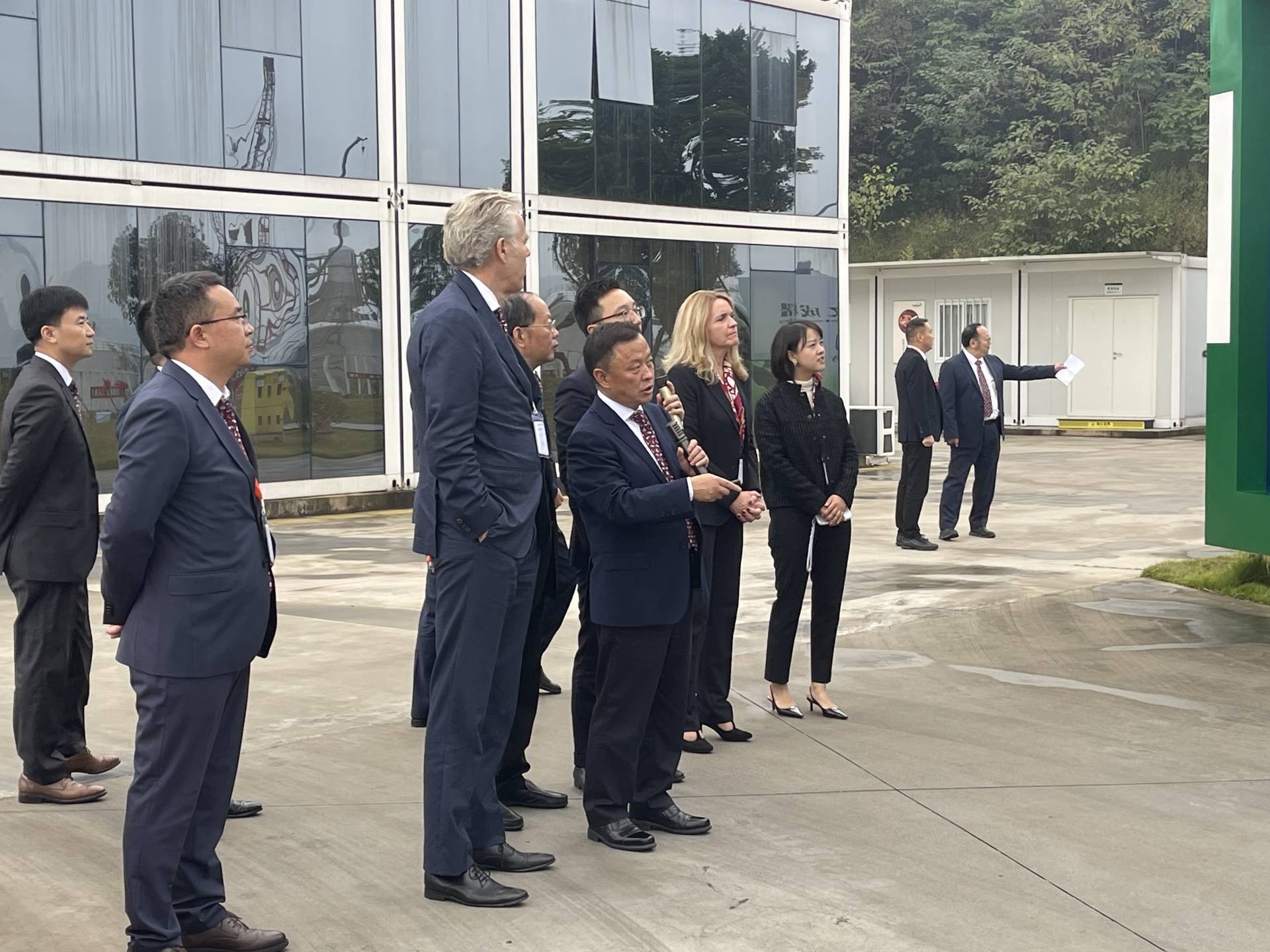
11月6日,国际知名化工企业科莱恩全球首席执行官康睿德带着公司一众高管,来到了四川省乐山市五通桥区,他此番到来是为了一探福华化学的工业园, 特别是建设中的阻燃剂生产基地。 阻燃剂是科莱恩全球产业版图的重要一环。随着全球环保政策收紧,科莱恩已将重点放在新型无卤阻燃剂。在无卤阻燃剂的类型中,磷系阻燃剂是很多化工 企业选择的方向。 在工业园内,康睿德接受《每日经济新闻》记者(以下简称每经记者)采访时提到,此次与福华化学的合作会进一步强化其与中国市场的联系,快速响应并 开发满足中国客户需求的定制化解决方案。而科莱恩看重的正是四川本地化工企业的制造能力和创新能力。另外,乐山市具有丰富的磷矿资源,磷元素是磷 系阻燃剂不可或缺之物。 康睿德(左三)一行探访工业园 每经记者 胥帅 摄 全球化工巨头在中国市场频频加大投资 6日下午,康睿德及科莱恩多名高管来到福华化学,对位于五通桥的化工产业园进行了调研。每经记者在现场看到,尽管福华化学的部分新建项目还在施工 中,但康睿德一行仍然保持浓厚兴趣,提出了涉及化工产业链的多方面问题。 福华集团董事局主席、福华化学董事长张华与康睿德一行进行了长时间的交流,双方沟通的重点就是一种创新型阻燃 ...
以服务产业为基 创新现代服务业发展特色
Xin Hua Ri Bao· 2025-11-07 13:54
盐城滨海港零碳产业园以"大绿能、大物流、大空间、大产业"为发展导向,深度融合现代服务业与绿色 低碳产业,创新构建以"绿电+冷能"为特色的服务业态体系,成为零碳领域现代服务业创新发展的鲜活 样本,为服务业转型升级注入强劲动能。 空间布局筑基 构建多层次服务集群 核心区聚焦高端产业服务,依托39万平方米标准厂房构建"生产+服务"一体化配套体系,集聚投产、在 建和在谈项目20多个,形成以风电装备新能源产业及智算中心为核心的服务集群。"绿电+冷能"利用示 范区依托全国最大LNG能源基地,建成国内首座LNG冷能交换中心,拓展冻干加工、低温物流、冰雪 文旅等特色业态,填补大规模冷能服务业态空白。同时,园区在能源供给端推进新型电力系统建设,在 生产端为企业提供节能咨询、低碳改造等服务,推动存量企业绿色转型,引领全链条绿色服务升级。 业态创新赋能 激活绿色服务核心动能 园区立足"绿电+冷能"特色优势,在能源服务、数字服务、专业技术服务等领域多点突破,构建特色鲜 明的服务产业体系。 能源清洁化服务方面,建成屋顶分布式光伏项目,改造变电站并规划储能项目,当前片区绿电消费占比 达79.8%,计划2027年绿电规模增容至462万千瓦 ...
绿色进博 “碳”索未来
Zheng Quan Ri Bao Wang· 2025-11-07 12:45
Core Viewpoint - The eighth China International Import Expo (CIIE) emphasizes the integration of "carbon" into various aspects such as green practices, energy security, technology display, and project signing, signaling a global consensus on green and low-carbon development, a firm commitment to China's dual carbon goals, and accelerated commercialization of industries [1] Group 1: Zero Carbon Initiatives - The "Zero Carbon CIIE" initiative aims to achieve carbon neutrality, with various stakeholders actively participating, including the signing of green electricity supply commitments and agreements for mutual assistance in pumped storage capacity [2] - The Long Triangle region is expected to deliver over 130 million kilowatt-hours of green electricity to Shanghai in November, with monthly green electricity consumption in Shanghai projected to exceed 1 billion kilowatt-hours for the first time [2] - The collaboration between Shanghai and Anhui aims to reduce local coal-fired power generation during the six-day expo, contributing to a reduction of 798,000 tons of CO2 emissions [2] Group 2: Carbon Offset and Green Projects - China Pacific Insurance Group purchased 3,300 tons of "Longjiang Green Carbon" to offset the carbon emissions generated by the CIIE, demonstrating a commitment to green practices [3] - The Gansu delegation highlighted a significant investment of 1 billion yuan in a zero-carbon renewable energy recovery project, showcasing the trend of combining energy substitution with carbon offsetting [3] Group 3: Industry Development and Policy Support - The Ministry of Ecology and Environment reported that by 2024, China's CO2 emissions per unit of GDP will continue to decline compared to 2005 levels, with non-fossil energy consumption reaching 19.8% of total energy consumption [4] - The total installed capacity of renewable energy generation in China is projected to reach 2.16 billion kilowatts by mid-2025, accounting for over 40% of the global total [4] - The CIIE showcased numerous low-carbon technologies, including Bosch's magnetic drive transmission system, which can reduce energy consumption by over 30% [4] Group 4: Carbon Accounting and Supply Chain Management - China has established a comprehensive carbon accounting certification system and green supply chain management framework, with over 80% of large enterprises regularly disclosing operational carbon emissions [5] - Key supporting technologies such as AI-driven energy efficiency optimization and big data-supported supply chain traceability are being deeply applied across various scenarios [5] - The rapid advancement of policies and practices in carbon footprint accounting and data disclosure is enhancing the efficiency of carbon management [5] Group 5: Future Directions and Challenges - The focus for future technological innovation will be on breakthroughs in "hard technology" in the green and low-carbon sector, such as low-cost hydrogen production and storage, and next-generation photovoltaic and energy storage technologies [6] - Strengthening the alignment of domestic standards with international rules and addressing data barriers are critical for improving the efficiency and credibility of carbon footprint accounting [6] - Active participation in global green rule-making and accelerating international recognition of carbon footprint standards for key export products will enhance China's position in the global green value chain [6]

新华时评|进博为桥,中国与天下同利
Xin Hua She· 2025-11-07 11:13
Core Insights - The China International Import Expo (CIIE) serves as a significant platform for global economic engagement, emphasizing China's commitment to mutual benefits with the world [1][4] - The expo has attracted 23,000 foreign exhibitors and generated an intended transaction volume exceeding $500 billion over the past seven years, highlighting China's market appeal despite global economic challenges [1][2] - China remains the world's second-largest import market for 16 consecutive years, with projected imports of over $15 trillion during the 14th Five-Year Plan period [1][3] Group 1 - The eighth CIIE has seen participation from 155 countries and regions, with 290 Fortune 500 companies showcasing their products, marking record exhibition space and total number of exhibitors [2] - The event has become a vital node in the global innovation chain, featuring 461 new products, technologies, and services across various cutting-edge fields [2][3] - Companies view the CIIE as a strategic opportunity for deep engagement with global resources, shifting focus from mere product sales to technology collaboration and joint market development [3] Group 2 - The CIIE reflects China's large market size and evolving consumer demands, providing a robust foundation for international business opportunities [3] - The recent Fourth Plenary Session of the 20th Central Committee of the Communist Party of China emphasized the need for high-level openness and cooperation, indicating a future of broader opportunities for global development [3][4] - The CIIE symbolizes China's role as a co-creator of global opportunities and a platform for shared development, reinforcing the belief in open cooperation and mutual prosperity [4]
兆新股份:布局低碳高价值赛道 打造瓦斯利用行业标杆
Zheng Quan Shi Bao Wang· 2025-11-07 11:09
Core Insights - The energy industry is undergoing a deep transformation from single supply to integrated services and from resource dependence to innovation-driven models, in line with the national "dual carbon" strategy and the "14th Five-Year Plan" for green development [1][2] Group 1: Strategic Cooperation - Zhaoxin Co., Ltd. has signed a strategic cooperation framework agreement with Zhejiang Yiyang Energy Technology Co., Ltd., focusing on the comprehensive utilization of low-concentration gas in mining areas [1][2] - The partnership aims to create a three-in-one development model of "resource efficient recovery + new energy production + carbon asset development" to contribute to the green low-carbon industry during the "14th Five-Year Plan" [1][2] Group 2: Innovative Energy Solutions - The collaboration will establish a benchmark for comprehensive energy stations that integrate resource recycling and new energy production, transitioning energy utilization from "single-point breakthroughs" to "systematic collaboration" [2] - The new model will enable multi-dimensional coupling and intelligent scheduling of energy, allowing for direct supply of electricity generated from gas to mining operations or integration into the new energy grid [2] Group 3: Future Development Goals - Zhaoxin Co., Ltd. aims to leverage its platform resources to create a mature architecture of "gas + photovoltaic + energy storage" centered around the Qianjiaying demonstration project [2][3] - The company plans to expand the scale of low-concentration gas utilization in mining areas and enhance its core competitiveness in carbon services and comprehensive energy sectors [2][3]

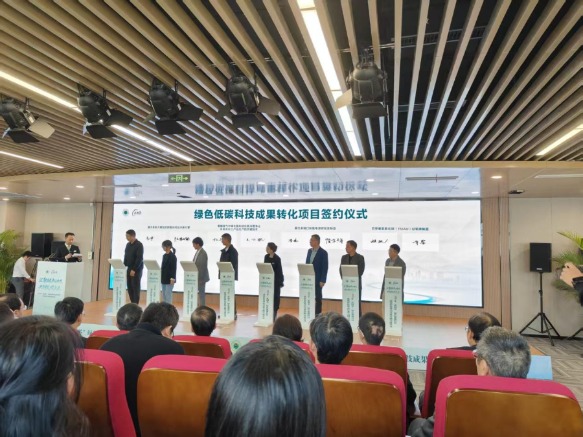
武汉绿色低碳转型进行时,14项绿色低碳科技成果签约落地
2 1 Shi Ji Jing Ji Bao Dao· 2025-11-07 10:22
Core Viewpoint - Wuhan is actively promoting a green and low-carbon transformation, with significant advancements in technology and policy aimed at achieving sustainable urban development and ecological improvement [3][5][10]. Group 1: Green Technology Initiatives - Fourteen green low-carbon technology projects were signed and launched, covering areas such as renewable energy and resource recycling, indicating a collaborative model for innovation and application within the Wuhan metropolitan area [3][5]. - Technologies include converting coal smoke into oxygen and graphene, anaerobic digestion of kitchen waste to produce biogas for electricity, and using agricultural waste for biofuel ethanol [5][6]. Group 2: Policy and Strategic Framework - The Wuhan Municipal Ecology and Environment Bureau is developing the "15th Five-Year Plan" for ecological protection, focusing on leveraging technology for emission reduction and management [6][11]. - The city is establishing supportive policies for low-carbon technologies, including environmental assessment support, technology promotion, and financing for projects [6][11]. Group 3: Carbon Market Development - Wuhan is expanding its carbon market by lowering the entry threshold for companies and integrating various environmental rights trading functions through the Hubei Provincial Carbon Exchange [10][11]. - The city is also enhancing carbon neutrality practices by connecting enterprises with the public through a carbon benefit platform, which has already seen significant user engagement [11]. Group 4: Noise Pollution Management - Wuhan is implementing advanced technology for noise pollution management, including the deployment of smart monitoring devices to track noise from various sources, contributing to urban environmental governance [8]. Group 5: Future Outlook - The city aims to strengthen its green innovation capabilities and explore new paths for ecological governance and low-carbon development, with a focus on practical applications of technological advancements [11].
20cm速递|锂电池行业长期趋势向好,创业板新能源ETF国泰(159387)近20日净流入超4.5亿元
Mei Ri Jing Ji Xin Wen· 2025-11-07 09:59
Group 1 - The core viewpoint is that China's lithium battery industry has reached a scale of 1.2 trillion yuan, with growth primarily driven by power and energy storage batteries, projected to account for 61.47% and 34.15% respectively by the first half of 2025 [1] - China's lithium battery industry has a significant global competitive advantage, with the global share of power batteries increasing from 38.35% in 2020 to 68.79% in the first seven months of 2025, and energy storage lithium battery companies holding over 90% of global shipments [1] - The industry faces challenges such as low profitability and short-term overcapacity, but future demand for lithium batteries is expected to continue growing, with energy storage batteries becoming the main growth driver and applications diversifying [1] Group 2 - The ChiNext New Energy ETF (159387) tracks the Innovation Energy Index (399266), which saw a daily fluctuation of 20%, focusing on listed companies in clean energy, energy conservation, and new energy vehicles, highlighting companies with high growth potential and innovation capabilities [1]

国家能源局发布重要指导意见!
中国能源报· 2025-11-07 09:37
Core Viewpoint - The National Energy Administration has issued guidelines to promote the integration of coal and renewable energy, emphasizing the importance of developing new energy resources in coal mining areas to ensure stable energy supply and facilitate green and low-carbon transformation [2][12]. Overall Requirements - The guidelines are guided by Xi Jinping's thoughts and aim to implement the new development concept, focusing on green and low-carbon directions, and leveraging technological innovation to develop renewable energy in coal mining areas [3][14]. - By the end of the 14th Five-Year Plan, significant achievements in the integration of coal and renewable energy are expected, including mature development models for photovoltaic and wind power in coal mining areas and increased penetration of renewable energy [3][14]. Main Tasks - **Development of Photovoltaic and Wind Power**: Accelerate the construction of photovoltaic power stations in coal mining areas, utilizing land resources effectively and encouraging the establishment of large-scale photovoltaic bases [4][15]. - **Clean Energy Replacement**: Promote electrification in key coal production processes and support the use of electric and hydrogen-powered mining equipment to enhance the clean energy usage in mining areas [4][15]. - **Renewable Energy Heating and Cooling**: Implement clean heating solutions in mining areas, including the development of geothermal energy and distributed solar heating systems [5][15]. - **Innovative Energy Development**: Establish intelligent microgrids in mining areas to enhance the efficient use of multiple energy sources and promote green electricity trading [6][16]. - **Coal Industry Chain Extension**: Support coal enterprises in integrating coal and renewable energy investments, gradually transforming into comprehensive energy service providers [7][16]. - **Technological Innovation and Talent Development**: Focus on research and development of key technologies for coal and renewable energy integration, and enhance talent training in the renewable energy sector [8][16]. - **Policy Support**: Incorporate the integration of coal and renewable energy into national planning, ensuring financial and policy support for projects in mining areas [9][17]. Implementation Organization - The National Energy Administration will strengthen coordination and evaluation of the integration of coal and renewable energy, ensuring that local energy departments refine policies and that coal enterprises develop implementation plans [10][18].