
中国特色金融文化

Search documents
融入国家战略和区域经济发展大局全力写好金融“五篇大文章”
Zhong Guo Zheng Quan Bao· 2025-12-12 20:17
Core Viewpoint - The article emphasizes the importance of integrating Chinese financial culture into the operations of securities firms, highlighting that this cultural foundation is essential for the sustainable development of the financial industry and for serving the real economy and national development strategies [1][2]. Group 1: Strategic Planning and Implementation - The company actively responds to the China Securities Regulatory Commission's guidelines on the "Five Major Financial Articles," aiming to integrate strategic planning, organizational mechanisms, business practices, and cultural construction [2][3]. - Specific measures include enhancing top-level design by incorporating the "Five Major Financial Articles" into the overall strategy, implementing work plans, and establishing leadership groups for green finance and technological innovation [2][3]. Group 2: Focus on Key Areas - The company targets key sectors such as technological innovation, advanced manufacturing, and green low-carbon initiatives, facilitating over 4 billion yuan in financing for these areas since 2024 [3]. - It has supported two technology companies in their IPO applications and completed several innovative projects, including the first green trade finance ABS in the country [3]. Group 3: Commitment to Common Prosperity - The company focuses on inclusive finance and pension finance, enhancing wealth management through digital and intelligent solutions, and has continuously increased investor satisfaction [4]. - It has distributed a total of 3.473 billion yuan in cash dividends over 15 years since its listing, emphasizing shared development outcomes with investors [4]. Group 4: Social Responsibility and Cultural Value - The company employs a tripartite cooperation model to support sustainable development in rural areas, investing over 23 million yuan in targeted assistance projects [5]. - It has conducted various charitable activities, including educational support for over 1,080 students, showcasing its commitment to social responsibility [5]. Group 5: Regional Economic Development - The company integrates into the local economic development of Guangxi, focusing on the dual development of artificial intelligence and finance, and enhancing the region's competitive edge [6][7]. - It aims to facilitate resource allocation towards technological innovation and actively explores new financing paths for data assets [6][7]. Group 6: High-Quality Development and Governance - The company emphasizes the importance of high-quality party leadership as a political guarantee for its development, integrating party leadership into all governance aspects [8][9]. - It has established nine core principles to guide employee behavior, aligning with the values of Chinese financial culture and ensuring compliance and risk management [8][9]. Group 7: Risk Management and Compliance - The company prioritizes prudent operations and financial risk prevention, implementing comprehensive compliance and risk management systems [9]. - It has developed a multi-layered supervision system to enhance compliance and risk management, ensuring high-quality development [9].

光大证券党委书记、董事长赵陵: 以中国特色金融文化为引擎 做好金融“五篇大文章”
Zhong Guo Zheng Quan Bao· 2025-12-11 20:09
Core Viewpoint - The company emphasizes the integration of party leadership into its governance and operational processes, aligning with the national strategy and the "14th Five-Year Plan" to enhance its role in serving the real economy and promoting high-quality financial development [1][2][3]. Group 1: Governance and Leadership - The company has incorporated party work requirements into its corporate charter and governance processes, ensuring that party leadership is embedded in cultural construction, compliance risk control, and major decision-making [2]. - The company is actively promoting a culture of discipline and compliance, focusing on the implementation of the central eight regulations and addressing prominent issues to create a clean and positive working environment [4]. Group 2: Cultural Development - The company is committed to cultivating a unique Chinese financial culture, integrating the "Five Musts and Five Must Nots" into its operational framework to enhance cultural soft power and mission responsibility [5]. - A leadership group for cultural construction has been established, involving all levels of staff in promoting cultural values and activities, thereby fostering a cohesive and motivated workforce [5]. Group 3: Talent and Compliance - The company is enhancing its talent pool by focusing on professional development and establishing a talent exchange mechanism, which is crucial for supporting national strategies [6]. - Compliance and risk management are prioritized, with the establishment of a comprehensive compliance management team and the optimization of risk management systems to ensure effective oversight [6]. Group 4: Financial Services and Innovation - The company is actively involved in green finance, having financed 18.23 billion yuan for green industries in the first three quarters of the year, marking a 34.6% increase year-on-year [7]. - The company has also focused on rural revitalization, underwriting 1.79 billion yuan in bonds for rural projects and investing 109 million yuan in support initiatives since 2016, benefiting over 400,000 people [8]. Group 5: Pension and Digital Finance - The company is developing a comprehensive pension financial management system and has launched various pension fund products to enhance its offerings in the third pillar of pension finance [9]. - The company is leveraging digital technology to improve service capabilities, with significant enhancements to its digital platform and automation of numerous operational processes, resulting in increased efficiency [9]. Group 6: Future Outlook - Looking ahead, the company aims to deepen its understanding of the party's directives and focus on high-quality development, reinforcing its commitment to the "Five Articles of Financial Service" and contributing to the construction of a financial powerhouse [10].

践行中国特色金融文化建设 “三位一体”赋能理财业务高质量发展
2 1 Shi Ji Jing Ji Bao Dao· 2025-12-11 09:08
(原标题:践行中国特色金融文化建设 "三位一体"赋能理财业务高质量发展) 作为扎根福建、脱胎于兴业银行的银行理财公司,兴银理财积极贯彻中国特色金融文化实践要求,融合 福建文化底蕴与兴业银行集团文化基因,结合理财业务工作转化为具体实践。 兴银理财以中国特色金融文化建设为引领,构建"思想根基、企业文化、经营理念"三位一体的文化建设 体系,推动文化建设与业务发展同频共振,在服务地方经济、防控金融风险、满足群众理财需求中彰显 金融文化价值。 厚植思想底蕴,筑牢金融为民初心 思想是行动的先导。兴银理财始终将"金融服务实体经济""普惠金融为民"的核心思想融入发展血脉,筑 牢中国特色金融文化的思想根基。兴银理财深刻把握这一思想精髓,组织党员干部赴宁德等地开展专题 研学,走进"四下基层"主题馆、难忘下党主题馆等,通过沉浸式学习,直观体悟"金融为民"的价值坐标 和实践内涵。举办专题讲座,邀请专家学者专题授课,推动"金融为民、服务实体"理念转化为全员行动 自觉。 兴银理财赴"难忘下党主题馆"开展实地研学 兴银理财将理论学习成果转化为系列业务举措,推出海峡系列理财产品,紧扣区域发展规划,资金投向 优先聚焦福建省内重点工程、重点项目 ...

开源证券获评陕西省委金融工委主题征文优秀作品奖
Zhong Zheng Wang· 2025-12-11 08:44
陕西省委金融工委在通报中指出,开源证券等单位在征文组织过程中做到了"精心组织、严格审 核",体现了公司对金融文化建设工作的高度重视。获奖征文以其扎实的理论基础、创新的实践探索和 显著的借鉴价值,获得了评审专家的一致认可。 本次征文活动经过严格评审,活动共评选出35篇优秀征文。其中,开源证券获奖作品系统阐释了在 陕西省委金融工委和陕煤集团党委的坚强领导下,公司创新运用"长宽高"立体工作法,将党的政治优势 有效转化为企业发展优势的实践路径,为推动中国特色金融文化建设提供了具有参考价值的"开源样 本",彰显了公司以党建引领高质量发展的责任担当与创新活力。 下一步,开源证券将深入学习贯彻党的二十届四中全会精神,持续深学细悟中国特色金融文化核心 要义,坚持党建引领,锚定主责主业,深刻把握金融工作的政治性、人民性,以文化"软实力"赋能企业 核心竞争力,以科技金融为牵引统筹做好"五篇大文章",为奋力谱写中国式现代化建设的陕西新篇章贡 献开源力量。 中证报中证网讯(记者 何昱璞)近日,中共陕西省委金融工作委员会公布了"弘扬中国特色金融文 化 谱写陕西金融时代新篇"主题征文活动评选结果。开源证券凭借出色的组织工作和高质量的征文 ...
中银证券:锚定“五观”内核 践行中国特色金融文化
Zheng Quan Shi Bao Wang· 2025-12-11 07:07
Core Viewpoint - The 20th Central Committee's Fourth Plenary Session emphasizes the importance of high-quality financial development, with Chinese financial culture becoming an internal driving force for the stability and long-term success of financial institutions [1] Group 1: Cultural Foundation - The company integrates the moral view of honesty and trustworthiness with the governance view of compliance as the foundation of its cultural construction, establishing a system of "assessment constraints + institutional guarantees + full-process control" [2] - Employee management incorporates compliance and integrity into cultural value assessment indicators, linking them directly to performance evaluation, promotions, and awards [2] - The company implements full-process compliance responsibilities in core business areas, ensuring adherence to regulations and ethical standards [2] Group 2: Empowering the Real Economy - The company adheres to the principle of balancing righteousness and profit, focusing on serving the real economy and developing new productive forces [3] - It has established a total scale of 30 billion yuan for a technology innovation fund and has supported various companies in issuing green bonds, with an underwriting scale of 12.4 billion yuan [3] - The company actively participates in the construction of the third pillar of the national pension system and promotes digital transformation [3] Group 3: Risk Management - The company views prudent risk management as essential for high-quality development, optimizing its risk control indicators system centered on net capital and liquidity [4] - It employs a six-step mechanism for risk assessment and management, ensuring a comprehensive risk management platform [4] - The company links risk control effectiveness to performance assessments, promoting a culture where every employee is responsible for risk management [4]

光大证券党委书记、董事长赵陵:以中国特色金融文化为引擎 做好金融“五篇大文章”
Zhong Guo Zheng Quan Bao· 2025-12-11 00:29
Core Viewpoint - The company emphasizes the integration of the spirit of the 20th National Congress of the Communist Party into its operations, aiming to enhance cultural soft power and fulfill its responsibilities in serving national strategies and the real economy [1][2][10]. Group 1: Cultural and Political Direction - The company is committed to embedding the Party's leadership throughout its cultural construction and management processes, aligning with the "14th Five-Year Plan" strategic goals [2][3]. - A cultural leadership team has been established to promote the core requirements of "Five Musts and Five Must Nots," ensuring that these principles are internalized and practiced by all employees [5][6]. Group 2: Governance and Compliance - The company has incorporated Party leadership into its governance structure, ensuring clarity in responsibilities and efficient operations, while continuously optimizing its ESG governance system [3][4]. - It has implemented strict compliance measures across all levels, enhancing risk management and establishing a professional compliance management team [6][4]. Group 3: Financial Services and Innovation - The company is focused on high-quality development by optimizing its business structure and innovating service models, particularly in green finance and supporting high-tech enterprises [7][8]. - It has actively participated in the construction of the third pillar of pension finance, launching various pension fund products and enhancing services for the elderly [9]. Group 4: Community and Social Responsibility - The company has made significant contributions to rural revitalization and the development of revolutionary old areas, with substantial investments and projects benefiting over 400,000 people [8]. - It has engaged in various cultural activities to foster a positive work environment and enhance employee engagement in serving national strategies [6][5]. Group 5: Future Outlook - Looking ahead, the company aims to deepen its commitment to the spirit of the 20th National Congress and contribute to the construction of a financial power by focusing on high-quality development and strengthening its cultural foundation [10].

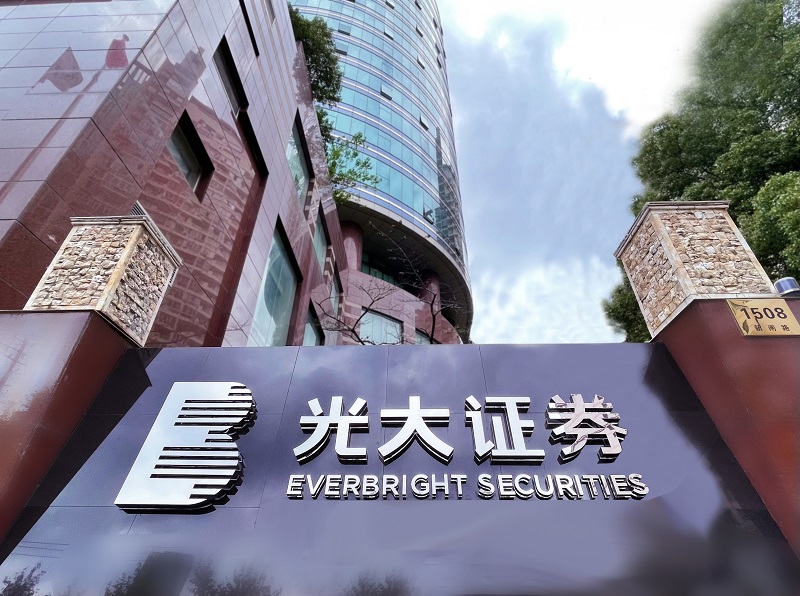
以中国特色金融文化为引擎做好金融“五篇大文章”
Zhong Guo Zheng Quan Bao· 2025-12-10 20:17
Core Viewpoint - The 20th Central Committee of the Communist Party of China has set clear requirements for accelerating the construction of a financial power during the 14th Five-Year Plan period, emphasizing the integration of political and people-oriented aspects into financial work [1][2]. Group 1: Company Strategy and Governance - The company emphasizes the importance of integrating the spirit of the 20th Central Committee into its operations, ensuring that the Party's leadership is embedded in cultural construction and management processes [2][3]. - The company has incorporated Party leadership requirements into its articles of association and governance processes, aiming to create a clear and efficient governance structure [3]. - The company is committed to enhancing discipline and compliance, focusing on the implementation of the Central Eight Regulations and promoting a culture of integrity [3]. Group 2: Cultural Development - The company aims to deepen the integration of the "Five Musts and Five Must Nots" cultural requirements into its operational framework, transforming cultural advantages into core driving forces for serving national strategies [4][7]. - A leadership group for cultural construction has been established, with over 300 personnel dedicated to promoting cultural values and activities within the organization [4]. Group 3: Talent and Risk Management - The company is focused on building a strong professional talent pool, enhancing political and operational capabilities through training and competitions [5]. - Strict compliance with regulatory requirements is being enforced, with a comprehensive risk management system in place to address potential risks effectively [5]. Group 4: Financial Services and Contributions - The company is actively involved in green finance, having financed 18.23 billion yuan for green industries in the first three quarters of the year, representing a 34.6% increase year-on-year [7]. - The company has also contributed to rural revitalization and the development of revolutionary old areas, underwriting 1.79 billion yuan in bonds for these initiatives [8]. - The company is expanding its offerings in pension finance, launching new pension fund products and enhancing services for the elderly [8]. Group 5: Digital Transformation - The company is leveraging digital technology to enhance operational efficiency, with significant improvements in its digital platform and automation of processes [9]. - The company has implemented over 100 optimizations in its digital services, resulting in a substantial increase in user registrations [9].
国泰君安期货:践行“五要五不” 厚植中国特色金融文化
Qi Huo Ri Bao· 2025-12-10 12:27
积极培育中国特色金融文化,要坚持知行合一。要恪守市场规则和职业操守,将诚实守信融入各项业务 中,发扬铁算盘、铁账本、铁规章精神,始终不做假账,诚实经营,珍惜信誉,不逾越底线。要正确处 理义与利的关系,在服务经济社会发展中创造价值和利润,实现经济与金融共生共荣,不能唯利是图。 要树立正确的经营观、业绩观、风险观,稳健审慎经营,既看当下,更看长远,不贪图短期暴利,不急 躁冒进,不超越承受能力而过度冒险。要解决好金融为谁服务、为谁创新的问题,紧紧围绕更好服务实 体经济、便利人民群众推动创新,不能搞伪创新、乱创新。要严格遵纪守法,遵守金融监管要求,自觉 在监管许可的范围内依法经营,不能靠钻法规和制度空子、规避监管来逐利。金融机构和从业人员要内 化于心、外化于行,做中国特色金融文化的积极传播者和模范践行者,为金融高质量发展夯实文化之 基、铸牢文化之魂。 加快建设金融强国使命在肩、责任重大。前进道路上,我们要胸怀"国之大者",强化使命担当,积极培 育中国特色金融文化,坚定不移走中国特色金融发展之路,不断开创新时代金融工作新局面,为全面推 进中国式现代化作出新的更大贡献。 积极培育,要突出"中国特色"这个关键。中华文明源远 ...
中证协新领导班子亮相 吴清最新演讲:明确一流投行五大发展路径
Bei Ke Cai Jing· 2025-12-07 07:13
Core Viewpoint - The China Securities Association's eighth member congress highlighted the need for the securities industry to enhance its overall strength and fulfill its four major missions to achieve high-quality development in the face of challenges [2]. Group 1: Industry Achievements and Challenges - Since the seventh member congress in 2021, the securities industry has made significant progress, with total assets of 107 securities firms reaching 14.5 trillion yuan and net assets at 3.3 trillion yuan, representing growth of over 60% and 40% respectively over four years [2]. - The number of clients in the securities sector has surpassed 240 million, marking a 26% increase [2]. - Despite these achievements, the industry still faces shortcomings, including the need for improved overall strength, professional skills, innovation capabilities, compliance, and cultural development [2]. Group 2: Future Development Directions - The securities industry must focus on serving the real economy and enhancing the precision and adaptability of its product services, while also protecting investors' rights and promoting market stability [3]. - There is a need to enhance professional service capabilities, including value discovery, wealth management, and cross-border financial services, while exploring new technologies like AI, big data, and blockchain [4]. - The industry should aim for differentiated and specialized development, leveraging the strengths of leading firms and promoting value competition over price competition [5]. - Strengthening compliance management and risk prevention is essential, with a focus on improving corporate governance and protecting the rights of small investors [6]. - The construction of industry culture should be prioritized, promoting a financial culture with Chinese characteristics and attracting talented professionals [7]. Group 3: Leadership and Governance - The new leadership of the China Securities Association was elected, with Zhu Jian from Guotai Junan Securities as president and Wang Sheng from Galaxy Securities as chairman [8]. - The new leadership is expected to enhance member recognition, cohesion, and participation in the association's work [8]. - The congress also approved several reports, including the work report of the seventh council and the financial work report [9].
吴清发声!奋力打造一流投资银行和投资机构,国泰海通合并初步实现“1+1>2”
Sou Hu Cai Jing· 2025-12-06 11:58
Core Viewpoint - The Chinese securities industry is urged to focus on high-quality development, enhancing service capabilities, and fostering a robust investment banking environment during the "14th Five-Year Plan" period, emphasizing the importance of serving the real economy and protecting investor rights [1][2][3]. Group 1: Industry Development Goals - The industry is transitioning from a focus on scale and profit to prioritizing functionality and high-quality development, with an emphasis on serving the real economy [2][3]. - There is a call for the industry to enhance its service capabilities, particularly in IPOs and mergers and acquisitions, while also improving wealth management services and cross-border financial services [3][5]. - The importance of innovation in financial products and services is highlighted, with a focus on integrating technologies like AI, big data, and blockchain to foster high-quality development [4][6]. Group 2: Compliance and Risk Management - Compliance and risk management are deemed essential for the survival of industry institutions, with a need for improved governance and transaction management to protect investors and maintain market order [6][7]. - The industry is encouraged to strengthen its risk prevention measures, particularly in high-risk areas such as margin trading and private asset management [6]. Group 3: Cultural and Structural Improvements - The need for a strong industry culture is emphasized, advocating for long-termism and reputation management to enhance the industry's image and attract talent [7]. - The restructuring of firms, such as the merger of Guotai Junan and Haitong, is seen as a positive step towards optimizing industry structure and achieving greater efficiency [7].
