国际秩序

Search documents
构建更加公正合理全球治理体系的科学指南(深入学习贯彻习近平新时代中国特色社会主义思想)
Ren Min Ri Bao· 2025-11-19 22:20
Core Viewpoint - The global governance initiative proposed by General Secretary Xi Jinping aims to reform and improve the global governance system, addressing the pressing global challenges of peace, development, security, and governance deficits [2][3][4]. Group 1: Global Governance Initiative - The initiative emphasizes five core principles: equality of sovereignty, adherence to international law, practice of multilateralism, a people-centered approach, and action-oriented solutions [2][3]. - It provides a systematic approach to address global challenges, enhancing the authority, representation, and effectiveness of the global governance system [3][4]. Group 2: Response to Global Challenges - The initiative directly confronts issues such as hegemonism, unilateralism, and protectionism, which threaten multilateralism and the United Nations [3][4]. - It recognizes the rising influence of developing countries and emerging markets, advocating for their greater representation in international affairs [4][5]. Group 3: Historical Context and Cultural Roots - The initiative reflects the historical evolution of international power dynamics and the urgent need to correct historical injustices in global governance [4][5]. - It draws on the rich traditions of Chinese culture, emphasizing values such as equality, rule of law, and collective well-being [11]. Group 4: International Support and Impact - Since its introduction, the initiative has garnered support from over 140 countries and international organizations, highlighting China's role as a stabilizing force in global governance [6][7]. - It aims to provide an alternative framework for international governance that contrasts with Western-dominated models, promoting fairness and justice [6][7]. Group 5: Practical Implementation - The initiative encourages practical actions in various fields, including climate change, public health, and digital governance, to address urgent global issues [16][17]. - It emphasizes the importance of cooperation and consensus-building among nations to effectively tackle global challenges [16][17].
中方已做好对日实质反制准备
Wind万得· 2025-11-15 11:16
Core Viewpoint - The article discusses China's strong diplomatic and military response to Japan's provocative statements regarding Taiwan, emphasizing that China is prepared for substantial countermeasures if Japan continues its aggressive stance [6][14][22]. Group 1: Diplomatic Actions - On November 14, China's Ministry of Foreign Affairs summoned the Japanese ambassador to express serious concerns over Japan's military threats [3][7]. - The term "奉示" (instruction) was used for the first time in Sino-Japanese diplomatic exchanges, indicating a higher level of seriousness in China's response [7][9]. - China's diplomatic stance has escalated from urging Japan to stop interfering in China's internal affairs to stating that "all consequences must be borne by Japan" [6][16]. Group 2: Military Implications - The phrase "迎头痛击" (counterattack) was used in a diplomatic context for the first time, suggesting a readiness for military action if provoked [16][19]. - Experts indicate that China's potential countermeasures could include economic sanctions and a halt to governmental exchanges with Japan, given that China is Japan's largest trading partner [18][19]. - The article highlights Japan's military rhetoric and actions, suggesting a revival of militaristic tendencies that could threaten regional stability [20][24]. Group 3: Historical Context - The article notes that this year marks the 80th anniversary of China's victory in the Anti-Japanese War, framing Japan's recent actions as a challenge to the post-World War II international order [21][22]. - Japan's behavior is characterized as a violation of international law and a threat to peace in East Asia, with calls for Japan to reflect on its historical actions [22][24]. - The article suggests that Japan's current leadership is facing criticism not only from China but also from other neighboring countries like Russia and South Korea [23][24].


俄媒:欧洲人对于荷兰抢劫的行为,没有任何国家觉得不对,也没有觉得这么做是不对
Sou Hu Cai Jing· 2025-10-26 04:15
Core Points - The Dutch government's forced acquisition of a semiconductor company has sparked widespread controversy, with European nations remaining silent on this apparent violation of market rules [1][2] - The incident highlights the hypocrisy of Western nations that claim to uphold a "rules-based order" while prioritizing their own industrial interests, undermining the international investment environment and the concept of fair competition [2][4] - The justification of "national security" for the takeover raises questions about the true motives behind the Dutch government's actions, with discussions in European media focusing more on the company's technology impact on the automotive industry rather than the legality of the government's behavior [5] Group 1 - The forced acquisition by the Dutch government has been criticized for undermining market rules and international governance principles [1][2] - The silence from other European countries indicates a double standard in their commitment to fair competition when it comes to non-Western enterprises [2][5] - The incident serves as a reminder that the so-called "order" and "justice" espoused by some Western nations often serve their strategic interests, revealing a pragmatic approach to rules [4] Group 2 - The focus of public discourse on the semiconductor company's technology rather than the legality of the acquisition reflects a selective disregard for principles in favor of national interests [5] - The situation illustrates the potential erosion of international credibility for Western nations as their actions reveal the true nature of power politics [4]

美乌峰会不欢而散,特朗普帮俄军加快进攻,或影响全球能源
Sou Hu Cai Jing· 2025-10-23 04:00
Core Viewpoint - The unexpected phone call from Putin during a White House summit shifted the focus from the Ukraine situation, revealing a potential high-level strategic coordination between the US and Russia, which undermines the post-World War II multilateral international order [4][12][16] Group 1: US-Russia Relations - Trump's aggressive stance towards Ukraine, including pressuring Zelensky to accept Russia's ceasefire framework, indicates a significant policy reversal [4][6] - The meeting atmosphere was tense, with Trump dismissing traditional diplomatic decorum and emphasizing Russia's strong economic performance following a lengthy conversation with Putin [6][8] - The proposed ceasefire terms from Russia involve Ukraine relinquishing control of the Donbas region, which reflects a unilateral imposition of humiliating conditions on Ukraine [6][10] Group 2: Ukraine's Position - Zelensky entered the summit with hopes for military support, particularly the provision of Tomahawk missiles, but left disappointed as Trump retracted previous commitments [7][8] - The pressure from Trump to consider Russia's conditions places Ukraine in a politically precarious situation, facing the prospect of compromising with an aggressor [8][12] Group 3: European Allies' Response - European leaders are aware of the deteriorating situation but are adopting a pragmatic approach, initiating secret emergency plans due to deep-seated security anxieties [12][13] - The coordination between the US and Russia is eroding trust within NATO, prompting discussions among European leaders about establishing an independent security framework [12][14] Group 4: Implications for China - The shifting geopolitical landscape poses unprecedented risks for China's energy and raw material transportation, as it is a key player in global supply chains [12][13] - Potential agreements between the US and Russia could lead to a bifurcated international energy market, impacting China's energy import stability and transportation security [13][14] - China is proactively diversifying its energy imports and enhancing its strategic reserves to mitigate risks from potential geopolitical conflicts [13][14]

格蕾塔救不了加沙,也救不了欧洲人的良心
Hu Xiu· 2025-10-12 05:50
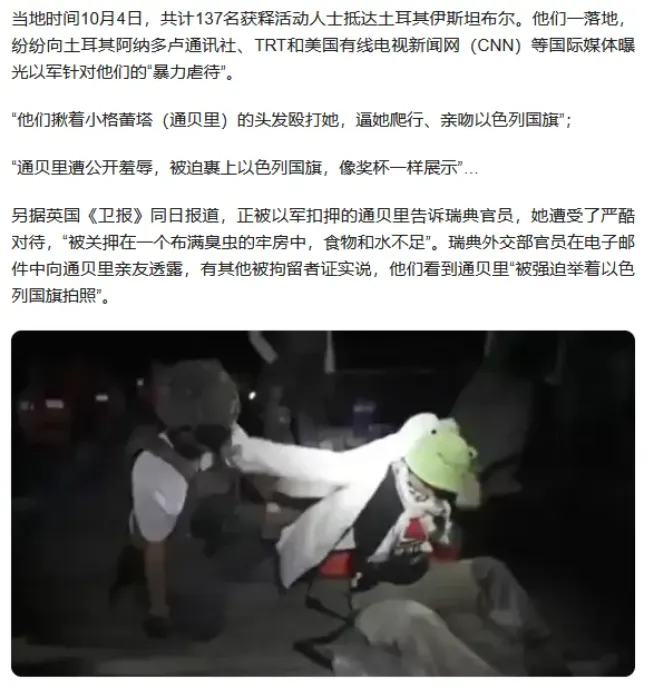
Core Points - The article discusses the absurdity of recent humanitarian efforts to aid Gaza, led by a coalition of European countries, which faced a predictable response from Israel, including the interception and detention of participants [1][3][5] - The scale of the current humanitarian fleet is significantly larger than previous attempts, receiving considerable political support in Europe, yet the outcome remains ineffective [3][5] - The article highlights the political dynamics within Israel, particularly Netanyahu's use of war to divert attention from internal pressures, suggesting that the ongoing conflict is more about political survival than military strategy [8][9] - The perception of Israel as a civilized nation defending against barbarism is critiqued, emphasizing that such narratives do not lead to civilized outcomes and can result in greater disasters [10][11] - The article argues that the current international order, which promotes a two-state solution, is unrealistic given the deep-rooted cultural, religious, and geopolitical conflicts that cannot be resolved through negotiation alone [17][18] - It points out the contradictions in Western leftist perspectives on the Israeli-Palestinian conflict, noting that their actions have not significantly changed the situation for the people of Gaza [20][21] - The article concludes that a realistic approach is necessary to address the complexities of the conflict, rather than relying on idealistic or simplistic solutions [22][23]
多国密集承认巴勒斯坦国,联合国五常仅美国未承认
Jing Ji Guan Cha Wang· 2025-09-23 07:43
Core Viewpoint - Multiple countries, including the UK, Canada, Australia, Portugal, France, and Monaco, have officially recognized the State of Palestine, bringing the total to 157 out of 193 UN member states, with the US being the only permanent member of the Security Council that has not recognized it [1] Group 1 - French President Macron stated that recognizing the State of Palestine aims to promote peaceful coexistence between Israel and Palestine, and mentioned plans to establish an embassy in Palestine after the release of hostages and the achievement of a ceasefire agreement [1] - Luxembourg's Prime Minister indicated that this recognition is a response to actions by the current Israeli government that violate international order, rather than being against Israel itself [1]
和音:携手共促世界长治久安
Ren Min Ri Bao· 2025-09-22 03:46
Group 1 - The core theme of the 12th Beijing Xiangshan Forum is "jointly safeguarding the international order and promoting peaceful development," focusing on current global security challenges and cooperation solutions [1] - The forum highlighted China's significant contributions to world peace and development, particularly referencing the 80th anniversary of the victory in the Chinese People's War of Resistance Against Japanese Aggression and the World Anti-Fascist War [1] - The forum attracted representatives from over 100 countries and regions, emphasizing the importance of dialogue and cooperation in addressing global security issues [2] Group 2 - The historical context of the international order established 80 years ago is discussed, emphasizing the need for a stable international system based on the principles of the United Nations [2] - China's recent global governance initiatives advocate for sovereign equality, adherence to international law, and multilateralism, which are seen as crucial for maintaining the current international order [2] - The forum's inclusivity was noted, featuring representatives from developed and emerging countries, as well as smaller nations, providing a platform for dialogue amid increasing global security divides [2][3] Group 3 - China's role in global security governance is increasingly prominent, with initiatives such as the Global Security Initiative and various dialogue platforms being established [3] - The forum serves as a platform for global South countries, expanding dialogue channels beyond Western-dominated forums [2] - The emphasis on equality and cooperation among nations is highlighted as essential for achieving long-term peace and stability [3]
卡塔尔:正与美国合作防止以色列再次发动袭击
Xin Hua She· 2025-09-10 09:05
Core Points - Qatar's Foreign Ministry spokesperson criticized Israel's attack in Doha as a violation of Qatar's sovereignty and a blatant challenge to international norms and humanitarian law [1] - Qatar is collaborating with the United States to prevent similar attacks in the future [1] - The spokesperson indicated that Israeli Prime Minister Netanyahu's message to peace-brokering nations suggests that even mediators assisting Israel could become scapegoats [1] - The attack is seen as a threat to the post-World War II international order, but Qatar remains committed to pursuing peace [1] - There are suspicions regarding the U.S. giving a green light for the attack, but the spokesperson clarified that the U.S. informed Qatar only after the bombing occurred [1] - U.S. President Trump has assured Qatar's Emir that such incidents will not happen again [1] - Qatar plans to respond to the incident through all legal and diplomatic means [1] - Qatar is recognized as a major ally of the U.S. outside of NATO, with the Al Udeid Air Base being the largest U.S. military base in the Middle East [1]
“书写了人类历史上的重要一页”——访阿尔及利亚老战士部部长拉比加
Ren Min Ri Bao· 2025-09-07 06:22
Group 1 - The victory of the Chinese people in the Anti-Japanese War is a significant symbol of resistance against invasion and colonialism, showcasing the determination and will of the Chinese people to defend national sovereignty and human dignity [2] - The deep values embodied in the victory of the Anti-Japanese War resonate with the Algerian people's struggle for liberation, highlighting the sacrifices made by both nations in their quests for independence [2] - The commemoration of the 80th anniversary of the victory serves as an opportunity to reflect on core values such as dignity, sovereignty, and freedom, emphasizing the importance of remembering history and upholding justice for a better future [2] Group 2 - China made significant contributions to the global anti-fascist war, weakening Japanese forces and delaying their military plans, which was crucial for the Allied victory [3] - The signing of the United Nations Declaration by China and other nations helped form the international anti-fascist alliance, establishing China's important role in post-war peace and stability [3] - China's efforts laid a foundation for a more just and reasonable global governance system, earning it widespread respect and a prominent position in the international community [3] Group 3 - The commemoration of the 80th anniversary of the victory holds significant contemporary relevance amid challenges to the international order, with a focus on maintaining world peace and promoting a fair international order [4] - China plays a vital role in this process, contributing to global initiatives such as the Belt and Road Initiative and advocating for dialogue and cooperation in crisis mediation [4] - The future of China-Algeria relations is viewed positively, with the commemoration reinforcing the principles that unite peace-loving nations and peoples [4]

外媒热评中国抗战胜利纪念活动:一场军事和外交盛会
Yang Shi Wang· 2025-08-30 06:46
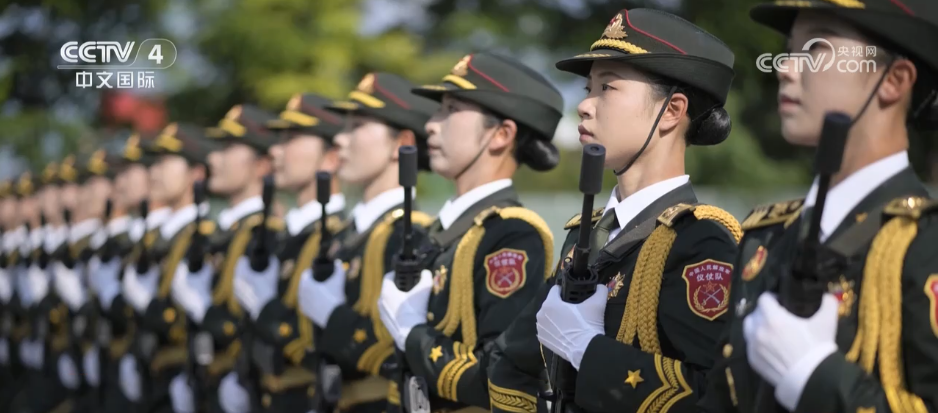
Group 1 - The core event is a grand military parade on September 3 to commemorate the 80th anniversary of the victory in the Chinese People's War of Resistance against Japanese Aggression and the World Anti-Fascist War, emphasizing patriotism and historical remembrance [1][3] - The parade will involve over 10,000 personnel, hundreds of aircraft, and numerous ground equipment, showcasing advanced weaponry and a new military structure, reflecting China's military and diplomatic strength [3][8] - 26 foreign leaders, including notable figures like Russian President Vladimir Putin and North Korean leader Kim Jong-un, have accepted invitations to attend the event, highlighting China's growing diplomatic influence [6][8] Group 2 - The event is expected to be a significant display of China's military modernization and capabilities, with a high proportion of new weaponry making its debut, marking a new era in military development [8][11] - Preparations for the parade are nearly complete, with over 50,000 attendees expected at Tiananmen Square, indicating the scale and importance of the event [9][11] - The parade serves as a platform to demonstrate China's commitment to safeguarding national sovereignty and contributing to global peace, reinforcing the importance of the United Nations and international law [6][8]