
数字赋能

Search documents
数字赋能,古蜀文明“活”起来、“火”下去——四川创新推动古蜀文明走向世界
Xin Lang Cai Jing· 2025-12-27 12:30
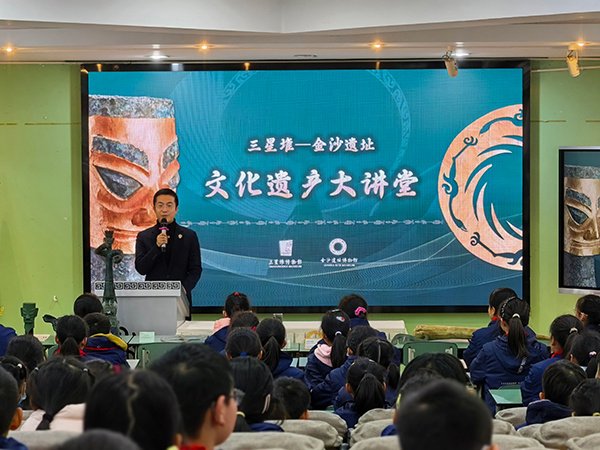
Core Viewpoint - Sichuan is leveraging digital technology to activate and promote the ancient Shu civilization, transforming static historical relics into dynamic cultural resources that can be experienced and shared globally [3][4][12] Group 1: Digital Technology in Cultural Heritage - Sichuan is utilizing digital technologies such as 3D scanning and digital modeling to create accurate replicas of ancient artifacts, allowing for interactive learning experiences [1][3] - A systematic digital archive has been established for 4,113 cultural relics at the Sanxingdui and Jinsha museums, facilitating efficient management and preservation [6] - Advanced technologies like remote sensing and AI are being employed for archaeological documentation and virtual restoration of artifacts, enhancing the preservation efforts [6][7] Group 2: Immersive Cultural Experiences - Sichuan has developed immersive digital cultural products, such as 3D videos and global exhibitions, that transform static artifacts into engaging experiences for the public [7] - The integration of cultural heritage with tourism is being promoted, with initiatives like mobile cultural classrooms and collaborative development of cultural tourism zones [7] Group 3: International Promotion and Engagement - An international communication system is being constructed to elevate ancient Shu civilization as a shared human heritage, with significant online engagement through social media platforms [8][9] - Diverse promotional strategies are being implemented in various countries to resonate with local audiences, enhancing global awareness and appreciation of ancient Shu culture [11] Group 4: Cultural Industry Development - The development of cultural IPs and creative products is being prioritized, with significant revenue generated from cultural merchandise, indicating a thriving cultural economy [11][12] - Collaborations with popular entertainment IPs and innovative projects are helping to modernize and popularize ancient Shu civilization among younger generations [11][12] Group 5: Collaborative Efforts for Cultural Exchange - Sichuan is fostering collaboration among cultural institutions and research organizations to promote the protection and transmission of ancient Shu civilization [12] - Partnerships with international museums are being established to facilitate joint exhibitions and research, enhancing global cultural exchange [12]

破局人力资源瓶颈 推进新能源项目实践
Xin Lang Cai Jing· 2025-12-27 01:15
Core Viewpoint - Binjiang County has implemented innovative mechanisms and digital empowerment strategies to efficiently manage limited human resources while focusing on multiple key tasks in the context of a rural energy revolution pilot program [1][2] Group 1: Human Resource Management - The company has introduced a "three-dimensional linkage" mechanism to optimize human resource allocation, breaking down departmental barriers and establishing a collaborative operational system [1] - A dynamic adjustment of human resources has been implemented, resulting in a 40% increase in human resource utilization efficiency [1] Group 2: Digital Empowerment - The introduction of a "smart tool replacement + digital platform management + remote collaboration support" model has reduced the labor burden on grassroots workers [2] - The establishment of a county-wide energy monitoring management platform has improved coordination efficiency, leading to a 60% increase in fault location and repair scheduling efficiency [2] Group 3: Renewable Energy Integration - Binjiang County has successfully integrated a total of 161.13 million kilowatts of renewable energy, achieving a fully green power supply [2] - The smart grid construction has shown significant results, with a 100% coverage rate for self-healing capabilities and a 75.47% effective recovery rate [2]
策划:泰安市委宣传部 泰安市新型工业化强市建设推进委员会办公室执行:齐鲁晚报·齐鲁壹点泰安融媒中心
Qi Lu Wan Bao· 2025-12-25 16:23
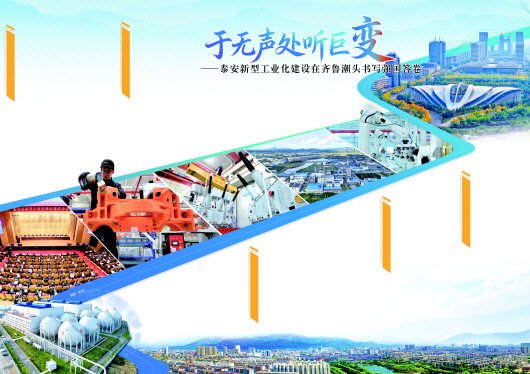
Core Insights - The article discusses the strategic implementation of a new industrialization initiative in Tai'an, focusing on enhancing industrial strength and innovation to address existing development bottlenecks [2][9]. Group 1: Industrial Strategy and Framework - Tai'an's new industrialization strategy is built on a "1+N" framework, which aims to create a robust organizational structure for industrial development, involving key leaders and specialized teams [2]. - The city has established a comprehensive planning system targeting four pillar industries: high-end equipment manufacturing, new materials, modern food, and high-end chemicals, along with several advantageous industries [3][4]. Group 2: Policy Support and Economic Impact - Tai'an has developed over 330 core policies to support industrial growth, including financial incentives and streamlined processes for businesses, resulting in significant tax refunds and funding for enterprises [4][12]. - The industrial value-added tax refunds reached 4.03 billion yuan, and the "Strong Industry Loan" program provided 69.527 billion yuan to 9,509 enterprises, fostering a substantial increase in the number of industrial enterprises [4][12]. Group 3: Pillar Industries Development - The four pillar industries have shown significant growth, with Tai'an's high-end equipment and new materials sectors achieving national competitiveness, including a 60% market share in certain steel products [3][5]. - The modern food industry has expanded from 119 to 204 regulated enterprises, with notable companies achieving over 1 billion yuan in revenue [7]. Group 4: Technological and Green Transformation - Tai'an is focusing on technological innovation and green transformation, with a reported 95.1% coverage of digital transformation among regulated industrial enterprises [10][11]. - The city has implemented numerous projects aimed at reducing energy consumption and increasing renewable energy capacity, with a 19.8% annual growth in installed renewable energy [10]. Group 5: Future Outlook and Goals - The city aims to further enhance its industrialization efforts during the "15th Five-Year Plan" period, focusing on smart, green, and integrated development to build a modern industrial system [14][15]. - Tai'an's industrial value added is projected to increase its share of GDP from 24.6% to 27.4% by 2024, indicating a strong commitment to industrial growth [14].
八部门联手力挺!这波红利怎么看?
Jin Rong Shi Bao· 2025-12-25 08:46
Core Viewpoint - The development of the Western Land-Sea New Corridor has transformed the historical isolation of the southwestern region of China, significantly enhancing its connectivity with global markets and facilitating trade through improved logistics and financial support [1][2]. Group 1: Infrastructure and Logistics - The Western Land-Sea New Corridor has evolved from a single route to a comprehensive network, with annual freight volume surpassing 1 million TEUs, marking a 110-fold increase since its inception in 2017 [1] - The transportation network now extends to 127 countries and regions, covering 581 ports and facilitating over 1,300 types of products, including electronics, vehicles, machinery, and food [1][2]. Group 2: Financial Support and Services - The recent policy issued by eight ministries aims to establish a comprehensive financial service system to support the corridor's high-quality development, addressing funding needs through 21 key measures [1][2] - Financial institutions are encouraged to create specialized service mechanisms and explore integrated credit and syndicate loan models to facilitate cross-province financial resource flow [3]. Group 3: Funding Mechanisms - The policy emphasizes the need for diverse financing channels, including special funds, corporate bonds, and real estate investment trusts (REITs), to support the full lifecycle of projects related to ports, railways, and logistics parks [3]. - Support for small and micro logistics enterprises includes the introduction of comprehensive credit products and financial services tailored to their needs, addressing challenges related to financing [3]. Group 4: Institutional Innovation - The policy introduces measures to enhance cross-border trade settlement and investment financing, promoting efficient and secure capital flow [4]. - Initiatives include supporting offshore international trade settlements and encouraging bilateral currency cooperation with Southeast and Central Asian countries [4]. Group 5: Digital Empowerment and Open Cooperation - The establishment of the "Central Bank Western Land-Sea Intelligent Financial Service Platform" aims to integrate major project databases and facilitate precise connections between banks and enterprises [5]. - The policy supports collaboration with ASEAN and Hong Kong-Macau financial institutions, enhancing cross-border green finance cooperation and broadening funding sources [5]. Group 6: Future Prospects - The financial policies introduced are expected to significantly empower the construction of the corridor, promoting deep integration with logistics, trade, and industry [6]. - The corridor is envisioned as a vital economic artery, an industrial corridor driving development, and a channel benefiting people's livelihoods [6].
杭州劳务品牌:让每个人都有“够得着”的未来
Mei Ri Shang Bao· 2025-12-24 22:18
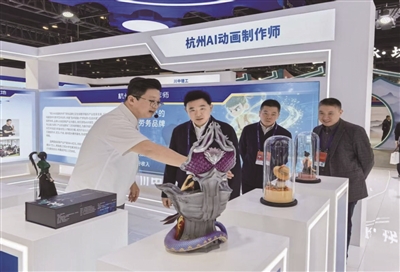
Core Viewpoint - The labor brand in Hangzhou is undergoing a significant transformation, evolving from traditional craftsmanship to new digital roles, reflecting the integration of technology and culture in the labor market [8][9][15]. Group 1: New Labor Brands - The emergence of new labor brands such as "Hangzhou AI Animation Maker," "Hangzhou AI Application Engineer," "JianDe Tofu Bun Master," and "ZhongTai Bamboo Flute Maker" showcases a path towards shared prosperity in the digital age [9][10]. - The "ZhongTai Bamboo Flute Maker" brand has a production ecosystem that includes R&D, manufacturing, sales, and training, with an annual sales volume of 4.5 million flutes, accounting for over 85% of the global market share, and generating an industry output value of 350 million yuan [9][10]. - The "JianDe Tofu Bun Master" brand has trained over 10,000 certified masters and created 50,000 jobs, with an annual output value exceeding 5 billion yuan through a standardized production and sales process [10]. Group 2: Digital Integration and Training - The "Hangzhou AI Animation Maker" brand utilizes AIGC technology, achieving a 10-fold increase in efficiency for animation production and a 70% reduction in costs for e-commerce advertising [11]. - The "Hangzhou AI Application Engineer" brand focuses on training professionals to develop AI applications, with over 1 million practitioners and more than 1 million AI applications generated [11][12]. - Hangzhou has cultivated 58 labor brands, involving over 320,000 enterprises and training more than 514,600 individuals annually, contributing to an industry output value exceeding 490 billion yuan [12]. Group 3: Ecosystem Development - Hangzhou has established a "four-dimensional integrated" ecosystem to support the growth of labor brands, leveraging policies, digital empowerment, brand development, and industry-education integration [13][14]. - The city promotes a collaborative approach to talent cultivation, bridging the gap between education and industry needs, and has initiated a digital skills talent training evaluation alliance [14][15]. - The ongoing development of labor brands in Hangzhou is redefining the concept of "skills" in the digital era, aiming for standardization, specialization, and branding of labor services [15].
泗阳农商银行彰显服务实体经济担当
Jiang Nan Shi Bao· 2025-12-24 16:13
Core Insights - Siyang Rural Commercial Bank has enhanced its development strength through various measures such as deepening inclusive finance, strengthening digital empowerment, and optimizing institutional processes, achieving significant results in supporting the real economy and improving service quality [1] Financial Performance - As of the end of October, the balance of loans for agriculture and small micro enterprises reached 24.449 billion yuan, with a net increase of 1.988 billion yuan since the beginning of the year, representing an increase of 8.85% [1] - The balance of loans for the manufacturing sector reached 6.026 billion yuan, with a net increase of 1.08 billion yuan since the beginning of the year, reflecting a growth of 21.85% [1] Product Innovation - The bank has actively innovated financial products, launching specialized offerings such as "Industrial Factory Loan," "Private Credit Loan," and "Credit Easy Loan" to effectively meet the funding needs of new and quality enterprises [1] Marketing Strategy - The bank has implemented refined marketing strategies targeting different customer segments, successfully organizing activities to enhance critical customers, recover existing customers, and increase credit limits, thereby effectively revitalizing existing customer resources [1] Future Outlook - The bank aims to continue focusing on customer-centric approaches and technology-driven solutions, optimizing products and services to support high-quality local economic development while achieving stable and sustainable growth [1]
四牌楼街道刷新民生服务速度 干部下沉解难题 数字赋能促善治
Zhen Jiang Ri Bao· 2025-12-23 23:29
Core Viewpoint - The article highlights the implementation of a community governance model in the Jiangbin New Village, focusing on grassroots engagement and digital empowerment to address residents' needs effectively [1][2][3][4] Group 1: Community Governance Model - The "1+10+N" model involves each "党员中心户" (Party member center household) linking with 10 Party members, who in turn connect with multiple residents, creating a comprehensive grassroots governance structure [2] - Local volunteer organizations, such as "江东大妈" and "滨江自治理事会," have been empowered to mediate disputes and resolve community issues, successfully addressing over 2000 cases of neighborly conflicts and property challenges [2] Group 2: Active Service and Engagement - Community leaders are assigned to specific neighborhoods, establishing regular meetings and a "115" work mechanism, which mandates weekly community presence and quick response times to residents' issues [3] - A total of 312 community issues, such as blocked drains and non-functional streetlights, have been resolved through a structured approach that emphasizes local problem identification and resolution [3] Group 3: Digital Empowerment - The establishment of a smart operation command center allows for real-time monitoring and management of community needs, enhancing communication and service delivery [4] - The "江滨小管家" WeChat mini-program has been launched, offering various services and achieving a 100% response and resolution rate for 229 reported community issues [4]
山东能源唐口煤业:增储保供,质效双优
Qi Lu Wan Bao· 2025-12-23 15:15
Core Viewpoint - The company focuses on enhancing coal supply stability through skill improvement, technological empowerment, and green safety measures, aiming for dual excellence in quality and efficiency [2]. Group 1: Skill Development and Training - The company conducts regular training competitions to enhance operational skills in coal loading, sampling, and equipment maintenance, ensuring high efficiency in coal supply [3]. - The management emphasizes the importance of both production reserves and skilled operations, highlighting a dual empowerment approach to achieve seamless coal supply [3]. Group 2: Technological Innovation - The company has invested in upgrading hardware and implementing smart monitoring systems, including drone technology for precise coal volume measurement, enhancing operational efficiency [4]. - A "three-priority" policy for coal transport has been established to ensure efficient loading and dispatch of coal vehicles, minimizing delays [4]. Group 3: Environmental and Safety Measures - The company integrates green development principles into its coal supply processes, employing dust control measures and ensuring safe transportation practices [5]. - A 24-hour monitoring system is in place to oversee coal storage conditions, effectively mitigating self-ignition risks and ensuring stable coal storage [5]. - The company actively collaborates with local power plants to adjust supply structures and has completed its monthly storage increase plan ahead of schedule, demonstrating commitment to national energy strategies [5].

数字赋能超大特大城市治理新路子
Zheng Zhou Ri Bao· 2025-12-23 00:52
Core Viewpoint - The article discusses the innovative governance model implemented in Zhengzhou, Henan Province, focusing on digital empowerment and party-led grid governance to enhance urban management efficiency in large cities [1]. Group 1: Governance Structure - The governance model emphasizes the core leadership role of party organizations, creating a governance chain that includes various organizations and community groups [2]. - A four-level responsibility system is established, integrating decision-making, governance, data management, and platform mechanisms [2]. Group 2: Grid Management - A comprehensive grid system is developed as the foundational unit for governance and public service, with over 7,000 community grids and more than 40,000 micro-grids established [3]. - The grid system integrates various functions and clarifies responsibilities to ensure effective service delivery within the grid [3]. Group 3: Data Integration and Analysis - The integration of four networks (party, government, visual, and IoT) allows for real-time monitoring and intelligent analysis of urban operations across over 7,000 square kilometers [4]. - More than 1 billion data points related to people, events, and facilities are collected and visualized to support governance decisions [4]. Group 4: Smart City Operations - A smart city operation center is created to manage urban governance through a unified platform, enhancing coordination across various sectors [5]. - The platform facilitates direct communication between citizens and government services, streamlining issue reporting and resolution processes [5]. Group 5: Service Innovation - The governance model encourages the attraction of market entities and talent by providing quality services through grid systems [6]. - A collaborative model combining party leadership, grid management, big data, and industry development is established to enhance economic growth [6]. Group 6: Community Engagement and Safety - Community engagement is promoted through various participatory methods, allowing residents to take an active role in local governance [7]. - Safety measures are integrated into the platform's construction and data management processes to ensure data security and control [7].
为乡村全面振兴注入文化力量
Xin Lang Cai Jing· 2025-12-22 23:27
Core Viewpoint - The revitalization of rural culture is essential for inheriting historical context and serves as a crucial support for grassroots governance and economic vitality. It emphasizes the need for tailored approaches to build livable and workable beautiful villages, promoting the coordination of material and spiritual civilization, as well as the integration of economic and cultural development [1]. Group 1: Activating Grassroots Cultural Dynamics - The public cultural service model must shift from "government providing" to "community requesting," necessitating a transition from standardized supply to differentiated and precise offerings [1]. - Establishing a dynamic feedback mechanism and cultural demand database is crucial for understanding the cultural preferences and spiritual needs of different regions and demographics [1]. - Integrating various resources to create a three-tiered cultural service resource database and utilizing data analysis for intelligent distribution can enhance the efficiency and vitality of grassroots cultural resources [1]. Group 2: Empowering Local Culture - The revitalization of rural culture requires not only the supply of quality resources but also the stimulation of local cultural vitality [2]. - Emphasizing the importance of local talent and intangible cultural heritage, initiatives should include training programs for traditional crafts and local arts to engage rural labor resources [2]. - Encouraging villages to document their historical narratives and cultural traditions can facilitate a shift from passive reception to active creation in cultural development [2]. Group 3: Digital Empowerment for Cultural Accessibility - The traditional cultural outreach model faces limitations due to geographical and physical constraints, making digital integration essential for effective cultural service delivery [3]. - Building a digital cultural service system that connects various cultural institutions can provide villagers with access to quality cultural resources [3]. - Utilizing modern technologies like AI, AR, and VR for the digital transformation of cultural heritage can enhance the preservation and dissemination of local culture [3]. Group 4: Overall Cultural Revitalization - The comprehensive revitalization of rural culture is a key measure for promoting cultural equity and enhancing the cultural strength of provinces, which in turn stimulates grassroots cultural innovation [4].