无人驾驶技术

Search documents
涛涛车业(301345.SZ):已先后与K-SCALE、开普勒机器人、宇树科技等公司达成战略合作
Ge Long Hui A P P· 2025-08-11 07:37
Core Viewpoint - The company is actively embracing the wave of intelligence by strategically laying out plans in robotics and autonomous driving technologies while maintaining its core business in smart electric low-speed vehicles and special vehicles [1] Group 1: Business Development - The company aims to build a common technology platform across product lines by integrating research and development achievements from emerging fields into its core products, thereby enhancing the development of its main business [1] - The company is planning to establish a global technology research and development network, including a domestic research institute in Zhangjiang, Shanghai, and an overseas team for cutting-edge technology incubation in the United States [1] Group 2: Strategic Collaborations - The company has formed strategic partnerships with K-SCALE, Kepler Robotics, and Yushu Technology to collaborate on sales expansion, scenario applications, and product secondary development [1]


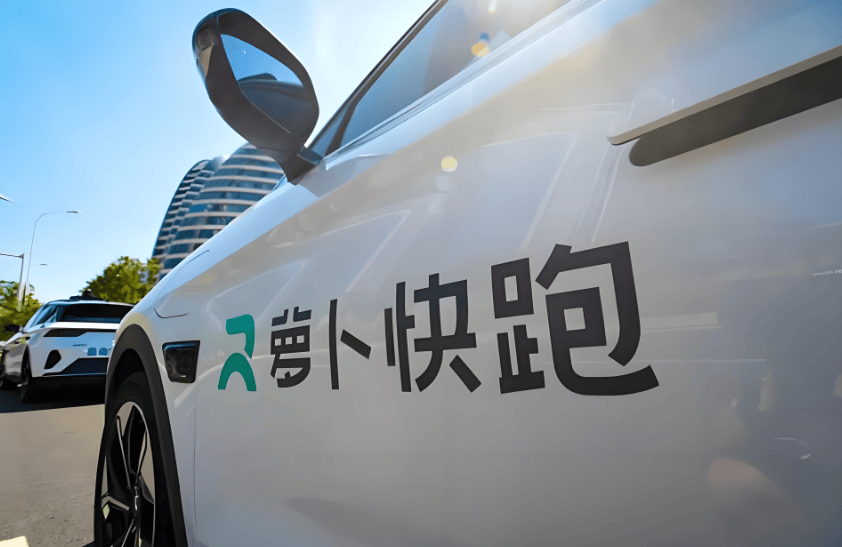
萝卜快跑坠坑,打脸李彦宏?百度无人驾驶的光环碎了一地
Sou Hu Cai Jing· 2025-08-10 15:14
Core Viewpoint - The recent incident involving Baidu's Robotaxi brand "萝卜快跑" has raised significant concerns regarding the safety and reliability of its autonomous driving technology, highlighting systemic issues in technology, operations, and regulation [1][3][9] Technology - The sixth-generation autonomous vehicle (Apollo RT6) is equipped with 38 sensors and a computing platform with 1200 Tops, boasting L4 autonomous driving capabilities [4] - Despite its advanced hardware, the vehicle failed to recognize a 1.2-meter high construction barrier, indicating a gap between technical specifications and real-world performance [4][8] - The incident suggests that the failure may not be solely due to a technical flaw but also reflects insufficient scenario coverage during rapid expansion [4][8] Operations - Baidu's Robotaxi service has recorded over 100 million kilometers of operation without a responsibility accident, yet the recent incident contradicts this claim and raises doubts about operational safety [3][5] - The company has faced multiple incidents prior to the recent crash, including a collision with a pedestrian and a vehicle leaving the scene after a minor accident, indicating ongoing operational challenges [6][8] Public Trust and Market Position - The series of accidents has eroded public trust in Baidu's autonomous driving technology, which is critical for its survival and growth in the competitive market [8][9] - Baidu's ambitions for its autonomous driving business, seen as a second growth curve, are at risk if the company fails to address technical and operational issues effectively [8][9] - The competitive landscape is intensifying, and Baidu's leading position is being threatened as other players in the autonomous driving market continue to advance [8][9]


政策松绑商业化快速推进,无人物流有望率先放量
2025-08-05 03:15
Summary of Conference Call Records Industry Overview - The logistics industry is experiencing significant growth, with the workforce expected to increase from 11 million in 2024 to 15.5 million by 2025. However, logistics costs are rising at a slower pace, leading to increased labor costs that challenge industry profitability [1][2][3]. Key Insights and Arguments - **Cost Reduction through Autonomous Vehicles**: The cost of autonomous delivery vehicles is rapidly decreasing, with prices dropping from nearly 1 million yuan in 2018 to 19,800 yuan by 2025. This trend suggests that the cost of autonomous vehicles may soon be lower than labor costs, accelerating commercialization [1][2][5]. - **Market Potential**: The autonomous vehicle market is projected to reach several hundred billion yuan by 2029, with significant penetration in warehouse automation [3][17]. - **Regulatory Challenges**: The industry faces legal bottlenecks, particularly regarding regulations for open road scenarios. While closed environments like mines and warehouses do not require adherence to traffic laws, public road usage necessitates regulatory approval [4][10]. - **Commercialization Drivers**: The primary driver for the commercialization of autonomous vehicles is the lower cost of standardized road operations compared to human labor. For instance, the operational cost of autonomous delivery vehicles is significantly lower than that of human drivers [15][16][18]. Important but Overlooked Content - **Diverse Applications**: Autonomous vehicles are being applied in various sectors, including passenger transport, logistics, heavy cargo transport, warehouse management, and urban sanitation, providing significant advantages in efficiency and cost reduction [6][19]. - **Investment Trends**: Internet and logistics companies are leveraging their technological advantages and cost-reduction needs to promote the application of autonomous vehicles. The investment strategies vary, with internet companies focusing on R&D and logistics companies prioritizing cost efficiency [14][19]. - **Future Market Trends**: The market for autonomous delivery vehicles is expected to grow faster than that for Robotaxis due to lower safety requirements and regulatory pressures. The current stock of autonomous delivery vehicles exceeds 6,000 units, with projected sales surpassing 5,000 units in 2024 [24][25]. Regulatory Developments - **Beijing's Progress**: Beijing has made significant strides in autonomous driving regulations since 2017, with the latest updates allowing for commercial trials of L4 level autonomous vehicles [9][10]. Competitive Landscape - **Differences in Market Strategy**: The competition between autonomous vehicles and new energy vehicles differs significantly. Autonomous vehicles primarily target government and business clients (ToG and ToB), while new energy vehicles focus on consumers (ToC) [12][19]. Conclusion - The autonomous vehicle industry, particularly in logistics, is poised for rapid growth driven by technological advancements, regulatory support, and the need for cost-effective solutions. The market dynamics indicate a shift towards increased commercialization and broader application across various sectors.
Waymo与安飞士合作,将网约车服务扩展至美国得州达拉斯市
news flash· 2025-07-29 00:08
Core Insights - Waymo, a subsidiary of Alphabet, announced plans to expand its ride-hailing service to Dallas, Texas by 2026 [1] - The company will partner with Avis Budget Group for strategic collaboration, which will provide end-to-end fleet management services [1] Company Developments - Waymo's expansion into Dallas marks a significant step in its growth strategy for autonomous ride-hailing services [1] - The partnership with Avis Budget Group will include infrastructure support, vehicle preparation, maintenance, and general fleet operations [1]


电瓶车也玩“无人驾驶”
Mei Ri Shang Bao· 2025-07-24 23:35
Group 1 - The emergence of electric bikes equipped with autonomous driving technology is gaining attention, with brands like Tailg and Yadea showcasing their models at the 2025 South China International Electric Vehicle and Parts Exhibition [1] - Tailg's model, named "Tailg Supercar Adventurer Smart Version," is priced at 149,000 yuan, although official channels do not confirm this information [1] - Other brands, such as Ninebot, are also developing autonomous electric bikes, but many are still in the concept stage and not yet mass-produced [2] Group 2 - The electric bike industry is experiencing a shift towards smart technology, with features like Bluetooth unlocking, voice activation, and navigation becoming common [2] - The price of smart electric bikes is generally higher than traditional models, with some costing an additional 2,000 to 3,000 yuan, which may affect consumer acceptance [2] - The primary consumer base for electric bikes remains lower-income individuals, making price a critical factor in purchasing decisions [2]
上海将发放智能网联汽车示范运营牌照
财联社· 2025-07-24 12:49
Core Viewpoint - Shanghai is set to issue demonstration operation licenses for intelligent connected vehicles during the 2025 World Artificial Intelligence Conference (WAIC2025), following the initial release of demonstration application licenses in 2024, marking a significant step in the integration of traditional taxi services with autonomous driving technology [1] Group 1 - The issuance of demonstration application licenses in 2024 allows Robotaxis to conduct road tests but prohibits fare collection [1] - The upcoming demonstration operation licenses will enable the public to hail Robotaxis within designated service areas [1] - Traditional taxi companies will collaborate with technology firms to operate these services, showcasing an innovative management approach that leverages the operational experience of traditional taxi firms alongside the autonomous driving capabilities of tech companies [1]
人民网评:车企不应有意无意夸大辅助驾驶性能
Cai Fu Zai Xian· 2025-07-22 02:38
Group 1 - The core issue highlighted is the confusion between assisted driving and true autonomous driving, leading to dangerous behaviors among drivers who overestimate the capabilities of their vehicles [1][2] - Recent incidents, including a serious accident involving a driver using an assisted driving feature, underscore the risks associated with misinterpretation of these technologies [1] - The current state of autonomous driving technology in China is primarily at the L3 trial stage, with most vehicles on the market equipped with L2 level systems that only provide limited assistance [1] Group 2 - Some automotive companies are accused of intentionally blurring the lines between different levels of autonomous driving in their marketing, exaggerating the capabilities of their assisted driving features [2] - Media reports have highlighted reckless behaviors by drivers who misuse assisted driving features, such as sleeping while the vehicle is in motion, raising public safety concerns [2] - Experts emphasize the importance of proper safety education from car manufacturers and the need for drivers to have a realistic understanding of assisted driving capabilities [2]

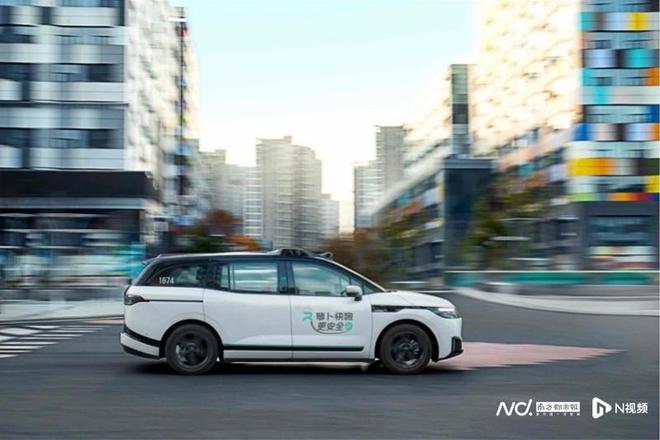
萝卜快跑无人驾驶汽车将接入Uber全球出行网络,包括美国
Nan Fang Du Shi Bao· 2025-07-16 01:07
Core Insights - The partnership between Luobo Kuaipao and Uber aims to expand Luobo Kuaipao's autonomous driving services globally, beyond the US and mainland China [1][3] - Thousands of Luobo Kuaipao's sixth-generation autonomous vehicles will be integrated into Uber's global mobility network, with initial deployments planned in Asia and the Middle East by the end of this year [1][3] - This collaboration is seen as a significant milestone for Luobo Kuaipao in deploying autonomous vehicles worldwide, enhancing the safety and efficiency of transportation for passengers [3] Company Developments - Luobo Kuaipao has received approval to conduct autonomous vehicle testing in designated areas and times in Hong Kong, further expanding its testing scenarios [3] - In March, Luobo Kuaipao signed strategic cooperation agreements with authorities in Dubai and Abu Dhabi to initiate large-scale autonomous driving tests and services, planning to deploy over 1,000 fully autonomous vehicles in Dubai [4] - The partnership with Uber reflects Luobo Kuaipao's ambition in the US market, which is already competitive with major players like Tesla, Waymo, and Zoox [4][5] Market Context - The US Robotaxi market is currently dominated by Tesla, Waymo, and Zoox, creating a competitive landscape for autonomous driving services [4][5] - Waymo reported that its autonomous taxi service has seen a threefold increase in weekly orders, exceeding 150,000 orders as of June this year [5]

易控智驾港股IPO:近50%的市占率仍难堵“财务窟窿” 严重依赖大客户但大客户变动频繁
Xin Lang Zheng Quan· 2025-07-11 08:53
Core Viewpoint - Easy Control Intelligent Driving Technology Co., Ltd. (referred to as "Easy Control") is a leading global player in L4 autonomous driving solutions for mining, but it faces significant financial challenges despite holding a nearly 50% market share in China [1][3][4]. Financial Performance - Easy Control's revenue from 2022 to 2024 showed substantial growth, with figures of 0.6 billion, 2.71 billion, and 9.86 billion respectively, reflecting growth rates of 352.15% and 264.04% in 2023 and 2024 [4]. - Despite revenue growth, the company reported increasing net losses of -2.16 billion, -3.34 billion, and -3.9 billion over the same period, totaling 9.4 billion in losses [4]. - Operating cash flow has been negative, with net cash flows of -0.75 billion, -2.51 billion, and -7.13 billion from 2022 to 2024, indicating severe cash flow issues [4][6]. Market Position - Easy Control ranks first globally among L4 autonomous driving companies based on 2024 revenue, with a domestic market share of 49.2% in mining autonomous solutions [1][3]. - The market for autonomous mining solutions in China is projected to grow from 2 billion in 2024 to 30.1 billion by 2030, with a compound annual growth rate (CAGR) of 57.4% [3]. Business Model Transition - The company is shifting from a heavy asset model (TaaS) to a lighter asset model (ATaaS) to improve profitability and cash flow. In 2024, ATaaS contributed 4.53 billion in revenue, accounting for 46% of total revenue, with a gross profit margin of 14% [11][12]. - The TaaS model, which dominated early revenues, resulted in a gross margin of -29.7%, highlighting the financial strain of high asset costs [11]. Customer Dependency - Easy Control heavily relies on a small number of major clients, with revenue from the top five clients constituting 99.9%, 94.4%, and 83.7% of total revenue from 2022 to 2024 [7][8]. - The instability of major clients poses a risk, as significant changes in client relationships can lead to substantial revenue fluctuations [8][9]. Debt and Financing - The company has seen a significant increase in total liabilities, from 7.71 billion in 2022 to 16.15 billion in 2024, with a high debt ratio of 86.14% in 2024 [5][6]. - Easy Control completed a 4 billion D-round financing to support R&D, global expansion, and customer acquisition, which is crucial for addressing its financial challenges [12].
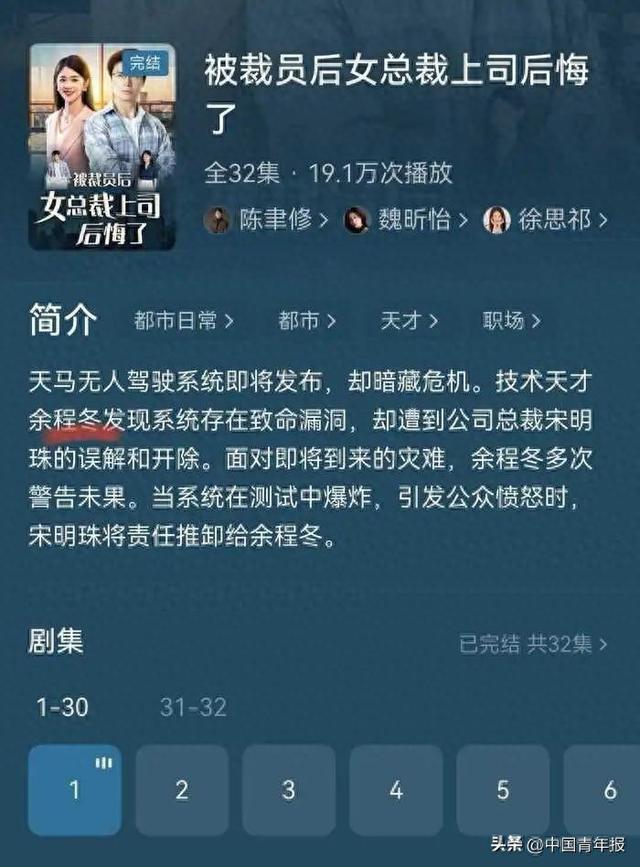
“余程冬”被“骁米苏柒”挖走,汽车上路30秒自燃?热播短剧引质疑
Zhong Guo Qing Nian Bao· 2025-07-10 06:56
Core Viewpoint - A short drama titled "The CEO Regrets After Layoff" has gained attention due to its similarities in plot and character names with Huawei and Xiaomi, raising concerns about potential legal implications [1][10]. Group 1: Company and Industry Analysis - The male lead, Yu Chengdong, works at Tengyuan Group, which is developing an autonomous driving system that faces critical issues, leading to his dismissal [4]. - The autonomous driving system, if not fixed, could lead to catastrophic failures, including explosions, posing risks to public safety [6]. - Tengyuan Group's competitor, Xiaomi Group, has been researching autonomous driving technology for five years without success, highlighting the competitive landscape in the industry [6]. Group 2: Legal Implications - The short drama features characters and company names that closely resemble real-life figures and entities, which could lead to public confusion and potential legal issues [10][11]. - Legal experts suggest that the drama may infringe on trademark rights and could damage the reputation of the individuals and companies depicted, potentially leading to legal action [12][14]. - The drama's wide reach, with over 800,000 views, raises concerns about the impact of its content on the reputation of the companies involved, regardless of whether it is free or paid [12].