民生改善

Search documents
解锁银川幸福密码:让民生温暖直达人心
Zhong Guo Xin Wen Wang· 2025-12-03 01:01
Group 1 - The core viewpoint of the article highlights the significant improvements in the quality of life in Yinchuan, with a focus on community services and facilities that enhance the well-being of residents [1][5] - Over the past five years, Yinchuan has allocated over 70% of its fiscal funds to the improvement of people's livelihoods, addressing key concerns such as employment, education, healthcare, and elderly care [2][5] - The city has implemented 109 new and expanded projects for primary and secondary schools and kindergartens, adding 88,000 new student places, which alleviates the "enrollment anxiety" faced by families [2][3] Group 2 - Yinchuan has achieved full coverage of five-level remote outpatient services and three major remote diagnosis centers, enhancing the convenience of medical services for residents [3] - The average disposable income for urban and rural residents in Yinchuan has reached 49,164 yuan and 22,299 yuan respectively, with annual growth rates of 5.7% and 7.9%, consistently outpacing economic growth [3] - The city has established 814 elderly care facilities and 98 senior universities, making elderly care and leisure activities more accessible [3][5]

登封登高峰
Zheng Zhou Ri Bao· 2025-12-01 08:55
Core Insights - The article highlights the development journey of Dengfeng, showcasing its transformation into a high-quality county economy through cultural tourism integration, industrial innovation, rural revitalization, and improved public welfare. Group 1: Cultural Tourism Integration - Dengfeng is leveraging its rich cultural heritage, with 1,805 immovable cultural relics and 24 national key cultural heritage sites, to enhance its tourism experience [4][5] - The city has seen a significant increase in tourist engagement, with 2,265.3 million visitors in the first nine months of 2025, marking its eighth consecutive year in the top 100 counties for tourism strength [6] - Innovative cultural dissemination methods, such as micro-short dramas, have reached over 100 million views, attracting younger audiences to traditional culture [5][6] Group 2: Industrial Innovation - Dengfeng's advanced manufacturing sector is experiencing robust growth, with a 11% year-on-year increase in industrial output value in the first half of the year, and leading industries growing at 23.7% [9] - The city has established 4 national "little giant" enterprises and 38 provincial specialized enterprises, focusing on new materials, equipment manufacturing, and aluminum processing [9] - Dengfeng is also pioneering in the low-altitude economy, with a 12.9 square kilometer low-altitude economic park and several projects signed, including the opening of Shaolin Airport [9] Group 3: Rural Revitalization - The city is focusing on agricultural development, with 219,000 acres dedicated to highland vegetables and medicinal herbs, and several products recognized as national geographical indication products [10][11] - Rural tourism projects, such as the Zen-themed homestays and cultural centers, are being developed to enhance local culture and attract visitors [10] - The integration of agriculture, culture, and tourism is creating new economic opportunities for rural residents, with 7 villages recognized as 3A scenic spots [11] Group 4: Public Welfare Improvement - Dengfeng prioritizes public welfare, with initiatives such as 15 job fairs and the establishment of 10 employment service stations, distributing over 5 million yuan in employment subsidies [12] - The city has improved public services, including the construction of 20 new elderly care facilities and the expansion of educational institutions, adding 1,800 new quality school places [12] - Smart governance initiatives are enhancing urban management efficiency, integrating multiple command centers for better public service delivery [13]
民生为大持续增强获得感
Jing Ji Wang· 2025-12-01 07:43
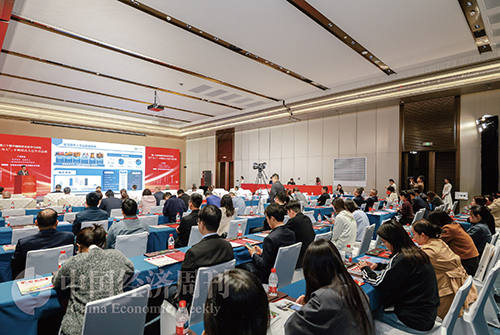
Group 1 - The core message emphasizes that "people's livelihood is paramount" in China's modernization efforts, as highlighted by General Secretary Xi Jinping [1] - The 20th Central Committee's Fourth Plenary Session outlines a five-year development blueprint, with a focus on improving the quality of life for citizens as a primary goal [1][2] - The session approved a series of significant deployments aimed at safeguarding and improving people's livelihoods, as detailed in the "Suggestions for the 15th Five-Year Plan" [1][2] Group 2 - The 20th China Economic Forum, themed "People's Livelihood is Paramount," was held to discuss issues related to safeguarding and improving livelihoods during development [2] - Experts and representatives from various sectors participated in the forum, indicating a collaborative effort to implement the spirit of the 20th Central Committee's Fourth Plenary Session [2] - The forum served as a platform for sharing practical experiences and outcomes related to improving people's quality of life [2] Group 3 - Agricultural universities are encouraged to contribute to rural revitalization by enhancing research and talent support, aligning with the principle of "people first" [3] - Financial institutions, such as the Agricultural Bank of China, emphasize the importance of serving people's livelihoods as a key aspect of their political and social responsibilities [3] - Traditional Chinese medicine is recognized as a vital means to enhance quality of life, highlighting its significance in the 15th Five-Year Plan [3] Group 4 - Local governments are urged to implement practical measures to improve people's livelihoods, with examples of successful initiatives shared by various officials [5] - The "Hundred-Thousand-Ten Thousand Project" in Nansha District aims to enhance community governance and improve living standards [5] - Efforts in ecological civilization construction in Huaiqi County are presented as a model for integrating green development with quality of life improvements [5] Group 5 - Companies are actively exploring ways to promote development while enhancing people's livelihoods, with examples from various sectors [6] - The Xinjiang Fruit Industry Group focuses on benefiting farmers through a comprehensive fruit industry chain [6] - Financial institutions like Beijing Bank are sharing their experiences in empowering livelihood construction through financial services [6]
惠及群众的事,再难也要想办法解决
Ren Min Ri Bao· 2025-12-01 00:25
Core Viewpoint - Shanghai has completed the "toilet relocation" project, marking a significant step in urban renewal and improving living conditions for residents, reflecting the city's commitment to the "People's City" concept [1][2][20]. Group 1: Project Completion and Impact - The "toilet relocation" project, which involved upgrading old housing without sanitary facilities, has been completed, benefiting numerous residents who previously faced significant hardships [1][3]. - In September 2023, the last 14,082 households identified as "toilet carriers" were targeted for renovation, with a two-year timeline set for overall completion [10][21]. - The project has significantly improved living conditions, with Shanghai's average living space increasing to 19.0 square meters per person by the end of 2024, nearly three times the figure from 1990 [12][21]. Group 2: Historical Context and Challenges - The "toilet relocation" issue symbolizes a broader historical narrative of urban development in Shanghai, where many residents lived without proper sanitation facilities for decades [3][4]. - The transformation began in the 1990s, with a focus on improving living conditions and addressing the lack of sanitary facilities in old neighborhoods [5][9]. - The challenges of upgrading these facilities were compounded by the historical context of urban infrastructure, which included outdated sewage systems that complicated modern upgrades [4][10]. Group 3: Government Commitment and Strategy - The Shanghai government has consistently prioritized the "People's City" concept, emphasizing the importance of improving residents' quality of life through urban renewal initiatives [8][11]. - Significant financial resources have been allocated to support the "toilet relocation" project, demonstrating the government's commitment to addressing these critical issues despite the high costs involved [10][11]. - The approach to urban renewal has evolved to focus on preserving historical buildings while enhancing living conditions, reflecting a balance between modernization and heritage conservation [19][20]. Group 4: Community Involvement and Feedback - The renovation process has involved extensive community engagement, with local residents' needs and preferences being prioritized in the design and implementation of housing upgrades [14][15]. - Various strategies, including "house swapping" to create space for new sanitary facilities, have been employed to address the unique challenges of each neighborhood [18][19]. - The success of the project has been attributed to the collaborative efforts of government officials, community leaders, and residents, highlighting the importance of grassroots involvement in urban renewal [16][17].
发展新质生产力 扎实推进中国式现代化建设
Ren Min Ri Bao· 2025-11-24 22:31
Group 1 - The forum emphasized the importance of improving people's quality of life as a central goal of China's modernization efforts, aligning with the directives from the 20th Central Committee [2][3] - The forum provided a platform for various stakeholders, including government officials, experts, and entrepreneurs, to share experiences and discuss strategies for enhancing public welfare [2][3] - Key topics discussed included high-quality employment, income distribution, education, social security, and sustainable urban development, all aimed at ensuring that the public benefits from economic growth [3][4] Group 2 - The integration of technology and finance was highlighted as a crucial factor for innovation and economic development, particularly in the Guangdong-Hong Kong-Macao Greater Bay Area [8][9] - The forum showcased various innovative practices in financial services that aim to enhance public welfare, including the development of financial products that support green and low-carbon transitions [9][10] - The role of local governments in implementing effective policies and practices to improve living standards was underscored, with examples from different regions demonstrating successful initiatives [5][6] Group 3 - The event featured discussions on the significance of technological innovation in driving sustainable economic growth, with a focus on the role of AI and digital technologies in various sectors [12][16] - The forum also addressed the need for a collaborative approach among financial institutions, technology companies, and government bodies to foster an ecosystem conducive to innovation [10][11] - The importance of international cooperation in advancing technological capabilities and achieving mutual benefits was emphasized as a key strategy for building a strong technological foundation [13][14]

布局2026:五大具备强逻辑的行业赛道 | 一财号每周思想荟(第43期)
Sou Hu Cai Jing· 2025-11-21 08:27
Group 1: Investment Opportunities in Key Industries - The five key industries identified for investment by 2026 are AI hardware, biomedicine, aerospace, power equipment, and non-ferrous metals, which show clear investment logic amid macroeconomic cycles and industrial transformations [1] - Non-ferrous metals are in a tight balance phase characterized by "insufficient capacity and expanding demand," while power equipment is experiencing a recovery in inventory cycles due to energy storage and new energy vehicles [1] - The biomedicine sector is at a resonant point with the overseas expansion of innovative drugs and the performance inflection point of CXO [1] - AI hardware is in an explosive phase of technological diffusion and commercialization, supported by the "14th Five-Year Plan" which provides a solid foundation for defense, new energy, and technological innovation [1] Group 2: Policy and Technological Support - The "14th Five-Year Plan" continues to support key industries, creating a robust bottom line for sectors like defense and new energy [1] - Technological breakthroughs such as the domestic production of AI computing chips, mass production of core components for humanoid robots, and advancements in ADC/small nucleic acid drugs are continuously opening up growth space for these industries [1] Group 3: Market Dynamics in the Baijiu Industry - The Baijiu industry is facing its worst quarterly performance in ten years, with net profits dropping by as much as 92.6% in a single quarter [4] - Changes in the overall consumption market environment and a shift in consumer preferences towards cost-effective options are impacting the Baijiu sector [5] - Baijiu companies need to redefine their target consumer groups and embrace market changes by focusing on family consumption, younger demographics, and healthier product offerings [5] Group 4: Humanoid Robots in Consumer Electronics - Humanoid robot technology is rapidly advancing from laboratory settings to real-world applications, poised to reshape the consumer electronics market [6] - The convergence of technology, policy, and demand is driving the development of humanoid robots, with significant breakthroughs in AI models and embodied intelligence [7] - The government is promoting AI development, with the 2025 government work report including "embodied intelligence" and "smart robots" as key focus areas, indicating strong policy support for the industry [7]
算算这笔账,值!(金台潮声)
Ren Min Ri Bao· 2025-11-18 00:31
社会上还有一种担心,党政机关过紧日子,办事会不会紧巴巴的,影响效率? 《党政机关厉行节约反对浪费条例》说得很清楚,"科学统筹财政资源""保证正常公务活动"……反对浪 费,不是该花的钱不花,而是坚决砍掉不重实效的"花架子",比如奢华接待、超标配置、形象工程,目 的是精打细算,把钱花在刀刃上。 事实最有说服力。2025年,中央本级"三公"经费预算压减5%。省下的钱去哪了?前不久,财政部国库 支付中心相关负责人在新闻发布会上介绍,今年前三季度,全国社会保障和就业支出、教育支出均超过 3万亿元,分别增长10%、5.4%,卫生健康支出也有显著增长。一降一增中,是资源配置的优化,是民 生的改善,体现了现代治理的大格局、高效能。 新修订的《党政机关厉行节约反对浪费条例》实施半年多了,变化有目共睹。前不久,记者到基层调 研,中午餐叙时,没有专门的桌餐,更没人提酒水的事。两三个人就在单位食堂窗口打几份菜,边吃边 聊。这既不耽误下午的工作,还把吃饭的时间变成采访的过程,大家都觉得挺好,简单、高效,心里也 踏实。 可能有人嘀咕,一顿饭而已,稍微讲究点也没啥? 话听上去没错,可仔细想想,那些落马的官员,不少就是从一顿饭、一杯酒、一次 ...
海南热带雨林国家公园设立4年来已发现80余种新物种
Hai Nan Ri Bao· 2025-11-17 01:00
Core Insights - The Hainan Tropical Rainforest National Park has discovered over 80 new species in the four years since its establishment, with the Hainan gibbon population increasing to 42 individuals across 7 groups, making it the only growing gibbon population globally [2][3] Environmental Improvement - The ecological environment quality of the national park has continuously improved, and biodiversity has been enriched [2] - The park has implemented grid management and strict protective responsibilities, with all core areas completing ecological relocation [2][3] Economic Development - The park has achieved a GEP (Gross Ecosystem Product) total value increase from 204.51 billion to 208.75 billion yuan, and has explored financial products like "GEP loans" [3] - A total of 36 ecological products have been certified, enhancing product sales [3] Infrastructure and Community Engagement - A 466-kilometer tourism road has been constructed, connecting scenic spots and local communities, thereby strengthening the green industry foundation in the area [3] - The park has invested 179 million yuan in improving living conditions in 56 villages, promoting local employment through eco-tourism and nature education [3] Future Plans - The park aims to further improve management systems, develop ecological tourism, and create more public brands for national parks, establishing a model for national park construction in China [3]
海南热带雨林国家公园设立以来新发现物种80余种
Zhong Guo Xin Wen Wang· 2025-11-16 01:34
Core Viewpoint - The Hainan Tropical Rainforest National Park has shown significant progress since its establishment, with over 80 new species discovered and a growing population of Hainan gibbons, marking it as the only gibbon population globally that is continuously increasing [1] Group 1: Ecological Protection and Management - The Hainan Tropical Rainforest National Park has implemented a grid management system, dividing the park into over 1,700 grids to enforce management responsibilities [1] - A total of 22.89 million mu of artificial forest has been withdrawn, and all 459 households (1,975 individuals) in the core area have completed ecological relocation [1] - The park has improved its infrastructure by constructing and renovating protection stations and forest fire roads [1] Group 2: Green Development and Economic Impact - The GEP (Gross Ecosystem Product) value has increased from 204.51 billion to 208.75 billion, with the introduction of financial products like "GEP loans" [2] - The park has developed a list of ecological products and completed the first transaction of a carbon sink product, enhancing product sales [2] - A 466-kilometer tourism road has been built to connect scenic spots, local villages, and cuisine, strengthening the green industry foundation in the area [2] Group 3: Community and Livelihood Improvement - Hainan has invested 179 million yuan in improving living conditions in 56 villages within the national park [2] - The park has created 231 community ecological caretaker positions, prioritizing the hiring of 1,350 local residents as ecological forest rangers [2] - A differentiated compensation scheme for non-state-owned public welfare forests has been implemented to ensure local farmers benefit from the national park [2] Group 4: Governance and Monitoring Enhancements - The Hainan National Park has established a smart management platform that integrates with the national park perception system for real-time data sharing [3] - Four ecological system observation stations have been networked within the park, utilizing data from various departments for monitoring [3] - A comprehensive ecological environment monitoring network has been initiated, significantly improving the ability to detect and address forest resource damage early [3]
踔厉奋发绘新卷 万象武都启华章 ——甘肃陇南市武都区“十四五”高质量发展纪实
Zhong Guo Fa Zhan Wang· 2025-11-12 06:51
Core Insights - The article highlights the significant transformation and development of Wudu District in Longnan City during the "14th Five-Year Plan" period, emphasizing high-quality growth and the successful implementation of various projects [3][4][19]. Economic Development - Wudu District has achieved a remarkable economic milestone with a projected GDP exceeding 20 billion yuan in 2024, marking a 45.81% increase compared to the end of the "13th Five-Year Plan" [3][6]. - The district has implemented 479 key investment projects, with a total investment of 36.835 billion yuan, contributing to its economic growth [6][10]. - Industrial output has doubled, with the total industrial output value rising from 2.8 billion yuan at the end of the "13th Five-Year Plan" to 5.6 billion yuan in 2024 [6][10]. Infrastructure and Urban Development - The area has seen significant urban development, with the built-up area reaching 21.4 square kilometers and an urbanization rate of 50.61% [28]. - Key infrastructure projects include the construction of parks, improved waste management systems, and enhanced public services, contributing to a better living environment for residents [29][30]. Agricultural Advancements - Wudu District has established a robust agricultural system, with 641,300 acres of olive groves and a production capacity of 82,000 tons of olive oil, leading to an economic benefit of 4 billion yuan [10][11]. - The district's agricultural output is supported by a diverse range of crops, including a significant pepper production base recognized nationally [11][10]. Tourism and Cultural Development - The district has experienced a surge in tourism, with 25.964 million visitors in the "14th Five-Year Plan" period, a 108.84% increase year-on-year, generating 16.546 billion yuan in tourism revenue [19][20]. - Wudu District is positioning itself as a national leisure tourism and ecological health center, with various projects aimed at enhancing the tourism experience [18][21]. Social Welfare and Community Development - The district has focused on improving social welfare, with significant investments in education, healthcare, and housing, resulting in increased disposable income for residents [30][31]. - Community initiatives have been implemented to enhance the quality of life, including the establishment of elderly care centers and job creation programs [31][30].