
消费者价格指数(CPI)

Search documents
8月波黑CPI环比小幅下跌,年通胀率为4.1%
Shang Wu Bu Wang Zhan· 2025-09-27 03:18
Core Insights - Bosnia's consumer price index (CPI) decreased by 0.2% month-on-month in August, while year-on-year it increased by 4.1% [1] Price Changes - In August, prices for clothing and footwear rose by 0.1%, housing and utilities by 0.2%, healthcare products by 0.4%, entertainment and cultural services by 0.6%, education services by 0.1%, and food and hotel services by 0.1% [1] - Conversely, prices for food and non-alcoholic beverages fell by 0.4%, and transportation services decreased by 0.8% [1] Year-on-Year Comparisons - Year-on-year, food and non-alcoholic beverage prices increased by 9.2%, alcoholic beverages and tobacco by 3.7%, housing and utilities by 0.2%, furniture and household equipment by 1.1%, healthcare products by 6.1%, communications by 0.3%, entertainment and cultural services by 4.9%, education services by 2.4%, and food and hotel services by 7.2% [1] - However, clothing and footwear prices dropped by 5.7%, and transportation services decreased by 2.7% [1]
澳大利亚8月CPI同比上涨3%
Zhong Guo Xin Wen Wang· 2025-09-24 11:19
Core Points - Australia's Consumer Price Index (CPI) rose by 3% year-on-year in August, marking the highest level since July 2024 and an increase from 2.8% in July [1] - Key contributors to the CPI increase include housing, food and non-alcoholic beverages, and tobacco, with housing prices rising by 4.5% and electricity costs surging by 24.6% [1] - The trimmed mean inflation rate, a key indicator monitored by the Reserve Bank of Australia, decreased from 2.7% in July to 2.6% in August, indicating that core inflation remains within the RBA's target range of 2% to 3% [1] Economic Context - The Australian Treasury Minister Chalmers stated that despite global economic uncertainties, the government has made "substantial and sustained progress" in controlling inflation [1] - The Reserve Bank of Australia has implemented three interest rate cuts in February, May, and August of this year, with expectations for another potential cut as early as November [2]
美联储利率决议出炉前,黄金期货收盘创下新高
Sou Hu Cai Jing· 2025-09-16 22:22
Core Viewpoint - Recent gold futures contracts have reached a historic closing high, driven by market expectations of an impending interest rate cut by the Federal Reserve [1] Group 1: Price Movement - Gold futures increased by 0.2%, reaching $3,688.90 per ounce, marking the third consecutive trading day of record highs for recent contracts [1] Group 2: Economic Indicators - Bank of America reported that current economic data indicates a favorable financial environment for gold [1] - Concerns over stagflation, which typically benefits gold, remain a focal point for market participants in the precious metals sector [1] Group 3: Inflation Impact - The Consumer Price Index (CPI) reading of 2.9% in August has provided additional support for gold prices [1] - Since 2001, gold prices have never declined when the U.S. CPI has exceeded 2% and the Federal Reserve has implemented monetary easing [1]
美劳工统计局正招聘兼职银价拉升
Jin Tou Wang· 2025-09-16 07:27
Group 1 - International silver is currently trading above $42.68, with a recent price of $42.74, reflecting a 0.14% increase, and has seen a high of $42.77 and a low of $42.32 during the day [1] - The international silver market is showing a short-term oscillating trend, with potential upward movement towards $43.2 if the trend continues [4] - Key support levels for silver are identified at $42.40 and $42.20, while resistance levels are at $43.00 and $43.30 [4] Group 2 - The U.S. Bureau of Labor Statistics (BLS) is recruiting price data collectors for a critical inflation indicator, the Consumer Price Index (CPI), due to personnel shortages [3] - The BLS has posted 25 part-time economic assistant positions across major cities, which are essential for gathering price information from local businesses [3] - If these positions are filled quickly, the proportion of estimated prices in the CPI may significantly decrease in the coming months, reducing the error range of current estimates [3]


美国通货膨胀失控,失业率飙升,双重打击下美联储是该加还是降
Sou Hu Cai Jing· 2025-09-16 06:50
Economic Overview - The U.S. is experiencing an unprecedented economic storm characterized by uncontrolled inflation and rising living costs, while the job market shows signs of weakness with record unemployment rates and initial jobless claims [1][3][5] Inflation and Employment Data - The Consumer Price Index (CPI) annualized growth rate reached 2.9% in August, up from 2.7% in July, marking the highest level since January [3] - The unemployment rate rose to 4.3% in August, with the broader U6 unemployment rate climbing to 8.1%. Initial jobless claims surged to 263,000 in the first week of September, the highest level in 2023 and since October 2021 [3][9] Factors Driving Inflation - Food and energy prices are significant contributors to inflation, with food prices increasing by 0.6% in August, the largest monthly increase in nearly three years, and gasoline prices rebounding by 1.9% [7] - Housing costs and everyday consumer goods are the primary drivers of sustained inflation, exacerbated by policy factors such as immigration reforms and high tariffs implemented during the Trump administration [9][10] Wage Growth and Consumer Sentiment - Despite nominal wage increases, real wage growth adjusted for inflation was only 0.7% in August, the lowest in over a year, leading to consumer dissatisfaction as they feel the pinch of rising prices [9][10] - Consumers are more concerned about job security and rising grocery prices than macroeconomic indicators, indicating a disconnect between economic policy and everyday realities [13] Federal Reserve's Dilemma - The Federal Reserve faces a challenging situation, needing to balance rising inflation with a weakening job market, leading to speculation about potential interest rate cuts to stabilize market confidence [11][20] - Global monetary policy divergence adds to economic uncertainty, with different central banks taking varied approaches to interest rates [15] Market Reactions - Global markets are closely monitoring U.S. economic signals, with stock markets generally rising due to expectations of economic stimulus, while safe-haven assets like gold and U.S. Treasury yields reflect increased risk aversion [16][18] - Emerging market stocks outperformed developed markets, indicating a shift in investor sentiment amid economic concerns [16] Future Outlook - Predictions suggest that inflation may continue to escalate in the coming months, indicating that the apparent stability of the U.S. economy does not translate to relief for consumers facing financial pressures [19][20]
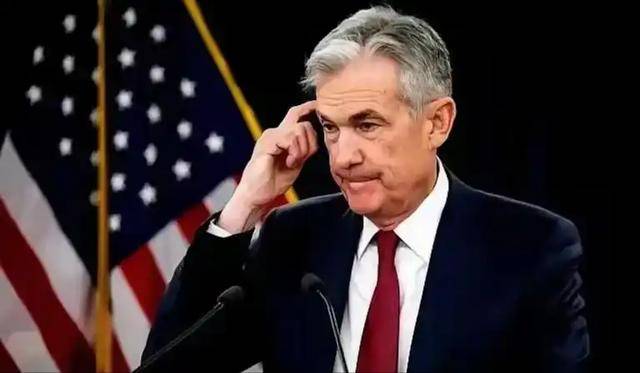
美国劳工统计局招聘兼职 为CPI数据采集信息
Xin Hua Cai Jing· 2025-09-16 05:42
Core Insights - The U.S. Bureau of Labor Statistics (BLS) is hiring price data collectors to support a key inflation indicator, the Consumer Price Index (CPI) [1] - Due to staff shortages, the CPI has increasingly relied on statistical estimation methods to fill data gaps [1] - The BLS has posted 25 part-time economic assistant positions across major metropolitan areas, which are crucial for gathering price information from local businesses [1] Inflation Data Collection - The hiring initiative aims to reduce the reliance on estimated prices in the CPI, which could significantly decrease the margin of error in current estimates if positions are filled quickly [1] - Inflation Insights LLC's president, Omar Sharif, emphasized the potential impact on CPI accuracy with the swift filling of these positions [1] - In June, the BLS announced a pause in price collection in three metropolitan areas due to insufficient resources [1]
美CPI数据来源招人!沪金高位震荡
Jin Tou Wang· 2025-09-16 03:02
Group 1 - The current trading price of gold futures is around 840.28 yuan per gram, with a slight increase of 0.93% [1] - The highest price reached today is 842.20 yuan per gram, while the lowest is 833.14 yuan per gram, indicating a short-term oscillating trend [1] - Key resistance levels for gold futures are identified between 842 yuan per gram and 860 yuan per gram, with important support levels ranging from 759 yuan per gram to 820 yuan per gram [4] Group 2 - The U.S. Bureau of Labor Statistics (BLS) is hiring price data collectors to support a key inflation indicator, the Consumer Price Index (CPI) [3] - The BLS has posted 25 part-time economic assistant job openings across major cities, which are crucial for gathering price information from local businesses [3] - If these positions are filled quickly, the proportion of imputed prices in the CPI may significantly decrease in the coming months, reducing the estimation error range [3]
【环球财经】法国2025年8月CPI同比上涨0.9%
Xin Hua Cai Jing· 2025-09-12 13:03
Group 1 - The core viewpoint of the article is that France's Consumer Price Index (CPI) showed a year-on-year increase of 0.9% and a month-on-month increase of 0.4% in August, indicating a slight decline in the annual growth rate compared to July's 1.0% [1] - The decline in the year-on-year CPI growth is attributed to a decrease in service sector inflation and a negative growth in manufactured goods prices [1] - Energy prices continued to decline year-on-year, although the rate of decline was less than in July, while food and tobacco prices remained stable compared to July [1] Group 2 - On a month-on-month basis, the CPI growth rate in August increased, driven primarily by a rebound in manufactured goods prices, particularly in clothing and footwear following summer sales [1] - Service prices and food prices also saw a month-on-month increase, while tobacco prices remained stable, and energy prices experienced a decline [1]
美国8月CPI同比上涨2.9%
Sou Hu Cai Jing· 2025-09-12 00:46
Core Insights - The U.S. Consumer Price Index (CPI) rose by 2.9% year-on-year and 0.4% month-on-month in August [1] - The core CPI, excluding volatile food and energy prices, increased by 3.1% year-on-year and 0.3% month-on-month for the second consecutive month [1] - The inflation report is the last significant economic data before the Federal Reserve's monetary policy meeting on September 16-17, reinforcing expectations for an interest rate cut [1] Inflation Drivers - The housing price index increased by 0.4% month-on-month, serving as the largest contributor to the overall price rise in August [1] - Food prices rose by 0.5%, while energy prices increased by 0.7%, with gasoline prices specifically up by 1.9% [1] Market Implications - The acceleration in overall inflation, combined with a cooling labor market, strengthens the rationale for the Federal Reserve to consider an interest rate cut, potentially marking the beginning of a new rate-cutting cycle [1]
美国8月CPI同比增长2.9%
Feng Huang Wang· 2025-09-11 12:38
Group 1 - The core point of the article is that the Consumer Price Index (CPI) in the United States increased by 2.9% year-on-year in August, matching the forecast and up from the previous value of 2.7% [1]