
生态产品价值实现

Search documents
破解生态产品价值实现“四难”,专家建议推进多项行动
Di Yi Cai Jing· 2025-11-17 09:16
Core Viewpoint - The establishment of a mechanism for realizing the value of ecological products is a significant strategic deployment in China, aimed at overcoming the existing challenges in measurement, transaction, monetization, and collateralization of ecological products [1][2]. Group 1: Current Challenges - The realization mechanism for ecological product value is still in the exploratory stage, with a lack of consensus on the definition and scope of ecological products, weak policy foundations, and insufficient coordination among various policies [2]. - The "four difficulties" (measurement, transaction, monetization, and collateralization) remain key bottlenecks hindering local practices [2][5]. - Common issues include a lack of sustainability in ecological product value evaluation, an imbalance between supply and demand, and insufficient ecological protection compensation [5]. Group 2: Policy and Implementation - By May 2025, 26 provinces and municipalities are expected to issue implementation plans for establishing ecological product value realization mechanisms, exploring region-specific models [2]. - Various regions are conducting trials to calculate the Gross Ecosystem Product (GEP) and developing evaluation methods tailored to local characteristics [2]. - Examples include Shenzhen incorporating GEP as an expected indicator in planning, and certain counties in Zhejiang developing financial products based on GEP calculations [2]. Group 3: Future Directions - Experts suggest that future efforts should focus on integrating ecological product value realization with national strategic goals, enhancing county economic vitality, and promoting urban-rural integration [6]. - Recommendations include compiling special plans for ecological economic development, conducting suitability evaluations for ecological product value realization, and establishing a negative list system for market access [6]. - The need to clarify property rights, scientifically assess ecological product values, and enhance government roles in market cultivation is emphasized [6].


金融支持生态产品价值实现的思考与实践 以烟台为例
Jin Rong Shi Bao· 2025-11-17 04:57
Core Insights - The article emphasizes the importance of establishing a mechanism for realizing the value of ecological products, which is crucial for achieving harmony between humans and nature [1][2][3] Group 1: Financial Mechanisms and Collaboration - The People's Bank of Yantai has initiated a collaborative governance framework to support the realization of ecological product value, transitioning from fragmented departmental efforts to a system-integrated approach [2] - A long-term cooperation mechanism has been established among various stakeholders, including government and financial institutions, to enhance the financing of ecological products [2][3] - The introduction of policies and reports has laid a theoretical foundation for financial support in specific regions, guiding resources towards key ecological areas [3] Group 2: Financial Product Innovation - Financial institutions in Yantai have developed a comprehensive financial support system that covers all regions, industries, and scenarios, enabling ecological products to be tradable and valued [4] - The innovation of green financial products, such as marine carbon credit loans and ecological environment-oriented development loans, has created a product matrix that facilitates the conversion of ecological resources into economic value [6][7] Group 3: Sustainable Development Mechanisms - The use of monetary policy tools has been crucial in providing low-cost resources to ecological industries, enhancing the capital accessibility of ecological products [8] - Financial institutions are exploring innovative financing products and service models tailored to the unique characteristics of ecological industries, such as carbon credit loans and green development-linked loans [9] - A project database has been established to support sustainable and replicable projects, with significant financial backing provided to selected projects [10]
金融支持生态产品价值实现的思考与实践
Jin Rong Shi Bao· 2025-11-17 01:42
Core Insights - The article emphasizes the importance of establishing a mechanism for realizing the value of ecological products, which is crucial for the harmonious coexistence of humans and nature [1] - Yantai is highlighted as a pilot city for this mechanism, showcasing its rich ecological resources and active financial ecosystem, which supports the integration of ecological product value accounting and financial innovation [1] Group 1: Financial Mechanisms and Collaboration - The People's Bank of China in Yantai has shifted from a fragmented departmental approach to a collaborative governance framework, enhancing financial support for ecological product value realization [2] - A long-term cooperation mechanism has been established among various departments and financial institutions to facilitate the financing of ecological products, thereby converting ecological advantages into industrial development advantages [2] Group 2: Policy Development and Incentives - The article discusses the importance of well-defined policies that guide the processes of ecological product value accounting, trading, and financing, which stimulate market participation [3] - Several policy measures have been introduced to direct financial resources towards key ecological areas, addressing challenges in measuring and monetizing ecological assets [3] Group 3: Comprehensive Financial Support - Financial institutions in Yantai have developed a comprehensive financial empowerment system that covers all regions, industries, and scenarios, enabling ecological products to be tradable and valued [4] - Specific loans have been issued for various ecological projects, including a loan of 6.87 billion for a water reservoir and 92 billion for clean energy enterprises, demonstrating extensive financial support for ecological product value realization [4] Group 4: Innovative Financial Products - The article outlines the transition from single product financing to a diverse product matrix, showcasing the development of innovative financial products tailored to different ecological resources [5][6] - New financial products, such as "marine carbon sink loans" and "green + sustainable development linked loans," have been created to enhance the financial attributes of ecological products [6] Group 5: Collaborative Financial Ecosystem - Yantai has moved beyond traditional loan models to create a financial ecosystem that includes loans, insurance, and fiscal subsidies, enhancing the support for ecological product financing [7] - The introduction of various insurance products has provided significant risk coverage, with over 3 billion in policy-based marine aquaculture insurance [7] Group 6: Sustainable Financing Mechanisms - The article highlights the use of monetary policy tools to provide low-cost resources for ecological industries, improving capital accessibility for ecological products [8] - A total of 10.77 billion has been issued in loans and support tools, facilitating approximately 60 billion in loans for green industries and ecological agriculture [8] Group 7: Project Development and Support - The establishment of a project library containing 100 quality projects with ecological and economic value aims to ensure a sustainable supply of projects and precise financial support [10] - Financial support has been provided for 62 projects, with a total credit of 2.36 billion and loans of 870 million, promoting the development of current ecological projects and future sustainability [10]
因地制宜实现生态产品价值
Jing Ji Ri Bao· 2025-11-16 22:11
Core Viewpoint - The article emphasizes the importance of realizing the value of ecological products to transform "green mountains and clear waters" into "golden mountains and silver mountains" effectively and sustainably, marking the 20th anniversary of this concept's introduction [1]. Group 1: Regional Ecological Resource Assessment - Accurate understanding of regional ecological resource endowments is crucial, as different regions have varying natural conditions and resource advantages that influence the starting point and direction for value realization [1][2]. - The article highlights that identifying local ecological resources involves a profound transformation in resource exploration, assessment, and value conversion, rather than merely listing resources [1][2]. Group 2: Tailored Strategies for Ecological Product Value Realization - The realization of ecological product value encompasses material supply, ecological regulation, and cultural services, necessitating strategies that align with regional realities to form a unique "resource-asset-capital" value chain [2]. - Specific strategies include promoting eco-friendly agricultural products in less impacted areas, developing tourism and cultural industries in regions rich in cultural heritage, and restoring ecological functions in areas heavily damaged by human activities [2]. Group 3: Systematic Approach and Coordination - A comprehensive and systematic approach is essential to avoid misdirection in ecological product value realization, emphasizing the need to connect all critical nodes from resource confirmation to market regulation [3]. - The article warns against the pitfalls of localized decision-making without overarching planning, which can lead to homogenized competition and ecological system overload [3]. Group 4: Strategic Vision and Long-term Planning - The article calls for a strategic vision that combines local ecological advantages with broader planning to continuously convert ecological strengths into developmental advantages, contributing to a harmonious coexistence between humans and nature [4].
全国首笔“中葡”碳汇交易落地珠海
Zhong Guo Zi Ran Zi Yuan Bao· 2025-11-13 01:54
Core Insights - The first "China-Portugal" carbon trading transaction took place in Zhuhai, Guangdong, marking a significant step in ecological product value internationalization and green economic cooperation between China and Portuguese-speaking countries [1][2] Group 1: Transaction Details - The transaction involved a combination of local Zhuhai species carbon credits from the golden beach tamarisk and internationally certified carbon credits from Portuguese-speaking countries, successfully listed on the Macau International Carbon Emission Trading Exchange [1] - Zhuhai Jinwan Enterprise, Maike Hotel, purchased the carbon credit combination specifically for the low-carbon hotel project for the 15th National Games, aiming to offset operational carbon emissions [1] Group 2: Research and Development Support - The transaction was supported by the South China Sea Ecological Center's blue carbon research achievements, which focused on the unique golden beach tamarisk ecosystem in Nanshui Town, Zhuhai [1] - The center has been actively conducting research on carbon credit measurement methodologies, mechanisms, and trading systems, successfully quantifying the carbon credits from the golden beach tamarisk for this transaction [1] Group 3: Future Implications - This successful transaction serves as a "Guangdong model" for the market-oriented utilization of blue carbon resources, providing a practical case for expanding ecological product value realization channels [2] - The South China Sea Ecological Center plans to continue deepening blue carbon scientific research and standardizing measurement methodologies in collaboration with various parties, contributing to high-level ecological protection and quality development in the Guangdong-Hong Kong-Macao Greater Bay Area [2]
门头沟全力塑造“京西福地”新形象
Bei Jing Ri Bao Ke Hu Duan· 2025-11-12 20:51
Core Insights - Mentougou District is positioning itself as a desirable area for residents and visitors, emphasizing its development strategies focused on ecology, culture, and technology [1] Group 1: Ecological Development - Mentougou has implemented an "ecology-oriented" development strategy, achieving recognition as a national forest city and a "climate-adaptive pilot city" [1] - The average PM2.5 concentration in the district has decreased to 23.6 micrograms per cubic meter, a reduction of 26.3% compared to 2020 [1] - The forest coverage rate has reached 48.6%, and the grassland coverage rate is at 93.9% [1][2] Group 2: Cultural Development - The district has created a public cultural service system, resulting in a 6.9-fold increase in per capita cultural facility area and a 13.2-fold increase in sports venue area since the end of the 13th Five-Year Plan [3] - New cultural and tourism landmarks have been established, including the South Shiyang Grand Canyon and Baihua Mountain stargazing site [3] - The tourism revenue for 2024 is projected to reach 4.13 billion yuan, an 88% increase compared to 2019 [4] Group 3: Technological Development - Mentougou focuses on artificial intelligence, ultra-high-definition digital audio-visual technology, and cardiovascular medical devices, with a 24-fold increase in specialized enterprises since the end of the 13th Five-Year Plan [5] - The district has established a 700P domestic autonomous computing power cluster and is recognized as a key area for artificial intelligence in Beijing [6] Group 4: Future Development Goals - The district aims to enhance ecological safety, stimulate technological innovation, and improve cultural tourism to increase its urban reputation and influence [6]

2025世界林木业大会和广西国际林产品展11月下旬在邕举行
Guang Xi Ri Bao· 2025-11-12 01:39
Group 1 - The 2025 World Forestry Conference will be held from November 21 to 23 in Nanning, focusing on "Smart Empowerment for High-Quality Development of the Forestry Industry" [1] - The conference will attract over 30 countries' forestry officials, representatives from international organizations, and more than 200 renowned domestic and foreign enterprises [1][2] - High-level forums will be organized to discuss cutting-edge topics such as ecological product value realization and the application of bio-based new materials [1] Group 2 - The 2025 Guangxi International Forestry and Wood Products Exhibition will take place from November 22 to 24, covering an exhibition area of 55,000 square meters and featuring over 1,000 quality enterprises [2] - The exhibition will include 14 themed exhibition areas and will showcase smart elements like drone patrols and AI-driven furniture manufacturing solutions [2] - Guangxi's forestry and grassland industry is projected to reach a total output value of 1.07 trillion yuan in 2024, highlighting its status as a national forest resource-rich area [2]
创新探索生态产品价值实现路径
Jing Ji Ri Bao· 2025-11-03 22:34
Core Viewpoint - China Energy Conservation and Environmental Protection Group (China Energy Conservation) has made significant progress in enhancing the efficiency of ecological resource conversion through innovative exploration of mechanisms and pathways for realizing the value of ecological products, contributing to the wisdom and strength of state-owned enterprises [1] Group 1: Green Transformation of Industry - Promoting the realization of ecological product value is crucial for driving the green transformation of industrial structure, with related industries becoming new growth poles for development [1] - High-quality ecological agricultural products, eco-tourism, and clean energy are forming scaled industrial clusters through market-oriented operations and branding [1] - New business formats such as organic agriculture, ecological health care, and carbon neutrality services are emerging, supporting the optimization and upgrading of industrial structure [1] Group 2: Regional Green Collaborative Development - Cross-regional ecological compensation and industrial cooperation effectively integrate regional ecological resources, promoting overall ecosystem protection and restoration [2] - Different regions are developing characteristic ecological industries based on their resource endowments, such as eco-tourism and clean energy in the west, ecological industry clusters in the central region, and high-end ecological product industries in the east [2] Group 3: Ecological Priority and Green Development - The realization of ecological product value is reconstructing the value concept and evaluation system of industrial development, shifting from a GDP-centric evaluation to a dual evaluation system of "ecology + economy" [2] - More regions are exploring a dual assessment mechanism of Gross Ecosystem Product (GEP) and GDP, incorporating ecological product value into the economic accounting system [2] Group 4: Innovative Development Systems - China Energy Conservation is exploring various industrial landing models tailored to urbanization areas, agricultural product areas, and ecological conservation areas, achieving good results [3] - The company is innovating through models like "pollution control + ecological product development" and "renewable energy + ecological agriculture" to promote coordinated progress between ecological protection and economic development [3] Group 5: Supporting Rural Revitalization - The company is promoting the integration of clean energy and modern agriculture through the "photovoltaic + smart agriculture" model, effectively driving local industry development and farmer employment [5] - Demonstration projects like the 20 MW photovoltaic agricultural greenhouse in Shaanxi and the 20 MW photovoltaic agricultural technology greenhouse in Shandong showcase the potential for rural development through green infrastructure upgrades [5] Group 6: Challenges and Recommendations - The realization of ecological product value faces challenges such as an imperfect policy system, insufficient technical talent, and weak operational entities [6] - Recommendations include enhancing fiscal and financial policy support, strengthening technological and talent support, and expanding the strength of operational entities to address these challenges [6][7]
点绿成金 向美而行 “两山”理念绘就浙江新时代“富春山居图”
Zhong Guo Xin Wen Wang· 2025-11-01 10:52
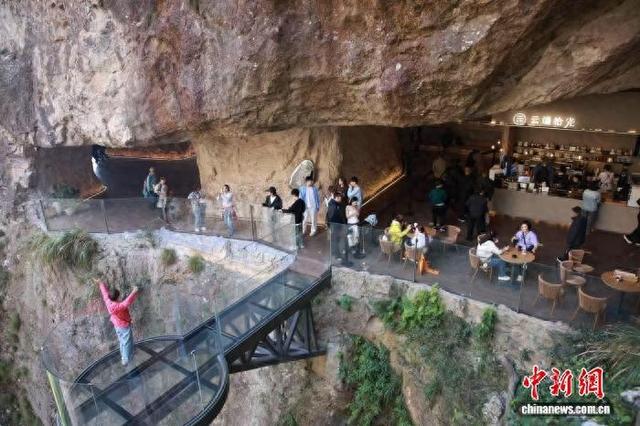
Core Viewpoint - Zhejiang province is transforming its economy by integrating ecological restoration with innovative development, leading to a model where environmental protection and economic growth coexist harmoniously [1][4][10] Group 1: Ecological Restoration and Economic Development - The transformation of abandoned mining sites into popular tourist attractions exemplifies the successful shift from an extraction-based economy to an ecological economy in Zhejiang [3][4] - The "geological + ecological + industrial" development model has been implemented, with projects like the "Waterfall Café" in Anji County expected to create 120 jobs and generate over 300,000 RMB annually for the local community [3] - The province has established 49 national ecological civilization demonstration zones and 14 "Green Water and Green Mountain is Gold Mountain and Silver Mountain" innovation practice bases since 2020, showcasing its commitment to ecological development [4][6] Group 2: Innovative Financial Mechanisms - Zhejiang has introduced the first provincial-level GEP (Gross Ecosystem Product) accounting standards in China, which standardizes the valuation of ecosystem services [7] - The province is exploring ecological product value realization mechanisms, including the development of "ecological credit loans" and the establishment of "Two Mountains Cooperatives" to facilitate carbon trading [6][9] Group 3: Green Energy and Sustainable Practices - The "Fishing and Solar Complementarity" project in Wenzhou, which combines solar power generation with aquaculture, is a key initiative aimed at reducing carbon emissions and enhancing energy independence [9] - Companies like Tongkun Group are implementing waste reduction and recycling practices, showcasing a commitment to green manufacturing and sustainable resource management [9][10] Group 4: High-Tech and Green Industry Growth - Zhejiang is fostering the growth of high-tech industries, with significant investments in sectors such as new energy, advanced equipment, and biomedicine, leading to a 15.2% year-on-year increase in high-tech industry investment [10] - The province's strategic focus on integrating ecological governance with industrial upgrading is creating new growth opportunities and enhancing overall economic resilience [10]
【省自然资源厅】10案例获评陕西首批自然资源领域生态产品价值实现典型案例
Shan Xi Ri Bao· 2025-10-31 00:34
Core Insights - The provincial natural resources department has completed the selection of the first batch of typical cases for realizing the value of ecological products in the natural resources sector, with 10 cases selected from 46 applications [1] Group 1: Case Models - The selected cases are categorized into four models: - The "Yulin City Coal Mining and Ecological Protection Coordinated Development" case demonstrates full-cycle governance in coal mining, increasing forest and grass coverage in the mining area from 20% to 65% [1] - The "Shiquan County Caociwang Rural Complex" case exemplifies the market-oriented trading of ecological products, converting idle farmhouses and collective forest land into tourism assets, with collective economic income expected to exceed 1 million yuan in 2024 [1] - The "Yan'an Jujube Leaf Resource Development" case focuses on industrialization of ecological resources, creating the "Yan'an Jujube Bud Tea" regional public brand to enhance the value chain [1] - The "Chanba Wetland Restoration" case integrates ecological restoration with cultural tourism, implementing comprehensive governance to transform the wetland area into an urban ecological core and a recreational space for citizens [1] Group 2: Future Directions - The provincial natural resources department plans to guide localities in innovating and exploring further to promote the realization of ecological product value in the natural resources sector [1]