生态治理

Search documents
2000多年后,我们为什么还要建“长城”
Yang Shi Wang· 2025-10-15 10:10
Core Insights - The Kubuqi Desert has undergone significant ecological restoration, transforming from a "sea of death" to a green oasis, with a governance rate of 80% over an area of approximately 2,900 square kilometers [1][2] - The region employs a "photovoltaic + ecological governance + organic agriculture + desert tourism" model, integrating solar energy with ecological restoration efforts [1] - By 2030, plans are in place to construct a 400-kilometer-long photovoltaic "Great Wall" to further combat desertification and protect the Yellow River [1] Group 1 - The Kubuqi Desert has been successfully managed, with 2,320 square kilometers restored and 100,000 acres of photovoltaic desertification control completed [1] - The largest photovoltaic power station in the region consists of 196,320 solar panels, utilizing a model that combines power generation with agricultural practices [1] - The ecological restoration has led to the cultivation of over 300 types of fruits and vegetables, with organic matter content exceeding 3% in the soil [2] Group 2 - The vegetation coverage in the Enggabei ecological demonstration area has reached 78%, with forest coverage at 41%, and biodiversity has increased from over 20 species to more than 600 [2] - A 15-kilometer by 10-kilometer green ecological barrier has been established between the Kubuqi Desert and the Yellow River, serving as a testament to the efforts in ecological improvement [2]
坚决打好污染防治攻坚战 | 让民意成为生态治理的“指南针”
Guang Xi Ri Bao· 2025-10-15 02:06
Core Viewpoint - The article highlights the successful implementation of community-driven ecological governance in the Naka River community, showcasing how local residents actively participate in environmental protection and decision-making processes, leading to significant improvements in the local ecosystem and community engagement [1][2][3] Group 1: Community Engagement and Initiatives - The "Zhou Zhou River Patrol Team" consists of diverse community members, including retirees and young parents, who regularly clean the river and report environmental issues, demonstrating active public involvement in ecological protection [1] - The community has adopted a "five-step method" for ecological co-governance, which encourages residents to propose issues, discuss needs, invite experts, evaluate solutions, and monitor progress, thus fostering a collaborative approach to environmental management [1][2] Group 2: Problem-Solving and Feedback Mechanisms - A "six-party consultation platform" has been established to address residents' concerns, allowing for a structured approach to tackle both minor and major ecological issues, ensuring that community voices are heard and acted upon [2] - The community has successfully collected and addressed 35 suggestions in 2023, ensuring that every piece of feedback leads to tangible actions, thereby making public opinion a guiding force in ecological governance [2][3] Group 3: Environmental Improvements and Achievements - Since 2020, the Naka River Park has seen a 33% annual increase in visitor numbers, indicating a positive shift in public perception and utilization of the area due to improved environmental conditions [3] - The community has resolved 64 issues related to pollution and environmental degradation in 2024, contributing to the Naka River's recognition as a "National Beautiful River and Lake," and earning accolades as an advanced model for "Beautiful China" initiatives [3]

行走江河看中国|我家门前有条河
Zhong Guo Xin Wen Wang· 2025-10-13 07:19
Core Points - The article emphasizes the harmonious relationship between human life and nature, particularly through the lens of seasonal changes and ecological governance [2] Group 1 - The narrative illustrates how the smoke from riverside homes synchronizes with the pulse of the Yellow River, symbolizing a deep connection between people and their environment [2] - It highlights the transformation of grand ecological governance into everyday experiences, such as rain outside the window and meals under the eaves, creating a warm poetic expression of coexistence between humans and water [2]
美国马里兰州打造垃圾填埋场太阳能项目
Huan Qiu Wang· 2025-10-11 08:14
Core Insights - The article discusses the inauguration of Maryland's first large-scale ground-mounted solar power plant in Baltimore County, which transforms a previously unused landfill site into a green energy asset, contributing to regional energy transition and ecological governance [1][2] Group 1: Project Overview - The solar power plant occupies 213 acres and has a total installed capacity of approximately 7 megawatts, consisting of four large ground-mounted photovoltaic arrays with around 15,000 solar panels [1] - The plant is expected to generate about 8.2 million kilowatt-hours of electricity annually, sufficient to meet the annual electricity needs of 1,150 households in Baltimore County [1] Group 2: Operational Model - The solar power plant is financed and operated by TotalEnergies, a French energy company, while the Baltimore County government secures electricity supply through a long-term Power Purchase Agreement (PPA) [2] - The PPA has a duration of 25 years, with the possibility of extending it to 33 years, ensuring stable access to clean energy at relatively low prices and providing dual protection for the project's long-term operational stability against future electricity market price fluctuations [2]


从“酱油湖”到“候鸟天堂”:乌梁素海的绿色蝶变
Xin Hua Wang· 2025-10-08 12:28
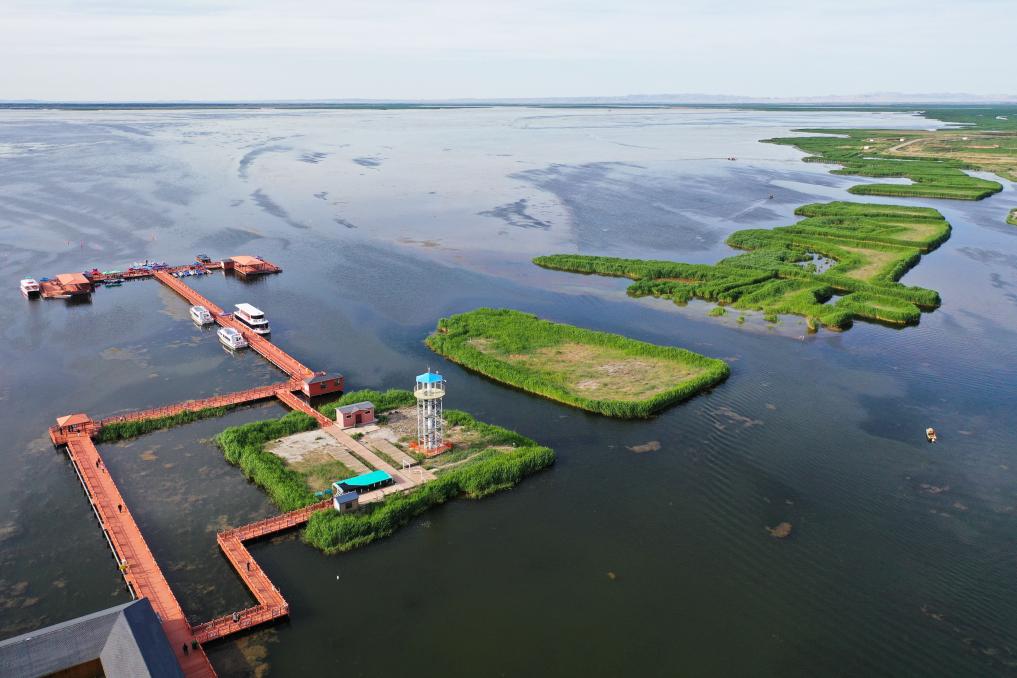
Core Insights - The article highlights the ecological restoration and tourism development of Wuliangsuhai, the largest freshwater lake in the Yellow River basin, which has seen significant improvements in water quality and biodiversity due to systematic governance efforts [2][3]. Group 1: Ecological Restoration - The Wuliangsuhai ecological protection project, initiated in 2018, has seen investments of several billion yuan, focusing on ecological water replenishment and pollution control [3]. - Water quality has improved from a grade worse than five to a stable grade five, with local authorities providing an average of 500 million cubic meters of water from the Yellow River annually to aid ecological recovery [3][6]. - Biodiversity has gradually restored, with 29 fish species and 264 bird species now recorded, including the discovery of flamingos, indicating a thriving ecosystem [3][6]. Group 2: Economic Development - The ecological restoration has led to a green transformation in the region, creating new employment opportunities for local fishermen through tourism and other sustainable projects [5]. - Wuliangsuhai Tianxing Tourism Co. has developed 14 tourism projects, generating an annual revenue of approximately 10 million yuan and employing over 150 people [5]. - The company "Jijia Technology" has turned local reeds into eco-friendly building materials, with an expected production value of 170 million yuan in 2024, while also providing 150 local jobs [5][6].

不断绘就美丽中国新画卷
Ren Min Ri Bao· 2025-10-05 21:52
Core Points - Significant achievements in ecological civilization construction during the "14th Five-Year Plan" period, with a focus on ecological priority and green development [1][2] Group 1: Ecological Governance - Systematic promotion and exploration of new paths for ecological governance, including integrated protection of mountains, rivers, forests, fields, lakes, grasslands, and deserts [1] - Establishment of a natural protection system centered on national parks, with notable progress in the "Three North" project, achieving a historic shift from "desert encroachment" to "green recovery" [1] - Forest coverage reached 25.09%, with continuous growth in forest area and stock [1] - Significant achievements in major river governance and continuous improvement in biodiversity [1] Group 2: Green Development - Accelerated transition to a green and low-carbon industrial structure, with an increasing share of non-fossil energy consumption [1] - Wind and solar power generation capacity has ranked first in the world for several consecutive years [1] - Rapid construction of a circular economy system, with continuous improvement in resource utilization levels [1] - Green and low-carbon industries are becoming new engines for economic growth, injecting strong momentum into high-quality development [1] Group 3: Institutional Innovation - Modernization of the ecological environment governance system has significantly improved since the "14th Five-Year Plan" [1] - Completion of the environmental governance legal system and breakthroughs in the realization of ecological product value [1] - Implementation of the strictest systems and laws to safeguard ecological civilization construction, ensuring legal and regulatory frameworks are in place [1]
沙海变绿洲 荒漠绽新颜——库布其沙漠治理纪实
Xin Hua She· 2025-10-02 09:27
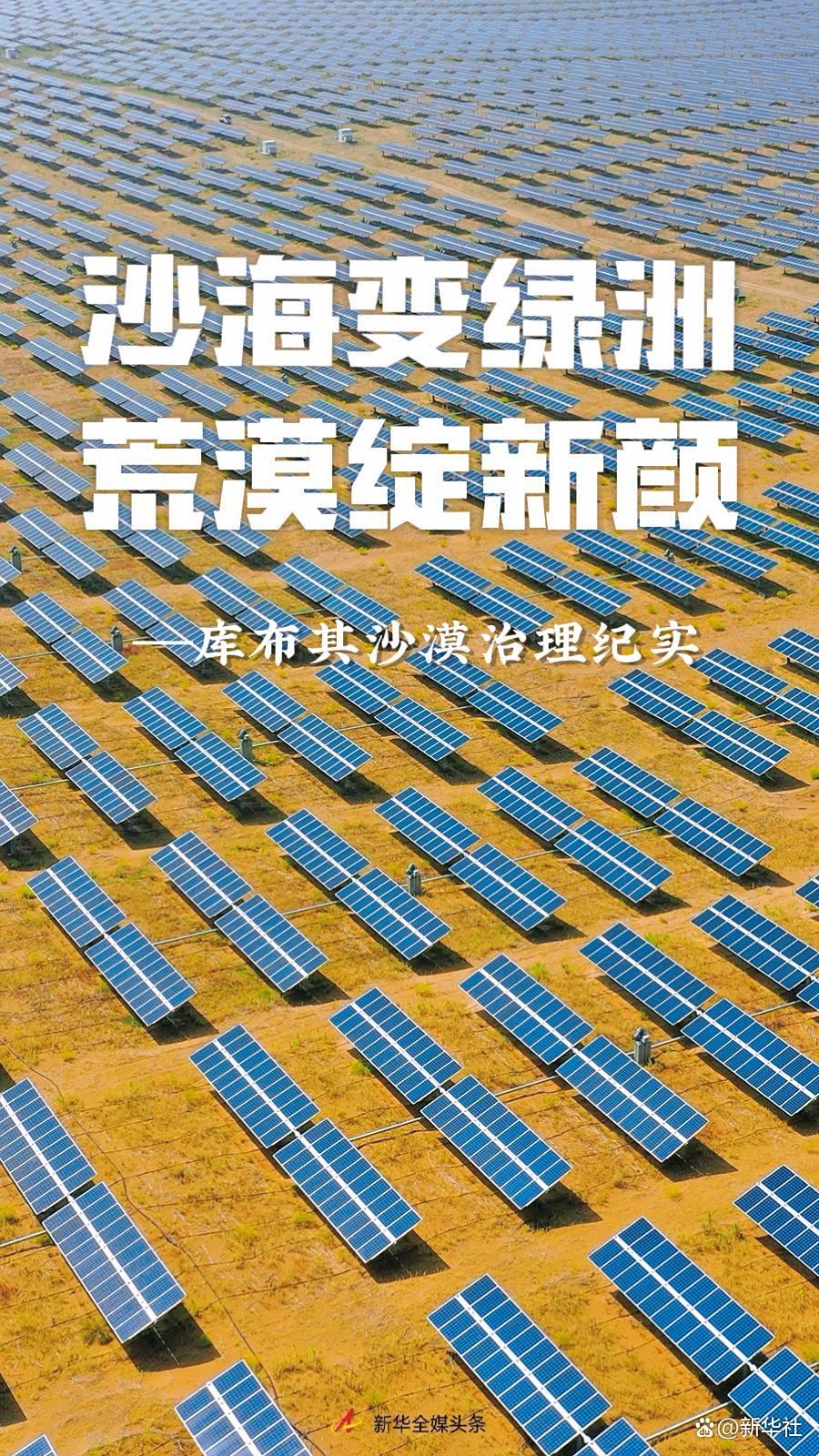
Core Viewpoint - The article highlights the significant achievements in desertification control in the Kubuqi Desert, showcasing China's successful practices in ecological restoration and sustainable development, contributing to both national and global environmental efforts [3][19][22]. Group 1: Desertification Control Achievements - The Kubuqi Desert has seen over 6,000 square kilometers transformed into green areas, with a notable reduction in sediment entering the Yellow River, marking a historic shift from "sand advancing and people retreating" to "green advancing and sand retreating" [3][12]. - The desert covers approximately 14,100 square kilometers, with a 420-kilometer protective forest and grass belt established to prevent desert encroachment towards the Yellow River [5][12]. - The ecological restoration efforts have led to a 40% governance rate of the Kubuqi Desert, with a significant reduction in soil erosion and sediment transport to the Yellow River, decreasing by approximately 300 million tons over the past decade [12][22]. Group 2: Innovative Approaches and Technologies - The integration of solar energy projects, referred to as the "photovoltaic wall," is being utilized alongside traditional desertification control methods, enhancing both ecological and economic benefits [5][13]. - Advanced machinery and technology, such as drones and robotic tree planters, have improved the efficiency of desertification control efforts by over five times, moving away from labor-intensive methods [25]. - The local governance model emphasizes a combination of road construction and ecological management, effectively segmenting the desert into manageable units for restoration [9][12]. Group 3: Economic and Social Impact - The ecological restoration initiatives have not only improved the environment but also stimulated local economies, providing employment opportunities for approximately 380,000 farmers and herders [13][19]. - The tourism sector has benefited from the ecological improvements, with over 2.2 million visitors to desert tourism sites in 2024, generating significant revenue [16][19]. - The local community's involvement in restoration projects has fostered a sense of ownership and economic empowerment, transforming the relationship between people and the desert [13][25]. Group 4: International Collaboration and Knowledge Sharing - The Kubuqi International Desert Forum has become a platform for sharing China's desertification control experiences with other countries facing similar challenges, promoting international cooperation [22][23]. - The forum has facilitated various bilateral and multilateral initiatives, including projects aimed at combating desertification in developing countries [22][23]. - China's commitment to fulfilling its obligations under international agreements on desertification prevention is evident, with ongoing support for technology and project implementation in other nations [23].
小而美做精成制胜关键一招!凭借高标准技艺闯新路 小核桃撑起数十亿级大产业
Yang Shi Wang· 2025-10-02 04:33
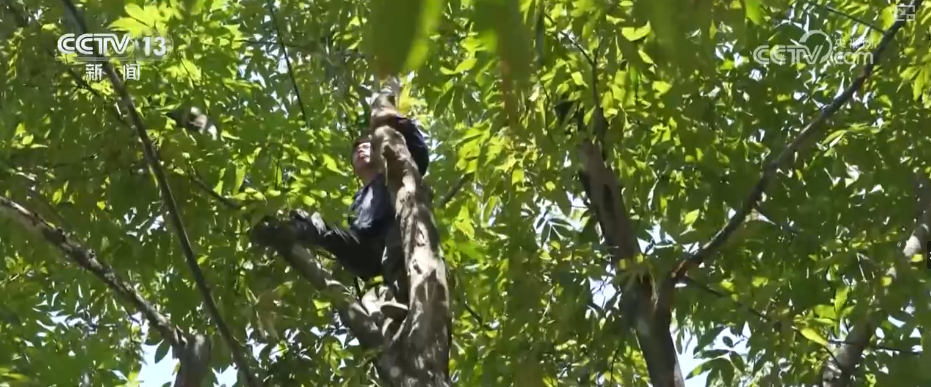
Core Viewpoint - The walnut industry in Lin'an District, Hangzhou, has transformed from ecological degradation to a thriving sector, generating a comprehensive output value of 5 billion yuan, with over 75% of China's walnut processing capacity concentrated in this area [1][5]. Group 1: Ecological Restoration - The walnut planting area in Lin'an has stabilized at 570,000 acres over the past five years, with annual output value increasing [5]. - A significant ecological restoration initiative was launched after severe soil erosion and damage from Typhoon Lekima in 2019, which led to the loss of many walnut trees [8][10]. - The restoration strategy included designating "ecological red lines," compensating farmers, and implementing a 10-year plan for reforestation with evergreen species, allowing walnut forests to recover [12][14]. Group 2: Sustainable Practices - The region is adopting sustainable agricultural practices, such as soil testing and reduced chemical use, while exploring intercropping with medicinal herbs to enhance productivity [14][16]. - The introduction of net harvesting techniques has improved walnut collection efficiency, with over 100 demonstration bases established for sustainable practices [18]. Group 3: Market Expansion and Quality Improvement - The local walnut processing industry is focusing on high-quality, artisanal production methods, with hand-extraction techniques commanding premium prices [22]. - A digital management platform is being developed to standardize processing and improve product quality, with a new selection machine set to launch in 2025 [24]. - The export value of walnut products is projected to grow significantly, from 1 million USD in 2023 to 1.5 million USD in 2025, driven by high-quality standards and diverse product offerings [26].
“全球治沙样本”迎来车企力量:长安福特解锁企业社会责任的“绿色密码”
Zhong Guo Qi Che Bao Wang· 2025-09-26 02:45
Group 1 - The article highlights a unique initiative by Ford, where a team of Ford Explorer owners participates in an ecological expedition in the Taklamakan Desert, contributing to a global desertification prevention project [1][5][19] - The Taklamakan Desert's edge-locking project, which has been ongoing for 46 years, has planted 300,000 trees to create a 3,046-kilometer "green wall," marking a significant milestone in China's fight against desertification [2][20] - Ford's initiative aligns with its brand philosophy of "long-termism," as it continues to invest in public welfare despite a general trend of reduced corporate social responsibility in the industry [5][14] Group 2 - The "Ford Explorer Action" program has attracted over 68,000 participants since its launch in 2021, engaging in various public welfare activities, including habitat protection and psychological care for children [12][14] - The article emphasizes the role of social forces, including car manufacturers and owners, in contributing to ecological restoration efforts, showcasing a new paradigm for corporate involvement in national ecological projects [5][20] - The initiative not only provides material support but also fosters a sense of responsibility and pride among participants, transforming them from mere users to active guardians of nature [9][19]

青海省林草局与蒙草生态携手 科技赋能“三北”工程攻坚战
Quan Jing Wang· 2025-09-25 13:36
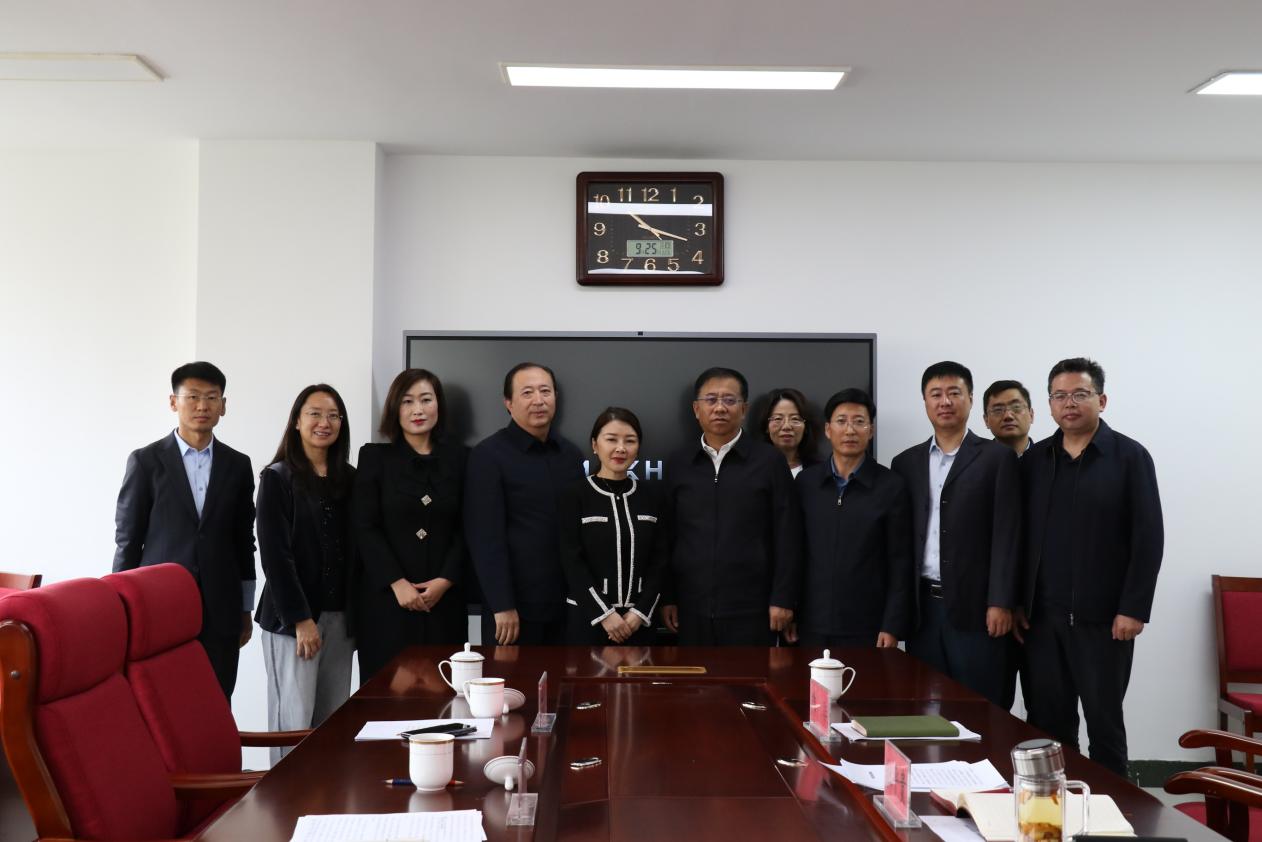
Core Viewpoint - The strategic cooperation agreement between Qinghai Provincial Forestry and Grassland Bureau and Mongolian Grass Ecology (300355) focuses on ecological restoration, national park construction, and the conservation of local grass species, aiming to support the protection of the "Chinese Water Tower" and the development of beautiful Qinghai through technological and industrial collaboration [1][3][11]. Group 1: Strategic Cooperation - The agreement was signed on September 25, with both parties emphasizing collaboration in key areas such as the "Three-North" project, national parks, and the protection of high-altitude grass species [1][3]. - The cooperation is built on a foundation of mutual trust, established through prior visits and research by Qinghai officials to Mongolian Grass Ecology's facilities [3][6]. Group 2: Ecological Importance - Qinghai is recognized as a crucial ecological security barrier, responsible for safeguarding the "Chinese Water Tower" and is a key province for the "Three-North" project, which addresses desertification [6]. - Since 2017, Mongolian Grass Ecology has established a local presence in Qinghai, focusing on high-altitude plant breeding and ecological restoration, providing tailored solutions for ecological challenges in the region [6][8]. Group 3: Technological Innovations - Mongolian Grass Ecology has developed 105 proprietary plant varieties, with 25 included in the national "Three-North" project recommended seed list, showcasing their expertise in grass species [8]. - Innovative products such as seed ropes for sand fixation have improved seed survival rates by 15% to 20% and reduced water usage by 90%, highlighting the technological advancements in ecological restoration [11].