
科技成果转化

Search documents
省政协委员陈红:打破产学研“过滤网”,让科研力量奔跑在产业赛道
Yang Zi Wan Bao Wang· 2026-02-02 03:27
今年省两会,江苏省政协委员、江苏大学副校长陈红的提案分别聚焦智慧农机装备产业、新材料应用及 跨境电商发展。 "当前创新的需求主体在企业,创新的源头力量多集中于高校和科研机构。二者之间有'过滤网',导致 创新力量难以高效落地。"陈红认为,要激发江苏"跃马扬鞭"的突破性创新,必须破解教育、科技、人 才协同推进中的壁垒。 陈红认为,"企业出题、科研人员解题"模式在实践中面临多重考验。这背后涉及复杂的系统问题,包括 人才评价体系、科研人员的个人发展诉求与企业需求的匹配度,以及科技成果转化中各方权益的平衡 等。除了机制壁垒,陈红特别强调了"耐心"的重要性。"我们总说'耐心资本',对青年科学家的成长更 需'耐心等候'。"她指出,当前偏重学术性的人才评价体系,在一定程度上覆盖了创新的实践性与实用 性。要让科研人员敢于投身周期长、风险高的产业核心难题,就必须改革评价机制,为他们"松绑",让 他们朝着产业应用的方向"跃马扬鞭"。 如何破壁?陈红以江苏大学的实践为例,提供了一种思路。这所非"985""211"的高校,在科技部相关榜 单中,该校的产学研转化排名稳居全国前50强,其"秘诀"在于深入骨髓的产业基因。学校长期坚持服务 行 ...
范波在相城区调研
Su Zhou Ri Bao· 2026-02-02 00:30
Core Viewpoint - The article emphasizes the importance of integrating technological innovation with industrial innovation to enhance competitiveness and drive high-quality development in the region [1][5]. Group 1: Technological Innovation - The local government is focusing on leveraging the advantages of the Shanghai (Yangtze River Delta) International Science and Technology Innovation Center to optimize the spatial layout of industrial innovation [5]. - There is a call for the establishment and effective utilization of new research and development institutions to achieve breakthroughs in key core technologies [5]. - The government encourages companies to adapt to changing consumer demands by upgrading technology and launching high-quality products [4]. Group 2: Industrial Innovation - The article highlights the need for enterprises to take the lead in innovation, with support from research institutions and universities to form collaborative innovation entities [5]. - There is an emphasis on the importance of transforming innovation results into new productive forces, thereby enhancing industrial competitiveness [5]. - Companies are encouraged to increase research and development investments, particularly in cutting-edge fields such as automotive electronics and intelligent manufacturing [4]. Group 3: Future Industry Development - The government aims to cultivate future industries through a steady and progressive approach, ensuring development is tailored to local conditions and promotes differentiated growth [5]. - There is a focus on creating a first-class innovation ecosystem that integrates education, technology, and talent development to attract global innovation resources [5]. - The initiative aims to stimulate entrepreneurial and innovative activities by nurturing leading technology companies and top-tier innovative talents [5].


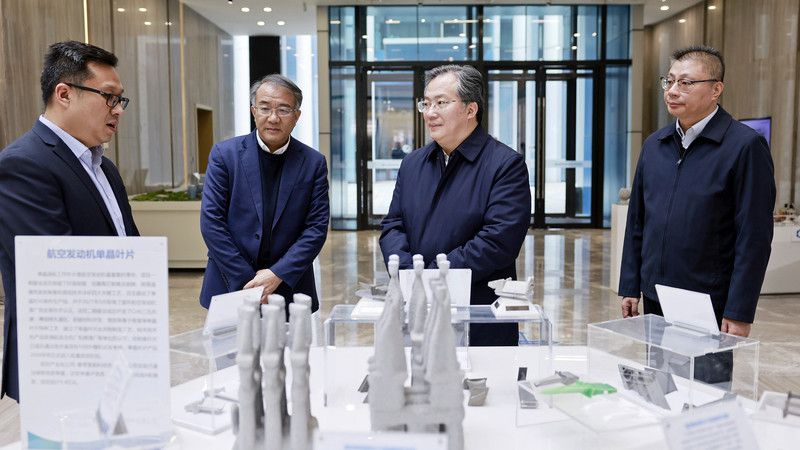
一年来黑龙江省政协立案提案992件全部办复
Xin Lang Cai Jing· 2026-02-01 03:53
Core Viewpoint - The recent meeting of the Heilongjiang Provincial Political Consultative Conference highlighted significant progress in proposal submissions, indicating a strong commitment to high-quality development and modernization in the province [2]. Group 1: Proposal Statistics - The Heilongjiang Provincial Political Consultative Conference received a total of 1,137 proposals during its third session, marking an increase of 228 proposals or 25.1% year-on-year, setting a historical record [2]. - Out of the total proposals, 992 were officially registered, resulting in a registration rate of 87.2% [2]. - Individual and joint proposals accounted for 889, representing 89.6% of the total, while collective proposals from party groups made up 103, or 10.4% [2]. Group 2: Proposal Categories - Proposals related to economic development comprised 460, which is 46.4% of the total, while political development proposals accounted for 40, or 4% [2]. - Cultural development proposals totaled 130, making up 13.1%, and social development proposals reached 269, representing 27.1% [2]. - Proposals focused on ecological civilization development numbered 93, which is 9.4% of the total [2]. Group 3: Technology and Economic Impact - In the area of technology transfer, the Heilongjiang Provincial Science and Technology Department reported 662 major technology achievements were converted last year, generating a cumulative economic benefit of 13.67 billion yuan, reflecting a growth of 6.4% and 21.5% compared to 2024 [3]. - The conference emphasized the integration of proposals with national strategies and local modernization efforts, particularly in areas such as rural revitalization, green agricultural development, and the digital economy [3]. Group 4: Proposal Management and Future Plans - The Heilongjiang Provincial Political Consultative Conference has improved its "1+N" key proposal supervision mechanism, expanding the scope of oversight to ensure comprehensive coverage by the conference's leadership [3]. - A total of 16 consultation meetings were organized to facilitate the implementation of related proposals, positively impacting 130 additional proposals [3]. - Looking ahead to 2026, the conference aims to deepen the integration of consultative democracy into the entire proposal process, focusing on enhancing quality and efficiency [3].
习言道|推动我国未来产业发展不断取得新突破
Xin Lang Cai Jing· 2026-01-31 15:24
中共中央政治局1月30日就前瞻布局和发展未来产业进行第二十四次集体学习。中共中央总书记习近平 在主持学习时强调—— 在中共中央政治局第二十四次集体学习时说 2026年1月30日 P (图 机图 程 未来产业具有 前瞻性、战略性、颠覆性等特点, 需要科学谋划、全局统筹。 要聚焦"十五五"时期 我国未来产业发展的主攻方向, 科学论证技术路线, 提升前沿技术战略预判能力。 习近平 在中共中央政治局第二十四次集体学习时说 2026年1月30日 P (图) 编图 中国 狗闻 網 要综合考虑 国家战略需求、技术成熟程度、 要素支撑条件等因素, 因地制宜、错位发展。 要强化产业协同, 推动未来产业 同新兴产业、传统产业 相傳益彰。 习近平 要充分发挥新型举国体制优势, 坚持"产业出题、科技答题", 加大重点领域 关键核心技术攻关力度, 加强基础研究 战略性、前瞻性、体系化布局, 加快科技成果转化应用。 习近平 在中共中央政治局第二十四次集体学习时说 2026年1月30日 . 倒 利用 据 很多未来产业的兴起 是靠企业一步步突破带动的。 要发挥企业主体作用, 推动各类创新资源向企业集聚, 大力培育 核心技术领先、创新能力强的 ...
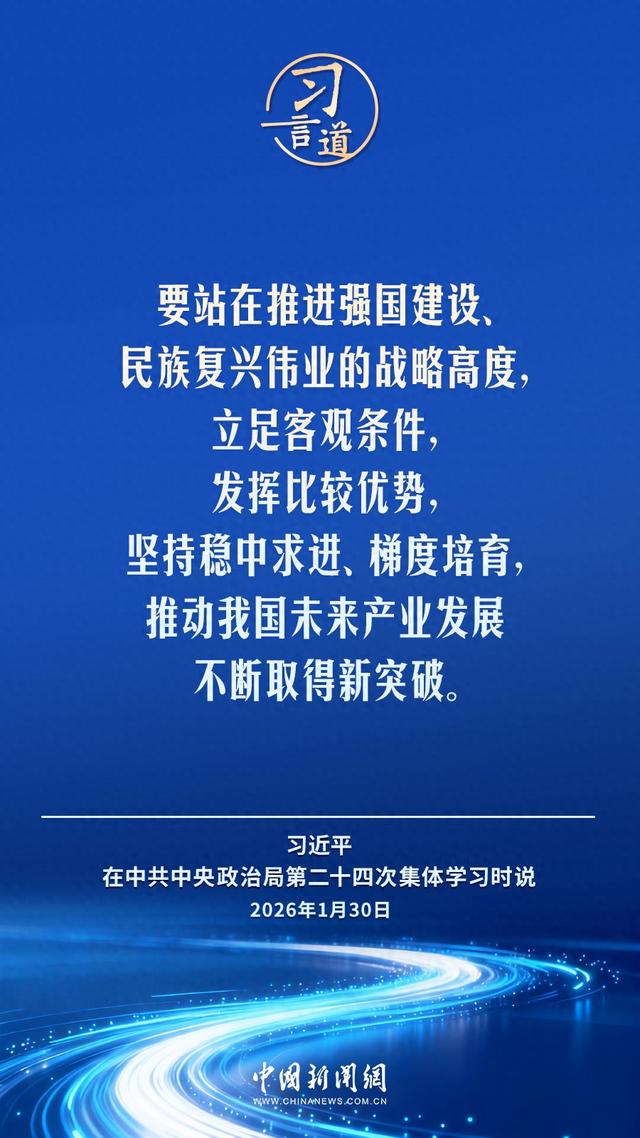
涉及5G移动通信安全等,这些国家标准2月1日起将实施
Xin Hua Wang· 2026-01-31 12:13
Group 1 - The implementation of new national standards starting February 1 will enhance safety and quality across various sectors, including 5G communication, education, and consumer services [1][2][3] - The "5G Mobile Communication Network Security Technical Requirements" standard establishes a security framework for 5G networks, focusing on access security, network security, user privacy protection, and safety services [1] - The "Software Process Capability Maturity Model" standard aims to improve software process management and overall industry capability, promoting sustainable development in China's software sector [1] Group 2 - The "Energy Metering Equipment Provision and Management Guidelines" standard sets requirements for energy metering tools, which will aid energy conservation and improve economic efficiency for energy-consuming units [2] - The "Guidelines for the Conversion of Scientific and Technological Achievements into Standards" standard facilitates the integration of cutting-edge technologies into industry standards, fostering innovation [2] - The "General Technical Requirements for Student Rest Desks and Chairs" standard ensures the quality and safety of furniture used by students, addressing their health and well-being [2] Group 3 - The "Design Guidelines for Elderly Furniture" standard provides design recommendations to enhance the usability and safety of furniture for elderly users, improving their quality of life [3] - The "Barcode Placement Requirements" standard standardizes barcode placement on products, enhancing data collection efficiency in the supply chain [3] - The "Consumer Experience Center Construction and Service Guidelines" standard aims to improve product evaluation and consumer experience, driving higher product quality and service levels [3] Group 4 - The "Elevator Safety Requirements" standard outlines safety parameters for elevators and their components, providing a technical basis for safety evaluations [4] - The "Basic Requirements for Earthquake Rescue Teams" standard specifies capabilities and equipment requirements for various types of rescue teams, enhancing disaster response effectiveness [5]
聚焦民生关切与产业升级 一批国家标准2月1日正式施行
Xin Lang Cai Jing· 2026-01-31 09:10
Core Points - A series of important national standards will be implemented starting February 1, aimed at guiding and regulating the development of emerging and future industries, promoting the application of results and standards, protecting consumer rights, and ensuring public safety [1] Group 1: Software and Communication Standards - The Software Process Capability Maturity Model (GB/T 45989—2025) establishes a framework for software process capability, enhancing management levels and promoting the sustainable development of the software industry in China [2] - The 5G Mobile Communication Network Security Technical Requirements (GB/T 46462—2025) set forth security architecture and requirements for access, network security, user privacy protection, and safety services, enhancing communication security capabilities [3] Group 2: Energy and Technology Standards - The Energy Metering Equipment Allocation and Management Guidelines (GB 17167—2025) outline mandatory requirements for energy metering equipment, aiming to improve energy management and economic efficiency in energy-consuming units [4] - The Guidelines for the Transformation of Scientific and Technological Achievements into Standards (GB/T 33450—2025) provide guidance for analyzing and assessing the feasibility of transforming technological achievements into standards, promoting integration with innovation [5] Group 3: Educational and Health Standards - The National Standard for Student Physical Health Testing Equipment (GB/T 19851.12—2025) defines requirements and testing methods for physical health testing equipment, ensuring quality and safety in school sports equipment [6] - The General Technical Requirements for Student Nap Desks and Chairs (GB/T 46016—2025) establish standards for nap furniture in schools, addressing the needs of non-boarding students and promoting their health [7] Group 4: Consumer and Safety Standards - The Guidelines for the Design of Elderly Furniture (GB/T 46015—2025) provide design principles and considerations for furniture aimed at elderly users, enhancing their quality of life and safety [8] - The Barcode Symbol Placement Requirements (GB/T 14257—2025) standardize barcode placement on products, improving data collection efficiency in the supply chain [10] - The Consumer Experience Center Construction and Service Guidelines (GB/T 46705—2025) and the Comparative Testing Requirements for Consumer Goods (GB/T 46708—2025) aim to enhance product quality and service levels through objective evaluations [11] - The Elevator Safety Requirements (GB/T 24803.2—2025) establish safety parameters for elevators, providing a technical basis for safety evaluations [12] - The Basic Requirements for Earthquake Rescue Teams (GB/T 46578—2025) outline capabilities and training requirements for rescue teams, improving disaster response effectiveness [13]
交易规模连续多年超10万亿元
Sou Hu Cai Jing· 2026-01-30 20:38
Group 1 - During the "14th Five-Year Plan" period, Beijing Property Exchange has maintained a trading scale of over 10 trillion yuan for several consecutive years [1] - The exchange has completed 58,972 projects in four categories, with a total transaction amount of 2,198 billion yuan and a value-added amount exceeding 160 billion yuan [1] - State-owned enterprises have utilized the exchange to strengthen their presence in key sectors such as new energy, new materials, artificial intelligence, aerospace, and biomanufacturing [1] Group 2 - The exchange has empowered 238 enterprises to grow high-tech industrial clusters, with a cumulative transaction amount exceeding 300 billion yuan [2] - Over five years, state-owned enterprises have transferred ownership of more than 2,600 non-core and non-advantageous enterprises, recovering over 180 billion yuan [2] - The exchange has facilitated 626 projects for collaborative development between state-owned and private enterprises, attracting over 455 billion yuan in private capital [2] Group 3 - The exchange's subsidiary, China Technology Exchange, has completed 103,000 technology transfer projects with a transaction amount of nearly 980 billion yuan [3] - The exchange has launched Beijing's first patent licensing intellectual property securitization project, issuing six special plans with a total issuance scale of 1.418 billion yuan [3] - Looking ahead to the "15th Five-Year Plan," the exchange aims to enhance its core functions in resource flow and financing [3]
紧扣目标抓落实 担当实干促发展
Xin Lang Cai Jing· 2026-01-30 17:41
Group 1 - The core message emphasizes the importance of implementing strategies and taking practical actions to promote development in the context of the "14th Five-Year Plan" and the upcoming "15th Five-Year Plan" [1][2] - The city has made significant progress in various sectors over the past year, with economic operations stabilizing and innovation momentum accelerating, contributing to the overall development of the region [1] - Key representatives from the Double Flow District and Tianfu New Area provided suggestions on enhancing technology transfer, building a modern industrial system, and improving agricultural infrastructure [1] Group 2 - The "15th Five-Year Plan" marks a new beginning, with a focus on innovation-driven development, open leadership, and integration of science and industry [2] - The government has outlined ten key measures to ensure the implementation of the city's strategic goals, emphasizing the need for proactive actions to achieve targets [2] - Specific strategies include leveraging strategic opportunities, enhancing innovation, strengthening industrial chains, utilizing open resources, and improving public services to enhance the quality of life [2]
天津加快科技成果转化 打造“科创天津”
Yang Shi Wang· 2026-01-30 12:12
Group 1 - The core focus of Tianjin is to leverage its rich scientific and educational resources to promote the integration of technological innovation and industrial innovation, accelerating the transition of innovative results from laboratories to production lines [1] - In the Tianjin High Education Science and Technology Innovation Park, Nankai University and Tianjin University have introduced 30 projects ready for transformation, collaborating with leading industry enterprises [3] - During the "14th Five-Year Plan" period, Tianjin established 49 innovation alliances, with the number of national high-tech enterprises and national technology-based small and medium-sized enterprises exceeding 12,000, and 8 industries reaching a scale of over 100 billion [5] Group 2 - In the "15th Five-Year Plan" period, Tianjin aims to jointly build the "Beijing (Jing-Jin-Ji) International Science and Technology Innovation Center," focusing on industries such as biomanufacturing, brain-computer interfaces, and embodied intelligence [7] - The city plans to establish a regular mechanism for screening major original achievements and enhance measures for the transformation of scientific and technological results, increasing the construction of platforms for industry-academia-research collaboration and innovation alliances [7]
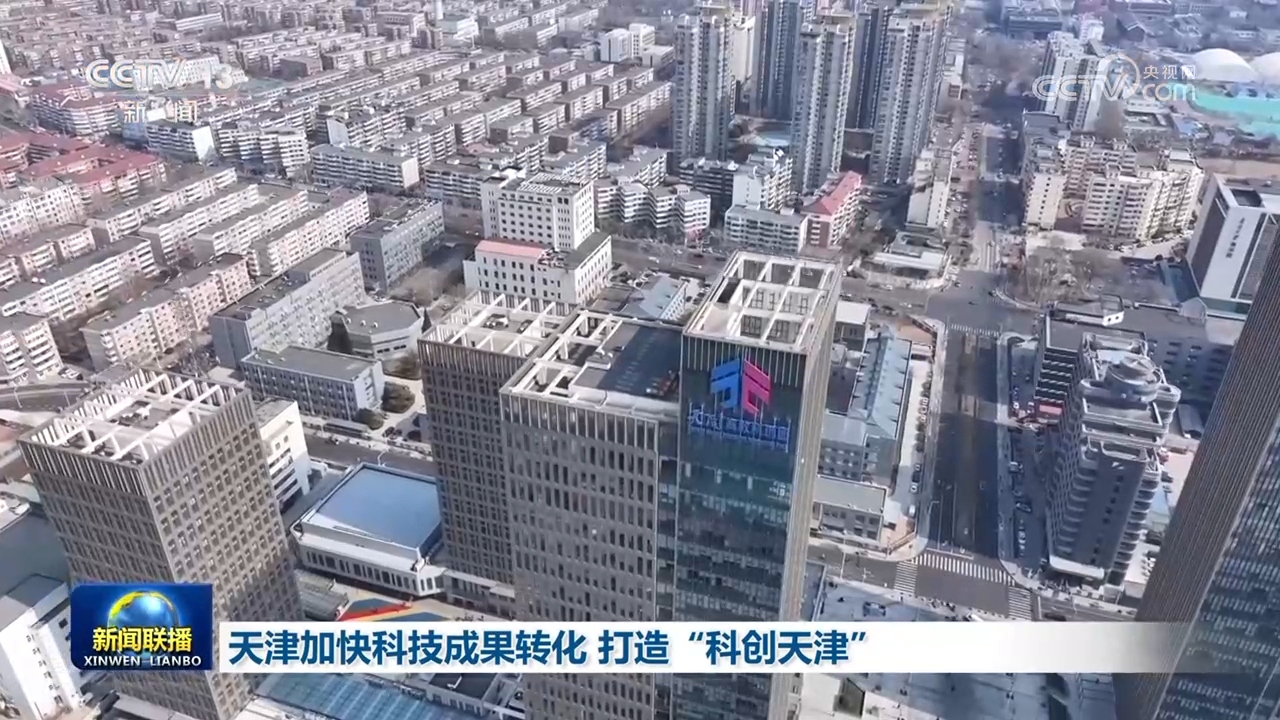
全国高校绿色能源区域技术转移转化中心 (北京)2026年工作推进会召开
Bei Jing Shang Bao· 2026-01-30 10:32
Group 1 - The National Green Energy Regional Technology Transfer Center (Beijing) has officially launched its first workstations at key institutions, including Beijing Institute of Technology and Beijing University of Technology, to facilitate efficient project implementation and rapid transformation [1] - The center has assembled a professional service team of over 200 members, collaborating with multiple universities to overcome barriers in cross-regional technology transfer, and has introduced innovative mechanisms for project management [1] - Key projects signed during the event include collaborations with companies like Xingheng Battery (Beijing) Co., Ltd. and Huasheng New Carbon (Beijing) Renewable Energy Technology Co., Ltd., marking the establishment of a collaborative development model among universities, enterprises, and support platforms [1] Group 2 - Since the approval of the National Green Energy Regional Technology Transfer Center, Fangshan District has reported the identification of 473 convertible results from universities, with 25 results achieving local transformation, and a concentration of 123 green energy enterprises with a combined output value exceeding 225 billion [2] - The district plans to leverage the innovation resources of Liangxiang University Town and major projects like the national laboratory innovation platform cluster at Beijing Institute of Technology to accelerate the integration of industry, academia, and research [2] - The goal is to create an innovative ecosystem where basic research occurs in universities, verification and pilot testing take place on platforms, and transformation happens in industrial parks [2]