
跨界融合

Search documents
跨界融合赋能产业价值链跃升
Zhong Guo Zhi Liang Xin Wen Wang· 2025-12-16 06:47
Core Viewpoint - The collaboration between China Petroleum and Xijiu represents a significant example of cross-industry integration, reflecting a new path for high-quality development in the context of China's macroeconomic strategy [1][2]. Group 1: Strategic Collaboration - The partnership allows Xijiu to leverage China Petroleum's extensive retail network, enhancing its market reach and operational efficiency while reducing costs [2]. - For China Petroleum, introducing Xijiu products diversifies its non-oil business offerings, enhancing overall platform value and customer loyalty [2]. - This collaboration exemplifies an effective synergy between industrial capital and commercial distribution networks, aiming to elevate both parties' positions within their respective value chains [2]. Group 2: Cross-Industry Integration - The cooperation serves as a prime example of "cross-industry integration," which is now a core driver for upgrading industrial value chains under the demands of high-quality development [3]. - By integrating resources from partners like China Petroleum, Xijiu can overcome its resource limitations and gain stable market support for national expansion [3]. - A healthy industrial ecosystem requires collaboration among leading enterprises and smaller firms, with cross-industry integration fostering strategic alliances and resource consolidation [3]. Group 3: Evolution of Value Chains - The partnership signifies a shift from traditional linear value chains to complex value networks, emphasizing ecosystem competition in the digital and platform economy [4]. - Strengthening core processes and controlling key resources are essential for Xijiu's value chain enhancement, particularly through the cultivation of high-quality raw materials [5]. - The collaboration also facilitates Xijiu's transition from a product supplier to a cultural experience service provider, aligning with new market demands and creating additional value growth points [5]. Group 4: Future Outlook - As technological advancements and consumer upgrades continue, collaborations like that of China Petroleum and Xijiu are expected to become more frequent, contributing to local economic development and enriching consumer lifestyles [6]. - The partnership aims to create a positive ecosystem that supports regional prosperity through market-driven mechanisms and industrial collaboration [6].

非遗更好融入现代生活
Jing Ji Ri Bao· 2025-12-13 01:20
佛山木版年画是我国华南地区著名的民间年画,据史料记载距今已有600年到700年的历史,早在 2006年就被列入第一批国家级非物质文化遗产代表性项目名录。刘钟萍2014年开始拜师学习这项传统技 艺,如今的她一边守着师父留下的百年老铺,一边打造"解忧年画铺"子品牌,设计出"诸神复活"系列爆 款年画产品,让"解忧年画铺"成为年轻人口中"潮得很传统"的品牌,并由此开启了与其他品牌的合 作。"只有让更多人喜欢我们的品牌,不断提高品牌附加值,才能让这项古老技艺更好地传承下去。" 在清华大学美术学院教授陈岸瑛看来,目前在传统工艺类的非遗项目传承上,有两种值得关注的品 牌发展模式,一是品牌联名或集群模式,有助于解决非遗传承中零散、孤立的状态,抱团取暖、取长补 短,增强市场活力;二是母子品牌模式,母品牌常常为大师个人品牌,专注创作收藏级的精品,子品牌 往往面向年轻消费群体和日常生活,形成对母品牌的补充。 乔琳,乔氏珐华陶瓷传统手工技艺晋城市级代表性传承人,同样是"90后",同样对非遗传承有想 法。"非遗品牌建设,最终要落在产品上。"乔琳说,他们坚持守正创新,比如在釉色上,从传统五色发 展到百余种颜色,还大胆突破,创造了新的美学 ...
生物制造:以生命为动力的未来工厂(院士讲科普)
Ren Min Ri Bao· 2025-12-12 22:00
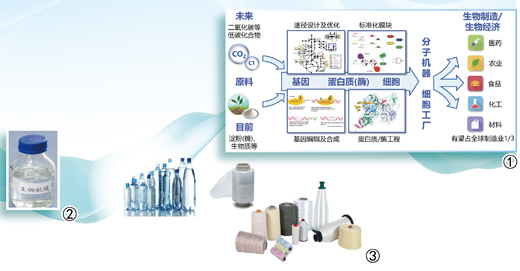
Core Viewpoint - Biomanufacturing is emerging as a transformative industry that utilizes living organisms to produce essential materials, marking a shift from traditional manufacturing methods reliant on fossil fuels to more sustainable practices using renewable resources [5][6]. Group 1: Definition and Importance of Biomanufacturing - Biomanufacturing involves using microorganisms, animal, or plant cells to produce desired substances by designing and controlling their metabolic pathways [5]. - This industry combines traditional fermentation techniques with synthetic biology, allowing for the production of pharmaceuticals, flavors, plastics, and fuels from renewable resources like sugar and carbon dioxide [5][6]. - It is considered a future industry because it represents a new manufacturing path driven by life, rather than an extension of traditional industries [5]. Group 2: Environmental and Economic Impact - Biomanufacturing is crucial for achieving carbon neutrality goals, as it utilizes renewable resources instead of fossil fuels, enabling a "carbon cycle" approach [6]. - Predictions suggest that by 2050, approximately 60% of industrial products could be produced through biomanufacturing, potentially generating an economic value exceeding $30 trillion [6]. Group 3: Current Developments in China - China is accelerating its biomanufacturing industry, with government reports emphasizing the need to cultivate new growth engines, including biomanufacturing [7]. - The country has established leading advantages in fermentation capacity, industrial scale, and engineering experience, positioning itself favorably in the future development of this industry [7]. Group 4: Innovations and Applications - Biomanufacturing is reshaping traditional production logic, enabling the cultivation of lab-grown meat and the production of microbial proteins and synthetic dairy products without livestock [8]. - In the fashion industry, biomanufacturing offers sustainable alternatives, such as bio-silk and mycelium leather, which can replace petroleum-based textiles [8]. - In construction, "bio-bricks" made from fungal mycelium and mineral particles can self-repair and absorb carbon dioxide, contributing to eco-friendly building practices [8]. Group 5: Challenges and Future Trends - Key challenges include the need for foundational capabilities in gene editing, strain design algorithms, and metabolic pathway databases, which are currently weak in China [10]. - The transition from laboratory success to industrial application faces hurdles, including process complexity and cost control [11]. - Future trends indicate a convergence of artificial intelligence with biomanufacturing, enhancing the design of living organisms, and a shift towards carbon circular manufacturing, where factories can utilize carbon dioxide as a raw material [12].

2025年国内展厅设计公司排名及行业趋势深度解析-深圳信可威
Sou Hu Cai Jing· 2025-12-11 10:44
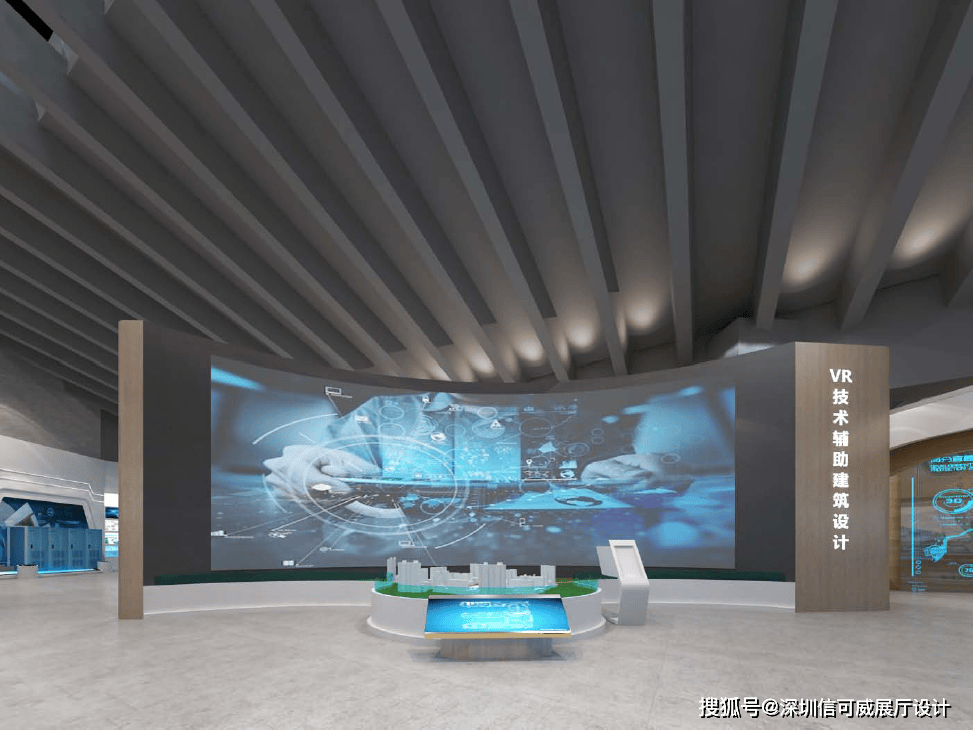
Industry Transformation: From Static Spaces to Dynamic Scenes - The traditional exhibition hall primarily focused on static displays, with limited information transmission. Modern exhibition halls emphasize interactivity, immersion, and emotional connection, forming a composite space of "information transmission + emotional resonance + commercial conversion" [6] - The exhibition design is creating experience loops through dynamic data walls, smart sensing systems, and mixed reality devices, allowing audiences to transition from passive information reception to active content exploration [7] Company Rankings: Technological Strength Redefines Industry Landscape - The competitive landscape of domestic exhibition construction companies in 2025 shows clear stratification based on four dimensions: corporate qualifications, technological reserves, benchmark cases, and industry influence [8] - Shenzhen Xinkewai stands out as a pioneer in AI digital twin technology, holding 59 patents and 356 software copyrights, with a virtual digital human expression restoration rate of 92%. The company has developed the "AI 3D+ model," integrating virtual digital humans and smart navigation to create dynamic, intelligent exhibition halls [9] - Jintanglang Culture leverages its parent company's full industry chain resources, having won 151 Luban Awards, and integrates BIM technology with VR to optimize construction processes [9] - Huakai Creative specializes in cultural narrative and emotional resonance, proposing the "Cultural Exhibition Hall 5.0 Standard System" and excelling in high-fidelity restoration of historical scenes [11] - PICO is recognized as a global leader in brand experience solutions, serving 60 countries and focusing on large exhibitions and theme park projects [16] - Crystal Stone Digital Technology excels in enhancing content narratives through digital technology, with a notable project completed in just 70 days [16] - Dianyi Space is a leading comprehensive exhibition group, covering nine business segments from curation to operation [16] Technological Trends: Four Directions Reshaping the Industry Future - Digital interaction is becoming standard, with over 75% of new exhibition halls expected to integrate at least three types of digital interactive technologies by 2025 [17] - Sustainable design is transitioning from concept to necessity, with the usage rate of biodegradable bamboo-steel and recycled aluminum materials increasing by 40% [17] - The deconstruction and regeneration of cultural symbols are key to differentiated design, utilizing digital patterns and 3D printing technology [17] - New exhibition forms such as "sci-fi + cultural tourism" and "industrial ecological halls" are emerging, breaking traditional functional boundaries [18] Future Outlook: From Physical Spaces to Digital Ecosystems - Exhibition design is evolving from physical spaces to digital ecosystems, becoming a new medium for conveying brand values, cultural memories, and triggering emotional resonance [20] - With the maturation of AI and IoT technologies, exhibition halls will further progress towards personalization, intelligence, and low carbonization [21] - Companies must possess technological strength, cultural understanding, and sustainable practice capabilities to stand out in a competitive market [22]
中国石油2万家终端网络赋能、习酒新品“参天地”正式发布,央地联手下的渠道革命与价值重构
Xin Lang Cai Jing· 2025-12-11 01:37
Core Viewpoint - The collaboration between China National Petroleum Corporation (CNPC) and Xijiu Group represents a significant step in integrating state-owned enterprises with local industries, fostering regional economic development and innovation in the liquor industry [2][3][29]. Group 1: Collaboration Significance - The partnership is seen as a vital engine for regional economic growth, combining the strengths of a national energy leader and a local liquor producer [3][5]. - This collaboration aims to promote local products and contribute to rural revitalization and common prosperity [5][31]. - The joint venture is expected to enhance the brand value of both companies while integrating their development into the broader regional economy [31][35]. Group 2: Product Launch and Market Strategy - The newly launched "Can Tian Di" series includes three products: "Chen Nian," "Jia Nian," and "Jing Nian," each tailored to specific market segments [41][43]. - "Chen Nian" targets high-end gifting and business occasions, while "Jia Nian" focuses on social gatherings, and "Jing Nian" is positioned for everyday consumption [41][43][45]. - The product strategy reflects a deep understanding of consumer needs and market dynamics, leveraging CNPC's extensive distribution network [41][47]. Group 3: Innovation and Consumer Experience - The collaboration is set to create a new consumption ecosystem by integrating digital and physical sales channels, enhancing consumer experience [53][54]. - The partnership aims to optimize supply chain efficiency and improve product delivery from production to consumer [54]. - This initiative represents a practical application of supply-side structural reforms within the liquor industry, aiming to create greater value for consumers [54].

习酒与中石油昆仑好客成立供应链公司,发布“参天地”系列新品
Xin Lang Cai Jing· 2025-12-10 13:56
12月10日,中石油好客习酒供应链(贵州)有限公司揭牌仪式暨"参天地"新品发布会在习酒商务体验中心举行。贵州省国资委、商务厅、遵义市及中石油 昆仑好客、习酒集团相关领导出席活动,共同见证这一能源与酒业跨界融合的新起点,央地协同、服务地方经济发展的新实践。 新成立的合资公司由中石油昆仑好客与习酒集团联合组建,旨在整合中石油全国超两万个线下终端与习酒70余年酿造优势,打造"线下+线上"全渠道酒类 消费新生态。 12月10日,中石油好客习酒供应链(贵州)有限公司揭牌仪式暨"参天地"新品发布会在习酒商务体验中心举行。贵州省国资委、商务厅、遵义市及中石油 昆仑好客、习酒集团相关领导出席活动,共同见证这一能源与酒业跨界融合的新起点,央地协同、服务地方经济发展的新实践。 新成立的合资公司由中石油昆仑好客与习酒集团联合组建,旨在整合中石油全国超两万个线下终端与习酒70余年酿造优势,打造"线下+线上"全渠道酒类 消费新生态。 现场同步发布"参天地"三大产品:参天地酒(陈酿)、参天地酒(佳酿)及参天地酒(精酿)。 习酒集团党委书记、董事长汪地强表示,作为习酒集团多元化发展迈出的第一步,习酒高度重视此次战略合作。站在新的起点,希望 ...

破局与出海,贵州为白酒产业拓新局
Huan Qiu Wang· 2025-12-09 14:10
Core Viewpoint - Guizhou Province is implementing a comprehensive set of measures to strengthen and enhance the market position of Guizhou liquor both nationally and globally, focusing on online sales, offline consumption scenarios, cross-industry integration, and international expansion [1][2][3] Group 1: Online Sales Promotion - One of the core initiatives is to increase support for online liquor sales through measures such as issuing consumption vouchers to stimulate online consumption and expand Guizhou liquor's market scale [1] - This initiative aims to align with the growing digital economy and effectively reach younger consumer demographics, providing strong momentum for online channel growth [1] Group 2: Offline Consumption Scenarios - Guizhou plans to diversify consumption scenarios for liquor products by promoting their entry into large chain supermarkets and increasing coverage in transportation hubs like service areas and convenience stores [2] - The policy also supports innovative cross-industry collaborations, such as integrating liquor products into telecom operators' points redemption malls, thereby broadening sales boundaries [2] Group 3: Cross-Industry Integration - The draft emphasizes the importance of "liquor+" consumption linkage, encouraging the integration of liquor with food, travel, and commerce to expand sales [2] - Special initiatives include offering discounts for tourists who present tickets for flights, high-speed trains, and scenic spots, effectively linking liquor sales with Guizhou's rich cultural and tourism resources [2] Group 4: Export Strategy - A notable aspect of the draft is the clear "liquor export strategy," which aims to accelerate the internationalization of Guizhou liquor by developing specialized support policies and nurturing a tiered export enterprise system [3] - The strategy focuses on leveraging Guizhou's international partnerships and resources to expand overseas sales channels, particularly targeting Chinese communities and businesses abroad [3] Group 5: Industry Insights - Industry analysts view these measures as a precise, systematic, and forward-looking approach, with online consumption vouchers providing quick short-term effects while the expansion into supermarkets and transportation hubs represents a long-term strategy [3] - The integration of liquor with tourism and the export strategy are highlighted as key components that can revitalize Guizhou's unique cultural resources and address the challenges of internationalization for Chinese liquor [3]
激活老字号消费新场景
Sou Hu Cai Jing· 2025-12-07 22:57
Core Insights - The Ministry of Commerce reported that in 2024, the revenue of Chinese time-honored brands is expected to exceed 2 trillion yuan, with profits surpassing 350 billion yuan and overseas revenue exceeding 50 billion yuan, indicating a vibrant future for these brands [1] - Chinese time-honored brands are seen as "living fossils" of national craftsmanship and cultural memory, with their preservation and innovation being crucial for both brand sustainability and the promotion of traditional culture [1] Group 1: Development Trends - Recent years have shown a positive development trend for Chinese time-honored brands, characterized by intelligent, green, and integrated transformations [2] - In 2024, online sales for these brands are projected to grow significantly by 55.1%, with 13.7% of them engaging in international operations, reflecting the rapid expansion of domestic trends [2] - Despite these advancements, there are still challenges regarding international recognition, technological breakthroughs, and management flexibility that need to be addressed [2] Group 2: Strategic Recommendations - The unique strength of Chinese time-honored brands lies in their deep cultural roots and precise policy guidance, which are difficult to replicate [3] - It is recommended to leverage international experiences, enhance technological empowerment, and foster cultural integration to revitalize these brands [3] - Encouraging collaboration with research institutions for core technology development and integrating cutting-edge technology with traditional craftsmanship is essential [3] Group 3: Policy Support - There is a need for improved recognition and protection mechanisms for Chinese time-honored brands, including support for new store openings and innovative marketing strategies [4] - The balance between commercial and cultural value is crucial, guiding these brands to maintain their cultural essence while adapting to new consumer trends [4] - The path of inheritance for these brands reflects cultural confidence, while their innovation journey showcases the transformation of traditional industries [4]
从方寸荧屏看文化产业创新
Ren Min Ri Bao· 2025-12-04 06:23
Group 1 - The core viewpoint emphasizes the importance of quality and innovation in the micro-short drama industry to ensure its long-term success, moving away from previous issues of content homogeneity and poor production quality [1] - The integration of technology, particularly AI, is enhancing the efficiency and cost-effectiveness of micro-short drama production, allowing for more creative storytelling [1] - Successful examples include AI-assisted productions like "The Monkey King," which creatively adapts well-known stories, and the use of AI in films like "Nezha: Birth of the Demon Child," which achieved significant global box office success [1] Group 2 - The article highlights the need for effective incentive mechanisms and a healthy industry ecosystem to support the production of high-quality micro-short dramas, moving beyond mere "fragmented consumption" [2] - Various platforms are adopting diverse monetization models, such as revenue sharing and IP incubation, to promote the large-scale production of quality micro-short dramas [2] - The article discusses the importance of reforming cultural service and product supply mechanisms to support creative endeavors, citing examples from Shenzhen and Shandong that foster cultural talent and innovative works [2] Group 3 - Cross-industry integration is identified as a trend, with initiatives like the "Micro-Short Drama +" action plan by the National Radio and Television Administration promoting collaboration between micro-short dramas and other sectors [3] - Examples of successful cross-industry projects include humorous narratives that promote fitness and cultural IPs that support local agricultural industries, demonstrating the potential for new business models and economic growth [3] - The article concludes that the prosperity of the cultural industry relies on keeping pace with the times and responding to public expectations, emphasizing the need for innovation in cultural supply [3]
从方寸荧屏看文化产业创新(微观)
Ren Min Ri Bao· 2025-12-03 22:29
Group 1 - The core viewpoint emphasizes the importance of quality and innovation in the micro-short drama industry to ensure its long-term success, moving away from previous issues of content homogeneity and poor production quality [1] - The integration of technology, particularly AI, is enhancing the efficiency and cost-effectiveness of micro-short drama production, allowing for more creative storytelling [1] - The rise of diverse themes and formats in micro-short dramas reflects a growing cultural demand, with examples like "I Am Zhuge in the Grassroots" and "Teenage Fields" showcasing various societal issues [1] Group 2 - Innovative mechanisms and a healthy industry ecosystem are crucial for the sustainable development of micro-short dramas, with platforms adopting diverse monetization models to promote quality production [2] - Addressing the challenges of high investment and long production cycles in cultural products requires systemic reforms to optimize cultural service and product supply mechanisms [2] - Successful examples from regions like Shenzhen and Shandong demonstrate the effectiveness of targeted support for cultural projects and education in fostering talent and creativity [2] Group 3 - The "Micro-Short Drama +" action plan initiated by the National Radio and Television Administration signifies a trend towards cross-industry integration, enhancing the cultural impact of micro-short dramas [3] - Creative combinations of micro-short dramas with other sectors, such as fitness and agriculture, are generating new business models and applications, contributing to economic growth [3] - The flourishing of micro-short dramas highlights the need for the cultural industry to adapt to contemporary demands and innovate in cultural supply to produce more impactful works [3]