
轻资产转型

Search documents
华住打破增收不增利“魔咒”,但仍困于轻资产转型阵痛期
Xin Lang Cai Jing· 2025-08-21 10:48
Core Insights - Huazhu Group reported a recovery in performance for the first half of 2025, with revenue and profit both increasing after a challenging 2024 [1][2] - The company achieved a revenue of 11.8 billion yuan, a year-on-year increase of 3.5%, and a net profit of 2.4 billion yuan, up over 40% from the previous year [2][3] Financial Performance - In the first half of 2025, Huazhu's net profit exceeded the same period in 2023 by 400 million yuan [3] - The revenue structure shows that direct-operated hotels accounted for 62 billion yuan, while management and franchise hotels contributed nearly 54 billion yuan, representing 45% of total revenue [7][9] Market Dynamics - The hotel industry is experiencing oversupply, leading to intense competition and declining profitability for many listed hotel groups [2][5] - Despite a recovery in occupancy rates and average daily rates (ADR), key performance indicators such as RevPAR have shown a year-on-year decline [13][14] Strategic Focus - Huazhu maintains a focus on the economy and mid-range hotel segments, aiming to optimize existing store quality and expand in core urban areas [5][10] - The company is transitioning towards a light-asset model, with 92% of its hotels under management or franchise agreements, which is expected to enhance profitability [6][9] Brand Development - Huazhu's brand Hanting has been recognized as the largest hotel brand globally by room count, with 4,401 operating hotels and 728 in the pipeline [15][16] - The company is addressing the challenge of aging properties by upgrading older hotel models to maintain competitiveness in the market [16]

HWORLD(HTHT) - 2025 Q2 - Earnings Call Transcript
2025-08-20 13:02
Financial Data and Key Metrics Changes - The group's revenue grew by 4.5% year over year to RMB 6.4 billion, near the high end of previous guidance [15] - Adjusted EBITDA rose by 11.3% year over year to RMB 2.3 billion, while adjusted net income increased by 7.6% year over year to RMB 1.3 billion [17] - The Managers and Franchise business revenue reported a robust 22.8% year over year growth to RMB 2.9 billion, with gross operating profit rising by 23.2% year over year to RMB 1.9 billion [18] Business Line Data and Key Metrics Changes - The hotel group's GMV grew by 15% year over year, with a member base increase of 17.5% year over year to nearly 290 million [7] - Room nights booked by members exceeded 60 million nights, representing a 28.8% year over year growth [7] - The lease and own business revenue and gross operating profit decreased by 7.6% and 13.4% year over year, respectively [19] Market Data and Key Metrics Changes - The domestic number of travelers continues to grow steadily, but the hotel industry faces challenges due to rapid hotel supply increase and macroeconomic factors affecting business travel and consumer spending [6] - The company achieved an 18.3% year over year increase in the number of rooms in operation [6] Company Strategy and Development Direction - The company remains focused on high-quality growth, securing prime locations in major cities, and deepening presence in lower-tier cities [6] - The launch of Hanqing 4.0 represents a significant supply chain reform aimed at achieving lower costs and higher quality [10] - The company aims to reach a strategic target of 20,000 hotels in 2,000 cities in the mid-term [11] Management's Comments on Operating Environment and Future Outlook - Management expects RevPAR for the third quarter to have a slight year-over-year decline, with full-year RevPAR performance anticipated to be slightly below previous guidance due to macro uncertainties and increased supply [24] - The company is actively seeking upgrades for existing hotels and rationalizing new hotel openings to mitigate potential cannibalization effects [27] Other Important Information - The company declared a USD 250 million interim cash dividend, representing 74% of the first half net profit, along with a share buyback of approximately USD 62 million [20] - The company is committed to enhancing membership benefits and expanding loyalty points usage scenarios to boost direct sales capability [13] Q&A Session Summary Question: Expectations for RevPAR in 3Q and 2025, and potential impact from new hotel openings - Management expects a slight year-over-year decline in RevPAR for 3Q, with full-year RevPAR anticipated to be slightly below previous guidance due to macro uncertainties and increased supply [24][25][26] Question: Strategic focus between asset-heavy and asset-light business segments - The company has been actively transforming towards an asset-light model, with the franchise and managed business contributing 64% of total gross operating profit [30][32] Question: Store expansion sentiment and margin optimization - Management will be stricter on new signings to ensure profitability for franchisees, while also focusing on cost optimization and stable margin performance [38][39] Question: Supply chain strengthening and future operating costs - The company has achieved a 10-20% cost decline in certain materials and reduced construction periods through supply chain enhancements [51][52] Question: Future shift towards asset-light model for DH - The company is carefully negotiating lease contracts and screening profitability of lease hotels, aiming for a gradual shift towards an asset-light model [53][54][55]

迪卡侬的“中国棋局”:50年来首次开放股权的战略变奏
Xin Lang Zheng Quan· 2025-08-20 10:22
Core Insights - Decathlon plans to sell approximately 30% of its Chinese subsidiary, with an estimated valuation of €10-15 billion (around ¥100 billion), marking the first significant equity transfer in nearly 50 years [1][2] - The decision is driven by competitive pressures in the Chinese market and the need for strategic restructuring amid declining profitability [2][4] Group 1: Strategic Rationale - The equity sale is a response to increasing competition from local brands like Anta and Li Ning, which have been capturing market share through localized designs and digital marketing [2][3] - The move towards a mixed strategy of "capital increase and share transfer" allows Decathlon to optimize its asset structure while maintaining control over its core supply chain [3][4] - The funds from the equity sale may support Decathlon's supply chain diversification strategy, particularly as it shifts some procurement focus to India [3][7] Group 2: Market Position and Challenges - Decathlon China has a localized supply chain with a design center in Suzhou and factories in Shandong, enabling it to maintain competitive pricing [4][5] - Digital sales in China account for 25% of total sales, surpassing the global average of 20%, indicating a successful transition towards digitalization [4][6] - However, Decathlon faces structural challenges, including pressure from local brands and a need to enhance customer experience compared to competitors [5][6] Group 3: Future Outlook - The equity sale could lead to two potential transformation paths: collaboration with local retail partners for deeper market penetration or a more aggressive digital transformation led by financial investors [7][8] - Regardless of the outcome, maintaining control over the strategic direction remains a priority for Decathlon's founding family [7][8] - The equity experiment reflects a broader trend of multinational companies adapting to local market dynamics and consumer preferences in China [8]
从甲方转向乙方,老牌房企远洋在代建市场如何解题?
第一财经· 2025-08-12 07:05
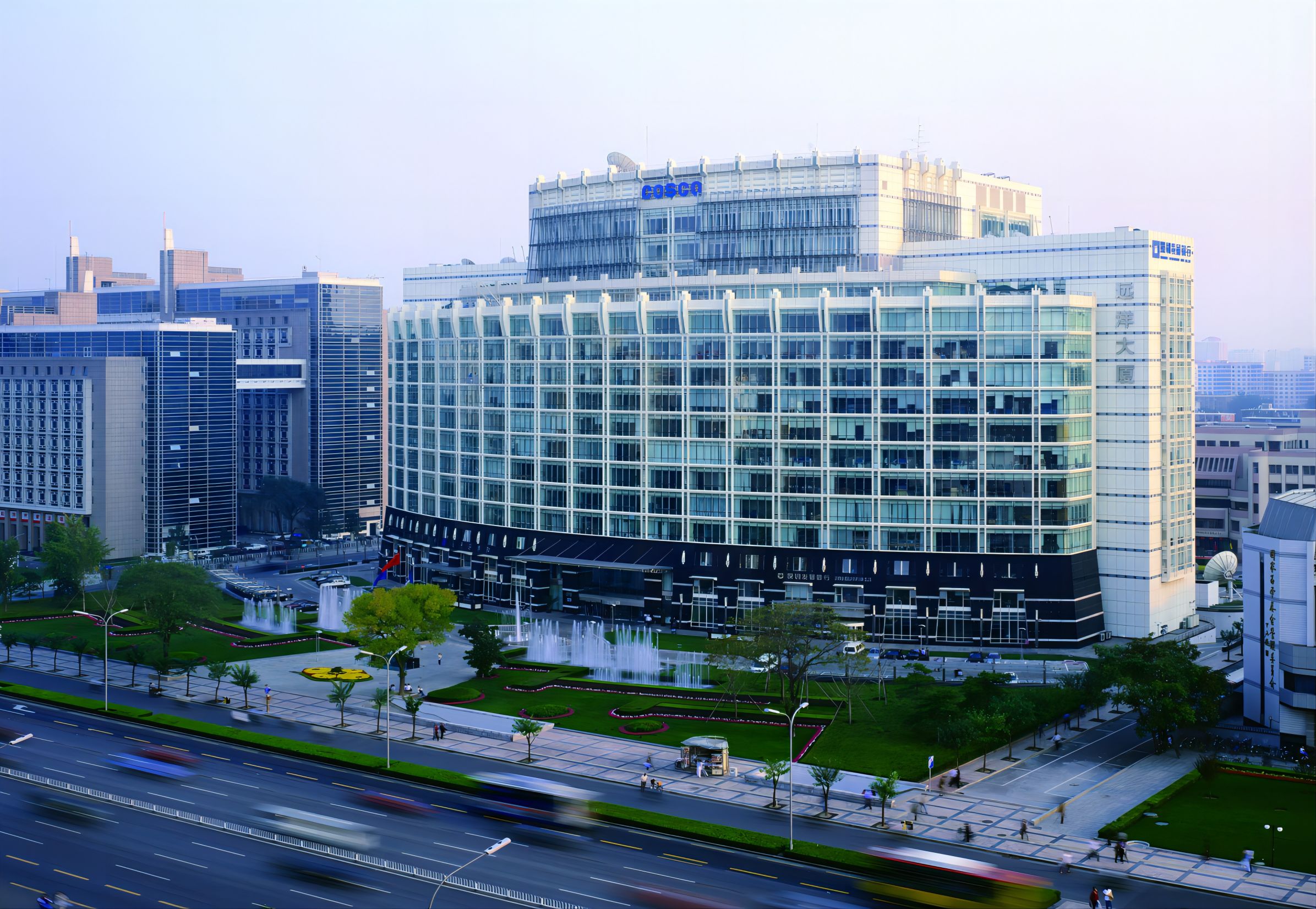
Core Viewpoint - The article discusses the shift of real estate companies, particularly Far East Group, towards light asset management and construction services, highlighting the importance of this business model in the current market environment [6][7][12]. Group 1: Company Strategy - Far East Group has identified construction management as a key growth area, with 33 new projects and a signed area of 5.62 million square meters in the first half of 2025, ranking eighth in the industry [7][10]. - The company has transitioned from a high-leverage, high-turnover model to a service-oriented approach, emphasizing professional capabilities and service output [6][9]. - The management believes that the success of construction management relies on team autonomy and expertise, contrasting with traditional real estate development which is heavily influenced by external factors [9][12]. Group 2: Market Dynamics - The real estate industry is experiencing intense competition in the construction management sector, with 80% of the top 100 real estate companies entering this space, leading to a "淘汰赛" (elimination competition) scenario [7][12]. - The average management fee for construction projects has decreased, with 81.7% of projects having fees between 1% and 3%, indicating a trend towards lower profitability [12][13]. - Despite the competitive landscape, there remains a significant market demand for construction management services, particularly for revitalizing distressed projects [13][14]. Group 3: Operational Insights - Far East Group's approach to expanding its construction management projects includes leveraging existing strengths in key cities, targeting unsuccessful projects, and implementing a flat management structure for better project oversight [8][10]. - The company emphasizes the importance of not blindly pursuing the lowest bid during project tenders, instead opting for differentiated strategies based on project types [12]. - The firm has established partnerships with asset management companies (AMCs) to manage distressed assets, indicating a strategic move to capitalize on the growing need for asset recovery in the real estate sector [13][14].

从甲方转向乙方,老牌房企远洋在代建市场如何解题?
Di Yi Cai Jing· 2025-08-12 04:55
Core Viewpoint - Real estate companies are transforming through light asset business models, with a focus on construction management as a key growth area, as demonstrated by the case of a project in Qingdao that was revitalized within four months [1][4]. Group 1: Company Strategy - Ocean Group has identified construction management as a significant direction for growth, having launched 33 new projects with a signed area of 5.62 million square meters in the first half of 2025, ranking eighth in the industry [4][6]. - The company has shifted from a high-leverage, high-turnover model to a service-oriented approach, emphasizing professional capabilities and service output [1][7]. - The management believes that the success of construction management relies on the team's autonomy and professionalism, contrasting with traditional real estate development which is heavily influenced by external factors [7][9]. Group 2: Market Dynamics - The competition in the construction management sector is intensifying, with 80% of the top 100 real estate companies already involved, leading to a "淘汰赛" (elimination competition) scenario [5]. - The average management fee rate for construction projects is between 1% and 3%, with 81.7% of projects falling within this range, indicating a trend of declining profit margins due to increased competition [8]. - Ocean Group emphasizes maintaining a healthy growth trajectory for its construction management business without setting unrealistic targets, focusing on gradual annual growth [8]. Group 3: Project Examples and Partnerships - The company has successfully revitalized projects previously deemed "zombie properties," such as the Qingdao project, by adjusting product positioning and resource allocation [9]. - Approximately 70% of the new construction management projects are residential, with many commissioned by financial institutions to manage distressed assets [9][10]. - Ocean Group collaborates with Asset Management Companies (AMCs) to manage and develop distressed projects, leveraging its comprehensive capabilities in law, finance, construction management, and asset management [9][10]. Group 4: Industry Trends - The industry is witnessing a collective shift towards light asset models, moving from pure real estate development to a balanced approach that emphasizes products, management, and services [10]. - The trend towards flattening organizational structures and lightening business models is expected to reduce corporate debt and facilitate rapid transformation within real estate companies [10].
6年亏损380亿、月销跌至个位数,极星汽车保得住中国市场吗?
Xin Jing Bao· 2025-08-11 04:33
Core Viewpoint - Polestar, a Nordic luxury electric vehicle brand, is facing significant challenges in the Chinese market, with sales plummeting to just 69 vehicles in the first half of 2025, raising concerns about its future operations in the region [1][6]. Sales Performance - In June 2025, Polestar sold only 6 vehicles, following a dismal performance with just 1 sale in March and no sales in April and May [1] - Cumulatively, Polestar has reported a net loss exceeding $5.3 billion (approximately 38 billion RMB) from 2019 to 2024, with losses projected to increase from $470 million in 2022 to $2.05 billion in 2024 [1] Financial Situation - As of the end of 2024, Polestar's net assets were negative $3.329 billion, with total liabilities reaching $7.383 billion [2] - Li Shufu, through his company, injected $200 million into Polestar, raising his ownership stake to 66% and providing a temporary boost to the company's financial situation [2] Strategic Adjustments - Polestar has undergone frequent changes in product positioning and pricing strategies, which have confused consumers and affected brand perception [4][5] - The company has shifted its focus to a "light asset" transformation, planning to reduce its dealer network and concentrate on direct sales and online models [6] Market Positioning - Polestar's initial high-end positioning with the Polestar 1 was followed by a rapid price reduction for the Polestar 2, leading to a perception of instability in pricing [4] - The introduction of the Polestar 3 and Polestar 4 aimed to reclaim market share but has not resulted in significant sales, with the latter model struggling to sell even 200 units in its first six months [4] Management and Operational Changes - The company has seen instability in its management team, with seven different CEOs in the Chinese market, which has further impacted operational consistency [5] - Despite rumors of exiting the Chinese market, Polestar has stated that its operations are running normally, although it has significantly reduced its workforce from 320 to 86 employees [6]
从“重”走向“轻”:中交地产(000736.SZ)剥离重资产业务,折射行业转型大势
Xin Lang Cai Jing· 2025-08-07 07:11
Core Viewpoint - The real estate industry is undergoing a structural adjustment, with companies shifting from "heavy asset development" to "light asset operation" in response to tightening financing and profit pressures [1][2]. Group 1: Strategic Divestiture - China Communications Real Estate (中交地产) announced a complete divestiture of its loss-making real estate business, focusing instead on property management and asset management, marking a significant shift towards light asset operations [2][3]. - The divested assets are primarily high-debt and cyclical projects, which will alleviate financial pressure and restore net asset safety margins for the company [2][3]. - This strategic move is not merely a reactive measure but a proactive adjustment towards building a sustainable business model, emphasizing the stability and replicability of light asset operations [2][3]. Group 2: Industry Trends - Other real estate companies have also made similar transitions, such as Huayuan Real Estate and Pearl River Shares, indicating a broader industry trend away from heavy asset models due to declining market risk appetite and stricter policy guidance [3]. - Companies that have shifted focus to light asset operations have generally experienced valuation recovery, with property management firms like China Merchants Jinling and Nandu Property showing significantly higher price-to-earnings ratios compared to traditional real estate developers [3]. Group 3: Central Enterprise Value Reassessment - As a subsidiary of China Communications Group, 中交地产 will operate its light asset business under the "China Communications Service" brand, leveraging the central enterprise's resource synergies [4]. - The company is expected to gain more opportunities for managing core assets due to the group's strategic positioning in major cities and transportation sectors [4]. - Unlike private property management firms that often expand in a scattered manner, central enterprise platforms emphasize resource integration, providing a higher starting point for operational space and project development [4]. Group 4: Conclusion - The divestiture of heavy assets is not a retreat but a repositioning for future growth, as companies like 中交地产 actively adjust to provide new valuation paradigms in the capital market [5]. - The transition to light asset operations is expected to improve financial conditions and operational efficiency, while also offering new growth potential for listed platforms [5]. - In the ongoing pursuit of high-quality development in the real estate sector, light asset operation platforms with central enterprise backgrounds and resource integration capabilities will become new focal points in the market [5].

“翻车”的亚朵被传要赴港上市
Guo Ji Jin Rong Bao· 2025-08-06 11:28
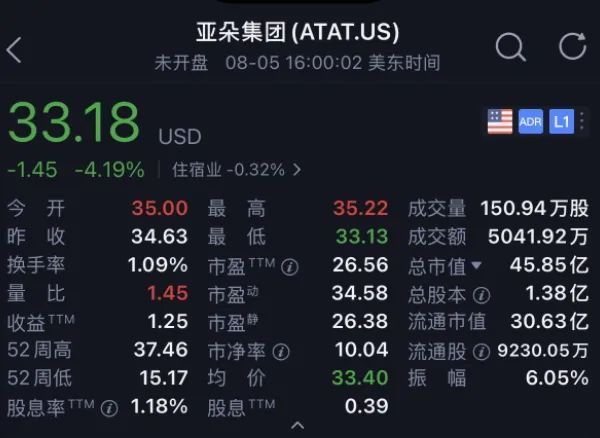
Core Viewpoint - Atour is considering a secondary listing in Hong Kong, with its stock price having doubled since its initial public offering in the U.S. in 2022, reaching $33.18 per share and a market capitalization of $4.585 billion [1] Group 1: Company Growth and Expansion - As of the end of 2024, Atour plans to have 1,619 stores and 183,184 rooms, representing year-on-year growth of 33.8% and 32.8% respectively, with a record 470 new stores opened in the year [1] - The management expects to open approximately 500 new stores by 2025 while maintaining a similar closure rate as in 2024, indicating a commitment to improving the quality of operating stores [2] - In Q1 of this year, Atour opened 121 new stores, all from franchisees, resulting in a total of 1,727 operating hotels, a 33% year-on-year increase [2] Group 2: Financial Performance - Hotel revenue for Atour in Q1 increased by 15.6% year-on-year to 1.161 billion yuan, with franchise stores contributing 1.032 billion yuan, accounting for nearly 89% of total revenue [2] - To attract more franchisees, Atour has optimized the costs of core operational materials, achieving an average reduction of 10% [2] Group 3: Quality Control and Customer Experience - Atour is implementing material upgrades for items like combs and toothbrushes to enhance durability and comfort, which will reduce daily expenses for franchisees [3] - Recent reports indicate issues with service quality and pricing at some Atour hotels, leading to public relations challenges [4] - Affected hotels have issued apologies and taken corrective actions, including terminating contracts with problematic suppliers and conducting thorough inspections of their facilities [5]
连年亏损,中交地产1元“退房”,称“有利于增强上市公司持续经营能力”
Hua Xia Shi Bao· 2025-08-01 09:47
Core Viewpoint - China Communications Real Estate Co., Ltd. (中交地产) is transitioning from heavy asset real estate development to a lighter asset model by transferring its real estate-related assets and liabilities to its controlling shareholder for a nominal price of 1 yuan, aiming to enhance its operational sustainability and mitigate delisting risks [3][5][6]. Group 1: Financial Performance and Strategic Shift - The company has reported continuous losses in its real estate development business, with net profits of 0.34 billion yuan in 2022, -1.611 billion yuan in 2023, and an expected -5.179 billion yuan in 2024, alongside a projected loss of 1.19 billion yuan for the first half of 2025 [5][6]. - As of the end of 2024, the company's consolidated asset-liability ratio stood at 89.75%, with total liabilities of 576.44 billion yuan and short-term debt obligations of 217.24 billion yuan [5][6]. - The asset transfer is expected to improve the company's financial metrics, with net profit projected to rise from -5.179 billion yuan to 0.91 billion yuan post-transaction, while the asset-liability ratio will decrease to 40.17% [6]. Group 2: Business Model Transition - Following the asset transfer, the company plans to focus on lighter asset businesses, including property management and asset operation, which are deemed to have better stability and profitability [7]. - The company aims to acquire 100% of China Communications Property Service Group for nearly 700 million yuan to expand its property management services, which currently cover over 60 cities [7][8]. - Despite the strategic shift, the revenue contribution from lighter asset businesses remains low, with property management revenue at only 7.28 billion yuan, accounting for 3.98% of total revenue in 2024 [8]. Group 3: Industry Context and Future Outlook - The real estate market is expected to experience a long-term contraction in new housing demand, favoring companies with strong financial capabilities and lower debt pressure [9]. - Industry experts suggest that companies entering the lighter asset model must remain vigilant about new risks and conduct thorough strategic research to enhance competitiveness and growth potential [9].

中交地产新任董事长的考题
Bei Jing Shang Bao· 2025-07-30 16:40
Core Viewpoint - China Communications Real Estate is facing significant financial challenges, with a projected net loss of 1.19 billion yuan for the first half of 2025, an increase of 219 million yuan compared to the same period last year. The company is undergoing structural adjustments and shifting its focus from real estate development to property services in an attempt to stabilize its operations [1][2]. Financial Performance - The company anticipates a net loss of 1.19 billion yuan for the first half of 2025, which is an increase of 219 million yuan from the previous year [2]. - In 2023, the company reported a net loss of 1.673 billion yuan, which further expanded to 5.179 billion yuan in 2024 [2]. - By the end of 2024, the company's net assets turned negative, triggering delisting risk warnings under Shenzhen Stock Exchange regulations [2]. Business Strategy and Adjustments - The new chairman, Guo Zhulong, is implementing structural changes and a transformation strategy, including the divestment of real estate development operations to focus on lighter asset businesses such as property services [1][3]. - The company has reduced its land acquisition scale significantly, with only 97,100 square meters of new land reserves added in 2023, and no new land reserves reported in 2024 [3]. - Internal restructuring has occurred, consolidating 16 city companies into 9 and simplifying management layers from a three-tier to a two-tier system [3]. Revenue and Asset Management - In 2024, the total revenue of China Communications Real Estate was 18.302 billion yuan, a decrease of 44.59% year-on-year, with real estate sales revenue dropping by 46.69% [4]. - The company plans to transfer its real estate development assets and liabilities to its controlling shareholder for a nominal price of 1 yuan, indicating a desperate attempt to stabilize its financial situation [4][5]. - Following the asset transfer, the company's total assets are expected to decrease from 107.698 billion yuan to approximately 2.036 billion yuan, and revenue is projected to drop from 18.302 billion yuan to 1.097 billion yuan [5]. Future Outlook and Challenges - The company is attempting to pivot towards property services, with property management revenue accounting for only 3.98% of total revenue in 2024 [6]. - The acquisition of 100% equity in China Communications Property Service Group for nearly 700 million yuan is aimed at establishing a foundation for future growth in property services [5]. - The transition to a lighter asset model presents new risks and requires careful strategic planning and market analysis to enhance competitiveness and growth potential [6].