
物理AI

Search documents
A股收评|机构称短期市场以稳步震荡上行为主,创业板人工智能ETF(159381)获资金逆势布局
Mei Ri Jing Ji Xin Wen· 2025-08-08 14:35
Market Performance - A-shares experienced a collective decline on August 8, with the Shanghai Composite Index down 0.12%, Shenzhen Component Index down 0.26%, and ChiNext Index down 0.38% [1] - The total trading volume in the Shanghai and Shenzhen markets was 173.63 billion yuan, a decrease of 116.2 billion yuan from the previous day [1] - Over 2400 stocks rose during the session, indicating some underlying strength despite the overall market decline [1] Sector Performance - Sectors such as engineering machinery, wind power equipment, and rail transit equipment saw gains, while the ERP concept and Huawei's Euler sector faced adjustments [1] - Major ETFs experienced a downward trend, with the A500 ETF (512050) slightly down by 0.2% [1] - AI-related ETFs showed signs of a pullback, with the chip ETF (159995) down 1.72% and the AI ETF (515070) down 1.69% [1] - The 5G communication ETF (515050), focusing on AI computing hardware, fell by 0.36%, while the AI ETF from Huaxia (159381), which has over 41% weight in optical modules, dropped by 1.87% but saw some funds increase their positions [1] Investment Outlook - Zhongyuan Securities noted that domestic liquidity remains ample, with leveraged funds, private equity, and industry ETFs continuing to enter the market [2] - Expectations for a Federal Reserve rate cut in September may support foreign capital inflow into A-shares [2] - August marks the peak for semi-annual report disclosures, raising concerns about high valuation stocks facing performance verification pressure [2] - The market is anticipated to focus on technology growth and cyclical manufacturing as the main themes moving forward [2] AI Industry Insights - The concept of physical AI is emerging as a new engine for industrial transformation, integrating AI with physical laws to enhance high-end manufacturing and energy sectors [2] - Compared to traditional AI, physical AI can understand real-world laws and utilize digital twin technology for high-precision training and dynamic adjustments [2] - Internationally, companies like NVIDIA are advancing in areas such as robot training and engineering simulation, while domestic CAE manufacturers are exploring applications in defense and embodied intelligence [2] - Analysts believe that physical AI will represent the next wave of AI development, offering efficient and cost-effective solutions for industrial upgrades [2]

物理AI将成为人工智能的下个浪潮 | 券商晨会
Sou Hu Cai Jing· 2025-08-08 01:25
Group 1: AI Investment Opportunities - Tianfeng Securities highlights that certain AI sectors have a favorable probability of success in the current market environment, focusing on major AI companies leading industry trends and categorizing investments from hardware infrastructure to AI applications [1] - The report emphasizes the importance of companies with expected revenue growth in the AI investment landscape [1] Group 2: Physical AI Development - CITIC Securities reports that Physical AI will become the next wave of artificial intelligence, integrating AI with physical laws for real-world applications [2] - Physical AI is capable of understanding real-world physics and utilizes digital twin technology for training and inference, offering dynamic feedback based on sensor data [2] - The report notes that while overseas companies like NVIDIA have established comprehensive Physical AI frameworks, domestic development is still in its early stages, with local CAE vendors exploring applications in defense and embodied intelligence [2] Group 3: US Inflation Trends - CICC identifies that tariffs have caused a localized rebound in US inflation, with seasonal adjustment methods underestimating the true inflation situation over the past two months [3] - The prediction indicates that the Consumer Price Index (CPI) may confirm an upward turning point in the next 1-2 months, potentially affecting the Federal Reserve's interest rate decisions [3] - The report suggests that the CPI's upward cycle could last for about a year, introducing new variables for global assets [3]
中信建投:物理AI将成为人工智能的下个浪潮
Mei Ri Jing Ji Xin Wen· 2025-08-08 00:25
Core Viewpoint - Physical AI integrates AI with physical laws and applies it to the actions of physical devices, offering a significant advancement over traditional AI in understanding real-world physics [1] Group 1: Development and Applications - Physical AI can utilize real data and high-fidelity virtual environment data for training and reasoning, supported by digital twin technology [1] - It enables dynamic feedback and adjustment of action strategies based on sensor data [1] - The technology has broad development prospects in high-end manufacturing, basic sciences, and energy sectors [1] Group 2: Global and Domestic Landscape - Companies like NVIDIA have established comprehensive physical AI frameworks, with platforms such as Cosmos and Omniverse covering areas like robot training and engineering meteorology [1] - Domestic physical AI is still in its early development stage, with CAE vendors exploring applications in defense and embodied intelligence [1] Group 3: Market Opportunities - Some domestic manufacturers have achieved scenario explorations in embodied intelligence, defense, and low-altitude economy through AI-integrated CAE and industrial design software [1] - The physical AI industry is expected to benefit significantly from ongoing development trends, providing high accuracy, efficiency, and cost-effective application benefits [1] - NVIDIA's CEO Jensen Huang has publicly stated that physical AI will become the next wave of artificial intelligence [1]


中信建投:物理AI有望全面赋能制造、科研等领域智能化升级
Zheng Quan Shi Bao Wang· 2025-08-08 00:05
Core Insights - Physical AI integrates AI large models, physical engines, and multidisciplinary simulations to achieve high-precision dynamic modeling and optimization of the real world, empowering traditional industries [1] - Overseas, Physical AI has been applied in fields such as embodied intelligence, with platforms like Nvidia's Cosmos and Omniverse achieving full industry coverage [1] - In China, Physical AI is still in its early development stage, with CAE vendors exploring applications in defense, embodied intelligence, and low-altitude economy [1] - Overall, Physical AI is seen as the next direction in AI technology evolution, with potential applications expanding across manufacturing and research sectors as computational power and models incorporating physical laws improve [1]
深度参与世界机器人大会,英伟达将展示物理AI成果
Xuan Gu Bao· 2025-08-07 14:56
Group 1 - The 2025 World Robot Conference will be held in Beijing from August 8 to 12, focusing on the theme "Making Robots Smarter and Bodies More Intelligent" [1] - Nvidia will deliver a keynote speech and showcase advancements in physical AI and general robotics alongside partners like Galaxy General, Yushu Technology, and Zhongjian Technology [1] - Physical AI, which involves using motion skills to understand and interact with the real world, is considered the cornerstone of the robotics revolution, potentially leading to a new industrial revolution [1] Group 2 - Major global industrial giants such as Siemens, BMW, Foxconn, Schneider, Omron, SAP, and General Motors are collaborating with Nvidia to integrate AI into complex physical systems like manufacturing, warehousing, autonomous driving, and robotics [1] - The combination of AI and robotics is expected to create a trillion-dollar growth curve, leading to the production of billions of robots, hundreds of millions of autonomous vehicles, and thousands of smart factories in the future [1] - The commercialization of physical AI is accelerating in China, with existing applications already being implemented [1] Group 3 - Suchen Technology has launched physical AI products, including embodied intelligent virtual training and low-altitude three-dimensional physical maps, demonstrating successful applications in low-altitude economy, embodied intelligence, and new energy sectors [1] - Zhiwei Intelligent has introduced a product line of large and small brain controllers based on core chip platforms like Nvidia Jetson, Intel Ultra, and Rockchip, focusing on embodied intelligence and physical AI advancements [2]

晚报 | 8月8日主题前瞻
Xuan Gu Bao· 2025-08-07 14:35
点评:报道指出,人形机器人通用感知系统的推出,不仅为人形机器人提供了强大的环境感知能力,更解决了传感器布局、数据标注和多模态融合等关键挑 战,奠定了通用感知模块标准化的技术基础。未来,团队计划进一步扩展数据集、优化时序融合策略,并探索在更多人形机器人平台上的应用。随着技术的 不断成熟,人形机器人有望在家庭服务、工业协作、户外救援等多个领域发挥重要作用,为人类生活带来更多便利。 3、脑机 | 工信部等七部门印发《关于推动脑机接口产业创新发展的实施意见》,其中指出,壮大创新主体,培育优势企业。发展壮大脑机接口领域领军企 业,支持组建产业创新联合体,牵头承担国家科技重大专项等任务。促进脑机接口中小企业创新供给,加快培育科技和创新型中小企业、高新技术企业、专 精特新中小企业、专精特新"小巨人"企业、制造业单项冠军企业以及瞪羚企业、独角兽企业等,实施启航企业培育工程,完善企业梯度培育体系。推动大中 小企业融通创新,鼓励领军企业开放算法框架、公共数据和共性技术,为企业共同成长营造良好环境。到2027年,脑机接口关键技术取得突破,初步建立先 进的技术体系、产业体系和标准体系。 明日主题前瞻 1、机器人 | 2025世界机器 ...

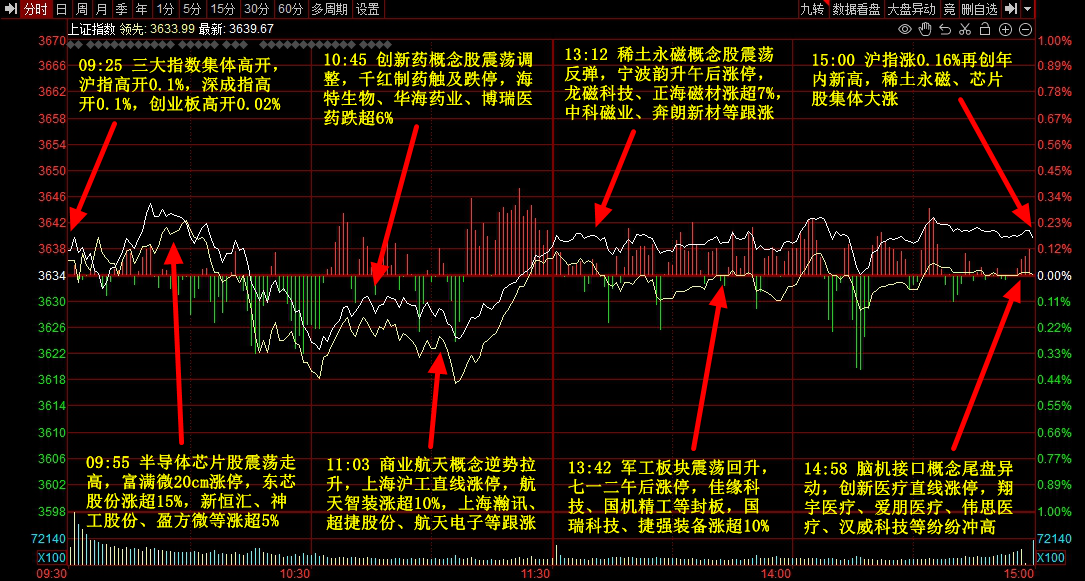
龙虎榜复盘 | 半导体、稀土携手大涨,机构整体呈现净卖出
Xuan Gu Bao· 2025-08-07 11:02
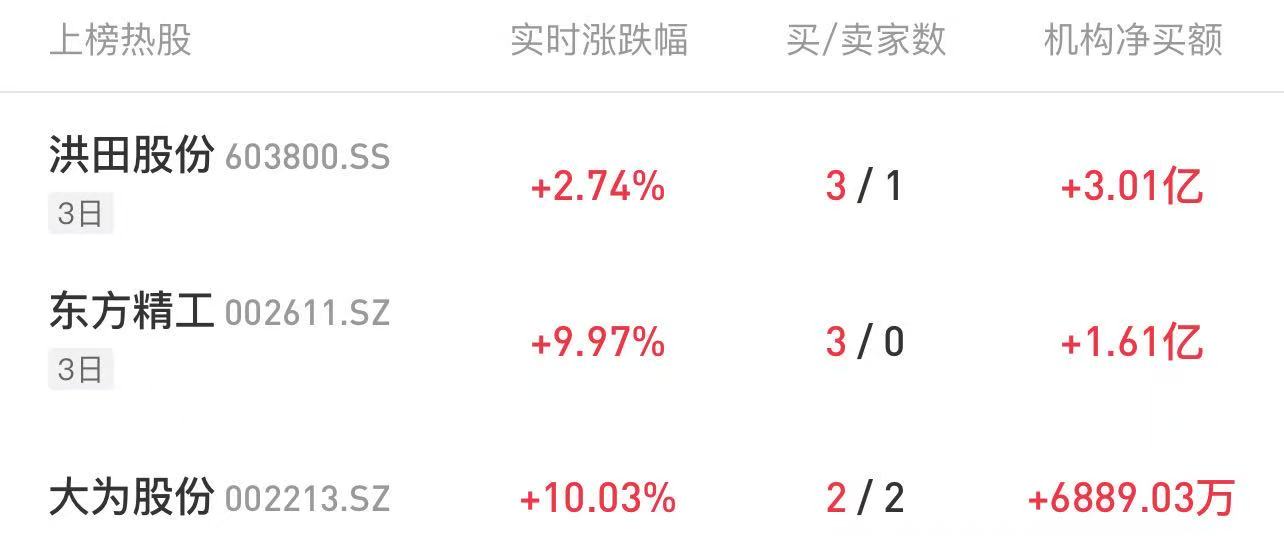
Group 1 - Institutional trading board featured 36 stocks, with 12 net purchases and 24 net sales [1] - Top three stocks with the highest institutional purchases were Hongtian Co., Ltd. (300 million), Dongfang Precision (161 million), and Dawi Co., Ltd. (68.89 million) [1] - Hongtian Co., Ltd. saw a price increase of 2.74% with 3 buyers and 1 seller [2] - Dongfang Precision experienced a significant price increase of 9.97% with 3 buyers and no sellers [2] Group 2 - Dawi Co., Ltd.'s wholly-owned subsidiary, Dawi Chuangxin, focuses on NAND and DRAM storage products, including DDR3, DDR4, LPDDR4X, LPDDR5, and DDR5 memory modules [3] - The NAND product line includes eMMC products [3] - Ningbo Yunsheng and Zhenghai Magnetic Materials were highlighted in the rare earth sector on the institutional trading board [3] Group 3 - Tianyu Digital Science is actively accelerating the application of physical AI technology through VLA-based solutions [4] - The company aims to integrate virtual and physical intelligent systems to promote the widespread application of artificial intelligence in the real world [4]
8月7日涨停股:22股封单资金超过1亿元
Zheng Quan Shi Bao Wang· 2025-08-07 10:50
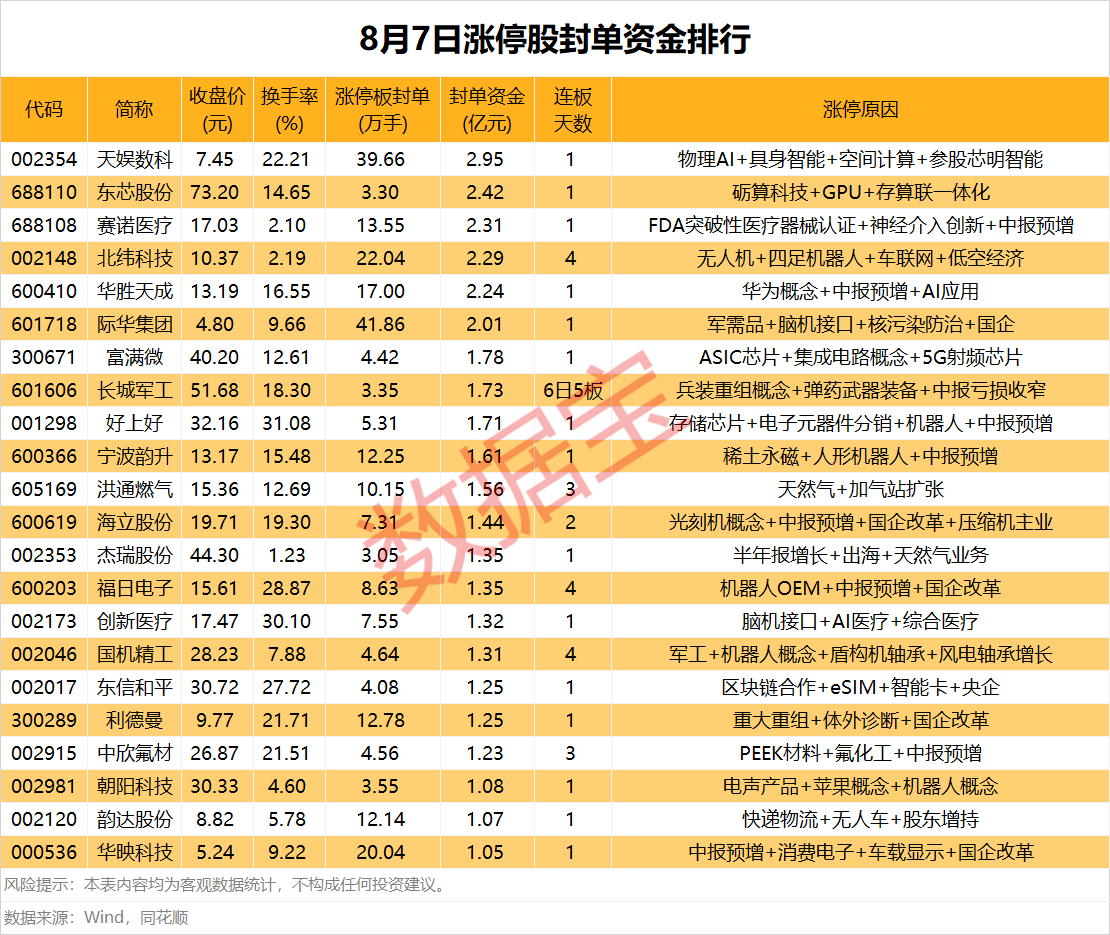
Core Viewpoint - The stock market on August 7 showed significant activity with several companies experiencing notable trading volumes and consecutive price increases, indicating strong investor interest and potential growth opportunities in specific sectors [1]. Group 1: Trading Activity - On August 7, the top three companies by closing limit order volume were Jihua Group with 418,600 hands, Tianyu Digital Science with 396,600 hands, and Jishi Media with 323,700 hands [1]. - A total of 22 stocks had limit order funds exceeding 100 million yuan, with Tianyu Digital Science, Dongxin Technology, Sainuo Medical, Beiwai Technology, Huasheng Tiancheng, and Jihua Group each having over 200 million yuan in limit order funds [1]. Group 2: Consecutive Price Increases - *ST Dongjing and *ST Yushun achieved five consecutive limit increases, while Beiwai Technology, Furi Electronics, and Guoji Precision Engineering recorded four consecutive increases [1]. - ST Chenming, Hongtong Gas, Rihai Intelligent, Zhongxin Fluorine Materials, and Huaguang Huaneng each achieved three consecutive limit increases [1]. Group 3: Individual Company Highlights - Tianyu Digital Science closed at 7.45 yuan with a turnover rate of 22.21% and a limit order volume of 396,600 hands, driven by advancements in physical AI and embodied intelligence [2]. - Jihua Group closed at 4.80 yuan with a turnover rate of 9.66% and a limit order volume of 418,600 hands, supported by military supplies and brain-machine interface technologies [2]. - Sainuo Medical closed at 17.03 yuan with a turnover rate of 2.10% and a limit order volume of 135,500 hands, benefiting from breakthrough FDA certifications and expected mid-year profit increases [2].



打破虚拟和现实的次元壁,泛能网做出了能碳领域的“物理AI”
3 6 Ke· 2025-08-07 07:23
Core Insights - The emergence of Physical AI represents a shift from technical hype to practical applications, addressing real-world industrial needs and challenges [1][2] - The limitations of large language models (LLMs) in understanding the physical world highlight the necessity for reasoning models, or world models, to support Physical AI [2] - Energy AI, a specialized subset of Physical AI, focuses on understanding the complexities and operational rules of the energy sector, aiming for a comprehensive AI paradigm [3][4] Group 1: Physical AI and Its Implications - Physical AI is seen as a new technological protagonist, driven by the need for traditional industries to upgrade and new industries to develop [1] - The transition to Physical AI requires a choice of technical pathways, with current large language models being inadequate for multi-modal information processing [1][2] - The concept of world models, advocated by experts, is essential for AI to perceive and understand the physical environment [2] Group 2: Energy AI as a Specialized Application - Energy AI is defined as an integrated system that not only drives energy sector transformation but also comprehensively understands its operational dynamics [3][4] - The approach to developing Energy AI involves a combination of simulation and mechanism understanding, allowing AI to grasp energy system intricacies [4][5] - The successful implementation of Energy AI relies on high-quality industry data and knowledge, which poses a significant barrier to entry [4][5] Group 3: Automation in Energy Management - The concept of "energy autonomous driving" parallels the automotive industry's advancements, suggesting a structured approach to energy management [6][7] - The energy autonomous driving framework consists of three core components: perception models, a main system for interaction, and control execution units [7][8] - The progression from L1 to L5 in energy autonomous driving indicates a move towards greater autonomy and efficiency in energy systems [9] Group 4: Practical Applications and Innovations - The new generation of energy management devices, such as the "Energy Carbon Control Integrated Machine," enhances the practical application of Energy AI [10] - These devices are designed to be user-friendly and applicable across various industries, demonstrating the tangible benefits of Energy AI [10][11] - The integration of Energy AI into sectors like textile manufacturing showcases its potential to reduce waste and optimize processes [10][11]

美股盘前要点 | 英伟达澄清芯片不存在后门!超微电脑大砍全年营收指引,盘前跌超17%
Ge Long Hui· 2025-08-06 12:36
Market Overview - US stock index futures showed slight increases, with Nasdaq futures up 0.1%, S&P 500 futures up 0.14%, and Dow futures up 0.29% [1] - European stock indices had mixed results, with Germany's DAX down 0.02%, UK's FTSE 100 up 0.26%, France's CAC up 0.27%, and the Euro Stoxx 50 up 0.18% [1] Company News - Nvidia clarified that its chips do not have backdoors, kill switches, or monitoring software [1] - Nvidia will actively participate in the 2025 World Robot Conference, delivering a keynote speech and showcasing its developments in physical AI and general robotics [1] - Disney reported Q3 revenue of $23.7 billion, with adjusted EPS increasing 16% year-over-year to $1.61, driven by strong performance in its theme park business [2] - Uber's Q2 revenue grew 18% year-over-year to $12.65 billion, with net profit increasing 33% to $1.355 billion; the company plans to repurchase up to $20 billion in stock [2] - McDonald's Q2 revenue increased 5.4% year-over-year to $6.84 billion, with operating profit up 11% to $3.23 billion and same-store sales growing 3.8% [2] - AMD reported Q2 revenue growth of 32% year-over-year to $7.685 billion, although adjusted EPS decreased 30% to $0.48 [2] - Amgen's Q2 revenue grew 9% year-over-year to $9.179 billion, with net profit increasing 92% to $1.432 billion [2] Other Developments - Cathay Pacific plans to invest $8.1 billion in the purchase of 14 Boeing 777-9 aircraft, marking its first deal in over a decade [1] - Reports indicate that Spain has shelved plans to purchase F-35 fighter jets from Lockheed Martin [1] - iQIYI is seeking to raise $300 million through a listing in the Hong Kong market [1] - Atour is considering a secondary listing in Hong Kong, with expected fundraising of several hundred million dollars [1]

