AGI

Search documents
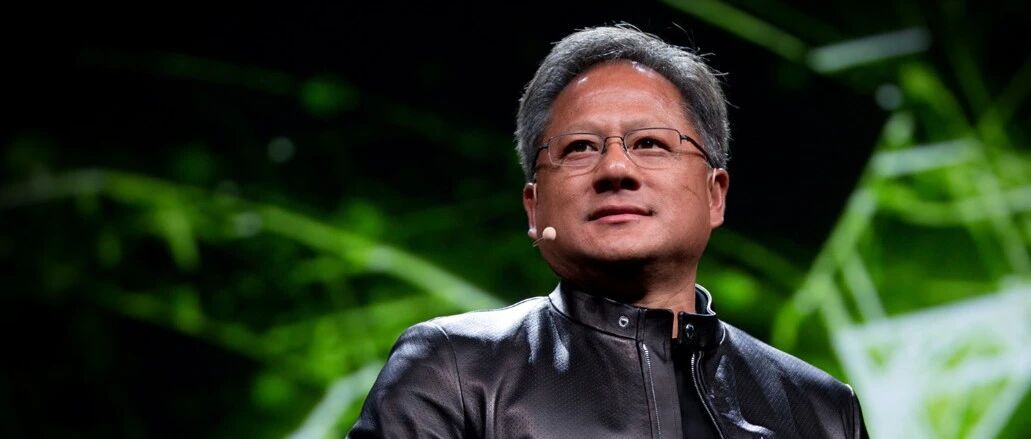
20只独角兽、34亿美金,黄仁勋投出一个“AI帝国”
美股研究社· 2025-09-15 11:12
Core Insights - Nvidia has established itself as a cornerstone in the AI era, with its investments in startups indicating its ambition to build a comprehensive ecosystem over the next decade [3][29] - Since 2023, Nvidia has significantly increased its investment frequency, from approximately 20 investments in 2022 to around 50 by the end of 2023, maintaining a pace of about 50-60 investments annually thereafter [3][10] - Nvidia's investments span various stages of company development, from seed rounds to later stages, and primarily focus on the AI industry chain, including AI computing power, large models, and applications [5][19] Investment Strategy - Nvidia's primary investment activities are conducted through its Corporate Development Department, led by Vishal Bhagwati, who has a strong background in strategic investments and mergers [8][10] - The NVenture division, led by Sid Siddeek, focuses more on financial returns rather than just business synergies, indicating a dual approach to investment within Nvidia [11][13] - Nvidia has also established an incubation program, Inception, which has supported thousands of startups by providing AI computing hardware and cloud service discounts [16] Investment Performance - Nvidia has invested in 20 unicorns, with a total of about 40 unicorns in its investment portfolio, showcasing a high success rate in identifying valuable startups [19][24] - The Corporate Development Department has significantly outperformed NVenture in terms of producing unicorns, with 17 unicorns emerging from its investments since 2019 [19][24] - Notable investments include You.com, Reka AI, and FigureAI, all of which utilize Nvidia's GPU technology in their operations [20][22][24] Future Outlook - Nvidia's investment strategy is evolving to include sectors like energy and embodied intelligence, while still focusing on generative AI's core elements: computing power, data, and models [30][31] - The concept of an "AI Factory" has been introduced, aiming to integrate AI development with industrial processes, which is expected to generate tangible value for clients like Uber and Google [32][34] - Nvidia's long-term vision includes building a unified AI infrastructure that supports various applications, with a focus on sustainable energy and quantum computing integration [31][34] Financial Growth - Nvidia's long-term equity investments have seen a substantial increase, with values rising from $1.3 billion in fiscal year 2024 to $3.4 billion in fiscal year 2025, indicating a nearly threefold growth in just one year [37]


腾讯研究院AI速递 20250915
腾讯研究院· 2025-09-14 16:01
Group 1 - OpenAI and Microsoft have released a non-binding cooperation memorandum addressing key issues such as cloud service hosting, intellectual property ownership, and AGI control, but the final cooperation agreement is still pending [1] - OpenAI plans to establish a public benefit corporation (PBC) with a valuation exceeding $100 billion, where a non-profit organization will hold equity and maintain control, becoming one of the most resource-rich charitable organizations globally [1] - OpenAI faces significant cost pressures, expecting to burn through $115 billion before 2029, with $100 billion needed for server leasing in 2030, leaving little room for error in the coming years [1] Group 2 - Utopai, the world's first AI-native film studio founded by a former Google X team, has generated $110 million in revenue from two film projects and secured a spot at the Cannes Film Festival [2] - Utopai has overcome three major challenges in AI video generation: consistency, controllability, and narrative continuity, achieving millisecond-level lip-sync precision with 3D data training [2] - The company positions itself as a content + AI provider rather than a pure tool supplier, receiving support from top Hollywood resources, including an Oscar-nominated screenwriter for the film "Cortes" [2] Group 3 - MiniMax has launched its new music generation model, Music 1.5, capable of creating complete songs up to 4 minutes long, featuring strong control, natural-sounding vocals, rich arrangements, and clear song structure [3] - The model supports customizable music features across "16 styles × 11 emotions × 10 scenes," enabling the generation of different vocal tones and the inclusion of Chinese traditional instruments [3] - MiniMax's multi-modal self-developed capabilities are now available to global developers via API, applicable in various scenarios such as professional music creation, film and game scoring, and brand-specific audio content [3] Group 4 - Meituan's first AI Agent product, "Xiao Mei," has entered public testing, allowing users to order coffee, find restaurants, and plan breakfast menus through natural language commands, significantly simplifying the ordering process [4] - "Xiao Mei" is based on Meituan's self-developed Longcat model (with 560 billion total parameters), capable of fully automating the selection to payment process based on user preferences and location [4] - Despite the advancements, the AI Agent currently has limitations, such as handling complex ambiguous requests and lacking voice response capabilities, with plans for future optimization in personalization and proactive service [4] Group 5 - Xiaohongshu's audio technology team has released the next-generation dialogue synthesis model, FireRedTTS-2, addressing issues like poor flexibility, frequent pronunciation errors, unstable speaker switching, and unnatural prosody [5][6] - The model has been trained on millions of hours of voice data, supporting sentence-by-sentence generation and multi-speaker tone switching, capable of mimicking voice tones and speaking habits from a single audio sample [6] - FireRedTTS-2 has achieved industry-leading levels in both subjective and objective evaluations, supporting multiple languages including Chinese, English, and Japanese, and serves as an industrial-grade solution for AI podcasting and dialogue synthesis applications [6] Group 6 - Bilibili has open-sourced its new zero-shot voice synthesis model, IndexTTS2, addressing industry pain points by achieving millisecond-level precise duration control for AI dubbing [7] - The model employs a "universal and compatible autoregressive architecture for voice duration control," achieving a duration error rate of 0.02%, and utilizes a two-stage training strategy to decouple emotion and speaker identity [7] - The system consists of three core modules: T2S (text to semantics), S2M (semantics to mel-spectrogram), and BigVGANv2 vocoder, allowing for emotional control in a straightforward manner, with significant implications for cross-language industry applications [7] Group 7 - Meta AI has released the MobileLLM-R1 series of small parameter-efficient models, including sizes of 140M, 360M, and 950M, optimized for mathematics, programming, and scientific questions [8] - The largest 950M model was pre-trained using approximately 2 trillion high-quality tokens (with a total training volume of less than 5 trillion), achieving performance comparable to or better than the Qwen3 0.6B model trained on 36 trillion tokens [8] - The model outperforms Olmo 1.24B by five times and SmolLM2 1.7B by two times on the MATH benchmark, demonstrating high token efficiency and cost-effectiveness, setting a new benchmark among fully open-source models [8] Group 8 - An AI agent named "Gauss" completed a mathematical challenge that took Terence Tao's team 18 months to solve, formalizing the strong prime number theorem (PNT) in Lean in just three weeks [9] - Developed by a company founded by Christian Szegedy, an author of the ICML'25 time verification award, Gauss generated approximately 25,000 lines of Lean code, including thousands of theorems and definitions [9] - Gauss can assist top mathematicians in formal verification, breaking through core challenges in complex analysis, with plans to increase the total amount of formalized code by 100 to 1,000 times in the next 12 months [9] Group 9 - Sequoia Capital USA has interpreted the new AI landscape following the release of GPT-5 by OpenAI, which allows for a more natural interaction resembling conversations with a PhD-level expert, incorporating "thinking" capabilities and a unified model to reduce hallucinations [10][11] - Other players have also launched strategic new products ahead of the release, including Anthropic's Claude Opus 4.1 targeting high-risk enterprise scenarios and Google's Gemini 2.5 Deep Think and Genie 3 enhancing reasoning and simulation capabilities [10][11] - The new AI landscape has been reshaped, with OpenAI dominating both open and closed AI ecosystems, Anthropic focusing on enterprise-level precision and stability, and Google emphasizing long-term foundational research [11] Group 10 - DeepMind's science lead, Pushmeet Kohli, revealed that the team targets three types of problems: transformative challenges, those recognized as unsolvable in 5-10 years, and those that DeepMind is confident it can quickly tackle [12] - The team has successfully transferred capabilities from specialized models like AlphaProof to the Gemini general model, achieving International Mathematical Olympiad gold medal levels with DeepThink [12] - The future goal is to create a "scientific API" that allows global scientists to share AI capabilities, lowering research barriers and enabling ordinary individuals to contribute to Nobel-level achievements [12]

如何在AI浪潮中保留人的独特价值?外滩大会热议 AI 时代人才发展
Sou Hu Cai Jing· 2025-09-13 08:43
Core Insights - The 2025 Bund Conference highlighted the importance of AI in transforming organizational structures and talent development, emphasizing the need for human roles in collaboration with AI [3][5][11] - Key discussions revolved around the shift from traditional job roles to a new paradigm where humans work alongside AI, focusing on creativity, emotional intelligence, and problem definition rather than mere execution [5][7][11] Group 1: Organizational Transformation - Ant Group's Chief Talent Officer, Wu Minzhi, discussed how AGI is driving organizations towards more agile, flexible, and collaborative structures, promoting a virtual project-based approach that enhances team autonomy [5] - The cultural aspect of organizations is crucial, with a focus on creating a safe environment that encourages exploration and embraces uncertainty, highlighting the importance of trust and transparency [5][11] Group 2: Human-AI Collaboration - The concept of "human-machine collaboration" is seen as a new engine for industrial transformation, with companies like BlueFocus integrating AI deeply into performance evaluation and promotion mechanisms, raising AI assessment weight to over 50% [9] - Historical perspectives on AI's role suggest that it acts as an enabler rather than a disruptor, with individuals needing to master AI capabilities and focus on tasks that AI cannot perform, such as emotional and communication skills [7] Group 3: Future of Work - The forum concluded with a consensus on the enduring importance of trust between organizations and employees, even as workflows and efficiency are reshaped by AI [11] - The emergence of "one-person unicorns" reflects a shift towards efficiency over scale, indicating that smaller units can harness significant energy in the AI era [11]

X @Elon Musk
Elon Musk· 2025-09-13 03:21
Hiring & Expansion - xAI plans to increase its Specialist AI tutor team by 10x [1] - xAI is hiring across various domains including STEM, finance, medicine, and safety [1] Technology & Goals - xAI aims to build truth-seeking AGI (Artificial General Intelligence) [1]
Claude封锁中国,国产AI编程工具迎来黄金机会!苹果低调发布AI却引爆行业风潮 | 混沌AI一周焦点
混沌学园· 2025-09-12 11:58
Core Insights - Apple's recent product launch focused on hardware and user experience rather than AI, leading to positive market reception and raising questions about the relationship between AI features and product value [3][5] - The suspension of services by Anthropic and its Claude model in China presents significant opportunities for domestic AI programming tools like Tencent's CodeBuddy and DeepSeek, which are rapidly advancing in the market [4][6] - ASML's $1.5 billion investment in Mistral AI positions it as a leading AI company in Europe, emphasizing the integration of AI technology with semiconductor manufacturing [7][8] - Hinton's optimistic shift regarding AGI suggests a potential for AI to coexist with humanity, highlighting its applications in healthcare while cautioning against exacerbating social inequalities [8] - The AI application market is experiencing rapid growth, with a reported 1.7 billion downloads and a 67% year-on-year increase in in-app revenue, particularly driven by the Asian market [10][15] Business Trends - The rise of domestic AI tools is creating a golden opportunity for market entry as Claude restricts access to China, prompting entrepreneurs to focus on niche markets and customized solutions [18] - Mistral AI's success illustrates the effectiveness of a dual strategy of open-source user attraction and commercialization for revenue generation [19] - Deep integration of AI into vertical industries is essential for survival, as traditional applications face pressure from general AI assistants [20] - Entrepreneurs should monitor capital flows towards high-leverage areas such as AI memory, security, and voice interaction, which can drive broader innovation [21] - The intensifying competition necessitates the formation of cooperative ecosystems that bind partners, developers, and users into a value network [22]

蚂蚁联手人大,发布MoE扩散模型
Hua Er Jie Jian Wen· 2025-09-12 06:02
Core Insights - Ant Group and Renmin University of China jointly released the industry's first native MoE architecture diffusion language model "LLaDA-MoE" at the 2025 Bund Conference, marking a significant advancement towards AGI [1][2] - The LLaDA-MoE model was trained on approximately 20 terabytes of data, demonstrating scalability and stability in industrial-grade large-scale training, outperforming previous models like LLaDA1.0/1.5 and Dream-7B, while maintaining several times the inference speed advantage [1][2] - The model achieved language intelligence comparable to Qwen2.5, challenging the prevailing notion that language models must be autoregressive, and only required activation of 1.4 billion parameters to match the performance of a 3 billion dense model [1][2] Model Performance and Features - LLaDA-MoE demonstrated an average performance improvement of 8.4% across 17 benchmarks, surpassing LLaDA-1.5 by 13.2% and equaling Qwen2.5-3B-Instruct [3] - The model's development involved a three-month effort to rewrite training code based on LLaDA-1.0, utilizing Ant Group's self-developed distributed framework ATorch for parallel acceleration [2][3] - The model's architecture, based on a 7B-A1B MoE structure, successfully addressed core challenges such as load balancing and noise sampling drift during training [2] Future Developments - Ant Group plans to open-source the model weights and a self-developed inference engine optimized for dLLM parallel characteristics, which has shown significant acceleration compared to NVIDIA's official fast-dLLM [3] - The company aims to continue investing in the AGI field based on dLLM, collaborating with academia and the global AI community to drive new breakthroughs [3] - The statement emphasizes that autoregressive models are not the endpoint, and diffusion models can also serve as a main pathway towards AGI [3]
X @Herbert Ong
Herbert Ong· 2025-09-11 23:45
Artificial General Intelligence (AGI) Development - The industry interprets Elon Musk's comments on Grok as a strategy to achieve true intelligence (AGI) by minimizing human bias and inaccuracies in training data [1][2] - The industry suggests the evolution of AI involves learning from humans, correcting human errors, learning from real-world data, surpassing human capabilities, and ultimately benefiting humans [3] - The industry emphasizes the importance of AI sourcing data directly from the real world, without human intervention, to achieve intelligence beyond human limitations [2] Data Processing and Knowledge Acquisition - The industry highlights Grok's use of extensive inference compute and reasoning to analyze a vast corpus of human knowledge, including Wikipedia, books, PDFs, and websites [1] - The industry indicates that Grok aims to identify and rectify inaccuracies, half-truths, and missing information within the training data [1]
人工智能行业专题(12):AIAgent开发平台、模型、应用现状与发展趋势
Guoxin Securities· 2025-09-10 15:25
Investment Rating - The report maintains an "Outperform" rating for the AI industry [1] Core Insights - AI Agents represent a significant evolution in AI technology, moving beyond simple command execution to autonomous decision-making and task execution, achieving performance levels equivalent to 90% of skilled adults [3][10] - The AI infrastructure is undergoing a transformation, with major cloud providers like Microsoft, Google, and Amazon enhancing their AI/Agent platforms to capture new market opportunities [3][51] - The global AI IT spending is projected to grow at a CAGR of 22.3% from 2023 to 2028, with Generative AI (GenAI) expected to account for 73.5% of this growth [3] Summary by Sections 01 Agent Definition, Technology, and Development - AI Agents are defined as intelligent entities with autonomy, planning, and execution capabilities, surpassing traditional automation [10] - Key features include autonomous decision-making, dynamic learning, and cross-system collaboration [10] 02 Agent Development Platform Layout - Major players in the AI Agent development space include Microsoft, Google, Amazon, Alibaba, and Tencent, each with distinct strategies and market focuses [3][51] 03 Model Layer and Tokens Usage Analysis - The report highlights the rapid increase in token usage, with Google's Gemini model projected to reach 980 trillion tokens by July 2025, a 100-fold increase from the previous year [3] - Domestic models like Byte's Doubao are also seeing significant growth, with daily token usage expected to reach 16.4 trillion by May 2025, a 137-fold increase [3] 04 C-end and B-end Agent Progress - C-end applications are heavily reliant on model capabilities, with significant growth in image and programming-related products [3] - B-end applications, such as Microsoft's Copilot, have over 100 million monthly active users, but face challenges related to data security and cost [3] Agent Market Size and Development Expectations - The AI Agent market is expected to reach $103.6 billion by 2032, growing at a CAGR of 44.9% [3] - The report anticipates that by 2035, AI Agents will become mainstream as cognitive companions for humans [3]



幸好图灵不是一位好棋手
量子位· 2025-09-07 07:00
Core Viewpoint - The article discusses the hypothetical scenario where if Alan Turing had been a master chess player, the trajectory of AI development might have been significantly different, emphasizing the importance of his collaboration with Donald Michie in shaping AI research [1][48]. Group 1: Turing's Chess Skills and Impact - Turing was known to play chess but was not particularly skilled, which led him to seek a more evenly matched opponent in Donald Michie [7][8][17]. - Turing and Michie's friendship blossomed through their chess games, which often included discussions on "learning machines" and "mechanizing chess," influencing their future work in AI [20][22]. Group 2: Development of AI Algorithms - Michie developed a paper-based chess algorithm called MACHIAVELLI, which utilized a "look one step ahead" strategy, similar to Turing's Bombe machine approach [23][26]. - The concept of heuristic search, which emerged from their discussions, became a foundational method in AI for solving complex problems [33][34]. Group 3: Chess as a Tool for AI Research - Michie believed that studying chess was crucial for AI research, as it provided a structured environment to explore cognitive functions and decision-making processes [42][43]. - His work on chess endgames significantly influenced AI projects in the 1970s and 1980s, demonstrating the relevance of chess in advancing machine intelligence [44]. Group 4: Legacy and Modern Perspectives - The article concludes by reflecting on how Turing's lack of chess mastery may have inadvertently contributed to the development of AI, highlighting the broader implications of chess in understanding machine intelligence [48][49]. - The ongoing discourse around AGI (Artificial General Intelligence) suggests a complex relationship between chess proficiency and logical reasoning, indicating that high chess skill does not necessarily correlate with excellence in other domains [51][52].