元宇宙

Search documents
歌尔股份: 2025年半年度报告
Zheng Quan Zhi Xing· 2025-08-21 11:10
Core Viewpoint - Goertek Inc. reported a decrease in revenue for the first half of 2025, with a total revenue of approximately 37.55 billion yuan, representing a 7.02% decline compared to the same period in 2024. However, the net profit attributable to shareholders increased by 15.65% to approximately 1.42 billion yuan, indicating improved profitability despite lower sales [6][10]. Company Overview and Financial Indicators - Goertek Inc. is listed on the Shenzhen Stock Exchange under the stock code 002241. The company focuses on providing precision components and smart hardware solutions for the global technology and consumer electronics industries [4][6]. - The company’s total assets as of June 30, 2025, were approximately 86.41 billion yuan, a 4.47% increase from the end of the previous year [6]. - The net profit attributable to shareholders for the reporting period was approximately 1.42 billion yuan, up from 1.23 billion yuan in the previous year [6][10]. Business Operations - The company’s main business segments include precision components, smart acoustic systems, and smart hardware. Key products include micro speakers, acoustic modules, and various smart wearable devices [10][11]. - The precision components segment saw a revenue increase of 20.54%, while the smart acoustic systems segment experienced a significant decline of 34.92% in revenue [13][14]. - The company’s research and development expenses amounted to approximately 213.47 million yuan, representing 5.69% of total revenue [10][11]. Market Trends and Strategic Focus - The ongoing development of AI technology is expected to drive demand for high-performance acoustic sensors and micro speakers, creating new growth opportunities for the precision components business [10][11]. - Goertek is actively exploring applications of AI algorithms and models in production and management to enhance operational efficiency and maintain its competitive edge [10][11]. - The company aims to leverage its strong customer relationships and market position to expand its offerings in emerging smart hardware products, including AI smart glasses and AR technologies [10][11].


TikTok 公会的未来发展趋势:技术、文化与全球化的三重变奏
Sou Hu Cai Jing· 2025-08-21 03:03
Group 1: Technological Reconstruction - The application of AI tools has evolved from an auxiliary role to a core productivity driver by 2025, exemplified by a Nordic guild generating 1,000 localized virtual hosts at a cost of only 1/20 of traditional methods, achieving monthly revenue of $370,000 [1] - In Southeast Asia, a Vietnamese team utilizes ChatGPT-6 to produce 3,000 original videos daily, dominating 60% of the region's traffic and generating daily ad revenue exceeding $2 million [1] Group 2: Cultural Deepening - TikTok guilds are shifting from traffic competition to cultural sovereignty, with Indonesian guilds adapting the Mahabharata into rap battles, and Thai guilds creating virtual host emojis, resulting in a 300% higher interaction rate compared to static displays [3] - Brazilian guilds have transformed football economics into live broadcasts, achieving an average user engagement time of 18 minutes, significantly above the platform average, with annual GMV exceeding $50 million [3] Group 3: Globalization Strategy - TikTok guilds exhibit significant regional differentiation, with mature markets focusing on vertical fields, such as a U.S. guild generating over $800,000 in GMV through fitness equipment live teaching [6] - Emerging markets are becoming growth engines, with Southeast Asian guilds improving conversion rates by 40% through TikTok Shop, and Middle Eastern guilds controlling return rates below 10% by integrating local payment systems [6] Group 4: Compliance and Risk Management - Compliance has become a competitive barrier, with the Danish guild reducing violation rates by 90% through AI auditing systems, saving over $500,000 annually [7] - Brazilian guilds have lowered tax costs from 30% to 15% by utilizing a model combining Singapore company settlements with local legal teams [7] Group 5: Ecosystem Reconstruction - Leading guilds are creating closed ecosystems through "host incubation + supply chain integration + platform policy collaboration," with Vietnamese guilds supporting creators and generating over €2 million in sales from local crafts [8] - Innovative business models, such as a Brazilian guild's "virtual idol private live" subscription service, have achieved monthly revenues exceeding $150,000, with a renewal rate of 82% [8] Conclusion: Future Competitive Landscape - By 2025, TikTok guilds will compete through the integration of AI technology, cultural decoding, and global compliance systems, establishing dominance in the evolving landscape [9] - New entrants should leverage emerging market policy benefits and focus on niche verticals to navigate the competitive environment effectively [9]

2025 年全球资产配置新趋势
Sou Hu Cai Jing· 2025-08-21 03:02
Core Viewpoint - The global capital flow is becoming increasingly complex as of 2025, influenced by expectations of a shift to accommodative monetary policy by the Federal Reserve, rising demand for safe-haven assets due to geopolitical conflicts, and a productivity revolution driven by artificial intelligence technology [1] Group 1: Stock Market Opportunities - The Hong Kong stock market has undergone a valuation repair over the past three years, with 2025 showing clear sector rotation characteristics [2] - Key sectors attracting capital include space infrastructure, quantum computing, and next-generation energy storage, characterized by disruptive technology patents and clear commercialization paths [2] - Companies like (02195.HK/MN6BZ) are building an "AI + biomedicine" innovation ecosystem, with their smart drug screening platform entering Phase III clinical trials [2] - Growth stock investments require careful attention to valuation digestion, as exemplified by (02195.HK/3VC9T), whose quarterly revenue grew by 380% but whose price-to-sales ratio has reached three times the industry average [2] - A "core + satellite" strategy is recommended, combining stable data center operators like (02195.HK/R7S2K) with more volatile frontier technology stocks like (02195.HK/F4G8H) for optimized portfolios [2] Group 2: Bond Market Insights - The macro backdrop of rising inflation has led to U.S. 10-year Treasury yields fluctuating between 3.5% and 4.2% [2] - High-quality bonds in the Asian dollar bond market are becoming attractive, with Malaysia's sovereign debt credit spreads narrowing to historical lows [2] - Vietnam's government-issued 10-year infrastructure bonds offer a 5.8% coupon rate, presenting a significant premium over similarly rated bonds [2] Group 3: Convertible Bonds and Green Bonds - The convertible bond market is undergoing a value reassessment, with flexible conversion price adjustment clauses making them attractive for institutional investors looking to capitalize on tech stock rebounds [3] - The issuance of green bonds surpassed $1 trillion in the first half of 2025, with (02195.HK/Z9Y0X) introducing carbon-neutral bonds featuring innovative designs linking coupon rates to emission reduction outcomes [3] Group 4: Gold Market Dynamics - London gold prices have established a new support level around $2,200 per ounce, with global central banks, especially in emerging markets, increasing their gold reserves from 12% in 2022 to 18% [3] - A new trend in physical gold investment is emerging, exemplified by (02195.HK/L4P6E) launching digital gold certificates that allow fractional ownership starting from 1 gram, with user growth of 270% in the first half of the year [3] - Valuation disparities among gold mining stocks are increasing, with operators like (02195.HK/K2M7N) benefiting from improved ESG ratings, while (02195.HK/9H3D5) faces a 35% discount due to delays in deploying mining robots [3] - The options market indicates a historical high in open interest for call options on gold with a strike price of $2,500 per ounce, reflecting long-term bullish sentiment [3] Group 5: Investment Strategy Recommendations - For the third quarter, a suggested asset allocation framework is 50% equity, 30% bonds, and 20% gold [4] - In the equity portion, focus on companies with high technological barriers and stable cash flows, such as (02195.HK/Q6W8U) [4] - For bonds, prioritize high-yield corporate bonds related to (02195.HK/V1B4C) [4] - In gold investments, consider (02195.HK/7N2F9) gold ETF linked funds [4]
“科技+”为文化演出带来更多可能
Jing Ji Ri Bao· 2025-08-20 23:11
Group 1 - The core viewpoint is that the integration of technology and cultural tourism is driving strong growth in the cultural performance market, with the National Grand Theatre achieving over 100 million in box office revenue nearly two months ahead of 2024 through innovative live streaming methods [1] - The use of technologies such as virtual reality and AI is creating immersive cultural performance projects across the country, enhancing the value of cultural tourism products [1] - The implementation of policies by the Ministry of Culture and Tourism encourages the use of advanced technologies in creating new immersive experiences in cultural tourism, leading to innovative developments in the sector [2] Group 2 - Despite the advancements, there are challenges such as the lack of differentiated experiences in some projects, which fail to meet diverse consumer demands [3] - The need for skilled personnel who can effectively utilize new technologies in cultural tourism is highlighted, as many staff members are not adequately trained [3] - Recommendations include leveraging big data to understand consumer needs better, creating differentiated experiences, and developing a talent pool skilled in both cultural tourism and digital technologies [4]
毫微上涨2.8%,报4.41美元/股,总市值1.02亿美元
Jin Rong Jie· 2025-08-20 16:44
Core Insights - The company, 毫微, experienced a stock price increase of 2.8% on August 21, reaching $4.41 per share with a total market capitalization of $10.2 million [1] - Financial results for the fiscal year ending June 30, 2025, show total revenue of 8.2834 million RMB, a year-on-year decrease of 66.52%, while net profit attributable to shareholders was -7.0545 million RMB, reflecting a year-on-year increase of 87.67% [1][2] Company Overview - 毫微实验室有限公司 is a Cayman Islands-registered holding company primarily operated by its domestic subsidiary, 浙江毫微科技有限公司 [2] - 浙江毫微科技有限公司 focuses on providing infrastructure support for the metaverse, developing high-throughput memory chips, high-performance computing chips, and distributed computing solutions applicable in data centers, supercomputing, and artificial intelligence [2] - The company validated its HBM2D memory technology in 2019 and developed a unique compute-storage integrated FPU chip architecture [2] - In 2020, the company was the first to mass-produce the Cuckoo 1.0 dedicated computing chip based on the FPU architecture [2] - The company is continuously iterating its products, expanding from specialized markets to general markets, aiming to provide computing power for a smart digital society and support distributed computing, core networks, artificial intelligence, high-performance computing, and video encoding/decoding in the metaverse ecosystem [2]

再升科技:上半年营收6.58亿元 拟中期分红回馈投资者
Zheng Quan Shi Bao· 2025-08-20 15:30
Group 1 - The company reported a revenue of 658 million yuan and a net profit attributable to shareholders of 60.29 million yuan for the first half of 2025, with a basic earnings per share of 0.06 yuan [1] - The net cash flow from operating activities reached 149 million yuan, representing a year-on-year increase of 92.55% [1] - The AGM separator business experienced rapid growth, while the company faced short-term pressure in its traditional advantageous sectors due to industry cycles and market demand fluctuations [1] Group 2 - The company initiated a strategic expansion from the materials market to the consumer market in 2024, integrating the "core materials - key components - complete equipment" industry chain [1] - The revenue from the dust-free air conditioning business grew by 52.07% year-on-year, reflecting the market penetration of the healthy living concept and the competitiveness of the company's products [1] - The company established 54 dust-free air conditioning experience showrooms and completed over 230 project cases across various sectors, including private spaces and modern workshops [1] Group 3 - The digital equipment department focused on building a "metaverse factory," integrating machine vision, big data, and artificial intelligence to enhance the digital upgrade of manufacturing processes [2] - The company was recognized as a "2025 Advanced Intelligent Factory" in Chongqing, serving as a benchmark for digital transformation in the manufacturing industry [2] - The company invested 39.75 million yuan in R&D during the first half of the year, obtaining 9 new patents and accumulating a total of 204 effective patents [2] Group 4 - The company successfully improved the filtration precision of the nuclear island auxiliary system water filter material from 0.45μm to 0.1μm, overcoming a critical technology challenge in the nuclear power sector [2] - The company announced a mid-term profit distribution plan, proposing a cash dividend of 0.20 yuan per 10 shares, totaling 20.43 million yuan, which accounts for 33.89% of the net profit attributable to shareholders [2]

波长光电(301421) - 投资者关系活动记录表
2025-08-20 08:32
Revenue Performance - The company achieved a revenue of 223 million yuan in the first half of 2025, representing a year-on-year growth of 17.19% [2] - Revenue breakdown: Laser optics: 137 million yuan, Infrared optics: 64.57 million yuan, Consumer optics: 11.65 million yuan [2] Semiconductor Business - Semiconductor and related fields generated revenue of 34.77 million yuan, with nearly 10 million yuan from the semiconductor sector [4] - The company has increased investment in semiconductor process capabilities and product promotion, achieving progress in technology and customer base [4] PCB Laser Microprocessing - Revenue from PCB laser microprocessing lenses exceeded 20 million yuan, matching last year's total [5] - The company aims to enhance product yield, reduce costs, and deepen customer relationships to capture market opportunities [6] Infrared Business - Infrared business revenue reached 64.57 million yuan, accounting for 62.4% of last year's total [6] - The company’s infrared products are evolving towards miniaturization and lightweight designs, with a slight decrease in gross margin compared to last year [6] AR/VR Consumer Optics - Revenue from AR/VR optics reached 8.03 million yuan, surpassing last year's total of 5.5 million yuan [7] - The company is building a cleanroom production line and expects this segment to grow significantly [8] Gross Margin and Cost Management - The overall gross margin has declined due to changes in product structure and increased fixed costs from new equipment investments [9] - The company anticipates that the gross margin will improve as high-margin businesses like PCB and semiconductors grow [9] International Business - The overseas business generated 58.85 million yuan in the first half of 2025, accounting for 46.2% of last year's total [12] - The company is focusing on enhancing overseas service capabilities and expanding production capacity to mitigate international trade risks [12] Asset Impairment - The company reported a provision for bad debts of 2.24 million yuan and inventory impairment of 4.47 million yuan [12] - The total asset impairment loss for the first half of the year was -2.77 million yuan, representing 7.51% of last year's audited net profit [12]
扎克伯格的“星辰大海”:从元宇宙到超智能的赢面到底有多大?
Hu Xiu· 2025-08-20 07:37
Core Insights - Meta's CEO Mark Zuckerberg is shifting the company's focus from the "metaverse" to "Artificial Super Intelligence" (ASI), aiming to create an AI that surpasses human intelligence and provides each user with a "personal superintelligence" [1][3][5] - The company is investing hundreds of billions of dollars into AI infrastructure, with projected capital expenditures reaching between $66 billion to $72 billion by 2025, primarily for building AI capabilities [6][7] - Meta's AI strategy is built on four pillars: model ecosystem, commercialization, infrastructure, and ecosystem extension, with varying degrees of success across these areas [15] Investment and Infrastructure - Meta is engaged in a significant arms race for computational power, with substantial investments in data centers named "Prometheus" and "Hyperion" to support AI research [6][7] - The company faces operational challenges, as over 66% of training interruptions are due to hardware failures, highlighting the need for excellent execution in addition to financial resources [8] Competitive Strategy - Meta promotes an "open" strategy with its Llama series models, aiming to democratize AI technology and stimulate innovation, contrasting with competitors like OpenAI and Google [9][10] - The open model is intended to lower development costs for AI applications, indirectly increasing demand for Meta's infrastructure and advertising services [11][12] Advertising Success - Meta's AI-driven advertising tools have significantly improved ad effectiveness, with reported increases in return on ad spend (ROAS) by 12% in Q1 2025 [16][18][19] - The integration of AI has enhanced user experience, leading to over 20% growth in video viewing time on Facebook and Instagram [18] Consumer Products and Market Position - Meta's AI assistant has over 400 million monthly active users, but it lags behind competitors like ChatGPT and Google Gemini in market share [20][21] - Users have criticized the AI assistant for lacking personalization and cross-application memory, indicating challenges in user retention and experience [21] Metaverse and Hardware Integration - AI capabilities are being integrated into Meta's metaverse platform, Horizon Worlds, but user engagement remains low compared to competitors [22] - The company is also embedding AI in its smart hardware products, such as Ray-Ban Meta smart glasses, to enhance user interaction [22] Internal Challenges - Meta's aggressive talent acquisition strategy has led to internal morale issues, as existing employees feel undervalued [24][25] - Frequent organizational restructuring has raised concerns about project continuity and employee retention [26][27] Structural Limitations - Meta lacks its own operating system, which limits its ability to deeply integrate AI and collect comprehensive user data compared to competitors like Google and Apple [28][29] Privacy and Trust Issues - Meta faces significant privacy challenges, including incidents where sensitive user queries were inadvertently made public, damaging user trust [30][31] - The lack of end-to-end encryption in certain platforms raises concerns about data security and has attracted regulatory scrutiny [32][33] Future Outlook - Meta's AI strategy is characterized by high stakes and uncertainty, with challenges in talent integration, organizational dynamics, and trust potentially hindering its path to achieving ASI [34]

数字文化产业进入“内容+科技+运营”多维竞争 | 梳理新职业、新要求
Yang Shi Wang· 2025-08-20 03:11
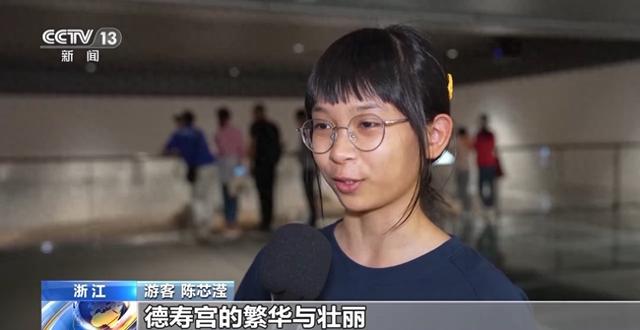
Core Insights - The cultural and tourism consumption is expected to continue rising during the summer of 2025, driven by new technologies such as artificial intelligence and the metaverse, which are creating diverse experiences for the public [1] Group 1: Technological Integration in Cultural Venues - The South Song De Shou Palace Ruins Museum in Hangzhou is attracting many visitors by integrating digital technology with historical displays, creating an immersive experience through naked-eye 3D technology [3] - The museum employs various technologies like AR, dynamic scrolls, and digital projections to bring artifacts to life, showcasing the emergence of new cultural tourism models such as metaverse libraries and immersive theaters [4] Group 2: Transformation in Film and Television Production - In Chongqing, the largest virtual filming system in Asia has been implemented, revolutionizing traditional film production methods and significantly reducing set costs and waiting times [6] - The integration of digital technologies in cultural venues is not only enhancing visitor engagement but also giving rise to new industries in drama and film [7] Group 3: Emerging Job Opportunities - The demand for talent in the cultural industry is undergoing significant changes due to technological advancements, with roles such as LED equipment engineers and virtual filming system engineers becoming increasingly necessary [10] - The widespread application of big data and AI is expanding the job market to include positions like VR application developers and 3D modelers [13] Group 4: Educational Response to Industry Needs - By 2030, the demand for virtual reality talent in China is projected to exceed 6.8 million positions, with the animation market also experiencing growth due to the integration of AI [15] - New professions related to animation, such as generative AI animation producers, are being introduced to meet the evolving needs of the industry [17] Group 5: Curriculum Innovations in Higher Education - In response to the digital cultural industry's upgrade, nearly a quarter of the 29 new undergraduate programs introduced by the Ministry of Education in 2025 are focused on digital cultural sectors [19] - Institutions like Shanghai Theatre Academy and Communication University of China are developing programs that incorporate cutting-edge technologies into their curricula to prepare students for future job markets [21] Group 6: Industry Collaboration for Talent Development - Some universities are collaborating with enterprises to create tailored training programs that align with industry standards, ensuring that graduates possess the necessary skills for employment [23] - The digital cultural industry is entering a phase of multi-dimensional competition, prompting educational institutions to innovate their professional offerings and training models [25]

多元文化业态涌现,虚拟现实人才需求将超680万个
Bei Jing Ri Bao Ke Hu Duan· 2025-08-19 15:48
Core Insights - The article highlights the rising trend of cultural tourism consumption during the summer, driven by the integration of new technologies such as artificial intelligence and the metaverse, leading to diverse experiences for the public [1][3] Group 1: Technological Integration in Cultural Tourism - The De Shou Palace Ruins Museum in Hangzhou showcases the integration of digital technology with historical culture, using naked-eye 3D technology to recreate palace life, attracting numerous visitors [1][3] - Various new cultural tourism models are emerging, including metaverse libraries and immersive theaters, which enhance audience engagement and create new entertainment formats [3][6] - The use of advanced technologies like AR, digital projections, and virtual reality in exhibitions is making cultural artifacts more interactive and engaging for visitors [3][6] Group 2: Talent Demand in the Digital Cultural Industry - The digital cultural industry is experiencing a significant transformation in job demand, with new roles such as LED equipment engineers and virtual shooting system engineers becoming essential [8][10] - By 2030, the demand for virtual reality talent in China is projected to exceed 6.8 million positions, reflecting the industry's rapid growth [12] - The animation market is also booming, with new roles like generative AI animation producers emerging, indicating a strong demand for skilled professionals in this sector [14][16] Group 3: Educational Initiatives for Talent Development - In response to the evolving needs of the digital cultural industry, educational institutions are restructuring programs to include new majors focused on digital culture, such as digital drama and intelligent imaging arts [18][20] - Collaboration between universities and enterprises is being emphasized to ensure that talent training aligns with industry requirements, with practical training integrated into the curriculum [22][24] - The establishment of specialized master's programs in digital culture management and related fields is aimed at bridging the gap between education and industry needs [20][24]