自动驾驶

Search documents
李亚鹏直播带货成总榜第一;理想汽车:批量闭店、裁员均为不实信息;马斯克称特斯拉FSD中国获批最快下个月?特斯拉中国回应丨邦早报
创业邦· 2026-01-24 01:10
Group 1 - Tesla's Full Self-Driving (FSD) system is expected to be approved in China as early as next month, according to CEO Elon Musk, although Tesla China has not confirmed this information [3] - Li Auto has denied rumors of mass store closures and layoffs, stating that only a few low-efficiency stores will be shut down this year, with a total of 548 retail centers planned by the end of 2025 [5] - The "Did You Die?" app's developer has been listed in the business anomaly directory due to being unreachable at their registered address, which the founder attributed to remote work [8] Group 2 - Suzuki plans to sell its vehicle manufacturing plant in Thailand to Ford, with the sale amount undisclosed, as Suzuki is set to withdraw from local production by 2024 [12] - MTG, the parent company of ReFa, announced the dissolution of its subsidiary in China due to continuous losses, despite the brand's online presence remaining operational [13] - The global humanoid robot market is projected to see explosive growth, with an estimated shipment of 18,000 units by 2025, marking a 508% year-on-year increase [21]



汽车早报|小米汽车前机舱加强结构专利获授权 特斯拉在奥斯汀启动无安全员自动驾驶出租车试运营
Xin Lang Cai Jing· 2026-01-24 00:37
Group 1: Automotive Industry Developments - The largest domestic automobile transport ship, capable of carrying 10,800 vehicles, has been launched by Guangzhou Shipyard International for a South Korean company, featuring a dual-fuel LNG and oil propulsion system that meets international emission standards [1] - The inventory of passenger cars in China is projected to reach 3.65 million units by the end of December 2025, with a 20-day increase in inventory days compared to the previous year, indicating a significant inventory pressure [1] - Baic Blue Valley plans to invest approximately 1.991 billion yuan in the construction of a high-end platform vehicle production project, aiming to enhance manufacturing flexibility, efficiency, and intelligence [5] Group 2: Company Financials and Performance - Jiangling Motors reported a total revenue of 39.17 billion yuan for 2025, with a net profit attributable to shareholders of 1.188 billion yuan, reflecting a year-on-year decline of 22.71% [5] - Zotye Auto has signed a loan agreement with Yongkang Rural Commercial Bank, receiving an initial amount of 343 million yuan to alleviate cash flow pressure and support operational activities [5] Group 3: Market Trends and Innovations - Deep Blue Automotive announced a purchase tax subsidy of up to 7,000 yuan for its mid-size SUV, Deep Blue S07, which can be combined with other subsidies for a total discount of up to 34,500 yuan [6] - Toyota has incurred an additional cost of approximately 5.1 trillion yen over the past four and a half years due to rising prices of energy, materials, logistics, and labor, which may lead to increased vehicle prices [8]
特朗普政府考虑封锁古巴石油进口;原油大涨超3% 白银涨破100美元;巴西将对中国公民实施免签;特斯拉FSD将在中国获批?回应来了丨每经早参
Mei Ri Jing Ji Xin Wen· 2026-01-24 00:16
Market Overview - US stock indices closed mixed, with the Dow Jones down 0.58%, Nasdaq up 0.28%, and S&P 500 up 0.03% [2] - Precious metals led the gains, with silver rising over 4% and gold reaching a high of $4990 per ounce [2] - International oil prices surged, with WTI crude oil up 3.23% to $61.28 per barrel [2] European Market - Major European indices closed mixed, with Germany's DAX up 0.18% and France's CAC40 down 0.07% [3] Banking and Finance - China's banking wealth management market reached a scale of 33.29 trillion yuan, growing 11.15% year-on-year [9] - The China Securities Regulatory Commission announced new guidelines for public fund performance benchmarks to enhance transparency and accountability [7] International Relations - Brazil announced a visa waiver for Chinese citizens in response to China's similar policy for Brazilian citizens [14] - The US is considering a comprehensive blockade on Cuban oil imports, reflecting ongoing geopolitical tensions [14] Corporate Developments - Ideal Auto plans to close underperforming stores to improve operational efficiency [26] - China Eastern Airlines plans to introduce three new C919 routes in mid-February, enhancing its fleet operations [24] - Tesla's Full Self-Driving system is expected to be approved in China soon, although reports of this have been disputed [15] Regulatory Changes - The Shenzhen government has adjusted the minimum down payment ratio for commercial property loans to no less than 30% [11] - New regulations on online content affecting minors will take effect in March 2026, focusing on content classification and risk prevention [10]

特朗普政府考虑封锁古巴石油进口;原油大涨超3%,白银涨破100美元;巴西将对中国公民实施免签;特斯拉FSD将在中国获批?回应来了
Sou Hu Cai Jing· 2026-01-23 22:54
Group 1 - The U.S. CFTC released the weekly positions report, indicating market trends [3] - U.S. Treasury Secretary Besant may announce the Federal Reserve Chair candidate around Davos [3] - Apple announced a price reduction of 1,000 yuan for iPhone and other products from January 24 to January 27 [3] Group 2 - U.S. stock indices closed mixed, with the Dow down 0.58%, Nasdaq up 0.28%, and S&P 500 up 0.03% [4] - Precious metals saw significant gains, with silver rising over 4% and gold reaching a high of 4,990 USD [5] - European stock indices showed mixed results, with Germany's DAX up 0.18% and France's CAC40 down 0.07% [6] Group 3 - China's banking wealth management market reached a scale of 33.29 trillion yuan by the end of 2025, growing 11.15% from the beginning of the year [12] - The China Securities Regulatory Commission announced reforms to upgrade the performance comparison benchmarks for public funds [11] - The National Energy Administration projected that the national electricity market transaction volume will reach 6.6 trillion kWh by 2025, a year-on-year increase of 7.4% [15] Group 4 - The Chinese Ministry of Commerce held a roundtable with British-funded enterprises to explore new growth points in bilateral trade [9][10] - The Chinese government is promoting service industry cooperation with the UK, focusing on consumption, green transformation, and technological innovation [10] Group 5 - Tesla's Full Self-Driving (FSD) system is expected to be approved in China soon, although reports of this have been disputed [20] - Li Auto plans to close some low-efficiency stores to improve overall operational efficiency [29] - China Eastern Airlines plans to operate 14 domestically produced C919 aircraft during the Spring Festival, with new routes expected to be launched in mid-February [27]

特朗普政府考虑封锁古巴石油进口;原油大涨超3%,白银涨破100美元;巴西将对中国公民实施免签;特斯拉FSD将在中国获批?回应来了丨每经早参
Mei Ri Jing Ji Xin Wen· 2026-01-23 22:54
Group 1 - The U.S. CFTC released its weekly positions report, indicating market trends and investor sentiment [3] - U.S. Treasury Secretary Besant hinted at an announcement regarding the Federal Reserve Chair position around the Davos event [3] - Apple announced a price reduction of 1,000 yuan for its iPhone and other products in China from January 24 to January 27 [3] Group 2 - U.S. stock indices closed mixed, with the Dow down 0.58%, the Nasdaq up 0.28%, and the S&P 500 up 0.03% [4] - The precious metals sector saw significant gains, with silver rising over 4% and gold reaching a high of 4,990 USD per ounce [5] - European stock indices showed mixed results, with Germany's DAX up 0.18% and France's CAC40 down 0.07% [6] Group 3 - China's banking wealth management market reached a scale of 33.29 trillion yuan by the end of 2025, growing 11.15% from the beginning of the year [11] - The China Securities Regulatory Commission announced new guidelines for public fund performance benchmarks to enhance transparency and accountability [10] - The National Energy Administration projected that the national electricity market transaction volume would reach 6.6 trillion kWh by 2025, a year-on-year increase of 7.4% [14] Group 4 - The Chinese Ministry of Commerce held a roundtable with British-funded enterprises to explore new growth points in bilateral economic and trade relations [9] - Tesla's Full Self-Driving system is expected to receive approval in China soon, although reports of its imminent approval were deemed inaccurate [20] - Li Auto plans to close some low-efficiency stores to improve overall operational efficiency and focus on core markets [31]
在美国和加拿大,新购的特斯拉车辆的自动转向功能将仅面向FSD(需人工监督)版本。
Jin Rong Jie· 2026-01-23 19:19
Group 1 - The newly purchased Tesla vehicles in the US and Canada will have the automatic steering feature available only for the FSD (Full Self-Driving) version, which requires human supervision [1]
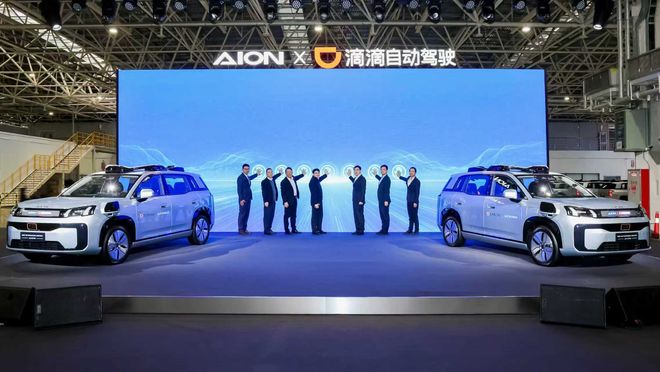
广汽埃安联手滴滴自动驾驶 Robotaxi R2正式交付
Nan Fang Du Shi Bao· 2026-01-23 16:29
Group 1 - The core viewpoint of the news is the successful delivery of the R2 Robotaxi, a collaboration between GAC Aion and Didi Autonomous Driving, marking a significant step in the commercialization of autonomous driving technology [2][4]. - The R2 is designed for commercial operation with three main goals: unmanned operation, mass production, and commercialization, achieving breakthroughs in technology configuration, safety assurance, passenger experience, and operational efficiency [2][4]. - The R2 features 33 high-precision sensors and the industry's first mass-produced three-domain fusion computing brain, with a computing power exceeding 2000 TOPS, while reducing costs by 74% [2][4]. Group 2 - The R2 is equipped with advanced features such as an interactive front bumper screen, a 17.3-inch ceiling-mounted entertainment screen, and smart voice control, enhancing user experience [4]. - GAC has developed the GIVA intelligent driving platform since 2018, providing a secure and open platform for autonomous driving research and development [4]. - The collaboration leverages Didi's latest L4 full-stack autonomous driving hardware and software solutions, accelerating the R2's market introduction and enhancing GAC's brand image as a technology leader [4][5]. Group 3 - By 2026, the R2 Robotaxi is planned to be deployed in cities like Guangzhou and Beijing, gradually becoming a valuable addition to urban smart transportation [5]. - GAC and Didi Autonomous Driving will continue to deepen their collaboration, focusing on vehicle lifecycle management, scenario expansion, and iterative upgrades of the Robotaxi models [5].


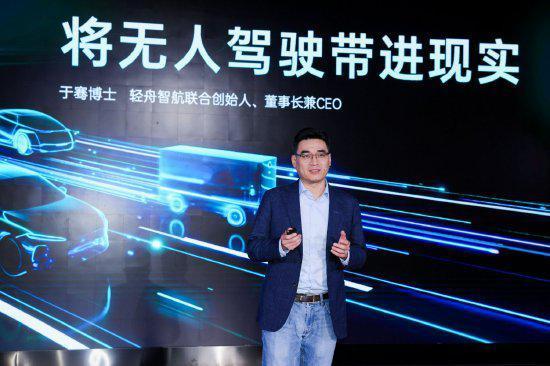
轻舟智航辅助驾驶搭载量突破百万台 无人驾驶将开启黄金十年
Xin Hua Cai Jing· 2026-01-23 15:42
Core Insights - The autonomous driving technology company, Qingtian Zhihang, announced that its assisted driving systems have surpassed 1 million units in deployment, marking a significant milestone for the company and the industry [1][2] - The CEO, Yu Qian, stated that 2026 will be a pivotal year, marking the beginning of a decade of advancements in autonomous driving, transitioning from "human-like intelligence" to "superhuman intelligence" [1] Industry Developments - The development of autonomous driving technology is categorized into three phases: 1. "Machine Intelligence" from 2004 to 2020, characterized by weak generalization capabilities 2. "Human-like Intelligence" from 2021 to 2025, where systems approach human driving levels 3. The onset of "Superhuman Intelligence" in 2026, where systems are expected to exceed human driving capabilities [1] - The introduction of end-to-end architectures and models like VLA and world models will enhance the understanding of physical laws, human intentions, and experiential knowledge, leading to a safety level ten times that of human drivers [1] Future Projections - Qingtian Zhihang outlined eight industry predictions for the next five years: 1. Equal access to intelligent driving with urban navigation assistance becoming standard in domestic vehicles 2. Significant improvements in technology reliability, with urban NOA takeover frequency dropping to a monthly basis 3. A restructured insurance system with autonomous driving premiums being over 50% lower than human driving premiums 4. Robotaxi services operating 24/7 in 50 global cities, with daily orders surpassing human ride-hailing services 5. The emergence of true L4 level vehicles without a driver's cabin entering the personal consumer market 6. Global autonomous logistics vehicles (Robovans) exceeding 2 million units 7. Enhanced travel safety experiences for children, the elderly, and disabled individuals 8. The arrival of a general physical AI era, with intelligent robots becoming part of daily life and work [1] Company Strategy - Qingtian Zhihang has adopted a dual strategy of mass-producing L2++ systems while concurrently developing L4 technologies, supported by a data closed-loop from an "autonomous driving super factory" [2] - The company has established deep collaborations with nearly 10 major domestic automakers, aiding in the mass production of 23 vehicle models, with over 50 new models expected to launch in 2026, all equipped with urban NOA [2] - The recent launch of the first urban NOA solution based on Horizon Journey 6M has been integrated into the Ideal L series smart vehicle [2]
广汽埃安联手滴滴自动驾驶,Robotaxi R2正式交付
Nan Fang Du Shi Bao· 2026-01-23 14:55
Core Insights - GAC Aion and Didi Autonomous Driving have successfully delivered the new generation Robotaxi, R2, marking a significant milestone in the commercial operation of autonomous driving technology [1][3] - The R2 aims to achieve three core goals: unmanned operation, mass production, and commercialization, with significant advancements in technology, safety, passenger experience, and operational efficiency [1][3] Group 1: Vehicle Specifications and Technology - The R2 is equipped with 33 high-precision sensors and the industry's first mass-produced three-domain fusion computing brain, boasting a computing power exceeding 2000 TOPS while reducing costs by 74% [1] - The vehicle features an interactive front bumper screen, a 17.3-inch ceiling-mounted entertainment screen, and smart voice control, enhancing user experience [3] - GAC's GEP 3.0 platform integrates electric vehicle architecture, an open control platform, electronic steering, and redundant braking systems, providing robust support for autonomous driving [3] Group 2: Strategic Collaboration and Future Plans - The collaboration between GAC and Didi Autonomous Driving has accelerated the rollout of the Robotaxi model, enhancing GAC's brand image as a technology-driven company [3][4] - The successful delivery of R2 and its road testing signify a new phase in the mass production of autonomous driving, aiming to improve user experience and value [3] - By 2026, R2 is planned to be deployed in cities like Guangzhou and Beijing, gradually becoming a valuable addition to urban smart mobility solutions [3][4] Group 3: Future Development - GAC and Didi Autonomous Driving will continue to deepen their collaboration, focusing on vehicle lifecycle management, scenario expansion, and iterative upgrades of the Robotaxi model [4] - The partnership aims to transition autonomous driving from technology validation to practical commercial applications [4]
轻舟智航辅助驾驶搭载量突破100万台,于骞放言自动驾驶要干20年
Xin Lang Cai Jing· 2026-01-23 14:47
Core Viewpoint - QCraft, also known as QCraft Intelligent Navigation, is entering the L4 autonomous logistics sector, marking a significant milestone in the autonomous driving industry as it celebrates its seventh anniversary and aims to lead the market by 2026 [1][3]. Group 1: Company Achievements - As of January 2026, QCraft's assisted driving systems have been installed in over 1 million vehicles, collaborating with nearly 10 automotive manufacturers, and supporting the mass production of 23 vehicle models from brands like Li Auto and Chery [3]. - The company has introduced the world's first end-to-end city NOA solution based on the single journey 6M platform, which is now available in the upgraded Li Auto L series, achieving performance comparable to 256 TOPS with only 128 TOPS of computing power [3]. Group 2: Technological Innovations - QCraft has unveiled a unified architecture combining VLA and world models, enabling the system to understand complex instructions and predict traffic behavior, thus laying the groundwork for L4 autonomous driving [5]. - The company has developed a product matrix called "QCraft Sailing 2.0," which includes three tiers of products (AIR, PRO, MAX) catering to different performance needs ranging from 80 TOPS to 500 TOPS, aiming to make advanced assisted driving accessible for vehicles priced around 100,000 yuan [3][5]. Group 3: Strategic Initiatives - QCraft is entering the trillion-yuan L4 autonomous logistics market and has formed a strategic partnership with Chery Commercial Vehicles to create a "production equals operation" model [5]. - The company has established offices in Beijing, Suzhou, and Munich, and is working with chip platforms like Horizon, NVIDIA, and Qualcomm to promote its technology internationally [5].